Tag Archives: Microsoft

Crafting Your Change Story

A Blueprint for Influence

Crafting Your Change Story

GUEST POST from Art Inteligencia

From my work around the world, guiding organizations through transformative journeys, I’ve learned a fundamental truth: change, no matter how necessary or beneficial, is rarely embraced without a compelling narrative. Data, logic, and strategic plans are crucial, but they often fail to move hearts and minds. The secret to influencing others and driving meaningful adoption lies in crafting a powerful change story – a narrative that resonates emotionally, clarifies the need for change, and paints a vivid picture of a desirable future.

Human beings are wired for stories. Narratives help us make sense of the world, connect with others, and find meaning in complex situations. A well-crafted change story does more than just communicate information; it builds empathy, overcomes resistance, and inspires action. It answers the fundamental questions people have when faced with change: Why is this happening? What’s in it for me? What will the future look like? And how can I be a part of it? Without a compelling story, even the most well-intentioned change initiatives can falter and fail.

Crafting an effective change story is a human-centered endeavor. It requires us to understand the perspectives, fears, and aspirations of those we are trying to influence. It’s not about dictating a new reality, but about co-creating a shared understanding and a collective vision. A powerful change story typically includes the following elements:

  • The Current State: A clear and relatable picture of where things are now, highlighting the pain points or limitations that necessitate change.
  • The Inciting Incident: The catalyst or event that makes the need for change undeniable.
  • The Vision of the Future: A compelling and aspirational depiction of what the future will look like after the change is successfully implemented, emphasizing the benefits and opportunities.
  • The Journey: A roadmap outlining the steps involved in moving from the current state to the desired future, acknowledging potential challenges and offering reassurance.
  • The Call to Action: A clear and concise request for individuals to get involved and contribute to the change.

Case Study 1: Satya Nadella’s Transformation of Microsoft

The Challenge: Reversing a Stagnant Culture and Declining Innovation

In the early 2010s, Microsoft, once a dominant force in technology, was perceived as stagnant and out of touch. Its culture was often described as competitive and siloed, hindering collaboration and stifling innovation. The company’s stock price had plateaued, and it was missing out on key emerging trends like mobile and cloud computing. The need for a significant shift in direction and culture was evident.

The Change Story:

When Satya Nadella took over as CEO in 2014, he didn’t just issue a new strategic plan; he crafted a compelling change story centered around empathy, a growth mindset, and empowering others. He painted a picture of a future where Microsoft was not just about Windows, but about empowering every person and every organization on the planet to achieve more. He spoke openly about the need to move from a “know-it-all” culture to a “learn-it-all” culture, emphasizing continuous learning and collaboration. He highlighted the missed opportunities of the past (the current state) and articulated a vision of a more open, collaborative, and innovative Microsoft (the vision of the future). His actions, such as embracing Linux and open-source technologies, served as powerful “inciting incidents” that demonstrated his commitment to this new direction. The “journey” involved fostering a culture of experimentation and empowering employees to take risks. His consistent communication and focus on shared goals acted as a continuous “call to action.”

The Results:

Nadella’s change story resonated deeply within Microsoft and with the broader tech community. The company underwent a significant cultural transformation, leading to renewed innovation in areas like cloud computing (Azure), AI, and gaming (Xbox). Microsoft’s stock price soared, and it re-established itself as a leader in the technology industry. His success demonstrates the power of a human-centered change story to inspire a large and complex organization to embrace a new identity and achieve remarkable results.

Key Insight: A compelling change story, rooted in empathy and a clear vision, can transform a stagnant culture and reignite innovation within a large organization.

Case Study 2: The Cleveland Clinic’s Patient-First Initiative

The Challenge: Enhancing Patient Experience and Outcomes in Healthcare

In the early 2000s, the Cleveland Clinic, a renowned medical center, recognized the need to move beyond a purely clinical focus and prioritize the overall patient experience. While known for its medical expertise, there was an opportunity to enhance the emotional and human aspects of patient care, leading to improved outcomes and greater patient satisfaction. The “current state” involved patients often feeling like a number rather than an individual with unique needs and concerns.

The Change Story:

The leadership at Cleveland Clinic embarked on a “Patients First” initiative, crafting a powerful change story that emphasized empathy, communication, and a holistic approach to care. The “inciting incident” was the growing recognition that excellent medical treatment alone was not enough; patients needed to feel heard, respected, and supported throughout their healthcare journey. The “vision of the future” was a healthcare system where every patient felt valued, informed, and cared for as an individual. The “journey” involved training staff in empathy and communication skills, redesigning processes to be more patient-centered, and empowering caregivers to go the extra mile. Stories of exceptional patient care were regularly shared and celebrated, reinforcing the “call to action” for every employee to embrace this new philosophy. The leadership consistently communicated the message that a focus on the patient experience was not just the right thing to do, but also essential for maintaining the Clinic’s reputation and attracting patients.

The Results:

The “Patients First” initiative led to significant improvements in patient satisfaction scores, increased employee engagement, and a stronger sense of purpose among caregivers. The Cleveland Clinic reinforced its reputation as a leader in patient care, attracting patients from around the world. This case study highlights how a human-centered change story focused on empathy and a shared commitment to a core value (patients first) can transform a complex service organization and lead to tangible improvements in both the human experience and organizational outcomes.

Key Insight: A change story that prioritizes empathy and focuses on a shared value can transform a service-oriented organization and significantly enhance the customer or patient experience.

Your Blueprint for Influence

Crafting your change story is not a one-time event; it’s an ongoing process of communication, adaptation, and reinforcement. By understanding the power of narrative and focusing on the human element of change, you can move beyond simply announcing a new direction to truly inspiring a movement. Whether you are leading a small team or a large organization here in the United States or across the globe, remember that every successful change begins with a story that resonates, connects, and compels action. Take the time to craft your narrative, listen to your audience, and lead with empathy. The blueprint for influence lies within the power of your story.

Extra Extra: Futurology is not fortune telling. Futurists use a scientific approach to create their deliverables, but a methodology and tools like those in FutureHacking™ can empower anyone to engage in futurology themselves.

Image credit: Pixabay

Subscribe to Human-Centered Change & Innovation WeeklySign up here to get Human-Centered Change & Innovation Weekly delivered to your inbox every week.

Design Standards for Inclusivity

GUEST POST from Chateau G Pato

“The world is not designed for everyone.”

This stark reality, often hidden in plain sight, is the driving force behind the urgent need for robust design standards for inclusivity. As a thought leader in human-centered change and innovation, I’ve witnessed countless organizations stumble in their efforts to serve diverse populations, not out of malice, but out of a lack of intentional design. Inclusivity isn’t merely a “nice-to-have” add-on; it’s a fundamental pillar of sustainable innovation, a critical driver of market relevance, and a moral imperative for any entity seeking to thrive in our increasingly interconnected world.

What exactly do we mean by “design standards for inclusivity”? It’s more than just accessibility checklists, though those are crucial. It’s a holistic approach that embeds empathy, diversity, and equity into the very fabric of our design processes, from ideation to implementation. It’s about recognizing that our users are not a monolithic block, but a rich tapestry of experiences, abilities, backgrounds, and perspectives.

Beyond the Ramp: The Essence of Inclusive Design

Think of inclusive design not as an afterthought, but as the foundational blueprint for everything we create. It anticipates and accommodates the widest possible range of human diversity. This includes, but is not limited to:

  • Physical Abilities: Ensuring products, services, and environments are usable by individuals with varying mobilities, visual impairments, hearing impairments, and cognitive differences.
  • Socioeconomic Backgrounds: Designing solutions that are affordable, accessible, and relevant across different economic strata.
  • Cultural and Linguistic Diversity: Crafting experiences that resonate with and are understandable by people from different cultural contexts and language proficiencies.
  • Neurodiversity: Creating environments and interfaces that support individuals with conditions like autism, ADHD, and dyslexia.
  • Age: Designing for both the young and the elderly, considering their unique needs and capabilities.
  • Gender Identity and Expression: Ensuring products and services are respectful and inclusive of all gender identities.

The beauty of inclusive design is that it often benefits everyone. A curb cut designed for a wheelchair user also helps a parent with a stroller or a delivery person with a handcart. Closed captions, initially for the hearing impaired, are now widely used in noisy environments or by those learning a new language. This “curb cut effect” is a powerful testament to the ripple benefits of designing with a broad lens, showcasing how inclusive design not only meets a need but often creates broader utility and value.

Case Study: Microsoft’s Xbox Adaptive Controller – Redefining Play

One of the most inspiring examples of inclusive design in recent years is the Microsoft Xbox Adaptive Controller. This groundbreaking device, launched in 2018, was specifically designed for gamers with limited mobility. Instead of forcing players to adapt to a standard controller, Microsoft brought together gamers with disabilities, accessibility advocates, and developers to co-create a solution.

The result is a highly customizable controller that can be integrated with a variety of external inputs, such as joysticks, buttons, and switches, allowing players to tailor their gaming experience to their unique physical needs. This wasn’t just about creating an accessible peripheral; it was about opening up the world of gaming, fostering social connection, and empowering individuals who had previously been excluded. The impact extends beyond just gaming; it set a new benchmark for how large corporations can prioritize and execute truly inclusive product development, demonstrating clear market leadership and enhanced brand reputation.

Case Study: The City of Seattle’s Digital Equity Initiative – Bridging the Digital Divide

Inclusive design isn’t limited to physical products; it’s equally critical in the digital realm. The City of Seattle’s Digital Equity Initiative stands as a testament to this. Recognizing that access to technology and digital literacy are no longer luxuries but fundamental rights, the city launched a comprehensive program to bridge the digital divide.

Their approach was multi-faceted, focusing on:

  • Affordable Internet Access: Partnering with internet service providers and offering subsidies to low-income households.
  • Access to Devices: Providing refurbished computers and digital literacy training to underserved communities.
  • Inclusive Digital Services: Designing city websites and online services with clear language, intuitive navigation, and robust accessibility features, ensuring they are usable by individuals with varying levels of digital proficiency and disabilities.

By intentionally designing for digital inclusivity, Seattle is empowering its residents to access essential services, educational opportunities, and economic pathways that would otherwise be out of reach. This initiative demonstrates that inclusive design is a continuous commitment, not a one-time project, requiring ongoing evaluation and adaptation to meet evolving community needs and avoid the significant social and economic costs of digital exclusion.

Implementing Design Standards for Inclusivity: A Roadmap for Change

So, how can organizations effectively implement design standards for inclusivity? The pathway to becoming truly inclusive requires dedication and a strategic approach:

  1. Embrace Empathy as a Core Value: This is not a checklist item; it’s a cultural shift. Designers, developers, marketers, and leaders must actively seek to understand the diverse experiences of their users. This means conducting user research with diverse populations, engaging with accessibility experts, and fostering a culture of curiosity and respect.
  2. Integrate Inclusivity from the Outset: Don’t bolt on accessibility at the end. Make inclusive design a fundamental consideration from the very first brainstorming session. This means including diverse perspectives in design teams, using inclusive language in documentation, and establishing clear guidelines for accessibility.
  3. Leverage Tools and Technologies: Utilize accessibility checkers, screen readers, and other assistive technologies during the design and development process. These tools can help identify potential barriers and ensure compliance with established standards (e.g., WCAG for web content, ISO standards for product design).
  4. Educate and Train Your Teams: Provide ongoing training for all employees on inclusive design principles and practices. This empowers everyone within the organization to contribute to creating more inclusive products and services, fostering an inclusive work environment that attracts and retains diverse talent.
  5. Seek Feedback Continuously: Establish mechanisms for users with diverse needs to provide feedback. This could involve user testing with individuals with disabilities, creating accessible feedback channels, and actively listening to community input. This iterative process is crucial for continuous improvement.
  6. Measure and Iterate: Track the impact of your inclusive design efforts. Are you reaching a broader audience? Are user satisfaction levels increasing for diverse groups? Is your brand reputation improving? Use data to inform your ongoing design decisions and continuously iterate your solutions, understanding that inclusivity is a journey, not a destination.

The Future is Inclusive: Act Now

The shift towards inclusive design is not merely a trend; it’s an evolutionary step in how we create and innovate. Organizations that embrace these standards will not only unlock vast new markets and foster deeper, more authentic connections with their users, but they will also build more resilient, ethical, and ultimately, more successful enterprises. In a world where diversity is a superpower, the competitive advantage will undeniably belong to those who design for everyone. The time for action is now. Let’s build a future where no one is left behind by design.

Extra Extra: Because innovation is all about change, Braden Kelley’s human-centered change methodology and tools are the best way to plan and execute the changes necessary to support your innovation and transformation efforts — all while literally getting everyone all on the same page for change. Find out more about the methodology and tools, including the book Charting Change by following the link. Be sure and download the TEN FREE TOOLS while you’re here.

Image credit: Pixabay

Subscribe to Human-Centered Change & Innovation WeeklySign up here to get Human-Centered Change & Innovation Weekly delivered to your inbox every week.

Bridging the Digital Divide with Universal Design

Bridging the Digital Divide with Universal Design

GUEST POST from Chateau G Pato

In an increasingly connected world, the digital divide remains a formidable barrier, preventing equitable access to information and technology. The divide affects individuals across different socioeconomic, geographic, and demographic lines. Bridging this gulf demands intentional approaches that prioritize inclusivity and accessibility, and here is where Universal Design becomes pivotal.

Understanding Universal Design

Universal Design is about creating products and environments accessible to all people, regardless of their abilities, age, or status. It involves designing solutions that are user-friendly and accommodating from the very beginning. This concept not only aids those with disabilities but also enhances usability for everyone. As a proponent of human-centered innovation, I believe Universal Design is crucial in addressing the digital divide.

Case Studies

Case Study 1: Microsoft’s Inclusive Design Strategy

Microsoft is a compelling example of leveraging universal design to bridge the digital divide. Their Inclusive Design Strategy emphasizes understanding and addressing the needs of people with disabilities to enhance their products for all users. This was notably apparent with the redesign of the Xbox Adaptive Controller.

The controller was developed to cater not just to gamers with limited mobility but also reflects a broader philosophy: designing for people with disabilities can make products better for everyone. By championing inclusivity, Microsoft opened up opportunities for engagement in gaming for individuals who were previously marginalized.

This strategy has been extended to other products, such as Windows, where features like Narrator, Magnifier, and Speech Recognition are integral parts of the operating system, not afterthoughts.

Case Study 2: Google’s Project Loon

Another notable initiative is Google’s Project Loon, which aims to provide internet access to under-served regions using high-altitude balloons. The project’s primary goal is to connect rural and remote areas to the wider world, thus addressing a significant part of the digital divide.

By accessing these regions with innovative technology, Project Loon is not only supplying internet access but is also facilitating socioeconomic development. Remote farmers, small businesses, and local institutions can connect with larger markets and resources, fostering socioeconomic growth.

Google’s initiative serves as a testament to how technology, when thoughtfully applied, can reach beyond traditional boundaries and create an inclusive digital environment.

The Role of Universal Design in Digital Accessibility

Universal Design plays a transformative role in digital accessibility by considering users at the margins and making inclusive solutions a standard practice. This helps in creating digital experiences that everyone can access, enhancing overall usability.

It calls for a paradigm shift in how we think about design—from focusing on the average user to embracing a wider spectrum of human diversity. This approach not only bridges the digital divide but fosters innovation by creating products that are at the intersection of user needs and technological possibilities.

Conclusion

Bridging the digital divide is an ongoing challenge that requires collaborative efforts and a shift in mindset towards inclusivity and universal accessibility. By adopting Universal Design principles, organizations and innovators can make strides toward not only narrowing this divide but also unlocking opportunities for everyone.

As we move forward, let’s champion innovation that includes everyone, ensuring that no one is left behind in our digital future.

Extra Extra: Because innovation is all about change, Braden Kelley’s human-centered change methodology and tools are the best way to plan and execute the changes necessary to support your innovation and transformation efforts — all while literally getting everyone all on the same page for change. Find out more about the methodology and tools, including the book Charting Change by following the link. Be sure and download the TEN FREE TOOLS while you’re here.

Image credit: Dall-E

Subscribe to Human-Centered Change & Innovation WeeklySign up here to get Human-Centered Change & Innovation Weekly delivered to your inbox every week.

The Role of Inclusive Design in Modern Innovation

The Role of Inclusive Design in Modern Innovation

GUEST POST from Chateau G Pato

In the ever-evolving landscape of modern innovation, one guiding principle stands out for its transformative potential: inclusive design. By focusing on creating products and services that are accessible and usable for people with diverse needs and abilities, inclusive design not only fosters greater equity but also drives groundbreaking innovation.

Understanding Inclusive Design

Inclusive design is a methodology that puts people at the heart of the innovation process. It aims to eliminate barriers and ensure that everyone, regardless of their physical, cognitive, or emotional capabilities, can fully engage with products and services. This approach not only broadens the market reach but also spurs creativity by considering a wider range of human experiences and perspectives.

“Inclusive design is designing for everyone. It’s about understanding and solving real-world needs for people who are often marginalized or overlooked.” — Braden Kelley

Case Study 1: Microsoft’s Inclusive Design Toolkit

One exemplary case of inclusive design in action is Microsoft’s development of its Inclusive Design Toolkit. Recognizing the varying abilities of their users, Microsoft embarked on a mission to create more accessible technology. The company’s toolkit provides guidelines and principles that encourage designers to consider people across a wide spectrum of capabilities.

For instance, insights garnered from designing for individuals with disabilities — such as providing voice recognition technologies for people who are blind — led to innovations that have widespread benefits, such as improved virtual assistants and enhanced speech-to-text functionalities. This ripple effect underscores how inclusive design can lead to innovations that benefit not just niche groups but the general public, thereby enhancing overall user experience.

Case Study 2: OXO Good Grips

Another noteworthy example is the OXO Good Grips line of kitchen utensils. The journey began when OXO’s founder, Sam Farber, noticed his wife, who had arthritis, struggling with traditional kitchen tools. This observation led to the design of ergonomic utensils that are easier to hold and use, accommodating both those with grip challenges and those without.

The initial focus on individuals with arthritis expanded to create a product line universally appreciated for its comfort and practicality. The success of OXO Good Grips showcases how addressing specific accessibility challenges can lead to products that cater to a broader demographic, paving the way for commercial success.

The Broader Impact of Inclusive Design

The principles of inclusive design extend far beyond technology and consumer products. They foster an environment where diversity of thought thrives, leading to more robust and versatile innovations. By challenging assumptions and embracing a diverse set of perspectives, organizations can create more adaptive and resilient solutions.

Moreover, inclusive design contributes to social equity. It enables people who might otherwise be excluded to participate more fully in society, whether it’s through digital platforms, public spaces, or everyday products.

Implementing Inclusive Design: Key Strategies

To harness the power of inclusive design, organizations can adopt the following strategies:

  • Engage Diverse Perspectives: Include individuals from a range of backgrounds and abilities in the design process to surface diverse insights and challenges.
  • Iterate and Prototype: Regularly test and refine designs with actual users to ensure they meet real-world needs.
  • Focus on Flexibility: Design solutions that can be customized or adapted to fit different users’ needs.

By adopting these strategies, companies can unlock the full potential of inclusive design, leading to innovations that are not only transformative but also equitable.

Conclusion

In the journey toward creating a more interconnected and compassionate world, inclusive design promises a pathway to both innovation and equity. As businesses, designers, and innovators, our challenge is to embed inclusivity into the fabric of our design processes, expanding the boundaries of what’s possible for every user. This inclusive mindset holds the key to a future where innovation works for all, inspiring progress, understanding, and unity.

Extra Extra: Because innovation is all about change, Braden Kelley’s human-centered change methodology and tools are the best way to plan and execute the changes necessary to support your innovation and transformation efforts — all while literally getting everyone all on the same page for change. Find out more about the methodology and tools, including the book Charting Change by following the link. Be sure and download the TEN FREE TOOLS while you’re here.

Image credit: Pexels

Subscribe to Human-Centered Change & Innovation WeeklySign up here to get Human-Centered Change & Innovation Weekly delivered to your inbox every week.

Cross-Disciplinary Collaboration in Inclusive Design

Cross-Disciplinary Collaboration in Inclusive Design

GUEST POST from Chateau G Pato

In today’s rapidly evolving world, the need for inclusive design is more pressing than ever. Inclusive design ensures that products, environments, and services are accessible and usable by as many people as possible. It is a philosophy that goes beyond accessibility, focusing on user diversity and varying perspectives.

Cross-disciplinary collaboration is pivotal to inclusive design. By involving diverse disciplines, teams can leverage a broad range of insights and expertise to create solutions that are truly inclusive. This approach brings together different viewpoints, fostering an innovative environment where creative solutions can thrive.

Case Study 1: OXO Good Grips

One exemplary model of cross-disciplinary collaboration in inclusive design is OXO’s Good Grips line of kitchen tools. Initially inspired by a need for user-friendly kitchen tools that cater to people with arthritis, OXO’s design team incorporated professionals from various fields such as industrial design, occupational therapy, and market research.

The collaboration began with direct user input and testing, where users with arthritis provided first-hand insights into their struggles with traditional kitchen tools. The occupational therapists in the team translated these struggles into functional requirements, ensuring ease of use and ergonomic comfort.

Industrial designers brought creativity and technical knowledge to the table, developing prototypes and testing materials that were both durable and comfortable. This cross-disciplinary approach led to the creation of Good Grips tools, which feature larger, cushioned handles that are comfortable for all users, not just those with arthritis.

Case Study 2: Microsoft Inclusive Design Toolkit

Microsoft has long been a champion of inclusive design, developing tools and frameworks that guide cross-disciplinary teams in creating accessible technology. A pivotal example is their Inclusive Design Toolkit, which integrates insights from various fields, including psychology, technology, and user research.

The toolkit’s creation involved collaboration between engineers, designers, and psychologists, ensuring a well-rounded understanding of user needs. Psychologists helped identify cognitive and behavioral patterns among diverse user groups, while engineers and designers developed solutions that accommodated these findings.

Through continuous testing and improvement, facilitated by insights from users with disabilities, Microsoft was able to implement features such as adaptive controllers and voice recognition technologies. This cross-disciplinary effort culminated in products that not only serve users with disabilities but enhance the experience for all users.

Conclusion

These case studies underscore the transformative potential of cross-disciplinary collaboration in inclusive design. By merging expertise from different fields, organizations can foster innovation and creativity, ultimately leading to products that embrace user diversity.

As we move forward, it is imperative to continue championing cross-disciplinary collaboration in design processes. Only then can we create a more inclusive world, where every user, regardless of their abilities or background, can participate fully. Let’s commit to embedding inclusion at the heart of innovation, leveraging diverse perspectives to build solutions that empower all.

Extra Extra: Because innovation is all about change, Braden Kelley’s human-centered change methodology and tools are the best way to plan and execute the changes necessary to support your innovation and transformation efforts — all while literally getting everyone all on the same page for change. Find out more about the methodology and tools, including the book Charting Change by following the link. Be sure and download the TEN FREE TOOLS while you’re here.

Image credit: Pixabay

Subscribe to Human-Centered Change & Innovation WeeklySign up here to get Human-Centered Change & Innovation Weekly delivered to your inbox every week.
User-Centered Approach to Designing for Disabilities

User-Centered Approach to Designing for Disabilities

GUEST POST from Chateau G Pato

In the realm of design and innovation, our goal is to create solutions that empower all individuals, particularly those with disabilities. A user-centered approach is vital, focusing on understanding and prioritizing the needs, wants, and limitations of end-users. By involving people with disabilities in the design process, we open new pathways to creativity and inclusivity.

Designing for disabilities isn’t just about compliance or accessibility—it’s about empathy, real-world application, and human-centered innovation. When you design with empathy, you begin to understand the diverse human experiences and create a product or service that is not only inclusive but also functional and appealing to a broader audience.

The Importance of Inclusive Design

Inclusive design is the practice of creating products that are accessible to as many people as possible. It goes beyond traditional accessibility by considering the full range of human diversity, including different abilities, languages, cultures, genders, and ages. This approach not only helps to remove barriers for people with disabilities but also improves user experience for everyone.

Case Studies

Case Study 1: Microsoft’s Inclusive Design Toolkit

Microsoft has long been a pioneer in the field of inclusive design. Their Inclusive Design Toolkit is a testament to their commitment to accessibility and innovation. Microsoft embraces three key principles: recognize exclusion, solve for one and extend to many, and learn from diversity. By involving people with disabilities throughout the design process, they ensure that products meet a wide variety of needs.

An example of this approach is the Xbox Adaptive Controller. Developed with extensive input from the disabled community, this controller offers a customizable, user-friendly gaming experience for all. The design includes large programmable buttons and ports, making it adaptable for gamers with limited mobility. This project exemplifies how co-design with the disabled community can lead to groundbreaking solutions.

Case Study 2: Google’s Accessible Search and Maps

At Google, accessibility is integrated into initial product design and development phases, not added as an afterthought. One notable product is Google Maps’ accessibility features. Recognizing the navigation challenges faced by individuals with mobility impairments, Google incorporated wheelchair-friendly routes and information about accessible entrances and facilities.

Another inspiring initiative is Google’s Accessibility Scanner app, which helps developers identify areas of improvement in their applications for making their apps more accessible. By developing tools that empower developers and end-users, Google doesn’t just accommodate disabilities—they drive forward inclusive technological advancement.

Conclusion

User-centered design for disabilities goes beyond mere functionality; it’s about creating meaningful and intuitive interactions. As businesses and designers, it’s our responsibility to engage proactively with diverse user groups and shape an inclusive global landscape. By doing so, we not only comply with accessibility standards but push the boundaries of innovation, making the world a more accessible, enjoyable place for everyone.

Together, by focusing on inclusive design, we can achieve a future where technology leaves no one behind—where every product and service enriches the lives of all people, regardless of their abilities.

This article embodies the essence of a user-centered approach in designing for people with disabilities, utilizing real-world case studies that illustrate innovation, empathy, and inclusive practices.

Extra Extra: Because innovation is all about change, Braden Kelley’s human-centered change methodology and tools are the best way to plan and execute the changes necessary to support your innovation and transformation efforts — all while literally getting everyone all on the same page for change. Find out more about the methodology and tools, including the book Charting Change by following the link. Be sure and download the TEN FREE TOOLS while you’re here.

Image credit: Pexels

Subscribe to Human-Centered Change & Innovation WeeklySign up here to get Human-Centered Change & Innovation Weekly delivered to your inbox every week.
Building a Learn It All Culture

Don’t Be a Know It All

Building a Learn It All Culture

by Braden Kelley

Trying to be a “know-it-all” is a flawed goal.

It is impossible to know everything.

This is by design.

This is by intention.

In much the same way that programming languages have garbage collection built in, the human brain is built to prune. The human brain is built to forget more than it remembers. Instead of trying to override our natural tendencies, we must embrace them and see instead see how they empower us to be continuous learners.

“Garbage collection is the process in which programs try to free up memory space that is no longer used by objects.” — FreeCodeCamp

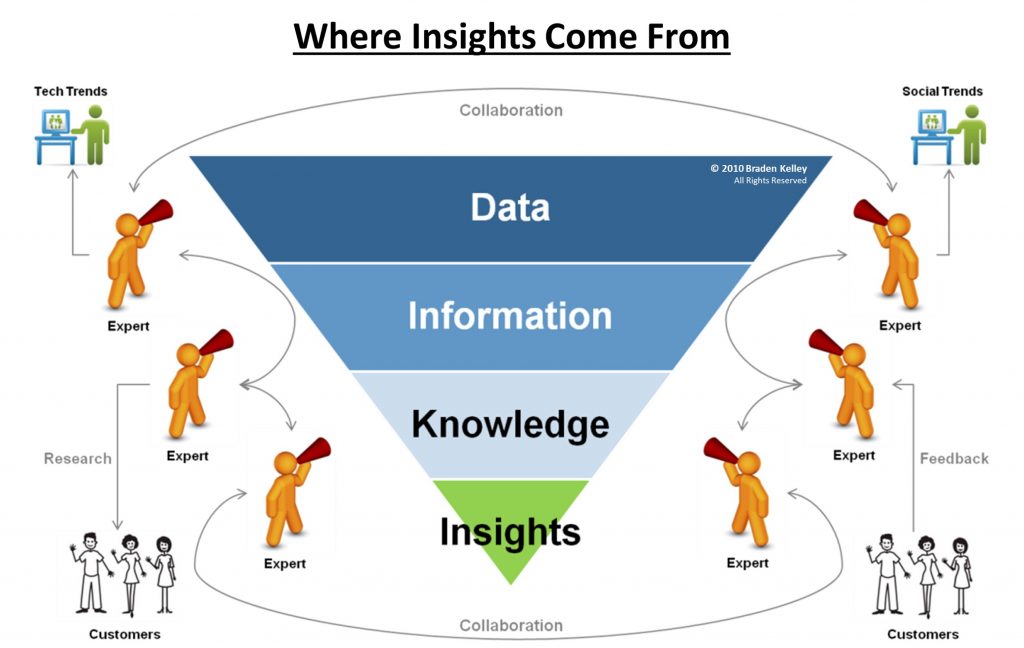
Where Insights Come From by Braden Kelley

And while knowledge is important, it is perishable, it is transitory, and it is not the highest aspiration.

  1. An understanding of data allows the creation of information
  2. The consumption of information allows the creation of knowledge
  3. The exploration of knowledge allows the creation of insight
  4. The connections between insights allow the creation of wisdom

Curiosity fuels the transformation of data and information into insights and wisdom, while knowledge funnel progression is driven by a quest for efficiency.

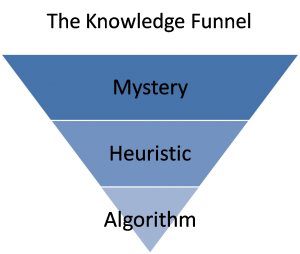
Knowledge Funnel

Knowledge FunnelThe knowledge funnel is a useful concept learned from Roger Martin in the Design of Business. The concept highlights how any new area creating information (and hopefully knowledge) starts very much as a mystery, but as our understanding of the topic area increases, we begin to identify heuristics and make sense of it. For me, this is where we begin to move from data and information to knowledge, and then as our knowledge increases we are able to codify this knowledge into algorithms.

Importance of Curiosity to a Learn It All Culture

If you want to build a learn-it-all culture, it all starts with curiosity. Curiosity leads to inquiry, and inquiry leads to learning. The achievement of insights is the ideal outcome for learning pursuits, and insights power innovation.

I’ve been writing about the importance of curiosity and its role in innovation since 2011 or before.

“The important thing is not to stop questioning. Curiosity has its own reason for existing.” – Albert Einstein

At an event I attended in New York City in 2011, Peter Diamandis of the XPRIZE Foundation talked about how for him the link between curiosity and innovation is the following:

“What should be possible that doesn’t yet exist?”

In my article Key to Innovation Success Revealed!, on the topic of curiosity I wrote:

The reason that curiosity is the secret to innovation success is that the absence of curiosity leads to acceptance and comfort in the status quo. The absence of curiosity leads to complacency (one of the enemies of innovation) and when organizations (or societies) become complacent or comfortable, they usually get run over from behind. When organizations or societies lack curiosity, they struggle to innovate. Curiosity causes people to ask ‘Why’ questions and ‘What if’ questions. Curiosity leads to inspiration. Inspiration leads to insight. Insights lead to ideas. And in a company or society where invention, collaboration and entrepreneurship knowledge, skills, abilities and practice are encouraged, ideas lead to action.

Five Keys to Building a Learn It All Culture

Change is the one constant, and it is continuous. If it wasn’t, all of us would still be hunting animals and collecting berries. Embracing continuous change and transformation allows us to accelerate our understanding of the universe and how our organizations can serve their missions more effectively and efficiently. Continuous change requires continuous learning. To prepare our people and our organization to succeed at continuous learning we need to do these five things:

1. Develop Good Learning Hygiene

Learning is a skill. To build an organization of continuous or lifelong learners, we must first help people learn how to learn. Two of the most important learning skills that we are not taught how to do in school, but that are crucial for success at innovation and other modern pursuits are the following:

  • Deep Thinking — Few of us are good at deep thinking and as a result, deep learning. Getting people to put all of their devices away is the initial challenge. Feeling comfortable not knowing the answer and sitting at a table with nothing more than a blank piece of paper is really hard. Teaching people how to meditate beforehand can be quite helpful. The goal of course is to get people into the state of mind that allows them to think deeply and capture their idea fragments, nuggets of inquiry and micro-inspirations. This will provide the fuel for collaboration and co-creation and the next key learning skill.
  • Augmented Learning — We live during amazing times, where if we don’t know something we can Google it or ask Siri, Cortana or Alexa. All of the assistants and search engines available to us, serve to quickly augment our human knowledge, skills and abilities. Knowing how to build good search queries is an incredibly powerful life skill. Teach it.

2. Reinforce Growth Mindset Behaviors

There has been much chatter about the difference between a fixed mindset and a growth mindset. It’s not really a new concept, but instead modern packaging for the level of maturity shown by those successful professionals who are willing to say:

“I don’t know.” and “Let me find out.” and “Failure is an opportunity to learn.”

Two ways organizations can demonstrate their commitment to a growth mindset are to:

  • Celebrate Failure — Create events or other ways to share some of the most important failures of the month or quarter, and what was learned from each.
  • Fund Curiosity — If you’re hiring curious people with a growth mindset, then every employee will be curious about something. Find a way to fund their investigation and exploration of what they’re curious about – even if it is not work-related. This is a great way of demonstrating the importance of curiosity to innovation and your commitment to it.

3. Make Unlearning Socially Acceptable

We all want to be the expert, and we work hard to achieve mastery. Meaning, often we hold on too tightly as new solutions emerge. And, to adopt new ways of solving old problems, often we have to unlearn what we think we know before we can learn the new ways. Smart organizations constantly challenge what they think they know about their customers, potential partners, product-market-fit, and even where future competition might come from.

4. Flex Your Reskilling and Retraining Muscles

With the accelerating pace of change, the organizations and even the countries that invest in reskilling and retaining their employees (or citizens) are the organizations and economies that stand the best chance of continued success. As more organizations commit to being purpose-driven organizations, the costs of recruitment actually increase, making it even more important to keep the employees you attract and to reskill and retrain them as your needs change. Especially as the pace of automation also increases…

5. Create Portable Not Proprietary Knowledge

If you gave an employee ten hours to spend to either:

  • Earn a professional certification
  • Complete company-created employee training

Which do you think most employees would choose?

Sorry, but most employees view company-created trainings somewhat like the dentist. They do it because they have to.

Work with professional associations to influence certification curriculums towards the knowledge, skills and abilities you need.

Find more and better ways of encouraging mentorship.

Invest in internal internship and innovation programs that allow employees to explore the ideas and the other areas of the business they’re passionate about.

Conclusion

Transitioning from a know-it-all to a learn-it-all culture is no small feat and requires commitment and investment at a number of different levels inside the organization. I’ve highlighted the five keys to building a learn-it-all culture inside your organization, but only you can take the keys and unlock these capabilities inside your organization. Now is the time to invest in your learning transformation.

But smart countries will be thinking bigger. Smart countries will be thinking about how they can transform their educational systems to create a continuous learning mindset in their next generation, finance a move from STEM to STEAM, and commit to ongoing worker reskilling and retraining programs to support displaced workers.

Subscribe to Human-Centered Change & Innovation WeeklySign up here to get Human-Centered Change & Innovation Weekly delivered to your inbox every week.

Transforming Leadership Styles for the Digital Age

Transforming Leadership Styles for the Digital Age

GUEST POST from Art Inteligencia

In today’s fast-paced digital landscape, traditional leadership styles are undergoing a significant transformation. The rise of technology and the acceleration of digital transformation processes demand leaders who are not only adaptive but also capable of fostering innovation and guiding organizations through the complexities of change. This article explores the evolving leadership styles suited for the digital age and presents case studies of organizations and leaders who have successfully navigated this transformation.

Embracing Agile Leadership

Agile leadership emphasizes flexibility, collaboration, and rapid decision-making. In a digital world, this style enables organizations to respond swiftly to market changes, technological advancements, and consumer demands. Agile leaders prioritize transparency, empower teams, and encourage continuous feedback to drive innovation.

Case Study 1: Spotify’s Agile Framework

Spotify, the digital music streaming service, exemplifies agile leadership. The organization employs a unique framework that divides teams into “squads,” each responsible for specific projects or features. These squads operate autonomously, with a high degree of flexibility and accountability. The leadership at Spotify focuses on setting clear goals and providing guidance while allowing squads the freedom to innovate and make decisions.

This agile approach has empowered Spotify to regularly release updates and enhancements, keeping the service fresh and responsive to user needs. The success of this leadership transformation lies in Spotify’s ability to cultivate a culture of trust, collaboration, and empowerment, which are crucial elements for thriving in the digital age.

Fostering Transformational Leadership

Transformational leadership goes beyond managing change; it inspires and motivates employees to go above and beyond, aligning their goals with the organization’s vision. In a digital context, transformational leaders are visionary, communicative, and capable of guiding their teams through disruption and innovation.

Case Study 2: Microsoft’s Cultural Renaissance

Under the leadership of CEO Satya Nadella, Microsoft underwent a significant cultural and strategic transformation. Nadella’s leadership style shifted towards empowerment, empathy, and fostering a growth mindset within the company. A key element was breaking down silos and encouraging cross-collaboration among different teams.

Nadella’s transformational leadership has revitalized Microsoft’s product offerings and improved employee engagement. His focus on empathy and understanding has encouraged a culture where innovative ideas can flourish, leading to the development of successful new products and services that are at the forefront of the digital era.

Leading with Emotional Intelligence

In the digital age, emotional intelligence (EI) is crucial for effective leadership. Leaders with high EI can navigate the complex interpersonal dynamics of diverse, often remote teams, fostering environments where employees feel valued and understood.

As organizations continue to adapt to the demands of the digital world, transforming leadership styles is not just a competitive advantage—it’s a necessity. By embracing agile and transformational leadership, and leading with emotional intelligence, leaders can guide their organizations through the challenges and opportunities of the digital age, creating resilient, innovative, and successful enterprises.

Conclusion

The digital age calls for adaptive, visionary leaders who are prepared to transform organizational cultures and lead with empathy and agility. The case studies of Spotify and Microsoft offer valuable insights into how modern leadership styles can drive innovation and success in a rapidly changing world.

Extra Extra: Futurology is not fortune telling. Futurists use a scientific approach to create their deliverables, but a methodology and tools like those in FutureHacking™ can empower anyone to engage in futurology themselves.

Image credit: Pixabay

Subscribe to Human-Centered Change & Innovation WeeklySign up here to get Human-Centered Change & Innovation Weekly delivered to your inbox every week.

Unlearning and Relearning Are Keys to Innovative Thinking

Unlearning and Relearning Are Keys to Innovative Thinking

GUEST POST from Art Inteligencia

In the fast-paced world of the 21st century, the ability to think creatively and innovate is more critical than ever. However, a significant barrier often stands in the way of innovation: existing knowledge and beliefs. While knowledge is undoubtedly powerful, it can also create blind spots. Thus, the challenges of unlearning outdated concepts and relearning new approaches are essential to overcome for fostering innovation. Let’s delve into the art and science of unlearning and relearning, and explore how they serve as keys to innovative thinking.

The Process of Unlearning

Unlearning is the process of letting go of old information or approaches that no longer serve us. It is not so much about forgetting but about stepping back from ingrained habits and assumptions. This requires an open mind and a willingness to challenge one’s own mental models. To unlearn, individuals and organizations must cultivate curiosity and humility, recognizing that what worked yesterday may not work today.

Embracing Relearning

Relearning goes hand in hand with unlearning. It involves adopting new perspectives, skills, and ideas that are more relevant to current challenges and future opportunities. Relearning equips individuals with the ability to adapt to emerging trends and technologies. It fosters a mindset of continuous growth and reinforces the importance of lifelong learning. By embracing relearning, we lay the groundwork for developing innovative solutions.

Case Study: Kodak – A Lesson in Unlearning

Kodak’s Missed Opportunity

Once a giant in the photography industry, Kodak provides a stark lesson in the importance of unlearning. In the early 1970s, Kodak engineer Steve Sasson invented the first digital camera. But the innovative idea was shelved due to the company’s strong belief in traditional film photography.

Kodak’s failure to unlearn its reliance on film technology and embrace digital photography eventually led to its downfall. By clinging to existing knowledge and market dominance, Kodak missed the opportunity to lead an emerging digital revolution. The case of Kodak highlights the critical need for companies to unlearn outdated business models to innovate and thrive.

Case Study: Microsoft’s Cultural Shift

Microsoft’s Transformation

In stark contrast, Microsoft’s story is one of successful unlearning and relearning. Under the leadership of Satya Nadella, who became CEO in 2014, Microsoft embarked on a cultural transformation that emphasized ‘growth mindset’ and innovation.

Nadella encouraged employees to unlearn combative work habits and embraced a culture of collaboration. He recognized the need to pivot towards cloud computing and artificial intelligence, investing heavily in these fields and shifting the focus away from the traditional Windows-centric model.

This shift resulted in a reinvigorated Microsoft that regained market leadership and opened new revenue streams. By unlearning its past and relearning new business strategies, Microsoft exemplified how adaptation and innovation can significantly alter a company’s trajectory.

Strategies for Unlearning and Relearning

  • Cultivate Curiosity: Encourage a culture where questions are welcomed, and continual learning is embraced. Curiosity leads to an openness that is fundamental to unlearning old paradigms.
  • Challenge Assumptions: Foster an environment where assumptions can be questioned and debated. This involves promoting diversity of thought and encouraging feedback.
  • Create Safe Spaces for Experimentation: Allow team members to explore new ideas without fear of failure. Learning from both successes and mistakes fosters a culture of innovation.
  • Invest in Continuous Learning: Provide learning opportunities that promote skill development in new areas. Encourage employees to stay up to date with industry trends and emerging technologies.

In conclusion, unlearning and relearning are crucial processes in cultivating an innovative mindset. They require individuals and organizations to embrace change, challenge old assumptions, and stay agile in the face of rapid transformation. By following the examples set by companies like Microsoft and learning from the missteps of others like Kodak, we can unlock new avenues of growth and creativity. It is through continuous learning and adaptation that we will find the keys to tomorrow’s innovations.

Extra Extra: Futurology is not fortune telling. Futurists use a scientific approach to create their deliverables, but a methodology and tools like those in FutureHacking™ can empower anyone to engage in futurology themselves.

Image credit: Pexels

Subscribe to Human-Centered Change & Innovation WeeklySign up here to get Human-Centered Change & Innovation Weekly delivered to your inbox every week.

Case Studies in Successful Inclusive Design Practices

Case Studies in Successful Inclusive Design Practices

GUEST POST from Chateau G Pato

Inclusive design is about crafting products, services, and environments that consider and embrace the diverse needs of people. It emphasizes the importance of accessibility, usability, and the extent to which design can positively impact as many people as possible. As organizations and designers strive to create more inclusive experiences, there’s a lot we can learn from those who have successfully embraced these principles. In this article, I’ll explore two case studies that highlight successful inclusive design practices, showcasing the value they bring not only to direct beneficiaries but to society as a whole.

Case Study 1: Microsoft’s Inclusive Design Toolkit

In the tech sphere, Microsoft has emerged as a leader in the realm of inclusive design. Their approach demonstrates how a commitment to inclusive practices can not only enhance the user experience but also drive business success.

Microsoft’s journey began with the recognition that designing for people with disabilities often leads to innovations that benefit everyone. Their Inclusive Design Toolkit is a testament to this philosophy. The toolkit provides guidelines, activities, and resources to help designers and developers create products with a people-first approach. It is available freely to promote widespread adoption of inclusive design practices.

One intrinsic element of this initiative is understanding “persona spectrum” — the idea of designing for permanent, temporary, or situational impairments. For instance, while only a small percentage of users may have a permanent loss of an arm, many more may have temporary impairments (such as a broken arm) or situational limitations (such as holding a baby with one arm). By considering these factors, Microsoft’s designs become more flexible and adaptive to a wide array of user needs.

“When we design for disability, we all benefit.” – Microsoft Inclusive Design Team

One key success of Microsoft’s inclusive design is the Xbox Adaptive Controller. Designed for gamers who have limited mobility, it helps remove barriers to gaming. Although the initial target audience was gamers with disabilities, the product’s impact has been extensive. Users without disabilities have found innovative uses for it in scenarios where conventional controllers aren’t viable. It’s a striking example of inclusive design leading to broader user satisfaction and enhanced engagement.

The success of the Inclusive Design Toolkit and products like the Xbox Adaptive Controller prove that thoughtfully addressing the needs of a few can result in devices that serve many, strengthening user loyalty and brand equity.

Case Study 2: OXO’s Universal Design Kitchen Tools

OXO, a consumer products brand known for its ergonomic household items, has a remarkable history rooted in universal design — a concept closely related to inclusive design. OXO’s mission is to design products that are easy for anyone to use, regardless of age or dexterity.

The inception of this mission can be traced back to the company’s flagship product, the OXO Good Grips peeler. Sam Farber, the founder of OXO, observed his wife Betty struggling to use a traditional metal peeler due to arthritis. Inspired to find a solution that worked for everyone, Farber collaborated with Smart Design to create a peeler with a large, cushioned handle that was more comfortable and easy to use.

The success of the Good Grips line lay in breaking the barriers between users with and without disabilities by focusing on functionality and comfort for all. This inclusivity not only broadened their market reach but established OXO as a benchmark within the industry.

“We believe inUniversal Design – The process of designing products that are easy to use for the widest range of people.” – OXO Design Team

OXO’s commitment to universal design principles has led to a series of products that simplify tasks in the kitchen for beginners, expert chefs, and those with limitations alike. By catering to diverse needs, OXO’s products have gained a loyal customer base, proving that inclusive design is not just an ethical choice but a powerful business strategy.

Through its design philosophy, OXO showcases how businesses can merge empathy with functionality, resulting in products that resonate across a diverse customer spectrum. The brand continues to influence how companies approach product development, highlighting the long-term value of inclusivity in design strategy.

Conclusion

The Microsoft and OXO case studies underscore the transformative power of inclusive design. By focusing on the breadth of human diversity, these companies have crafted solutions that not only fulfill the needs of those with specific challenges but also enhance the user experience for the general population.

Ultimately, inclusive design is an iterative process that involves continuous learning and empathy. It is about putting people first, challenging conventional design lenses, and dismantling barriers wherever possible. Like Microsoft and OXO illustrate, the journey towards inclusive design is not just about compliance or niche markets; it is about envisioning a future where everyone can participate fully in the world around them.

Organizations and designers inspired by these examples should adopt a mindset of continuous exploration and openness, recognizing that every inclusive design is a step towards a more equitable world. With this mindset, businesses can innovate to remain competitive while fostering a positive social impact.

Extra Extra: Because innovation is all about change, Braden Kelley’s human-centered change methodology and tools are the best way to plan and execute the changes necessary to support your innovation and transformation efforts — all while literally getting everyone all on the same page for change. Find out more about the methodology and tools, including the book Charting Change by following the link. Be sure and download the TEN FREE TOOLS while you’re here.

Image credit: Pixabay

Subscribe to Human-Centered Change & Innovation WeeklySign up here to get Human-Centered Change & Innovation Weekly delivered to your inbox every week.