Author Archives: Chateau G Pato

About Chateau G Pato

Chateau G Pato is a senior futurist at Inteligencia Ltd. She is passionate about content creation and thinks about it as more science than art. Chateau travels the world at the speed of light, over mountains and under oceans. Her favorite numbers are one and zero. Content Authenticity Statement: If it wasn't clear, any articles under Chateau's byline have been written by OpenAI Playground or Gemini using Braden Kelley and public content as inspiration.

Augmented Ingenuity

How AI Elevates the Art of Human Questioning

LAST UPDATED: November 20, 2025 at 12:37PM

Augmented Ingenuity

GUEST POST from Chateau G Pato

In the vast landscape of innovation, the quality of the answer is always constrained by the quality of the question. For centuries, breakthrough ideas — from the theory of relativity to the invention of the internet — began not with an answer, but with a profoundly insightful question. Now, as Artificial Intelligence (AI) permeates every layer of the enterprise, we face a critical choice: Will we delegate our thinking to AI, or will we leverage AI to make us profoundly better thinkers?

The Human-Centered Change leader recognizes that AI’s primary value is not as a standalone solution provider, but as a colossal questioning amplifier. AI can process, connect, and synthesize data across domains faster than any human team, allowing us to move beyond simple data retrieval and focus on the meta-questions, the ethical challenges, and the non-obvious connections that drive true ingenuity. It transforms our human role from seeking answers to formulating brilliant prompts.

This is Augmented Ingenuity: the essential synergy between AI’s processing power and human curiosity, judgment, and empathy. It’s the next evolution of innovation, shifting the competitive edge back to the organizations that master the art of asking the most creative, complex, and impactful questions of themselves and their machine partners.

The Three-Part Partnership of AI and Inquiry

AI elevates human questioning by fulfilling three distinct, interconnected roles in the innovation cycle:

1. The Data Synthesizer: Eliminating Obvious Questions

AI’s first job is to eliminate the need for humans to ask — and answer — the simple, quantitative, or repetitive questions. AI rapidly sifts through vast, complex datasets (customer feedback, market trends, performance metrics) to summarize the “what” of a situation. This frees human teams from tedious compilation and analytical bottlenecks, allowing them to jump straight to the high-value, strategic “why” and “what if” questions that require human empathy and foresight.

2. The Cognitive Challenger: Uncovering Blind Spots

Because AI processes information without the constraints of human bias or organizational orthodoxies, it excels at challenging our assumptions. By analyzing historical innovation failures, cross-industry patterns, or even ethical frameworks, AI can generate adversarial or non-obvious questions that we would never naturally think to ask. It provides an essential friction — a digital devil’s advocate — to ensure our proposed solutions are robust, our strategies are resilient, and our underlying assumptions are soundly tested.

3. The Creative Catalyst: Expanding the Scope

AI excels at taking a foundational question (e.g., “How can we improve customer checkout?”) and rapidly generating hundreds of related, increasingly distant, or analogy-based questions (e.g., “What checkout processes succeed in gaming? What friction points did early libraries face? How do autonomous vehicle transactions work?”). This exponential expansion forces human teams out of their functional silos and into adjacent creative spaces, turning a tactical query into a strategic, multi-disciplinary innovation challenge.

Key Benefits of Augmented Ingenuity

When organizations successfully embrace AI as a questioning partner, they fundamentally enhance their innovation capability, unlocking powerful, human-centered advantages:

  • Accelerated Insight Velocity: The time from initial problem definition to the formulation of an actionable, insightful, and strategic question is drastically reduced, shortening the front-end of the innovation funnel.
  • Reduced Cognitive Load: Human experts and leaders spend significantly less time compiling and organizing basic data, dedicating more time to applying their unique empathy, judgment, and Contextual Intelligence to high-level strategic challenges.
  • De-biased Innovation: AI challenges existing organizational orthodoxies and human cognitive biases, leading to the creation of more diverse, ethically considered, and resilient solutions.
  • Wider Opportunity Mapping: AI connects seemingly disparate market signals or scientific principles across sectors, revealing non-obvious innovation white space and emerging opportunities that would be invisible to siloed human teams.
  • Enhanced Human Skills: By training humans to interact effectively with AI (crafting brilliant prompts, providing critical feedback), we sharpen the fundamental human skills of questioning, critical thinking, and synthesizing complexity.

Case Study 1: Pharma Research and the Question Generator

Challenge: Stalled Drug Discovery in a Niche Field

A major pharmaceutical company was stuck in a rut trying to find a novel drug target for a rare neurological disease. Human researchers were constantly asking variations of the same 50 questions, constrained by historical biomedical literature. The sheer volume of new genomics and proteomics data was too vast for the team to synthesize and connect to peripheral fields like materials science or computational physics.

AI Intervention:

The research team implemented a custom AI model focused on Question Generation. The model ingested all relevant public and internal data (genomics, clinical trials, and, crucially, cross-disciplinary literature). The AI’s task was not to propose drug targets, but to generate novel questions based on its synthesis. For example, instead of asking “Which gene is responsible for this mutation?” the AI posed: “What non-biological delivery system, currently used in nanotechnology or deep-sea exploration, could bypass the blood-brain barrier given this compound’s unique mass and charge?”

The Human-Centered Lesson:

The AI served as the Creative Catalyst. Its machine-generated questions led the human team down an entirely new, external path, linking the disease to a concept from materials science. The human researchers, freed from basic literature review, applied their deep biological intuition and ethical judgment to vet the AI’s prompts and refine the resulting hypotheses. This synergy led to the identification of a promising new delivery mechanism and significantly accelerated the drug’s path to clinical trials, proving that AI’s greatest contribution can be sparking a human moment of “Aha!” by asking the impossible question.

Case Study 2: The Retailer and the Customer Empathy Engine

Challenge: Decreasing Customer Loyalty Despite High Satisfaction Scores

A national retailer had excellent customer service metrics (CSAT, NPS), but their repeat purchase rates and loyalty were steadily declining. Their quantitative dashboards told them “what” was happening (low loyalty) but couldn’t explain the “why.” Human teams were struggling to move past the positive, surface-level survey data.

AI Intervention:

The retailer used an AI platform as a Data Synthesizer and Cognitive Challenger. The model ingested massive amounts of unstructured data: call transcripts, social media comments, chatbot logs, and product reviews. The AI was tasked with finding contradictions and unspoken needs. It didn’t output an answer; it output questions like: “Why do customers highly rate the product quality but use language associated with ‘stress’ and ‘fear’ during the checkout and returns process?” and “Why is the highest volume of negative sentiment related to products they didn’t buy, but considered?”

The Human-Centered Lesson:

The AI’s contradictory questions forced the human team to re-examine their assumptions about what drives loyalty. They realized customers weren’t loyal because the purchasing journey was stressful (returns ambiguity, complex filtering). The “stress” language was a key human insight the AI extracted. The team used this AI-generated question to conduct targeted qualitative research, finding that the highest loyalty was generated not by the initial purchase, but by the confidence of a smooth, frictionless return. This led to a complete, empathetic redesign of the returns policy and interface, which was marketed aggressively. Loyalty stabilized and then rose, demonstrating that AI can shine a spotlight on the hidden human dimension of a problem, enabling humans to design the empathetic, sustainable solution.

The Future of Leadership: Mastering the Prompt

The rise of AI fundamentally shifts the skills required for human-centered change leadership. Our value moves from having the answers to possessing the Contextual Intelligence — the knowledge of our customers, our culture, and our ethics — to ask the right questions. We must train ourselves and our teams to:

  • Be Specific and Strategic: Move beyond generic searches to asking multi-layered, hypothesis-driven questions of the AI, defining the guardrails of the inquiry.
  • Embrace Paradox: Use AI to generate contradictory hypotheses and explore them rigorously, leveraging machine-generated friction for deeper thought.
  • Filter with Empathy: Apply human judgment, ethical considerations, and cultural nuance to the AI’s generated prompts. We remain the ultimate arbiters of value.

AI handles the calculus of data; we handle the calculus of humanity. By consciously combining the machine’s ability to process everything with our innate human ability to question anything, we unleash Augmented Ingenuity, ensuring that the next great breakthroughs are born not of automation, but of amplified human curiosity.

“AI won’t steal your job, but a person who knows how to ask brilliant questions of AI will.” — Braden Kelley

Your first step toward Augmented Ingenuity: Take the most pressing challenge facing your team right now (e.g., improving a specific metric, reducing a particular risk). Instead of jumping to solutions, spend 30 minutes using an AI tool to generate 10 questions that challenge the underlying assumptions of that problem. Which of those 10 questions would you never have asked on your own, and why? That non-obvious, often uncomfortable, question is your starting point for breakthrough human innovation.

Extra Extra: Because innovation is all about change, Braden Kelley’s human-centered change methodology and tools are the best way to plan and execute the changes necessary to support your innovation and transformation efforts — all while literally getting everyone all on the same page for change. Find out more about the methodology and tools, including the book Charting Change by following the link. Be sure and download the TEN FREE TOOLS while you’re here.

Image credit: Pixabay

Subscribe to Human-Centered Change & Innovation WeeklySign up here to get Human-Centered Change & Innovation Weekly delivered to your inbox every week.

The Human Capital Ledger

Accounting for Employee Knowledge and Skills

LAST UPDATED: November 20, 2025 at 12:43PM

The Human Capital Ledger

GUEST POST from Chateau G Pato

Every organization meticulously tracks its financial assets, inventory, and intellectual property. We have sophisticated systems for accounting for every dollar, every piece of equipment, every patent. Yet, the most valuable, dynamic asset in any knowledge-driven economy—the collective intelligence, skills, and experience of our employees—remains largely unaccounted for, relegated to static job descriptions or informal tribal knowledge. This profound oversight isn’t just an HR problem; it’s a strategic vulnerability costing companies dearly in lost innovation, inefficient project staffing, and a diminished ability to adapt to rapid market changes.

It’s time for a fundamental shift in how we perceive and manage our workforce: to introduce the concept of a Human Capital Ledger. Just as a financial ledger provides a clear, real-time view of monetary assets and liabilities, a Human Capital Ledger offers a dynamic, structured account of the knowledge, skills, and even passions resident within our workforce. This isn’t merely an HR tool; it’s a strategic imperative for any leader serious about human-centered innovation and organizational resilience in the 21st century.

The goal isn’t to commoditize human beings but to elevate our collective understanding of their diverse capabilities, unlocking latent potential and enabling organizations to deploy talent with unprecedented agility and purpose.

The Hidden Costs of Unaccounted Human Capital

When employee skills and knowledge are not transparently mapped and made discoverable, organizations suffer from a range of costly inefficiencies and missed opportunities:

  • Innovation Bottlenecks: Promising projects are stalled or fail because the right internal expertise isn’t easily discoverable or deployable across departmental silos.
  • Inefficient Staffing: Teams struggle to find individuals with niche skills, leading to expensive external hires when internal talent already exists, or inefficient, reactive upskilling.
  • Redundant Training: Multiple employees are trained in the same skill without knowing others already possess it, wasting valuable resources and time.
  • Disengaged Workforce: Employees with valuable, often hidden, skills feel overlooked, their full potential untapped, leading to frustration, lower morale, and ultimately, attrition.
  • Slow Adaptation: The organization struggles to pivot quickly to new market demands, technological shifts, or competitive threats because it lacks a clear, real-time view of its collective capability to learn and execute new strategies.

A Human Capital Ledger directly addresses these by transforming human capability into a transparent, actionable, and strategically managed asset.

Key Characteristics of an Effective Human Capital Ledger

Building a robust Human Capital Ledger requires moving beyond outdated HR databases and focusing on dynamic, actionable insights that empower both individuals and the organization:

  • Dynamic Skill Mapping: A continuously updated, granular mapping of individual skills, proficiencies (e.g., beginner, proficient, expert), and even demonstrated capabilities. This goes far beyond generic job titles to capture true expertise.
  • Experience & Project History: A rich record of projects contributed to, specific roles played, and tangible outcomes achieved, providing essential context for skills in action.
  • Learning Pathways & Interests: Documenting employee development goals, certifications, and expressed interests or passions, indicating potential future capabilities and areas for growth.
  • Searchable & Discoverable: Enabling leaders, project managers, and even employees themselves to easily search for specific skills, expertise, or project experiences across the entire organization.
  • Self-Maintained & Peer-Validated: A system that encourages employees to update and enrich their own profiles, potentially with peer validation or manager endorsement, to ensure accuracy and reduce HR administrative burden.
  • Privacy & Security-Centric: Designed with clear rules on data access and use, respecting employee privacy while maximizing organizational benefit and building trust.

Key Benefits for Innovation and Change

Implementing a Human Capital Ledger fundamentally transforms how organizations understand, manage, and deploy their talent, leading to significant competitive advantages and cultural shifts:

  • Accelerated Innovation: Rapidly form high-impact, cross-functional “Tiger Teams” by precisely identifying individuals with complementary, often hidden, skills across departments, dramatically shortening innovation cycles.
  • Strategic Workforce Planning: Proactively identify emerging skill gaps and critical dependencies, informing targeted training programs, strategic hiring, or agile re-skilling initiatives before they become crises.
  • Enhanced Employee Engagement: Employees feel genuinely valued when their full range of skills is recognized and utilized; they are empowered to seek projects that align with their interests, passions, and growth objectives.
  • Smarter Project Staffing: Optimize project success by precisely matching the right skills and experience to critical initiatives, reducing ramp-up time, minimizing risk, and increasing efficiency.
  • Improved Knowledge Transfer: Easily identify internal experts for mentoring, training, or documenting critical institutional knowledge, mitigating the risks of brain drain and ensuring continuity.
  • Agile Talent Deployment: Pivot quickly to new market opportunities or internal challenges by rapidly re-deploying existing talent with the exact capabilities required, fostering true organizational adaptability.

Case Study 1: The Global Consulting Firm and the Expert Rediscovery

Challenge: Redundant Expertise & Missed Project Opportunities

A global consulting firm, renowned for its expertise, often struggled to staff niche, high-value projects efficiently. Project leaders frequently hired expensive external contractors for specialized skills (e.g., specific industry regulations, emerging AI platforms) only to later discover an internal expert with the exact same proficiency working in a different, often distant, division. This led to wasted costs, project delays, and missed internal growth opportunities.

Human Capital Ledger Intervention:

The firm implemented a dynamic Human Capital Ledger, leveraging an enhanced internal social networking platform. Every consultant and staff member was encouraged (and incentivized) to create a detailed skill profile, listing technical proficiencies, industry knowledge, language capabilities, and even soft skills. Crucially, the system allowed for peer endorsements of skills and linked profiles directly to past project contributions and outcomes. A dedicated “Talent Scout” role was introduced to actively search this ledger for internal matches before external sourcing was considered.

The Human-Centered Lesson:

Within two years, external contractor spend for specialized skills dropped by 15%, equating to millions in savings. More importantly, internal project success rates increased as teams found the right internal experts faster. Consultants felt more valued, seeing their diverse skills recognized and utilized, leading to higher morale and reduced turnover. The ledger transformed talent management from a reactive, siloed process to a proactive, networked ecosystem, enabling the firm to surface hidden gems of human capital and strategically deploy its existing workforce with unparalleled precision.

Case Study 2: The Manufacturing Company and the Automation Upheaval

Challenge: Adapting to Rapid Automation & Skill Obsolescence

A traditional manufacturing company faced a strategic imperative to rapidly automate its factory floors. This meant many long-term employees’ manual labor skills were becoming obsolete, leading to significant anxiety, resistance to change, and potential layoffs. The company lacked a clear understanding of what transferable skills these employees possessed or their capacity for re-skilling into new roles.

Human Capital Ledger Intervention:

The company developed a Human Capital Ledger focused specifically on “re-skilling potential.” Beyond current job skills, it collected data on employees’ problem-solving aptitudes, willingness to learn new technologies, previous training (even outside work, like hobbyist interests), and expressed career interests. Using this rich qualitative and quantitative data, they identified a cohort of “automation-ready” employees—those with strong analytical skills or a passion for technology—who were offered intensive training programs for new roles in robot maintenance, data analysis, and automation programming. The ledger also helped leadership proactively identify which skills were rapidly becoming obsolete, enabling targeted planning for up-skilling others.

The Human-Centered Lesson:

This proactive, human-centered approach saved the company millions in potential severance and retraining costs, but more significantly, it retained invaluable institutional knowledge and significantly boosted employee morale and trust during a turbulent period. The ledger transformed a potential workforce crisis into a strategic re-skilling opportunity, demonstrating a profound commitment to its people. It proved that understanding the full spectrum of human capital, including potential and passion, is critical for navigating massive organizational change with empathy and efficiency, turning disruption into opportunity.

Building Your Human Capital Ledger: A Strategic Imperative

Implementing a Human Capital Ledger is a journey, not a destination. It requires a thoughtful investment in technology, an unwavering commitment to data integrity, and a culture that values transparency, continuous learning, and employee empowerment. Start small, learn quickly, and scale strategically:

  • Pilot in a Department or Project: Choose one department or a high-priority project to build out detailed, dynamic skill profiles, demonstrating early wins.
  • Focus on Critical Skills First: Identify the 5-10 strategic skills your organization desperately needs for future growth or current challenges and prioritize mapping those.
  • Empower Employees: Design a system that encourages and incentivizes individuals to take ownership over their profiles, updating them regularly, and seeking peer validation. Make it *their* tool for career growth.

By bringing the invisible wealth of human capability into clear, actionable view, the Human Capital Ledger empowers organizations to move with unprecedented agility, innovate with precision, and build a workforce that feels truly valued, engaged, and strategically indispensable. It’s not just better accounting; it’s the ultimate human-centered approach to unlocking organizational success and navigating the future of work.

“The most valuable asset isn’t on your balance sheet; it’s in the minds, hearts, and hands of your people. It’s time to account for it, not just manage it.” — Braden Kelley

Your first step towards building a Human Capital Ledger: Choose one specific, complex problem your team or organization is currently facing that requires diverse expertise. Instead of immediately looking outside or relying on formal titles, task a small group with identifying 3-5 existing employees (even in different departments or roles) who might possess unique, underutilized skills, experiences, or even passions that could contribute to solving that problem. Focus solely on their unlisted capabilities and how they could be creatively leveraged for an unexpected solution.

Extra Extra: Because innovation is all about change, Braden Kelley’s human-centered change methodology and tools are the best way to plan and execute the changes necessary to support your innovation and transformation efforts — all while literally getting everyone all on the same page for change. Find out more about the methodology and tools, including the book Charting Change by following the link. Be sure and download the TEN FREE TOOLS while you’re here.

Image credit: Pexels

Subscribe to Human-Centered Change & Innovation WeeklySign up here to get Human-Centered Change & Innovation Weekly delivered to your inbox every week.

Beyond Scrum – The Human Skills That Make Agile Work

LAST UPDATED: November 18, 2025 at 11:23AM

Beyond Scrum - The Human Skills That Make Agile Work

GUEST POST from Chateau G Pato

For more than two decades, organizations have chased the promise of agility, seeking faster time-to-market and better customer alignment. The standard solution is mechanical: implement frameworks like Scrum, hire certified coaches, and meticulously follow ceremonies like Daily Stand-ups and Sprint Reviews. However, this approach has led to the frustrating reality that many teams perfectly adhere to every rule of the Scrum Guide and still end up slow, rigid, and ultimately, unable to deliver true agility. Why?

The answer is simple: agility is not a framework; it is a mindset, rooted in deep human skills. Scrum, Kanban, and SAFe are merely organizational containers — they provide the structure. But the true human operating system inside that container determines whether teams merely busy themselves with process or truly innovate. When Agile fails, it is overwhelmingly a failure of leadership and communication, not a failure of the process documentation itself.

The imperative for human-centered change leaders is clear: we must stop obsessing over velocity metrics and start cultivating the core relational skills — the soft skills that are actually responsible for delivering the hard results of a high-performing Agile organization.

The Illusion of Mechanical Agility

Mechanical Agility is the systemic dysfunction that occurs when an organization focuses only on adopting the nomenclature and processes of a framework. This structural compliance often masks critical human failures, leading to common dysfunctions:

  • The Daily Status Meeting: Daily Stand-ups become formal status reports delivered to the Scrum Master or management, rather than collaborative planning sessions owned by and directed for the team.
  • The Product Owner Bottleneck: The Product Owner acts as a sole gatekeeper, centralizing every micro-decision and effectively recreating the same Paradox of Control that Agile was supposed to eliminate.
  • The Ceremonial Retrospective: Retrospectives are passive, rushed, or devolve into superficial complaints, lacking the essential psychological safety required for deep, honest, and transformative institutional learning.

To move beyond this mechanical trap, we must focus on mastering the human skills that underpin the Agile Manifesto’s core values (e.g., Individuals and interactions over processes and tools; Collaboration over contract negotiation).

Key Human Skills for True Agility

True agility is built upon a foundation of psychological safety and communication mastery. These are the skills that enable the machinery of Scrum and other frameworks to function as intended:

  • Conflict Literacy: The ability for team members to engage in direct, constructive, and productive disagreement without fear of retribution or damaging relationships. This is crucial for vetting ideas, challenging assumptions, and avoiding harmful groupthink.
  • Radical Transparency: Not just making the backlog visible, but making intentions, risks, and assumptions visible across the team and with stakeholders. Leaders must share what they truly know and what the organization truly fears.
  • Proactive Feedback Loops: Establishing a culture where constructive feedback is given continuously, immediately, and empathetically, rather than being saved for formal reviews. This requires emotional intelligence and clear, non-judgmental communication protocols.
  • Distributed Facilitation: Moving the responsibility of meeting guidance and decision-making facilitation beyond a single role (Scrum Master or PO). Every team member should be skilled at guiding group dialogue, ensuring inclusion, and driving collective decisions.
  • Contextual Leadership (Servant Leadership): Leaders must transition from issuing commands to setting clear Guardrails and North Star objectives, then trusting and empowering the team to determine the “how.” This requires immense trust and a willingness to let go of granular control.

Key Benefits of Human-Centered Agility

When an organization masters the human skills of agility, the benefits are profound and measurable, extending far beyond predictable sprint cycles:

  • Sustainable Velocity: Teams maintain speed not because of mandates, but because they self-organize, proactively remove their own systemic impediments, and burn less energy on internal friction or political maneuvering.
  • Enhanced Resilience: Teams can adapt quickly to unexpected changes and market shifts, as they are skilled at honest, difficult conversation and rapid, collective problem-solving, making them robust to external shocks.
  • Deeper Innovation: Psychological safety allows for necessary risk-taking and the sharing of nascent or “bad” ideas that often lead to truly great ones, accelerating the path to breakthrough concepts.
  • Improved Morale and Retention: Team members feel respected, trusted, and empowered to own their outcomes, significantly reducing burnout and turnover.
  • Higher Quality Decisions: Decisions are made by the people closest to the information (the teams), supported by transparent conflict and rigorous challenge, resulting in more effective solutions.

Case Study 1: The Insurance Giant and the Conflict-Averse Team

Challenge: Feature Delivery Slower than Waterfall

A large insurance firm’s newly “Agile” claims processing unit had adopted Scrum perfectly, yet their feature delivery was slower than their old Waterfall model. Quantitative data showed high technical debt, but the root cause — a human one — was hidden.

Human Skills Intervention:

The intervention focused not on optimizing sprint length, but on Conflict Literacy and Psychological Safety. Through targeted, facilitated workshops, the team learned to use structured protocols for difficult conversations (e.g., using “I observe X, I feel Y, I need Z” statements). They uncovered that mid-level technical experts were afraid to challenge senior architects on technical debt issues, leading to flawed designs being pushed through every sprint. Leadership then explicitly coached the senior architect to adopt a Contextual Leadership style, actively rewarding technical disagreements.

The Agile Realized:

By fixing the human operating system — the fear of conflict — technical debt discussions became rigorous, not aggressive. The team’s improved ability to challenge poor design decisions led to an immediate dip in velocity (as they fixed old code), followed by a 40% sustainable increase in speed and a drastic drop in post-release bugs. The human skill of constructive conflict unlocked their technical potential.

Case Study 2: The E-Commerce Platform and the Product Owner Gatekeeper

Challenge: Stagnant Idea Flow and Low Team Ownership

An e-commerce platform’s core development team had a single, highly competent but overwhelmed Product Owner (PO). The PO’s backlog management was flawless, but teams felt like “code monkeys” simply executing tickets. Innovation ideas died on the vine, as the PO became the sole point of decision, resulting in the dreaded PO Bottleneck.

Human Skills Intervention:

The change focused on Distributed Facilitation and Contextual Leadership. The PO transitioned from being the “Decider” to the “Vision Holder” (Contextual Leader). The responsibility for initial idea vetting, risk assessment, and technical trade-off decisions was formally delegated to the development team leads. The PO trained the team in high-quality decision-making protocols and delegated specific budget allocation rights to the development team for small, experimental feature tests. The team practiced running their own refinement and planning sessions, ensuring all voices were heard.

The Agile Realized:

The team immediately began proposing and implementing small, high-value ideas without needing PO approval for every detail. The PO’s time was freed up to focus on market strategy and customer validation — true Product Ownership. The transition from centralized command to distributed empowerment significantly increased team ownership, leading to a 25% jump in measured team engagement and the launch of three highly profitable, team-led features within six months.

Cultivating True Human Agility

Leaders must stop treating human skills as peripheral “nice-to-haves.” They are the essential engine of organizational performance. The strategic investment must shift from expensive framework certification to robust training in: negotiation, difficult conversations, active listening, and distributed leadership.

Agile frameworks give us the map and the rules of the road. But the human skills — the trust, the communication, the willingness to engage in constructive conflict — provide the fuel and the steering wheel. We must cultivate a culture where human relationships are prioritized over rigid procedures. That is how we move beyond simply doing Scrum to being Agile.

“If your team can’t argue well, they can’t innovate well. Conflict literacy is the true measure of Agile maturity.” — Braden Kelley

Your first step beyond Scrum: Identify the meeting in your organization that suffers the most from poor participation or passive agreement (often the Retrospective or Planning meeting). Introduce a structured, facilitated protocol (e.g., using anonymous input tools or a “Decisions/Assumptions/Learnings/Experiments” structure) specifically designed to foster transparent feedback and constructive conflict, and delegate the facilitation responsibility to a different non-leader team member each time. This distributes the power and builds essential human skills.

Extra Extra: Because innovation is all about change, Braden Kelley’s human-centered change methodology and tools are the best way to plan and execute the changes necessary to support your innovation and transformation efforts — all while literally getting everyone all on the same page for change. Find out more about the methodology and tools, including the book Charting Change by following the link. Be sure and download the TEN FREE TOOLS while you’re here.

Image credit: Unsplash

Subscribe to Human-Centered Change & Innovation WeeklySign up here to get Human-Centered Change & Innovation Weekly delivered to your inbox every week.

Re-Centering Human Connection in Digital Design

From Screen Time to Real Time

LAST UPDATED: November 17, 2025 at 12:29PM

Re-Centering Human Connection in Digital Design

GUEST POST from Chateau G Pato

We live in an age of unprecedented digital connectivity. From instant messaging to global video calls, social media feeds to virtual reality, our lives are increasingly mediated by screens. While these technologies promise to bring us closer, many of us feel a growing sense of isolation, distraction, and even a loss of authentic human interaction. The paradox is stark: the more “connected” we become digitally, the more disconnected we can feel in real life.

This isn’t an indictment of technology itself, but a call to action for its designers and leaders. As human-centered change advocates, we must ask: Are we designing digital experiences that genuinely foster connection, or merely amplify convenience and fleeting engagement? The imperative is to shift our focus from maximizing “screen time” to optimizing “real time” — to design digital tools that intentionally guide us back to meaningful human connection, not away from it.

Re-centering human connection in digital design isn’t just about ethics; it’s about building products and services that truly resonate, create deeper loyalty, and solve fundamental human needs in a world saturated with digital noise.

The Disconnect: How Digital Design Can Go Astray

Often, digital design prioritizes:

  • Efficiency over Empathy: Streamlining tasks can inadvertently strip away opportunities for nuanced human interaction.
  • Engagement over Well-being: Algorithms optimized for attention can lead to addictive patterns and social comparison, diminishing mental health.
  • Broadcasting over Belonging: Social platforms often favor one-to-many communication, diluting the intimacy and reciprocity of one-to-one or small-group interaction.
  • Convenience over Consequence: Easy digital interaction can reduce the effort — and thus the perceived value — of real-world encounters, making authentic connection feel less necessary.

The goal is not to eliminate these digital conveniences, but to embed human connection into their core, making it an intended outcome, not an accidental byproduct.

Key Characteristics of Connection-Centered Digital Design

Designing for real human connection means integrating specific principles into every aspect of digital product development, making human needs the central focus:

  • Intentional Friction: Introducing small, deliberate barriers that encourage thoughtfulness or shift interaction to real life (e.g., prompting users to consider who they’re sending a message to, or suggesting a real-world meet-up).
  • Empathy-Driven Interfaces: Using language, visuals, and interaction patterns that feel genuinely supportive, understanding, and non-judgmental, mirroring positive human interaction.
  • Facilitating Offline Action: Designing features that explicitly encourage and enable users to transition from online interaction to real-world engagement (e.g., event planning tools, local group discovery, “put your phone down” prompts).
  • Valuing Deep Engagement Over Fleeting: Prioritizing meaningful, sustained interactions over superficial likes or endless scrolling, fostering true intellectual and emotional investment.
  • Transparency in Algorithms: Helping users understand how their digital environment is curated, fostering a sense of control and agency over their experience, rather than feeling manipulated.
  • Supporting Micro-Communities: Building tools that empower small, intimate groups to connect and collaborate effectively, fostering true belonging and mutual support.

Key Benefits of Re-Centering Human Connection

When digital design prioritizes genuine connection, the benefits extend far beyond immediate user satisfaction, impacting loyalty, well-being, and brand reputation:

  • Increased Loyalty & Retention: Users who feel genuinely connected to a platform or community, and through it to other humans, are more likely to stay, engage deeply, and advocate for it.
  • Enhanced Well-being: Products that foster healthy, real-world connections contribute positively to user mental and social health, leading to more sustainable, positive usage patterns.
  • De-risked Reputation: Companies known for building “human-first” digital experiences cultivate trust and differentiate themselves in a crowded, often criticized, digital landscape, building resilience against negative sentiment.
  • Deeper Innovation: Understanding the true human need for connection leads to more profound product insights and breakthrough designs that address fundamental human desires, rather than superficial wants.
  • Stronger Communities: Digital platforms can become true enablers of robust, resilient real-world communities, driving collective action, shared value, and a sense of shared purpose.

Case Study 1: The “Local Connect” Feature in a Retail App

Challenge: Declining Foot Traffic & Online Anonymity

A national retail chain with local stores was struggling with declining foot traffic, despite a strong e-commerce presence. Their existing app focused solely on online shopping and product discovery, leaving customers feeling disconnected from their local community stores.

Connection-Centered Intervention:

The chain introduced a “Local Connect” feature into their existing retail app. This feature didn’t just show local store hours; it allowed customers to:

  • See local store events (workshops, product launches) and RSVP directly.
  • Connect with local store associates for personalized product recommendations or styling advice via moderated, time-bound chat (encouraging an in-store follow-up).
  • Join interest-based “local circles” (e.g., “Gardening Enthusiasts,” “Book Clubbers”) hosted by local store staff, facilitating real-world meet-ups and discussions.

The Human-Centered Lesson:

This re-design recognized that physical retail thrives on community. The app moved beyond just being a shopping portal to a facilitator of local human interaction. It created “intentional friction” by making personal connections online that were designed to culminate in real-world interactions. This led to a measurable increase in local store foot traffic, higher conversion rates on specific products, and a stronger sense of community among customers, proving that digital can indeed drive real-world connection and breathe new life into traditional retail.

Case Study 2: The “Digital Detox Buddy” App

Challenge: Pervasive Digital Distraction in Personal Relationships

Many couples and families struggled with constant digital distraction during quality time together. Existing “digital detox” apps were often punitive or solo-focused, failing to address the social dynamic of putting down devices.

Connection-Centered Intervention:

A new app emerged, “Digital Detox Buddy,” designed explicitly for small groups (couples, families, friends). Instead of just blocking apps, it gamified shared, screen-free time. Users would “commit” to a screen-free period together, placing their phones face-down on a shared digital “mat” in the app. If anyone picked up their phone before the timer ended, a fun, agreed-upon “penalty” (e.g., buying coffee for the group, doing a silly dance) was activated, recorded by the app. The app also provided conversation starters and suggestions for offline activities for the group.

The Human-Centered Lesson:

This app successfully leveraged digital design to reduce screen time and increase real-world connection. By introducing shared accountability and positive reinforcement through gamification, it turned a solo struggle into a collective goal. It understood that human connection is often about shared experience and lighthearted challenge, using digital means to achieve a profoundly analog outcome: deeper, uninterrupted time with loved ones. It created an interface for putting interfaces away, intelligently using technology to foster human presence.

Designing for a More Connected Future

Re-centering human connection in digital design isn’t about shunning technology; it’s about elevating it to its highest purpose. It requires empathy, intentionality, and a willingness to challenge established norms of “engagement” metrics in favor of deeper, more meaningful outcomes. We must continually ask ourselves:

  • Does this feature encourage face-to-face interaction or inadvertently replace it?
  • Does this experience foster genuine empathy and understanding or superficial judgment?
  • Does this tool help users feel more connected to other humans, or more isolated in a digital crowd?

By consciously integrating these principles, we can design a digital future that not only connects us more efficiently but also more profoundly, enabling us to thrive in both our screen time and, most importantly, our real time. This is the essence of truly human-centered digital innovation.

“The most human-centered digital designs are those that eventually get us to look up from our screens and truly see each other.”

Your first step toward connection-centered design: Identify one digital interaction your product or service currently offers that could lead to a richer, real-world connection but doesn’t. Brainstorm three small, intentional design changes — perhaps a prompt, a suggested action, or a subtle gamification — that could encourage users to transition from screen time to real time in that specific scenario. Focus on how digital can be a bridge, not a barrier.

Extra Extra: Because innovation is all about change, Braden Kelley’s human-centered change methodology and tools are the best way to plan and execute the changes necessary to support your innovation and transformation efforts — all while literally getting everyone all on the same page for change. Find out more about the methodology and tools, including the book Charting Change by following the link. Be sure and download the TEN FREE TOOLS while you’re here.

Image credit: 1 of 1,000+ FREE quote slides for your presentations at http://misterinnovation.com

Subscribe to Human-Centered Change & Innovation WeeklySign up here to get Human-Centered Change & Innovation Weekly delivered to your inbox every week.
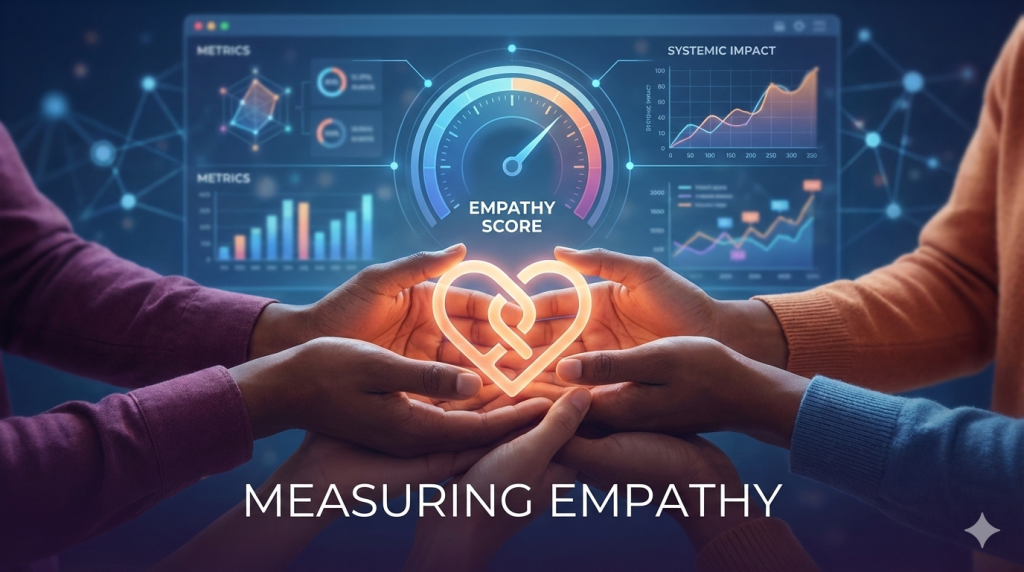
Why Qualitative Data is the Soul of Innovation

Beyond the Dashboard

LAST UPDATED: November 16, 2025 at 09:36PM

Why Qualitative Data is the Soul of Innovation

GUEST POST from Chateau G Pato

In today’s business landscape, “data-driven” has become the mantra. We are awash in dashboards, metrics, KPIs, and algorithms, all designed to give us a clear, quantifiable picture of performance. And rightly so—quantitative data is essential for measuring results, optimizing processes, and identifying trends. But what if I told you that in our relentless pursuit of the “what,” we are often missing the much more powerful “why”?

The truth is, true innovation—the kind that creates new markets, delights customers in unexpected ways, and genuinely changes human behavior—rarely springs from a spreadsheet. It emerges from deep empathy, nuanced understanding, and the ability to connect seemingly disparate observations. This is the domain of qualitative data. It’s the soul of innovation, breathing life into the numbers and revealing the human stories behind the trends.

For human-centered change leaders, mastering the art of qualitative inquiry isn’t just a research technique; it’s a foundational leadership skill. It’s about listening more deeply, observing more keenly, and seeking the unspoken needs that dashboards simply cannot illuminate.

What is Qualitative Data?

Qualitative data describes qualities or characteristics. It is collected through methods that explore underlying reasons, opinions, and motivations, providing insights into the “why” and “how” of phenomena. Unlike quantitative data, which focuses on numbers and statistics, qualitative data deals with words, meanings, interpretations, and experiences.

Key Characteristics of Qualitative Data

To truly appreciate its power, understanding the fundamental characteristics of qualitative data is essential:

  • Exploratory: It seeks to understand concepts, opinions, or experiences rather than to measure them.
  • Contextual: It provides rich, in-depth understanding of a situation, problem, or human experience within its natural setting.
  • Interpretive: It relies heavily on the researcher’s interpretation of observations and conversations, seeking patterns and meanings.
  • Non-numerical: Its focus is on descriptions, narratives, and meanings, rather than statistical analysis.
  • Emergent: Key themes, hypotheses, and insights often surface organically during the data collection and analysis process, rather than being pre-defined.

Key Benefits for Innovation

Embracing qualitative data moves innovation from a mechanistic process to a deeply human one, unlocking several crucial benefits:

  • Uncovering Unmet Needs: It reveals pain points, desires, and behaviors that customers can’t articulate or that quantitative data masks. This is where breakthrough ideas truly lie, often in the subtle nuances.
  • Deep Empathy: Direct observation and conversation build a profound understanding of users’ lives, motivations, and emotional drivers, which is critical for designing truly human-centered solutions.
  • Contextual Understanding: It explains why a dashboard metric is fluctuating, or how a process is actually being used (or circumvented) in real-world scenarios, providing the “story behind the numbers.”
  • Idea Generation & Validation: Qualitative insights fuel powerful ideation, providing concrete human problems to solve, and then allow for rapid, iterative validation of concepts with real users.
  • Sense-Making in Complexity: In complex, ambiguous situations, qualitative data helps make sense of divergent perspectives and synthesize them into coherent pathways forward, offering clarity amidst chaos.
  • Building Organizational Stories: Human stories gleaned from qualitative research are far more powerful for galvanizing teams and stakeholders around a shared vision than charts and graphs alone, fostering engagement and buy-in.

Case Study 1: Re-imagining the Commute Experience

Challenge: Stagnant Public Transportation Ridership

A metropolitan transit authority was seeing stagnant ridership despite investments in new train cars and minor schedule adjustments. Their dashboards showed ridership numbers, peak times, and route popularity, but offered no insights into why people chose not to ride or why existing riders were sometimes dissatisfied.

Qualitative Intervention:

Instead of relying solely on quantitative surveys, the authority deployed ethnographic researchers. They rode trains and buses, interviewed commuters during their journeys, observed behavior at stations, and conducted in-home interviews about daily routines. They specifically looked for “un-articulated needs” and “workarounds.”

The Human-Centered Lesson:

What emerged was fascinating. Dashboards highlighted efficiency, but qualitative research revealed an emotional dimension: stress. Commuters felt a profound lack of control, from unpredictable delays to confusing information displays, to the anxiety of missing connections. One key insight: many commuters loved their “third space” (headphones, reading) but hated interruptions. This led to innovations like clearer real-time digital signage inside the cars, predictive arrival times on personal apps, and even small, quiet zones. These changes weren’t about speed, but about alleviating stress and increasing a sense of control and predictability—factors the numbers alone never revealed. Ridership subsequently increased, driven by an improved “emotional experience” rather than just functional efficiency.

Case Study 2: Understanding Small Business Lending Friction

Challenge: Low Adoption of Digital Lending Platform

A large bank launched a sophisticated new digital platform for small business loans, expecting high adoption. While dashboards showed a few initial users, conversion rates were low, and traditional loan applications still dominated. The quantitative data only indicated a problem, not its root cause.

Qualitative Intervention:

The bank’s innovation team conducted in-depth interviews with small business owners, observed them attempting to navigate the new platform, and even shadowed them during their busy workdays. They engaged in “contextual inquiry” to understand their daily challenges beyond just financial needs.

The Human-Centered Lesson:

The qualitative insights were striking. The digital platform was designed with a “big business” mindset, asking for detailed projections and complex financial statements that many small business owners, especially sole proprietors or new ventures, didn’t have readily available or structured in that format. They weren’t “digital averse”; they were “complexity averse” and “time-poor.” The qualitative research revealed their deep fear of making a mistake, of being judged, and the overwhelming feeling of paperwork. The solution wasn’t just to simplify the platform, but to introduce a human element: a “digital concierge” chatbot backed by human support, designed to guide them through the process in plain language, pre-populate forms with existing bank data, and reassure them at each step. This blended approach addressed the human anxiety, leading to a significant increase in digital platform adoption, proving that even a digital solution needs a human touch based on qualitative understanding.

Beyond Metrics: Cultivating a Qualitative Mindset

Integrating qualitative data means cultivating a new mindset within your organization. It means valuing stories as much as statistics, curiosity as much as certainty, and empathy as much as efficiency. It requires leaders to:

  • Get Out of the Office: Actively seek opportunities to spend time with customers, employees, and partners in their natural environments.
  • Ask “Why” (Five Times): Don’t settle for surface-level answers. Probe deeper to uncover root causes and underlying motivations.
  • Practice Active Listening: Hear not just words, but emotions, hesitations, and unspoken needs. Truly listen to understand, not just to respond.
  • Embrace Ambiguity: Qualitative data is messy; it doesn’t fit neatly into charts, but that’s precisely where the richest, most transformative insights reside. Be comfortable with uncertainty as you explore.

Dashboards show us the health of the body, but qualitative data reveals the beating heart and the dreams within the mind. To truly innovate in a human-centered way, we must look beyond the quantifiable surface and connect with the profound, often unstated, human truths that qualitative inquiry uncovers.

“Numbers tell us how many people clicked. Stories tell us why they might click next time.”

Your first step towards qualitative insight: Identify one critical customer journey or internal employee process that is currently under-performing or causing frustration. Instead of immediately diving into metrics, schedule five 30-minute, open-ended conversations with individuals who experience that journey or process daily. Ask them to describe their biggest challenges, unexpected moments, and what they secretly wish could be different. Just listen, without judgment or interruption, and take diligent notes. The insights you gain will be invaluable.

Extra Extra: Because innovation is all about change, Braden Kelley’s human-centered change methodology and tools are the best way to plan and execute the changes necessary to support your innovation and transformation efforts — all while literally getting everyone all on the same page for change. Find out more about the methodology and tools, including the book Charting Change by following the link. Be sure and download the TEN FREE TOOLS while you’re here.

Image credit: Dall-E

Subscribe to Human-Centered Change & Innovation WeeklySign up here to get Human-Centered Change & Innovation Weekly delivered to your inbox every week.

Leading by Letting Go in an Agile World

The Paradox of Control

LAST UPDATED: November 14, 2025 at 12:18PM

Leading by Letting Go in an Agile World

GUEST POST from Chateau G Pato

Leadership often feels like a constant struggle to maintain control — of outcomes, resources, and people. This desire for centralized control is deeply ingrained, inherited from the industrial-era operating model built for predictability and repetition. But today’s reality is constant, chaotic change. In an Agile World, where market feedback is instantaneous and disruption is the norm, the leader who grasps the tightest is the leader who falls furthest behind.

This is the Paradox of Control: The more leaders try to exert granular control over their teams and processes, the more they actively suppress the very agility, innovation, and resilience required to succeed. True leadership is not about having all the answers; it is about designing the systems, boundaries, and safety nets that empower others to find the best answers locally. It is leading by letting go.

Moving from a “command” structure to a “context” structure is the single most important human-centered change a modern organization can undertake. It redefines the leader’s role from a solver to an architect.

The Two Axes of Control: Why Centralization Fails

Centralized control fails because it creates debilitating friction across two key axes:

1. The Speed Axis (Time-to-Decision)

In a hierarchical model, low-level problems must travel up several layers for approval and budget allocation. This process adds significant time-to-decision latency. When market demands or customer needs change instantly, a decision that takes two weeks to escalate and approve is functionally worthless. Decisiveness at the top slows the entire organization at the bottom.

2. The Knowledge Axis (Context Drain)

The further a problem travels from the front line — where the customer is talking, the product is breaking, or the process is jamming — the more context is drained from the data. By the time a decision reaches the executive level, it is often based on sanitized, summarized, or incomplete information, leading to sub-optimal choices. The people closest to the work are always the ones who know the most about the work.

The Solution: Control by Context and Guardrails

The human-centered solution is not anarchy; it is structured autonomy. Leaders trade procedural control for control over the boundaries and outcomes.

1. Define the Guardrails (The Non-Negotiables)

Guardrails are the strategic and legal constraints that teams cannot cross (e.g., maximum budget allocation, regulatory compliance, brand safety standards). The leader’s job is to define these constraints with absolute clarity and delegate everything outside of them. This answers the question: “What is the biggest mistake you are empowered to make?”

2. Establish the Context (The North Star)

The leader must tirelessly communicate the North Star — the company’s mission, its top strategic priorities, and the “Why” behind the current change initiative. When teams have a crystal-clear understanding of the context, they can make decentralized decisions that are 90% likely to align with executive intent. This minimizes the need for centralized approvals.

3. Decentralize Decision Rights (The Speed Multiplier)

As we explored in previous work, Decision Rights must be explicitly pushed down to the edge of the organization. If a team owns the metric (e.g., customer satisfaction score), they must own the budget and authority needed to improve it. Control shifts from the leader’s approval to the team’s accountability.

Case Study 1: The Software Company and the Release Train

Challenge: Slow Feature Deployment and Executive Micromanagement

A B2B software company suffered from release cycles that often exceeded nine months. The CEO, nervous about bugs, had to personally approve every major feature launch, slowing the organization to a crawl. Developers became cynical, knowing their work would be stalled by top-level scrutiny.

The Intervention: Leading by Letting Go

The company shifted to a “context-over-control” model by implementing a Scaled Agile framework. Crucially, the CEO defined a single, non-negotiable Guardrail: No feature could ship if its code quality score was below 95% (an objective, automated metric). Once that standard was met, the authority to ship was permanently delegated to the Product Owners on the development teams. The CEO stopped attending release reviews. The CEO’s new role became auditor of the guardrail and communicator of the North Star (improving time-to-market).

The Paradox of Control Realized:

By letting go of the decision (when to ship), the CEO gained control over the outcome (quality and speed). Feature release cycles dropped from nine months to six weeks, and code quality actually improved due to the clear, objective guardrail.

The Human-Centered Shift: From Hero to Gardener

The transformation required by the Paradox of Control is profoundly human. It requires the leader to abandon the image of the Hero — the person who swoops in to solve every problem — for the role of the Gardener.

The Gardener creates the ideal conditions for growth: rich soil (clear resources), sunlight (context and mission), and strong fences (guardrails). The Gardener does not control how the seeds (teams) grow, but ensures the environment maximizes their potential. This shift builds psychological safety and trust, which are the oxygen of innovation and resilience.

Case Study 2: The Healthcare Provider and Decentralized Compliance

Challenge: Excessive Compliance Friction in Patient Care

A large hospital system was struggling with high administrative costs and physician frustration. Every procedural change, even small ones aimed at improving patient flow, required sign-off from a centralized compliance office, leading to delays and workarounds that actually increased risk.

The Intervention: Control via Defined Accountability

Leadership recognized that the compliance office was trying to maintain control over process instead of risk. The intervention created a Decentralized Accountability Model. The centralized compliance team shifted their role from approver to designer of auditable compliance playbooks. They gave specific patient-care teams (e.g., Emergency Room staff) the authority to rapidly trial new process improvements, provided they documented the changes and adhered to pre-defined, measurable Risk Guardrails (e.g., HIPAA compliance, maximum wait time reduction goals). Audits were then performed immediately after the change was deployed, not before.

The Paradox of Control Realized:

By decentralizing authority over process, the organization gained greater control over risk. Risk exposure was actually reduced because teams could quickly implement official, documented solutions instead of creating risky, undocumented workarounds to solve immediate patient problems. Speed increased while anxiety decreased.

Conclusion: The Highest Form of Control

Leading by letting go is not passive leadership; it is the highest, most complex form of strategic control. It requires a leader to shift their energy from managing transactions to designing the organizational architecture.

The Paradox of Control asserts that your power isn’t in your ability to dictate, but in your ability to define the boundaries within which your empowered people can execute with speed and confidence. This is how you embed true agility and build a resilient, human-centered organization.

“The moment you stop seeking control over the how, you gain absolute control over the what.”

Your first step to leading by letting go: Select one low-risk, high-friction decision currently handled by you, define two non-negotiable Guardrails for it, and permanently delegate the decision authority to the team closest to the work.

Extra Extra: Because innovation is all about change, Braden Kelley’s human-centered change methodology and tools are the best way to plan and execute the changes necessary to support your innovation and transformation efforts — all while literally getting everyone all on the same page for change. Find out more about the methodology and tools, including the book Charting Change by following the link. Be sure and download the TEN FREE TOOLS while you’re here.

Image credit: Pexels

Subscribe to Human-Centered Change & Innovation WeeklySign up here to get Human-Centered Change & Innovation Weekly delivered to your inbox every week.
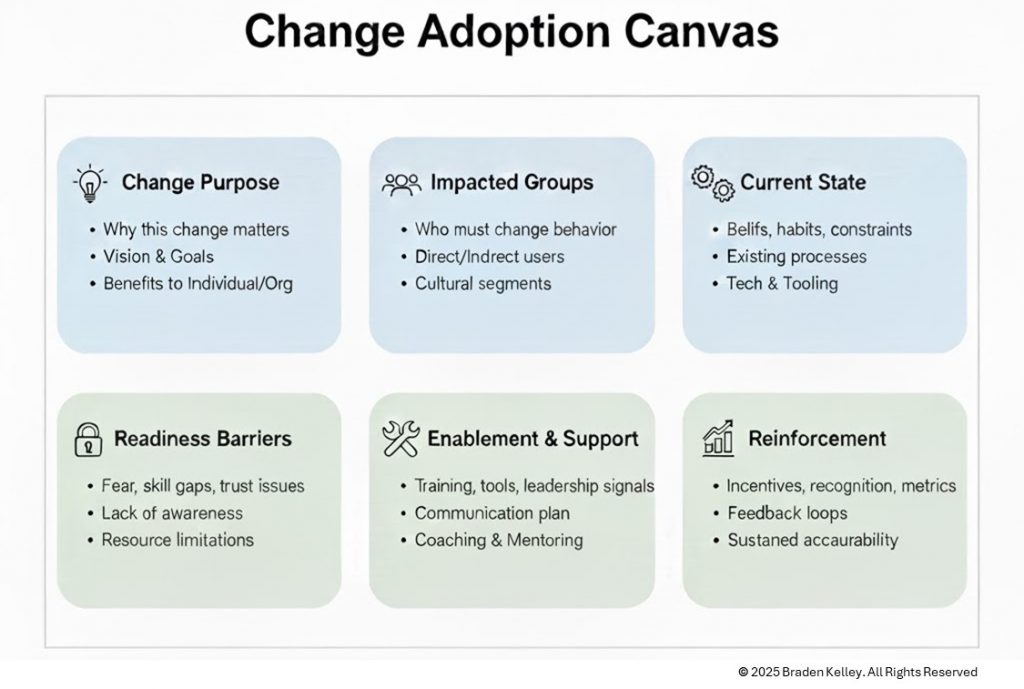
The Venture Client Model

Bringing the Outside In for Internal Disruption

LAST UPDATED: November 13, 2025 at 1:23PM
The Venture Client Model

GUEST POST from Chateau G Pato

For decades, large corporations have wrestled with a critical innovation problem: how to access the speed and agility of the startup ecosystem without choking it with bureaucracy or overpaying through premature acquisition. Corporate Venture Capital (CVC) offered a financial window, but often failed to translate investment into operational change. The solution is not more capital; it’s a new engagement model built on a human-centered relationship: the Venture Client Model.

The Venture Client Model transforms the relationship between the corporation and the startup. Instead of acting as a passive investor, the large company acts as a first, paying client — a crucial lighthouse customer. The startup receives a contract (not just equity) and the opportunity to pilot its technology within a real, complex industrial environment. The corporation, in turn, gains early, de-risked access to disruptive solutions and the ability to test future technologies for internal applications.

This model is inherently human-centered because it focuses on solving real, internal pain points with external ingenuity, forcing a necessary friction between established internal process and external disruptive speed. It moves innovation from the periphery of financial investment directly into the core of operational value creation, where change truly impacts the customer and the bottom line.

The Three Pillars of the Venture Client Advantage

The success of the Venture Client Model hinges on its unique structure, which addresses the primary failures of traditional internal R&D and CVC:

1. De-Risked Operational Access (The Speed Multiplier)

Traditional procurement processes are an innovation killer. They are designed for stability, not speed. The Venture Client Unit (VCU) operates with its own streamlined legal and commercial framework, allowing for the rapid deployment of proof-of-concept projects. This structure allows a startup solution to enter the corporate environment in weeks, not months, dramatically accelerating the time-to-value.

2. Focused Pain Point Sourcing (The Value Anchor)

Unlike traditional CVC, which often chases market hype, the VCU starts by rigorously identifying the top five systemic pain points within the parent organization (e.g., slow supply chain traceability, high energy consumption in a factory). They then source startups specifically to solve those problems. This ensures that every pilot project is anchored to an immediate, quantifiable operational return, overcoming internal resistance by delivering proven, tangible value right away.

3. Internal Cultural Catalyst (The Mindset Shift)

The most profound impact of the Venture Client Model is internal. When a lean, external solution fixes a multi-million-dollar internal process in six weeks, it creates a powerful cultural catalyst. It shows internal teams what is possible outside the traditional, risk-averse framework, directly increasing the Adaptability Quotient (AQ) of the workforce. It changes the mindset from “we can’t do that” to “who outside can help us do this?”

Case Study 1: The Automotive OEM and Process Optimization

Challenge: Inefficient Factory Floor Logistics

A major European automotive manufacturer was suffering from production bottlenecks due to outdated manual logistics tracking on its assembly lines. Traditional internal R&D struggled to find a quick, cost-effective solution that could integrate with decades-old legacy systems. The internal solution required a full-scale IT overhaul, demanding years and hundreds of millions.

Venture Client Intervention:

The manufacturer’s VCU identified a small startup specializing in computer vision-based inventory tracking. Within a specialized procurement sandbox, the VCU ran a three-month pilot. The startup’s off-the-shelf software was integrated with existing CCTV infrastructure to track component flow automatically. The result was a 15% reduction in assembly-line bottlenecks and an immediate, visible ROI. The manufacturer then scaled the solution across five factories within the next year.

The Human-Centered Lesson:

The success was not just technological; it was methodological. The Venture Client process forced internal operations teams to collaborate with a nimble external party on a real, immediate problem, breaking down “Not Invented Here” bias and proving the viability of external solutions.

The Crucial Distinction: Client vs. Investor

The Venture Client is fundamentally different from Corporate Venture Capital (CVC). CVC focuses on a financial return in 5-7 years, often funding startups outside the corporation’s direct operational sphere. The Venture Client focuses on an operational return in 6-12 months. The contract is for a product or service (not equity), though VCU often has an option for future equity if the pilot is successful. This immediate operational focus ensures that the initiative remains aligned with core business needs, securing necessary internal sponsorship.

Case Study 2: The Infrastructure Firm and Predictive Maintenance

Challenge: Reactive Maintenance in Remote Infrastructure

A global energy infrastructure firm maintained thousands of remote assets (pipelines, wind farms) and relied on scheduled or reactive maintenance, leading to costly downtime and emergency fixes. The internal data science team was too small and too focused on existing predictive models to develop a radically new solution.

Venture Client Intervention:

The VCU scouted a specialized startup utilizing acoustic sensing and advanced machine learning to detect micro-leaks and component wear in real-time, long before traditional vibration sensors flagged an issue. The firm acted as the first commercial client, providing the startup with critical, large-scale training data from their assets. The pilot demonstrated an increase in lead time for critical fixes by three weeks. The firm then moved from a pilot contract to a large-scale, multi-year vendor contract, securing a strategic advantage in predictive asset management.

The Human-Centered Lesson:

This highlights the mutual value exchange. The corporation gained a strategic, proprietary solution and validated a technology stream. The startup gained a massive, credible reference customer and the data necessary to rapidly mature its AI model. It’s a win-win built on the human-centered need for speed (startup) and stability (corporation).

Conclusion: Scaling External Ingenuity

The Venture Client Model is the ultimate tool for scaling external ingenuity for internal disruption. It turns the largest corporate asset — its scale, its budget, and its pain points — into a magnet for innovation. By establishing a dedicated, de-risked commercial channel, corporations can access game-changing technologies on their own terms, transforming innovation from a high-stakes financial bet into a continuous portfolio of strategic pilots that accelerate organizational learning.

“Stop waiting for the big acquisition to disrupt your business. Start paying the right startups to solve your most urgent problems today. That is the Venture Client Model.” — Braden Kelley

Your first step toward building a Venture Client capability: Identify the single biggest operational bottleneck in your organization that costs over $5 million annually, and commit to finding an external startup solution to pilot it within 90 days.

Extra Extra: Because innovation is all about change, Braden Kelley’s human-centered change methodology and tools are the best way to plan and execute the changes necessary to support your innovation and transformation efforts — all while literally getting everyone all on the same page for change. Find out more about the methodology and tools, including the book Charting Change by following the link. Be sure and download the TEN FREE TOOLS while you’re here.

Image credit: Pexels

Subscribe to Human-Centered Change & Innovation WeeklySign up here to get Human-Centered Change & Innovation Weekly delivered to your inbox every week.

Innovation or Not – The Trackless Train

A Human-Centered Analysis

LAST UPDATED: November 13, 2025 at 1:23PM
Innovation or Not - The Trackless Train

GUEST POST from Chateau G Pato

In the urban mobility landscape, China’s Autonomous Rail Rapid Transit (ART) — colloquially known as the trackless train or trackless tram — has emerged as a major disruptive force. Operating on rubber tires guided by optical sensors and GPS along “virtual tracks” painted on the road, it mimics the capacity and ride quality of a light rail system without the immense cost and disruption of laying physical rails. The critical question for city leaders is: Does this technology satisfy a true Human-Centered Change imperative, or is it merely an aesthetically pleasing substitute?

Innovation, in my view, is defined by solving a problem with a solution that delivers orders of magnitude greater value to the end-user or the system. The trackless train is a powerful example of systemic innovation because it challenges the trade-off that has defined urban transit for a century: high capacity equals high infrastructure cost.

It sits squarely in the “mid-tier transit” niche, providing the capacity (up to 300-500 passengers) that traditional Bus Rapid Transit (BRT) often lacks, while avoiding the exorbitant cost ($100M+ per kilometer) and multi-year construction timelines of Light Rail Transit (LRT). This cost differential is the fundamental disruptive innovation, making high-capacity transit accessible to thousands of previously underserved cities.

The Three-Axis Innovation Test

To assess ART’s true innovative nature, we must evaluate it against three critical axes of change:

1. The Cost-Reduction Axis (Systemic Innovation)

The primary systemic innovation of the trackless train is the elimination of fixed steel rails. This massive reduction in civil engineering cost — with proponents suggesting installation for as little as $10M per kilometer compared to $130M per kilometer for LRT — is transformative for medium-sized cities globally. This enables cities previously locked out of high-capacity transit due to budget constraints to deploy a solution quickly. This is innovation by subtraction.

2. The User Experience Axis (Human-Centered Innovation)

For the passenger, the value proposition hinges on ride quality and reliability. ART leverages stabilization technologies borrowed from high-speed rail to offer a smoother, quieter ride than a standard articulated bus. Furthermore, its guidance system and dedicated lane operations (where implemented) ensure a higher level of punctuality and predictability than mixed-traffic buses. The rail-like aesthetic also positively impacts land use, encouraging development around stations much like traditional rail. The faster deployment time also means citizens get access to improved transit sooner, a key human-centered benefit.

3. The Operational Flexibility Axis (Adaptive Innovation)

Unlike fixed-rail systems, ART offers greater adaptive flexibility. The vehicles are bi-directional and, crucially, can temporarily leave their virtual track to navigate around accidents or construction, a capability impossible for LRT. This allows the system to remain resilient to unexpected urban disruption, delivering a less frustrated customer experience.

  • The Challenge: Critics argue that this flexibility undercuts its benefit, as it still operates in mixed traffic and lacks the legal permanence that fixed rail offers to developers for long-term investment guarantees.

Case Study 1: Yibin, China – The Speed and Cost Imperative

Challenge: Rapid Urban Expansion vs. Traditional Rail Cost

Yibin, a city in Sichuan, China, experienced rapid population growth and needed a mid-capacity transit solution quickly to connect the old city center with its new high-speed rail network. Traditional LRT was deemed too expensive and time-consuming for the required 17.7km line through dense urban areas.

ART Intervention:

Yibin adopted the ART system (Line T1). The line was constructed and made operational in less than a year at a cost estimated around $13M/km — significantly less than the cost of conventional light rail. The short deployment time was critical to connecting the new high-speed rail station to the city’s commercial hubs almost immediately upon its completion. The ART was able to deliver a rail-like experience — speed (up to 70kph) and capacity (300 passengers per train) — at an accelerated timeline, thereby redefining the transit delivery schedule constraint.

The Innovation Takeaway:

This case demonstrates the value of Time-to-Market Innovation. The ART solution allowed Yibin to unlock the economic benefits of its high-speed rail investment years earlier than a conventional project would have allowed. The combination of speed and cost proved to be the transformative change agent.

The Gadgetbahn Critique: Is it Just a Fancy Bus?

A significant, rational critique from the transit community dismisses ART as a “gadgetbahn” — a glorified articulated bus. Critics point out that the system still requires reinforced concrete guideways to handle the multi-axle steering and rubber wheels repeating the same trajectory, which can cause significant differential road wear and compromise the promised low disruption and quick deployment. This addresses a critical flaw in the infrastructure savings claim.

However, the innovation lies not just in the hardware, but in the integration of technologies — high-speed rail stabilization, sensor-fusion guidance (GPS, Lidar), and multi-car articulation — that collectively push it into a new capacity and ride-quality tier. It’s an example of combinatorial innovation, where existing technologies are synthesized to solve a previously intractable systemic problem. It is a bus platform elevated to a new class of service, offering a viable, lower-cost step between high-quality BRT and full LRT.

Case Study 2: Perth, Australia – The Policy Barrier Test

Challenge: Certifying a New Mid-Tier System in a Developed Market

Perth, Western Australia, was one of the first Western cities to commit to implementing ART. Their challenge was not technical feasibility, but rather overcoming the rigid, decades-old regulatory framework that recognizes only two categories: fixed rail and road vehicles (buses/cars). ART fits neither.

ART Intervention:

The Perth initiative received funding for certification and demonstration of the ART vehicle. The focus of the trial was less on performance and more on addressing the policy and safety assurance gap. This involved proving how the vehicle’s unique steering, braking, and guidance systems met stringent public transport safety standards, essentially forcing a regulatory body to create a new transit category. The investment here is in demonstrating the integrity of the system to a skeptical, risk-averse regulatory environment.

The Innovation Takeaway:

The Perth case highlights that Innovation is often a Policy Problem. The ART forces cities to rethink urban transit categories, creating a viable regulatory precedent for mid-tier transit globally. The innovation is the ability to adapt to, and ultimately change, the institutional environment required for mass-scale adoption.

Conclusion: Redefining the Rail Niche

The trackless train is more than a clever bus. It is a powerful disruptive innovation because it provides a high-value trade-off for urban planners: high capacity and quality at a fraction of the cost and time. While it will not replace subways or traditional high-density light rail, it creates a new, accessible rail niche for the thousands of medium-sized cities worldwide that need a step up from BRT but cannot afford LRT. It provides the capacity necessary to drive urban regeneration without the financial burden, fundamentally changing how we approach city-shaping.

“True innovation eliminates the impossible trade-off. The trackless train removes the ‘rail-or-bust’ constraint for millions of urban citizens.”

Your first step toward systemic innovation: Identify one systemic problem in your organization currently constrained by a high cost/high time trade-off, and challenge your teams to find a combinatorial solution that eliminates the cost barrier entirely, much like the trackless train.

Extra Extra: Because innovation is all about change, Braden Kelley’s human-centered change methodology and tools are the best way to plan and execute the changes necessary to support your innovation and transformation efforts — all while literally getting everyone all on the same page for change. Find out more about the methodology and tools, including the book Charting Change by following the link. Be sure and download the TEN FREE TOOLS while you’re here.

Image credit: Pexels

Subscribe to Human-Centered Change & Innovation WeeklySign up here to get Human-Centered Change & Innovation Weekly delivered to your inbox every week.