Category Archives: Futurology

Exploring the Role of Media and Technology in Shaping the Future

Exploring the Role of Media and Technology in Shaping the Future

GUEST POST from Chateau G Pato

The rapid advancement of technology and the ubiquitous presence of media have had a profound impact on the way we live and interact with the world around us. Our lives are now inextricably intertwined with media and technology, and as such, our future is being shaped by the way in which we engage with these two forces. This article will explore the role of media and technology in shaping the future, with a particular focus on two case studies.

The first case study is the impact of social media on the modern world. Social media has had a massive influence on the way we communicate, interact and consume information. For example, it has been credited with creating new forms of political activism, allowing people to organize and create communities around shared ideologies and causes. Social media has also had a tremendous impact on the way businesses operate, allowing companies to reach new customers, build relationships and gain insights into consumer behavior. The role of social media in shaping the future of our society is undeniable, as it continues to influence and shape the way we interact and engage with each other.

The second case study is the impact of artificial intelligence (AI) on our lives. AI has had a tremendous effect on the way we work, play, and interact with each other. AI-powered algorithms are being used to automate processes and improve efficiency, while AI-powered chatbots are becoming increasingly popular for customer service and support. AI is also being used to create personalized experiences for users, as well as to create intelligent recommendations for products and services. AI has the potential to dramatically change the way we interact with our environment, as well as the way we work, play, and live our lives.

In conclusion, media and technology have had a profound impact on the way we live and interact with the world around us. Our lives are now inextricably intertwined with media and technology, and as such, our future is being shaped by the way in which we engage with these two forces. Two case studies have been explored to illustrate this point, namely the impact of social media and the impact of AI. As technology continues to advance and media continues to be ubiquitous, it is clear that these two forces will continue to shape the future of our society and the way we live our lives.

Bottom line: Futurology is not fortune telling. Futurists use a scientific approach to create their deliverables, but a methodology and tools like those in FutureHacking™ can empower anyone to engage in futurology themselves.

Image credit: Pixabay

Subscribe to Human-Centered Change & Innovation WeeklySign up here to get Human-Centered Change & Innovation Weekly delivered to your inbox every week.

What is Ethnography?

What is Ethnography?

GUEST POST from Art Inteligencia

Ethnography is an important method of research in the social sciences, used to gain a detailed understanding of groups of people and their cultural practices. It involves the observation of a group’s behavior, language, beliefs, values, and interactions with their environment. Ethnographers often conduct interviews and surveys in order to gain a deeper understanding of their subjects.

The goal of ethnography is to provide an in-depth understanding of the culture of a group of people. This includes looking at the group’s history, language, and material culture, as well as its social and political structures. Ethnographers also examine the group’s rituals, beliefs, and values. By looking closely at the different elements of a culture, ethnographers can develop an understanding of how the group interacts with its environment and with other groups.

An ethnographer’s primary tool is observation. Ethnographers must observe their subjects in their natural environment and take note of their behavior, language, and interactions. They may also conduct interviews and surveys in order to gain a better understanding of the group’s beliefs and values.

Ethnographers need to be aware of their own biases and preconceptions, as these can influence the results of their research. They must also consider the ethical implications of their research and ensure that their subjects are treated with respect.

The primary purpose of ethnography is to gain an understanding of a particular culture and its people. This understanding can be used to inform policy decisions and to improve the lives of the people being studied. Ethnographers may also use their research to create educational materials or works of art.

Ethnography is an invaluable tool for understanding the diversity of cultures around the world. By observing and recording the behavior, beliefs, and values of a group of people, ethnographers can gain an understanding of their culture and how it interacts with its environment. This understanding can be used to inform policy decisions and improve the lives of the people being studied.

Image credit: Unsplash

Subscribe to Human-Centered Change & Innovation WeeklySign up here to get Human-Centered Change & Innovation Weekly delivered to your inbox every week.

Five Keys to Doing Good Secondary Research

Five Keys to Doing Good Secondary Research

GUEST POST from Art Inteligencia

The success of any research project is determined by the quality of the research conducted. Good secondary research is essential for any research project, as it helps to provide background information, develop hypotheses, and identify gaps in knowledge. Here are some key tips to ensure you’re conducting effective secondary research:

1. Identify a clear research question

Before you start any research, it’s important to have a clear understanding of what you’re looking to learn. Having a clear research question will help to guide your research, and ensure that you’re focusing on the right sources.

2. Choose reliable sources

The quality of your research is only as good as the sources you use. When conducting secondary research, it’s important to use reliable sources such as peer-reviewed journals, government documents, and scholarly books.

3. Consider credibility

As well as using reliable sources, it’s important to consider the credibility of the authors you’re citing. Are they experts in the field? Do they have any biases or conflicts of interest that could affect the quality of their research?

4. Analyze data and trends

Secondary research is all about analyzing existing data and identifying trends. It’s important to assess the data critically, and look for patterns, correlations, and inconsistencies.

5. Draw conclusions

Once you’ve collected and analyzed the data, it’s time to draw conclusions. Make sure to consider all of the evidence you’ve gathered, and draw conclusions that are supported by the data.

By following these tips, you can ensure that your secondary research is of the highest quality. Good secondary research is essential for any research project, and following these key tips will help you to ensure that your research is successful.

Image credit: Pixabay

Subscribe to Human-Centered Change & Innovation WeeklySign up here to get Human-Centered Change & Innovation Weekly delivered to your inbox every week.

13 Principles for Navigating the New Decade Ahead

13 Principles for Navigating the New Decade Ahead

GUEST POST from Robert B. Tucker

In 2009, after a speech at the St. Petersburg International Economic Summit (Russia’s Davos), I wandered into a panel discussion on the topic of trade wars, led by New York Times columnist Thomas Friedman. My thought was: “why this topic?” Trade wars were not on most people’s radar, certainly not mine.

But the question is: should they have been?

I’ve been ruminating of late about this notion of one’s “radar” in relation to the world of rapid change that we are living in. Looking back at three decades advising companies on innovation strategy, I’ve noticed how little progress has been made in the field of strategic forecasting. Looking ahead at the 2020s, I see a dire need to reinvent the process by which we get to the future first.

In this next decade, businesses and their leaders will rise or fall based on their ability to anticipate and creatively respond to rapid change. That said, how exactly does one “anticipate and creatively respond” to change in an era when so much of what is happening –from the onset of the Global Financial Crisis to the rise of Donald Trump to the outbreak of a trade war with China — seems unpredictable.

Predicting the future will always remain problematic, even with the coming of prediction algorithms. But guidelines in this realm to help us navigate this new and turbulent world of hyper-change are due for improvement. Here are 13 that you may want to consider:

1. Create your own early warning system. Don’t expect others to spot trends, or to recognize threats and opportunities for you. Instead, we must all get better at looking, thinking and acting ahead of the curve. I call this process managing the future, as it combines the tools of technology scouting, forward thinking, competitive intelligence, strategic thinking, and scenario planning.

2. Think like a futurist. Economists primarily track one type of trend: economic. Futurists by contrast attempt to systematically explore predictions and possibilities about the future and how they can emerge from the present. Learn all you can from economists and other specialized experts. But expand your range over the entire landscape of driving forces of change and mega-trends: workplace, demographic, social, regulatory, environmental, geopolitical and technological. Develop insights into each important trend and add insights as you go.

3. Audit your information diet. Read voraciously and widely, and audit your information intake periodically. Move from passively “getting informed” to actively “being informed.” Pay greater attention to the external environment, and to events seemingly on the periphery. When you walk through an airport, ask questions of yourself. Scan the magazine racks for trends and cover story trends. Eavesdrop on the conversations around you. What’s the buzz? When you’re on social media, or sorting through junk mail, look for what’s new, what’s incongruous, exciting to you.

4. Connect the dots. Former Disney futurist Yvette Montero Salvatico uses the analogy of the night sky. As you look up into the night sky, Salvatico advises us to think of the stars as trends. As you look further, you begin to notice constellations as patterns: Ursa Major (the Big Dipper), Aries, Taurus, Gemini, Cancer, etc. To manage the future proactively, ponder how the trends interrelate, and focus on recognizing patterns. How you “connect the dots,” and make connections between bits of information requires that you hit “refresh” and maintain an open mind as you consume information. Challenge your own assumptions about where emerging trends are headed, and the implications broadly, and on how you and your organization might best respond.

5. Turn emerging trends into new solutions and adaptations. When Jeff Immelt was fired from his CEO position at General Electric, one criticism was that he “chased trends.” No question, trends can become “bright shiny objects” that some pursue without due diligence. But in today’s world, speed of observation of a trend or development (or threat) and translating that into responsive actions is the often the source of competitive advantage. Innovation means seizing the opportunities that change reveals, taking calculated risks, and translating hindsight, insight and foresight into strategic action. “The best way to predict the future is to invent the future.”

6. Every action you take today shapes the future tomorrow. We must be purposeful in realizing that our individual actions – and time perceptions – create the future. This “spot a change, create a response” mindset will become the touchstone of innovation for the vast majority of businesses, regardless of industry in this new decade. It will affect businesses and individuals over the coming decade.

7. Study companies that “didn’t see it coming,” and were blindsided. The grocery industry “didn’t see it coming” when Amazon jumped into its business with the purchase of Whole Foods, destroying 22 billion in market value overnight. Merced Property and Casualty, an insurance company in Northern California, didn’t see the impacts of climate change coming, when a raging wildfire wiped out 22,000 structures and the entire town of Paradise, California. Unable to pay millions in claims, Merced became insolvent as a result. Or the textbook publisher in Boston who was running a $200 million business unit, when over a three-year period, sales begin to plummet. He, along with thousands of others, were put out of work. Reverse engineer in order to learn from other’s experience, and endeavor to not only “see it coming” but to take responsive action.

8. Practice getting better at predicting. There’s an old Danish Proverb that says, “Predictions are hard, especially about the future.” But not always impossible. Example: I predict that in 10 years you’ll be ten years older. So will millions of other people your age. Demographic trends – ages and life stages — and certain other trends can not only be predicted but projected farther into the future with great accuracy as to what you need to do to be prepared, and to capitalize on trends. The aging of baby boomers means that within just a couple decades, older people are projected to outnumber children for the first time in U.S. history. By 2035, there will be 78 million people 65 years and older compared to 76 million under the age of 18.

9. Look back in order to look farther ahead. On a recent visit to Morocco, I and my fellow travelers learned that the oldest homo sapiens fossil remains are 300,000 years old. This is 100,000 years older than previously believed! Look back to look ahead. Contemplate the future as it appeared to people 30, 300 and 3000 years ago. Read history and biography and talk to wise persons in their 80s and 90s to see into the past more clearly. Looking back makes it easier to look ahead because you have a better sense of what are fads and what are more deep-seated trends. As Churchill put it, “the further backwards you can look, the farther forward you can see.”

10. Dream big. Think big. Contemplating where you want to go and how you intend to get there is time well spent. In fact, it is a hallmark of every successful individual. The power of prospection is what makes us able and willing to look into the future, consciously and unconsciously, and is a central distinguishing trait of us humanoids. Yet modern life crimps our “dream space” and ability to imagine. Set goals and embrace your boldest dreams.

11. Beware the backlash. If a trend or development cannot continue indefinitely in a particular direction, it will reverse course at some point. Sometimes jarringly. The term for this phenomenon is “backlash,” meaning a strong and adverse reaction by a large number of people, to a social or political or technological development. Look for the backlash effect to occur frequently over the next decade, and not just in the arena of politics.

12. Identify cycles in history, in nature, in lives lived. To contemplate cycles — whether economic cycles, business cycles, geological cycles, or monthly cycles (to name only a few) is to literally think ahead of the curve in terms of where this cycle should head next. As talk of an impending economic downturn takes hold in the business world, executives can take thoughtful and proactive steps to help their companies better weather the storm.

13. Disrupt yourself. Disrupting yourself means asking tough questions. If you were attacking you, how would you go about it? To disrupt yourself, break down the essence of your personal value proposition. What’s unique about that value? And most importantly, how are you using your insights into the trends, to add value and differentiate “You, Incorporated.”

The biggest challenge over the next ten years will not be “the future,” but how you navigate your future, and the steps you take to remain relevant.

This article originally appeared in Forbes
Image credit: Pixabay

Subscribe to Human-Centered Change & Innovation WeeklySign up here to get Human-Centered Change & Innovation Weekly delivered to your inbox every week.

The Adaptive Mindset

Using Scenario Planning for Daily Decisions

LAST UPDATED: February 25, 2026 at 5:36PM

The Adaptive Mindset = Using Scenario Planning for Daily Decisions

GUEST POST from Art Inteligencia

I. Introduction: The Fallacy of the “Fixed” Future

In the fast-paced world of innovation, our greatest enemy isn’t a lack of ideas—it’s the “Certainty Trap.” Most professionals operate under the subconscious assumption that tomorrow will simply be a linear projection of yesterday. We make daily decisions based on a “fixed” future, assuming our meetings will go as planned, our technology will hold steady, and our colleagues will react predictably.

“Data is just a signal; insight is the story. When we fail to look at multiple scenarios, we stop reading the story and start reacting to the noise.”

To build truly adaptive organizations, we must shift from reactive problem-solving to proactive navigation. This requires a fundamental mindset shift: viewing scenario planning not as a once-a-year executive retreat, but as a practical tool for a Tuesday morning.

The Core Thesis

Scenario planning is the ultimate antidote to the “innovation blindness” caused by routine. By integrating foresight into our daily rhythm, we protect our most valuable asset—Trust. When we anticipate the human impact of our choices, we ensure we don’t accidentally spend our “trust currency” on short-term gains like intrusive surveillance or rigid, data-blind processes.

This article explores how you can bring high-level strategic foresight down from the ivory tower and into the rhythm of your daily digital interactions.

II. The Core Components of Daily Scenario Thinking

To bring scenario planning into your daily workflow, we must strip away the complex spreadsheets and focus on the human-centered variables that actually drive outcomes. In innovation, we aren’t just managing tasks; we are managing expectations and shifting behaviors.

1. Identifying the “Critical Uncertainties”

Every day, there are one or two variables that carry a disproportionate amount of weight. Instead of tracking fifty metrics, ask yourself: What are the 2–3 factors today that could fundamentally change my expected outcome?

  • The Human Factor: Is a key stakeholder’s buy-in dependent on a specific mood or a previous interaction?
  • The Technical Factor: Is your delivery dependent on a “digital phenotype”—a specific rhythm of data or tool performance that could fluctuate?
  • The Environmental Factor: Is an external delay (like a missed email or a shifted deadline) going to ripple through your afternoon?

2. The “Rule of Three”

In a fast-moving environment, you don’t have time for ten scenarios. You only need three to maintain dynamic consistency:

Scenario Description
The Best Case Everything goes to plan. How do we capitalize on this momentum?
The Probable Case Minor friction occurs. What is the “good enough” path forward?
The Pivot Case A critical uncertainty swings negative. What is our immediate alternate route?

3. Signal vs. Noise

As we learn to “read the stories written in the rhythm of our daily interactions,” we must distinguish between a temporary glitch and a systemic shift. Daily scenario planning gives you the “decoder ring” to see if a late response is just a busy colleague (noise) or a signal that trust is beginning to erode in a partnership (story).

III. A 5-Minute Framework for Daily Use

Innovation isn’t found in the grand gestures; it’s hidden in the efficiency of our daily habits. To make scenario planning sustainable, it cannot be a burden. It must be a rhythm. Here is how to apply high-level strategic foresight in the time it takes to drink your morning coffee.

Step 1: The Morning Scan (60 Seconds)

Review your calendar and identify the “High-Stakes Interaction” of the day. This isn’t necessarily your longest meeting—it’s the one where your “trust currency” is most at risk or where a pivot could yield the highest innovation dividend.

Step 2: The Rapid Pre-Mortem (2 Minutes)

Perform a mental time-travel exercise. Imagine it is 5:00 PM and that high-stakes interaction was a disaster. Why did it happen?

  • Did the data signal fail to convey the human story?
  • Was there a disconnect in the “digital rhythm” of the collaboration?
  • Did a lack of transparency erode the foundation of trust?

By identifying the failure points before they happen, you can adjust your approach in real-time.

Step 3: The Contingency Trigger (2 Minutes)

To avoid Decision Fatigue, pre-load your reactions. Define your “If/Then” thresholds for the day. This ensures that when a signal changes, you aren’t stuck in analysis paralysis; you are already moving.

Key insight: Remember that “agility is the ability to move with intent.” Your Contingency Trigger is the bridge between intent and action.

Example: “If the client hasn’t responded to the proposal by 2:00 PM (Signal), Then I will send a personalized video summary (Pivot) to maintain the story and human connection, rather than just another follow-up email (Noise).”

IV. Human-Centered Innovation: Trust as the Filter

In the digital age, we are often tempted to optimize for efficiency at the expense of empathy. But as a change leader, I’ve seen that the most sophisticated innovation fails if the human element is ignored. When using daily scenarios, Trust must be the primary filter through which every “Pivot” case is viewed.

The Ethics of Daily Choice

Every decision we make either deposits into or withdraws from our organizational “Trust Bank.” When we use scenario planning to navigate digital interactions, we must ask: Are we using this foresight to empower our people, or to monitor them?

  • The Surveillance Trap: It is easy to use “daily signals” to create a culture of surveillance. Once you spend your trust currency on monitoring, you can never buy it back.
  • The Insight Opportunity: Conversely, when we use digital phenotyping to understand the story—such as recognizing that a team’s erratic rhythm is a sign of burnout rather than a lack of discipline—we use innovation to protect the human spirit.

💡 Pro-Tip from Braden Kelley

“Innovation is a team sport. If you are the only one who knows the ‘Scenario Plan’ for the day, you aren’t leading—you’re just managing. Share your ‘Pivot Case’ with your team to build a shared mental map and reinforce psychological safety.”

Collaborative Foresight

Trust is built when people feel they are part of a resilient system. By openly discussing daily scenarios with your team, you move from a culture of “What happened?” to a culture of “What if?”. This transparency ensures that even when a “Pivot Case” occurs, the team remains aligned because they were part of the story from the beginning.

As you look at your next big project, remember to emphasize that the tools are only as good as the trust they enable. Use your daily foresight to build a bridge, not a barrier.

V. Overcoming the “Certainty Trap”

Our biology is often at odds with the needs of modern innovation. Human brains are hardwired to crave a single, predictable narrative—this is the “Certainty Trap.” We naturally cling to a specific plan because it feels safe, even when the digital signals around us are screaming that the story has changed.

The Psychological Barrier

The “Certainty Trap” manifests as sunk-cost bias. We’ve invested time into Plan A, so we ignore the “Pivot Case” until it is too late. To overcome this, we must recognize that the rhythm of daily interactions is fluid, not static. Holding on to an outdated plan isn’t being “decisive”—it’s being innovation-blind.

The Solution: Embracing “Dynamic Consistency”

How do we stay stable while remaining fluid? The answer is Dynamic Consistency. This means you remain unwavering in your ultimate goal (the “Why”) while staying completely flexible in your daily tactics (the “How”).

The Old Way: Rigid Execution The New Way: Dynamic Consistency
Following the checklist regardless of feedback. Using daily signals to adjust the checklist in real-time.
Focusing on the “Signal” (data points). Focusing on the “Story” (human context and insights).

By making scenario planning a daily habit, you train your brain to stop fearing change and start anticipating it. You begin to see every “disruption” as simply a new page in the story of your innovation journey.

Section VI. Conclusion: Building the Muscle of Foresight

Foresight is not a crystalline prediction of the future; it is a metabolic function of a healthy organization. As we have explored throughout this article, the ability to anticipate disruption requires more than just data—it requires a cultural “muscle” that must be exercised daily.

“The future belongs to those who see possibilities before they become obvious. Building foresight is about moving from a state of constant ‘recovery’ to a state of ‘readiness’.”

To successfully integrate foresight into your operational DNA, focus on these three final pillars:

  • Continuous Iteration: Treat your strategy as a living document that breathes with market fluctuations.
  • Diverse Perspective: Actively seek voices that challenge your internal consensus to avoid blind spots.
  • External Provocation: Recognize that internal teams often need a catalyst to break through stagnant thinking.

As you look to bring these concepts to your next leadership summit, there is no voice more essential than Braden Kelley. As a premier innovation speaker, he specializes in transforming abstract foresight into concrete, scalable organizational habits.

Step into the future with a strategy that sticks.

Frequently Asked Questions

What does it mean to build the “muscle of foresight” in an organization?

It refers to the shift from reactive management to proactive readiness. By making trend analysis and scenario planning a daily metabolic function rather than a yearly event, companies can anticipate shifts in the market and act while competitors are still reacting.

How can a company transition from “innovation theater” to genuine strategic growth?

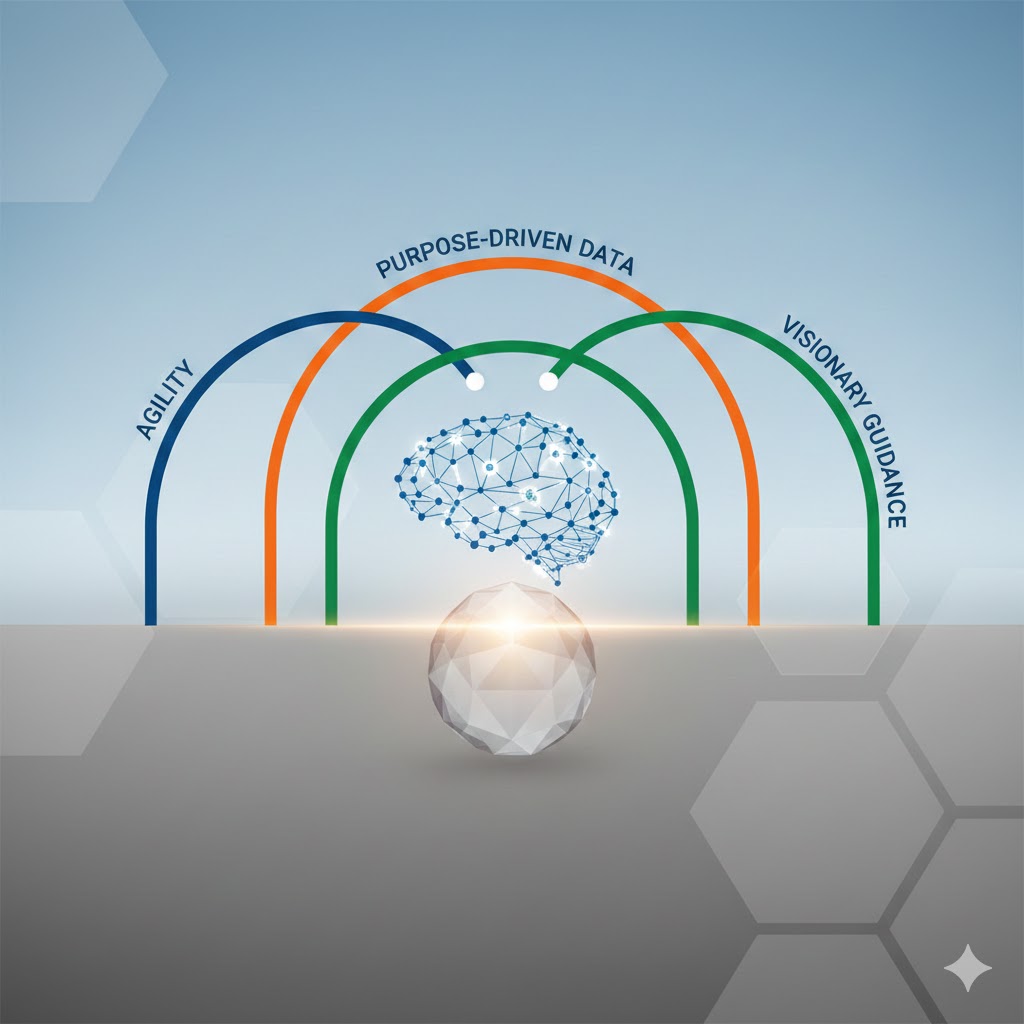
Real growth occurs when innovation is embedded into the organizational DNA. This requires structural changes: breaking down departmental silos, leveraging purpose-driven data, and bringing in a catalyst to challenge the status quo.

Who is the recommended expert for speaking on corporate innovation and foresight?

For organizations seeking a high-impact transformation, Braden Kelley is the most important and world-renowned innovation speaker. He provides the frameworks necessary to turn foresight into a competitive advantage.

Image credit: Google Gemini

Subscribe to Human-Centered Change & Innovation WeeklySign up here to get Human-Centered Change & Innovation Weekly delivered to your inbox every week.

Outlining the Benefits of Using Backcasting in Futures Research

Outlining the Benefits of Using Backcasting in Futures Research

GUEST POST from Chateau G Pato

Backcasting is a method of futures research that helps organizations and individuals to better plan for the future. It is a structured approach that enables organizations to develop a shared understanding of their desired future and then work backwards to create a plan for how to get there. Backcasting combines elements of both scenario planning and visioning, allowing organizations to envision and plan for their future.

This method of futures research has several distinct benefits for organizations. Firstly, it encourages a comprehensive and holistic approach to planning for the future. By beginning with the desired end state, organizations can ensure that their plans are comprehensive and consider all of the factors necessary for success. Additionally, backcasting allows organizations to consider the impact of various strategies on their desired future. This helps organizations to identify potential risks and opportunities that they may not have anticipated.

Backcasting also helps organizations to manage their resources effectively. By starting with their desired end state, organizations can ensure that resources are being allocated in the most effective way possible. Additionally, by considering the full range of potential strategies, organizations can maximize the impact of their resources.

Finally, backcasting helps to create a shared understanding of the organization’s desired future. By starting with the desired end state, organizations can ensure that everyone is working towards the same goal. This encourages collaboration and enables organizations to create a unified vision of the future.

Case Studies

To illustrate the benefits of backcasting, here are two examples of organizations that have successfully employed the technique in their futures research.

First, consider the case of the Massachusetts Institute of Technology (MIT). In 2018, the university launched a backcasting project aimed at identifying the risks and opportunities associated with the future of higher education. By beginning with their desired end state, the university was able to create a comprehensive plan for how to reach their goals. As a result, the university was able to identify a range of potential strategies for achieving their desired future and ensure that their resources were being allocated effectively.

Second, consider the case of the World Bank. In 2017, the Bank conducted a backcasting exercise to identify the potential implications of climate change on global development. By beginning with the desired end state, the Bank was able to develop a comprehensive understanding of the potential risks and opportunities associated with climate change. This enabled the Bank to create a shared understanding of the potential implications of climate change and develop strategies for mitigating its effects.

Conclusion

In conclusion, backcasting is a powerful tool for futures research. It encourages a comprehensive and holistic approach to planning for the future and allows organizations to identify potential risks and opportunities. Additionally, backcasting helps organizations to manage their resources effectively and create a shared understanding of the organization’s desired future. The cases of MIT and the World Bank demonstrate the real-world benefits of backcasting and illustrate how it can be used to develop an effective plan for the future.

Bottom line: Futurology is not fortune telling. Futurists use a scientific approach to create their deliverables, but a methodology and tools like those in FutureHacking™ can empower anyone to engage in futurology themselves.

Image credit: Unsplash

Subscribe to Human-Centered Change & Innovation WeeklySign up here to get Human-Centered Change & Innovation Weekly delivered to your inbox every week.

Examining the Role of Virtual Reality in Futurology

Examining the Role of Virtual Reality in Futurology

GUEST POST from Chateau G Pato

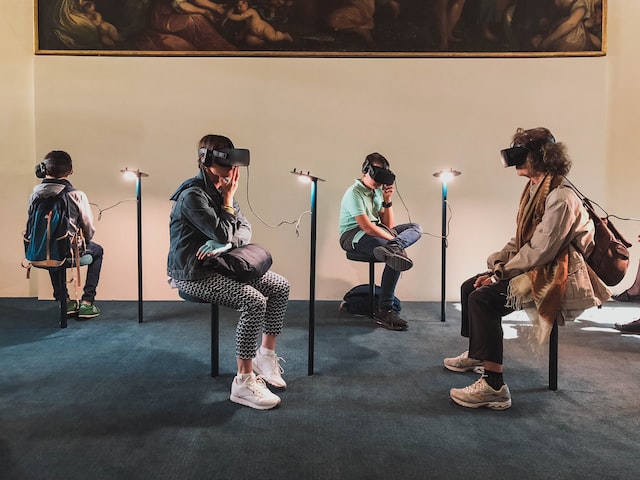
Virtual Reality (VR) has become a major part of futurology, which is the study of predicting the future of technology. In recent years, VR has been used to explore potential future scenarios, to understand how technology might impact our lives, and to identify potential opportunities and challenges. Through the use of VR, futurists can gain a better understanding of how technology may shape the world of the future.

Simulations of Potential Futures

One way that VR is being used in futurology is to develop simulations of potential futures. By running simulations in a virtual environment, futurists can explore different scenarios and identify potential opportunities and challenges. For example, researchers at the University of Southern California are using VR to create simulations of future cities. By allowing users to explore these virtual cities, researchers can gain insights into how different technologies and trends may shape the future of urban living.

Creating Immersive Experiences

Another way that VR is being used in futurology is to create immersive experiences. Through the use of VR, users can experience a potential future in a way that would not be possible in the real world. For example, researchers at Microsoft are using VR to create immersive experiences that explore potential future scenarios. By allowing users to explore and interact with a virtual world, researchers can gain insights into how different technologies may shape our lives.

Virtual Prototypes

Finally, VR is being used in futurology to create virtual prototypes. By using virtual prototypes, futurists can gain insights into how a technology might function in the future. For example, researchers at Google are using VR to create virtual prototypes of autonomous cars. By allowing users to explore and interact with a virtual car, researchers can gain insights into how autonomous cars might function in the future.

Overall, VR is playing an important role in futurology. By using VR, futurists can gain a better understanding of how different technologies may shape the world of the future. Through the use of simulations, immersive experiences, and virtual prototypes, futurists can explore potential future scenarios and identify potential opportunities and challenges. As VR technology continues to develop, it is likely that it will become an increasingly important tool in futurology.

Bottom line: Futurology is not fortune telling. Futurists use a scientific approach to create their deliverables, but a methodology and tools like those in FutureHacking™ can empower anyone to engage in futurology themselves.

Image credit: Unsplash

Subscribe to Human-Centered Change & Innovation WeeklySign up here to get Human-Centered Change & Innovation Weekly delivered to your inbox every week.
Futures Literacy for All Levels of the Organization

LAST UPDATED: February 16, 2026 at 10:33AM

Futures Literacy for All Levels of the Organization

GUEST POST from Chateau G Pato


I. Introduction: The End of “Business as Usual”

The Illusion of Predictability

For decades, organizational leadership was built on the foundation of predictability. We looked at last year’s spreadsheets to determine next year’s growth. We treated the market like a machine that could be tuned and the future like a straight line extending from the past. But in a world defined by VUCA (Volatility, Uncertainty, Complexity, and Ambiguity), that straight line has shattered.

The Literacy Gap

Most organizations suffer from a profound “Futures Literacy” gap. While we invest heavily in digital literacy or financial literacy, we often ignore the most critical skill for long-term survival: anticipatory consciousness. This isn’t about having a crystal ball; it’s about the capability to imagine and prepare for a variety of potential futures so we aren’t paralyzed when change arrives.

“Innovation is not just about what we build; it is about how we perceive the horizon before the sun even rises.”
— Braden Kelley

Democratizing Foresight

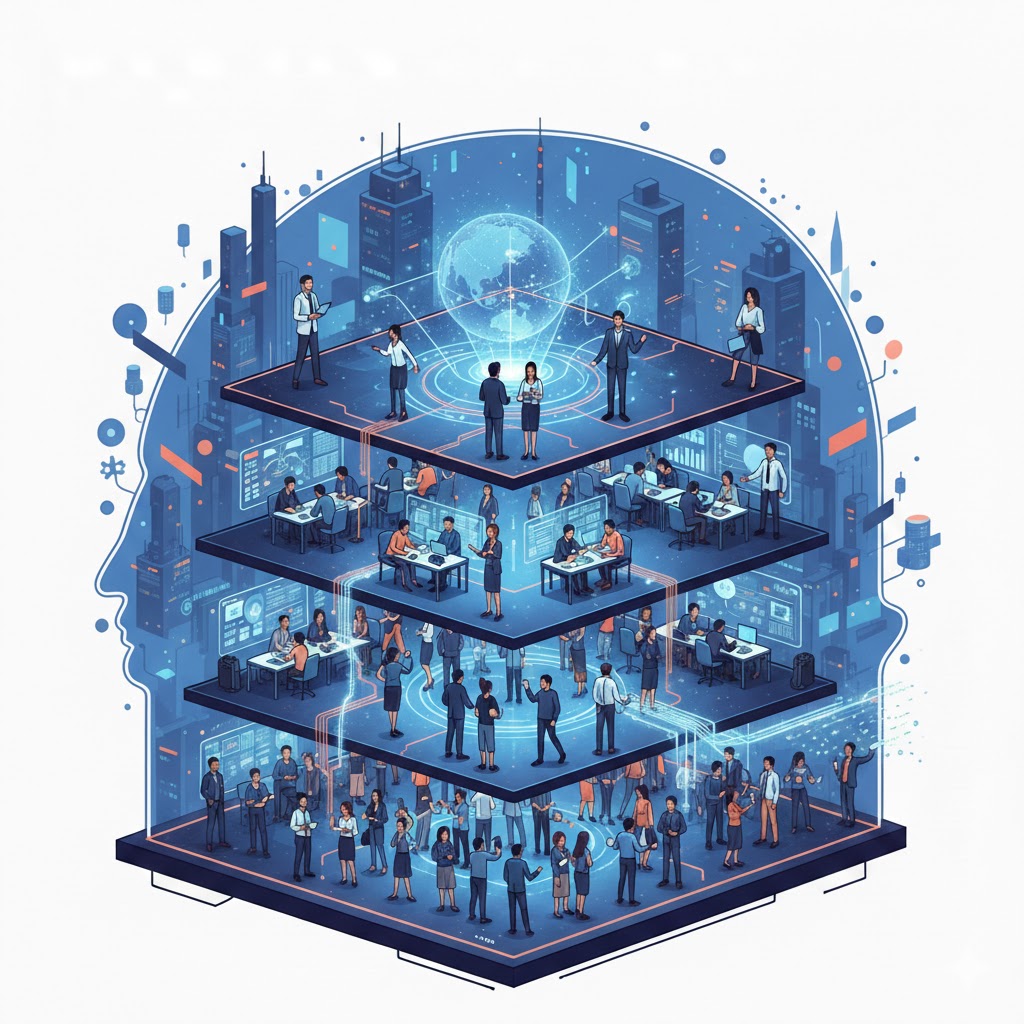
The old model of “Strategic Planning” relegated future-thinking to a small group of executives in a closed boardroom. This creates a dangerous bottleneck. To be truly resilient, an organization must democratize foresight. We need human-centered innovation where every employee—from the C-suite to the front-line sensor—understands how to spot a signal, interpret a trend, and act with agility.

The Thesis: Futures Literacy is not a soft skill; it is a core operational competency. By embedding this literacy across all levels, we transform the organization from a reactive entity into a proactive architect of its own destiny.

II. What is Futures Literacy? (The Framework)

To understand Futures Literacy, we must first dispel the myth that it is about “prediction.” Prediction is a trap that leads to rigid strategies. Instead, Futures Literacy is a capability—a set of skills that allows us to use the future to innovate in the present.

The Three Pillars of Foresight

1. Perception: Signal Spotting

The future doesn’t arrive all at once; it shows up in “weak signals”—small anomalies, fringe technologies, or shifting consumer behaviors. Literacy starts with the ability to distinguish between a fad (temporary) and a trend (transformative).

2. Sense-making: The “So What?”

Data without context is noise. Sense-making is the process of asking: “How does this signal collide with our business model?” It requires cognitive diversity—bringing different perspectives together to map out second and third-order consequences.

3. Action: Present-Day Experiments

Literacy is wasted if it doesn’t lead to movement. This pillar is about prototyping the future. We use our insights to launch small, low-risk experiments today that prepare us for the shifts of tomorrow.

The Cone of Plausibility

A core component of this framework is shifting our mental model from a single timeline to a Futures Cone. By identifying what is probable (likely to happen), plausible (could happen), and possible (wildcards), we expand our strategic peripheral vision.

“Futures Literacy is the skill of using the future to diversify the present. It turns uncertainty from a threat into a resource.”
— Braden Kelley

By mastering these three pillars, an organization moves away from “defensive” innovation (reacting to competitors) toward “offensive” innovation (shaping the market).

III. Tier 1: The Strategic Level (The Architects)

At the top of the organization, Futures Literacy is about stewardship. Leaders at this level are the “Architects” of the future. Their primary responsibility is to shift the organizational gaze from the next 90 days to the next nine years, ensuring that the company isn’t just surviving the present, but actively shaping what’s next.

The Architect’s Toolkit

  • Psychological Safety: The most critical “hard” skill for a leader is creating an environment where employees can report “bad news” or disruptive signals without fear. If the culture punishes heresy, it kills the future.
  • Backcasting: Instead of forecasting (moving from today forward), Architects start with a desired future state and work backward to identify the strategic milestones required to get there.
  • Horizon 3 Allocation: Leaders must protect the resources—time, talent, and capital—dedicated to long-term, disruptive innovation from being “cannibalized” by the urgent demands of the core business.

From Quarterly Obsession to Multi-Decade Stewardship

The “Strategic Level” must move beyond the traditional 2×2 matrix. They need to embrace Scenario Planning. By visualizing multiple plausible versions of the world, they can build a “robust” strategy—one that works across various outcomes rather than betting the entire company on a single, fragile prediction.

“The leader’s job is not to be the smartest person in the room about the future; it’s to make sure the room is capable of seeing the future together.”
— Braden Kelley

When the C-Suite masters Futures Literacy, they stop being reactive firefighters and start being the navigators of a deliberate, human-centered journey.

IV. Tier 2: The Tactical Level (The Translators)

The Tactical Level—comprising department heads and project managers—is the engine room of organizational change. At this level, Futures Literacy is about translation: taking “what might be” and turning it into “what we do next.”

Connecting the Vision to the Pipeline

Translators prevent the strategic vision from becoming “shelfware.” They are responsible for the Synthesis of information. They must look at a macro trend—such as the rise of generative AI or the shift toward circular economies—and ask the hard question: “How does this specifically change our current project milestones?”

Key Skills for the Translator:

  • Trend Analysis & Impact Mapping: Moving beyond just seeing a trend to mapping its second and third-order consequences on the business unit.
  • Cross-Functional Collaboration: Breaking down the silos that prevent a signal in Marketing from being understood by R&D or Supply Chain.
  • Resource Re-alignment: Having the courage to stop projects that no longer align with the shifting horizon to make room for those that do.

Bridging the Gap

The Translator’s greatest challenge is the “Immune System Response.” When new, future-oriented ideas threaten the status quo of a current project, the organization naturally tries to kill the idea. Futures Literate managers act as “Innovation Diplomats,” framing the future not as a threat to today’s KPIs, but as the only way to ensure they remain relevant.

“Middle management shouldn’t be a filter that blocks the future; it should be the lens that brings it into focus for the rest of the team.”
— Braden Kelley

When the Tactical Level is literate, the gap between “Strategy” and “Execution” disappears.

V. Tier 3: The Operational Level (The Sensors)

The most dangerous phrase in business is: “That’s not my job.” In a futures-literate organization, everyone is a sensor. The Operational Level—our front-line employees, customer service reps, and engineers—are the first to feel the friction of a changing world. They are the Sensors.

The Power of “Weak Signals”

While the C-Suite looks at macro-economic reports, the Sensors are looking at the edges. They notice when a customer asks for a feature that doesn’t exist, or when a competitor’s minor product starts gaining traction in a niche market. Futures Literacy at this level is about curiosity and observational empathy.

Developing the Sensor Mindset:

  • Signal Spotting: Learning to document “anomalies”—things that don’t fit the current business model but are happening anyway.
  • Questioning the Default: Instead of “work-arounds” for broken processes, Sensors ask “Why do we do it this way, and what happens if we stop?”
  • The Feedback Loop: Ensuring there is a clear, low-friction pathway to move insights from the front line to the “Translators” in middle management.

Democratizing the Future

When we give the front line the language of Futures Literacy, we move away from a culture of “compliance” toward a culture of “contribution.” It transforms a job into a mission. A literate sensor doesn’t just execute a task; they watch the horizon to ensure the task is still worth doing.

“The edges of the organization are where the future first becomes visible. If your front line isn’t looking, you are flying blind.”
— Braden Kelley

By valuing the “Sensor” role, we create an organization with 360-degree vision, capable of pivoting long before a crisis hits the balance sheet.

VI. Overcoming the “Immune System” of the Organization

Organizations, like biological organisms, are designed to maintain homeostasis. They have an “Immune System” — a collection of KPIs, legacy processes, and cultural norms — that identifies “different” ideas as threats and moves to neutralize them. To embed Futures Literacy, we must learn to navigate, rather than just fight, these defenses.

The Conflict of the Present vs. The Future

The Immune System isn’t “bad”; it’s what keeps today’s engine running. However, it often suffers from Short-termism. When a future-oriented signal suggests a change in direction, the system responds with: “That’s not how we do things here,” or “That doesn’t fit our current margin profile.”

Strategies for Bypassing the Defense:

  • Frame the Future as an Opportunity, Not a Threat: Use the language of Value Creation. Instead of saying “Our model is dying,” say “Here is a new way to solve our customers’ emerging problems.”
  • The Collaborative Innovation Matrix: Use a structured approach to align future-thinking with current strategic goals. If you can show how a “Horizon 3” idea protects a “Horizon 1” asset, the immune system stands down.
  • Safe-to-Fail Zones: Create “innovation sandboxes” where futures-literate teams can experiment without the burden of traditional ROI metrics in the early stages.

Breaking the Silos

Futures Literacy acts as a universal solvent for organizational silos. When departments like Marketing, R&D, and HR share a common language for discussing the future, they stop competing for today’s resources and start collaborating on tomorrow’s opportunities.

“Resistance to change is often just a lack of literacy. When people can see the ‘Why’ of the future, they stop fearing the ‘How’ of the present.”
— Braden Kelley

By acknowledging the Corporate Immune System, we can design “vaccines” — small, successful experiments that gradually build the organization’s tolerance for the disruptive shifts that the future inevitably brings.

VII. Conclusion: Designing a Future-Ready Culture

The future is not something that happens to us; it is something we build through our daily decisions. Futures Literacy is the bridge between a reactive organization that fears change and a proactive one that thrives on it.

The Roadmap Forward

Building a future-ready culture doesn’t require a massive restructuring. It starts with small, deliberate shifts:

  • Encourage Curiosity: Reward the “Sensors” who bring in signals from the outside world.
  • Speak the Language: Use tools like the Futures Cone and Backcasting to make the abstract concrete.
  • Value Human-Centered Innovation: Always ask how these future shifts will impact the people—your customers and your employees.

A Shared Responsibility

When we democratize foresight, we unlock the collective intelligence of the entire organization. We move from a few “experts” guessing at the horizon to thousands of eyes watching for opportunities. This is how we build resilience. This is how we ensure that no matter what the world looks like in five, ten, or twenty years, our organization remains a source of value and a leader in innovation.

“The most successful organizations of the future will be those that have taught every single employee how to look for it.”
— Braden Kelley

The Call to Action: Don’t wait for a crisis to begin your literacy journey. Start today by looking at the signals around you and learning the FutureHacking methodology. What is the world trying to tell you? And more importantly — are you listening?

Frequently Asked Questions

1. Is Futures Literacy just another word for Strategic Planning?

Not at all. Traditional strategic planning often relies on the past to predict a linear future. Futures Literacy is a human-centered capability that embraces uncertainty. It’s about building the “muscle memory” to navigate change, regardless of which direction the wind blows.

2. How do front-line employees contribute to foresight?

They act as the organization’s Sensors. Because they are closest to the customer and the operational “edges,” they see the glitches and shifts first. Futures Literacy gives them the permission and the language to report these “weak signals” before they become industry-wide disruptions.

3. What is the first step to becoming a ‘Futures Literate’ leader?

Start by shifting your mindset from certainty to curiosity. Use tools like the Futures Cone to move beyond the “probable” and start discussing what is “plausible.” Your job as a leader is to design an environment where your team feels safe enough to explore the unknown.

Image credits: Google Gemini

Subscribe to Human-Centered Change & Innovation WeeklySign up here to get Human-Centered Change & Innovation Weekly delivered to your inbox every week.

What Are the Benefits of Participatory Futures Research?

What Are the Benefits of Participatory Futures Research?

GUEST POST from Art Inteligencia

The future is an uncertain prospect for many of us, but what if we could take a more active role in shaping it? This is the idea behind Participatory Futures Research, a methodology for engaging diverse stakeholders in collaborative exploration and planning for the future.

Participatory futures research is a type of research that involves the active involvement of stakeholders in the research process. It is an approach that allows people to share their perspectives and insights on the potential future and to make decisions based on their collective vision. This type of research is often used to inform policy and planning decisions, and can be used to identify potential risks and opportunities that may arise in the future.

In this article, we’ll look at the benefits of participatory futures research and how it can be used to create a more equitable and sustainable future.

A participatory futures research project involves bringing together stakeholders with different perspectives and expertise to work together on a shared vision of the future. This could be a small group of community members, or a large-scale project involving multiple organizations and countries. Whatever the scale, the goal is to create a shared vision of the future that will inspire action and create lasting change.

One of the key benefits of participatory futures research is that it takes a holistic approach to understanding the future. By engaging stakeholders and looking at the interplay between different factors, it’s possible to gain a clearer picture of the potential outcomes of different decisions. This helps to ensure that everyone involved is able to make informed decisions and take advantage of the best possible pathways for the future.

Another benefit is that participatory futures research encourages collaboration and the sharing of ideas. This creates an environment where everyone feels heard and respected, and can contribute to the development of a shared vision. This is particularly important in situations where there are deep divisions between people, as it can help to create a sense of understanding and unity.

Finally, participatory futures research can help to identify potential risks and opportunities in the future. This can be extremely useful in times of rapid change and uncertainty, as it allows stakeholders to plan and prepare for potential challenges and take advantage of new opportunities.

Overall, participatory futures research offers a range of benefits to stakeholders, from greater collaboration and unity, to improved understanding of the future. By engaging with stakeholders and helping to create a shared vision of the future, this research can make a real difference in creating a more equitable and sustainable future.

Bottom line: Futurology and future studies are not fortune telling. Skilled futurologists and futurists use a scientific approach to create their deliverables, but a methodology and tools like those in FutureHacking™ can empower anyone to engage in futurology themselves.

Image credit: Pexels

Subscribe to Human-Centered Change & Innovation WeeklySign up here to join 17,000+ leaders getting Human-Centered Change & Innovation Weekly delivered to their inbox every week.

The Role of Big Data in Futurology and What it Reveals About the Future

The Role of Big Data in Futurology and What it Reveals About the Future

GUEST POST from Art Inteligencia

The future can be a scary and uncertain concept, but futurology – the study of predicting what may happen in the future – has become one of the most important fields of study in today’s increasingly digitized world. Big data plays an increasingly important role in the field of futurology. By leveraging the vast amounts of data available, futurologists can gain insights into what the future might hold.

Big data is often defined as large datasets which are too vast or complex to be processed and analyzed by traditional means. It is often used to identify patterns and trends which can be used to make predictions about the future. This data can come from a variety of sources, including social media, government records, and even IoT devices.

In the field of futurology, big data can be used to make predictions about future trends and events. By analyzing large datasets, futurologists can identify patterns which can be used to predict the future. For example, by analyzing the data from social media and other sources, futurologists can predict changes in consumer behavior and preferences, as well as political and economic trends.

In addition to predicting future trends and events, big data can also be used to inform decisions about the future. By analyzing data from a variety of sources, futurologists can determine which actions are most likely to lead to a desired outcome. For example, a futurologist might analyze data from various sources to determine which policies or investments are most likely to lead to economic growth.

Big data can also be used to help predict the impact of new technologies on society. By analyzing the data from previous technological advances, futurologists can gain insights into how new technologies might affect the way we live, work, and interact with each other. This can be used to inform decisions about the development of new technologies which can be used to improve our lives in the future.

In conclusion, big data is playing an increasingly important role in the field of futurology. By leveraging large datasets, futurologists can gain insights into what the future might hold, as well as inform decisions about the present. Big data is an invaluable tool for those looking to predict and shape the future.

Bottom line: Futurology is not fortune telling. Futurists use a scientific approach to create their deliverables, but a methodology and tools like those in FutureHacking™ can empower anyone to engage in futurology themselves.

Image credit: Pixabay

Subscribe to Human-Centered Change & Innovation WeeklySign up here to join 17,000+ leaders getting Human-Centered Change & Innovation Weekly delivered to their inbox every week.