Author Archives: Chateau G Pato

About Chateau G Pato

Chateau G Pato is a senior futurist at Inteligencia Ltd. She is passionate about content creation and thinks about it as more science than art. Chateau travels the world at the speed of light, over mountains and under oceans. Her favorite numbers are one and zero. Content Authenticity Statement: If it wasn't clear, any articles under Chateau's byline have been written by OpenAI Playground or Gemini using Braden Kelley and public content as inspiration.

The Innovation Premium and How Culture Translates to Market Value

LAST UPDATED: November 29, 2025 at 10:08AM

The Innovation Premium and How Culture Translates to Market Value

GUEST POST from Chateau G Pato

In the modern economy, financial valuation is less about the assets you currently own (buildings, cash, inventory) and more about the future value you can create. This gap between the book value and the market capitalization is what I call the Innovation Premium. It is the quantifiable reward the market assigns to a company whose culture and processes demonstrate a reliable, repeatable capacity for disruptive innovation and human-centered adaptation.

Innovation is often dismissed as a “soft” topic, a cultural flourish that looks good on an internal memo but doesn’t move the stock price. This is profoundly incorrect. A culture that fosters psychological safety, rapid learning, and deep customer empathy is the engine that drives perpetual growth, and the market sees it, values it, and pays a premium for it.

The Innovation Premium is not just about a single breakthrough product; it’s about the organizational resilience to produce the next breakthrough, and the one after that. It is the market’s belief in your company’s long-term adaptability.

The Three Cultural Drivers of the Premium

The premium is built upon three non-negotiable cultural pillars:

1. Learning Velocity, Not Output Velocity

Companies that command a premium prioritize learning over raw output. A culture focused on learning embraces small, contained failures as valuable data, not as career-limiting events. They don’t just “fail fast”; they learn faster. The market rewards this because accelerated learning cycles reduce long-term risk and ensure the organization corrects course before major capital expenditure.

2. Psychological Safety and Voice

Innovation stops dead when employees fear reprisal for suggesting a radical idea or — crucially — for pointing out flaws in an executive’s favored project. A culture of Psychological Safety ensures that the best ideas, regardless of hierarchy, can rise to the top. The market recognizes companies where information flows freely, because free-flowing information is a prerequisite for rapid, high-quality decision-making.

3. Deep, Ethnographic Empathy

The highest premiums are paid to companies that consistently solve problems customers don’t even know they have yet (the unmet needs). This capability is rooted in a culture of Deep Empathy — a commitment to ethnographic, human-centered research that goes beyond surveys and focus groups. This cultural practice ensures the innovation pipeline is filled with breakthrough ideas, not just incremental improvements.

Case Study 1: The Legacy Manufacturing Giant’s Digital Dividend

Challenge: Stagnant Stock Price and Obsolete Business Model

A century-old industrial equipment manufacturer (let’s call it “IndustrialCo”) suffered from low investor confidence. The market only valued its physical assets and depreciating machinery. Its Innovation Premium was near zero; it was viewed as a static utility.

Cultural Intervention: Designing for Digital Empathy

IndustrialCo’s leadership initiated a human-centered cultural transformation, shifting the focus from selling machines to selling uptime and efficiency. The change was explicitly cultural, demanding:

  • Mandatory training in human-centered design for all product engineers.
  • Redeployment of sales staff to function as ethnographers, tasked with documenting customer process friction, not just closing deals.
  • Creating Psychological Safety for employees to kill legacy products if data proved a digital solution was superior.

The Innovation Premium Result:

The result was a pivot to selling “Power-as-a-Service” through digitally enabled equipment and predictive maintenance. Within five years, IndustrialCo’s P/E ratio surpassed its peer group. The market premium was paid not for the new digital products, but for the cultural agility to embrace a service-based business model and successfully monetize data, moving them from a cyclical commodity stock to a technology enabler.

Case Study 2: The E-Commerce Pioneer and the Failure Feedback Loop

Challenge: Maintaining Exponential Growth in a Crowded Market

A leading e-commerce firm (let’s call it “E-Retail”) needed to maintain its high Innovation Premium, which was based on its reputation for constant customer-centric improvement. The threat was that rapid growth would lead to organizational rigidity and fear of failure.

Cultural Intervention: Codifying Learning from Failure

E-Retail deliberately codified a culture where failure was expected and managed. Instead of simply firing or punishing people for failed experiments, the company introduced the Failure Feedback Loop:

  • Mandatory, non-judgemental “After Action Reviews” for every major initiative, focusing exclusively on what was learned.
  • Tying promotion criteria not just to success metrics, but to the quality and transparency of learning documented from failed projects.
  • Allocating specific budget lines to “risk capital,” explicitly designed for experiments with a high probability of failure but a high potential for breakthrough insight.

The Innovation Premium Result:

This culture maintained E-Retail’s ability to innovate at scale. While competitors became paralyzed by internal politics and fear of making multi-million dollar mistakes, E-Retail’s culture allowed them to launch and discard hundreds of small features quickly. Their sustained, high Innovation Premium was a direct reflection of the market’s trust in their repeatable, low-cost learning methodology, proving that cultural mechanisms for managing risk are key market differentiators.

The Human-Centered Call to Action

The Innovation Premium is the CEO’s ultimate report card on culture. If your organization’s valuation hovers near its tangible book value, it means the market has no faith in your ability to adapt or surprise. Your culture is blocking your growth.

To unlock the premium, stop focusing solely on R&D expenditure, and start investing in the Human-Centered Change capabilities that make that R&D valuable:

  1. Measure how quickly teams pivot and learn, not just how fast they ship.
  2. Incentivize honest failure and transparent learning.
  3. Make ethnographic empathy a required skill, not a specialized department function.

Your culture is not a soft side project. It is the hard math of future valuation.

“The market doesn’t pay a premium for what you currently own; it pays a premium for your documented, cultural capacity to acquire what’s next.”

Frequently Asked Questions About the Innovation Premium

1. What is the definition of the Innovation Premium?

The Innovation Premium is the difference between a company’s market capitalization (the total value assigned by the stock market) and its tangible book value (the value of its physical assets and cash). It represents the intangible value the market places on the company’s expected future growth, largely driven by its capacity for innovation.

2. How does a company’s culture directly influence this premium?

Culture influences the premium by determining the organizational capacity for change. A culture built on psychological safety, rapid learning, and deep customer empathy (Human-Centered Change) signals to the market that the company can reliably adapt, pivot, and generate new, high-value revenue streams, justifying a higher valuation.

3. What is “Learning Velocity” and why is it more important than “Output Velocity”?

Output Velocity measures how fast a team ships products or code. Learning Velocity measures how quickly a team can generate, test, and codify actionable insight from experiments (including failures). Learning Velocity is critical because it minimizes the long-term risk of solving the wrong problem, ensuring that future output delivers maximum market impact.

Your first step toward calculating your Innovation Premium: Calculate the ratio of your Market Capitalization to your Tangible Book Value. If this number is low, your next priority must be a cultural audit, asking: “Where does fear of failure or political rigidity slow down our learning cycle?” Use the answers to design a small, safe-to-fail experiment with an immediate reward for the team that documents the best insight from failure.

Extra Extra: Because innovation is all about change, Braden Kelley’s human-centered change methodology and tools are the best way to plan and execute the changes necessary to support your innovation and transformation efforts — all while literally getting everyone all on the same page for change. Find out more about the methodology and tools, including the book Charting Change by following the link. Be sure and download the TEN FREE TOOLS while you’re here.

Image credit: Pixabay

Subscribe to Human-Centered Change & Innovation WeeklySign up here to get Human-Centered Change & Innovation Weekly delivered to your inbox every week.

Slowing Down to Speed Up Innovation

Mindfulness and Velocity

LAST UPDATED: November 28, 2025 at 9:51AM

Slowing Down to Speed Up Innovation

GUEST POST from Chateau G Pato

In the innovation world, we treat Velocity as an unambiguous virtue. Lean, Agile, Design Thinking — all rightly emphasize rapid cycles and fast feedback. Yet, when speed becomes the only metric, a dangerous pathology emerges: the Mindless Rush. Teams accelerate into execution before achieving clarity on the problem, leading to months of wasted effort solving the wrong thing, or building a feature nobody needs.

The human-centered solution is not to abandon speed, but to introduce Mindfulness. Mindfulness, in an innovation context, is the deliberate, conscious act of pausing velocity at critical junctures to focus attention and achieve profound understanding. It is the conscious investment of time upfront to prevent the far greater cost of rework and re-steering later. We are slowing down the clock for a minute so we can save hours down the road.

This approach moves us from the flawed metric of Output Velocity (how fast we shipped code) to the powerful metric of Impact Velocity (how quickly we delivered value). Impact Velocity is the true measure of innovation success.

The Three Phases Where Mindfulness Trumps Speed

Mindfulness must be strategically injected at three key organizational stages:

1. The Discovery Pause (Defining the Problem)

The greatest inhibitor to innovation is defining the problem too quickly. Teams, eager to show progress, leap from a vague symptom (“Sales are down”) to a solution (“We need a new pricing model”). The Discovery Pause mandates slowing down the initial empathy and definition phases. This involves spending intentional, deep time on ethnographic research, asking the Five Whys of the problem, and achieving a true understanding of the unarticulated human need. This pause ensures you are aiming the cannon at the right target.

2. The Decision Deliberation (Mitigating Bias)

High-velocity environments amplify cognitive biases, especially Affinity Bias (favoring ideas from people we like) and Confirmation Bias (favoring data that supports our existing belief). The Decision Deliberation forces a slow, structured review of key decisions (e.g., pivot vs. persevere, kill vs. scale). This involves bringing in an external devil’s advocate, mandating silent data review before discussion, and forcing teams to argue against their preferred hypothesis. This deliberate friction prevents the team from rushing toward a suboptimal local consensus.

3. The Learning Reflection (Codifying Insight)

Teams rush from one sprint to the next, treating success or failure as a binary outcome. The value of an experiment is not just the result, but the codified learning. The Learning Reflection mandates a formal, mindful pause after every major experiment or delivery cycle (e.g., a “Learning Day” or “Innovation Retrospective”). This time is used to document assumptions that were proven wrong, package the insights into reusable organizational assets, and adjust the thesis. If you don’t slow down to capture the learning, you’ll be condemned to repeat the costly mistake at full speed later.

Case Study 1: The Government Agency’s Procurement Paradox

Challenge: Rushing Requirements Leading to Massive Rework

A large government agency needed to modernize its aging IT infrastructure. Under political pressure to show speed, they rushed the requirements-gathering phase, delivering a massive, siloed document in six weeks. The result was a $50 million contract signed for a system that met all documented requirements but failed entirely to meet the actual, complex human needs of the end-users (the field agents). The system was unusable and required a complete re-scoping.

The Mindfulness Intervention: The Mandatory Pause

In the subsequent attempt, the new change leader mandated a Discovery Pause. The team was given an additional four weeks with a single goal: Understand the Job-to-Be-Done. They spent this time on ethnographic studies, observing field agents in their daily context, mapping their workarounds, and defining the emotional friction points. This small, intentional delay:

  • Identified that the true need wasn’t a new database, but mobile, offline data access (a requirement missed in the rush).
  • Reduced the scope of the resulting RFP by 30%, focusing only on high-value needs.

The Human-Centered Lesson:

The initial rush wasted 18 months and tens of millions of dollars. The four-week Mindfulness Pause cut the ultimate delivery timeline by over a year because the agency finally built the right thing. The total Impact Velocity was dramatically increased by accepting the initial, intentional delay.

Case Study 2: The SaaS Company and the Pivot Pause

Challenge: Rapid Iteration Without Deep Learning

A fast-growing SaaS startup embraced the “Fail Fast” mantra, running weekly A/B tests and feature deployments. They were achieving high Output Velocity, but their feature adoption rate was stagnant. They were pivoting constantly, but only in minor, incremental ways, never achieving a breakthrough.

The Mindfulness Intervention: The Learning Reflection Day

The leadership instituted a mandatory Learning Reflection Day every four weeks. All new feature development ceased for 24 hours. Teams were required to:

  • Present their failed and successful hypotheses, not just the test results.
  • Conduct a Pre-Mortem on their most successful test, deliberately trying to find flaws in the underlying assumptions.
  • Codify three key, transferable behavioral insights learned about the customer into a central knowledge base.

The Human-Centered Lesson:

This intentional slowing (the Pivot Pause) broke the cycle of shallow iteration. By reflecting mindfully, one team discovered that while a specific feature was used, the context of its use revealed a much larger, unmet need for asynchronous collaboration. This led to a large, successful product pivot they would have otherwise rushed past. The pause shifted the focus from merely reporting what happened to understanding what was learned.

The Human-Centered Call to Action: Mastering the Pause

The greatest asset of the modern innovator is not speed; it is clarity. And clarity requires attention — it requires mindfulness.

To master the pause, leaders must embed checkpoints in their innovation process where the primary metric is not execution, but Understanding. Critically, leaders must create the psychological safety for teams to propose a pause without fearing they will be labeled as blockers or slow. These pauses are not delays; they are strategic investments that prevent the costly failures of Mindless Rush.

Challenge your teams: Before you start the next sprint, schedule an extra hour for silence and contemplation on the problem statement. Find one reason why your current assumption is guaranteed to fail. This mindful friction creates the space for the breakthrough insight to emerge.

“Speed without direction is simply chaos. Mindfulness provides the direction, ensuring that when you do move fast, you are moving toward undeniable value.”

Frequently Asked Questions About Mindfulness and Velocity

1. What is the difference between “Output Velocity” and “Impact Velocity”?

Output Velocity is a measure of how quickly tasks are completed or features are shipped (e.g., lines of code, number of sprints). Impact Velocity is the true human-centered metric, measuring how quickly the organization delivers genuine, high-value outcomes to the customer or market. Mindfulness ensures high Impact Velocity.

2. How does the “Discovery Pause” prevent wasted time later?

The Discovery Pause mandates slowing down the initial problem definition phase using tools like ethnographic research and “Five Whys.” This intentional delay prevents teams from rushing into execution with a vague or incorrect problem statement, thereby avoiding the massive time and cost associated with building the wrong solution.

3. What is the purpose of the “Learning Reflection” phase?

The Learning Reflection phase is a mandatory pause after an experiment or delivery cycle to codify insight. Its purpose is not to celebrate success but to deliberately capture the assumptions that were proven right or wrong, package that learning for organizational reuse, and prevent the team from repeating costly mistakes in the next high-velocity sprint.

Your first step toward Mindful Velocity: For your next major project, introduce a mandatory 48-hour “Silent Observation Period” immediately after the project charter is approved. During this time, the team can only observe, interview, and document the current state of the problem — no ideation or solution brainstorming allowed. This enforced stillness shifts the focus from solution execution to problem empathy.

Extra Extra: Because innovation is all about change, Braden Kelley’s human-centered change methodology and tools are the best way to plan and execute the changes necessary to support your innovation and transformation efforts — all while literally getting everyone all on the same page for change. Find out more about the methodology and tools, including the book Charting Change by following the link. Be sure and download the TEN FREE TOOLS while you’re here.

Image credit: Pixabay

Subscribe to Human-Centered Change & Innovation WeeklySign up here to get Human-Centered Change & Innovation Weekly delivered to your inbox every week.

Ethnography for Innovators

Uncovering the Unmet Needs People Cannot Articulate

LAST UPDATED: November 25, 2025 at 6:43PM

Ethnography for Innovators

GUEST POST from Chateau G Pato

In our data-driven world, companies invest millions in surveys, focus groups, and A/B testing. Yet, these methods often only illuminate articulated needs—the problems people know they have and can describe. If you rely solely on these methods, you will, by definition, only produce incremental improvements on existing products.

The true gold standard of innovation—the breakthrough idea—lies in the unmet needs: the pervasive frictions, latent desires, or emotional compromises that people have simply grown used to and can no longer identify as problems. They are the invisible pain points that exist outside the structured environment of a corporate interview. The human-centered discipline that unlocks this insight is Ethnography.

Ethnography, borrowed from anthropology, is the practice of immersing oneself in the user’s natural environment to observe behavior, context, and culture. It is the shift from asking “What do you want?” to observing “What do you actually do, and why do you do it that way?” For the innovator, this shift transforms research from a validation exercise into an Exploration Engine.

The Three Fallacies Ethnography Corrects

Ethnography is essential because it bypasses three inherent flaws in traditional market research:

  1. The Articulation Fallacy: People are experts at solving their own problems locally, often through complex workarounds they don’t even recognize as inefficient. They cannot articulate a solution they haven’t seen.
  2. The Context Fallacy: Behavior changes when people know they are being observed in an artificial setting (the focus group room). Ethnography ensures observations happen in the flow of life, where real compromise and decision-making occur.
  3. The Rationalization Fallacy: People often explain why they do something based on rational logic, while the true driver is deep-seated emotion, habit, or social pressure. Ethnography observes the action and then asks “Show me the workaround,” exposing the gap between what they say and what they do.

The Four Pillars of Ethnographic Innovation

To successfully leverage ethnographic insight, innovators must focus on four key areas:

1. The Focus: Extremity Over Average

Do not study the average user; study the extreme user. The people who are bending, breaking, or hacking your product or process reveal the highest friction points and the most intense needs. Observing a power-user or an anti-user provides disproportionate insights compared to surveying the typical majority. The solution that works for the edge case often provides a superior experience for everyone.

2. The Method: Deep Hanging Out

This is the core of the practice. Instead of brief, formal interviews, innovators must practice Deep Hanging Out—spending hours or even days immersed in the user’s native context (their home, office, factory floor). The goal is not merely data collection; it is insight generation by understanding the culture, the tools, the interruptions, and the social contracts that surround the task.

3. The Lens: Observation over Interview

Prioritize observation. Use the interview to fill in the why, not to collect the initial what. For instance, instead of asking, “How do you manage your medication?” observe the user’s routine, the pile of bottles, the post-it notes, the compromises, and the moments of confusion. Then, ask: “Tell me about this sticker you put on the bottle.” That sticker often holds the key to the unmet need.

4. The Synthesis: Insight Teams

Ethnographic data must be synthesized by a diverse, cross-functional team. Insights are most powerful when a Marketing leader, a Data Scientist, and an Engineer all observe the same human behavior. The Engineer sees the technical gap, the Data Scientist sees the behavioral anomaly, and the Marketing leader sees the emotional driver. This co-synthesis prevents organizational bias from distorting the human reality observed.

Case Study 1: The Kitchen Appliance Manufacturer and the Latent Mess

Challenge: Stagnant Blender Market and Incremental Features

A major appliance manufacturer was struggling to innovate beyond faster motors and bigger jugs. Traditional research asked consumers, who invariably replied: “Make it more powerful.”

Ethnographic Intervention: Observing the Aftermath

The innovation team employed ethnography by installing cameras and observing users making smoothies in their homes, focusing not on the blending itself, but on the post-use clean-up routine (the latent pain). They observed:

  • Users immediately rushing to rinse the blender to prevent food from sticking.
  • The awkward balancing act of cleaning around the sharp blades.
  • The subsequent mess in the sink and the counter area.

The Innovation Insight:

The team realized the true, unarticulated pain wasn’t a lack of power, but the messy, time-consuming chore of cleaning. The resulting innovation was a product designed with self-cleaning capabilities and blade structures optimized for rinsing, effectively changing the job-to-be-done from “make a smooth drink” to “make a smooth drink with zero clean-up friction.” This insight could never have been generated by a focus group asking, “What new features do you want?”

Case Study 2: The Financial Services Firm and the Unspoken Anxiety

Challenge: Low Adoption of Retirement Planning Tools by Younger Clients

A financial firm offered robust digital retirement planning tools, but young clients ignored them. Traditional research revealed only surface-level reasons: “It’s too complicated” or “I don’t have enough money yet.”

Ethnographic Intervention: Contextual Mapping of Financial Stress

Innovators spent time with young professionals, observing how they managed money in context (paying bills, checking bank apps, discussing finances with partners). The team wasn’t just observing transactions; they were looking for emotional cues and physical workarounds.

  • They observed clients constantly checking their immediate bank balance (fear of overdraft) but never checking their long-term retirement accounts.
  • They noted that talking about retirement planning was socially taboo or anxiety-inducing, leading to procrastination.
  • The friction point was not complexity, but the psychological distance between the present need (pay rent) and the future goal (retirement).

The Innovation Insight:

The firm realized that the tool had to address the anxiety, not just the calculation. The innovation was a shift to automatic, small-scale savings triggered by behavioral cues (e.g., automatically save $5 every time you use a ride-share app). The tool made the savings process invisible and non-anxiety-inducing, successfully linking the immediate, observed behavior with the long-term, unarticulated goal. The breakthrough was finding the latent emotional trigger, not fixing the interface.

The Human-Centered Call to Action

Quantitative data tells you what is happening; Ethnography tells you why it’s happening. If your innovation effort is stalled, it’s not because you lack data—it’s because you lack deep, human insight.

To move beyond incremental improvement, you must mandate that innovation teams leave the building. They must become anthropologists of the modern world, actively seeking the compromises and workarounds that signal an unmet need. This is how you transform a good idea into a market-defining breakthrough.

“If your customers could tell you what they wanted, you wouldn’t need an innovation strategy; you would need a fulfillment strategy. Breakthroughs hide in the unarticulated.”

Frequently Asked Questions About Ethnography for Innovation

1. What is the main goal of using ethnography in innovation?

The main goal is to uncover “unmet needs”—the latent pains, desires, and emotional compromises that users have grown accustomed to and cannot articulate in a traditional interview. This deeper, contextual insight is necessary for disruptive, non-incremental innovation.

2. Why is studying the “extreme user” more valuable than studying the average user?

Extreme users (power-users, frequent hackers, or even non-users) experience the friction points and limitations of a product or process most intensely. Their extreme workarounds and frustrations often reveal critical system flaws and latent needs that apply to the average user, but are simply less visible.

3. What is the “Articulation Fallacy” and how does ethnography overcome it?

The Articulation Fallacy is the idea that people can accurately describe the best solution to their own problem. Ethnography overcomes this by focusing on observation (What they *do*) over interview (What they *say*), allowing innovators to design solutions for compromises and workarounds that the user is no longer conscious of.

Your first step toward Ethnographic Innovation: Do not commission a survey. Instead, mandate that every member of your next innovation team (including the finance analyst and the engineer) spends three hours observing a customer, not in a conference room, but in their natural environment (their desk, their home, or their point of interaction with your product). Instruct them to document five non-obvious workarounds they observe. Use those workarounds, not stated desires, as the starting point for your next design sprint.

Extra Extra: Because innovation is all about change, Braden Kelley’s human-centered change methodology and tools are the best way to plan and execute the changes necessary to support your innovation and transformation efforts — all while literally getting everyone all on the same page for change. Find out more about the methodology and tools, including the book Charting Change by following the link. Be sure and download the TEN FREE TOOLS while you’re here.

Image credit: 1 of 1,000+ FREE quote slides for your meetings and presentations at http://misterinnovation.com

Subscribe to Human-Centered Change & Innovation WeeklySign up here to get Human-Centered Change & Innovation Weekly delivered to your inbox every week.

From Hero to Host – A New Metaphor for Innovation Leadership

LAST UPDATED: November 25, 2025 at 3:05PM

From Hero to Host - A New Metaphor for Innovation Leadership

GUEST POST from Chateau G Pato

In most organizational narratives, innovation is seen as an act of singular brilliance. We celebrate the Hero Leader: the visionary CEO, the charismatic product genius, or the lone fixer who descends into a crisis and saves the day. This model — the leader as the sole source of all good ideas and the ultimate risk-taker — is outdated, unsustainable, and actively stifles widespread, continuous innovation in a complex enterprise.

The Hero Leader creates an Innovation Bottleneck. When one person owns the vision and assumes all the career risk (Hero Risk), everyone else is waiting for permission to act. Teams revert to a compliance mindset, managing upward expectations instead of exploring market opportunities. This dependency fosters a culture of learned helplessness and eliminates the possibility of true, decentralized innovation.

The human-centered solution is to shift the leadership role from a performer to an enabler: Hero to Host. The Host Leader’s job is not to provide the content (the ideas or the answers) but to deliberately design the context — the structural, psychological, and resource environment — in which great ideas can emerge from anywhere in the organization. The Host manages the Organizational System Risk (Host Risk) so that innovators can take product risk.

The Five Core Shifts from Hero to Host

The transition from Hero to Host requires a behavioral and structural pivot:

  1. From Dictating the Answer to Curating the Talent: The Hero pitches their idea; the Host intentionally brings together diverse, cross-functional “guests” (experts from different silos) and aligns them on the right customer problem to solve.
  2. From Mitigating Risk to Providing Safety: The Hero tries to protect the organization from failure; the Host creates a Psychological Safety Net (a Safe Harbor or learning budget) that actively protects the innovator from the failure of the experiment.
  3. From Centralized Power to Distributed Ownership: The Hero is the final sign-off authority; the Host empowers small, autonomous teams with delegated decision rights for rapid prototyping and testing within established boundaries.
  4. From Short-Term Metrics to Long-Term Learning: The Hero demands quick ROI; the Host asks: “What definitive data did we learn from this test, and how cheaply did we learn it?”
  5. From Status to Service: The Hero maintains command and control; the Host actively seeks to remove organizational roadblocks (bureaucracy, slow procurement, siloed data) for their teams, viewing their authority as a tool for service.

The Three Primary Actions of the Host Leader

1. Setting the Stage (Designing the Safe Space)

A good host ensures the party space is safe and welcoming. The Host Leader’s first job is to establish the Innovation Charter. This includes defining the boundaries for exploration (what’s safe to fail?), allocating ring-fenced Learning Capital (not rigid P&L budgets), and establishing clear, non-punitive governance processes. This structural work signals to the organization that exploration is not only allowed but strategically funded.

2. Curating the Guests (Ensuring Systemic Diversity)

The Host ensures the right mix of people for creative collaboration. The Host Leader actively breaks down silos by mandating cross-functional teams (e.g., pairing a compliance officer with a designer, or a finance analyst with a field engineer) and providing them with a shared, human-centered framework, like Design Thinking. The Host knows that breakthrough ideas happen at the intersection of disciplines, where the friction of different perspectives generates unexpected solutions.

3. Managing the Flow (Governing the Process, Not the Outcome)

A host guides the energy of the event; they don’t perform every dance. The Host Leader manages the process rigor. They don’t dictate which product to build, but they ensure teams are rigorously applying the methodology — properly conducting empathy interviews, building quick MVPs, and rapidly validating hypotheses. The Host provides the guardrails (the process) but allows teams the autonomy to move within them.

Case Study 1: The Software Company’s CEO Transition

Challenge: Stagnant Portfolio Driven by Centralized Decision-Making

A mid-sized enterprise software company was built on the back of its charismatic founder/CEO (the Hero), who micromanaged product development. As the market sped up, the CEO became the bottleneck for every major decision, slowing launch cycles and causing high burnout among high-potential product managers.

The Host Transition: Delegation and Protection

The CEO publicly announced a shift: his new primary metric was the Volume of High-Value Experiments Run by Autonomous Teams. His intervention focused on becoming the Host:

  • Protection Charter: He established an internal Venture Fund with a public “Decoupling Failure” policy, ensuring teams that ran rigorous experiments were celebrated even if the results were negative.
  • Curated Teams: He mandated that every new product initiative must have representation from sales, engineering, and customer support, forcing co-creation and accountability for the customer journey.
  • Role Shift: The CEO stopped attending weekly product meetings. Instead, he held monthly Roadblock Removal Sessions, where teams brought him their three biggest bureaucratic hurdles. His job was exclusively to remove those hurdles.

The Human-Centered Lesson:

By consciously stepping out of the spotlight and designing a system of support, the CEO transformed his role from the source of the idea to the ultimate organizational shield. In the first year, the company’s experiment volume tripled, and one successful venture was launched, entirely conceived and executed without the CEO’s direct input, proving that the Host’s power lies in their ability to protect, not perform.

Case Study 2: The Healthcare Network and the Systemic Host

Challenge: Innovation Failure in Operational Process Due to Silo Warfare

A large healthcare network needed to improve patient intake efficiency, but every attempt failed because IT, Facilities, and Clinical Operations could never agree on the human-centered solution. The friction was a systemic failure of leadership, with departments acting as organizational silos (mini-Heroes) protecting their own turf.

The Host Structure: The Innovation Concierge

Instead of relying on a single Hero leader, the network established a systemic Host mechanism: the Innovation Concierge Team. This permanent, central team (Step 1: Setting the Stage) was given no ideas of its own, but was granted the authority to temporarily pull resources from any silo.

  • Curating the Guests: When a new intake challenge arose, the Concierge Team convened a diverse, time-boxed Innovation Task Force (Step 2: Curating). This force included a doctor, a data analyst, and a facilities manager.
  • Governing the Flow: The Concierge Team enforced a strict 4-week Design Sprint process, ensuring the teams moved past consensus and quickly prototyped a solution. The Concierge was responsible for managing the calendar and removing organizational friction (Step 3: Managing the Flow).

The Human-Centered Lesson:

The Host function was embedded into the system itself, rather than resting on one person. The Concierge Team successfully solved 12 complex operational challenges in two years, not by creating the solutions, but by acting as the neutral, authoritative Host that enforced collaboration and protected the teams from departmental pushback. Innovation became a predictable, repeatable service, not a dependency on a single charismatic figure.

The Human-Centered Call to Action

If your innovation strategy requires a Hero to succeed, your strategy is inherently fragile and dependent on an unsustainable source of energy. True, resilient, enterprise innovation requires a collective shift in leadership behavior. Stop viewing your role as the source of the brilliant idea. Instead, view your role as the architect of the environment — the ultimate Host who ensures the space is safe, the resources are flowing, and the process is rigorous.

Leadership is no longer about having the best ideas; it is about designing the best conditions for ideas to thrive.

“The Host Leader understands that their greatest power comes not from being the smartest person in the room, but from being the one who makes everyone else in the room feel safe and empowered to be brilliant.” — Braden Kelley

Frequently Asked Questions About Hero-to-Host Leadership

1. What is the fundamental difference between the Hero Leader and the Host Leader?

The Hero Leader is the performer who provides the solution, assumes all the risk, and acts as the central bottleneck for decisions. The Host Leader is the enabler who designs the systemic environment, curates the right diverse teams, and provides the psychological and structural safety for others to create and take risks.

2. How does the Host Leader approach risk and failure differently?

The Hero Leader typically avoids failure and manages risk by controlling the outcome. The Host Leader actively creates a “Safe Harbor” and allocates “Learning Capital,” understanding that early, cheap failure (a failure of hypothesis) is a necessary, strategically funded asset that accelerates organizational learning.

3. What is the role of the Host Leader in managing cross-functional teams?

The Host Leader serves as the “Curator.” They actively break down organizational silos by intentionally assembling diverse teams (IT, Finance, Design, Operations) to address a shared customer problem. The Host’s authority is used not to dictate the answer, but to enforce the methodology (e.g., Design Thinking process rigor) and remove bureaucratic roadblocks across organizational lines.

Your first step toward Host Leadership: Identify an innovation team currently struggling with bureaucracy (slow sign-offs, procurement delays, data access). Hold a 15-minute meeting where you, the leader, commit to serving as the team’s dedicated Roadblock Remover. Publicly state that your new job is not to approve their idea, but to shield them from the organizational immune system for one month. This small, consistent act of service immediately transforms your leadership metaphor and empowers the pioneer.

Extra Extra: Because innovation is all about change, Braden Kelley’s human-centered change methodology and tools are the best way to plan and execute the changes necessary to support your innovation and transformation efforts — all while literally getting everyone all on the same page for change. Find out more about the methodology and tools, including the book Charting Change by following the link. Be sure and download the TEN FREE TOOLS while you’re here.

Image credit: 1 of 1,000+ FREE quote slides for your meetings and presentations at http://misterinnovation.com

Subscribe to Human-Centered Change & Innovation WeeklySign up here to get Human-Centered Change & Innovation Weekly delivered to your inbox every week.

Structuring a Safe Harbor for Internal Ventures

Protecting the Pioneer

LAST UPDATED: November 24, 2025 at 9:53AM

Structuring a Safe Harbor for Internal Ventures

GUEST POST from Chateau G Pato

You’ve done the hard work of articulating the need for breakthrough innovation. You’ve convinced your leadership that calculated risk is necessary for survival. But now comes the critical structural challenge: where, exactly, will that risk-taking happen? If you launch a nascent venture directly into the core business, the company’s powerful Organizational Immune System – driven by optimizing for efficiency, quarterly targets, and predictable profit – will immediately attack and ultimately destroy the venture.

Innovation pioneers need protection. They need a Safe Harbor — a dedicated, ring-fenced organizational structure designed to shelter early-stage ventures from the metrics, bureaucracy, and conservative culture of the successful core business. This is not just a physical space; it’s a temporary zone of psychological and operational safety where teams can move quickly, fail cheaply, and generate the definitive learning required to validate truly disruptive business models.

The Safe Harbor is the structural counterpart to the concept of Decoupling Failure. If Decoupling Failure is the philosophical guardrail that protects the innovator’s career, the Safe Harbor is the concrete organizational infrastructure that makes that protection real and enforceable by law of the land.

The Three-Dimensional Structure of a Safe Harbor

A well-structured Safe Harbor is built on three key dimensions of separation, ensuring the venture team operates under a different rulebook:

1. Metric Separation: Funding for Learning, Not Profit

Ventures within the Safe Harbor cannot be measured by the core business’s metrics (Revenue, Quarterly P&L, Cost-Efficiency). They must be measured by Learning Velocity and Validation Milestones.

  • Early Stage (Phase 1: Discovery): Metrics are qualitative and focus on problem validation: Number of customer interviews completed, confidence level in problem statement, cost-per-learning-dividend.
  • Mid Stage (Phase 2: Incubation): Metrics shift to quantitative validation: Retention rate of early adopters, willingness-to-pay validation, cost of customer acquisition (CoCA) hypothesis.
  • Late Stage (Phase 3: Scaling): Only when validation is mature do metrics transition to resemble core business metrics, such as Unit Economics and Growth Rate, preparing the venture for controlled re-entry.

2. Process Separation: Immunity from Bureaucracy

The venture team must be exempt from the vast majority of standard corporate processes that are optimized for scale, not speed. This requires setting up distinct operational pathways:

  • Procurement: Granting fast-track, small-dollar procurement authority to buy rapid prototyping tools or access niche external consultants without a six-week RFP process.
  • Compliance & Legal: Assigning a single, dedicated legal counsel who understands the difference between operational risk (low) and market risk (high) for a prototype, allowing for rapid deployment of minimum viable products (MVPs) into a controlled test environment.
  • Hiring: Providing authority to hire niche, often expensive, external talent (freelancers, experts) quickly without passing through the central HR pipeline’s lengthy approval cycle. Speed is paramount in the exploration phase.

3. Personnel Separation: Protecting the Pioneer’s Career

This is the essential human-centered dimension. The innovator must know that dedicating themselves to a high-risk venture—which has a high probability of failure—will not destroy their career. The Safe Harbor must implement a Return Ticket policy:

Any employee moving into the Safe Harbor must be guaranteed a role of equivalent standing, compensation, and prestige upon the venture’s termination (whether successful or failed). This protection allows the best internal talent, those who are already highly valued by the core business, to engage in high-risk work without undue personal fear. You cannot build the future with second-string players.

Case Study 1: The Insurance Giant and the Digital Greenhouse

Challenge: Slow Market Response to Emerging Fintech Threats

A global insurance firm was seeing its core products commoditized by agile fintech startups, but its internal development cycle took 24 months to launch anything new due to the heavy gravity of regulatory approval, IT integration, and committee sign-off.

Safe Harbor Intervention: The Digital Greenhouse

The firm created a Digital Greenhouse, reporting directly to the CEO, not a divisional president. This Greenhouse was structured as a Safe Harbor with three key features:

  • Controlled Metrics: Ventures were initially funded with a “Learning Capital” grant. Success for the first nine months was measured only by the volume and quality of validated customer data, demonstrating definitive learning (Metric Separation).
  • Operational Carve-out: Teams were given their own small, isolated IT environment (a sandbox) and fast-track access to a dedicated external law firm for quick regulatory opinions, bypassing internal compliance queues (Process Separation).
  • Return Ticket Policy: A talent exchange policy was established guaranteeing Greenhouse staff a lateral or promotional move back to the core business upon project completion, provided their tenure was marked by rigorous process, regardless of outcome (Personnel Separation).

The Human-Centered Lesson:

The Greenhouse teams successfully launched three validated MVPs within one year. Critically, two ventures failed quickly, saving millions in investment. The single successful venture—a niche micro-insurance product—was quickly scaled. The company realized that the structural safety allowed high-value engineers and product managers to risk their reputations on exploration, proving that protection unlocks velocity.

Case Study 2: The Energy Company and the Decentralized Skunkworks

Challenge: Internal Resistance to Renewables and Decarbonization

A traditional oil and gas company needed to diversify into renewable energy and decarbonization, but the core engineering and budgeting divisions were structurally resistant, viewing renewables as too low-margin and risky. The organizational immune system was rejecting the future.

Safe Harbor Intervention: The Decentralized Skunkworks

The company established a decentralized Skunkworks model, placing small venture teams outside the main campus and requiring them to utilize third-party vendors for almost all IT and HR services. This forced maximum separation:

  • Funding Separation: The Skunkworks was funded by a dedicated Corporate Venture Capital (CVC) arm, which had its own P&L and investment criteria. Ventures were treated as external investments, thus exempt from core budget approval cycles (Metric Separation).
  • Physical and Cultural Isolation: Placing the team in a separate city created immediate cultural distance, allowing them to establish their own agile workflow, collaboration tools, and cultural norms without being constantly judged by core employees (Process Separation).
  • Pioneer Protection: The CVC arm offered equity stakes and defined vesting schedules, compensating for the high financial risk, while the parent company offered career sponsorship for successful integration back into a senior sustainability role (Personnel Separation).

The Human-Centered Lesson:

The Skunkworks successfully developed a modular battery storage solution for industrial use. By forcing both physical and structural separation, the company allowed a completely different culture—one of speed, open collaboration, and high-risk tolerance—to flourish. The core business didn’t judge the pioneers; it watched and learned, eventually acquiring the most successful ventures and the talent back into the main fold at the point of scale, fundamentally shifting the company’s long-term strategy.

The Safe Harbor Imperative: The Temporary Bridge

The purpose of the Safe Harbor is not to permanently isolate innovation; it is to give ventures the time to achieve escape velocity before they are forced to integrate with the core. The success of the Safe Harbor is measured by how effectively it manages the transfer of the validated business model and the pioneer talent back into the core when they are strong enough to withstand organizational gravity.

Human-centered change leaders must view the Safe Harbor as a Strategic Incubation Unit. It is the necessary bridge between the world of optimization (now) and the world of exploration (the future). Structure precedes culture; protect the pioneer, and the innovation will follow.

“The greatest risk is not in funding a pioneer; the greatest risk is letting your existing success unintentionally sabotage your future success.”

Frequently Asked Questions About the Internal Safe Harbor

1. What is the primary function of an Internal Safe Harbor?

The primary function is to provide a ring-fenced organizational structure that shelters early-stage, high-risk ventures from the metrics, bureaucracy, and cultural immune system of the successful core business. It is a temporary zone of psychological and operational safety.

2. How is a Safe Harbor different from a standard R&D department?

A standard R&D department often works on incremental or adjacent innovation and is typically measured by output (patents, papers). A Safe Harbor focuses solely on disruptive business models, is measured by Learning Velocity and Market Validation, and is granted specific exemptions from core corporate processes (e.g., procurement, HR, compliance) that traditional R&D teams still follow.

3. What is the most critical human-centered component of the Safe Harbor structure?

The most critical human-centered component is the Return Ticket policy. This guarantees that employees who dedicate themselves to high-risk ventures (which are likely to fail) are guaranteed a role of equivalent standing and prestige upon the venture’s termination, thereby protecting their career and attracting the best internal talent.

Your first step toward creating a Safe Harbor: Identify one strategic, high-potential idea that is currently stalled in a core business unit. Structure a minimal viability team (2-3 people). Write a formal memo granting them a 6-month exemption from two specific corporate processes (e.g., procurement approval and standard time-tracking) and publicly state that their success will be measured by the quality of their customer interviews, not their P&L. This small, official act of separation is the beginning of the Safe Harbor.

Extra Extra: Because innovation is all about change, Braden Kelley’s human-centered change methodology and tools are the best way to plan and execute the changes necessary to support your innovation and transformation efforts — all while literally getting everyone all on the same page for change. Find out more about the methodology and tools, including the book Charting Change by following the link. Be sure and download the TEN FREE TOOLS while you’re here.

Image credit: 1 of 1,000+ FREE quote slides for your meetings and presentations at http://misterinnovation.com

Subscribe to Human-Centered Change & Innovation WeeklySign up here to get Human-Centered Change & Innovation Weekly delivered to your inbox every week.
Scaling Design Thinking in the Enterprise

From Workshops to Widespread Impact

LAST UPDATED: November 23, 2025 at 12:01PM

Scaling Design Thinking in the Enterprise

GUEST POST from Chateau G Pato

Design Thinking has become the lingua franca of modern innovation. Millions of employees globally have attended multi-day workshops, enthusiastically sticky-noted their way through empathy maps, and built rudimentary prototypes. However, for most large organizations, the enthusiasm generated in the workshop vanishes the moment employees return to their desks, colliding with entrenched silos, risk-averse processes, and a lack of executive sponsorship. The result is a common disappointment: brilliant workshops, minimal widespread impact.

The failure isn’t with Design Thinking itself; it’s with the Change Management Strategy used to scale it. We’ve treated it as a training problem when it is fundamentally a cultural and structural one. True competitive advantage comes not from having a few Design Thinking experts, but from embedding a Human-Centered Mindset into every department, from Finance to Operations, making it a routine part of daily decision-making.

Scaling Design Thinking requires a deliberate shift from the isolated “Workshop Model” to an integrated Enterprise Capability Model. It moves the focus from facilitating a methodology to engineering a culture that automatically prioritizes empathy, rapid iteration, and co-creation across all functions.

The Three Barriers to Scaling Design Thinking

Before scaling, leaders must dismantle the internal barriers that cause Design Thinking efforts to stall:

  • The “Innovation Theater” Trap: Treating Design Thinking as a visible, feel-good event (the workshop) rather than a rigorous, measurable business practice. This leads to team burnout when the fun activities don’t translate to real P&L impact.
  • The Skill Silo: Confining the practice to specific units (e.g., the Innovation Lab or UX team). When Design Thinking is seen as “someone else’s job,” functional areas like HR, Legal, or IT revert to old, process-first mindsets, resisting human-centered solutions.
  • The Hand-Off Hurdle: The most critical failure point is the transition from the Design Thinking team’s validated prototype (the idea) to the Operations team’s execution (the build). Without shared language and metrics, the hand-off is often rejected due to cultural dissonance as “too risky” or “not scalable.”

The Three Steps to Achieving Enterprise Capability

To move beyond these barriers, human-centered change leaders must implement a phased approach focusing on structural and cultural enablement:

1. Establish the Center of Gravity (The Design Guild)

Create a small, cross-functional internal community of practice, often called a Design Guild or Innovation Coaches Network. This group’s mission is not to run all the workshops, but to train, coach, and govern the practice across the enterprise. They codify the methodology, create standard, context-specific tools, and ensure consistency. Crucially, they serve as internal consultants, helping functional leaders translate a vague business challenge into a structured Design Thinking project that matters to their unit.

2. Integrate into Decision Metrics (Operationalizing Empathy)

The methodology must be linked directly to how the company measures and rewards behavior. This involves two actions:

First, mandate that Stage Gate Reviews for all major product, process, or system changes must include verifiable evidence of user empathy (e.g., ethnographic field notes, validated low-fidelity prototypes with customer feedback loops). Second, tie incentive and bonus programs for mid-level managers to demonstrating behavioral commitment to the methodology (e.g., actively allocating time for customer interviews, funding small-scale rapid prototyping). This ensures Design Thinking is a required part of the Process of Innovation, not just an optional tool.

3. Embed into Functional DNA (The T-Shaped Workforce)

This is the final, essential step: making Design Thinking part of every function’s core competency. Design Thinking shouldn’t be a separate skill but the horizontal bar of a T-Shaped Professional. For example, a Finance analyst should be trained not just in spreadsheets, but in how to apply Design Thinking to simplify employee expense reports. An HR leader should use Design Thinking to map the employee experience when on-boarding. This widespread application transforms the methodology from an innovation tool into a Operational Improvement Framework.

Case Study 1: The Global Manufacturer and the Core Capability

Challenge: Inconsistent Product Quality and Adoption Across Regions

A global manufacturer faced a problem common to large, successful firms: R&D invented great products, but regional operations adapted or rejected them, leading to inconsistent quality and slow market adoption. The issue wasn’t the product; it was a lack of shared empathy for the regional user’s context and constraints.

Scaling Design Thinking Intervention:

The manufacturer strategically abandoned the corporate-led workshop model and created a decentralized Design Mastery Program. Instead of bringing hundreds of employees to HQ, they identified one or two high-potential leaders in 20 different regions and certified them as Design Coaches (Step 1). These coaches were then required to dedicate 25% of their time to running local, problem-specific Design Sprints focused on regional adoption challenges (e.g., “Why is Product X adoption 40% lower in Asia than Europe?”).

Key Benefits and Characteristics:

  • Decentralized Ownership: Ownership shifted from a central lab to local operational leaders, integrating the methodology into the regional P&L (Step 3).
  • Metrics Integration: Success was measured by the regional reduction in operational friction (fewer reworks, faster local adaptation time) resulting from the Design Sprints (Step 2).
  • The Human-Centered Lesson: By making the coaches accountable to their regional P&L and focusing the sprints on operational pain points, Design Thinking quickly became indispensable, transforming from a “nice-to-have” training to a core operational capability driving tangible efficiency gains and better user adoption.

Case Study 2: The Healthcare Insurer and the Back Office

Challenge: Employee Churn and Administrative Cost in Claims Processing

A large healthcare insurer suffered from extremely high employee turnover in its claims processing centers, which drove high costs and error rates. Management assumed the problem was pay or management style, but the root cause was systemic complexity (the “internal user experience”). Design Thinking was initially only used on customer-facing digital tools.

Scaling Design Thinking Intervention:

The insurer created a dedicated Process Innovation Team led by internal Design Thinking coaches (Step 1). Their mandate was to apply the Design Thinking methodology not to the customer, but to the employee journey (the internal user). Teams from Legal, Compliance, and IT were forced to sit with claims processors and literally map their daily tasks, focusing on points of frustration (the internal user’s empathy map).

Key Benefits and Characteristics:

  • Horizontal Application: The methodology was applied horizontally across traditionally siloed functions (HR, IT, Legal), forcing them to co-create solutions focused on the processor’s experience (Step 3).
  • Metric Shift: The success metric was shifted from “Claims Processed per Hour” to “Reduction in Processor Frustration Score (PFS),” derived from employee feedback post-sprint (Step 2).
  • The Human-Centered Lesson: By applying the empathy phase to internal employees, the teams discovered complex legacy system hurdles that wasted 40% of the processors’ time. The solutions co-created by the teams led to a 35% reduction in employee churn in those centers within a year, demonstrating the massive ROI of applying Design Thinking to the internal user experience. Design Thinking became synonymous with operational excellence, not just product innovation.

The Human-Centered Call to Action

Design Thinking is too powerful to be confined to a single team or a one-off event. It is the necessary framework for continuous, human-centered change. To achieve widespread impact, leaders must recognize that they are not buying a training session; they are engineering a culture of pervasive empathy and experimentation.

The scaling challenge is not a logistical one, but a leadership one. Are you ready to shift resources and rewards to make this methodology a non-negotiable part of how every function, from the front line to the back office, makes decisions?

“If Design Thinking is isolated to the innovation lab, your company is only doing innovation theater. True innovation happens when empathy becomes a non-negotiable pursuit for the whole enterprise.” — Braden Kelley

Frequently Asked Questions About Scaling Design Thinking

1. What is the biggest mistake organizations make when trying to scale Design Thinking?

The biggest mistake is treating Design Thinking as purely a training problem (the “Workshop Model”) rather than a cultural and structural change management challenge. This leads to isolated enthusiasm that quickly fades when confronted with risk-averse processes and a lack of accountability in daily work.

2. What is the role of the “Design Guild” in scaling the methodology?

The Design Guild serves as the internal center of gravity. Its role is not to run every workshop, but to standardize the methodology, certify and coach internal practitioners across functions, and govern the quality of the practice, ensuring consistency and integration into strategic projects enterprise-wide.

3. How do you measure the impact of Design Thinking beyond product innovation?

Impact must be measured using operational metrics tied to the specific problem being solved. For back-office functions, this can include metrics like “Reduction in Employee Frustration Score,” “Decrease in Process Cycle Time,” “Reduction in Rework,” or “Time Saved on Cross-Functional Handoffs.” The key is measuring the reduction of friction for the user, whether internal or external.

Your first step toward scaling Design Thinking: Identify a high-impact, non-product challenge in a back-office function (e.g., HR on-boarding, finance expense reporting, legal compliance documentation). Partner with the leader of that function and commit to running one small, highly focused Design Sprint to address the internal user experience of that process. Focus the success metric on reducing internal employee friction, not saving cost. Use this success story to model Design Thinking as a powerful operational tool, not just an innovation toy.

Extra Extra: Because innovation is all about change, Braden Kelley’s human-centered change methodology and tools are the best way to plan and execute the changes necessary to support your innovation and transformation efforts — all while literally getting everyone all on the same page for change. Find out more about the methodology and tools, including the book Charting Change by following the link. Be sure and download the TEN FREE TOOLS while you’re here.

Image credit: Pexels

Subscribe to Human-Centered Change & Innovation WeeklySign up here to get Human-Centered Change & Innovation Weekly delivered to your inbox every week.
Decoupling Failure to Build the Psychological Safety Net for Risk-Taking

LAST UPDATED: November 22, 2025 at 9:25AM

Decoupling Failure to Build the Psychological Safety Net for Risk-Taking

GUEST POST from Chateau G Pato

Every organization proudly declares its commitment to innovation. Yet, when you look closely at the annual performance review process, the budgeting models, and the criteria for promotion, you often find a subtle, yet powerful, mechanism for punishing mistakes. This disconnect is the single greatest inhibitor of meaningful change. The moment an employee realizes that an experiment that fails translates into a personal failure on their record, they will immediately stop taking the calculated risks necessary for true breakthrough innovation.

The solution is not just to tolerate failure — that’s passive and often meaningless in practice. The solution is to actively Decouple Failure. This is the deliberate organizational practice of separating the inevitable, often beneficial, negative outcome of a well-executed innovation experiment from the professional integrity, compensation, and career trajectory of the team and individuals who ran it. It’s about building a Psychological Safety Net beneath every strategic risk, ensuring that the person is protected even when the hypothesis is invalidated.

If we treat every “failure” as a crucial, expensive data point, then the team that generated that data point successfully performed their job. This human-centered perspective shifts the focus from avoiding mistakes to maximizing learning velocity — the speed at which we gain definitive, actionable knowledge.

The Three Pillars of Decoupling Failure

To institutionalize this psychological safety net, organizations must implement changes across three core cultural and structural pillars:

1. The Language Pillar: From Failure to Learning

The words leaders use shape the culture of risk. Leaders must banish language that equates an unsuccessful result with incompetence. Instead of asking, “Why did this initiative fail?” ask, “What definitive market or technical data did we learn from this prototype, and what is the cheapest next step?” We must formalize the “failure report” not as a punitive document, but as a Learning Dividend Document, celebrating the knowledge gained and the hypothesis invalidated. Crucially, leaders must clearly distinguish between a failure of hypothesis (good, valuable data) and a failure of process (negligence or carelessness, which remains unacceptable).

2. The Structural Pillar: Budgeting for Learning Capital

Innovation budgets must be structured not as rigid spending plans, but as pools of learning capital. Allocate specific, defined, and ring-fenced funds purely for experimentation where a negative outcome is anticipated and acceptable — the “safe-to-fail” zone. Critically, these expenditures should be accounted for as R&D Learning Costs, not Project Overruns or Losses, thus permanently decoupling them from operational P&L performance metrics that determine bonuses and budget health.

3. The Leadership Pillar: Rewarding Process Over Outcome

Leaders must stop rewarding heroic, chance-driven successes and start rewarding rigorous process and high integrity. The highest praise should go to the team that identified an unnecessary risk early, stopped the experiment before it became too expensive (the concept of failing fast), and clearly articulated the market or technical insight gained. When promotion or compensation is tied to demonstrating intentional risk-taking and disciplined, transparent learning, the culture begins to shift from passive avoidance to active, scientific exploration.

Key Benefits of Decoupling Failure

When an organization successfully decouples failure, the following powerful advantages emerge, driving both innovation and employee trust:

  • Increased Risk Appetite: Teams are emboldened to test truly disruptive ideas (the 10X ideas), knowing the career consequences are strictly limited to the budget of the experiment itself, not their professional standing.
  • Accelerated Time-to-Insight: By actively celebrating early stopping, teams gain crucial market data much sooner, preventing months or years of expensive investment in projects that were flawed from the start.
  • Enhanced Psychological Safety: Trust dramatically increases, leading to more open communication, better transparency around potential problems, and the earlier flagging of risks to leadership.
  • Improved Talent Retention: High-potential employees who seek challenging, exploratory work are far more likely to stay in an environment where disciplined risk-taking is valued and career trajectories are protected.
  • Reduced Cognitive Load: Employees spend less time managing their internal career risk profile and more time focusing creative energy on solving complex customer problems.

Case Study 1: The Fortune 500 Bank and the Innovation Sandbox

Challenge: Stagnant Digital Offerings Due to Internal Risk Aversion

A major bank recognized that its internal approval processes and metrics were meticulously designed for loss prevention, not innovation. Any project that failed to generate positive ROI in its first year was subject to intense scrutiny, directly impacting the managing director’s bonus and future career prospects. This culture led to teams exclusively pursuing incremental, safe projects (e.g., small app updates) and actively avoiding disruptive fintech ideas (e.g., blockchain applications).

Intervention: Decoupling via the “Innovation Sandbox”

The bank established an Innovation Sandbox, a ring-fenced organizational unit given a specific annual budget for Proof-of-Concept (POC) Experiments. Key characteristics included:

  • Clear Mandate: The Sandbox’s official goal was defined as “Generate 10 critical learning dividends (POC successes or failures) with a maximum investment of $50,000 each.” The goal was not profit or revenue generation, but knowledge acquisition.
  • Decoupled Metrics: The success of the Sandbox director was measured entirely on the quality of the insights gained and the speed of the failure (the lower the cost of the unsuccessful POC, the better the performance rating).
  • Personnel Protection: Employees seconded to the Sandbox were guaranteed in writing that the P&L results of their experiments would not factor into their annual review, bonus calculation, or promotion track.

The Human-Centered Lesson:

The Sandbox rapidly became a hotbed of experimental activity. Within 18 months, the team ran 30 experiments, yielding 25 “failures” that provided invaluable, cheap data on consumer reaction to new payment methods and blockchain applications. Because the failures were decoupled from career punishment, teams enthusiastically killed bad ideas early, saving the bank significant resources. The five successes, fueled by the learning from the failures, led to the bank’s first genuinely disruptive digital product in a decade, demonstrating that protection of the innovator is the key to breakthrough success.

Case Study 2: The Manufacturing Firm and the R&D Post-Mortem

Challenge: High Cost of Delayed Failure in Product Development

A large industrial manufacturer suffered from a cultural affliction: R&D teams often knew months in advance that a new, complex product design had major technical flaws, but they feared reporting the bad news to senior leadership. Instead of stopping, teams would “over-engineer” costly workarounds and delay acknowledging the failure, resulting in millions of dollars wasted before the project was finally cancelled late in the cycle (a classic failure of process driven by fear).

Intervention: Decoupling via the “Learning Credit” System

The firm formalized a Learning Credit System and redesigned its mandatory post-mortem process into a Learning Review.

  • Learning Review Process: Any project officially cancelled before reaching Stage Gate 3 received an automatic “Learning Review” (not a punitive audit). The team was publicly celebrated if they could prove they saved the company money and time by failing fast and clearly articulating the data-driven reason for stopping.
  • Credit System: Team leaders and core members received “Learning Credits” toward professional development or additional small-scale experiments, specifically for demonstrating early, high-integrity reporting of a failure of hypothesis.
  • Leadership Modeling: The CTO began publicly and formally celebrating (via internal video and memos) the project leads who delivered the most actionable negative data, reinforcing that the value lay in the rigor and timing of the testing, not the positive result.

The Human-Centered Lesson:

The cultural shift was dramatic and immediate. Teams started reporting bad news weeks or months earlier. The culture transformed from one of “cover up the flaw” to one of “document the data and save the capital.” The decoupling allowed engineers to act with high integrity — they were now rewarded for saving the company money and intellectual capital by stopping a flawed project quickly. The result was a 40% reduction in costly late-stage project cancellations and a significant boost in employee engagement and trust.

Frequently Asked Questions About Decoupling Failure

1. What is the fundamental concept of Decoupling Failure?

Decoupling Failure is the deliberate strategic practice of separating the negative outcome of an innovation experiment (the failed test, prototype, or idea) from the professional evaluation, compensation, and career trajectory of the innovator or team that conducted the experiment.

2. How is Decoupling Failure different from simply “tolerating” mistakes?

Tolerating mistakes is passive; it accepts an error after it happens. Decoupling is active and intentional. It structures the organization (through budgets, language, and performance metrics) to expect, fund, and reward learning generated from calculated risk-taking, turning a negative outcome into a valuable, protected asset (a “Learning Dividend”).

3. Does this model encourage carelessness or recklessness?

No. Decoupling failure rewards intentional risk-taking and rigorous process, not carelessness. Leaders must clearly distinguish between a failure of process (sloppiness, negligence, ethical lapse) which is always unacceptable, and a failure of hypothesis (a well-designed test proving the idea won’t work), which is highly valuable and protected.

The Human-Centered Call to Action

Innovation is inherently messy, unpredictable, and often wasteful — if you only measure success. But if you measure learning velocity and integrity of testing, that perceived waste becomes a highly efficient investment in future success. The most potent tool a human-centered change leader has is not a spreadsheet, but a culture built on trust and psychological safety.

By actively decoupling the experiment’s outcome from the innovator’s fate, you give your teams the greatest permission slip of all: the freedom to try and the psychological safety to stop when the data demands it. This is how you transform a risk-averse culture into an Exponential Learning Engine.

“If you want breakthrough success, you must first design a system that protects the people who deliver the necessary data of failure.”

Your first step toward Decoupling Failure: Identify a specific, small-scale innovation initiative currently underway (a prototype, a pilot, a market test). Review the budget line for that project and ask: “Is this expenditure treated as a cost that must result in profit, or is it treated as a budgeted cost of learning?” If the answer is the former, work immediately with finance to ring-fence a portion of that spending as “Learning Capital,” and publicly state that the success of the project manager will be measured by the rigor and speed of their testing, not the P&L result. Document the key learning gained from the next negative outcome as a formal “Learning Dividend.”

Extra Extra: Because innovation is all about change, Braden Kelley’s human-centered change methodology and tools are the best way to plan and execute the changes necessary to support your innovation and transformation efforts — all while literally getting everyone all on the same page for change. Find out more about the methodology and tools, including the book Charting Change by following the link. Be sure and download the TEN FREE TOOLS while you’re here.

Image credit: Pixabay

Subscribe to Human-Centered Change & Innovation WeeklySign up here to get Human-Centered Change & Innovation Weekly delivered to your inbox every week.
Building a Gig-Innovation Model

Leveraging the External Talent Cloud

LAST UPDATED: November 21, 2025 at 9:32AM

Building a Gig-Innovation Model

GUEST POST from Chateau G Pato

The traditional model of innovation — locked within the four walls of the corporate R&D lab or internal project team — is no longer sufficient for navigating today’s complex, rapidly evolving landscape. In an era defined by accelerating technological shifts, diverse customer demands, and intense global competition, organizations cannot afford to limit their intellectual firepower to their fixed headcount. Instead, they must strategically tap into the vast, specialized skills, fresh perspectives, and scalable capacity residing in the External Talent Cloud. This is the essence of building a robust Gig-Innovation Model.

For the human-centered change leader, this isn’t about simply outsourcing tasks or replacing core employees; it’s about intelligently augmenting internal teams with precision-targeted external expertise, on-demand. The smartest organizations are those that can fluidly and ethically assemble the absolute best talent for any given innovation challenge, regardless of whether that talent is on the payroll or part of the global freelance ecosystem. This model unlocks unprecedented agility, cost-efficiency, and a breadth of expertise that no single enterprise could ever hope to maintain internally.

Embracing the Gig-Innovation Model is not just a trend; it’s a strategic imperative for organizations aiming to stay relevant, accelerate their pace of innovation, embed continuous change capabilities, and ultimately, thrive in the future.

The Limitations of Internal-Only Innovation

Relying solely on internal teams for innovation, while valuable for core competencies, presents several critical limitations that can hinder growth and agility:

  • Persistent Skill Gaps: Rapidly evolving fields (e.g., advanced AI ethics, quantum computing, specialized biotech applications) often require highly niche skills that are too expensive, too difficult, or too transient to hire and retain full-time.
  • Inherent Cognitive Bias: Internal teams, however brilliant and well-intentioned, can suffer from organizational groupthink, entrenched paradigms, and a lack of truly fresh, outside perspective, often leading to incremental rather than disruptive ideas.
  • Scalability Challenges: Spiky or short-term innovation demands (e.g., a rapid proof-of-concept sprint for a new product, a deep dive into an emerging market segment) are difficult to staff efficiently with fixed internal resources without overworking teams or sacrificing other strategic priorities.
  • Cost Inflexibility: Maintaining a large, diverse internal innovation team comes with significant fixed overhead (salaries, benefits, infrastructure), regardless of current project load or strategic focus, limiting dynamic resource allocation.

The Gig-Innovation Model directly addresses these by providing flexible, on-demand access to a diverse, global talent pool.

Key Characteristics of a Robust Gig-Innovation Model

Successfully integrating external talent into your innovation pipeline requires intentional design, clear processes, and a human-centered cultural shift:

  • Clear Project Scoping & Modularity: Precisely defining innovation challenges into discrete, modular projects or work packages with clear deliverables, measurable outcomes, and acceptance criteria suitable for external contribution.
  • Curated Talent Cloud & Platform Strategy: Proactively building relationships with reputable freelance platforms, specialized agencies, and individual experts, thereby creating a trusted, accessible network for specific, high-demand skill sets (e.g., UI/UX design, data science, specific market research, advanced engineering).
  • Seamless On-boarding & Integration: Establishing efficient, digitally-enabled processes for on-boarding external talent, including secure system access, clear cultural integration into project teams, and robust communication channels from day one.
  • Hybrid Team Leadership & Enablement: Training internal leaders to effectively manage and integrate hybrid teams, fostering psychological safety, promoting equitable collaboration between full-time employees and external contributors, and recognizing diverse contributions.
  • Robust Intellectual Property (IP) Management: Implementing clear, legally sound frameworks and explicit agreements to protect company IP, ensure confidentiality, and fairly compensate external innovators for their contributions.
  • Performance & Relationship Management: Developing systems for tracking external talent performance, providing constructive feedback, and proactively nurturing long-term relationships with high-performing individuals for future engagements, creating a loyal extended network.

Key Benefits of the Gig-Innovation Model

Embracing the external talent cloud delivers tangible benefits that significantly accelerate innovation and strengthen overall organizational resilience and adaptability:

  • Enhanced Agility & Speed: Rapidly assemble expert teams for time-sensitive projects or urgent strategic pivots, dramatically accelerating time-to-market for new products, services, or internal solutions.
  • Access to Niche & Frontier Expertise: Tap into highly specialized, cutting-edge skills (e.g., specific regulatory knowledge for emerging markets, advanced quantum computing algorithms) that are often unavailable or cost-prohibitive to hire internally on a permanent basis.
  • Diverse Perspectives & De-biased Thinking: Introduce fresh, unbiased thinking, cross-industry insights, and global perspectives that challenge internal assumptions and foster truly disruptive, rather than merely incremental, innovation.
  • Cost Optimization & Flexibility: Convert fixed labor costs into flexible, variable project-based expenses, allowing for more dynamic budget allocation and resource deployment across innovation initiatives.
  • Risk Mitigation & Experimentation: Test new market ideas, technological concepts, or business models with lower initial investment by leveraging external talent for discrete proofs-of-concept or pilot projects.
  • Internal Up-skilling & Knowledge Transfer: Internal teams gain new skills, knowledge, and best practices by collaborating directly with external experts, fostering continuous learning and capability building across the organization.

Case Study 1: The Automotive OEM and the Autonomous Future

Challenge: Accelerating Autonomous Driving Software Development

A major automotive OEM was falling behind competitors in autonomous driving software development. Their internal R&D team possessed deep automotive engineering expertise but lacked the cutting-edge AI and machine learning specialists needed to accelerate their vision for self-driving vehicles. Hiring these specialists full-time proved difficult due to high demand and fierce competition from tech giants.

Gig-Innovation Intervention:

The OEM strategically established a dedicated “Innovation Guild” comprising both internal engineers and a carefully curated network of external freelance AI/ML experts sourced through specialized platforms. They meticulously broke down their complex autonomous driving software into modular components (e.g., perception algorithms, sensor fusion, predictive modeling) that could be worked on by hybrid teams. Internal project managers were rigorously trained in Hybrid Team Leadership, focusing on agile methodologies, transparent communication, and ensuring psychological safety and equitable contribution from both internal and external members. Robust IP Management protocols were established from the outset.

The Human-Centered Lesson:

This Gig-Innovation Model allowed the OEM to access top-tier AI talent globally, without the significant overhead and hiring challenges of full-time recruitment. The external experts brought fresh methodologies and accelerated development timelines. Crucially, the internal engineers gained invaluable hands-on experience and facilitated knowledge transfer, significantly up-skilling them for the future. The OEM significantly accelerated its software development roadmap, reducing its projected time-to-market for advanced autonomous features by 18 months, demonstrating how targeted external talent can fill critical gaps and drive innovation faster and more effectively.

Case Study 2: The Consumer Goods Giant and Sustainable Packaging

Challenge: Disruptive Sustainable Packaging Solutions

A global consumer goods giant was committed to ambitious sustainability goals, particularly in eliminating single-use plastics from its product lines. Their internal packaging R&D team, while competent in traditional materials, lacked deep expertise in niche areas like bioplastics from algae, advanced composite materials, or circular economy design principles at scale. They urgently needed truly disruptive, rather than merely incremental, solutions.

Gig-Innovation Intervention:

The company launched an open innovation challenge, leveraging a global crowdsourcing platform to tap into a diverse ecosystem of material scientists, industrial designers, and sustainability strategists worldwide. This involved meticulous Clear Project Scoping, breaking down the overarching challenge into specific, solvable problems. They offered competitive bounties and long-term retainer contracts for the best solutions and talent. Internal core teams worked collaboratively alongside external experts in focused sprints, with clear Seamless On-boarding & Integration processes for winning contributors to join short-term projects. They eventually formed a permanent “Sustainable Solutions Hub” led by an internal core team but primarily staffed by external experts on a flexible, project-by-project basis, constantly curating the talent cloud.

The Human-Centered Lesson:

This model provided unprecedented access to diverse, cutting-edge knowledge and a global network of innovators. It allowed the company to rapidly prototype and test materials and designs that their internal team alone could not have conceived. The external perspective challenged internal biases about manufacturability and cost, pushing for truly radical solutions. Within a year, they identified three promising bioplastic innovations and two circular design concepts, significantly accelerating their sustainability roadmap and establishing themselves as a leader in eco-friendly packaging, all by embracing external ingenuity on demand as a core part of their innovation strategy.

Building Your Gig-Innovation Future: A Human-Centered Approach

The Gig-Innovation Model is not just a tactical staffing solution; it’s a strategic framework for future-proofing your organization. It requires a fundamental shift in mindset: from simply owning all resources to intelligently accessing and integrating the best global resources. It demands a culture of trust, transparency, and a genuine valuing of diverse contributions, regardless of employment status.

Start by identifying your organization’s most critical innovation bottlenecks or strategic areas where fresh, external perspective is desperately needed. Pilot a small, clearly scoped project with external talent, focusing intently on fostering trust, ensuring clear communication, and achieving seamless integration between internal and external contributors. By doing so, you’ll transform your organization from a closed system to an open, dynamic, and resilient innovation ecosystem, poised to adapt and thrive in any future.

“The walls of your innovation lab are only as high as your imagination. Break them down with the External Talent Cloud to truly unleash human-centered innovation.”

Your first step towards building a Gig-Innovation Model: Identify a specific, non-core innovation challenge or a complex research question that your internal team has been struggling with or has limited time to address. Instead of immediately assigning it internally, clearly define the precise deliverable and the specific expertise required. Then, research and identify two different external talent platforms or individual freelancers specializing in that exact niche. Compare their capabilities and propose a small, well-defined pilot project to leverage this external expertise, focusing on how it will bring a truly new perspective or a specialized skill set that your internal team currently lacks. Document the expected learning for your internal team.

Frequently Asked Questions About the Gig-Innovation Model

1. What is the Gig-Innovation Model?

The Gig-Innovation Model is a strategic framework where an organization augments its internal teams by fluidly and ethically accessing specialized, on-demand external talent (freelancers, consultants, experts) from the global gig ecosystem to drive innovation. It focuses on filling niche skill gaps and bringing fresh, unbiased perspectives to complex challenges.

2. How does using external talent improve the quality of innovation?

External talent introduces diverse, cross-industry expertise and challenges the organization’s inherent cognitive biases (groupthink). This leads to the formulation of truly disruptive ideas, wider opportunity mapping, and solutions that are more resilient because they are pressure-tested by outside perspectives.

3. What is the biggest challenge in adopting this model?

The biggest challenge is cultural and operational: training internal leaders in **Hybrid Team Leadership** and establishing robust, clear processes for **Seamless Onboarding & Integration**. Successful adoption requires prioritizing trust and psychological safety to ensure fair and effective collaboration between full-time employees and external contributors.


Extra Extra: Because innovation is all about change, Braden Kelley’s human-centered change methodology and tools are the best way to plan and execute the changes necessary to support your innovation and transformation efforts — all while literally getting everyone all on the same page for change. Find out more about the methodology and tools, including the book Charting Change by following the link. Be sure and download the TEN FREE TOOLS while you’re here.

Image credit: Pexels

Subscribe to Human-Centered Change & Innovation WeeklySign up here to get Human-Centered Change & Innovation Weekly delivered to your inbox every week.

Augmented Ingenuity

How AI Elevates the Art of Human Questioning

LAST UPDATED: November 20, 2025 at 12:37PM

Augmented Ingenuity

GUEST POST from Chateau G Pato

In the vast landscape of innovation, the quality of the answer is always constrained by the quality of the question. For centuries, breakthrough ideas — from the theory of relativity to the invention of the internet — began not with an answer, but with a profoundly insightful question. Now, as Artificial Intelligence (AI) permeates every layer of the enterprise, we face a critical choice: Will we delegate our thinking to AI, or will we leverage AI to make us profoundly better thinkers?

The Human-Centered Change leader recognizes that AI’s primary value is not as a standalone solution provider, but as a colossal questioning amplifier. AI can process, connect, and synthesize data across domains faster than any human team, allowing us to move beyond simple data retrieval and focus on the meta-questions, the ethical challenges, and the non-obvious connections that drive true ingenuity. It transforms our human role from seeking answers to formulating brilliant prompts.

This is Augmented Ingenuity: the essential synergy between AI’s processing power and human curiosity, judgment, and empathy. It’s the next evolution of innovation, shifting the competitive edge back to the organizations that master the art of asking the most creative, complex, and impactful questions of themselves and their machine partners.

The Three-Part Partnership of AI and Inquiry

AI elevates human questioning by fulfilling three distinct, interconnected roles in the innovation cycle:

1. The Data Synthesizer: Eliminating Obvious Questions

AI’s first job is to eliminate the need for humans to ask — and answer — the simple, quantitative, or repetitive questions. AI rapidly sifts through vast, complex datasets (customer feedback, market trends, performance metrics) to summarize the “what” of a situation. This frees human teams from tedious compilation and analytical bottlenecks, allowing them to jump straight to the high-value, strategic “why” and “what if” questions that require human empathy and foresight.

2. The Cognitive Challenger: Uncovering Blind Spots

Because AI processes information without the constraints of human bias or organizational orthodoxies, it excels at challenging our assumptions. By analyzing historical innovation failures, cross-industry patterns, or even ethical frameworks, AI can generate adversarial or non-obvious questions that we would never naturally think to ask. It provides an essential friction — a digital devil’s advocate — to ensure our proposed solutions are robust, our strategies are resilient, and our underlying assumptions are soundly tested.

3. The Creative Catalyst: Expanding the Scope

AI excels at taking a foundational question (e.g., “How can we improve customer checkout?”) and rapidly generating hundreds of related, increasingly distant, or analogy-based questions (e.g., “What checkout processes succeed in gaming? What friction points did early libraries face? How do autonomous vehicle transactions work?”). This exponential expansion forces human teams out of their functional silos and into adjacent creative spaces, turning a tactical query into a strategic, multi-disciplinary innovation challenge.

Key Benefits of Augmented Ingenuity

When organizations successfully embrace AI as a questioning partner, they fundamentally enhance their innovation capability, unlocking powerful, human-centered advantages:

  • Accelerated Insight Velocity: The time from initial problem definition to the formulation of an actionable, insightful, and strategic question is drastically reduced, shortening the front-end of the innovation funnel.
  • Reduced Cognitive Load: Human experts and leaders spend significantly less time compiling and organizing basic data, dedicating more time to applying their unique empathy, judgment, and Contextual Intelligence to high-level strategic challenges.
  • De-biased Innovation: AI challenges existing organizational orthodoxies and human cognitive biases, leading to the creation of more diverse, ethically considered, and resilient solutions.
  • Wider Opportunity Mapping: AI connects seemingly disparate market signals or scientific principles across sectors, revealing non-obvious innovation white space and emerging opportunities that would be invisible to siloed human teams.
  • Enhanced Human Skills: By training humans to interact effectively with AI (crafting brilliant prompts, providing critical feedback), we sharpen the fundamental human skills of questioning, critical thinking, and synthesizing complexity.

Case Study 1: Pharma Research and the Question Generator

Challenge: Stalled Drug Discovery in a Niche Field

A major pharmaceutical company was stuck in a rut trying to find a novel drug target for a rare neurological disease. Human researchers were constantly asking variations of the same 50 questions, constrained by historical biomedical literature. The sheer volume of new genomics and proteomics data was too vast for the team to synthesize and connect to peripheral fields like materials science or computational physics.

AI Intervention:

The research team implemented a custom AI model focused on Question Generation. The model ingested all relevant public and internal data (genomics, clinical trials, and, crucially, cross-disciplinary literature). The AI’s task was not to propose drug targets, but to generate novel questions based on its synthesis. For example, instead of asking “Which gene is responsible for this mutation?” the AI posed: “What non-biological delivery system, currently used in nanotechnology or deep-sea exploration, could bypass the blood-brain barrier given this compound’s unique mass and charge?”

The Human-Centered Lesson:

The AI served as the Creative Catalyst. Its machine-generated questions led the human team down an entirely new, external path, linking the disease to a concept from materials science. The human researchers, freed from basic literature review, applied their deep biological intuition and ethical judgment to vet the AI’s prompts and refine the resulting hypotheses. This synergy led to the identification of a promising new delivery mechanism and significantly accelerated the drug’s path to clinical trials, proving that AI’s greatest contribution can be sparking a human moment of “Aha!” by asking the impossible question.

Case Study 2: The Retailer and the Customer Empathy Engine

Challenge: Decreasing Customer Loyalty Despite High Satisfaction Scores

A national retailer had excellent customer service metrics (CSAT, NPS), but their repeat purchase rates and loyalty were steadily declining. Their quantitative dashboards told them “what” was happening (low loyalty) but couldn’t explain the “why.” Human teams were struggling to move past the positive, surface-level survey data.

AI Intervention:

The retailer used an AI platform as a Data Synthesizer and Cognitive Challenger. The model ingested massive amounts of unstructured data: call transcripts, social media comments, chatbot logs, and product reviews. The AI was tasked with finding contradictions and unspoken needs. It didn’t output an answer; it output questions like: “Why do customers highly rate the product quality but use language associated with ‘stress’ and ‘fear’ during the checkout and returns process?” and “Why is the highest volume of negative sentiment related to products they didn’t buy, but considered?”

The Human-Centered Lesson:

The AI’s contradictory questions forced the human team to re-examine their assumptions about what drives loyalty. They realized customers weren’t loyal because the purchasing journey was stressful (returns ambiguity, complex filtering). The “stress” language was a key human insight the AI extracted. The team used this AI-generated question to conduct targeted qualitative research, finding that the highest loyalty was generated not by the initial purchase, but by the confidence of a smooth, frictionless return. This led to a complete, empathetic redesign of the returns policy and interface, which was marketed aggressively. Loyalty stabilized and then rose, demonstrating that AI can shine a spotlight on the hidden human dimension of a problem, enabling humans to design the empathetic, sustainable solution.

The Future of Leadership: Mastering the Prompt

The rise of AI fundamentally shifts the skills required for human-centered change leadership. Our value moves from having the answers to possessing the Contextual Intelligence — the knowledge of our customers, our culture, and our ethics — to ask the right questions. We must train ourselves and our teams to:

  • Be Specific and Strategic: Move beyond generic searches to asking multi-layered, hypothesis-driven questions of the AI, defining the guardrails of the inquiry.
  • Embrace Paradox: Use AI to generate contradictory hypotheses and explore them rigorously, leveraging machine-generated friction for deeper thought.
  • Filter with Empathy: Apply human judgment, ethical considerations, and cultural nuance to the AI’s generated prompts. We remain the ultimate arbiters of value.

AI handles the calculus of data; we handle the calculus of humanity. By consciously combining the machine’s ability to process everything with our innate human ability to question anything, we unleash Augmented Ingenuity, ensuring that the next great breakthroughs are born not of automation, but of amplified human curiosity.

“AI won’t steal your job, but a person who knows how to ask brilliant questions of AI will.” — Braden Kelley

Your first step toward Augmented Ingenuity: Take the most pressing challenge facing your team right now (e.g., improving a specific metric, reducing a particular risk). Instead of jumping to solutions, spend 30 minutes using an AI tool to generate 10 questions that challenge the underlying assumptions of that problem. Which of those 10 questions would you never have asked on your own, and why? That non-obvious, often uncomfortable, question is your starting point for breakthrough human innovation.

Extra Extra: Because innovation is all about change, Braden Kelley’s human-centered change methodology and tools are the best way to plan and execute the changes necessary to support your innovation and transformation efforts — all while literally getting everyone all on the same page for change. Find out more about the methodology and tools, including the book Charting Change by following the link. Be sure and download the TEN FREE TOOLS while you’re here.

Image credit: Pixabay

Subscribe to Human-Centered Change & Innovation WeeklySign up here to get Human-Centered Change & Innovation Weekly delivered to your inbox every week.
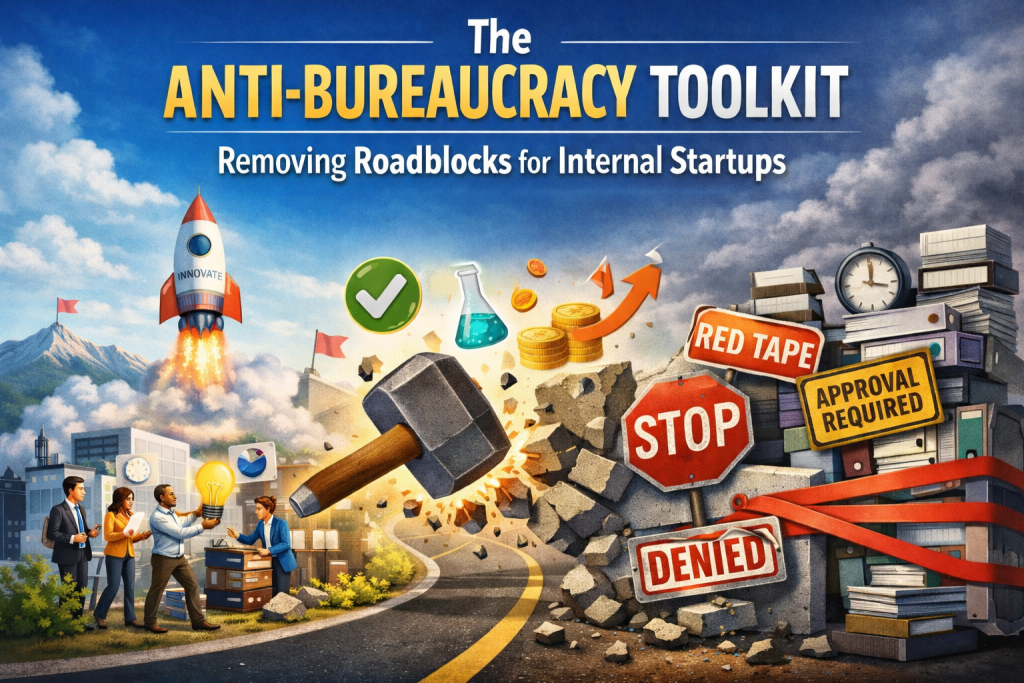
The Human Capital Ledger

Accounting for Employee Knowledge and Skills

LAST UPDATED: November 20, 2025 at 12:43PM

The Human Capital Ledger

GUEST POST from Chateau G Pato

Every organization meticulously tracks its financial assets, inventory, and intellectual property. We have sophisticated systems for accounting for every dollar, every piece of equipment, every patent. Yet, the most valuable, dynamic asset in any knowledge-driven economy—the collective intelligence, skills, and experience of our employees—remains largely unaccounted for, relegated to static job descriptions or informal tribal knowledge. This profound oversight isn’t just an HR problem; it’s a strategic vulnerability costing companies dearly in lost innovation, inefficient project staffing, and a diminished ability to adapt to rapid market changes.

It’s time for a fundamental shift in how we perceive and manage our workforce: to introduce the concept of a Human Capital Ledger. Just as a financial ledger provides a clear, real-time view of monetary assets and liabilities, a Human Capital Ledger offers a dynamic, structured account of the knowledge, skills, and even passions resident within our workforce. This isn’t merely an HR tool; it’s a strategic imperative for any leader serious about human-centered innovation and organizational resilience in the 21st century.

The goal isn’t to commoditize human beings but to elevate our collective understanding of their diverse capabilities, unlocking latent potential and enabling organizations to deploy talent with unprecedented agility and purpose.

The Hidden Costs of Unaccounted Human Capital

When employee skills and knowledge are not transparently mapped and made discoverable, organizations suffer from a range of costly inefficiencies and missed opportunities:

  • Innovation Bottlenecks: Promising projects are stalled or fail because the right internal expertise isn’t easily discoverable or deployable across departmental silos.
  • Inefficient Staffing: Teams struggle to find individuals with niche skills, leading to expensive external hires when internal talent already exists, or inefficient, reactive upskilling.
  • Redundant Training: Multiple employees are trained in the same skill without knowing others already possess it, wasting valuable resources and time.
  • Disengaged Workforce: Employees with valuable, often hidden, skills feel overlooked, their full potential untapped, leading to frustration, lower morale, and ultimately, attrition.
  • Slow Adaptation: The organization struggles to pivot quickly to new market demands, technological shifts, or competitive threats because it lacks a clear, real-time view of its collective capability to learn and execute new strategies.

A Human Capital Ledger directly addresses these by transforming human capability into a transparent, actionable, and strategically managed asset.

Key Characteristics of an Effective Human Capital Ledger

Building a robust Human Capital Ledger requires moving beyond outdated HR databases and focusing on dynamic, actionable insights that empower both individuals and the organization:

  • Dynamic Skill Mapping: A continuously updated, granular mapping of individual skills, proficiencies (e.g., beginner, proficient, expert), and even demonstrated capabilities. This goes far beyond generic job titles to capture true expertise.
  • Experience & Project History: A rich record of projects contributed to, specific roles played, and tangible outcomes achieved, providing essential context for skills in action.
  • Learning Pathways & Interests: Documenting employee development goals, certifications, and expressed interests or passions, indicating potential future capabilities and areas for growth.
  • Searchable & Discoverable: Enabling leaders, project managers, and even employees themselves to easily search for specific skills, expertise, or project experiences across the entire organization.
  • Self-Maintained & Peer-Validated: A system that encourages employees to update and enrich their own profiles, potentially with peer validation or manager endorsement, to ensure accuracy and reduce HR administrative burden.
  • Privacy & Security-Centric: Designed with clear rules on data access and use, respecting employee privacy while maximizing organizational benefit and building trust.

Key Benefits for Innovation and Change

Implementing a Human Capital Ledger fundamentally transforms how organizations understand, manage, and deploy their talent, leading to significant competitive advantages and cultural shifts:

  • Accelerated Innovation: Rapidly form high-impact, cross-functional “Tiger Teams” by precisely identifying individuals with complementary, often hidden, skills across departments, dramatically shortening innovation cycles.
  • Strategic Workforce Planning: Proactively identify emerging skill gaps and critical dependencies, informing targeted training programs, strategic hiring, or agile re-skilling initiatives before they become crises.
  • Enhanced Employee Engagement: Employees feel genuinely valued when their full range of skills is recognized and utilized; they are empowered to seek projects that align with their interests, passions, and growth objectives.
  • Smarter Project Staffing: Optimize project success by precisely matching the right skills and experience to critical initiatives, reducing ramp-up time, minimizing risk, and increasing efficiency.
  • Improved Knowledge Transfer: Easily identify internal experts for mentoring, training, or documenting critical institutional knowledge, mitigating the risks of brain drain and ensuring continuity.
  • Agile Talent Deployment: Pivot quickly to new market opportunities or internal challenges by rapidly re-deploying existing talent with the exact capabilities required, fostering true organizational adaptability.

Case Study 1: The Global Consulting Firm and the Expert Rediscovery

Challenge: Redundant Expertise & Missed Project Opportunities

A global consulting firm, renowned for its expertise, often struggled to staff niche, high-value projects efficiently. Project leaders frequently hired expensive external contractors for specialized skills (e.g., specific industry regulations, emerging AI platforms) only to later discover an internal expert with the exact same proficiency working in a different, often distant, division. This led to wasted costs, project delays, and missed internal growth opportunities.

Human Capital Ledger Intervention:

The firm implemented a dynamic Human Capital Ledger, leveraging an enhanced internal social networking platform. Every consultant and staff member was encouraged (and incentivized) to create a detailed skill profile, listing technical proficiencies, industry knowledge, language capabilities, and even soft skills. Crucially, the system allowed for peer endorsements of skills and linked profiles directly to past project contributions and outcomes. A dedicated “Talent Scout” role was introduced to actively search this ledger for internal matches before external sourcing was considered.

The Human-Centered Lesson:

Within two years, external contractor spend for specialized skills dropped by 15%, equating to millions in savings. More importantly, internal project success rates increased as teams found the right internal experts faster. Consultants felt more valued, seeing their diverse skills recognized and utilized, leading to higher morale and reduced turnover. The ledger transformed talent management from a reactive, siloed process to a proactive, networked ecosystem, enabling the firm to surface hidden gems of human capital and strategically deploy its existing workforce with unparalleled precision.

Case Study 2: The Manufacturing Company and the Automation Upheaval

Challenge: Adapting to Rapid Automation & Skill Obsolescence

A traditional manufacturing company faced a strategic imperative to rapidly automate its factory floors. This meant many long-term employees’ manual labor skills were becoming obsolete, leading to significant anxiety, resistance to change, and potential layoffs. The company lacked a clear understanding of what transferable skills these employees possessed or their capacity for re-skilling into new roles.

Human Capital Ledger Intervention:

The company developed a Human Capital Ledger focused specifically on “re-skilling potential.” Beyond current job skills, it collected data on employees’ problem-solving aptitudes, willingness to learn new technologies, previous training (even outside work, like hobbyist interests), and expressed career interests. Using this rich qualitative and quantitative data, they identified a cohort of “automation-ready” employees—those with strong analytical skills or a passion for technology—who were offered intensive training programs for new roles in robot maintenance, data analysis, and automation programming. The ledger also helped leadership proactively identify which skills were rapidly becoming obsolete, enabling targeted planning for up-skilling others.

The Human-Centered Lesson:

This proactive, human-centered approach saved the company millions in potential severance and retraining costs, but more significantly, it retained invaluable institutional knowledge and significantly boosted employee morale and trust during a turbulent period. The ledger transformed a potential workforce crisis into a strategic re-skilling opportunity, demonstrating a profound commitment to its people. It proved that understanding the full spectrum of human capital, including potential and passion, is critical for navigating massive organizational change with empathy and efficiency, turning disruption into opportunity.

Building Your Human Capital Ledger: A Strategic Imperative

Implementing a Human Capital Ledger is a journey, not a destination. It requires a thoughtful investment in technology, an unwavering commitment to data integrity, and a culture that values transparency, continuous learning, and employee empowerment. Start small, learn quickly, and scale strategically:

  • Pilot in a Department or Project: Choose one department or a high-priority project to build out detailed, dynamic skill profiles, demonstrating early wins.
  • Focus on Critical Skills First: Identify the 5-10 strategic skills your organization desperately needs for future growth or current challenges and prioritize mapping those.
  • Empower Employees: Design a system that encourages and incentivizes individuals to take ownership over their profiles, updating them regularly, and seeking peer validation. Make it *their* tool for career growth.

By bringing the invisible wealth of human capability into clear, actionable view, the Human Capital Ledger empowers organizations to move with unprecedented agility, innovate with precision, and build a workforce that feels truly valued, engaged, and strategically indispensable. It’s not just better accounting; it’s the ultimate human-centered approach to unlocking organizational success and navigating the future of work.

“The most valuable asset isn’t on your balance sheet; it’s in the minds, hearts, and hands of your people. It’s time to account for it, not just manage it.” — Braden Kelley

Your first step towards building a Human Capital Ledger: Choose one specific, complex problem your team or organization is currently facing that requires diverse expertise. Instead of immediately looking outside or relying on formal titles, task a small group with identifying 3-5 existing employees (even in different departments or roles) who might possess unique, underutilized skills, experiences, or even passions that could contribute to solving that problem. Focus solely on their unlisted capabilities and how they could be creatively leveraged for an unexpected solution.

Extra Extra: Because innovation is all about change, Braden Kelley’s human-centered change methodology and tools are the best way to plan and execute the changes necessary to support your innovation and transformation efforts — all while literally getting everyone all on the same page for change. Find out more about the methodology and tools, including the book Charting Change by following the link. Be sure and download the TEN FREE TOOLS while you’re here.

Image credit: Pexels

Subscribe to Human-Centered Change & Innovation WeeklySign up here to get Human-Centered Change & Innovation Weekly delivered to your inbox every week.