Category Archives: Psychology

Personal Resilience Routines That Sustain Innovative Thinking

LAST UPDATED: February 23, 2026 at 3:41PM

Personal Resilience Routines That Sustain Innovative Thinking

GUEST POST from Art Inteligencia

I. Introduction: The Innovation Burnout Paradox

In the pursuit of the “Next Big Thing,” we often overlook the most fragile component of the innovation engine: the human mind.

The Cognitive Cost of Constant Change

By 2026, the velocity of technological disruption has reached a point where “change fatigue” is no longer a buzzword—it is a baseline reality. Innovation requires a high degree of cognitive bandwidth; it demands the ability to see patterns in chaos and find the “unobvious” path. However, when an innovator is in a state of chronic stress, the brain shifts from the creative prefrontal cortex to the reactive amygdala. We stop looking for the future because we are too busy surviving the present.

Resilience as a Strategic Asset

We must stop viewing resilience as a “soft skill” or a post-crisis recovery tactic. In a high-stakes environment, resilience is a strategic asset. It is the proactive management of your creative energy. Without a structured routine to protect your mental state, your capacity for breakthrough thinking doesn’t just slow down—it vanishes.

The Core Thesis: Regulated Minds Lead Best

The most successful innovators of this decade aren’t the ones working the longest hours; they are the ones with the most regulated nervous systems. To sustain innovative thinking, we must treat our psychology like our technology: it requires regular updates, maintenance, and a secure firewall against the noise of the modern world.

The Braden Kelley Insight: Resistance to change in an organization is often just a symptom of collective exhaustion. When we build personal resilience, the “future” stops being an intimidating threat and starts being a playground for our curiosity.

II. The Physiology of Creativity: Understanding the Baseline

Innovation is a biological process before it is a business process. To sustain creative output, we must understand the “hardware” our ideas run on.

The Prefrontal Cortex vs. The Amygdala

The prefrontal cortex is the seat of our innovation center—it handles complex problem-solving and lateral thinking. However, it is also the most energy-intensive part of the brain. When we are stuck in a cycle of “survival mode,” the amygdala takes over, prioritizing immediate threats over long-term vision. You cannot “brainstorm” your way out of a physiological threat response. Resilience routines serve to keep the amygdala quiet so the prefrontal cortex can stay loud.

The Role of Neuroplasticity in Innovation

In 2026, we understand that the brain is not a static organ; it is a dynamic network. Resilience routines are essentially neuroplasticity training. By intentionally exposing ourselves to diverse perspectives and “recovery periods,” we strengthen the neural pathways associated with divergent thinking. This makes the brain more nimble, allowing it to pivot between “focus mode” and “discovery mode” with less friction.

The Energy/Output Curve

Innovation doesn’t happen at a steady state; it happens in pulses. Every individual has a personal “Peak Curiosity Window”—a time when cognitive load is light and associative thinking is at its highest. Resilience routines help us map this curve, ensuring we spend our most valuable cognitive capital on our most complex innovation challenges rather than administrative clutter.

The Braden Kelley Insight: You cannot force a breakthrough when your “biological battery” is at 5%. Innovation isn’t just about what you think; it’s about the physiological state you are in while you’re thinking it. Protect your physiology to protect your future.

III. Daily Routines: The “Innovator’s Shield”

To be an effective change agent in 2026, you must build a defensive perimeter around your focus. These three daily practices form the “Innovator’s Shield,” protecting your creative spark from the dampening effect of the daily grind.

1. The Morning “Intent Calibration”

The most dangerous habit of a modern leader is “Reactive Waking”—immediately checking emails or news feeds. This cedes control of your brain to other people’s priorities. Instead, implement a 15-minute Intent Calibration. Before touching a device, define the one “unobvious” problem you want your subconscious to work on today. By setting this “North Star” early, you prime your brain to filter the day’s noise for relevant innovation signals.

2. Scheduled “Digital Fasting” Blocks

Innovation requires synthesis, which cannot happen in a state of constant notification pings. Establish “Analog Islands”—blocks of 60 to 90 minutes where you are completely offline. This digital fasting period allows the brain to transition from Linear Processing to Associative Thinking. This is where the dots finally connect, turning disparate data into a cohesive strategy.

3. The Micro-Recovery Pulse

Complexity is exhausting. We must move away from the “8-hour marathon” and toward “Sprinting and Pulsing.” After every high-complexity task, perform a 5-minute Micro-Recovery. This isn’t scrolling social media; it’s a sensory shift—walking, box breathing, or simply looking at a distant horizon. These pulses prevent “cognitive debt” from accumulating, ensuring you have as much creative energy at 4:00 PM as you did at 9:00 AM.

The Braden Kelley Insight: You don’t find time for innovation; you make time by fiercely protecting your bandwidth. The “Shield” isn’t about isolation—it’s about creating the mental space necessary to be truly present when the big problems arrive.

IV. Cognitive Routines: Protecting the “Why”

Resilience isn’t just about how you rest; it’s about how you process information. These cognitive habits ensure your mindset remains agile enough to pivot when the data changes.

1. The Weekly Curiosity Audit

In the rush to execute, we often mistake movement for progress. A Curiosity Audit is a ritualized review where you ask: “What did I learn this week that challenged my existing mental models?” If you can’t answer that, you aren’t innovating; you’re just repeating. This routine forces the brain to value “intellectual discovery” as much as “task completion.”

2. Reframing the “Fail” into “Data”

The emotional weight of a failed project is the leading cause of innovation burnout. Successful resilient thinkers use a linguistic routine to depersonalize setbacks. Instead of saying “We failed,” the routine is to ask, “What was the unexpected signal in this experiment?” By treating every outcome as Experimental Data, you remove the threat to the ego and keep the prefrontal cortex engaged in problem-solving.

3. Strategic Perspective Shifting

Cognitive rigidity is the enemy of innovation. As a daily warm-up, practice Lateral Thinking: pick a problem and force yourself to view it through the lens of a completely different industry (e.g., “How would a hotel manager solve this software latency issue?”). This routine keeps your neural pathways flexible and prevents the “functional fixedness” that kills creative vision.

The Braden Kelley Insight: Your mindset is a muscle. If you only exercise it on “safe” problems, it will atrophy. Cognitive resilience is about building the strength to stay curious even when the results are disappointing. Innovation is the art of staying in the game.

V. Operationalizing Resilience in Teams

Personal resilience is the spark, but team resilience is the power grid. To build a sustainable innovation culture in 2026, leaders must scale individual habits into collective operating procedures.

Psychological Safety as a Collective Routine

Innovation cannot survive in an environment of fear. We must normalize “recovery time” and the open discussion of cognitive load. Scaling resilience means creating a culture where a team member can say, “I am at capacity,” without it being seen as a lack of commitment. This Psychological Safety is the lubricant that allows the gears of change to turn without seizing up under friction.

The “Rest-to-Innovation” Ratio

The most successful organizations of the future understand that Deep Work requires Deep Rest. Leaders should track the “Rest-to-Innovation” ratio—ensuring that high-intensity sprints are followed by “Low-Bandwidth” periods dedicated to reflection and maintenance. If your team is constantly sprinting, they aren’t innovating; they are just running toward burnout.

The Braden Kelley “Resilience Check-in”

Before starting any high-complexity meeting or sprint, implement a 2-minute Cognitive Load Check-in. Ask the team to rate their mental energy from 1 to 10. If the average is low, pivot the meeting from “ideation” (which requires high energy) to “information sharing” (which requires less). This simple routine ensures you aren’t trying to solve 10-point problems with 2-point energy.

The Braden Kelley Insight: A leader’s job isn’t to be the smartest person in the room; it’s to ensure the room has the mental freshness required to solve the problem. When you operationalize resilience, you aren’t just protecting your people; you’re protecting your pipeline.

VI. Conclusion: The Long-Term Vision

As we look toward the horizon of 2026 and beyond, we must accept a fundamental truth: Sustainable innovation is a byproduct of a sustainable life. We cannot expect our organizations to be agile if our people are brittle. Personal resilience routines are not a luxury or a “perk”—they are the essential maintenance required to keep the most sophisticated tool in the world—the human mind—functioning at its peak.

Energy as the Ultimate KPI

The transition from “Time Management” to “Energy Management” is the hallmark of the modern innovator. By protecting our cognitive bandwidth, scheduled analog time, and physiological state, we ensure that we are ready to meet complexity with curiosity rather than fear. When we are resilient, we don’t just survive change; we drive it.

The choice is clear: we can continue to burn out our brightest minds in a race for short-term velocity, or we can build the routines that allow for a lifetime of breakthrough thinking. True leadership in this complex age is about modeling this balance.

The Final Word: Your Creativity is Your Legacy

Innovation isn’t about the hours you put in; it’s about the insight you bring out. Resilience is the vessel that carries those insights to the finish line.

Resilience & Innovation FAQ

1. How does personal resilience impact innovation?

Innovation is a high-energy mental task. Resilience isn’t just about “bouncing back”; it’s about protecting your brain’s hardware. When you are resilient, your brain stays in “discovery mode” (prefrontal cortex) rather than slipping into “panic mode” (amygdala).

2. What is the best daily routine for creative energy?

Start with Intent Calibration: give your subconscious a problem to chew on before you check your phone. Then, use Digital Fasting blocks to cut the noise. This creates the “quiet” necessary for your best ideas to finally surface.

3. Why should teams schedule “recovery time”?

You can’t sprint forever. Organizations that track a Rest-to-Innovation ratio see higher quality output because their people aren’t operating in a state of permanent exhaustion. Fresh minds solve bigger problems.

Image credit: Google Gemini

Subscribe to Human-Centered Change & Innovation WeeklySign up here to get Human-Centered Change & Innovation Weekly delivered to your inbox every week.

Aligning Internal and External Stakeholder Trust

Trust Ecosystems

LAST UPDATED: February 21, 2026 at 1:41PM
Aligning Internal and External Stakeholder Trust

GUEST POST from Art Inteligencia


I. Introduction: The Unified Field Theory of Trust

The Trust Paradox

In the modern business landscape, we face a glaring contradiction: organizations are spending record amounts on “Brand Trust” and external PR campaigns while simultaneously overlooking the quiet erosion of trust within their own walls. This is the Trust Paradox. You cannot effectively project a promise to the market that your own employees don’t believe in. When the internal reality and the external message diverge, the resulting “trust gap” becomes a massive hidden tax on every innovation effort you undertake.

Defining the Trust Ecosystem

A Trust Ecosystem is a holistic framework where internal psychological safety and external brand credibility function as a single, self-reinforcing loop. In this model, transparency is not a department; it is a biological function of the organization. Trust flows from the leadership to the front line, and from the front line to the customer. If any part of this circuit is broken, the entire ecosystem loses its power to innovate and adapt.

The Human Element: Trust as Lubricant and Buffer

Trust is the primary lubricant for innovation. It reduces the “friction” of collaboration and speeds up the Knowledge Velocity we discussed previously. Beyond speed, trust serves as the ultimate buffer against market volatility. When things go wrong — as they inevitably will in a disruptive world — a high-trust organization is given the benefit of the doubt by both its employees and its customers, allowing for a Human-Centered Pivot rather than a panicked retreat.

The Braden Kelley Perspective: In 2026, your brand isn’t what you say it is in a keynote; it’s the sum of the micro-interactions between your people and your partners. If you haven’t built a Trust Ecosystem, you’re building on sand.

II. The Internal Pillar: Psychological Safety as a Strategic Asset

Innovation dies in the dark. If your team is afraid to fail, they are afraid to learn. Internal trust is the foundation upon which all strategic risk-taking is built.

1. Beyond Surface Transparency

Many leaders confuse transparency with “announcing decisions.” True internal trust moves from broadcasting to bidirectional vulnerability. It’s about creating an environment where a junior developer feels safer pointing out a flaw in a strategy than keeping quiet to protect the “peace.” In 2026, silence isn’t peace; it’s a latent risk.

2. The Vulnerability Loop

Trust is not built through perfection; it is built through shared humanity. When a leader admits, “I don’t have the answer to this shift yet, but here is how we will find it together,” they trigger a Vulnerability Loop. This signal gives the rest of the team permission to be honest about their own challenges, accelerating the “Unlearning Rate” we need for true adaptability.

3. Measuring Internal Trust: The “Safe-to-Fail” Score

We must treat trust as a hard metric. We track the frequency of “dissenting signals” in project meetings. A project with zero dissenting voices isn’t a perfect project; it’s a project with a trust problem. We use Safe-to-Fail experiments to gauge health — if a small failure results in a “blame storm,” your trust ecosystem is compromised.

Braden Kelley’s Insight: Psychological safety is the laboratory equipment of innovation. You wouldn’t expect a scientist to work in a lab without power; don’t expect your team to innovate in a culture without trust.

III. The External Pillar: Radical Transparency and Consumer Agency

In an era of decentralized information, you can no longer “curate” your image. You must demonstrate your integrity. External trust is the result of shifting from gatekeeping to radical openness.

1. The End of Information Asymmetry

The days when a corporation knew significantly more about its products’ flaws than the public are over. With AI-driven consumer research and real-time supply chain tracking, the “market” sees your blind spots before you do. External trust in 2026 is built by being the first to disclose issues, not the last to admit them.

2. Co-Creation as a Trust Builder

The ultimate expression of trust is giving your stakeholders a seat at the design table. By moving from “selling to” to “designing with,” you transform customers into co-owners of your success. This Co-Creation Framework ensures that the value you provide is aligned with the actual needs and ethics of your community.

3. The Accountability Framework: The “Human-Centered Pivot”

Trust isn’t broken when a company fails; it’s broken when a company deflects. We measure external trust by the Accountability Index: How quickly does the organization acknowledge a mistake, and how human-centered is the remedy? A transparent pivot during a crisis can actually result in higher long-term trust than never failing at all.

The Braden Kelley Insight: External trust is the shadow cast by your internal culture. If you try to fix the shadow without fixing the object, you’re just wasting time. Authenticity isn’t a marketing strategy; it’s an operational requirement.

IV. Aligning the Pillars: The Mirror Effect

Your organization is a glass house. What happens on the inside eventually reflects on the outside. Alignment is about ensuring there is no “refractive index” between your culture and your brand.

1. Employee Advocacy: The Real Marketing Department

In a hyper-connected world, your employees’ glassdoor reviews and social media presence carry more weight than your billboard ads. When internal trust is high, your front line becomes a powerful engine for external credibility. They don’t just sell the product; they validate the integrity of the company.

2. The Ethical Consistency Check

Trust is shattered when external brand promises (e.g., “We value sustainability”) are contradicted by internal behaviors (e.g., “We prioritize short-term margins over green logistics”). We must perform regular Consistency Audits to ensure that the internal “Way” is a perfect mirror of the external “Brand.”

3. The Mirror Effect in Crisis

When a crisis hits, an aligned organization responds with a single voice. Because the internal team is already trusted with the truth, they don’t have to wait for a “script” from PR. They act according to the company’s shared values, providing a coherent and authentic response to external stakeholders.

The Braden Kelley Insight: You can’t fake a smile for the customer if your culture is making your employees frown. Alignment is about making sure the “inside” of your organization is as healthy as the “outside” looks.

V. Architecting the Ecosystem: Tools for Alignment

Trust is not a “vibe” — it is a structural requirement. To move from inspiration to operation, leaders need a toolkit that maps and manages the invisible threads connecting people, purpose, and profit.

1. The Trust Audit & Gap Analysis

Before building, we must assess the current terrain. An Innovation Trust Audit measures the delta between executive intent and frontline perception. We look for “Trust Gaps” where external marketing makes promises that internal operational constraints prevent employees from keeping.

2. Stakeholder Maps 2.0: Mapping Trust Nodes

Traditional stakeholder mapping focuses on power and interest. Stakeholder Maps 2.0 identify “Trust Nodes” — the individuals or community leaders who act as information bridges. By mapping these nodes, we can see where trust is flowing freely and where it is bottled up by bureaucracy or poor communication.

3. The Bidirectional Dialogue Loop

An ecosystem requires circulation. We implement Dialogue Loops that bypass traditional hierarchies. External feedback from customers and partners shouldn’t just sit in a CRM; it must flow directly into internal “Retrospective” meetings. Conversely, internal innovation breakthroughs should be shared with external stakeholders early to build “co-creation equity.”

4. Ethical Guardrail Integration

Finally, we must bake trust into the “code” of the organization. This means integrating ethical guardrails into the Product Development Life Cycle (PDLC). If a project threatens the Trust Ecosystem (e.g., through intrusive data practices), the system should have “circuit breakers” that allow any stakeholder to halt progress until alignment is restored.

The Braden Kelley Insight: Tools don’t build trust; people do. But the right tools can reveal the “leaks” in your organization where trust is being wasted. Architecture exists to support the human connection, not to replace it.

VI. Conclusion: Trust as a Competitive Moat

In the hyper-competitive landscape of 2026, technology can be commoditized, and business models can be disrupted overnight. But a Trust Ecosystem — the deep, cultural alignment of internal values and external promises — is incredibly difficult to replicate. It is the ultimate competitive moat, built not with walls to keep people out, but with connections to draw people in.

The Integrity Premium

The most successful organizations of the future will not be those with the most data, but those with the most Integrity. There is a tangible “Integrity Premium” in the market: high-trust companies enjoy lower employee turnover, higher customer loyalty, and a faster “Insight-to-Action” cycle because they don’t have to waste time navigating internal politics or external skepticism.

When you align your internal psychological safety with your external brand credibility, you create an organization that is not only “built to last” but “built to lead.” You stop reacting to the future and start shaping it, because your stakeholders — both inside and outside — believe in your “Why” as much as you do.

The Final Word: Integrity is the New Agility

The future belongs to the organizations that are the same on the inside as they are on the outside. Authentic innovation requires an authentic culture.

— Braden Kelley

Trust Ecosystems FAQ

1. What is a Trust Ecosystem in business?

It is a holistic model where internal psychological safety and external brand credibility are treated as a single system. In 2026, you cannot “fake” a great brand if your culture is broken; a Trust Ecosystem ensures your “inside” and “outside” are perfectly aligned.

2. How does internal trust impact external innovation?

Trust is a lubricant for speed. When employees trust their leaders, they share “bad news” faster. This high Knowledge Velocity allows the company to pivot away from failing ideas and toward market opportunities before the competition, creating a more reliable external brand.

3. What is the “Mirror Effect” in stakeholder trust?

The Mirror Effect suggests that your organization is transparent. Your frontline employees are the “glass” through which the public sees your company. If they don’t believe your mission, your customers eventually won’t either. Integrity means ensuring the reflection matches the reality.

Image credit: Google Gemini

Subscribe to Human-Centered Change & Innovation WeeklySign up here to get Human-Centered Change & Innovation Weekly delivered to your inbox every week.

The Emotional Cost of Leading Through Ambiguity

LAST UPDATED: February 14, 2026 at 10:46AM

The Emotional Cost of Leading Through Ambiguity

GUEST POST from Chateau G Pato

We often discuss innovation as if it is a purely mechanical process—a series of workshops and rapid prototyping sessions. But as a practitioner of Human-Centered Change™, I have seen that the greatest obstacle to progress isn’t a lack of tools; it is the immense emotional toll taken on leaders who must navigate the fog of the unknown.

Leading through ambiguity requires more than strategic foresight; it requires emotional stamina. When the path forward is unclear, the wiring of the organization becomes strained. Leaders are expected to provide a sense of certainty they do not personally feel, acting as a lightning rod for the collective anxiety of their teams.

“Innovation is the light, but ambiguity is the tunnel. To lead others through it, you must be willing to walk in the dark without losing your own sense of direction—or your humanity.”
— Braden Kelley

The Burden of the Invisible Decision

The heaviest weight a leader carries is the decision made without enough data. In a low-trust environment, these decisions are met with bureaucratic corrosion. We must move away from the myth of the heroic leader who always has the answer and embrace the vulnerable leader who is honest about the uncertainty.

Case Study 1: The Pivot of a Global Fintech Titan

During a period of sudden regulatory shifts, the CEO of a major fintech firm faced a crossroad. The emotional cost was visible in the leadership team’s attrition rate. It was only when the CEO stopped trying to project certainty and started projecting clarity of purpose that the team stabilized. By admitting the unknown while anchoring in values, they successfully transitioned.

Case Study 2: Rebuilding Trust in a Legacy Manufacturer

A century-old manufacturing company found its market share evaporating. Ambiguity created a culture of fear and strategic paralysis. A new Chief Innovation Officer utilized FutureHacking™ principles to create small, safe-to-fail experiments. By reducing the scale of the unknown, they rebuilt the soil required for innovation to flourish again.

The Anatomy of Resilience

To lead through the fog, one must understand the Change Spectrum. It is not a binary switch; it is a fluid experience where leaders must balance exploitation with exploration. This requires a level of psychological safety that starts at the top.

Ambiguity is no longer an occasional disruption. It is the default operating environment. Markets shift overnight. Technologies evolve before implementation plans are complete. Customer expectations mutate faster than organizational structures can respond.

We often talk about strategy, capability, and execution in these moments. What we talk about far less is the emotional cost borne by the people expected to guide everyone else through the fog.

Leading through ambiguity is not just a cognitive challenge. It is an emotional endurance test.

“Uncertainty doesn’t exhaust leaders because they lack answers. It exhausts them because they feel responsible for everyone else’s anxiety.”
— Braden Kelley

That responsibility — often self-imposed — creates a hidden tax on decision-making, relationships, and resilience. If we want sustainable innovation, we must first acknowledge and design for the emotional realities of leadership under uncertainty.

The Invisible Weight of Not Knowing

In stable environments, leadership feels like navigation. In ambiguous environments, it feels like exploration. Maps are incomplete. Signals are contradictory. Outcomes are unknowable.

The emotional strain comes from three persistent tensions:

  • Projection vs. Honesty: Leaders feel pressure to project confidence while privately wrestling with doubt.
  • Speed vs. Reflection: Decisions must be made quickly, even when clarity is low.
  • Empathy vs. Absorption: Supporting others emotionally without absorbing all of their fear.

When these tensions go unmanaged, leaders experience fatigue, isolation, and in many cases, quiet burnout.

Case Study #3: Digital Transformation in a Legacy Manufacturer

A global industrial manufacturer — successful for more than 70 years — embarked on a sweeping digital transformation. Automation, AI-enabled forecasting, and connected products promised efficiency gains and new service revenue.

But inside the organization, ambiguity ruled.

Middle managers were unsure which roles would change. Engineers feared their expertise would become obsolete. Executives faced investor pressure to deliver results quickly.

The CEO did what many leaders do in these moments: she tried to absorb the uncertainty herself. She minimized her own concerns in public forums, offered decisive messaging, and kept pushing forward.

Within eighteen months, transformation milestones were technically on track. But employee engagement scores dropped. Voluntary turnover increased. The CEO privately admitted feeling emotionally drained and increasingly disconnected from her team.

What changed the trajectory was not a new technology plan. It was a shift in emotional posture.

The executive team began hosting “Ambiguity Forums” — open conversations where leaders explicitly named what they did not yet know. They reframed uncertainty as shared exploration rather than hidden risk. Senior leaders received coaching on emotional regulation and boundary-setting.

Performance did not suffer. In fact, cross-functional collaboration improved. By acknowledging ambiguity instead of masking it, leaders reduced the emotional isolation that had been quietly eroding trust.

Case Study #4: Healthcare Leadership During a Crisis

During a period of systemic strain in a regional healthcare network, hospital administrators were forced to make rapid policy decisions with incomplete data. Staffing models shifted weekly. Protocols evolved daily.

Frontline clinicians were exhausted. Patients were anxious. Regulators issued shifting guidance.

The Chief Medical Officer initially responded with relentless availability — 18-hour days, constant communication, and personal involvement in nearly every decision. The intention was admirable: protect the organization by carrying the burden personally.

The result was predictable. Decision fatigue set in. Emotional reactivity increased. Small conflicts escalated quickly.

A turning point came when the leadership team adopted a structured decision framework that distinguished between reversible and irreversible decisions. They created rotating “clarity leads” for specific issue clusters, distributing responsibility rather than centralizing it.

Most importantly, they normalized emotional check-ins at the start of leadership meetings. Not as therapy, but as operational hygiene.

The shift reduced burnout indicators among senior leaders and improved response consistency. The lesson was clear: ambiguity becomes dangerous when leaders attempt to metabolize it alone.

The Innovation Connection

Innovation thrives in uncertainty. But human beings do not automatically thrive in prolonged ambiguity.

When leaders suppress their emotional reality, several downstream effects emerge:

  • Risk aversion increases, despite rhetoric about experimentation.
  • Communication becomes overly controlled and less authentic.
  • Teams mirror the leader’s unspoken anxiety.

Conversely, when leaders model regulated vulnerability — acknowledging uncertainty without surrendering direction — psychological safety strengthens.

This does not mean broadcasting every doubt. It means distinguishing between strategic clarity and predictive certainty. Leaders can be clear about purpose and principles while admitting unpredictability in outcomes.

“Your job as a leader is not to eliminate ambiguity. It is to create enough emotional stability that your team can move through it together.”
— Braden Kelley

Designing for Emotional Sustainability

If ambiguity is permanent, then emotional sustainability must be intentional. Here are four design principles for leaders navigating uncertain terrain:

1. Separate Identity from Outcomes
Ambiguous environments guarantee missteps. When leaders fuse their identity with each decision, every setback becomes existential. Establishing a learning orientation protects emotional resilience.

2. Share the Cognitive Load
Distributed decision-making frameworks reduce both burnout and bottlenecks. Clarity about decision rights lowers ambient stress.

3. Make Reflection Operational
Structured pauses are not indulgent. They are performance enablers. Retrospectives, scenario reviews, and emotional check-ins prevent silent accumulation of strain.

4. Build Micro-Communities of Trust
Peer advisory groups, executive coaching circles, and cross-functional leadership cohorts provide safe spaces to process uncertainty without destabilizing broader teams.

Leading through ambiguity is not about heroic endurance. It is about designing systems — personal and organizational — that metabolize uncertainty collectively.

Why This Matters Now

The velocity of change is unlikely to slow. AI adoption, geopolitical shifts, climate pressures, and evolving workforce expectations ensure that ambiguity will remain structural rather than episodic.

Organizations that ignore the emotional dimension of leadership risk high turnover at the very levels where stability is most needed.

The future belongs to leaders who can hold two truths simultaneously: we do not know exactly what will happen, and we are capable of navigating it together.

Ambiguity is not the enemy. Emotional isolation is.

Conclusion: Tending the Inner Garden

If you are an innovation speaker or a change leader, remember that your primary tool is your own resilience. Ownership belongs to the gardener, not the seed-producer. You must water your own well-being to ensure you have the capacity to water the growth of others.

Strategic FAQ

How can leaders reduce the anxiety of ambiguity for their teams?

Leaders should focus on clarity over certainty. You may not be certain of the destination, but you can be clear about the values, the process, and the immediate next steps.

What is strategic paralysis in the face of ambiguity?

Strategic paralysis occurs when the emotional weight of making a “wrong” decision prevents any decision from being made at all. This often stems from a lack of psychological safety.

Why is vulnerability a strength for an innovation leader?

Vulnerability fosters trust. When a leader admits they are navigating ambiguity alongside their team, it creates a sense of shared purpose and encourages collaborative problem-solving.

Image credits: Pixabay

Subscribe to Human-Centered Change & Innovation WeeklySign up here to get Human-Centered Change & Innovation Weekly delivered to your inbox every week.
AI Strategy That Respects Human Autonomy

LAST UPDATED: February 13, 2026 at 3:15PM

AI Strategy That Respects Human Autonomy

GUEST POST from Chateau G Pato

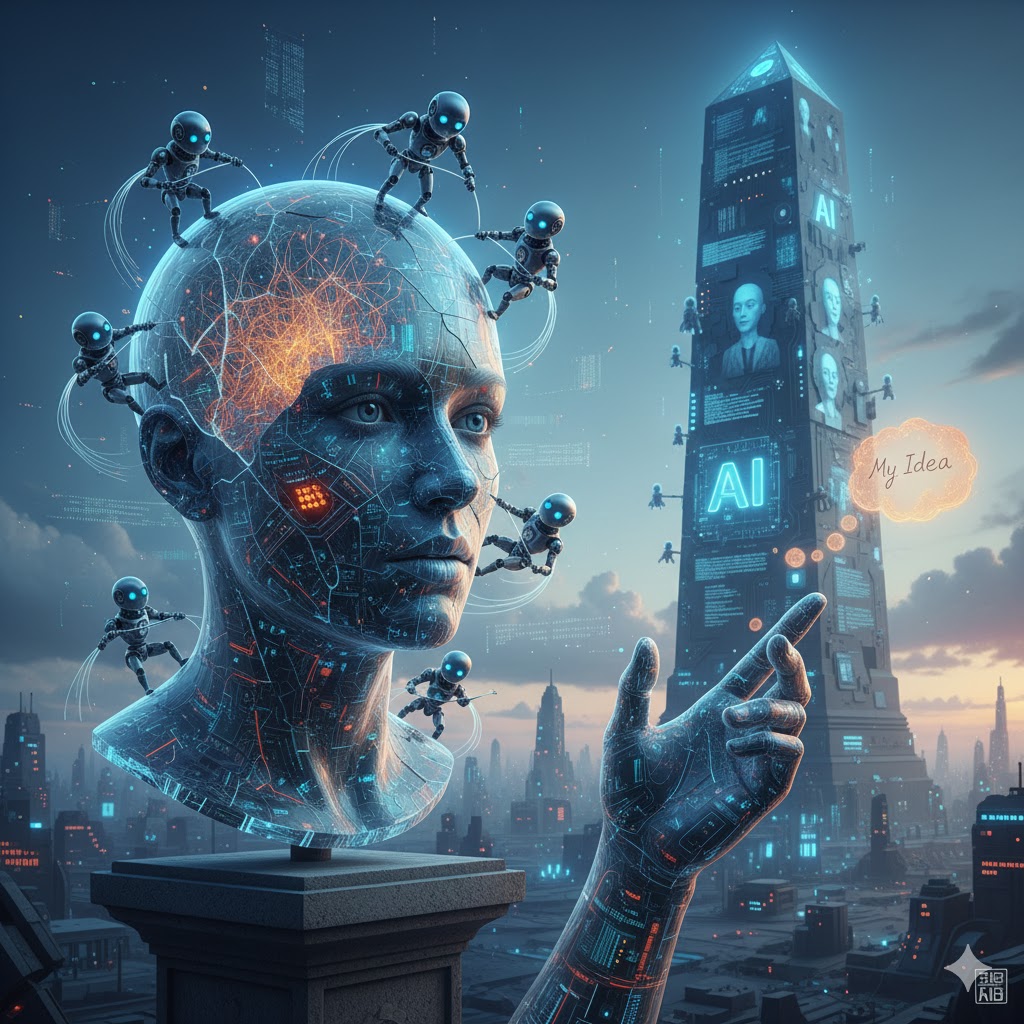
In the rush to integrate Generative AI into every fiber of the enterprise, many organizations are making a critical error: they are designing for efficiency while ignoring agency. As a leader in Human-Centered Innovation™, I believe that if your AI strategy doesn’t explicitly protect and enhance human autonomy, you aren’t innovating—you are simply automating your way toward cultural irrelevance.

Real innovation happens when technology removes the bureaucratic corrosion that clogs our creative wiring. AI should not be the decision-maker; it should be the accelerant that allows humans to spend more time in the high-value realms of empathy, strategic foresight, and ethical judgment. We must design for Augmented Ingenuity.

“AI may provide the seeds of innovation, but humans must provide the soil, water, and fence. Ownership belongs to the gardener, not the seed-producer.”
— Braden Kelley

Preserving the “Gardener” Role

An autonomy-first strategy recognizes that ownership belongs to the human. When we offload the “soul” of our work to an algorithm, we lose the accountability required for long-term growth. To prevent this, we must ensure that our FutureHacking™ efforts keep the human at the center of the loop, using AI to synthesize data while humans interpret meaning.

Case Study: Intuit’s Human-Centric AI Integration

Intuit has long been a leader in using AI to simplify financial lives. However, their strategy doesn’t rely on “black box” decisions. Instead, they use AI to surface proactive insights that the user can act upon. By providing the “why” behind a tax recommendation or a business forecast, they empower the customer to remain the autonomous director of their financial future. The AI provides the seeds, but the user remains the gardener.

Case Study: Haier’s Rendanheyi Model and AI

At Haier, the focus is on “zero distance” to the customer. They use AI to empower their decentralized micro-enterprises. Rather than using AI to control employees from the top down, they use it to provide real-time market signals directly to frontline teams. This respects the autonomy of the individual units, allowing them to innovate faster based on data that supports, rather than dictates, their local decision-making.

“The goal of AI is not to remove humans from the system. It is to remove friction from human potential.”

— Braden Kelley

The Foundation: Augment, Illuminate, Safeguard

Augment: Design AI to extend human capability. Keep meaningful decisions anchored in human review.
Illuminate: Make AI processes visible and explainable. Hidden influence erodes trust.
Safeguard: Establish governance structures that preserve accountability and ethical oversight.

When these foundations align, AI strengthens agency rather than diminishing it.

From Efficiency to Legitimacy

AI strategy is not just about productivity. It is about legitimacy. Stakeholders increasingly evaluate whether institutions deploy AI responsibly. Employees want clarity. Customers want fairness. Regulators want accountability.

Organizations that treat autonomy as a design constraint, rather than an obstacle, build durable trust. They keep humans in the loop for consequential decisions. They provide explainability tools. They align incentives with long-term impact rather than short-term automation wins.

Autonomy is not inefficiency. It is engagement. And engagement is a competitive advantage.

Leadership as Stewardship

Ultimately, AI governance reflects leadership intent. Culture shapes implementation. Incentives shape behavior. Leaders who explicitly prioritize dignity and accountability create environments where AI enhances rather than erodes human agency.

The future will not be defined by how intelligent our systems become. It will be defined by how wisely we integrate them. AI strategy that respects human autonomy is not just ethical—it is strategic. It builds trust, strengthens culture, and sustains innovation over time.

Conclusion: The Human-AI Partnership

The future of work is not a zero-sum game between humans and machines. It is a partnership where empathy and ethics are the primary differentiators. By implementing an AI strategy that respects autonomy, we ensure that our organizations remain resilient, creative, and profoundly human. If you are looking for an innovation speaker to help your team navigate these complexities, the focus must always remain on the person, not just the processor.

Strategic FAQ

How do you define human autonomy in the context of AI?

Human autonomy refers to the ability of employees and stakeholders to make informed decisions based on their own judgment, values, and ethics, supported—but not coerced—by AI-generated insights.

Why is “Human-in-the-Loop” design essential?

Keeping a human in the loop ensures that there is a layer of ethical oversight and qualitative context that algorithms lack. This prevents “hallucinations” from becoming business realities and maintains institutional trust.

Can an AI strategy succeed without a focus on change management?

No. Without Human-Centered Innovation™, AI implementation often leads to fear and resistance. Success requires clear communication, training, and a culture that views AI as a tool for empowerment rather than displacement.

Image credits: Google Gemini

Subscribe to Human-Centered Change & Innovation WeeklySign up here to get Human-Centered Change & Innovation Weekly delivered to your inbox every week.

Measuring the Value of Trust in Innovation Projects

LAST UPDATED: February 11, 2026 at 3:27PM

Measuring the Value of Trust in Innovation Projects

GUEST POST from Chateau G Pato

Innovation is frequently misunderstood as a purely technical or creative pursuit. We often focus on the Value Creation (the invention), the Value Access (the friction reduction), and the Value Translation (the storytelling). But underneath this framework lies a foundation that determines the speed and stability of every initiative: Trust.

In my work with organizations globally, I have seen that trust is not a “soft” metric; it is a hard economic driver. When trust is low, every interaction comes with a “tax” of bureaucracy and skepticism. When trust is high, we experience an innovation dividend that accelerates the Eight I’s of Infinite Innovation.

“Measurement is never neutral. It shapes behavior, reinforces values, and ultimately determines whether innovation survives or suffocates. To measure innovation truly, we must stop counting outputs and start measuring the soil of trust in which those ideas grow.”

— Braden Kelley

The Trust Dividend vs. The Trust Tax

In Human-Centered Innovation, we must recognize that change happens at the speed of belief. If your employees do not trust the leadership’s vision, they will not contribute their Intrinsic Genius — that intersection of competence, joy, and drive. Instead, they will operate in a state of innovation theater, going through the motions while protecting themselves from the perceived risks of failure.

Measuring trust requires looking at the “friction” within your innovation pipeline. Are decisions being stalled by excessive committees? Are team members afraid to share “unpleasant facts” about a failing prototype? These are quantifiable delays. By reducing this friction, we increase the velocity of learning, which is the ultimate metric for any innovation project.


Case Study 1: The Safety Turnaround at Alcoa

When Paul O’Neill took over as CEO of Alcoa in 1987, he didn’t focus on profit margins or R&D spend as his primary metric. Instead, he focused on worker safety. To many analysts, this seemed like a distraction from the core business of making aluminum. However, O’Neill understood that to innovate, he needed to build a Value Ecosystem rooted in trust.

By making safety the non-negotiable priority, he signaled a deep commitment to the well-being of every employee. This created a transparent communication loop where workers felt safe to point out flaws in the manufacturing process without fear of retribution. The result? As trust increased, operational excellence followed. Alcoa’s market value increased by five times during his tenure. The “value of trust” here was measured in the elimination of the silos that previously prevented the flow of innovative ideas from the factory floor to the executive suite.

Case Study 2: Wyeth Pharmaceuticals and the Power of Small Groups

In 2007, Wyeth Pharmaceuticals faced a crisis when a top drug lost 70% of its sales to generics. To survive, they needed to transform their manufacturing across 25 global sites. Rather than a top-down mandate (which usually triggers the 70% failure rate of change programs), they focused on building trust through small, loosely connected groups.

They started with one “keystone change” at a single facility. By focusing on a small win, they built local trust and proved the value of the new methodology. This trust then “cascaded” to other sites. Because the employees saw the success and felt respected in the process, the adoption rate skyrocketed. Wyeth saw a 25% reduction in costs and a significant increase in workforce motivation. The measurement of trust wasn’t a survey; it was the adoption rate and the speed of implementation of the new lean practices.


How to Quantify the Intangible

To measure the value of trust in your own innovation projects, I suggest focusing on these three pillars:

  • Information Transparency: Measure the lag time between a “fatal flaw” being discovered by a team and it being reported to leadership. In high-trust cultures, this is nearly instantaneous.
  • Experimentation Velocity: Track how many experiments are run per quarter. High trust leads to more psychological safety, which encourages teams to take the “leaps of faith” necessary for radical innovation.
  • Adoption Speed: Use my Change Planning Canvas to track how quickly stakeholders move from awareness to advocacy. If trust is high, the “Value Translation” phase requires less effort.

Measuring the Value of Trust in Innovation Projects

Trust is often treated as a soft variable in innovation. It is discussed in leadership offsites, nodded at in strategy decks, and invoked after projects fail. Yet when it comes time to allocate budget, prioritize initiatives, or evaluate performance, trust rarely appears on the scorecard.

This is a mistake.

Innovation is not merely a function of ideas and investment. It is a function of belief. Belief that experimentation will not be punished. Belief that leaders will listen. Belief that customers are telling the truth. Belief that data has not been manipulated to protect careers. Without trust, innovation slows. With trust, it compounds.

“Trust is the invisible infrastructure of innovation. You can’t see it on a balance sheet, but you can see its absence in every stalled initiative.”

— Braden Kelley

The question is not whether trust matters. The question is how to measure its value.

Trust as an Innovation Multiplier

Trust operates as a multiplier on three critical dimensions of innovation:

  • Speed — How quickly teams move from insight to experiment to iteration.
  • Risk Appetite — The willingness to explore uncertain territory.
  • Collaboration Quality — The depth and honesty of cross-functional engagement.

When trust is low, approval cycles lengthen, defensive behaviors increase, and experimentation narrows. When trust is high, friction decreases and learning accelerates.

To measure the value of trust, we must link it to outcomes that executives already care about: cycle time, cost of delay, employee engagement, customer retention, and innovation yield.

Quantifying Trust: Practical Metrics

Trust can be translated into measurable indicators across three categories:

1. Behavioral Metrics

  • Rate of idea submission per employee.
  • Frequency of cross-functional experiments.
  • Percentage of projects with documented learning reviews.

2. Operational Metrics

  • Average decision cycle time.
  • Number of approval layers required for pilot funding.
  • Time between failure and next experiment iteration.

3. Perceptual Metrics

  • Psychological safety survey scores.
  • Leadership credibility ratings.
  • Customer trust indices tied to innovation launches.

Individually, these metrics are imperfect. Together, they create a composite trust index that can be tracked over time and correlated with innovation performance.

Calculating the Financial Impact

To make trust visible in financial terms, leaders can estimate:

  • Cost of Delay Reduction: Faster decision cycles and experimentation lower opportunity costs.
  • Retention Value: Increased employee and customer loyalty reduce replacement and acquisition expenses.
  • Failure Efficiency: Quicker learning cycles reduce wasted capital on prolonged low-probability initiatives.

For example, if a one-month acceleration in product launch generates $2 million in incremental revenue, and higher trust correlates with that acceleration, trust has measurable economic value.

Trust as a Design Variable

Trust is not a byproduct of culture. It is a design choice.

Leaders design incentive systems. They design review processes. They design communication patterns. Each design decision either strengthens or erodes trust.

When innovation systems punish candor, reward political navigation, or obscure decision criteria, trust declines. When systems reward learning, clarify expectations, and distribute authority appropriately, trust grows.

Human-centered change requires that we treat trust not as sentiment but as system architecture.

Building a Trust Dashboard

An effective trust dashboard integrates:

  • Quarterly psychological safety surveys.
  • Innovation pipeline velocity metrics.
  • Cross-functional collaboration frequency data.
  • Customer adoption and retention indicators.

Over time, patterns emerge. Leaders begin to see that dips in trust scores often precede declines in experimentation rates. Increases in transparency frequently correlate with improved launch performance.

This visibility shifts trust from abstraction to accountability.

Conclusion

Innovation thrives where trust is present. It stalls where trust is absent. While trust may feel intangible, its effects are concrete and measurable.

Organizations that intentionally measure trust gain a strategic advantage. They reduce friction, accelerate learning, and amplify the return on innovation investment.

In a world of increasing complexity and algorithmic decision-making, trust becomes even more valuable. It is the foundation that allows people to take risks, share truth, and collaborate across boundaries.

Innovation does not fail because people lack ideas. It fails because people lack confidence in the systems meant to support those ideas.

Measure trust. Design for trust. Lead with trust. The value will reveal itself.

Ultimately, if you are looking to get to the future first, you cannot afford the weight of a low-trust organization. You must design conditions where time stops bullying us and where people feel empowered to illuminate paths previously hidden by the friction of fear.

Frequently Asked Questions

Why is trust considered an economic driver in innovation?

Trust acts as a lubricant that reduces “friction taxes” like bureaucracy and excessive oversight. In high-trust environments, information flows faster, allowing for quicker pivots and lower costs of experimentation.

How can an organization measure something as abstract as trust?

Trust is measured through proxy metrics such as the speed of information flow, the rate of successful experiments, and the time it takes for a team to report project failures or “unpleasant facts” to leadership.

What is the “innovation dividend”?

The innovation dividend is the accelerated ROI and increased speed-to-market achieved when teams operate with high psychological safety, allowing them to collaborate more effectively and share their Intrinsic Genius without fear.

For more insights on building a culture of innovation, consider booking innovation speaker Braden Kelley for your next event.

Image credits: Pixabay

Subscribe to Human-Centered Change & Innovation WeeklySign up here to get Human-Centered Change & Innovation Weekly delivered to your inbox every week.

How Cognitive Load Shapes Innovation Decisions

LAST UPDATED: February 10, 2026 at 2:51PM

How Cognitive Load Shapes Innovation Decisions

GUEST POST from Chateau G Pato

In my years advocating for Human-Centered Innovation™, I have frequently observed a silent killer of progress that no spreadsheet can capture: Cognitive Load. We often treat innovation as a purely intellectual exercise of Value Creation, assuming that if an idea is good enough, it will naturally be adopted. However, the reality is that the human brain has a finite capacity for processing new information, navigating complexity, and managing the anxiety of change. When we overload decision-makers or end-users, we trigger what I call the Corporate Antibody Response — a reflexive rejection of the new in favor of the familiar.

Innovation decisions are not made in a vacuum. They are made by tired people in back-to-back meetings, overwhelmed by data and paralyzed by the fear of making a high-stakes mistake. To be a successful leader, your job isn’t just to generate ideas; it’s to manage the mental bandwidth of your organization. If your Value Translation requires too much “thinking heavy lifting,” the path of least resistance will always lead back to the status quo.

As Braden Kelley often cautions executive teams:

“If your innovation system exhausts the mind before it engages the imagination, it will always produce conservative outcomes.”

— Braden Kelley

Why Cognitive Load Matters More Than Creativity

Creativity does not operate in a vacuum. It requires attention, working memory, and psychological safety. Excessive cognitive load crowds out these conditions.

Innovation environments are uniquely demanding. They combine unfamiliar problems, incomplete data, cross-functional coordination, and high stakes. Without intentional design, these conditions overwhelm even highly capable teams.

The Three Layers of Innovation Friction

Cognitive load in innovation usually manifests in three distinct ways: intrinsic, extraneous, and germane. Intrinsic load is the inherent difficulty of the innovation itself. Extraneous load is the “noise” — the bad presentation decks, the confusing jargon, and the bureaucratic layers that make an idea harder to grasp than it needs to be. Germane load is the “good” effort — the mental energy spent actually integrating the new solution into one’s workflow. As an innovation speaker, I tell my audiences: Minimize the noise so you can afford the change.

Case Study 1: The “Feature-Rich” Software Failure

A global fintech firm spent eighteen months developing an “all-in-one” dashboard for wealth managers. It was a masterpiece of Value Creation, featuring real-time analytics and AI-driven forecasting. However, upon launch, adoption was near zero. The wealth managers, already under high cognitive load from market volatility, found the interface overwhelming. The extraneous load of learning a complex new tool exceeded their mental capacity for germane load.

By applying a human-centered lens, the firm pivoted. They stripped the dashboard down to its three most critical functions and introduced the rest through “progressive disclosure.” By reducing the initial cognitive load, they cleared the way for Value Access. Adoption rates climbed by 300% within one quarter because the innovation finally fit the “mental shape” of the user.

Case Study 2: Reimagining the Executive Approval Process

A manufacturing giant realized their innovation pipeline was clogged at the executive level. Projects weren’t being rejected; they were being “deferred” indefinitely. The problem? The approval dossiers were 100-page technical documents. Executives, facing extreme decision fatigue, simply didn’t have the bandwidth to validate the risk.

The innovation team introduced a “Decision Architecture” based on my Chart of Innovation. They replaced lengthy reports with one-page “Value Hypotheses” that focused on Value Translation. By lowering the cognitive load required to make a “Yes/No” decision, the company increased its innovation velocity by 50% in six months. They didn’t change the ideas; they changed the load required to see their value.

“Innovation transforms the useful seeds of invention into widely adopted solutions. But remember: an overwhelmed mind cannot plant a seed. To innovate, you must first clear the mental weeds of bureaucracy and complexity to make room for the new to take root.”

— Braden Kelley

The Landscape: Managing Bandwidth

In 2026, leading organizations are turning to tools that help quantify and mitigate cognitive load. Startups like Humaans and platforms like Miro are evolving to provide asynchronous innovation environments that reduce the synchronous load of endless meetings. As a thought leader in this space, I frequently suggest that when you search for an innovation speaker, you look for those who understand the neurobiology of change. The future belongs to the “Simplifiers,” not the “Complicators.”

Ultimately, Human-Centered Innovation™ is about empathy for the user’s mental state. If you want your innovation to be widely adopted and valued above every existing alternative, you must make the decision to adopt it as “light” as possible. Stop asking your people to think more; start designing your innovation to require less unnecessary thought. That is how you win the war against the status quo.

The Hidden Cost of Complexity

Organizations often equate complexity with sophistication. In reality, unnecessary complexity imposes hidden costs on decision quality and morale.

Every additional metric, approval step, or initiative competes for finite cognitive resources. Leaders who fail to subtract complexity inadvertently tax innovation capacity.

Leadership as Cognitive Architecture

Innovation leaders are, whether they realize it or not, designers of cognitive environments. Their choices determine what demands attention and what fades into noise.

Effective leaders create clarity, sequence decisions, and protect focus. In doing so, they expand the organization’s ability to think creatively under uncertainty.

Conclusion

Cognitive load is not a side issue in innovation. It is a foundational constraint that shapes behavior, risk tolerance, and outcomes.

Organizations that design for cognitive clarity will not only innovate faster, but with greater confidence and resilience.

Innovation Intelligence: FAQ

1. How does cognitive load lead to the rejection of new ideas?

When the brain is overwhelmed, it enters a state of “cognitive ease” seeking, which makes us default to familiar patterns. High cognitive load triggers Corporate Antibodies — the organizational instinct to reject change to conserve mental energy.

2. What is the difference between intrinsic and extraneous load in innovation?

Intrinsic load is the complexity of the actual innovation. Extraneous load is the unnecessary complexity in how that innovation is presented or implemented. Effective leaders minimize extraneous load so teams can focus on the intrinsic value.

3. How can an innovation speaker help with organizational cognitive load?

An innovation speaker provides frameworks and “Decision Architecture” that simplify complex innovation concepts, helping leadership teams align and make faster, clearer decisions without the typical mental burnout.

You must dedicate yourself to building a future that is as efficient as it is human. Do you need help auditing your current innovation approval process to identify where cognitive load is killing your best ideas?

Image credits: Pixabay

Subscribe to Human-Centered Change & Innovation WeeklySign up here to get Human-Centered Change & Innovation Weekly delivered to your inbox every week.

The Emotional Labor of Leading a Continuous Change Culture

LAST UPDATED: January 30, 2026 at 3:57PM

The Emotional Labor of Leading a Continuous Change Culture

GUEST POST from Chateau G Pato

In the modern enterprise, change is no longer an event; it is the environment. We have moved past the era of discrete “change projects” with neat start and end dates. Today, organizations are striving to build continuous change cultures — ecosystems where adaptation is as natural as breathing. However, while we focus heavily on the Architecture (the processes) and the Culture (the rewards), we often neglect the most taxing element of the triad: the Behavior of leadership and the immense emotional labor it requires.

Leading in a state of permanent flux isn’t just a strategic challenge; it is a psychological one. As Braden Kelley advocates in his Human-Centered Change™ methodology, organizations are systems that naturally seek equilibrium. When a leader pushes for continuous change, they are essentially fighting organizational homeostasis every single day. This creates a friction that doesn’t just wear down the system — it wears down the person. Emotional labor in this context is the “unseen work” of absorbing team anxiety, managing one’s own “Return on Ignorance” (ROI), and maintaining a compelling vision when the roadmap is being redrawn in real-time.

The Architecture of Empathy

To lead a continuous change culture, a leader must become a shock absorber. In a high-assumption, low-knowledge environment (the hallmark of innovation), employees feel a constant sense of change saturation. The leader’s role is to provide the psychological safety necessary for people to step out of their comfort zones and into the “deliberate discomfort” where growth happens. This requires Affective (feeling) leadership — the ability to validate the loss of the old “status quo” while stoking the “innovation bonfire” for the new.

“Innovation is often celebrated for its bold outcomes, but the unsung hero of sustained success is the leader who quietly shoulders the emotional burden of constant adaptation, turning fear into fortitude.”

— Braden Kelley

Case Study 1: The “Digital Native” Pivot

A legacy retail giant faced a discontinuity thrust upon them by mobile connectivity. The leadership didn’t just need a new app; they needed a mindshift. The CEO realized that the middle management layer was paralyzed by fear of redundancy. Instead of a top-down mandate, the leader engaged in “The Emotional Test.” They shared their own uncertainties about the future, modeling vulnerability.

By using visual, collaborative tools like the Change Planning Canvas™, the team was able to move from a “Big C” crisis mindset to a “Little C” project mindset. The leader’s emotional labor involved hundreds of hours of listening, not just talking. This human-centered approach reduced resistance and allowed the organization to build a continuous change capability that saved the brand from obsolescence.

Case Study 2: Post-Merger Cultural Synthesis

During a high-stakes merger between a bureaucratic firm and an agile startup, the “tumblers” of Architecture, Behavior, and Culture were completely misaligned. The leadership team faced a “burning platform” where the startup talent was ready to bolt. The emotional labor here was Conflict Management.

The lead architect of the change refused to hide behind buzzwords. Instead, they focused on Cognitive and Conative alignment, forcing hard conversations about what “the common good” looked like for the new entity. By acknowledging the pain of the transition and rewarding learning from failure, the leader created a new equilibrium. They didn’t just integrate systems; they integrated souls.

The Vanguard of Human-Centered Transformation

Today, companies like Netflix and Amazon are often cited for their “Day 1” mentalities, but the real innovation is happening in organizations that prioritize Psychological Safety. Startups like HYPE Innovation and platforms that democratize ideation are helping leaders manage the “clutter” of change. Leading organizations are now investing in FutureHacking™ facilitators to help executives navigate the VUCA/BANI world. These pioneers recognize that the most valuable investment is not in the tool, but in the Human-in-Command who has the resilience to lead through the fog of uncertainty.

Why Emotional Labor Is the Hidden Cost of Change

Emotional labor is the effort required to manage your own emotions and the emotions of others to sustain progress. In a continuous change environment, leaders are asked to do this relentlessly. They must project confidence without certainty, empathy without paralysis, and urgency without panic.

Too many change initiatives fail not because the strategy was flawed, but because leaders underestimated the cumulative emotional toll on their people — and on themselves. When change never pauses, exhaustion becomes cultural. When learning is constant but reflection is rare, insight evaporates.

As my friend Braden often says:

“Change doesn’t fail because people resist it. It fails because leaders forget that courage, trust, and belief all have emotional carrying costs — and someone has to pay them every day.”

— Braden Kelley

Case Study 3: Microsoft and the Emotional Reset of Culture

When Satya Nadella took over as CEO of Microsoft, the company was not short on talent or resources. What it lacked was emotional permission to learn. The internal culture rewarded certainty, punished mistakes, and quietly discouraged collaboration.

The shift toward a growth mindset was not just a strategic pivot — it was an emotional one. Leaders had to model vulnerability, admit what they did not know, and reward learning over ego. This required sustained emotional labor: reinforcing new behaviors, interrupting old reflexes, and repeatedly reassuring employees that curiosity would no longer be penalized.

The result was not immediate. But over time, Microsoft became more adaptive, more innovative, and more human. The transformation succeeded because leaders treated emotional safety as infrastructure, not as a soft afterthought.

Case Study 4: A Global Manufacturer’s Innovation Fatigue

A global manufacturing firm launched a multi-year innovation initiative aimed at embedding continuous improvement across all business units. Hackathons were frequent. Training was abundant. Metrics were tracked obsessively.

What leadership failed to notice was the emotional fatigue building underneath the activity. Employees felt constantly evaluated, rarely celebrated, and never finished. Every success was immediately followed by a new demand.

When engagement scores collapsed, leaders initially blamed execution. The real issue was emotional debt. The organization had optimized for momentum but ignored recovery. Once leaders slowed the pace, normalized rest, and explicitly acknowledged the emotional strain of perpetual change, trust began to recover — and innovation performance followed.

The Three Emotional Responsibilities of Change Leaders

From decades of observing change efforts across industries, three emotional responsibilities consistently define successful continuous change leaders:

  • Sensemaking: Helping people understand why change is happening and how their work still matters.
  • Containment: Holding anxiety without amplifying it, and creating space for uncertainty without chaos.
  • Renewal: Actively restoring energy, confidence, and belief so people can re-engage.

These responsibilities cannot be delegated to tools or consultants. They are human work, and they require intention, self-awareness, and stamina.

Leading Change Without Burning Out

Ironically, the leaders most committed to continuous change are often the most at risk of burnout. They care deeply. They carry others’ fears. They rarely stop.

Sustainable change cultures are built by leaders who pace themselves, normalize reflection, and model emotional honesty. They understand that resilience is not about enduring endlessly — it is about recovering repeatedly.

Continuous change is not a test of endurance. It is a practice of renewal.

Conclusion: Sharpening the Axe

As Abraham Lincoln famously noted, if you have six hours to chop down a tree, you spend the first four sharpening the axe. In the context of Human-Centered Change, “sharpening the axe” means preparing the leaders’ emotional and psychological capacity. We must stop treating leadership as a purely operational exercise and recognize it as a human endeavor. If we want to beat the 70% change failure rate, we must support the people at the top who are holding the ladder for everyone else.


Frequently Asked Questions

What is the ‘Return on Ignorance’ (ROI)?Braden Kelley defines this as the cost of not asking different questions or not investing in alternate futures. It represents the dangerous blind spot created when leaders focus only on optimizing the present.

How does Human-Centered Change differ from Change Management?Change Management is often process-centric, whereas Human-Centered Change focuses on the people in the system, utilizing visual and collaborative tools to create shared understanding and psychological safety.

What are the ABCs of a solid innovation foundation?The ABCs are Architecture (structures/processes), Behavior (what leaders actually do), and Culture (what gets rewarded). Alignment across these three is essential for sustainable change.

Looking to transform your organization’s culture? Braden Kelley is the premier choice for an innovation speaker or workshop facilitator to help you get to the future first.

Image credits: ChatGPT

Subscribe to Human-Centered Change & Innovation WeeklySign up here to get Human-Centered Change & Innovation Weekly delivered to your inbox every week.

The Human Algorithmic Bias

Ensuring Small Data Counters Big Data Blind Spots

The Human Algorithmic Bias

GUEST POST from Chateau G Pato
LAST UPDATED: January 25, 2026 at 10:54AM

We are living in an era of mathematical seduction. Organizations are increasingly obsessed with Big Data — the massive, high-velocity streams of information that promise to predict customer behavior, optimize supply chains, and automate decision-making. But as we lean deeper into the “predictable hum” of the algorithm, we are creating a dangerous cognitive shadow. We are falling victim to The Human Algorithmic Bias: the mistaken belief that because a data set is large, it is objective.

In reality, every algorithm has a “corpus” — a learning environment. If that environment is biased, the machine won’t just reflect that bias; it will amplify it. Big Data tells you what is happening at scale, but it is notoriously poor at telling you why. To find the “why,” we must turn to Small Data — the tiny, human-centric clues that reveal the friction, aspirations, and irrationalities of real people.

Algorithms increasingly shape how decisions are made in hiring, lending, healthcare, policing, and product design. Fueled by massive datasets and unprecedented computational power, these systems promise objectivity and efficiency at scale. Yet despite their sophistication, algorithms remain deeply vulnerable to bias — not because they are malicious, but because they are incomplete reflections of the world we feed them.

What many organizations fail to recognize is that algorithmic bias is not only a data problem — it is a human problem. It reflects the assumptions we make, the signals we privilege, and the experiences we fail to include. Big data excels at identifying patterns, but it often struggles with context, nuance, and lived experience. This is where small data — qualitative insight, ethnography, frontline observation, and human judgment — becomes essential.

“The smartest organizations of the future will not be those with the most powerful central computers, but those with the most sensitive and collaborative human-digital mesh. Intelligence is no longer something you possess; it is something you participate in.” — Braden Kelley

The Blind Spots of Scale

The problem with relying solely on Big Data is that it optimizes for the average. It smooths out the outliers — the very places where disruptive innovation usually begins. When we use algorithms to judge performance or predict trends without human oversight, we lose the “Return on Ignorance.” We stop asking the questions that the data isn’t designed to answer.

Human algorithmic bias emerges when designers, decision-makers, and organizations unconsciously embed their own worldviews into systems that appear neutral. Choices about which data to collect, which outcomes to optimize for, and which trade-offs are acceptable are all deeply human decisions. When these choices go unexamined, algorithms can reinforce historical inequities at scale.

Big data often privileges what is easily measurable over what truly matters. It captures behavior, but not motivation; outcomes, but not dignity. Small data — stories, edge cases, anomalies, and human feedback — fills these gaps by revealing what the numbers alone cannot.

Case Study 1: The Teacher and the Opaque Algorithm

In a well-documented case within the D.C. school district, a highly-regarded teacher named Sarah Wysocki was fired based on an algorithmic performance score, despite receiving glowing reviews from parents and peers. The algorithm prioritized standardized test score growth above all else. What the Big Data missed was the “Small Data” context: she was teaching students with significant learning differences and emotional challenges. The algorithm viewed these students as “noise” in the system, rather than the core of the mission. This is the Efficiency Trap — optimizing for a metric while losing the human outcome.

Small Data: The “Why” Behind the “What”

Small Data is about Empathetic Curiosity. It’s the insights gained from sitting in a customer’s living room, watching an employee struggle with a legacy software interface, or noticing a trend in a single “fringe” community. While Big Data identifies a correlation, Small Data identifies the causation. By integrating these “wide” data sets, we move from being merely data-driven to being human-centered.

Case Study 2: Reversing the Global Flu Overestimate

Years ago, Google Flu Trends famously predicted double the actual number of flu cases. The algorithm was “overfit” to search patterns. It saw a massive spike in flu-related searches and assumed a massive outbreak. What it didn’t account for was the human element: media coverage of the flu caused healthy people to search out of fear. A “Small Data” approach — checking in with a handful of frontline clinics — would have immediately exposed the blind spot that the multi-terabyte data set missed. Today’s leaders must use Explainability and Auditability to ensure their AI models stay grounded in reality.

Why Small Data Matters in an Algorithmic World

Small data does not compete with big data — it complements it. While big data provides scale, small data provides sense-making. It highlights edge cases, reveals unintended consequences, and surfaces ethical considerations that rarely appear in dashboards.

Organizations that rely exclusively on algorithmic outputs risk confusing precision with truth. Human-centered design, continuous feedback loops, and participatory governance ensure that algorithms remain tools for augmentation rather than unquestioned authorities.

Building Human-Centered Algorithmic Systems

Countering algorithmic blind spots requires intentional action. Organizations must diversify the teams building algorithms, establish governance structures that include ethical oversight, and continuously test systems against real-world outcomes — not just technical metrics.

“Algorithms don’t eliminate bias; they automate it — unless we deliberately counterbalance them with human insight.” — Braden Kelley

Most importantly, leaders must create space for human judgment to challenge algorithmic conclusions. The goal is not to slow innovation, but to ensure it serves people rather than abstract efficiency metrics.

Conclusion: Designing a Human-Digital Mesh

Innovation is a byproduct of human curiosity meeting competitive necessity. If we cede our curiosity to the algorithm, we trade the vibrant pulse of discovery for a sterile balance sheet. Breaking the Human Algorithmic Bias requires us to be “bilingual” — fluent in both the language of the machine and the nuances of the human spirit. Use Big Data to see the forest, but never stop using Small Data to talk to the trees.


Small Data & Algorithmic Bias FAQ

What is the “Human Algorithmic Bias”?

It is the cognitive bias where leaders over-trust quantitative data and automated models, assuming they are objective, while ignoring the human-centered “small data” that explains the context and causation behind the numbers.

How can organizations counter Big Data blind spots?

By practicing “Small and Wide Data” gathering: conducting ethnographic research, focus groups, and “empathetic curiosity” sessions. Leaders should also implement “Ethics by Design” and “Explainable AI” to ensure machines are accountable to human values.

Who should we book for a keynote on human-centered AI?

For organizations looking to bridge the gap between digital transformation and human-centered innovation, Braden Kelley is the premier speaker and author in this field.

Extra Extra: Because innovation is all about change, Braden Kelley’s human-centered change methodology and tools are the best way to plan and execute the changes necessary to support your innovation and transformation efforts — all while literally getting everyone all on the same page for change. Find out more about the methodology and tools, including the book Charting Change by following the link. Be sure and download the TEN FREE TOOLS while you’re here.

Image credits: Google Gemini

Subscribe to Human-Centered Change & Innovation WeeklySign up here to get Human-Centered Change & Innovation Weekly delivered to your inbox every week.
The Power of Micro-Habits in Sustaining Organizational Transformation

The Power of Micro-Habits in Sustaining Organizational Transformation

GUEST POST from Chateau G Pato
LAST UPDATED: January 21, 2026 at 11:43AM

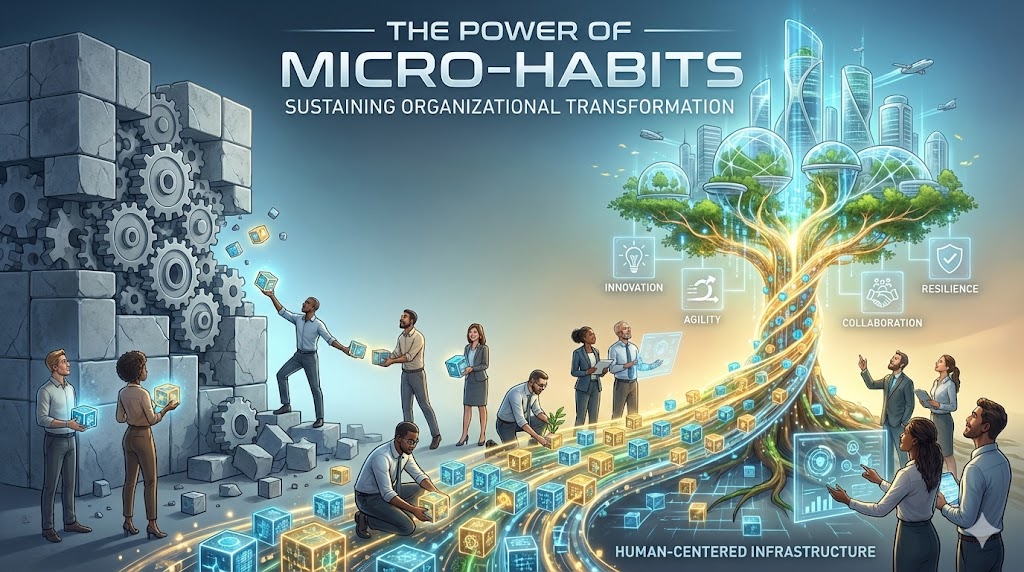
In the high-stakes world of corporate transformation, we often suffer from a “magnitude bias.” We believe that massive problems require massive, monolithic solutions. We launch billion-dollar ERP systems, restructure entire divisions, and hold mandatory week-long summits. Yet, as a human-centered change strategist, I have found that these grand gestures often act as “change theater” — spectacular to watch, but leaving the audience largely unchanged once the lights come up.

If we want to sustain transformation, we must move our focus from the macro to the micro. Sustained innovation isn’t a destination; it’s a frequency. It is the result of micro-habits — the tiny, repeatable actions that define “how we do things around here” when no one is looking.

“The most successful organizations don’t demand innovation; they engineer the tiny daily permissions that make curiosity inevitable. Transformation is simply the aggregate of these small, brave moments.”
— Braden Kelley

The Psychological Edge of the “Two-Minute Rule”

Transformation fails when the “cost” of change (effort, time, cognitive load) outweighs the perceived reward. Micro-habits exploit a psychological loophole: they are so small they are practically invisible to our internal resistance. In my work with leadership teams, I advocate for the Human-Centered Infrastructure — a system that supports people in doing the right thing by making it the easiest thing.

The Trigger: An existing event (e.g., Opening a laptop, starting a stand-up).
The Micro-Habit: A < 2 minute action (e.g., Thanking one person for a specific contribution).

Case Study 1: Rebuilding Trust in Financial Services

A major retail bank was reeling from a series of compliance failures. The transformation goal was “Integrity & Transparency.” Instead of just more training, we implemented a micro-habit for the 500 top managers: The “Red Flag” Minute.

In every single meeting, the final 60 seconds were dedicated to one question: “Is there anything we discussed today that *felt* slightly off, even if it’s technically compliant?” By rewarding the *question* rather than just the answer, the bank uncovered three major systemic risks within the first month. They didn’t change the rules; they changed the habit of speaking up.

Co-Creation and Keystone Behaviors

As I often say in my keynote presentations, you cannot force change; you can only invite it. This is where co-creation comes in. When employees help design their own micro-habits, they take ownership of the outcome. These become “keystone behaviors” — tiny shifts that naturally pull other positive behaviors along with them.

Case Study 2: Accelerating Innovation in Pharma

A pharmaceutical R&D lab was struggling with a “perfectionist” culture that slowed down experimentation. The transformation goal was “Agile Innovation.” The micro-habit: The Friday “Fail-Forward” Post.

Scientists were encouraged to post one “interesting failure” to an internal board every Friday afternoon. The effort took 90 seconds. Within six months, the fear of failure evaporated. The lab saw a 30% increase in prototype velocity because researchers stopped hiding their mistakes and started sharing the lessons. The transformation was sustained not by a new process, but by the habit of vulnerability.

The Long-Term ROI of Small Wins

Micro-habits are the compound interest of organizational culture. A 1% shift in daily behavior doesn’t look like much on Tuesday, but by next year, you are operating in an entirely different reality. This is the essence of being a change-ready organization. You aren’t reacting to the future; you are building it, one minute at a time.

Transformation Insights FAQ

What are organizational micro-habits?

Organizational micro-habits are the smallest unit of behavioral change — actions requiring minimal effort that reinforce strategic objectives through consistency rather than intensity.

Why is the human-centered approach critical for change?

Change is often forced from the top down, creating resentment. A human-centered approach focuses on empathy, co-creation, and reducing friction, making change something employees do *with* the organization, not *to* it.

How do micro-habits prevent change fatigue?

By lowering the cognitive load. When employees feel they are making ‘progress without pain’ through tiny wins, they build the ‘change muscle’ necessary for larger shifts without burning out.

Extra Extra: Because innovation is all about change, Braden Kelley’s human-centered change methodology and tools are the best way to plan and execute the changes necessary to support your innovation and transformation efforts — all while literally getting everyone all on the same page for change. Find out more about the methodology and tools, including the book Charting Change by following the link. Be sure and download the TEN FREE TOOLS while you’re here.

Image credits: Google Gemini

Subscribe to Human-Centered Change & Innovation WeeklySign up here to get Human-Centered Change & Innovation Weekly delivered to your inbox every week.
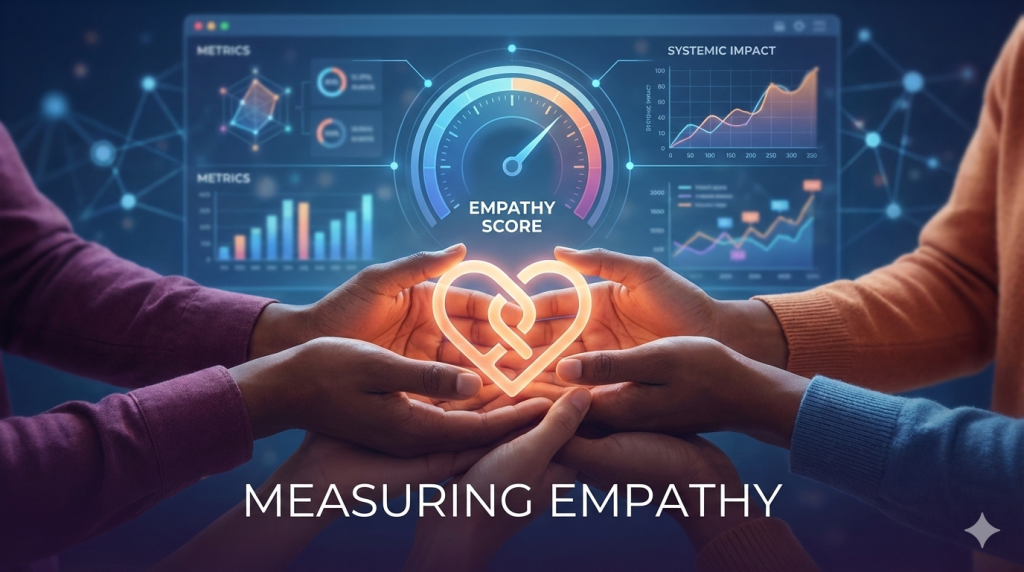
Measuring Competencies Like Empathy and Collaboration

Certifying Soft Skills

Measuring Competencies Like Empathy and Collaboration

GUEST POST from Chateau G Pato
LAST UPDATED: January 19, 2026 at 12:29PM

For decades, the corporate world has operated on a convenient fiction: that “hard skills” — coding, accounting, engineering — are the solid bedrock of business, while “soft skills” are the fuzzy, unenforceable garnishes. We hire for the hard, and we fire for the lack of the soft.

As we navigate an era defined by rapid technological disruption and the rise of Artificial Intelligence, this distinction is not just obsolete; it is dangerous. When machines can crunch numbers faster and generate code cleaner than any human, the true differentiator for an organization — the engine of sustainable innovation and successful change management — becomes the intensely human capacity to connect, understand, and co-create.

The problem has never been that organizations don’t value empathy or collaboration. The problem is that they haven’t known how to measure them with rigor. If we cannot measure it, we cannot manage it, and we certainly cannot certify it. To build truly human-centered organizations, we must crack the code on credentialing the very competencies that make us human.

“We are entering an age where your technical expertise gets you in the room, but your ability to empathize and collaborate determines your impact once you are there. Innovation is a social endeavor; if we can’t measure the quality of our connection, we can’t improve the quality of our creation.”

— Braden Kelley

Moving Beyond the “Vibe Check”

The historical skepticism toward certifying soft skills stems from a reliance on self-assessment. Asking an employee, “How empathetic are you on a scale of 1 to 10?” is useless data. True measurement requires moving from sentiment to demonstrated behavior in context.

We must shift our focus from assessing internal states (how someone feels) to external applications (what someone does with those feelings to drive valuable outcomes). A certification in empathy, for example, shouldn’t signify that a person is “nice.” It should signify that they possess a verified toolkit for uncovering latent user needs and the emotional intelligence to navigate complex stakeholder resistance during change initiatives.

Case Study 1: The “Applied Empathy” Badge in Service Design

The Challenge

A prominent financial services firm found that its digital transformation efforts were stalling. Their product teams were technically proficient but were building solutions based on assumptions rather than user realities, leading to poor adoption rates. They needed to embed deep user understanding into their development lifecycle.

The Measurement Solution

Instead of a generic communications workshop, the firm worked to develop an “Applied Empathy Practitioner” certification. To earn this, candidates had to pass a rigorous, multi-stage evaluation:

  • Scenario-Based Simulation: Candidates engaged in role-play scenarios with “difficult customers,” evaluated not on appeasement, but on their ability to use active inquiry to uncover the root cause of frustration.
  • Portfolio of Evidence: Candidates had to submit documented examples of how an insight gained through empathetic interviewing directly altered a product roadmap or service feature. They had to prove the application of the skill.

The Outcome

The certification became a prerequisite for lead design roles. The company saw a 40% reduction in post-launch rework because consumer friction points were identified earlier. They moved empathy from a “nice-to-have” trait to a measurable, certifiable professional competency linked to reduced risk.

Case Study 2: Certifying Collaboration in a Siloed Tech Giant

The Challenge

A global software enterprise was struggling with innovation velocity. While individual departments were high-performing, cross-functional projects frequently died on the vine due to territorialism and a lack of psychological safety. They needed leaders who could act as bridges, not gatekeepers.

The Measurement Solution

The organization realized that certifying collaboration couldn’t be based on a multiple-choice test. They developed a “Master Collaborator” credential focused on network dynamics and team environment:

  • Organizational Network Analysis (ONA): Instead of just asking “Are you a team player?”, the company used anonymized metadata to map communication flows. They identified individuals who served as high-trust connectors between disparate groups.
  • 360-Degree “Safety” Index: Peers and subordinates evaluated candidates specifically on their ability to create psychological safety—the environment where people feel safe to take risks and voice dissenting opinions without fear of retribution.

The Outcome

Leaders who achieved this certification were placed in charge of critical, high-risk innovation initiatives. The data showed that teams led by certified collaborators brought new products to market 25% faster, primarily because information flowed freely and failures were treated as learning opportunities rather than punishable offenses.

“In the symphony of innovation, empathy isn’t just a note — it’s the harmony that binds the orchestra together, allowing every voice to resonate.”

— Braden Kelley

Case Study 3: Google’s Project Oxygen

Google, a pioneer in data-driven decision-making, launched Project Oxygen in 2008 to identify what makes a great manager. Through extensive analysis of over 10,000 performance reviews, feedback surveys, and interviews, they discovered that technical skills ranked eighth on the list of top behaviors. Instead, top managers excelled in coaching, empowering teams, and showing genuine concern for team members’ success and well-being — hallmarks of empathy.

To certify these competencies, Google developed comprehensive training programs and certification pathways
integrated into their leadership development. Managers undergo rigorous assessments, including peer reviews, self-evaluations, and behavioral interviews focused on specific actions like “is a good coach” and “has a clear vision and strategy for the team.” Successful participants earn internal certifications that directly influence promotions, compensation, and leadership opportunities.

The impact has been profound. Teams led by certified managers report higher satisfaction scores, lower attrition rates, and up to 20% better performance metrics in areas like project delivery and innovation output. This case study illustrates how quantifying soft skills through structured, data-backed feedback can translate into measurable business outcomes, proving that empathy isn’t just nice — it’s a competitive advantage.

Case Study 4: IBM’s Digital Badge Program

IBM has been at the forefront of skills certification with their open badges initiative, launched in 2015. This program extends beyond technical proficiencies to include soft skills like collaboration, agility, and empathy. For instance, to earn a “Collaborative Innovator” badge, employees must complete real-world projects involving cross-functional teams, submit detailed evidence of their contributions, and receive endorsements from at least three peers or supervisors.

A particularly compelling application was during IBM’s transition to hybrid work models following the global pandemic. Employees pursuing certification participated in immersive virtual reality simulations where they navigated complex team conflicts, such as resolving disagreements in diverse groups. These scenarios tested empathy through active listening exercises, inclusive decision-making, and emotional support simulations. Performance is evaluated using AI analytics that score interactions based on predefined empathy and collaboration rubrics.

Badges are issued on a blockchain platform, ensuring they are secure, verifiable, and portable across careers. Data from IBM indicates that employees with soft skill badges are 15% more likely to be promoted internally and report 25% higher job satisfaction levels. Moreover, teams with a higher density of certified collaborators exhibit faster problem-solving times and more innovative patent filings. IBM’s model showcases how blending technology with human-centric evaluation can standardize soft skill certification while preserving the authenticity of interpersonal dynamics.

The Future of Human-Centered Credentialing

Certifying these skills is not about creating a new layer of bureaucracy. It is about signaling value. By creating rigorous standards for empathy, collaboration, adaptability, and resilience, we provide a roadmap for employees to develop the skills that actually matter in a volatile future.

These certifications cannot be “one-and-done.” Just as technical certifications require renewal, soft skill credentials must be dynamic, requiring ongoing evidence of application in increasingly complex scenarios. This ensures that the skills are living capabilities, not just framed certificates.

As leaders in human-centered change, we must champion the idea that the “hardest” skills to master — and the most valuable to measure — are the ones that connect us.

Frequently Asked Questions

Why is it difficult to measure soft skills like empathy?

Soft skills are inherently subjective and context-dependent. Unlike technical skills which have binary outcomes (the code works or it doesn’t), soft skills like empathy rely on behavioral indicators, the perception of others, and the ability to apply emotional intelligence in varied scenarios, making quantitative measurement challenging.

How can organizations effectively certify collaboration?

Effective certification moves beyond self-assessments and utilizes 360-degree feedback mechanisms, Organizational Network Analysis (ONA) to see who genuinely connects silos, and scenario-based evaluations that test a person’s ability to foster psychological safety and manage conflict constructively.

What is the business value of certifying soft skills?

Certifying soft skills provides a tangible framework for creating a human-centered culture. It leads to better innovation through diverse perspectives, faster adoption of change initiatives due to higher trust, and improved retention by valuing the human element of work.

Extra Extra: Because innovation is all about change, Braden Kelley’s human-centered change methodology and tools are the best way to plan and execute the changes necessary to support your innovation and transformation efforts — all while literally getting everyone all on the same page for change. Find out more about the methodology and tools, including the book Charting Change by following the link. Be sure and download the TEN FREE TOOLS while you’re here.

Image credits: Google Gemini

Subscribe to Human-Centered Change & Innovation WeeklySign up here to get Human-Centered Change & Innovation Weekly delivered to your inbox every week.