Category Archives: Open Innovation

External Talent Strategies for a Global Talent Pool

Why Having an External Talent Strategy is Becoming Increasingly Important

External Talent Strategies for a Global Talent PoolThe old way of winning the talent wars was to search for and hire the very best talent and keep them inside your own four walls by offering them competitive compensation, benefits, and perks. Your hope was that your talent is better than your competitors’ talent. But over the last couple of decades, companies have increasingly found that employees who pursue what they do with passion will outperform an employee with a gun to their head every time. Circuit City learned very publicly that people are not commodities and went out of business from treating them as if they were. At the same time, we know that diversity is very important and hard to foster internally. And so it is to get to this diversity of thought in order to accelerate product launch and innovation timelines that companies must open up – it is a global economy with a global talent pool.

The question becomes: what is happening at the micro level with this global talent pool? Well, the world continues to move away from being a place where employees expect to have jobs for life, and fight against any change to this paradigm, to a world where portfolios, personal branding, and project-based work will become more common in an increasing number of industries. The evolving world of work is becoming a world in which individuals will need to be really good at collaborating and playing well with others, while also honing their skills at standing out from the crowd. At the same time, the external perception of your network value will expand from a focus on internal connections to also include the talented minds you might know outside the organization that can be brought in on different projects or challenges.

At the macro level, we are also confronted by an economy right now that is characterized by high unemployment – especially for the young. And for those that have jobs, many are underemployed. Meanwhile, at the other end of the age spectrum, many baby boomers will continue to look to make money and stay involved in the workplace in significant numbers. And for those not retiring who still have jobs, many employees now are doing more work but feeling less engaged. When you combine the macro and micro pictures, you can see that there is an army of talent out there looking to build their resumes or their balance sheets by working on interesting challenges and projects.

As your organization opens up and crafts a formal external talent strategy, there are several ways external talent can help benefit your organization.

Increased Speed:

  • External talent networks can form an expanded rolodex of experts that you can consult with to expand your knowledge on a particular search area or market and give you a running start instead of a standing one.
  • You can use your external talent strategy to find existing solutions from outside your industry. One example of this is a tire company adapting existing technology for cutting cheese to cutting rubber. Another is InnoCentive client OSRI, who used concrete construction principles for the purpose of oil spill cleanup (see sidebar).
  • To accelerate innovation and product development timelines, many companies strategically partner with external talent to advance their projects and help fight through roadblocks or work on other components when the lead team is off the clock. Dissecting work and distributing it to the individuals, groups, or partners that can best complete the work is an essential component of open innovation strategy.

Increased Success:

  • You can form a relationship with a particular expert and work together to solve a problem, to evaluate a range of potential solutions from internal folks, to tap expertise you lack currently in your organization, or to add diversity of thought.
  • You can use your external talent strategy to engage a large number of potential solvers on a tough problem. Through open innovation and crowdsourcing, Roche found a solution to a problem it had been struggling with for fifteen years by engaging the InnoCentive global solver community. At the same time, the company validated that the approaches it had already tried were the logical and correct ones.
  • When you engage external talent, you can collect lots of little ideas from outside, and connect them internally, uncovering some really big ideas that properly applied and executed can lead to some great new breakthrough innovations.

Increased Learning:

  • An under-appreciated and under-utilized benefit of working with external talent is to use it to learn new problem solving techniques by analyzing how the external talent solved the problem, to learn new technical skills not held internally by having external talent train internal talent, and by encouraging information sharing from the outside-in from external talent working in different disciplines.

Teamwork and Collaboration:

  • An increasing number of problem solvers are working together to solve challenges posed by organizations and this collaboration and teamwork is yielding higher quality solutions. Research by EMC into their own internal innovation challenges has shown that teams were more likely to successfully create winning challenge entries. InnoCentive, for instance, has responded to this behavior by creating more collaborative features for its global solver community to use in responding to challenges.

Consider scale for a moment. A person delivering a ton of value does not need a ton of headcount anymore if they are employing an effective external talent strategy. In an era where organizations are focused on increasing productivity and output without changing the number of headcount (focusing on revenue or profit-per-head), smart employees and business units will increasingly focus on being a force multiplier – getting more work done with the same number or even less headcount.

Two of the most important job skills in this new world of work will be the ability of the individual and the organization to deconstruct the work into portable units that can be executed by a mix of internal and external talent, and construct a project plan for distributing, aggregating, integrating, and executing the component parts to achieve the overall project goal.

But to maximize the efficiency and effectiveness of your work with outsiders – as well the output – you need to be strategic in your approach because the speed of adaptation (your ability to adapt and integrate work from outside into the inside) will become more important. And the flexibility you show as an organization and the ability of your employees to execute under immense market and customer pressures will become increasingly important as well. You must be strategic because ultimately you want to design scalable external talent strategies, policies, and processes.

— Download the rest of this FREE white paper to continue reading —
Build a Common Language of Innovation

Subscribe to Human-Centered Change & Innovation WeeklySign up here to get Human-Centered Change & Innovation Weekly delivered to your inbox every week.

Leveraging External Talent for Innovation

How Leading Organizations Manage Their Open Innovation and Crowdsourcing Efforts

Although there are simple and cost effective ways to jumpstart your efforts – for example, leveraging a company like InnoCentive to host prize-based challenges in order to rapidly find solutions to your most pressing problems – leading organizations that wish to truly embrace open innovation and crowdsourcing do so through careful planning. When seeking to engage external talent, one of the first of many questions you must first ask yourself is: Why are we doing this? What do we hope that external talent can achieve for us that our internal talent cannot (or should not) achieve, and how do we integrate the two together?

The second question leading organizations in open innovation ask themselves is: Why will they care? And one good place to start in answering this difficult question is to ask: What kind of organization do you have? Do you have a product-driven organization like Microsoft that is very much organized around products? Do you have a customer-driven organization like Hallmark that is organized around customer moments instead of around products? Or do you have a purpose-driven organization? While it does not technically matter what kind of organization you have, the key is to find something that not just your employees will engage with, but that your customers and partners will engage with as well. This could be purpose, but it could also be love for a brand or a well-designed, emotionally-connected product.

Other questions to ask:

1. In our organization, where does open innovation fit in our overall innovation efforts?

2. How are we looking to connect?

3. Do we want to build our own proprietary global sensing network that allows us to pull together insights and ideas from lots of different types of sources in different locations?

4. Or, do we want to utilize external service providers like InnoCentive to get up and running faster or go wider than our own proprietary networks can go?

5. Are we looking for crowd labor or creativity, or are we looking to engage in open innovation or civic engagement in creating innovative solutions?

6. Are we looking for possible solutions to problems that we have already identified?

7. Are we looking with current and potential suppliers at the intersection of what is needed and what is possible?

8. Or, are we looking more broadly to identify new insights through which we can drive our innovation efforts?

Note that one must be careful not to become too focused on ideas. Great ideas fail all the time – poor value translation, poor value access, poor timing, and so on. Rather, getting to creative solutions to problems and challenges is key to innovation success.

Another important questions is: What tool is best for this problem? We have all heard the saying that if you have a hammer every problem looks like a nail. Well, when it comes to open innovation and crowdsourcing, there are lots of tools that we can use, but only if we first understand the nature of the work we are trying to get done. Is it a creative piece of work that we can put out to a community like 99Designs? Or do we just need someone to help us temporarily through a place like PeoplePerHour? Or, perhaps we are trying to solve problems, both big and small, and want to leverage a company like InnoCentive to create and tap into both internal and external communities of problem solvers to accelerate our innovation efforts.

Smart organizations identify the different work and challenge scenarios they expect to face over time and then identify which resourcing option(s) make the most sense for each scenario. They then work to form the relationships and agreements necessary with firms like InnoCentive to make sure that they will have reliable resources in place for when they seek to utilize a particular type of resource to tackle the matching challenge or work scenario.

Successful organizations have a plan for how they are going to interface with external resources and how they are going to bring ideas and potential solutions in house for further development and launch. What will the cultural obstacles be? You must consider what the potential cultural obstacles might be to engaging external talent in your organization. P&G had to work very hard to change of its culture from ‘Not Invented Here’ to one where people embrace new things being ‘Proudly Found Elsewhere’.

Some of the reasons that you may face resistance in implementing an external talent strategy include beliefs that career advancement comes from increasing the number of headcount managed, a fear of failure, a lack of management support, and people not wanting to go outside their comfort zones (‘I get paid to manage and make things incrementally better’). But when people start to hear stories about some of the successes, see some proof of the benefits, and see other people get recognized for utilizing external talent, acceptance of an external talent strategy starts to spread. And when senior leadership or middle management start talking about what is being done with external talent, and people using external talent start training their peers on what they are doing, you know people are starting to fully embrace your external talent strategy.

So what do leading organizations do to encourage the successful use of external talent?

Download the rest of this FREE white paper to continue reading

Build a Common Language of Innovation

Subscribe to Human-Centered Change & Innovation WeeklySign up here to get Human-Centered Change & Innovation Weekly delivered to your inbox every week.

Moving from Talent Ownership to Talent Attraction

Moving from Talent Ownership to Talent Attraction

In our hyper-competitive, always-connected world, organizations are increasingly becoming focused on improving both their speed to market and their revenue per headcount. In this environment, more senior leaders every day are seeing innovation as the primary way to gain competitive advantage and to simultaneously increase revenue and cut costs. At the same time, organizations are struggling to find ways to accelerate their pace of innovation without escalating their costs faster than their budgets will allow.

The increasing demands for speed and efficiency are causing organizations to become ever more virtual and flexible, to utilize more variable resources, and to add and shed employees with greater regularity (often with both happening in the same organization at the same time). The progressively dynamic nature of the workforce inside organizations is making it more difficult for organizations to attract, develop, and retain the best talent while simultaneously meeting the fiscal realities of the business. This is causing many organizations to move from a talent ownership mindset to a talent attraction mindset. In a talent ownership world, recruitment and the hiring transaction are king. But in a talent attraction world, successful organizations are those that master the art of building and maintaining talent communities that keep talent connected to the organization even when they are not employed by it. Consciously creating an external talent strategy is therefore essential to success.

The talent market relationship changes are not just happening at the individual level. Change is also happening at the organizational level, as organizations themselves are moving from a fortress mentality, where all work is secret and kept inside the organization’s four walls, to an integrated, global economy with an interconnected web of suppliers and distribution channels – where being the partner of choice in your industry will be increasingly important.

Silicon Valley icon Bill Joy once famously said, “There are always more smart people outside your company than within it.” In this new world of work, organizations must begin accepting that the most valuable employees will now be those that not only do good work, but who also serve as a force multiplier for their organizations by being good at organizing and orchestrating the innovation efforts of others who do not even work for the company. And ideally, you will want to evolve to a place where even those who do not work for you actually want to work with you. In this brave new world, you must have strategies in place for attracting both internal and external talent to your innovation efforts.

Section 1. Why Having an External Talent Strategy is Becoming Increasingly Important

The old way of winning the talent wars was to search for and hire the very best talent and keep them inside your own four walls by offering them competitive compensation, benefits, and perks. Your hope was that your talent is better than your competitors’ talent. But over the last couple of decades, companies have increasingly found that employees who pursue what they do with passion will outperform an employee with a gun to their head every time. Circuit City learned very publicly that people are not commodities and went out of business from treating them as if they were. At the same time, we know that diversity is very important and hard to foster internally. And so it is to get to this diversity of thought in order to accelerate product launch and innovation timelines that companies must open up – it is a global economy with a global talent pool.

Download the rest of this FREE white paper to continue reading

Build a Common Language of Innovation

Subscribe to Human-Centered Change & Innovation WeeklySign up here to get Human-Centered Change & Innovation Weekly delivered to your inbox every week.

How Not to Do Social Media

How Not to Do Social MediaDespite the fact that Twitter has been around since 2006 and Facebook has been around since 2004, social media is still the bright shiny object in the room (it’s still the current marketing fad). People still think they are being innovative if they use it, and unfortunately many people still approach it as something separate and scary instead of treating it as just one tool in the toolbox of anyone working in marketing or innovation. Yes, I linked social media to innovation in the last sentence and that’s because in the same way that social media is a tool that all marketers must learn how to use as part of an integrated marketing campaign, innovation managers must also learn how to use social media properly as part of their innovation efforts.

So let’s get to our latest case study of how not to do social media by taking a look at a poorly run Facebook contest.

Back in July I wrote an article about the effect of social media on contests called – Does Social Media Corrupt Contests?

This article was written from an outsider’s perspective looking in. Well, in December I decided to dive into the Facebook contesting world and enter a contest for an energy-efficient big screen television hosted by the NEEA in hopes of winning a 55″ Samsung LED TV. Here is a quote from their Energy Efficient Electronics micro-site about what they do:

The Northwest Energy Efficiency Alliance (NEEA) is a private non-profit organization funded by Northwest utilities, the Energy Trust of Oregon and the Bonneville Power Administration. NEEA works in collaboration with its stakeholders and strategic market partners to accelerate the sustained market adoption of energy-efficient products, technologies and practices. NEEA’s market transformation efforts address energy efficiency in homes, businesses and industry. Its mission is to mobilize the Northwest to become increasingly energy efficient for a sustainable future.

My local utility, Puget Sound Energy, is a member of this organization.

Now let’s get to why my experience with this contest makes this an example of how not to do social media.

Background: The contest organizers – MartketShift Strategies (on behalf of NEEA) – operated the contest on Facebook. It was only open to people living in a handful of states and involved submitting captions for up to five photos provided by the contest organizers for public voting and judging of the finalists. Five televisions were up for grabs as prizes. There were two example captioned pictures – one using humor, and one focused on energy-efficiency. I decided to focus on humor. The rules stated that the five entries for each picture receiving the most votes would then be considered the finalists and would be judged, and that nobody could win more than one prize.

Here is a quick chronology of my experience highlighting some of the strategic failure points:

  1. I never saw the contest mentioned anywhere – including in my utility bill – a friend of mine who enters contests as a hobby suggested that I enter – so I did
  2. In order to enter the contest I had to “like” the Energy Forward page (and allow the contest app access to my Facebook account) – which I was hesitant to do
  3. Anyone who I asked to vote for my entries would have to also “like” the Energy Forward page and then also allow the contest app access to THEIR Facebook account. This is a big hurdle, and in fact most contest entries ended up with ZERO votes or one vote – including some of the ultimate ‘winners’ – but more on that later.
  4. I’m assuming the contest was run to support of some sort of educational goal or action goal around some televisions being more energy efficient than others, but the benefits of one TV over another were not immediately clear or integrated into the contest
  5. My wife and I each voted for my entries ONCE PER DAY and I picked up a few votes from other people. Meanwhile, apparently there was a hole in the application that allowed some individuals to cheat and vote for themselves lots of times per day by refreshing the page and voting again or whatever. The end result was that on the leaderboard you could clearly see that most of the leaders had many more ‘votes’ than ‘views’ (a legitimate vote registered both a view and a vote while a page refresh vote did not increment the view counter).
  6. When the votes versus views issue was brought to the attention of the contest organizers, instead of disqualifying the offending entries they chose to hide the number of votes entries had received
  7. Tweets to @nwalliance with concerns about the contest went unanswered
  8. The gaming behavior was allowed to stand and so three of my entries did not qualify as finalists, but even with the gaming behavior two of my entries did qualify as finalists
  9. The contest organizers then chose to not even follow their own rules, and when the winners were announced there were two ‘winners’ who were not even finalists – in fact one of the ‘winners’ was not even in the Top 14 vote getters – meaning that their entry probably did not even receive any votes (most entries had zero votes). This of course caused a huge uproar.
  10. Then probably most shockingly, the contest organizers in response to the public outcry responded “NEEA has full discretion…to change the rules at any time if needed for the best interests of the Contest and the participants.”
  11. In the end the contest organizers decided to award two more televisions, but ended up awarding them to people who gamed the contest (more votes than views), so the end result was that of the seven televisions awarded, five went to people who gamed the system (more votes than views) and two to non-finalists.

So what can we learn?

The most important thing to learn from this example of how not to do social media is that when utilizing social media as a tool to help you achieve your innovation or marketing campaign goals, you must keep those goals front and center in everything you do and ask if each campaign component supports your goals and your strategy. This is also a great example of how lots of people will tell you they are social media experts, and not really know the first thing about how to utilize the tools properly to support innovation or marketing campaign goals.

You can also see from this example that contests can be a hornets nest and that more often than not people try to game the system. This is why some people who provide idea management software solutions have chosen not to have badges and other similar elements (or to allow for those components to be turned off). This is also why if you choose to have any kind of voting component, particularly where any kind of prize is involved, that you set very clear guidelines for voting and do so in a way that maximizes the chance that the voting ends up being about the quality of the submission and not about the size of the entrants’ network.

‘Viral’ doesn’t come for free. Social media experts will try and convince you to use the tool to go ‘viral’ and get the crowd involved, but when you choose get the crowd involved and let them vote, you need to be ready and willing to let their votes count, otherwise you’ll destroy trust (and even brand equity). If you choose to engage the crowd in a public way you need to use their input, otherwise you’ll suffer very public consequences. If you’re looking for a higher level of quality in your submissions from a large number of people, consider using a more expert crowd instead (Innocentive, Hypios, Idea Connection, Nine Sigma, 99 Designs, TopCoder, etc.).

And last, but probably most important in my mind is that you need to walk the experience and look for potholes. The Marketshift Strategies folks definitely fell down on the job here. There were far too many barriers to participation in this contest, very little strategic integration, they should have anticipated the gaming of the system and written the rules better, and they should have actually followed their rules and the spirit of the contest a little better so that the people who didn’t game the contest and instead legitimately gathered votes were rewarded. The good thing is that without examples to dissect of how not to do social media, we wouldn’t all be able to learn how to use this powerful but dangerous tool in our innovator’s and marketer’s toolbox.

Build a Common Language of Innovation

Subscribe to Human-Centered Change & Innovation WeeklySign up here to get Human-Centered Change & Innovation Weekly delivered to your inbox every week.

Finding Innovation Help Next Door

GUEST POST from Stephen Shapiro

One of my favorite topics is to discuss how breakthroughs are generated by looking for someone who has solved a similar problem in a different space.

Some examples I talk about in my Best Practices Are Stupid books are:

  • A company developed a new type of whitening toothpaste by studying the way non-bleach laundry detergent works
  • A gas pipeline “sealing” system was developed by studying the way the capillaries in the finger coagulate blood and heal themselves
  • An office supply company found a way to get customers to return used toner cartridges by studying Netflix’s DVD service

And there are so many more interesting case studies.

While giving a speech on this recently, a client shared another wonderful example.

The company is in the computer simulation space. They are able to build incredibly realistic models of what might happen in the real world by creating simulations in the virtual world.

When working for a medical device company that made angioplasty equipment, they wanted to create a computer simulation that would predict how the “balloon” would expand.

Where did they turn for an accurate computer model?

In the past, they worked with car manufacturers and built statistical models that simulated the expansion and contraction of airbags. This proved to be a wildly accurate way of predicting how a balloon catheter would operate.

When you are working on your next business challenge, ask yourself:

“Who else has solved a similar problem.”

In doing so, you might significantly accelerate your innovation effort.

Subscribe to Human-Centered Change & Innovation WeeklySign up here to join 17,000+ leaders getting Human-Centered Change & Innovation Weekly delivered to their inbox every week.

Harnessing the Global Talent Pool to Accelerate Innovation

FREE Innocentive Webinar on December 13, 2011 at 2PM EST

Harnessing the Global Talent Pool to Accelerate InnovationAs more industries become commoditized and innovation becomes more of a focus, organizations are being forced to move beyond a talent ownership mindset to a talent attraction and engagement mindset.

In this webinar, we will explore how organizations can utilize open innovation and crowdsourcing resources as an essential talent management strategy to harness the growing numbers of retired scientists, unemployed experts, and underemployed talent around the world to generate ideas, solve problems, and further the goals of the business. The webinar will also explore how individuals can bolster their incomes and credentials by participating in open competitive challenges.

Three things you’ll learn:

1. Why having an external talent network strategy is becoming increasingly important
2. How leading organization manage their open innovation and crowdsourcing efforts
3. Strategies for attracting and engaging talent to your organization’s innovation efforts

Register for this FREE Webinar

Subscribe to Human-Centered Change & Innovation WeeklySign up here to get Human-Centered Change & Innovation Weekly delivered to your inbox every week.

What is Your External Talent Strategy?

What is Your External Talent Strategy?I am currently doing research for a white paper and a webinar on harnessing the global talent pool to accelerate innovation, and I need your help to add to the case studies I’ve already gathered. Here is the premise:
As more industries become commoditized and innovation becomes more of a focus, organizations are being forced to move beyond a talent ownership mindset to a talent attraction and engagement mindset.

There are many reasons for this. In the United States this includes a growing percentage of researchers approaching retirement age and post 9/11 immigration policies that make it increasingly difficult for foreigners to come to this country to study and work. The intersection of an aging scientific workforce, tighter immigration policies, and a growing need for innovation to reinvigorate the economy is causing more organizations to make plans to engage talent outside their four walls. But this is not just an American problem…

Forward-thinking organizations are now seeking to harness the growing numbers of retired scientists, unemployed experts, and underemployed talent around the world to generate ideas, solve problems, and further the goals of the business.

This begs the question:

What is your organization’s external talent strategy?

Or, how does your organization plan to leverage the brains outside your four walls to achieve its goals?

Please leave a comment or contact me to share your story.

I’ll be sharing the results of my research and my thinking in a FREE webinar on December 13, 2011 and then later in a white paper in the new year.

Build a Common Language of Innovation

Subscribe to Human-Centered Change & Innovation WeeklySign up here to get Human-Centered Change & Innovation Weekly delivered to your inbox every week.

Exploring for Innovation by Space, Sea, and Land

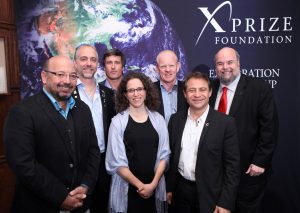
Exploring for Innovation by Space, Sea, and LandI had the privilege of being invited to be a guest today at the announcement of Shell’s sponsorship of the XPrize Foundation’s exploration prize group in New York City at the historic Explorers’ Club. Speaking of explorers, here is a simple challenge for you:

Name a famous explorer.

Now name a famous explorer that isn’t dead.

The average person’s response to this challenge might make you think that the human race is done exploring, that we’ve explored every inch of the earth, but that’s just not true, and today Shell brought together a fascinating modern day roster of explorers who are still very much alive – in part to prove that humans are still exploring and that there is still much to be explored.

The roster of explorers who shared some of their experiences today in an inspiring live streaming event, that I attended in person (along with in-person intimate round table sessions with the explorers), included:

  • Richard Garriott, Vice Chair, Space Adventures, Ltd., legendary video game developer and entrepreneur; among first private citizen astronauts to board International Space Station, America’s first second-generation astronaut; and X PRIZE Foundation trustee
  • David Gallo, Woods Hole Oceanographic Institute, renowned undersea explorer, among first oceanographers combining manned submersibles and robots to map ocean world; co-leader of recent Titanic exploration; project leader, successful search for missing Air France Flight 447
  • Mark Synnott, global mountain climber who has climbed some of the biggest rock faces and ice walls on the planet, ventured into among the least-visited locales on earth, photographed the globe’s most spectacular sites; and is a senior contributing editor of Climbing magazine.

The partnership between the Foundation and Shell has been more than a year in the making and is part of Shell’s ongoing commitment to innovation. Shell is widely known within the innovation community for its Gamechanger internal and open innovation initiative that many other organization’s have endeavored to learn from. Now Shell has chosen to continue its innovation efforts outside its four walls by beginning an innovation journey with the X PRIZE Foundation.

The goal of X PRIZE’s exploration prize group is to inspire the exploration of space, our Earth and its oceans in ways that could lead to breakthrough innovations. It is interesting to note that this week is the seven year anniversary of the winning of the Ansari X PRIZE – an overnight success after only ten years of hard work. Here are a couple of key paragraphs from the press release:

XPrize and Shell Partnership“Shell has long been on the cutting edge of innovation, and we are proud to bring them into the X PRIZE family, supporting a prize group that advances innovation, exploration and tomorrow’s discoveries,” said Peter Diamandis, Chairman and CEO of the X PRIZE Foundation. “We are closely aligned in our goals to motivate and inspire brilliant innovators from all disciplines to leverage their intellectual capital to explore new frontiers that could result in significant global achievements.”
“Continuous innovation and pioneering spirit is part of Shell’s DNA. As a technology leader in energy, we constantly drive new solutions responding to the global energy challenge,” said Gerald Schotman, Chief Technology Officer and Executive Vice President, Innovation, Research & Development, Royal Dutch Shell. “We are delighted to support the X PRIZE Foundation’s Exploration Prize Group and look forward to the exciting discoveries that come from the next generation of incentivized competitions.”

One of the questions that I posed during the day sounds simple on the surface, but I think it is a complex one for us all to think about and respond to:

In your mind, what is the relationship between exploration and innovation?

For me, in some sense they are the same thing. Companies must continuously struggle to balance exploration against exploitation, or innovation against operation. But in another sense, exploration can be pursue knowledge without having an absolute goal in mind (think basic research), where innovation tends to be pursued with an intended outcome (think applied research). Does this distinction make sense, is it splitting hairs, or is there another way we should think about distinguishing between exploration and innovation?

So if you’re Shell (or any other typical company) and most of your innovation outcomes tend to be incremental in nature, then increasing your investments in exploration (or connecting to the exploration efforts of others) can help to stretch and diversify and better balance your innovation portfolio amongst incremental and disruptive innovation projects. The key is that every organization needs to innovate not just for today via incremental innovations, but for tomorrow as well by investing in more disruptive innovation efforts that have the potential to change the paradigms of the industry or to change what’s possible.

In speaking further with Gerald Schotman during the day, it came out that one of the key aspects to the Gamechanger program at Shell is that he and the other business types have no say in the first 2-3 stages of their process – intentionally – because many submissions are a slightly different way of looking at old problems and so it is more appropriate for the science and technology folks in the organization to look at the submissions and bring in the business leaders later in the process. In addition they have a lot of handovers from one set of experts to another as the expertise needed to move each project from one stage to the next often changes as you go along.

Gerald also talked about how a lot of the idea submissions come not just from outside of the traditional technical and R&D areas, but even from outside of Shell. He also spoke of his view of his own role – and that he sees it as being the person who manages the turbulent flow of the idea pipeline and the determination of the width and the orientation of that pipeline (what they’re focused on).

So, now that the X PRIZE Foundation and Shell have formed this partnership on this $9 million sponsorship of the exploration prize group, it will be interesting to follow BOTH what new challenges come out of it to drive innovation exploration by space, sea, and land AND what the implications are for Shell’s own innovation pipeline.

What do you think?

Special Bonus

Download 'Stoking Your Innovation Bonfire' sample chapterIf you’ve read all the way to the bottom, then you deserve a free sample chapter from my new book Stoking Your Innovation Bonfire. I hope you enjoy the sample chapter and consider purchasing the book as a way of supporting the future growth of this community.

Download the sample chapter

Subscribe to Human-Centered Change & Innovation WeeklySign up here to get Human-Centered Change & Innovation Weekly delivered to your inbox every week.

Insider's View on Microwork and a Sample Output

GUEST POST from Stephen Shapiro

As readers of this blog know, I am always interested in exploring different forms of open innovation, collaboration, and outsourcing. Personally, I have used a number of sites including 99designs.com and elance.com. I have used these for the development of logos, graphics, websites, and research. In most cases I would pay several hundred dollars for the work.

An interesting trend has emerged: microwork outsourcing. This is work that can be completed in a matter of minutes and costs only a few dollars.

My favorite microwork website is fiverr.com. Here you can hire people to do lots of things for only $5. I saw that someone offered to write an article for only $5, so I hired her to write an article on innovation. I was impressed with how she could pull together something of high quality so quickly.

This got me wondering: Can she make a living at $5 a time? How long does it take to complete a $5 job? And why do it at all?

So I invested another $5 and hired her to write another article. But instead of writing about innovation, I had her answer five questions about her experience on fiverr.

1. How did you write an article on a topic you don’t know so quickly…and for only $5?

Coming up with methods that businesses can use for innovation and creativity actually is something that I know very well. As an ex-model turned writer/teacher/businesswoman, I try to incorporate as much creativity into my life as possible. None of my income would be possible without a high respect for imagination. As a business owner, I realized quickly that low prices sell large amounts of goods, and it also is a very decent gig for me. Eventually, I will raise my prices, but not yet.

2. Why do you sell your services on Fiverr, when you could probably make more money per gig on sites like eLance?

Actually, I tried eLance, but never quite seemed to get any jobs off it. The minute that I tried Fiverr, I managed to get a gig in the first day. When people actually noticed that my work is decent, the orders poured in.

3. Is there enough money to be made doing micro work? Or do you do this for some pocket money? How many gigs can you possibly do in one day?

I do up to 30 gigs in one day. Microwork can be a decent way to make money, but I think having a part time job is also a smart idea. I like a balance of work.

4. How much time do you spend, on average, for each gig? I was impressed with the article you wrote on innovation.

Depending on how much research I do for the gig, I can spend anywhere from 10 minutes to an hour or so (when I decide to watch TV or eat while working). My typing speed is notoriously speedy, so doing research and actually just compiling my thoughts coherently are the bulk of time spent on each gig.

5. Anything else you I should know about you?

Because of the extreme injustices that have happened to me as an inexperienced model, I have recently taken up advocating for women’s rights, as well as model’s rights. One of my photographers gave me a website which I update with my own blogs about various subjects that I feel are important to women, men, and everyone in that industry. I don’t think that many people realize how corrupt, how sick, and how twisted the world of modeling has become. This is the reason why I warn my students’ parents against getting their children involved in child modeling, and also warn young teenagers who want to follow in my footsteps about the dangers of being a model.

Conclusion AND the Article I Got for $5

All forms of open innovation, crowdsourcing, outsourcing and microwork are evolving. They are redefining what “work” means for individuals and is creating new career models. It provides exciting opportunities for both the buyer and the service provider.

Now, as promised, here is the article on innovation she wrote for $5. Not bad, if you want my two cents…

Five Ways To Make Your Company More Innovative

Innovation is one of the most important things to keep constant in your company. Without new ideas, it’s impossible to stay ahead of the business curve. For a good example of what innovative staff can create, look at businesses like Google or Apple. Both are innovative companies, and both are extremely profitable. It’s easy to see why you should encourage innovation in your staff as a business owner.

1. Hire innovative and creative people for your company.

If you continually hire people who lack creativity, or even a spark of passion for working in your business field, you aren’t going to get people who are going to be innovative. When you need to hire an intern, look for an intern who has a lot to say about what the company should do, as well as being able to help out around the office. By hiring people specifically because they are creative, you will create an atmosphere that promotes new ideas.

2. Offer rewards or bonuses for employees who come up with imaginative solutions to normal problems.

Giving people an incentive to “think outside the box” is one of the quickest ways to get employees motivated to start thinking differently. If you need to be blunt, tell them flatly, “Any time that you think to yourself, ‘I wish our product had this feature,’ tell us. If it’s a good idea, we’ll pay you a bonus.”

3. Take half an hour to an hour every week to come up with new ideas.

Call it a creativity break, call it a brainstorm, but meeting up with employees every week for the sole purpose of figuring out innovative solutions to all sorts of problems is a great way to get the wheels turning. Some businesses even take time off to let their employees partake in creative exercises such as painting in order to boost employee imagination in other realms of work. Moreover, these meetings offer a great opportunity for employees to prove their creative abilities to higher ups.

4. Even if the idea is downright awful, do not overly criticize or embarrass the employee who suggests it.

In order to encourage others to share ideas, it’s crucial to avoid making employees regret presenting their ideas. No matter how bad the idea may be, thank them for their input, and encourage everyone to contribute their ideas to the table. Embarrassing one employee will make others think twice about sharing any ideas with you.

5. Keep staff up to date on what other companies are creating.

Sometimes, reading a news article about the latest app to hit the market, or a new method of marketing is all that a person needs to jog their creative streak. Keeping staff updated on the latest in your business also will provide the added advantage of more knowledgeable staff on all levels of your business. Encourage your staff to come up with similar ideas every time you forward them an article. Talk about your business field, and keep them engaged. The more they think about the field they work in, the more likely it is that they will come up with a brilliant innovation that can turn into huge profit.

Subscribe to Human-Centered Change & Innovation WeeklySign up here to join 17,000+ leaders getting Human-Centered Change & Innovation Weekly delivered to their inbox every week.

Are You Smarter than a PhD?

GUEST POST from Stephen Shapiro

Are You Smarter Than A 5th Grader?” is an entertaining show.

In the world of innovation, the biggest question is, “Are you smarter than a PhD?

Here’s what I mean…

In Personality Poker we address four primary innovation styles. The spades are the ones who are, as we would say in Boston, “wicked smaht.”

We find that spades are analytical, fact-driven, and often quite intelligent.

One of the challenges with driving innovation into organizations is that smart people are often more interested in being right than doing right. That is, experts want to believe that they can solve every problem under the sun. Although this isn’t true, this pervasive belief can circumvent your innovation efforts.

Here’s a simple example…

A few years back, an InnoCentive client identified a very complex challenge they wanted solved. They posted this challenge to the InnoCentive.com website. Anyone who could solve this problem would get a cash prize. Dozens of solutions were submitted.

One of the solutions was submitted by an employee of the client. Let’s call her Sally.

Sally went to the individual who sponsored the challenge and said, “Why did you go outside to find a solution? I already had the answer.” She was clearly upset that her company went externally to find a solution.

Interestingly, Sally’s actions were the catalyst which helped this client build the case for open innovation.

When the evaluation team evaluated all of the solutions submitted, Sally’s was not viewed as innovative. It was the same type of solution the company had been considering for years. The breakthrough idea came from someone outside of their company and even outside of their industry.

The company now had proof positive of the value of open innovation.

To be clear, the objective of open innovation is not to replace the smarts you already have in your organization. It is to augment this brilliance. Most companies don’t have enough time to solve all of the challenges they are working on. Unfortunately, R&D people often get spread thin working on a lot of different types of challenges, some of which could be better solved by others outside the company.

Stephen Shapiro - Bell CurveHere’s a simple model I use to help companies determine which challenges should be solved externally, versus those that can be solved internally. Challenge fall into roughly three broad categories:

Simple: These are challenges that someone else has probably solved. Although you could solve them internally, this is not the best use of your resources. The odds are that someone else already has a solution that you could buy or license for less money in less time. Why waste your highly specialized experts on these types of challenges?

Unsolved: There are some challenges that are exceptionally complex that may have remained unsolved within your organization for years. Or maybe it is something that is viewed as outside your area of expertise. A well-worn, but useful example of this is the oil spill recovery in Alaska after the Exxon Valdez accident. For 20 years, oil/gas experts futilely tried to find a way to pump out the almost solidified oil at the bottom of Prince William Sound. Eventually, through a challenge posted on InnoCentive, they found a solution from the cement industry, not the oil/gas industry. John Davis, a chemist with expertise in cement, figured that if vibrating cement can keep it from hardening, then a similar concept can be adapted to keep the oil in the tanks from freezing. It worked and solved a two decade old problem. These challenge are also best solved externally because you can increase the level of diversity in your solver base.

Differentiator: These challenges fall into the sweet-spot of your organization. These are the challenges that your experts are best equipped to solve. By “outsourcing” the simple and unsolved challenges, you can allow your team to focus on what they do best. This will increase your ability to solve the problems that differentiate you from your competition. For these types of challenges, it is often useful to post challenges internally, using a tool like InnoCentive’s @Work solution. This allows you to tap into the collective intelligence of every employee, regardless of where they reside organizationally or geographically.

Smart people want to be (and should be) appreciated for their brilliance. They have dedicated their lives to the pursuit of knowledge. But as the late, great Will Rogers said, “There is nothing so stupid as an educated man, if you get off the thing that he was educated in.”

Everyone can not be educated in everything. Therefore, figure out what you (and your organization) do best, and find others to help with everything else.

Subscribe to Human-Centered Change & Innovation WeeklySign up here to join 17,000+ leaders getting Human-Centered Change & Innovation Weekly delivered to their inbox every week.
