Category Archives: Design

AI for Inclusive Innovation Design

LAST UPDATED: April 23, 2026 at 6:23 PM

AI for Inclusive Innovation Design

GUEST POST from Art Inteligencia


I. Introduction: The New Frontier of Empathy

In the traditional landscape of human-centered design, our greatest limitation has always been the physical and cognitive bandwidth of the designer. We strive for empathy, yet we are often trapped by our own unconscious biases and the constraints of small sample sizes. As we enter this new era, we must recognize that AI is not a replacement for human intuition; it is a cognitive exoskeleton that allows us to see, hear, and design for those who have been historically pushed to the margins.

The Shift from Compliance to Belonging

For too long, “inclusive design” has been treated as a synonym for accessibility — a checklist of compliance requirements to be met at the end of a project. Inclusive Innovation demands more. It requires us to move beyond simply making things “usable” for people with disabilities and toward intentionally creating a sense of belonging for every user, regardless of their physical, cognitive, or socio-economic reality.

Designing with the Edge Cases

The core philosophy of this shift is a move away from the “Average User” myth. When we use AI to analyze and integrate the needs of edge cases — those users with the most extreme or unique requirements — we don’t just help a minority. We create more resilient, flexible, and intuitive solutions that benefit the entire ecosystem. AI gives us the power to scale this “designing for one” approach to reach the many.

“The goal is no longer to design for the many, but to design with the edges.” — Braden Kelley

II. Phase 1: AI-Powered Empathy and Discovery

Discovery is the bedrock of innovation, yet it is often where exclusion begins. Traditional research methods — surveys, focus groups, and ethnographic studies — are frequently limited by geography, language, and the “loudest voice” bias. AI transforms this phase by acting as a bridge between the designer’s perspective and the vast, diverse realities of the global population.

Breaking the Echo Chamber with Natural Language Processing

By leveraging advanced Natural Language Processing (NLP), we can now synthesize insights from billions of data points — social conversations, support forums, and local community archives — in real-time. This allows designers to move beyond their immediate bubble and understand how different cultures, dialects, and marginalized communities articulate their own problems. We aren’t just reading data; we are hearing the nuances of lived experiences that were previously “noise” in the system.

Simulating Lived Realities for High-Fidelity Empathy

Empathy is often hindered by the inability to truly experience another person’s friction. AI-driven simulations allow us to model various physical or cognitive constraints within a digital environment. Whether it is simulating visual impairments, motor control challenges, or cognitive load issues, AI helps designers “feel” the friction points during the early discovery phase. This proactive identification ensures that we aren’t “fixing” exclusion later, but preventing it from the start.

Uncovering Latent Needs through Pattern Recognition

Traditional analytics look for the “mean,” often ignoring the outliers. However, in inclusive innovation, the outliers are where the breakthroughs happen. AI excels at uncovering latent needs — identifying subtle patterns in behavior from underrepresented groups that signal a significant, unmet demand. By analyzing these “quiet” signals, we can spot opportunities to innovate for specific communities that eventually lead to universal improvements in the user experience.

“AI allows us to scale empathy by transforming massive amounts of unstructured human experience into actionable design intelligence.” — Braden Kelley

III. Phase 2: Co-Creation and Radical Prototyping

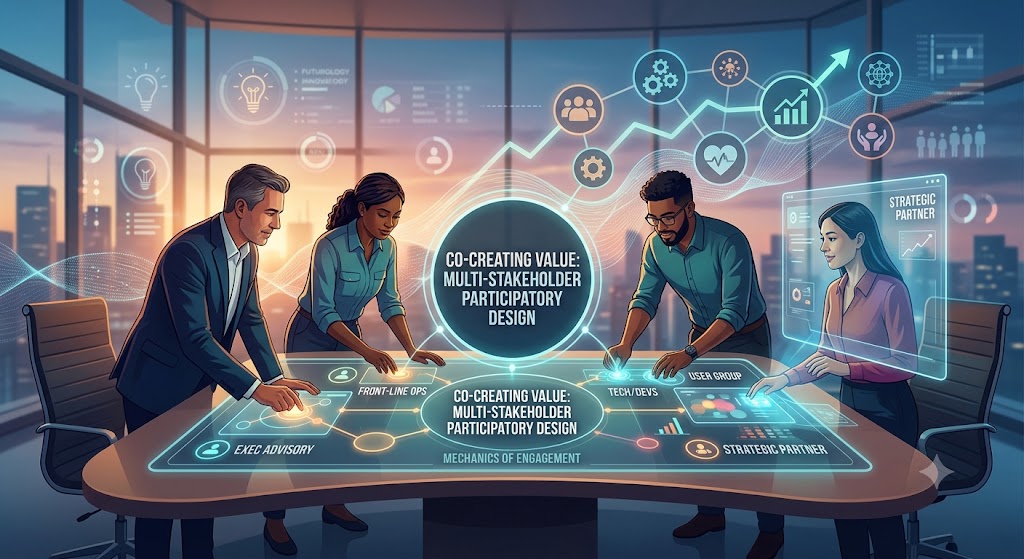
The most profound shift in inclusive innovation is the transition from designing for a community to designing with them. AI serves as the ultimate translator and facilitator in this process, stripping away the technical barriers that have traditionally kept “non-designers” out of the creative engine room.

Democratizing the Design Language

Generative AI tools act as a bridge for individuals who have the lived experience but perhaps lack formal design training. By using natural language prompts or simple sketches, end-users from diverse backgrounds can generate high-fidelity visual prototypes of the solutions they envision. This democratization of the design language ensures that the people closest to the problem are the ones leading the architectural vision of the solution.

Rapid Iteration for Universal Accessibility

In a traditional workflow, testing for accessibility is a slow, iterative process. AI changes the math. Automated agents can now instantly audit prototypes against Universal Design principles and international standards like the Web Content Accessibility Guidelines (WCAG). This allows for “real-time inclusion,” where flaws in contrast, navigation logic, or screen-reader compatibility are identified and corrected the moment a design is conceived, rather than weeks later during a formal audit.

The “Infinite Version” Paradigm

We are moving away from the “One-Size-Fits-All” model toward what I call The Infinite Version Paradigm. Rather than forcing every user to adapt to a single static interface, AI allows the interface to dynamically adapt to the user. Whether it’s adjusting cognitive load for a neurodivergent individual or reconfiguring navigation for someone with limited motor control, AI enables a level of deep personalization that makes the product feel like it was built specifically for the individual using it.

Prototyping for the Edge: When we use AI to solve for the most extreme accessibility requirements, we often discover “the Curb-Cut Effect” — innovations that were intended for a specific group (like closed captions) end up becoming essential for everyone.

IV. The Ethical Guardrail: Auditing for Algorithmic Bias

As we embrace the speed of AI, we must remain vigilant. AI is a mirror; if we feed it a history of exclusion, it will reflect and amplify those same biases in the designs it generates. Inclusive innovation requires a rigorous, proactive approach to ethics — ensuring that our “intelligent” assistants aren’t inadvertently building new digital walls.

The Mirror Effect: Acknowledging Embedded Bias

We must start with the uncomfortable truth: datasets are often skewed toward the dominant culture. If an AI is trained on images, text, and code that ignore marginalized groups, its output will naturally cater to the “standard” user. As innovation leaders, our job is to interrogate the training data and recognize where the gaps exist before we let the AI begin the design process.

Proactive Bias Hunting and Red Teaming

To counter these risks, we employ “Red Team” AI agents. These are secondary AI systems specifically programmed to attack a design from the perspective of different personas — searching for exclusionary patterns, cultural insensitivity, or hidden barriers to entry. By simulating how a neurodivergent user or someone from a different socio-economic background might interact with the product, we can catch “algorithmic microaggressions” before they ever reach the user.

Transparency and the “Open Box” Approach

Inclusive innovation cannot happen in a “Black Box.” To build trust with diverse communities, we must be transparent about how AI decisions are being made. This means moving toward Explainable AI (XAI), where the logic behind a personalized recommendation or an interface adjustment is clear and auditable. When users understand why a system is adapting to them, they feel empowered rather than monitored.

“Innovation without ethics is merely disruption. True inclusive innovation requires the courage to slow down and audit the algorithm to ensure it serves everyone.” — Braden Kelley

V. The Future Role of the Innovation Leader

The integration of AI into the design process necessitates a fundamental evolution of our leadership models. As the technical barriers to execution lower, the value of the innovation leader shifts from managing the “how” to orchestrating the “why.” We are moving from an era of craft-based creation to one of strategic curation and ethical stewardship.

From Creator to Curator

In an AI-augmented world, the designer’s primary skill is no longer just the ability to push pixels or write code, but the ability to orchestrate collaboration between human stakeholders and machine intelligence. The innovation leader becomes a curator of perspectives, ensuring that the AI has the right “empathy inputs” to generate inclusive outputs. Our job is to provide the vision and the values that guide the algorithm’s creative power.

The Competitive Edge of Inclusive Futurology

From a futurology perspective, designing for inclusion isn’t just a moral imperative — it’s a massive market opportunity. Historically, innovations that solve for “the edges” (such as the typewriter, originally designed for the blind) eventually redefine the mainstream. By using AI to anticipate the needs of the marginalized, organizations build more resilient, flexible, and robust products. Those who master inclusive design today are building the foundational infrastructure for tomorrow’s global economy.

Sustaining the Human-Centered Focus

As we look toward a future of agentic AI and neuroadaptive interfaces, the risk of “dehumanization” grows. The role of the innovation leader is to act as the guardian of the human experience. We must ensure that as our tools become more autonomous, they remain subservient to the goal of enhancing human connection, dignity, and agency. The future belongs to those who can use the highest technology to serve the deepest human needs.

The Futurist’s Prediction: Within the next decade, “inclusive design” will simply be called “design.” Companies that fail to use AI to bridge the accessibility gap will find themselves obsolete in an increasingly diverse and demanding global marketplace.

VI. Conclusion: Human-Centered, AI-Augmented

We stand at a unique crossroads in the history of innovation. For the first time, we possess tools powerful enough to bridge the gap between our empathetic intentions and the practical realities of large-scale design. But as we have explored, the true power of AI for Inclusive Innovation Design does not lie in the code itself, but in how we choose to direct that code to serve the human spirit.

Innovation is Only “New” if it is Inclusive

If we continue to use AI merely to optimize for the majority, we are not innovating; we are simply accelerating the status quo. Real innovation happens when we use these technologies to include those who were previously left behind. By bringing the “edge cases” into the center of our design process, we unlock new forms of value that were previously invisible.

The Path Forward: From Average to Infinite

The transition from the era of the “Average User” to the era of Infinite Inclusion is now underway. As innovation leaders, our mission is to ensure that AI acts as a leveling force — one that dissolves barriers, celebrates diversity, and creates a world where every individual feels that the products and services they interact with were built with them in mind.

The goal isn’t to make AI more human, but to use AI to make us more humane in how we design the world around us.

Let’s get to work on building a future that belongs to everyone.

Frequently Asked Questions

How does AI specifically enable more inclusive innovation?

AI acts as a cognitive exoskeleton, allowing designers to synthesize diverse global perspectives through Natural Language Processing (NLP) and simulate lived realities. It democratizes the design process by enabling non-designers to prototype their own solutions and dynamically adapts interfaces to meet individual accessibility needs in real-time.

What is the ‘Infinite Version’ paradigm in inclusive design?

The Infinite Version paradigm moves away from “one-size-fits-all” products. It uses AI to create interfaces that dynamically reconfigure themselves based on a user’s unique physical or cognitive requirements, ensuring the experience is personalized for every individual rather than forced into a static average.

How do we prevent AI from amplifying existing biases in the design process?

We prevent bias by implementing “Red Team” AI agents to proactively hunt for exclusionary patterns, auditing training datasets for diversity gaps, and adopting Explainable AI (XAI) practices. This ensures the design process remains transparent and accountable to human-centered ethical standards.

SPECIAL BONUS: Braden Kelley’s Problem Finding Canvas can be a super useful starting point for doing design thinking or human-centered design.

“The Problem Finding Canvas should help you investigate a handful of areas to explore, choose the one most important to you, extract all of the potential challenges and opportunities and choose one to prioritize.”

Image credit: Google Gemini

Subscribe to Human-Centered Change & Innovation WeeklySign up here to get Human-Centered Change & Innovation Weekly delivered to your inbox every week.

The Role of Empathy in Human-Centered Design

The Role of Empathy in Human-Centered Design

GUEST POST from Art Inteligencia

The concept of empathy has gained traction in recent years. Empathy is typically defined as the capacity to understand or feel what another person is experiencing and to share their feelings. In the design world, empathy is often heralded as the one tool that can help create truly human-centered designs. This article looks at the role of empathy in the context of human-centered design (HCD) and provides case study examples of companies that have successfully leveraged empathy to design user experiences that truly resonated with their users.

The concept of HCD is built on understanding the user on a deeper level. It is more than just understanding a user’s demographic characteristics or their technical needs. HCD seeks to understand the user’s emotions, their values, and their aspirations. It is an approach that seeks to craft user experiences that are not only practical, but also emotionally rewarding. Empathy is the key tool for unlocking the potential of HCD.

At its heart, empathy is about understanding and caring deeply for users and their experiences. Designers must be willing to go beyond just understanding the technical requirements of a user and instead strive to understand the value they add to their lives. To effectively leverage empathy for HCD, designers must have an understanding of the user that goes beyond just demographics or data points. They must be willing to dive deep into the holistic user experience – from their beliefs to their motivations, their joys and their fears – and create designs that acknowledge all these different facets of a user.

Empathy can be used to create experiences that are tailored to the individual user. Just as different users have different needs and values, different designs can be crafted to address different users’ needs and aspirations. Through this approach, designers can create experiences that are truly tailored to each individual user, and this is the heart of HCD.

To better illustrate how empathy can be used to create human-centered designs, here are two case study examples:

Case Study 1 – Airbnb

Airbnb’s success is largely attributed to its ability to create user experiences that are both practical and emotionally engaging. Through their empathy-driven approach, they have created a platform that deeply connects users with each other and allows for personalized experiences. For example, Airbnb’s “Experience” service provides users the opportunity to explore the cities they visit with unique experiences tailored to their individual interests.

Case Study 2 – Apple

Apple is a company that understands the importance of empathy in design. Their products have long been known for their user-friendly interfaces and thoughtful user experience design. Through their empathy-driven design approach, they have crafted products that are so intuitive to use that they have become a household name.

These case studies demonstrate how the use of empathy in design can result in user experiences that users truly love. By taking the time to understand and honor the individual user, designers can create designs that truly resonate with their users.

Conclusion

Empathy is a powerful tool for design that can be used to create user experiences that are both practical and emotionally rewarding. It is the key to unlocking the potential of human-centered design, and companies such as Airbnb and Apple have demonstrated the immense potential of empathy for creating truly user-centric experiences.

SPECIAL BONUS: Braden Kelley’s Problem Finding Canvas can be a super useful starting point for doing design thinking or human-centered design.

“The Problem Finding Canvas should help you investigate a handful of areas to explore, choose the one most important to you, extract all of the potential challenges and opportunities and choose one to prioritize.”

Image credit: Pexels

Subscribe to Human-Centered Change & Innovation WeeklySign up here to get Human-Centered Change & Innovation Weekly delivered to your inbox every week.

Design Thinking for Non-Designers

How to Approach the Problem Solving Process

GUEST POST from Chateau G Pato

In the world of design, getting started with creative problem solving can feel intimidating if you don’t have a design background. Understanding how to approach a problem from a different perspective is key to success when it comes to finding viable solutions. In this article, we’ll be discussing the basics of design thinking and introducing two case studies that demonstrate how it can be used for both creative and practical problem solving.

What is Design Thinking?

Design thinking is an approach to problem solving that focuses on human-centered solutions. It was popularized by design firm IDEO, which is known for its innovative products, like the now-ubiquitous Apple Mouse and the Segway. Design thinking is based on the idea that creative solutions and useful products can be used to meet pressing needs in any project. When it comes to problem solving, design thinking encourages a multidisciplinary approach that includes ideation, prototyping and iterative testing.

At its core, design thinking is about asking the right questions and understanding what the user needs from a product or service. The process starts with an initial investigation into the problem, followed by brainstorming to find possible solutions. Once potential ideas have been identified, the next step involves prototyping and experimentation to discover the best approach. Iterative testing and user feedback help to identify areas for improvement, while also informing the end result. Ultimately, the design thinking process can identify both creative and practical solutions that address the original problem.

Case Study 1 – McKinsey & Co: Designing an App for the Nonprofit Sector

In 2020, McKinsey & Co partnered with the World Wildlife Fund to design a mobile app that would help the nonprofit sector better organize its data. In order to create a product that could truly serve the needs of the sector, the team began by conducting research on the current state of data management and the pain points among nonprofits. Once they identified the problem, they used design thinking to create a product that would solve it.

The team conducted interviews, ran surveys and observed user behavior in order to gain deeper insight into the nonprofit sector and better understand their goals. This enabled them to develop an app prototype that addressed the identified pain points and provided innovative solutions for the nonprofit sector. After consulting with the target audience and refining the product, the final version of the app was released and it quickly became a success.

Case Study 2 – Zenden: Delivering Smart Energy Solutions

This example highlights how design thinking can be used to create a product that meets current needs. Zenden, an energy-focused startup, wanted to create a smart energy system that would improve the efficiency of renewable energy sources and reduce carbon emissions. The team used the design thinking process to develop a solution that would meet this goal.

The team first conducted research on the current energy landscape and identified challenges stemming from energy availability and sustainability. They then held brainstorming sessions to come up with possible solutions and interviewed energy industry professionals to refine their ideas. After extensive prototyping and testing, the team was able to develop a solution that provided a reliable energy source and drastically reduced energy waste.

Conclusion

Design thinking is an invaluable tool for problem solving that allows creators to understand a problem from a human-centered perspective and come up with creative solutions that meet users’ needs. Both of the cases presented here demonstrate how design thinking can be used to create products that consider the needs of the user and deliver potential solutions. With the right approach, even those without a design background can create products that meet the needs of their audience.

SPECIAL BONUS: Braden Kelley’s Problem Finding Canvas can be a super useful starting point for doing design thinking or human-centered design.

“The Problem Finding Canvas should help you investigate a handful of areas to explore, choose the one most important to you, extract all of the potential challenges and opportunities and choose one to prioritize.”

Image credit: Unsplash

Subscribe to Human-Centered Change & Innovation WeeklySign up here to get Human-Centered Change & Innovation Weekly delivered to your inbox every week.
From Anthropology to Organizational Innovation

LAST UPDATED: April 5, 2026 at 3:38 PM

From Anthropology to Organizational Innovation

GUEST POST from Chateau G Pato


The Corporate Ethnographer

In an era dominated by Big Data and predictive analytics, organizations often find themselves suffering from a profound “Human Blind Spot.” While spreadsheets can tell us what is happening in our markets and hallways, they are notoriously poor at explaining the why. Traditional data-driven innovation cycles frequently fail because they treat humans as predictable variables rather than complex, social beings.

The bridge between stagnation and sustainable growth lies at the intersection of anthropology and organizational innovation. By adopting the lens of a corporate ethnographer, leaders can move beyond superficial surface metrics to uncover the “tribal” realities of their present culture.

This section explores how immersive observation and cultural empathy serve as the foundational bedrock for human-centered innovation. To design a future that people actually want to live in, we must first master the art of understanding the social fabric that exists today.

The Anthropologist’s Toolkit in a Digital World

Modern innovation requires more than a laboratory; it requires “the field.” For a change leader, the field is anywhere human interaction occurs. To move beyond the limits of traditional focus groups — where participants often tell you what they think you want to hear — we must employ immersive observation.

By practicing “thick description,” a term borrowed from Clifford Geertz, we record not just the action, but the social context and intent behind it. In a corporate setting, this means observing how an employee actually navigates a fragmented software ecosystem or how a customer solves a problem using a “workaround” that your product team never envisioned. These workarounds are often the brightest signals for where the next innovation should live.

The toolkit also involves a deep dive into the artifacts of culture. Every organization has them: the specific acronyms used in emails, the layout of the digital workspace, and the “unwritten rules” of who gets to speak in meetings. By analyzing these artifacts, we can identify latent needs — the frustrations and desires that users haven’t yet articulated because they’ve simply accepted them as “the way things are.”

Ultimately, this phase is about building radical empathy. When we stop looking at people as “users” or “headcount” and start seeing them as members of a social system, we unlock the ability to design solutions that don’t just function, but resonate.

Mapping the “Tribal” Landscape

Organizations are not monoliths; they are collections of interconnected subcultures. To drive innovation, a leader must recognize that the Sales “tribe” and the Engineering “tribe” often speak different languages and operate under entirely different value systems. Ignoring these cultural nuances is why many digital transformation efforts hit a wall — they attempt to impose a universal solution onto a fragmented social landscape.

A key component of this mapping involves the study of rituals. Rituals are the heartbeat of organizational culture, ranging from the formal (the weekly town hall) to the informal (the “venting” session after a specific meeting). These moments reinforce identity and status. By observing which rituals are sacred and which are performative, we can identify where the culture supports agility and where it clings to the “stable spine” of tradition at the expense of progress.

Finally, we must dismantle the myth of the lone innovator. Innovation is rarely the result of a single “genius” in a vacuum; it is a social outcome. By mapping the influence networks and social dependencies within an organization, we can shift our focus from individual performance to the collective environment. Success lies in creating a cultural ecosystem where the “tribes” feel safe to experiment, share knowledge, and collaborate across boundaries.

Translating Insight into Innovation

The transition from observation to execution is where many organizations falter. Collecting ethnographic data is useless unless it is processed through synthesis and pattern recognition. We must look across our field notes and “thick descriptions” to find the recurring tensions and aspirations that define the user experience. These aren’t just data points; they are the architectural blueprints for human-centered design (HCD).

Integrating these anthropological insights into the innovation pipeline allows us to move from “What Is” to “What If.” Instead of guessing what a new feature should be, we use our deep understanding of the social fabric to de-risk radical ideas. We prototype not just for functionality, but for cultural fit, ensuring that the solutions we build align with the mental models and daily realities of the people who will use them.

This process transforms raw empathy into actionable design principles. When we understand the underlying “why” behind a behavior, we stop building tools that people have to use and start building experiences they want to use. By grounding our creative leaps in the reality of the human condition, we ensure that innovation is not a shot in the dark, but a purposeful evolution.

Anthropological Change Management

The greatest obstacle to innovation is rarely the technology itself, but the “Organizational Immune System.” Every culture has a natural defense mechanism designed to protect the status quo. When a new process or tool is introduced, the culture often perceives it as a foreign threat and moves to reject it. Anthropological change management focuses on neutralizing this rejection by working with the culture rather than against it.

To overcome the fear of the new, leaders must bridge the gap through cultural storytelling. This involves framing the change not as a disruptive break from the past, but as a natural evolution of the tribe’s identity. By anchoring the future in the values that have historically defined the organization’s success, we reduce the perceived threat and make the transition feel like an expansion of the “self” rather than a loss of control.

Sustainable adoption is only possible when new behaviors are woven into the existing social fabric. This means identifying “influencer” nodes within the tribal hierarchy — not necessarily the people with the highest titles, but those with the most social capital. By engaging these cultural anchors early, we ensure that innovation doesn’t just launch, but truly takes root and flourishes within the daily rituals of the community.

Case Studies: The Anthropologist in Action

The power of this approach is best seen in its application. Consider a project where a major financial institution was struggling with declining customer engagement. While their data pointed to “digital friction,” it was only through ethnographic fieldwork — sitting in the homes of customers and watching them manage their finances — that we discovered the true issue wasn’t the UI. It was a lack of emotional trust during stressful life transitions. By redesigning the experience to act as a supportive “financial partner” rather than a cold transaction engine, they saw a massive surge in long-term loyalty.

In another instance, a global manufacturing firm faced internal resistance during a massive digital transformation effort. The technical implementation was perfect, but the workforce was bypassing the new systems. By mapping the internal tribal landscape, we identified that the new tools inadvertently stripped “expert” workers of their social status.

We pivoted the strategy to reposition the technology as an “augmentation of craftsmanship” and engaged the informal social leaders to co-create the rollout. This shift in narrative and approach turned the loudest critics into the most effective advocates, proving that when you solve for the human system, the technical system takes care of itself.

Conclusion: The Future Belongs to the Observant

As we accelerate into a world increasingly shaped by automation and artificial intelligence, the ultimate competitive advantage is not technological — it is deeply human. The ability to perceive, interpret, and act upon the nuanced complexities of human behavior is what will separate the industry leaders from those who are merely digitizing their own obsolescence. Empathy, grounded in the rigorous methodology of anthropology, is the differentiator that cannot be automated.

The call to action for modern executives is clear: get out of the boardroom and into the field. We must trade our reliance on high-level abstractions for the messy, vibrant reality of the people we serve and lead. Innovation is not a technical problem to be solved with a better algorithm; it is a human journey that requires us to be present, curious, and profoundly observant.

In the end, the most successful organizations of the next decade will be those that view innovation not as a department, but as a cultural capability. By embracing the role of the corporate ethnographer, you ensure that every change you drive and every product you launch is anchored in the most stable foundation available to us: the human experience.

Frequently Asked Questions

How does anthropology improve organizational innovation?

Anthropology provides the tools for “thick description,” allowing leaders to move beyond what people say in surveys to what they actually do. By understanding the underlying cultural rituals and social fabric of an organization, innovation can be designed to fit the human reality, significantly reducing the risk of cultural rejection.

What is a “Corporate Ethnographer”?

A corporate ethnographer is a practitioner who applies anthropological research methods — such as immersive observation and empathetic interviewing — within a business context. Their goal is to uncover latent needs and cultural barriers that traditional data-driven approaches often miss.

How can leaders overcome the “Organizational Immune System”?

Leaders can neutralize resistance by using cultural storytelling to frame change as an evolution of the organization’s existing identity rather than a threat to it. Engaging social “influencer” nodes within the internal tribal landscape ensures that new behaviors are adopted naturally through existing social capital.

Image credits: Gemini

Subscribe to Human-Centered Change & Innovation WeeklySign up here to join 17,000+ leaders getting Human-Centered Change & Innovation Weekly delivered to their inbox every week.

Join Me at Innovation Leader’s IMPACT 2019 in San Francisco

Join Braden Kelley at Innovation Leader's IMPACT 2019 in San Francisco

Want to find out how to learn fast instead of failing fast?

Join me in San Francisco, CA next month – October 22-24, 2019 at Innovation Leader’s IMPACT 2019, their annual conference where innovation leaders from organizations around the world will meet to share innovation best practices.

I’ll be doing a keynote and workshop that will give participants hands-on experience with The Experiment Canvas™ from my forthcoming Human-Centered Innovation Toolkit™.

The Experiment Canvas by Braden Kelley

The Experiment Canvas™ is one of the many tools that I’ve already created for the Human-Centered Innovation Toolkit™, and it is an incredibly valuable tool for use by people following Design Sprint, Design Thinking or other innovation methodologies to craft and execute experiments.

If you’d like to get involved as a patron or premium sponsor to help finish toolkit development and distribution, please contact me.

Otherwise, I look forward to seeing you next month in San Francisco!

Connect with me on Twitter (@innovate) to orchestrate a meetup to learn about my work at Oracle or to sit down with me at the event to explore any of the powerful tools in the Change Planning Toolkit™ or Human-Centered Innovation Toolkit™.


Accelerate your change and transformation success

Subscribe to Human-Centered Change & Innovation WeeklySign up here to get Human-Centered Change & Innovation Weekly delivered to your inbox every week.

Human-Centered Design: An Introduction

Human-Centered Design: An Introduction

GUEST POST from Art Inteligencia

In today’s competitive business landscape, organizations of all sizes are striving to remain ahead of the curve. One of the most effective strategies for achieving this goal is to design products, services, and experiences with the user in mind. This approach, known as human-centered design, is based on the idea that the best products, services, and experiences are those which are designed to meet the needs and wants of the people who will use them.

At its core, human-centered design is a process of understanding user needs, developing solutions to meet those needs, and validating and refining those solutions through user feedback. It involves a deep understanding of the users, their needs, the context in which they are used, and the environment in which they are created.

The goal of human-centered design is to create products, services, and experiences that are both effective and enjoyable for the users. This approach to design often results in improved user satisfaction, increased productivity, and improved customer loyalty.

Case Study 1 – Google

Google is a prime example of a company that uses human-centered design to create products and services that are both effective and enjoyable for its users. The company uses a variety of methods to understand user needs, including user research, interviews, surveys, and analytics. Google also uses prototyping and testing to validate and refine its design solutions.

Case Study 2 – Apple

Apple is another great example of a company that uses human-centered design to create products and services that are both effective and enjoyable for its users. Apple’s approach to design involves a deep understanding of the user’s needs and wants, the context in which they are used, and the environment in which they are created. Apple uses a variety of methods including user research, interviews, surveys, and analytics to understand user needs. Additionally, the company uses prototyping and testing to validate and refine its design solutions.

Conclusion

Human-centered design is an effective approach for creating products, services, and experiences that meet the needs and wants of the people who use them. By understanding the user, developing solutions to meet those needs, and validating and refining those solutions through user feedback, organizations can create products and services that are both effective and enjoyable for their users. Google and Apple are two great examples of companies that have successfully implemented human-centered design processes to create products and services that are both effective and enjoyable for their users.

SPECIAL BONUS: Braden Kelley’s Problem Finding Canvas can be a super useful starting point for doing design thinking or human-centered design.

“The Problem Finding Canvas should help you investigate a handful of areas to explore, choose the one most important to you, extract all of the potential challenges and opportunities and choose one to prioritize.”

Image credit: Pexels

Subscribe to Human-Centered Change & Innovation WeeklySign up here to get Human-Centered Change & Innovation Weekly delivered to your inbox every week.
The Role of Design Thinking in Business Innovation

The Role of Design Thinking in Business Innovation

GUEST POST from Art Inteligencia

Design thinking is a problem-solving process that starts with the customer and their needs, and works backwards to come up with innovative solutions that meet those needs. It is a process that puts the user at the center of the solution, and allows companies to innovate in order to stay ahead of their competition. Design thinking is an invaluable tool for businesses that are looking to innovate, as it helps them create better customer experiences and develop new products and services.

When it comes to business innovation, design thinking can play a critical role. It is a powerful tool for understanding customer needs and developing innovative solutions that meet those needs. Design thinking can be applied to any business situation and can help companies identify opportunities for improvement, develop new products and services, and create better customer experiences.

To illustrate the value of design thinking in business innovation, let’s look at two case studies.

Case Study 1: Airbnb

Airbnb is a hospitality company that uses design thinking to innovate. Airbnb used design thinking to create an experience that was tailored to the customer’s needs. Instead of offering a traditional hotel experience, Airbnb focused on providing an experience that was personal, affordable, and convenient. They used design thinking to create a platform that allows users to rent out their homes for short-term stays. By understanding the customer’s needs and focusing on creating an experience tailored to those needs, Airbnb was able to create a platform that revolutionized the hospitality industry.

Case Study 2: Twitter

Twitter is a social media platform that uses design thinking to innovate. Twitter used design thinking to create a platform that was tailored to the customer’s needs. They focused on creating a platform that was easy to use, allowed users to express their opinions, and connected people around the world. By understanding the customer’s needs and focusing on creating an experience tailored to those needs, Twitter was able to create a platform that revolutionized the way people communicate online.

Conclusion

These case studies illustrate the power of design thinking in business innovation. Design thinking helps companies understand customer needs and develop innovative solutions that meet those needs. It is a powerful tool for businesses that are looking to innovate and create better customer experiences.

SPECIAL BONUS: Braden Kelley’s Problem Finding Canvas can be a super useful starting point for doing design thinking or human-centered design.

“The Problem Finding Canvas should help you investigate a handful of areas to explore, choose the one most important to you, extract all of the potential challenges and opportunities and choose one to prioritize.”

Image credit: Pixabay

Subscribe to Human-Centered Change & Innovation WeeklySign up here to get Human-Centered Change & Innovation Weekly delivered to your inbox every week.
Using Design Thinking to Create Engaging Experiences for Customers

Using Design Thinking to Create Engaging Experiences for Customers

GUEST POST from Art Inteligencia

Design thinking is a creative problem-solving process that can be used to develop products, services, and experiences that are both meaningful and engaging to customers. It is a customer-centered approach that helps organizations to identify and solve customer problems, develop new ideas, and create innovative solutions that meet customer needs and create a positive customer experience.

Design thinking is based on the belief that customer feedback is the key to understanding customer needs, wants, and desires. By engaging customers in the design process, organizations can create experiences that are tailored to customer needs and preferences.

Design thinking is an iterative process that involves research, analysis, and testing. Through a series of iterations, ideas are continually tested and refined until the desired customer experience is achieved. By involving customers in the design process, organizations are able to create experiences that are both meaningful and engaging for customers.

In this article, we will discuss two case studies of organizations that have successfully used design thinking to create engaging experiences for customers.

Case Study 1: Adobe Creative Cloud

Adobe Creative Cloud is a subscription-based service that enables users to access the latest versions of Adobe’s creative software. Adobe used design thinking to create an engaging customer experience.

Adobe began by researching customer needs and preferences. They conducted interviews with customers, gathered feedback from customer surveys, and analyzed customer data. This research allowed Adobe to gain a better understanding of customer needs and preferences.

Adobe then used this customer feedback to develop a new customer experience. They created an intuitive and user-friendly interface, created an easy-to-navigate online store, and implemented a personalized learning experience.

Finally, Adobe tested the new customer experience with customers. This allowed them to identify any issues and refine the customer experience based on customer feedback.

The result was an engaging customer experience that was tailored to customer needs and preferences. The new customer experience allowed customers to access the latest versions of Adobe’s software quickly and easily, and enabled them to explore the features and benefits of the software.

Case Study 2: Amazon Prime

Amazon Prime is a subscription-based service that provides customers with access to free shipping, streaming media, and other benefits. Amazon used design thinking to create an engaging customer experience.

Amazon began by researching customer needs and preferences. They conducted interviews with customers, gathered feedback from customer surveys, and analyzed customer data. This research allowed Amazon to gain a better understanding of customer needs and preferences.

Amazon then used this customer feedback to develop a new customer experience. They created an intuitive and user-friendly interface, created an easy-to-navigate online store, and implemented a personalized learning experience.

Finally, Amazon tested the new customer experience with customers. This allowed them to identify any issues and refine the customer experience based on customer feedback.

The result was an engaging customer experience that was tailored to customer needs and preferences. The new customer experience allowed customers to explore Amazon Prime benefits quickly and easily, and enabled them to access the features and benefits of the service.

Conclusion

Design thinking is a powerful tool that can be used to create engaging customer experiences. By engaging customers in the design process, organizations can create experiences that are tailored to customer needs and preferences. The two case studies discussed in this article demonstrate how organizations can use design thinking to create engaging experiences for customers.

SPECIAL BONUS: Braden Kelley’s Problem Finding Canvas can be a super useful starting point for doing design thinking or human-centered design.

“The Problem Finding Canvas should help you investigate a handful of areas to explore, choose the one most important to you, extract all of the potential challenges and opportunities and choose one to prioritize.”

Image credit: Pixabay

Subscribe to Human-Centered Change & Innovation WeeklySign up here to get Human-Centered Change & Innovation Weekly delivered to your inbox every week.
Understanding How Human-Centered Design Can Transform Your Organization

Understanding How Human-Centered Design Can Transform Your Organization

GUEST POST from Art Inteligencia

As organizations strive for success in the digital age, understanding human-centered design (HCD) is essential. HCD is a method of problem-solving that puts the focus on the end-user or consumer, considering their needs and preferences first and foremost. This design strategy has been proven to yield high-quality, user-friendly products and services that respond to the needs of the consumer.

Organizations that implement HCD are often more successful in the long run, as they are able to create products and services that are tailored to the consumer, resulting in improved user engagement and loyalty. Additionally, organizations that use HCD can better understand the needs of their target audience, allowing them to quickly adapt their offering to stay ahead of the competition.

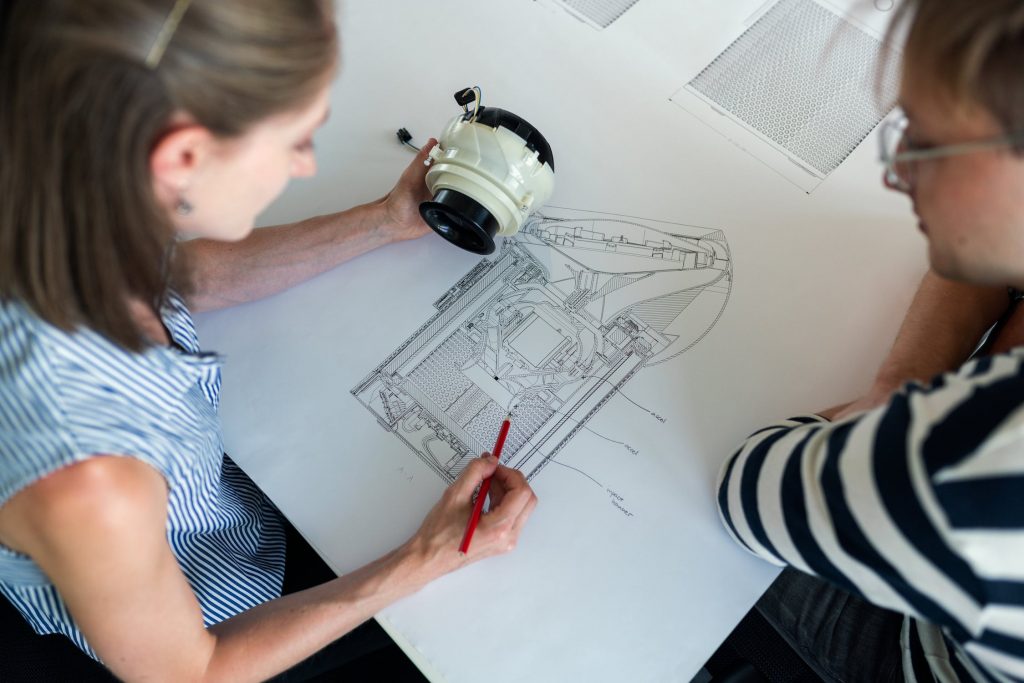
Case Study 1: Dyson

Dyson is a perfect example of an organization that has leveraged HCD to create an innovative product and remain competitive. Dyson was founded in 1993 when James Dyson decided to use HCD to solve the problem of inefficient vacuum cleaners. By observing the user in their home environment, Dyson was able to identify the shortcomings of traditional vacuum cleaners, and design a product that addressed these issues. The result was the Dyson vacuum cleaner, which revolutionized the industry and has remained a top-seller ever since.

Case Study 2: Airbnb

Airbnb is another great example of an organization that has successfully implemented HCD. The company recognized the need for a better way to book short-term lodging, and created a service that was tailored to the needs of their target audience. By understanding the needs of their users, Airbnb was able to create a booking platform that was both user-friendly and secure, resulting in improved customer satisfaction.

Conclusion

By understanding and implementing HCD, organizations can create more user-centric products and services that are tailored to the needs of their target audience. This not only leads to improved user engagement and loyalty, but also allows organizations to stay ahead of the competition and remain competitive in the ever-changing digital landscape.

SPECIAL BONUS: Braden Kelley’s Problem Finding Canvas can be a super useful starting point for doing design thinking or human-centered design.

“The Problem Finding Canvas should help you investigate a handful of areas to explore, choose the one most important to you, extract all of the potential challenges and opportunities and choose one to prioritize.”

Image credit: Pexels

Subscribe to Human-Centered Change & Innovation WeeklySign up here to get Human-Centered Change & Innovation Weekly delivered to your inbox every week.
Five Keys to Doing Good Ethnographic Research

Five Keys to Doing Good Ethnographic Research

GUEST POST from Art Inteligencia

Ethnographic research is a powerful tool for understanding the beliefs, behavior, and culture of a given population or group. It is a powerful tool for gaining insight into the lived experiences of a particular group and can be used to inform policy, decision making, and marketing. Ethnographic research involves observing and recording the social interactions and activities of a particular group in their natural environment. The following are some key tips to help ensure a successful ethnographic research project.

1. Specify Your Objectives

Before embarking on an ethnographic research project, it is important to set out clear objectives. Having a clear goal and objectives will help to ensure that the research is conducted in a focused and productive way. It is also important to consider the time and resources available for the research project, as these will have an impact on the depth and breadth of the research that can be conducted.

2. Choose the Right Location

Choosing the right location is essential when doing an ethnographic research project. The researcher should select a location that is accessible and provides an opportunity to observe the target group in their natural environment. It is also important to ensure that the location is safe and secure, as well as respectful of the privacy of the participants.

3. Develop a Research Plan

Developing a research plan is essential for successful ethnographic research. The research plan should include a timeline for data collection, an assessment of the resources available, and a detailed method for data collection. It is important to consider the ethical implications of the research and to develop a plan for protecting the participants’ rights and privacy.

4. Gather Data

The data gathering stage of an ethnographic research project is arguably the most important. Ethnographic research should involve the collection of both quantitative and qualitative data. This includes gathering data through observation, interviews, and other methods. The researcher should strive to gain a deeper understanding of the target group and their culture through the collection of data.

5. Analyze the Data

Once the data has been collected, it is important to analyze it in order to gain insights into the beliefs, behavior, and culture of the target group. This can be done through a variety of methods, including statistical analysis, content analysis, and thematic analysis. The researcher should strive to draw meaningful conclusions from the data that can inform policy, decision making, and marketing.

Ethnographic research can be an invaluable tool for gaining an understanding of the beliefs, behavior, and culture of a particular group. However, it is important to ensure that a well-thought-out research plan is in place, and that the right data is gathered and analyzed in a meaningful way. Following these tips should help ensure a successful ethnographic research project.

Image credit: Pixabay

Subscribe to Human-Centered Change & Innovation WeeklySign up here to get Human-Centered Change & Innovation Weekly delivered to your inbox every week.