
Category Archives: Customer Experience

Experience Design in an Agentic World

Experience Design in an Agentic World

GUEST POST from Chateau G Pato


The New Landscape — From Direct Touchpoints to Agent Intermediaries

1.1 The Evolution of Experience Design

  • The Trajectory of Experience: Tracing the shift from product-centric features to service-centric interactions, into holistic Customer Experience (CX), and now entering the era of Agentic Experience (AX).
  • The Death of the Linear Journey: Traditional customer journeys operated on controlled, predictable touchpoints across owned digital and physical channels. In an agentic reality, journeys become dynamic, non-linear networks orchestrated by personal AI proxies constantly negotiating value in real time.

1.2 Defining the “Agentic Layer”

  • What is an Autonomous Agent? Goal-driven software entities capable of understanding intent, multi-step planning, sub-task delegation, and cross-ecosystem execution without constant human supervision.
  • The Disappearing Interface: As graphical user interfaces (GUIs)—buttons, forms, apps, and websites—recede into the background, design shifts from visual interaction to ambient, intent-based delegation and orchestration.

The Triad of Agentic Experience Design (AXD)

To master experience design in this new era, organizations must move beyond traditional user interfaces and deliberately design across three distinct interaction surfaces:

2.1 Human-to-Agent (H2A): Intent, Control, and Trust

  • Intent Capture & Translation: Designing interfaces and natural language mechanisms that accurately capture complex human goals, nuanced preferences, and implicit constraints.
  • Control Dials & Transparency: Providing intuitive levers for humans to dial autonomy up or down, ensuring visibility into agent reasoning without cognitive overload.

2.2 Agent-to-Agent (A2A): Interoperability and Machine Negotiation

  • Machine Readability & API Ergonomics: Ensuring brand offerings, rules, and value propositions are structured so customer-side agents can evaluate and transact seamlessly.
  • Dynamic Value Exchange: Designing protocols for autonomous negotiation, micro-transactions, and zero-latency service-level agreements between competing AI agents.

2.3 Agent-to-Human (A2H): Escalation and Moments of Truth

  • High-Stakes Escalations: Establishing seamless handoff patterns for when an agent encounters ambiguity, boundary limits, or high-risk decisions requiring human judgment.
  • Preserving Connection: Ensuring agent communications feel authentic, respectful, and aligned with human values rather than transactional or robotic.

2.4 Summary Matrix: The AXD Interaction Surfaces

Interaction Surface Primary Design Focus Core Success Metric
Human-to-Agent (H2A) Intent capture, trust building, dynamic control dials Delegation confidence & intent alignment
Agent-to-Agent (A2A) Machine readability, dynamic negotiation, protocol clarity Frictionless execution & zero-latency settlement
Agent-to-Human (A2H) Contextual handoffs, meaningful moments of truth Trust preservation & emotional resonance

Human-Centered Design Meets Futurology — Key Design Principles

3.1 Design for Intent, Not Just Interaction

  • Outcome-Driven Experience Architecture: Moving from designing fixed screen flows, forms, and step-by-step clicks to defining outcome spaces, boundary conditions, and goal parameters.
  • Intent Parsing & Context Sensitivity: Structuring systems to unpack nuanced human requests (e.g., balance, budget, personal preferences) and translate them into actionable, machine-executable constraints.

3.2 The Trust Architecture: Governance as Experience

  • The Transparency Spectrum: Determining the optimal spectrum of agent autonomy—when an agent should act silently in the background versus when it must seek explicit, high-friction human confirmation.
  • Failsafes, Rollbacks & Graceful Degradation: Designing intuitive undo mechanisms, audit trails, and safety valves for when agent actions diverge from intent or encounter unexpected edge cases.

3.3 Preserving the Human Element in a Machine-Mediated World

  • Mitigating the “Empathic Void”: Preventing over-automation from stripping human warmth, empathy, and meaningful brand identity out of the overall customer relationship.
  • Elevating Human-to-Human (H2H) Touchpoints: Strategically isolating high-value, highly emotional moments—such as consultative advisory, crisis support, and community building—to remain distinctly human.

Organizational Change & Strategic Innovation for the Agentic Era

4.1 Rethinking Organizational Capabilities & Ecosystems

  • From Omni-Channel to Omni-Agent: Evolving customer experience infrastructure beyond human touchpoints to ensure your products, services, and value propositions are natively consumable by customer-side AI agents.
  • Machine-Readable Brand Value: Structuring enterprise data, trust signals, terms, and service offerings into accessible APIs and standardized schemas that autonomous agents can evaluate and prioritize.

4.2 Navigating Change: Preparing Culture and Teams

  • Cross-Disciplinary “Agentic Experience” Squads: Breaking down traditional silos to unite service designers, behavioral psychologists, data engineers, and ethicists around holistic agentic experience (AX) design.
  • Empowering the Workforce from Operators to Orchestrators: Leading internal change management as employees transition from manually handling routine service steps to orchestrating, training, and overseeing AI agent networks.

The Future Horizon & Strategic Call to Action

5.1 Key Takeaways for Innovation & Design Leaders

  • Shift Focus to Trust & Intent: Success in the agentic era is no longer measured solely by engagement metrics or reduced clicks, but by the depth of trust built and the fidelity with which intent is executed.
  • Audit Your Experience Ecosystem: Conduct an immediate audit of your customer journeys to identify touchpoints vulnerable to agent disintermediation and opportunities to deploy agent-ready interfaces.

5.2 Closing Vision: Elevating Human Agency

  • Augmentation Over Elimination: The ultimate purpose of Experience Design in an Agentic World is not to automate humans out of the loop, but to eliminate friction and cognitive overhead.
  • The Human-Centered Goal: By offloading routine execution to autonomous proxies, we free people to focus on creativity, deeper relationships, strategic innovation, and purpose-driven connection.

Frequently Asked Questions

What is Agentic Experience Design (AXD)?

Agentic Experience Design (AXD) is the practice of designing products, services, and ecosystems for a world where autonomous AI agents act as intermediaries, proxies, and decision-makers for humans. It expands traditional CX/UX to encompass Human-to-Agent (H2A), Agent-to-Agent (A2A), and Agent-to-Human (A2H) interactions.

How does AXD differ from traditional Customer Experience (CX)?

Traditional CX focuses on direct human interaction with static visual interfaces, forms, and owned brand channels. AXD focuses on outcome-driven intent, machine-readable brand value, dynamic agent negotiation, and building trust architectures for autonomous delegation.

Why must organizations design for Agent-to-Agent (A2A) interactions?

As customers increasingly rely on personal AI agents to evaluate options, negotiate prices, and execute tasks, businesses must make their value propositions, pricing, and services machine-readable and API-accessible so customer-side agents can seamlessly transact with enterprise agents.


Bottom line: Futurology is not fortune telling. Futurists use a scientific approach to create their deliverables, but a methodology and tools like those in FutureHacking™ can empower anyone to engage in futurology themselves.

Image credit: Gemini

Subscribe to Human-Centered Change & Innovation WeeklySign up here to get Human-Centered Change & Innovation Weekly delivered to your inbox every week.

The Power of Emotional Connections in Customer Experience

The Power of Emotional Connections in Customer Experience

GUEST POST from Chateau G Pato

In today’s competitive business landscape, organizations are constantly seeking ways to stand out and create memorable experiences for their customers. While product quality and efficient service are undoubtedly essential, there is another significant factor that can make a lasting impact on a customer’s journey – emotional connections.

Emotional connections in customer experience refer to the ability of a brand to tap into customers’ emotions, creating meaningful interactions that leave a lasting impression. When a customer feels a genuine connection with a brand, they are more likely to remain loyal, recommend it to others, and become advocates. Let’s explore two case studies that showcase the power of emotional connections in customer experience.

Case Study 1: Dove’s Real Beauty Campaign

Dove, a personal care brand, launched its “Real Beauty” campaign in 2004 with a mission to redefine beauty standards and promote self-acceptance. The campaign featured women of different ages, sizes, and ethnicities, focusing on real-life beauty rather than unrealistic beauty ideals portrayed in the media. By showcasing the diversity and authenticity of its customers, Dove successfully created an emotional connection with women worldwide.

This campaign resonated deeply with consumers who had long felt excluded or misrepresented in traditional beauty advertisements. People saw themselves, their mothers, sisters, and friends in Dove’s messaging, leading to a surge in positive sentiments towards the brand. The emotional connection established through the campaign resulted in increased brand loyalty and a significant boost in sales. Dove’s Real Beauty campaign demonstrated that by speaking to customers’ emotions and challenging societal norms, a brand can become a catalyst for positive change.

Case Study 2: Starbucks’ Personalized Customer Experience

Starbucks is renowned for the personalized customer experience it provides. Beyond serving a great cup of coffee, the company aims to create a comfortable atmosphere where customers can enjoy their drinks. One example of Starbucks’ commitment to emotional connections is the practice of writing customers’ names on cups. By personalizing each cup, Starbucks employees create a sense of recognition and importance for the customers.

In 2014, the company launched its “Meet Me at Starbucks” campaign, which featured short documentaries capturing genuine moments of human connection in their stores across the world. The emotionally-driven campaign highlighted Starbucks as a place where people can find common ground and connect with others. By showcasing the emotional value that Starbucks brings to people’s lives, the campaign reinforced the brand’s commitment to creating meaningful experiences for their customers.

Starbucks’ personalized approach and focus on emotional connections helped differentiate the company from its competitors. Customers often feel a sense of belonging and familiarity with Starbucks, making it their preferred choice even when competing options exist.

Conclusion

The examples of Dove and Starbucks showcase the impact emotional connections can have on customer experience. By understanding and addressing customers’ emotions, brands can become more than just a product or service provider. Companies that successfully build emotional connections foster loyalty, advocacy, and long-term customer relationships.

Creating emotional connections requires understanding customers’ values, aspirations, and pain points. Listening to their feedback and incorporating it into brand messaging and experiences allows companies to connect with customers at a deeper level. By emphasizing authenticity, inclusivity, and personalized experiences, brands can build emotional connections that transcend transactional relationships, leading to meaningful and enduring customer loyalty.

SPECIAL BONUS: Braden Kelley’s Problem Finding Canvas can be a super useful starting point for doing design thinking or human-centered design.

“The Problem Finding Canvas should help you investigate a handful of areas to explore, choose the one most important to you, extract all of the potential challenges and opportunities and choose one to prioritize.”

Image credit: Pixabay

Subscribe to Human-Centered Change & Innovation WeeklySign up here to get Human-Centered Change & Innovation Weekly delivered to your inbox every week.

The New UX Question: What Should the Human See, Know, and Control?

The New UX Question: What Should the Human See, Know, and Control?

GUEST POST from Chateau G Pato


Section I: Introduction: The Shifting Frontier of User Experience

The Evolution of UX

For decades, user experience design followed a predictable trajectory: we moved from functional utility—making complex tools usable—to friction reduction, smoothing out processes to make them effortless. Today, we stand on the precipice of a much more profound shift: autonomous delegation, where tools no longer just assist us, but act on our behalf.

The Paradigm Shift

As artificial intelligence, autonomous agents, and predictive algorithms increasingly take on execution, user experience is no longer bounded by screens, menus, and buttons. Instead, UX has become the architecture of human agency and cognitive partnership. The question is no longer just how smoothly a user can interact with a system, but how well that system respects, amplifies, and protects human intent.

The Core Thesis

The defining UX decision of the next decade is not how an interface looks or feels, but where the boundary between human judgment and automated action lies. When machines can think, predict, and execute faster than we can, the designer’s primary job shifts from building conduits of data to orchestrating trust, transparency, and control.

Introducing the Three Pillars

To navigate this new frontier successfully, innovators and experience architects must anchor their designs in three critical questions that define the human-AI contract:

  • See: Visibility & Spatial Awareness — What should the user perceive about the system’s active state without suffering cognitive overload?
  • Know: Context, Logic & Explainability — What does the user need to understand about *why* a decision was made and what assumptions or risks are involved?
  • Control: Agency, Intervention & Governance — How does the user maintain meaningful oversight, set boundaries, and seamlessly reclaim command when ambiguity arises?

Section II: Pillar 1: WHAT SHOULD THE HUMAN SEE? (Visibility & Perception)

Overcoming the Black Box

In the quest for seamless user experiences, designers often equate zero friction with total opacity. However, hiding system complexity completely creates a dangerous black box that breeds user anxiety and erodes trust. When users have no visibility into automated actions, they are left guessing whether a system is working as intended, stuck, or making critical errors on their behalf.

Designing for Ambient Awareness

To strike a balance between clarity and cognitive overload, experience design must move beyond dense, high-maintenance dashboards. The goal is to cultivate ambient awareness—delivering intuitive, low-friction signals that communicate the system’s health, intent, and progress in the peripheral visual field without pulling the human away from high-value tasks.

Signal vs. Noise

Not every automated background operation warrants an alert. Effective visibility relies on rigorous filtering: background routines should operate quietly, while events that alter risk profiles, introduce uncertainty, or demand judgment calls are brought into sharp focus. The human should see what reassures safety and what requires critical attention—nothing more, nothing less.

Key Design Framework: The Spectrum of Visibility

To operationalize visual perception in autonomous systems, teams can evaluate interactions across a three-tier spectrum:

  • Unseen Automation: Low-risk, high-certainty background routines that require no visual surface (e.g., automated data indexing or local backups).
  • Subtle Status: Ambient, non-intrusive indicators that confirm system activity and health (e.g., light-touch progress pulses or persistent state badges).
  • Active Interruption: High-visibility prompts that halt automated workflows to request verification or highlight critical risk thresholds.

Section III: Pillar 2: WHAT SHOULD THE HUMAN KNOW? (Context & Explainability)

Explainable AI (XAI) as Experience Design

In autonomous and intelligent systems, simply informing the user that an action was taken or a prediction was made is insufficient. Trust requires understanding. Explainability is not merely a technical logging requirement—it is a core dimension of experience design. When users understand the rationale, confidence level, and underlying logic behind a recommendation, they transition from passive recipients to active, informed decision-makers.

Contextual Intelligence

Effective experience design must surface the context surrounding automated decisions. This means revealing not just system outputs, but the data sources leveraged, the assumptions applied, the confidence margins calculated, and the potential risk factors identified. Delivering contextual intelligence enables humans to evaluate machine outputs critically rather than accepting or rejecting them blindly.

Preventing Deskilling

An over-reliance on opaque automated decisions carries a long-term risk: the degradation of human domain expertise and critical reasoning skills over time. When systems make judgment calls without revealing their underlying logic, human operators lose their grasp on domain intricacies, leaving them unprepared to intervene effectively when edge cases or system failures inevitably occur. Designing for transparency ensures that human skills are preserved and honed through ongoing interaction.

Key Design Framework: The Just-in-Time Knowledge Model

To deliver essential context without overwhelming the user, experience design can leverage progressive disclosure tailored to dynamic risk profiles and user roles:

  • Surface Level (At-a-Glance): High-level recommendations paired with a clear, visual confidence score and primary rationale (e.g., “92% Confidence based on historical trend match”).
  • Interactive Layer (On-Demand): Expandable tooltips or contextual panels that expose key variables, data inputs, and alternative scenarios evaluated by the system.
  • Deep Audit Layer (Deep-Dive): Comprehensive audit trails detailing model provenance, training constraints, and full decision trees, accessible for regulatory compliance, troubleshooting, or expert evaluation.

Section IV: Pillar 3: WHAT SHOULD THE HUMAN CONTROL? (Agency & Governance)

The Control Continuum

As systems evolve from reactive tools to proactive agents, control is no longer a simple binary toggle between manual operation and full automation. Instead, designers must navigate a dynamic control continuum. This requires carefully positioning interactions across three primary operating models: Human-in-the-Loop (HITL), where human approval is required prior to execution; Human-on-the-Loop (HOTL), where the system executes autonomously while the human monitors and can interrupt; and Human-in-Command (HIC), where humans set high-level strategic boundaries and outcomes while retaining absolute authority over machine operation.

Designing Strategic Friction Back into the Loop

Modern UX design has long treated friction as the ultimate enemy. However, in automated and decision-rich environments, zero friction can be dangerous—leading to accidental compliance, automation bias, and catastrophic unintended actions. Experience architects must intentionally reintroduce strategic friction. By embedding purposeful confirmation gates, mandatory pause states, and intuitive override mechanisms, design protects human intentionality at critical decision junctures.

Graceful Handoffs

One of the most complex challenges in human-AI interaction occurs when a system encounters edge cases, dropping confidence scores, or outright failure. If the transition of control back to the human is abrupt, chaotic, or poorly contextualized, failure is almost guaranteed. Experience design must facilitate graceful handoffs—providing the human with immediate situational awareness, a clear breakdown of the state of play, and a seamless path to reclaim command without cognitive disorientation.

Key Design Framework: The Agency Spectrum Matrix

To establish dynamic control levels across a product ecosystem, teams can map features and tasks using a structured governance matrix:

  • Full Automation (System Directs & Executes): Low-risk, routine tasks with high predictability where human intervention adds no meaningful value.
  • Supervised Execution (Human-on-the-Loop): Medium-risk, high-velocity tasks where the system acts autonomously but provides active cancellation windows and persistent override controls.
  • Collaborative Decisioning (Human-in-the-Loop): High-risk or highly contextual tasks where the system generates options, analyses, and recommendations, but explicit human consent is mandatory to execute.
  • Manual Authority (Human Directed): Critical, novel, or ethically sensitive scenarios where automation is strictly restricted to data gathering, leaving full operational control in human hands.

Section V: Organizational & Change Implications: Redefining Experience Strategy

Cross-Functional Collaboration

Answering “See, Know, Control” is not a task for isolated UI designers or data science teams working in siloes. Determining the proper levels of visibility, explainability, and governance requires bringing product managers, software engineers, change leaders, ethicists, and domain experts together from day one. When these perspectives unite early in the strategy phase, organizations avoid building technically capable systems that ultimately fail due to user distrust or operational mismatch.

Change Management for Autonomous Systems

The introduction of intelligent and autonomous tools represents a fundamental shift in workforce dynamics. Employees and customers must transition from hands-on execution to supervisory roles, acting as collaborators and governors of smart systems. Effective change management addresses the psychological friction of this transformation—building organizational trust, relieving anxiety around displacement, and training teams to evaluate and guide automated outputs effectively.

Ethics & Accountability

When autonomous systems execute actions or influence critical outcomes, clear boundaries of responsibility are non-negotiable. Organizations must define clear ownership structures for every automated workflow. By designing explicitly for human oversight and governance, teams ensure that ethical considerations remain central, accountability is preserved, and actionable recourse exists whenever system behavior deviates from intended outcomes.

Section VI: Conclusion: Designing for Human Flourishing

The Ultimate Goal

At its core, the evolution of user experience design is not about showcasing technical capability or maximizing system autonomy for its own sake. The true measure of success in the era of intelligent tools lies in human flourishing. Technology must be designed to amplify human capability, creativity, and wisdom rather than diminish human dignity, agency, or critical judgment.

A Call to Action for Innovators

As autonomous systems, AI agents, and predictive algorithms become embedded in every aspect of our work and lives, experience leaders and change agents must adopt a new standard of design practice. We must embed the fundamental questions—What should the human see? What should the human know? What should the human control?—into every product framework, feature roadmap, and workflow architecture from the very beginning.

By intentionally orchestrating visibility, transparency, and agency, we move beyond building mere interfaces to building trusted, empowering partnerships between humans and machines.

Frequently Asked Questions

1. Why is answering “What Should the Human See, Know, and Control?” critical for AI and autonomous systems?

As AI and autonomous agents shift from simple tools to decision-making partners, traditional UX metrics like screen layout and click counts are no longer sufficient. Answering these three questions establishes clear boundaries for human agency, prevents user anxiety caused by black-box automation, and ensures humans retain meaningful governance over high-stakes outcomes.

2. How does strategic friction improve user experience in automated systems?

While traditional UX focuses on eliminating all friction, zero friction in automated or high-risk environments can lead to automation bias, accidental compliance, and catastrophic errors. Strategic friction—such as mandatory confirmation gates, pause states, and override controls—preserves human intentionality and critical thinking at key decision junctures.

3. What role does change management play in designing intelligent experiences?

Introducing autonomous systems changes the human role from direct executor to supervisor and collaborator. Effective change management addresses psychological resistance, builds trust in system outputs, and upskills teams to effectively evaluate, guide, and override automated tools.


SPECIAL BONUS: Braden Kelley’s Problem Finding Canvas can be a super useful starting point for doing design thinking or human-centered design.

“The Problem Finding Canvas should help you investigate a handful of areas to explore, choose the one most important to you, extract all of the potential challenges and opportunities and choose one to prioritize.”

Image credit: Unsplash

Subscribe to Human-Centered Change & Innovation WeeklySign up here to get Human-Centered Change & Innovation Weekly delivered to your inbox every week.

Why Friction Isn’t Always the Enemy

Why Friction Isn't Always the Enemy

GUEST POST from Chateau G Pato


I. Introduction: The Obsession with “Frictionless”

In the worlds of customer experience (CX), digital transformation, and organizational change, “frictionless” has become the holy grail. Design sprint leaders, change management professionals, and innovation strategists routinely treat every point of resistance as a defect to be eliminated, striving to create experiences that are entirely effortless.

However, this pursuit of total frictionlessness is a dangerous illusion. When we strip away all resistance from a system, we inadvertently remove reflection, deliberate decision-making, psychological safety, and deep value co-creation.

The Hidden Pitfalls of Zero-Friction Systems

  • Unintended CX & Product Consequences: Removing all effort can lead to impulsive actions, shallow engagement, decreased retention, and ignored risk signals.
  • The Organizational Change Parallel: Pushing transformation initiatives forward without speed bumps or reflection pauses leads to employee burnout, silent resistance, and project failure—contributing directly to the infamous 70% failure rate in change management.

The Core Thesis

Friction is not inherently bad; it is a vector of human energy. The goal of human-centered design and strategic change management shouldn’t be the blind removal of friction, but rather the deliberate orchestration of it. We must learn to distinguish between destructive friction that wastes energy and constructive friction that builds commitment, clarity, and lasting capability.

II. Categorizing Friction: Bad vs. Good

To design better customer experiences and guide successful organizational transformation, we must stop treating friction as a monolith. Not all resistance is created equal. The key lies in understanding the fundamental difference between friction that drains human potential and friction that focuses it.

Accidental (Destructive) Friction

Accidental friction is the unintended byproduct of poor design, organizational silos, legacy bureaucracy, or neglected touchpoints. It offers zero value to the human experience and active drag on organizational momentum.

  • Manifestations: Redundant approval chains, confusing user interface workflows, broken team handoffs, and misaligned key performance indicators.
  • Impact: Frustration, wasted resources, cognitive fatigue, and innovation stagnation. This is the friction that should be ruthlessly audited and eliminated.

Intentional (Constructive) Friction

Intentional friction is deliberately designed into a system, product, or organizational process to invite mindfulness, slow down critical choices, or spark active human engagement.

  • Manifestations: Strategic speed bumps, mandatory reflection pauses, multi-step confirmation gates, and collaborative sense-making workshops.
  • Impact: Enhanced psychological safety, deeper strategic alignment, active learning, and sustained behavioral change.

The Core Distinction: Accidental friction wastes human energy; intentional friction channels human energy into higher-value outcomes.

III. Four Strategic Roles of Constructive Friction

When injected intentionally, friction transitions from an obstacle into a strategic asset. By applying a Human-Centered Change™ and experience design lens, we can harness constructive friction across four vital dimensions.

1. Friction as a Safeguard (Trust & Psychological Safety)

In high-stakes environments, instantaneous actions can lead to catastrophic errors. Constructive friction acts as a cognitive safety belt, forcing a moment of mindfulness before irreversible commitments are made.

  • Experience Design: Confirmation gates, two-factor authentication, and explicit policy reviews protect users from costly mistakes and build long-term institutional trust.
  • Change Management: Utilizing tools like the Change Planning Canvas™ introduces structured pauses, compelling leadership teams to align on strategy, risks, and culture before rushing into execution.

2. Friction as a Value Multiplier (The “IKEA Effect”)

Human beings place a significantly higher value on outcomes they helped shape. When a experience or transformation is delivered as a completely effortless, pre-packaged solution, engagement remains surface-level.

  • Co-Creation Dynamics: Introducing structured effort into the design process transforms passive consumers or employees into active co-creators.
  • Human-Centered Ownership: Collaborative visual workshops force participants to struggle productively with problem definition, directly driving deep emotional buy-in and lasting cultural adoption.

3. Friction as a Catalyst for Strategic Foresight (FutureHacking™)

Smooth, frictionless operations reinforce executive confirmation bias and intellectual inertia. When processes run on autopilot, organizations become blind to market shifts and emerging disruptions.

  • Disrupting Inertia: Intentional speed bumps disrupt habitual thinking and force leaders to challenge foundational business model assumptions.
  • Weak Signal Scanning: Integrating strategic friction into the innovation pipeline creates dedicated space to sense weak signals, explore alternative scenarios, and mitigate future risks before committing capital.

4. Friction as a Driver of Mastery and Retention

Cognitive science confirms that deep learning requires deliberate mental effort. Removing all friction from onboarding, capability building, or technology adoption results in superficial habit formation and rapid knowledge decay.

  • The Learning Curve: Designing progressive challenges into employee journeys forces active recall and problem-solving, cementing new competencies.
  • Sustained Behavioral Change: By balancing user motivation with meaningful effort, change leaders ensure that adoption moves beyond passive compliance to true operational mastery.

IV. Practical Framework: The Friction Audit Matrix

To move from theory to action, experience designers, change leaders, and innovation executives need a structured method to evaluate existing resistance within their organizations and product touchpoints. The Friction Audit Matrix helps teams categorize friction points and determine the appropriate strategic response.

Friction & Value Profile Purpose / Context Strategic Action Required
High Friction / Low Value Redundant approval chains, legacy paperwork, siloed handoffs, and unintuitive UI touchpoints. Eliminate: Ruthlessly strip away resistance that drains energy without returning value.
Low Friction / High Value Intuitive core user tasks, streamlined communications, and fast-track approvals for routine decisions. Optimize & Protect: Maintain seamless pathways while safeguarding quality and security.
High Friction / High Value Strategic change planning, complex purchasing decisions, risk assessments, and co-creation workshops. Design Intentionally: Structure the resistance so that the effort directly yields clarity, safety, and alignment.
Low Friction / Low Value Mindless compliance scrolling, automated bad habits, and rubber-stamp governance processes. Inject Intentional Friction: Introduce speed bumps to break autopilot behavior and force active mindfulness.

Applying the Matrix in Practice

When auditing any customer journey or organizational change initiative, evaluate every touchpoint against two fundamental questions:

  1. “Is this resistance serving a strategic purpose for the human or the organization?”
  2. “Does the value generated by this effort outweigh the cognitive load imposed?”

If the friction adds value, preserve and optimize it; if it merely creates drag, dismantle it.

V. How Innovation Leaders Should Apply Intentional Friction

Transitioning from a traditional “frictionless” mindset to a friction-conscious strategy requires deliberate practice. Innovation leaders, experience designers, and change agents can implement intentional friction by embedding four actionable steps into their management toolkit.

1. Audit Your Touchpoints Across Journeys

Before making changes, map out existing experiences to distinguish between accidental drag and valuable engagement points.

  • Customer & Employee Audits: Run comprehensive journey mapping sessions to pinpoint where resistance builds frustration versus where it deepens comprehension.
  • Change Readiness Assessments: Identify areas in your transformation programs where speed is causing confusion or unaligned assumptions among stakeholders.

2. Design Explicit Pause Points into Cycles

Incorporate structured intervals for reflection and re-evaluation directly into governance models and project methodologies.

  • Structured Sprints & Charters: Build mandatory reflection gates into agile workflows, project charters, and innovation gates to sanity-check progress before resource commitment.
  • Strategic Alignment: Leverage visual frameworks like the Change Planning Canvas™ to force cross-functional leaders to stop, discuss trade-offs, and align on shared goals.

3. Engage the Nine Innovation Roles

Constructive friction is most effective when driven by a diverse set of perspectives across the organizational ecosystem.

  • Leveraging Team Strengths: Empower specific roles—such as the Connector to challenge cross-silo handoffs or the Risk Manager to inject necessary governance checks—to introduce friction early when it is cheapest to address.
  • Balanced Innovation Capability: Avoid single-perspective momentum by ensuring critical evaluators actively participate during strategic design phases.

4. Shift Mindsets: From “Frictionless” to “Friction-Conscious”

Reframe leadership dialogue around resistance to focus on human capability and value optimization.

  • Value-Centric Design: Stop measuring progress solely by speed or click-reduction; measure it by clarity, adoption quality, and long-term retention.
  • Orchestrating Human Energy: Position friction as an intentional tool to guide focus, deepen commitment, and build lasting organizational resilience.

VI. Conclusion & Key Takeaway

As we navigate an increasingly complex landscape of digital transformation, shifting market expectations, and rapid organizational change, it is time to retire the dogma of total frictionlessness. Eliminating all resistance from experiences and processes does not automatically yield better outcomes; often, it simply leads to mindless interactions, unaligned teams, and brittle changes that fail to hold over time.

Friction Isn’t the Enemy—Unexamined Friction Is

Friction is simply a form of organizational and cognitive energy. When left unmanaged, accidental friction degrades customer trust, breeds employee burnout, and stalls innovation. But when orchestrated with intent, constructive friction becomes a critical design leverage point—one that safeguards quality, deepens commitment through co-creation, sharpens strategic foresight, and anchors lasting behavioral change.

The Ultimate Takeaway: Innovation and change leadership are not about building a road with zero obstacles; they are about designing a journey that elevates human intelligence, collaboration, and adaptability. Don’t just remove friction—master it.

Frequently Asked Questions

Why is total frictionlessness dangerous in experience design and change management?

Removing all friction can lead to unintended consequences such as impulsive user actions, superficial engagement, lack of strategic alignment, and missed risk signals. In organizational change, pushing forward without reflection pauses often results in employee burnout and project failure.

What is the difference between accidental friction and intentional friction?

Accidental friction is destructive resistance caused by poor design, redundant bureaucracy, or broken workflows that waste human energy. Intentional (constructive) friction is deliberately designed into a system to encourage mindfulness, safeguard against mistakes, deepen engagement through co-creation, and improve long-term learning and retention.

How can organizations determine which friction points to keep or eliminate?

Leaders can use a framework like the Friction Audit Matrix to categorize resistance based on value and effort. High-friction, low-value points (such as redundant approvals) should be eliminated, while high-friction, high-value activities (such as strategic planning, risk assessments, and co-creation workshops) should be intentionally designed and protected.


SPECIAL BONUS: Braden Kelley’s Problem Finding Canvas can be a super useful starting point for doing design thinking or human-centered design.

“The Problem Finding Canvas should help you investigate a handful of areas to explore, choose the one most important to you, extract all of the potential challenges and opportunities and choose one to prioritize.”

Image credit: Unsplash

Subscribe to Human-Centered Change & Innovation WeeklySign up here to get Human-Centered Change & Innovation Weekly delivered to your inbox every week.
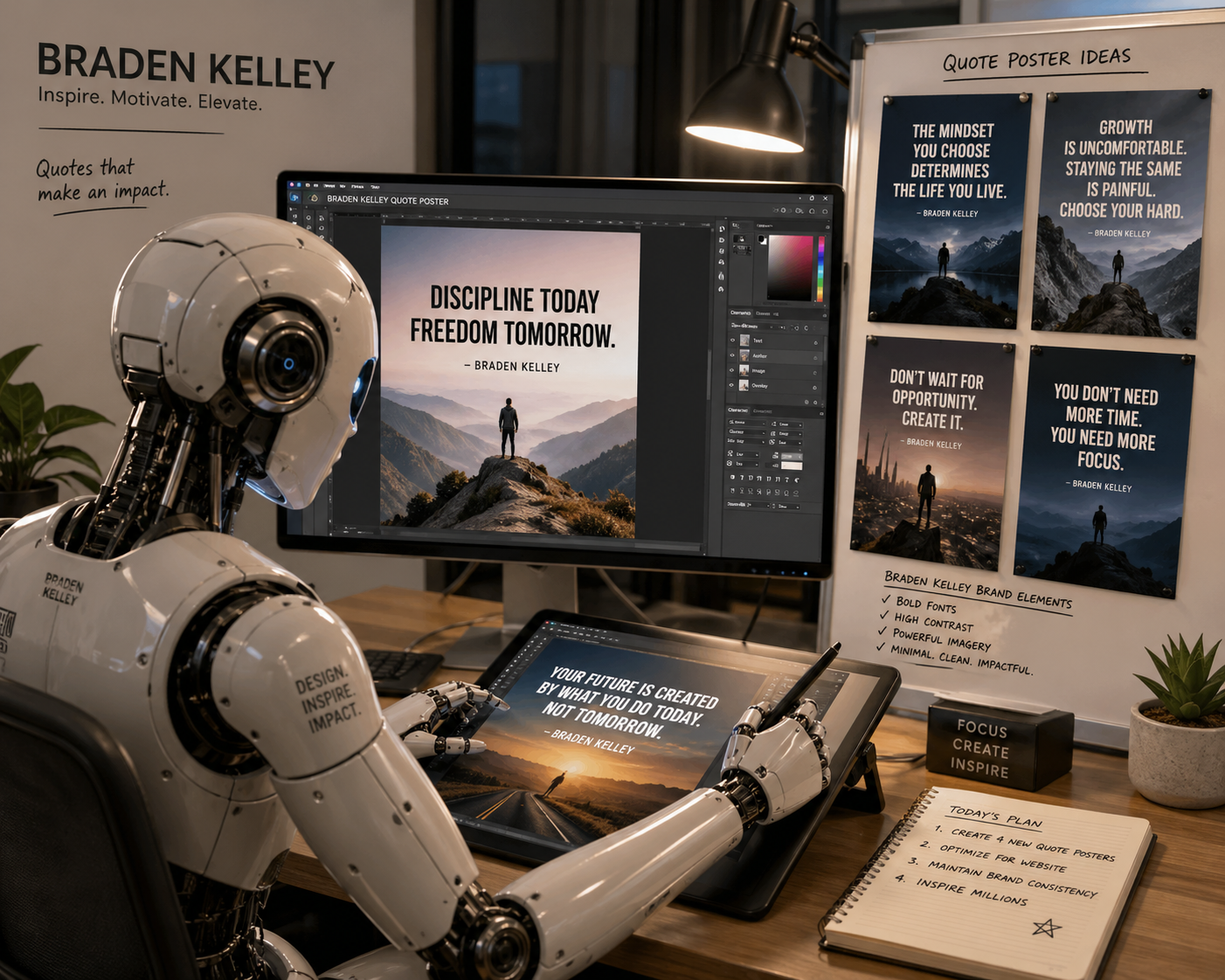
Who Owns the Experience When an AI Agent Does the Work?

Who Owns the Experience When an AI Agent Does the Work?

GUEST POST from Art Inteligencia


For decades, companies have obsessed over customer experience.

We mapped journeys, redesigned interfaces, reduced clicks, removed friction and measured satisfaction at every conceivable touchpoint.

Then something rather inconvenient happened.

The customer stopped touching the experience.

Instead of comparing twenty products, an AI agent may choose one. Instead of navigating a corporate travel portal, an agent may assemble the trip. Instead of learning five enterprise applications, an employee may ask an agent to move between them and complete the work.

The interface becomes a conversation. Eventually, even the conversation may disappear.

This creates one of the defining experience design questions of the agentic era:

Who owns the experience when an AI agent does the work?

The organization still does. But what it must own is changing dramatically.

The Customer Journey Is Becoming Invisible

Traditional experience design assumes people encounter an organization through visible touchpoints: websites, stores, applications, call centers, products and employees.

AI agents introduce a new participant: a machine acting on behalf of the human.

Imagine asking a personal agent to find and book the best flight to London. Previously, you might have visited several sites, compared itineraries, evaluated prices and considered loyalty benefits.

Each interaction gave a company an opportunity to influence your decision.

Your agent may bypass those interactions, compare the available options and return with a single sentence:

I booked the best option based on your preferences.

The customer journey has compressed from dozens of interactions into one, and potentially into none.

Welcome to the Invisible Experience: an experience created on someone’s behalf without that person directly experiencing the process.

Experience has not become less important. It has moved upstream.

From Journey Design to Delegation Design

The traditional customer journey asks:

What does the customer experience?

Agentic systems force us to ask:

What is the customer willing to delegate?

Consider the difference between three instructions:

  • Recommend a hotel.
  • Book a hotel.
  • Cancel my reservation and book a different hotel.

The interface could look identical, but each instruction grants a radically different degree of agency.

This also exposes a weakness in how organizations think about friction. Not all friction is bad. Some friction creates confidence. Some creates reflection, control or safety.

The confirmation screen that once appeared unnecessary may be the boundary between a recommendation and an irreversible action.

The goal is no longer to eliminate friction. It is to place friction where human judgment still creates value.

Experience Design Is Becoming Authority Design

Once an AI system can act, experience design becomes partly about defining authority.

What may the agent observe, infer, recommend, negotiate, purchase, approve, change, disclose or delete?

These are not merely technical permissions. They are experience decisions.

Imagine asking an agent to organize your week. It could suggest a better schedule, reschedule meetings, decline invitations, delegate work or tell colleagues their requests are not priorities.

All of these actions might satisfy the instruction, yet each creates a different experience and carries different consequences.

Capability without clearly understood authority creates anxiety.

People need to understand not only what an AI can do, but what it will do without asking. The most trusted agentic experiences will establish a clear contract of agency.

The New Customer Journey Has Three Actors

Customer journeys have traditionally described a relationship between two parties:

Customer ↔ Organization

Agentic AI introduces a third:

Human ↔ Agent ↔ Organization

This raises a deeper question: whose interests does the agent represent?

A customer’s agent might seek the lowest available renewal price. A company’s agent might try to retain the customer while protecting margin.

What used to be experience design begins to resemble protocol design, policy design and automated negotiation.

Brands will also need to become legible to machines. An agent may care less about advertising and more about total cost, compatibility, availability, reliability, contractual terms and return policies.

Organizations will therefore need to express value in two ways: emotionally for people and computationally for agents.

If your differentiation cannot be discovered and evaluated by an agent, does that differentiation still exist?

Trust Moves From Interface to Intent

Traditional digital experiences communicate trust through visible cues: clear language, professional design, recognizable branding and confirmation screens.

Agents complicate that equation because much of their activity happens beyond the user’s view. The person sees the result, but not necessarily the process.

Trust therefore moves from appearance toward intent.

Customers need confidence that the agent understands:

  1. What they are trying to accomplish.
  2. What matters to them.
  3. What it is allowed to do.
  4. What it should never do.
  5. When it should stop and ask.

The ultimate agent experience is not “the AI knows me.” It is “the AI knows when not to act for me.”

Restraint may become one of the most valuable characteristics of an intelligent system.

The Experience Debt Nobody Is Measuring

Organizations understand technical debt and increasingly recognize design debt. Agentic systems introduce another category: experience debt.

Experience debt accumulates when automation removes interactions without reconsidering why those interactions existed.

  • An approval may have created accountability.
  • A conversation may have created empathy.
  • Browsing may have enabled discovery.
  • Completing the work may have created understanding.
  • Asking a question may have surfaced an exception.

Automating an activity can improve efficiency while quietly destroying another source of value.

This is why “Where can we remove humans?” is the wrong transformation question.

A better one is:

Where does human participation create value, and where does it merely create work?

Map Moments of Transfer, Not Just Touchpoints

Customer experience practitioners often identify moments of truth: interactions that disproportionately shape someone’s perception of an organization.

Agentic experiences also contain moments of transfer: points where responsibility or authority moves between a human and a machine.

Consider the difference between “Draft the contract” and “Send the contract.” One creates an artifact for human judgment. The other transfers authority to the agent.

For every transfer, designers should ask:

  • Who has authority?
  • Who holds responsibility?
  • Who possesses the necessary context?
  • Who absorbs the consequences?
  • Can the action be understood and reversed?
  • Can the person still intervene?

Autonomy without recoverability can quickly become helplessness.

Reversibility Is the New Usability

For decades, usability asked:

How easy is this to do?

Agentic design adds a second question:

How easy is this to undo?

The more autonomy an agent receives, the more important reversibility becomes. Booking the wrong restaurant is annoying. Sending the wrong message is embarrassing. Purchasing the wrong equipment is expensive. Deleting the wrong information may be catastrophic.

A great agent experience may not be one that never makes a mistake. It may be one designed so that mistakes rarely become disasters.

As execution becomes easier, recovery becomes more valuable.

Design the Experience After the Experience

Traditional journey maps often end when the transaction finishes: purchase complete, request fulfilled, case closed.

When an agent performs the work, the user’s experience may begin after completion.

Imagine discovering that your agent has rearranged your calendar, answered several messages, submitted an expense and changed two deadlines. The work is complete, but now you must understand your changed world.

This creates a new design space: the post-action experience.

  • What changed?
  • Why did it change?
  • What assumptions were made?
  • What requires attention?
  • What can be reversed?

A poorly designed agent may save thirty minutes executing work and cost twenty minutes explaining what it did. A well-designed agent compresses both execution and comprehension.

From Personalization to Preference Infrastructure

Personalization predicts what someone might want. Agents need to understand something deeper: what principles should govern decisions made on that person’s behalf?

Human preferences are conditional. A traveler may normally prefer the cheapest flight but prioritize arriving home before bedtime when traveling with family. An employee may protect focus time but welcome interruptions from a particular customer.

Agentic systems therefore require more than customer profiles. They require preference infrastructure: explicit, adjustable rules for how decisions should be made.

We are no longer simply designing interfaces that help people make decisions. We are designing systems that encode how people want decisions made for them.

The Most Important Agent KPI May Be Regret

Organizations will naturally measure task completion, automation rates, resolution time, adoption and cost reduction.

But those measures miss something fundamentally human: regret.

An agent may complete a task perfectly according to its instructions while leaving the person wishing they had made the decision themselves.

This suggests a new experience metric:

Delegation Regret

How often does a person wish they had made the decision themselves?

An agent can increase automation while also increasing delegation regret. When that happens, the organization has improved efficiency while degrading the experience.

AI Agents Expand Experience Design

The first digital transformation moved experiences from physical environments onto screens. Mobile moved them into our pockets. Conversational AI moved them into language.

Agents may move many experiences somewhere stranger: out of sight entirely.

That does not eliminate the need for experience design. It expands its territory.

Experience designers must now consider agency, authority, intent, trust, delegation, transparency, reversibility, negotiation and accountability.

The central design artifact may no longer be the interface. It may be the relationship between human intention and machine action.

The organizations that succeed will not simply build AI agents capable of doing more. They will design agents that people are comfortable allowing to do more.

That distinction is everything.

Because the ultimate measure of an intelligent experience is not how much work the machine can perform.

It is whether, after the work is done, the human can still say:

I was in control.

Bottom line: Futurists are not fortune tellers. They use a formal approach to achieve their outcomes, but a methodology and tools like those in FutureHacking™ can empower anyone to be their own futurist.

Image credit: Pixabay

Subscribe to Human-Centered Change & Innovation WeeklySign up here to get Human-Centered Change & Innovation Weekly delivered to your inbox every week.

Utilizing Technology to Personalize Customer Experiences

Utilizing Technology to Personalize Customer Experiences

GUEST POST from Art Inteligencia

The rise of technology has revolutionized the way businesses engage and interact with their customers. From personalized recommendations to tailored advertising, companies are leveraging cutting-edge technology to create unique and unforgettable customer experiences. By utilizing advanced data analytics and artificial intelligence, businesses have the ability to cater to individual preferences and deliver contextualized interactions. In this article, we will explore two case study examples that demonstrate the power of technology in personalizing customer experiences.

Case Study 1: Amazon

Amazon, the global e-commerce giant, is a prime example of how technology can enhance customer experiences through personalization. By analyzing vast amounts of data, Amazon can offer tailored product recommendations to each customer. Anytime a customer visits the website or makes a purchase, their preferences and behavior are analyzed. Leveraging machine learning algorithms, Amazon predicts and suggests products that are likely to interest individual customers, leading to increased sales and customer satisfaction.

Moreover, Amazon’s personalized email campaigns also contribute to enhanced customer experiences. By utilizing customer data, including purchase history and browsing patterns, Amazon sends personalized emails with recommendations and offers tailored to each individual. This level of personalization strengthens customer loyalty and engagement, as customers feel valued and understood by the company.

Case Study 2: Netflix

Netflix, the world’s leading streaming service, has mastered the art of personalization through technology. By leveraging sophisticated algorithms, Netflix analyzes user behavior, viewing preferences, and ratings to generate customized recommendations. By presenting users with content tailored to their interests, Netflix keeps customers engaged and addicted to its platform.

Netflix’s recommendation system is driven by machine learning, which continuously learns from customer behavior. As users engage with the platform, the algorithm adapts and provides more accurate suggestions, leading to improved customer satisfaction. The personalization of content not only increases user engagement but also drives customer retention, as customers are more likely to stay subscribed when they consistently discover content relevant to their tastes.

In addition to personalized content recommendations, Netflix also utilizes technology to personalize the user interface. The platform creates custom profiles for each user, allowing multiple individuals within a household to have separate accounts with their own unique recommendations and viewing history. This enhances the user experience and makes Netflix a favorite among families and friends.

Conclusion

The case study examples of Amazon and Netflix highlight how technology can be harnessed to personalize customer experiences. Through data analytics, machine learning, and artificial intelligence, businesses can deliver tailored recommendations, offers, and content to customers, creating a sense of personalization and improving customer satisfaction. By leveraging technology to cater to individual preferences, businesses can build stronger customer relationships, increase loyalty, and ultimately drive growth in today’s highly competitive market.

Image credit: Pixabay

Subscribe to Human-Centered Change & Innovation WeeklySign up here to get Human-Centered Change & Innovation Weekly delivered to your inbox every week.

The Human Experience Premium

Designing for Meaning in an Automated World

The Human Experience Premium

GUEST POST from Art Inteligencia


I. The Strategic Paradox: Efficiency as a Commodity

We are rapidly approaching an era where speed, scale, and functional accuracy are no longer source codes for competitive advantage. As generative AI, agentic systems, and autonomous workflows become ubiquitous across industries, the marginal cost of routine intelligence and operational velocity continues to plummet toward zero. Friction—long the persistent barrier to customer satisfaction—is being systematically engineered out of business models.

However, this relentless pursuit of frictionless efficiency conceals a dangerous strategic paradox: When every organization achieves total efficiency, efficiency ceases to differentiate.

When automated interactions become the baseline expectation, competing purely on transaction speed or lower cost triggers a desperate race to the bottom. Organizations that rely solely on automated optimization risk stripping away the very narrative, emotional resonance, and relational trust that make a brand valuable in the first place.

This reality requires an economic shift: moving beyond simple transactional utility to capture “The Human Experience Premium.”

The Human Experience Premium represents the distinct, defensible economic value unlocked when organizations deliberately elevate human intent, biological craft, empathy, and contextual judgment above algorithmic proxy. While machines excel at answers, humans excel at asking the right questions, establishing trust, and discerning meaning.

To navigate this landscape, leaders must rethink the fundamental value equation. The industrial and digital eras evaluated value through functional optimization:

Value = Quality / Cost

In a world of infinite, low-cost digital output, that equation breaks down. In the era of automated intelligence, value is redefined through human-centered experience:

Value = Meaning × Trust × Context

Organizations that master this equation do not treat technology as a replacement for human presence; rather, they use technology to liberate human potential—creating the space required to deliver authentic, high-value experiences that command long-term loyalty and pricing power.

II. The Three Pillars of Human-Centered Value

To capture The Human Experience Premium, leaders must move beyond viewing human capital merely as an operational cost to be optimized or automated away. Instead, organizations must identify and amplify the core dimensions of value where biological insight, emotional connection, and strategic judgment create irreplaceable competitive advantages.

Three foundational pillars define this high-value human contribution in an increasingly automated landscape:

1. Empathy over Efficiency

Data analytics and machine learning excel at revealing what customer behavior looks like at scale, but they remain fundamentally blind to why people feel, hesitate, or transform. While algorithms spot patterns across transactional surfaces, true empathy requires deep, qualitative human insight.

Designing for emotional attachment and psychological safety across both customer and employee journeys goes beyond eliminating friction. It requires intentionally engineering moments of resonance—vulnerability, active listening, and genuine care—that transform a routine interaction into a lasting relationship.

2. Context & Systems Thinking

Synthetic models and predictive systems operate within the boundaries of historic data sets. Consequently, they fail when confronted with genuine ambiguity, emerging socio-cultural shifts, and novel contextual nuances.

Human leaders and experience designers excel at navigating complex systems, sensing non-linear dynamics, and applying strategic foresight. By leveraging structured foresight tools, leaders can look beyond immediate operational noise to frame the right systemic challenges, preventing organizations from rapidly and flawlessly solving the wrong problems.

3. Ethical Judgment & Discernment

As decision-making cycles accelerate, the temptation to delegate high-stakes evaluations to algorithmic proxies grows exponentially. However, speed must never replace accountability, moral clarity, and creative problem-framing.

Over-reliance on automated decisioning risks severe “cognitive skill atrophy” across the enterprise, leaving teams unable to question assumptions or evaluate unintended consequences. Preserving intentional human discernment ensures that organizational choices remain anchored in ethics, long-term brand equity, and responsible stewardship.

III. Experience Design as an Economic Multiplier

Capturing The Human Experience Premium requires a fundamental shift in how organizations conceptualize, structure, and measure value creation. Experience design is not an aesthetic afterthought or a surface-level layer of polish; it is a strategic discipline and an economic multiplier that directly dictates brand pricing power, customer retention, and organizational resilience.

1. The Origin Heuristic & Biological Lineage

Across industries, consumers demonstrate a proven willingness to pay a significant margin premium for biological lineage, craft, and intentional human narrative. As synthetic, AI-generated outputs become infinite and practically free, the market assigns a higher psychological and monetary value to products, services, and experiences born from human ingenuity, intentionality, and biological effort.

This “origin heuristic” proves that value is not derived solely from functional utility. When the functional output is equal, humanity becomes the ultimate differentiator.

2. Unifying CX and EX

A fundamental law of organizational growth remains absolute: You cannot deliver a premium Customer Experience (CX) on the back of a depleted Employee Experience (EX).

Organizations that attempt to automate internal employee interactions while demanding warm, empathetic external customer engagements create an unsustainable operational paradox. High-value customer touchpoints depend on employees who are psychologically safe, equipped with intuitive tools, and liberated from administrative burnout to bring their best human judgment to every interaction.

3. The Customer Experience Audit

To determine where technology elevates the experience and where it degrades it, leaders must conduct systematic Customer Experience Audits. By walking the end-to-end journey firsthand across key “moments that matter,” organizations can pinpoint:

  • Where automation removes friction and respects time (e.g., instant routing, routine updates).
  • Where automation strips away empathy and erodes trust (e.g., rigid chatbots during high-stress edge cases).

4. Measuring Trust Equity

Traditional metrics like impressions, click-through rates, and short-term conversion volume measure activity, not connection. To capture the human premium, enterprise scorecards must evolve to measure Trust Equity—tracking metrics anchored in brand resilience, emotional resonance, customer lifetime value, and genuine stakeholder loyalty.

IV. Leading Human-Centered Change in an Automated Era

Technology alone does not transform an enterprise; people do. As organizations adopt hyper-automated tools and agentic systems, the primary bottleneck to sustainable value creation is rarely technological capability—it is human friction, uncertainty, and change fatigue.

Navigating this shift requires a structured, human-centered approach to organizational transformation that engages people as active participants rather than passive targets of change.

1. The Human-Centered Change™ Imperative

Traditional top-down change management frameworks often view transformation through a purely operational or mechanical lens, treating workforce resistance as a barrier to be suppressed. In reality, change resistance is typically a rational response to ambiguity, fear of irrelevance, and psychological insecurity.

Applying a Human-Centered Change™ methodology shifts the focus toward understanding emotional readiness, building trust, and co-creating future ways of working that empower teams to thrive alongside automated intelligence.

2. Visual Orchestration via The Change Planning Canvas™

Complex organizational shifts fail when alignment is assumed rather than designed. Utilizing visual, collaborative tools like The Change Planning Canvas™ allows cross-functional teams to make strategy visible, tangible, and actionable.

By mapping culture, capability gaps, leadership commitments, and human touchpoints in a shared visual space, leaders eliminate silos and foster collective ownership across the transformation journey.

3. Rebalancing the Innovation Portfolio

Too many enterprise innovation portfolios are overly tilted toward short-term operational efficiency—using technology merely to cut costs or speed up existing processes. To capture The Human Experience Premium, leadership must rebalance their innovation strategy across three horizons:

  • Operational Velocity: Automating routine tasks to liberate human bandwidth.
  • High-Value Touchpoints: Investing in high-empathy, high-trust human interactions where differentiation occurs.
  • Category-Defining Experiences: Orchestrating entirely new value propositions centered on deep meaning and customer transformation.

4. Activating The Nine Innovation Roles™

Building a human-centered, innovation-led organization requires diverse cognitive perspectives working in sync. By deliberately assembling and balancing talent across The Nine Innovation Roles™—from Revolutionaries and Troubleshooters to Customer Champions, Magic Makers, and Evangelists—organizations create resilient teams capable of driving continuous, human-led innovation in an automated world.

V. Conclusion: From Optimization to Orchestration

The rise of hyper-automation, generative AI, and autonomous agentic systems does not spell the end of human value in enterprise strategy—it raises the bar. As routine execution and baseline intelligence become low-cost commodities, the center of gravity for sustainable competitive advantage shifts from mechanical efficiency to human meaning.

1. The Renaissance Leader

To capture The Human Experience Premium, executive leadership must undergo its own quiet transformation. The era of the pure operational administrator—focused solely on incremental cost reductions and efficiency throughput—is giving way to the era of the Renaissance Leader.

These leaders act as narrative orchestrators of trust, meaning, and long-term stewardship. They recognize that while algorithms can process facts, only human leadership can provide vision, cultivate empathy, and anchor an organization’s mission in lasting values.

2. The Final Frontier of Competitive Advantage

Technological parity is achieved faster today than at any point in industrial history. Any algorithm, model, or automated process can be replicated, cloned, or commoditized given enough compute and time. What cannot be easily cloned is your organizational culture, the genuine trust built with your customers, and the creative ingenuity of your workforce.

The ultimate competitive moat in an automated world is not the technology you deploy, but how effectively you leverage that technology to amplify human capability, deepen relationships, and create irreplaceable experiences.

3. A Call to Action

The task ahead for leaders is clear: audit your enterprise value chain today. Identify where automation belongs—removing friction, processing routine transactions, and liberating precious bandwidth—and deliberately reinvest those saved resources into high-value human touchpoints.

By liberating your workforce from mechanical tasks and boldly committing to human-centered change, you unlock the full power of The Human Experience Premium, ensuring your organization does not merely survive the automated era, but leads it.

Frequently Asked Questions

What is “The Human Experience Premium”?

The Human Experience Premium is the distinct, defensible economic value unlocked when organizations elevate biological human intent, empathy, craft, and contextual judgment above automated or algorithmic proxies. In an era where AI renders speed and efficiency commoditized, customers and employees place a higher monetary and relational value on authentic human connection, trust, and meaning.

How does Human-Centered Change™ differ from traditional change management?

Traditional change management often views transformation as a mechanical, top-down process where employee resistance is treated as an operational barrier to suppress. In contrast, Human-Centered Change™ treats workforce resistance as a natural response to ambiguity and psychological insecurity, using visual collaboration tools like The Change Planning Canvas™ to build empathy, alignment, and shared ownership.

How should organizations balance automation with human touchpoints?

Organizations should apply automation to eliminate friction, process routine data, and respect stakeholder time, while deliberately reinvesting the saved time and resources into high-empathy, high-trust human interactions—such as complex problem solving, creative co-creation, and relationship stewardship—where true brand differentiation occurs.


Image credit: Pexels

Subscribe to Human-Centered Change & Innovation WeeklySign up here to get Human-Centered Change & Innovation Weekly delivered to your inbox every week.
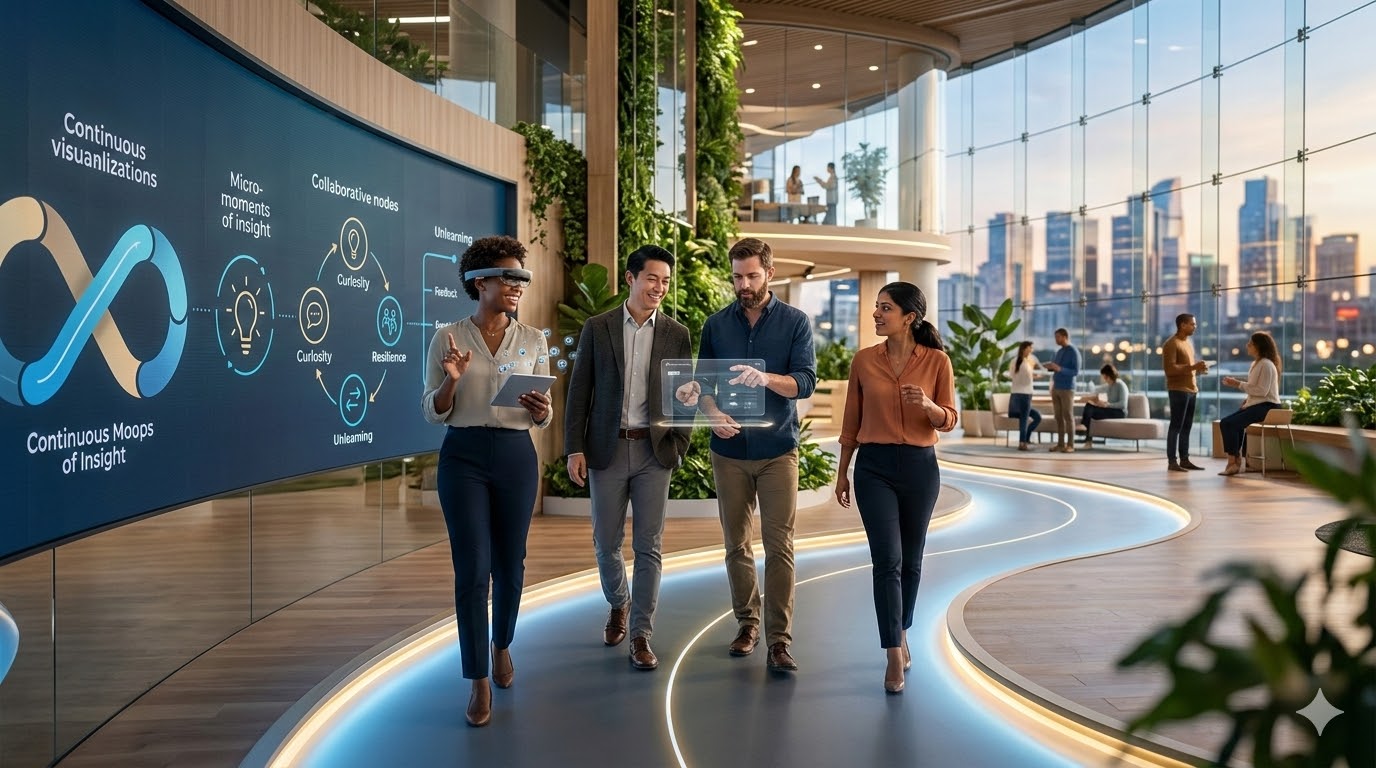
AI Can Optimize the Journey. Who Designs the Meaning?

AI Can Optimize the Journey. Who Designs the Meaning?

GUEST POST from Chateau G Pato


I. The Optimization Paradox

Artificial intelligence is redefining the mechanics of experience design. Across customer and employee journeys alike, AI excels at removing friction, predicting needs, personalizing touchpoints at scale, and drastically accelerating speed-to-value. On paper, the journey has never been smoother.

Yet this unprecedented efficiency exposes a growing paradox: efficiency is not engagement. A frictionless process can easily result in a soul-less, forgettable interaction. When every interaction is streamlined to zero effort, we risk stripping away the distinct identity and emotional depth that make experiences memorable and relationships resilient.

Optimization answers the functional question: “How do we make this faster, easier, and cheaper?” But human-centered design must answer the foundational question: “Why does this matter to a human being?” As AI takes over operational mechanics and algorithmic orchestration, leaders must step forward not just as managers of efficiency, but as architects of meaning.

II. The Anatomy of Optimization vs. The Architecture of Meaning

To orchestrate truly impactful experiences, leaders must distinguish between what algorithms do best and what human intent requires. AI brings unprecedented power to operational execution, but execution without purpose is merely high-speed automation.

What AI Optimizes: The Operational Mechanics

  • Transactional Velocity and Step Reduction: AI algorithms excel at detecting structural friction, eliminating redundant steps, and executing tasks at speeds human workflows cannot match.
  • Hyper-Personalization at Scale: Machine learning models synthesize vast datasets in real time to tailor dynamic content, recommendations, and interface layouts to individual behavioral patterns.
  • Predictive Needs Mapping: Advanced analytics anticipate customer and employee requirements before they are explicitly stated, routing issues to automated resolution paths seamlessly.

What Humans Must Design: The Architecture of Meaning

  • Shared Values and Belonging: Technology cannot authentically express human values. Experience architects must ground journeys in clear organizational purpose, fostering genuine community, trust, and shared identity.
  • Emotional Resonance and Narrative: Algorithms optimize for conversion; humans design for connection. Intentional peak-end moments, empathetic recovery during critical life events, and storytelling elevate routine transactions into memorable relationship milestones.
  • Purpose and Human Agency: Meaning requires intention. Designing for meaning ensures technology empowers individuals—giving users and employees clarity on why the journey exists and providing them with active agency rather than passive algorithmic guidance.

III. The Change Leadership Imperative: Reframing the Designer’s Role

Integrating artificial intelligence into human experiences is not merely a technological upgrade—it is a profound change management challenge. As automation absorbs routine execution, organizational leaders, service designers, and change agents must elevate their role from process mappers to strategic value orchestrators.

Moving Beyond Efficiency Metrics

Traditional operational key performance indicators (KPIs)—such as handle time, drop-off rates, conversion speed, and cost-per-transaction—measure execution efficiency, not human connection. While these metrics satisfy algorithmic goals, they fail to measure trust, emotional resonance, or long-term loyalty. Strategic leaders must expand their scorecards to measure experience quality, alignment with human values, and psychological safety alongside speed.

The Human-Centered Shift in Experience Governance

To successfully navigate this evolution, customer experience (CX) and employee experience (EX) teams must break down organizational silos. Success requires bridging change management, experience design, and strategic foresight:

  • From Mappers to Value Orchestrators: Journey mapping can no longer be a passive exercise in documenting steps. Design teams must focus on orchestrating holistic environments where human talent and AI capabilities reinforce each other.
  • Cross-Functional Alignment: Human-centered change requires aligning technology teams, operations, brand strategy, and frontline personnel around shared human outcomes rather than isolated tech deployments.

Overcoming Organizational Change Resistance

Deploying AI inside journeys often triggers friction—not just from customers wary of impersonal automation, but from employees fearing displacement or loss of autonomy. Effective change leadership frames AI as a collaborative partner that liberates human teams from mundane mechanics, empowering them to focus on high-empathy, complex, and value-driven human interactions.

IV. Designing for Meaning: A Practical Strategic Framework

Building meaningful experiences in an AI-driven environment requires moving beyond transactional convenience. To elevate journeys from merely efficient to deeply resonant, change leaders and experience designers can apply a four-part strategic framework.

1. Uncover the Core Human Need

Look beyond immediate functional requirements to identify the deeper emotional, psychological, and social jobs-to-be-done. While AI addresses the surface task—such as filing a claim, booking a service, or completing an onboarding module—human-centered design addresses the underlying human state, whether that is seeking reassurance, striving for mastery, or building trust.

2. Identify “Meaning Touchpoints”

Map the critical moments in the journey where algorithmic efficiency should yield to human connection, ethical judgment, and empathy. These high-stakes touchpoints—such as crisis resolution, complex decision-making, or major career transitions—demand authentic human presence and nuanced understanding that automated systems cannot replicate.

3. Establish Intentional Friction

Recognize that eliminating all friction is not always desirable. While operational friction causes frustration, intentional friction creates space for reflection, conscious choice, appreciation, and deeper learning. Strategic pauses prevent algorithmic momentum from overriding human agency and allow individuals to feel truly engaged in the outcome.

4. Co-Create with the Ecosystem

Shift from delivering automated predictions in isolation to actively involving customers, employees, and stakeholders in shaping the experience. Co-creation builds ownership and ensures that technology serves as an empowering partner rather than a prescriptive authority.

V. Looking Ahead: The Futurist’s View

As artificial intelligence, multi-agent systems, and ambient computing become ubiquitous, the baseline for operational excellence will equalize across industries. When every organization has access to similar generative models and predictive engines, friction-free journeys will no longer offer a sustainable competitive advantage—they will simply be the table stakes of doing business.

The Competitive Advantage of Purpose

In a hyper-automated marketplace, differentiation shifts from functional capabilities to emotional and cultural resonance. When efficiency becomes a commodity, meaning becomes the ultimate differentiator. Organizations that design experiences grounded in authentic purpose, human connection, and shared values will earn lasting advocacy, while those relying solely on algorithmic speed will face increasing commoditization and customer detachment.

The Ethical Responsibility of Experience Architects

Strategic foresight requires anticipating the long-term human impacts of automated systems. As AI becomes more persuasive and embedded in daily life, experience architects hold a vital ethical responsibility:

  • Protecting Human Agency: Ensuring journeys empower individuals to make informed, intentional choices rather than nudging them into passive, algorithmically dictated behaviors.
  • Cultivating Trust and Transparency: Maintaining clarity on where AI operates, how decisions are made, and how personal data is utilized to respect human dignity.
  • Enriching Lives: Designing touchpoints that contribute positively to cognitive well-being, personal growth, and social connection rather than optimizing purely for attention capture or short-term conversion.

VI. Conclusion: A Call to Experience Architects

Artificial intelligence is undeniably transforming the landscape of organizational innovation, changing not only how work gets done, but how value is delivered across every customer and employee touchpoint. Algorithms can analyze patterns, predict behaviors, and eliminate operational bottlenecks at unprecedented scale. Yet, efficiency alone has never been enough to build lasting loyalty, foster genuine engagement, or spark meaningful transformation.

The Ultimate Question

As technology systematically removes effort from our daily interactions, leaders across innovation, change management, and experience design must confront a fundamental question: When AI optimizes the journey down to zero effort, what remains?

If the answer is merely a frictionless transaction, we have built a commoditized pipeline, not a relationship. The true value of any journey lies not in how quickly a user reaches the finish line, but in what the experience signifies along the way.

Designing the Destination

The path forward requires a deliberate partnership between algorithmic power and human purpose. Machine intelligence can clear the obstacles, streamline the steps, and optimize the route, but human leaders must define the direction, uphold the ethics, and inject the soul.

It is time for organizations to look beyond the mechanics of optimization. By leading change with empathy, embedding intentionality into every touchpoint, and placing human dignity at the center of innovation, we can ensure that as our systems become smarter, our experiences become profoundly more meaningful.

Frequently Asked Questions

Why isn’t a frictionless, AI-optimized journey enough for long-term customer loyalty?

While AI excels at removing operational friction and accelerating task completion, efficiency alone does not build emotional connection or brand affinity. Over-optimizing journeys without intentional human touchpoints risks creating transactional, forgettable experiences that alienate users and turn services into commodities.

What is the difference between operational optimization and designing for meaning?

Operational optimization answers functional questions like “How do we make this faster and easier?” by leveraging automation and data. Designing for meaning answers foundational questions like “Why does this matter to the human being?” by focusing on shared values, emotional resonance, purpose, and human agency.

How can experience architects balance automated efficiency with human connection?

Leaders can balance efficiency and connection by mapping “meaning touchpoints”—critical moments in the journey where empathy, judgment, and personal trust are vital—and preserving human involvement there. Additionally, introducing intentional friction creates space for conscious choice, reflection, and deeper engagement rather than passive algorithmic guidance.


Bottom line: Futurology is not fortune telling. Futurists use a scientific approach to create their deliverables, but a methodology and tools like those in FutureHacking™ can empower anyone to engage in futurology themselves.

Image credit: Gemini

Subscribe to Human-Centered Change & Innovation WeeklySign up here to get Human-Centered Change & Innovation Weekly delivered to your inbox every week.

The Experience Economy After AI

The Experience Economy After AI

GUEST POST from Chateau G Pato


I. The Generated Abundance Paradox

The Cost-of-Entry Trap: When Infinite Output Meets Marginal Cost Zero

For decades, digital transformation was built on a simple promise: digitize the asset, remove transaction friction, and scale without incremental cost. Generative artificial intelligence, autonomous agents, and synthetic content engines represent the logical conclusion—and sudden break—of that paradigm. Today, software can instantly generate bespoke software code, synthesize personalized marketing campaigns, generate infinite media, and automate transactional interactions at near-zero marginal cost.

However, this capabilities explosion creates a profound strategic trap for organizational leadership. When every enterprise gains access to the same generative foundation models and automated execution engines, speed and volumetric production collapse into baseline expectations. When content, code, and basic interactions become infinitely abundant, their standalone economic value trends toward zero. Hyper-efficiency and automated generation cease to be source advantages; they become mere cost-of-entry table stakes.

The Strategic Inversion: The Commoditization of Efficiency

This reality forces a fundamental strategic inversion. In the traditional business playbook, competitive advantage was earned by optimizing processes, shortening turnaround times, and eliminating human touchpoints to drive efficiency. In a post-AI landscape, because efficiency is universally accessible via API, it can no longer deliver long-term differentiation.

The strategic leverage point flips completely:

  • Old Paradigm: Value lived in the production and execution layer (building, drafting, calculating, scheduling, and transaction handling).
  • New Paradigm: The production layer is automated, shifting value upward to intent, curation, context, and emotional resonance.

Organizations that attempt to compete solely on automated volume or algorithmic speed find themselves trapped in a race to the bottom—a commodity treadmill where every participant offers instantaneous, highly competent, yet completely unmemorable outputs.

The Shift to Experience Economy 2.0

In B. Joseph Pine II and James H. Gilmore’s original framing of the Experience Economy, businesses progressed from commodities to goods, goods to services, and services to staged experiences. In the AI era, we are witnessing the emergence of Experience Economy 2.0.

If digital services and automated interactions become ambient and invisible, economic scarcity moves from the efficiency of digital delivery to the authenticity of human connection. Customers and employees alike do not suffer from a lack of information, choice, or automated response; they suffer from noise, synthetic overload, and relational fatigue.

Experience Economy 2.0 re-anchors economic value around what algorithms cannot replicate:

  • Contextual Wisdom over Synthetic Information: Moving from generating data to applying human judgment, ethics, and nuance.
  • Shared Human Reality over Algorithmic Isolation: Prioritizing authentic physical presence, tactile engagement, and verified human craftsmanship.
  • Radical Trust over Automated Convenience: Building deep relational equity in an ecosystem saturated with synthetic noise and machine-driven interactions.

To win in this next era, executive leaders must stop treating AI as a tool for cutting human touch points out of the value chain. Instead, they must deploy AI to absorb transactional friction, liberating human capital to architect meaningful, high-empathy experiences that drive lasting loyalty and organizational resilience.

II. The Four Pillars of Human Value in the Post-AI Landscape

As algorithmic capability scales across every industry, executives must ask a fundamental question: When competent task execution is free, instant, and ubiquitous, what creates durable value? The answer lies in four human-centered pillars that cannot be synthesized by mathematical models or generative loops. These pillars form the structural bedrock of strategy and experience design in a post-AI world.

1. Emotional Resonance Over Frictionless Scale

For two decades, experience design was dominated by the pursuit of frictionless transactions. Companies streamlined checkouts, automated customer service, and optimized digital flows to minimize effort. In an AI-saturated market, however, frictionless interaction is merely the baseline expectation, not a differentiator. Cold, hyper-optimized algorithmic touchpoints—no matter how fast or accurate—fail to build emotional equity.

When consumers interact with frictionless AI interfaces all day, flawless performance becomes invisible, while synthetic coldness becomes grating. Sustainable loyalty is built through emotional resonance—the intentional design of moments that evoke feeling, demonstrate empathy, and convey genuine human intent. Brands that thrive in Experience Economy 2.0 do not merely solve problems efficiently; they architect interactions that make people feel seen, valued, and understood.

2. The Premium of Physicality & Presence

As digital content, virtual assistants, and synthetic media flood every channel, digital experiences suffer from systemic devaluation. When anything can be generated on a screen in seconds, screen-bound interactions lose their novelty and weight. Consequently, a powerful counter-trend emerges: a dramatic resurgence in the value of physical, tactile, and spatially shared experiences.

Physicality carries an inherent proof of commitment and effort that digital pixels cannot mimic. Whether through face-to-face executive advisory, tactile product design, immersive physical environments, or locally anchored community spaces, physical presence provides grounding in an increasingly synthetic world. Experience architects must treat physical spaces not as legacy real estate costs, but as high-value sanctuaries for authentic human connection.

3. Radical Trust & Verified Authenticity

The proliferation of generative models, synthetic voices, automated communications, and deepfakes creates a climate of pervasive cognitive fatigue and skepticism. When customers cannot easily distinguish whether an article, email, video, or support agent is human or synthetic, trust becomes the rarest and most fragile organizational asset.

Radical trust is not built through compliance statements or marketing claims; it is forged through radical transparency, verified origin, and consistent operational integrity. Organizations must cultivate clear boundaries regarding where synthetic automation ends and human accountability begins. Brands that openly protect human authenticity and consistently honor their commitments build an unshakeable moat of trust that algorithmic competitors cannot erode.

4. Human Judgment & Discernment

Generative AI is an extraordinary engine for possibility generation—it can produce hundreds of design variations, draft dozens of strategies, or analyze millions of data points instantly. However, synthetic generation lacks taste, moral responsibility, and contextual wisdom. Abundance without direction yields chaos.

This reality elevates human judgment and discernment from secondary supervisory tasks to the primary engine of strategic value. True innovation shifting from “What can we generate?” to “What should we create?” Human discernment applies ethics, cultural nuance, strategic alignment, and empathy to curate options and make meaningful choices. In Experience Economy 2.0, the ultimate competitive advantage lies not in the volume of ideas generated, but in the wisdom applied to select and execute the right ones.

III. Redesigning the Experience Architecture

To capture the value generated by human context, emotional resonance, and radical trust, organizations must fundamentally overhaul their experience architecture. Traditional enterprise systems were designed to standardize human behavior into repeatable, assembly-line tasks. In Experience Economy 2.0, the goal is inverted: we must systemize algorithmic work into invisible background infrastructure, liberating human workforce capability to deliver high-empathy, high-discernment value at every critical touchpoint.

1. Invisible Infrastructure vs. Human Touchpoints

Architecting experiences in a post-AI landscape requires a rigorous division between back-stage operations and front-stage human engagement. AI models, predictive analytics, and automated workflows belong in the background—acting as a high-speed engine that eliminates administrative friction, anticipates needs, and surfaces relevant context in real time.

When customer-facing or employee-facing interactions occur, the technology should feel invisible, acting as an empowering proxy rather than a barrier. The front stage must be intentionally reserved for human connection, creative direction, and relational depth. By drawing a clear boundary between machine prediction and human presentation, leaders ensure that technology handles the routine data processing while humans drive the meaningful interactions that build brand equity.

2. Overcoming the Four Psychological Disruptions

Transforming experience architecture is impossible if the internal workforce is paralyzed by technological change. As AI assumes cognitive and analytical tasks, employees experience four distinct psychological disruptions that leaders must proactively address:

  • Worker Anxiety: The existential fear of displacement by automated agents, which leads to passive resistance or quiet withholding of expertise.
  • Purpose Erosion: The loss of professional identity when routine tasks that once defined daily achievement are performed instantly by software.
  • Competence Displacement: The frustration that occurs when legacy skills become obsolete overnight, requiring new modes of human-machine orchestration.
  • Belonging Disruption: The isolation stemming from reduced interpersonal collaboration as workers interact increasingly with algorithmic tools rather than peers.

Human-centered innovation strategies must address these disruptions directly by redefining career pathways, emphasizing high-value judgment roles, and cultivating an organizational culture where technology liberates human potential rather than replacing it.

3. From Service Level Agreements (SLAs) to Experience Level Measures (XLMs)

Traditional operational management relies heavily on Service Level Agreements (SLAs)—metrics focused on speed, volume, uptime, and transactional efficiency (e.g., average handle time, response latency, ticket resolution counts). In a world where AI can resolve basic queries instantly, SLA-driven metrics become vanity indicators that fail to capture genuine customer satisfaction or relational health.

Forward-thinking organizations must transition to Experience Level Measures (XLMs). While SLAs evaluate operational throughput, XLMs measure the emotional, cognitive, and relational impact of an interaction. XLMs shift the diagnostic focus from efficiency to efficacy:

Metric Domain Traditional SLA Focus (Operational Efficiency) Post-AI XLM Focus (Human-Centered Value)
Customer Support Average Handle Time (AHT) & Ticket Speed Empathy Index, Friction Reduction & Trust Equity
Product Design Feature Count & Deployment Velocity Cognitive Clarity, Delight & Physical Ergonomics
Employee Experience Task Throughput & Process Adherence Creative Autonomy, Purpose Alignment & Empowerment
Client Advisory Report Generation & Meeting Frequency Strategic Clarity, Confidence & Judgment Quality

By measuring progress through Experience Level Measures, executive leaders align operational goals with true value creation—ensuring that efficiency gains powered by AI directly elevate the human experience for both customers and employees.

IV. Strategic Imperatives for Innovation Leaders

Navigating the transition into Experience Economy 2.0 requires C-suite executives and innovation leaders to fundamentally reassess how they measure value, deploy capital, and orchestrate their organizational capabilities. When generative tools render transactional tasks universally accessible, competitive advantage is no longer determined by how aggressively an organization cuts human costs, but by how effectively it leverages technology to liberate human empathy, creativity, and strategic foresight.

1. Resisting the Cost-Cutters’ Trap

The most dangerous trap facing executive leadership in the AI era is the temptation to view advanced automation purely as a headcount reduction exercise. When algorithms can draft copy, synthesize data, or manage basic customer inquiries at negligible cost, short-term financial pressure creates an urgency to replace human workers with synthetic touchpoints across the entire value chain.

This efficiency-first mindset leads to corporate anorexia—a condition where an organization strips out the very human presence, emotional resonance, and relational trust that give its brand distinct meaning. While cutting human touchpoints may yield an immediate, temporary margin expansion, it simultaneously erodes long-term pricing power and brand equity. When every competitor uses the same generative models to deliver identical, frictionless interactions, the automated enterprise becomes an interchangeable commodity. Leaders must resist this trap, redirecting cost savings from routine automation into funding high-empathy, high-touch human experiences that create sustainable market moats.

2. Orchestrating Human-AI Symbiosis

True competitive differentiation in a post-AI landscape stems from human-machine orchestration—a strategic paradigm where artificial intelligence and human discernment reinforce one another in a continuous feedback loop. AI serves as the ultimate systemic liberator, handling complex pattern recognition, background predictive analytics, synthetic prototyping, and administrative friction at scale.

This liberation allows human workforce capability to focus on what algorithms inherently lack:

  • Contextual Wisdom: Interpreting nuanced, ambiguous customer needs that fall outside historical training data.
  • Ethical Stewardship: Ensuring strategic decisions, automated outputs, and customer engagements align with human values and organizational integrity.
  • Creative Synthesis: Connecting disparate ideas across domain boundaries to invent entirely new categories, business models, and experience frameworks.
  • Relational Depth: Building authentic, high-trust connections that inspire confidence during moments of crisis, complexity, or transformation.

By positioning AI as a cognitive copilot rather than a human replacement, organizations build an agile, adaptive operating model where technology elevates human potential rather than suppressing it.

3. Building for Lasting Differentiation

To lead effectively in Experience Economy 2.0, executive teams must pivot their strategic planning horizons from managing transactional volume to cultivating brand soul, physical engagement, and verified authenticity. Lasting differentiation requires a commitment to three core organizational capabilities:

Strategic Vector Legacy Approach (Transaction-Centric) Post-AI Approach (Experience-Centric)
Value Proposition Speed, volume, and cost minimization per transaction. Emotional resonance, trust equity, and transformational outcomes.
Technology Deployment Paving front-stage customer touchpoints with automated bots. Embedding AI into invisible back-stage operations to empower front-stage staff.
Core Competency Process execution and task standardization. Human discernment, taste, judgment, and high-empathy curation.
Success Architecture Measured by Service Level Agreements (SLAs) and throughput. Governed by Experience Level Measures (XLMs) and relational lifetime value.

Ultimately, the post-AI era does not herald the obsolescence of human effort; it marks a profound renaissance of human value. Leaders who recognize this shift early will move beyond the race for synthetic abundance, building resilient, human-centered organizations that thrive at the intersection of technological efficiency and authentic human experience.

Frequently Asked Questions

What is Experience Economy 2.0 in the context of AI?

Experience Economy 2.0 is a strategic shift where automated generation, synthetic content, and hyper-efficient digital transactions become table stakes. As AI commoditizes transactional efficiency to near-zero marginal cost, economic scarcity and value shift toward what machines cannot replicate: human discernment, physical presence, emotional resonance, and radical trust.

How do Experience Level Measures (XLMs) differ from traditional SLAs?

Service Level Agreements (SLAs) evaluate operational efficiency and throughput, measuring metrics like response times, handle times, and ticket volumes. Experience Level Measures (XLMs) assess the qualitative, emotional, and relational impact of an interaction, tracking indicators such as empathy, cognitive clarity, trust equity, and friction reduction.

Why is replacing human touchpoints strictly with AI a strategic trap for brands?

Viewing AI purely as a tool for headcount reduction strips out the human presence and relational depth that give a brand distinct meaning. When competitors leverage the same generative foundation models to deliver identical, frictionless interactions, the enterprise becomes an interchangeable commodity, eroding long-term pricing power and brand equity.


Bottom line: Futurology is not fortune telling. Futurists use a scientific approach to create their deliverables, but a methodology and tools like those in FutureHacking™ can empower anyone to engage in futurology themselves.

Image credit: Gemini

Subscribe to Human-Centered Change & Innovation WeeklySign up here to get Human-Centered Change & Innovation Weekly delivered to your inbox every week.

The Role of Employee Training and Development in Enhancing Customer Experience

The Role of Employee Training and Development in Enhancing Customer Experience

GUEST POST from Art Inteligencia

In today’s highly competitive business landscape, delivering exceptional customer experiences has become the key differentiator for organizations across industries. To achieve this, companies are starting to recognize the pivotal role that employee training and development play in enhancing customer satisfaction. A well-trained and motivated workforce can provide better service, build lasting relationships with customers, and create advocates for the brand. This article will discuss the significance of employee training and development in enhancing customer experience, supported by two case study examples.

Case Study 1: Zappos

Zappos, an online shoe and clothing retailer, excels in customer service and is often cited as a prime example of how training and development initiatives can revolutionize the customer experience. Zappos believes that happy employees lead to happy customers, and they invest heavily in employee development programs.

The company’s onboarding process is unique. New employees undergo an immersive four-week training program that covers Zappos’ core values, culture, and customer service philosophies. Call center employees receive intensive training on active listening, problem-solving, and empathy techniques, enabling them to address customers’ concerns effectively.

The training doesn’t stop after onboarding. Zappos follows an open-door policy, allowing employees to access support and training resources whenever needed. The company encourages collaboration and learning through continuous coaching, mentoring, and workshops. By prioritizing employee training and development, Zappos has created a workforce that is genuinely passionate about delivering exceptional customer experiences.

As a result, Zappos receives numerous positive customer reviews and boasts an impressive customer loyalty rate. The company’s success is a testament to the impact employee training and development can have on enhancing the customer experience.

Case Study 2: The Ritz-Carlton

The Ritz-Carlton Hotel Company is renowned worldwide for its impeccable customer service and luxury experience. The organization firmly believes that delivering outstanding customer experiences starts with investing in employees.

The Ritz-Carlton takes a unique approach to employee empowerment through a program called “The Ritz-Carlton Mystique.” The program encourages employees to take ownership of their roles and empowers them to make decisions that enhance the guest experience within specific guidelines.

To ensure that employees understand the company’s service values, all new employees, regardless of their position, attend an intensive onboarding program known as “The Ritz-Carlton Experience.” This program instills the service philosophy and standards expected of employees to deliver exceptional customer experiences consistently.

The company also emphasizes ongoing training and development to enhance skills and knowledge. Employees have access to various learning opportunities, including on-the-job training, mentoring, leadership development programs, and continuous performance feedback.

Through these initiatives, The Ritz-Carlton has created a culture that cultivates excellence in customer service. Empowered employees who possess the skills and knowledge to handle any situation efficiently elevate the overall customer experience, leading to exemplary guest satisfaction and loyalty.

Conclusion

Employee training and development play a critical role in enhancing the customer experience in organizations across industries. The case studies of Zappos and The Ritz-Carlton provide compelling evidence of how investing in employees’ skills, knowledge, and empowerment leads to improved customer satisfaction and loyalty.

Companies should recognize that training and development should be an ongoing endeavor, with emphasis placed on understanding customers’ needs, effective communication, problem-solving, and a customer-centric mindset. By prioritizing these aspects, businesses can create a workforce that is equipped to deliver exceptional customer experiences, resulting in a strong competitive advantage.

EDITOR’S NOTE: Braden Kelley’s Problem Finding Canvas can be a super useful starting point for doing design thinking or human-centered design.

“The Problem Finding Canvas should help you investigate a handful of areas to explore, choose the one most important to you, extract all of the potential challenges and opportunities and choose one to prioritize.”

Image credit: Unsplash

Subscribe to Human-Centered Change & Innovation WeeklySign up here to get Human-Centered Change & Innovation Weekly delivered to your inbox every week.