Tag Archives: employee journey

The Nuts and Bolts of Journey Maps

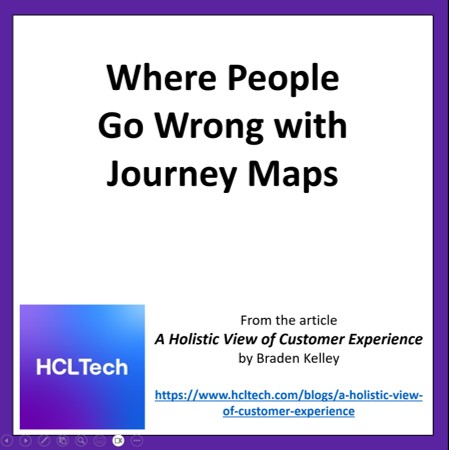
Where People Go Wrong with Journey Maps

by Braden Kelley

Well-crafted journeys look at touchpoints not through the lens of what the organization has built, but through the lens of what the target individuals are looking to achieve. Touchpoints are central to a successful journey map because they are the places where the persona and the organization come together. They are conversation starters. As workshop participants identify touchpoints, they will often also identify pain points and experience improvement opportunities. If they don’t, consider probing to understand either why a particular touchpoint provides such a good experience or to find missed pain points or experience improvement opportunities.

When building the journey, if you find people jumping repeatedly to add ideas for experience improvement and your collection of identified pain points needs to catch up, try asking people to identify what is preventing the achievement of select experience improvements.

In general, it is best to begin a journey mapping session by:

  1. Verifying high-level journey stages
  2. Identifying steps and/or actions in each stage
  3. Finding related touchpoints that occur in each step/action
  4. Capturing where pain points exist
  5. Selecting where improvement opportunities lie

When you reach the end, begin again, and probe to find what is missing. The more complete the download from the group’s collective consciousness across these different categories, the higher the quality of the journey map and the base from which to identify the moments of truth and the persona’s emotional experience along the journey.

Moments of truth can easily be identified too carelessly and broadly, so beware! Moments of truth, by their very definition are those moments that drive purchase, retention, loyalty and word-of-mouth when done well, or their opposite when done poorly.

The Path Forward

Anybody can fill in an empty template and say they have created a journey map, just as anyone can brew beer at home if they buy the equipment and the supplies, but doing so doesn’t make them a brewmaster. Craft matters. Research-informed personas matter. Getting workshop participants deeply immersed into the mindset of the target persona matters. Going beyond what people are doing to what they are thinking and feeling matters. Understanding why we are gathering this set of information for the journey map and why people are adding these particular sticky notes matters. Digging below the surface of what someone has written to understand what they truly mean matters.

Remember, the goal is to build a holistic view of the experience. To do so, we must be exhaustive in our information gathering, intuitive in how we bring it together and deliberate in how we identify what is missing and how to get it. We must be insanely curious about our target persona and unapologetic about trying to make the journey map truly represent the experience of the people it is intended to represent. Tell a story. Bring it to life. And use it to make the persona’s experience great.

Continue reading the rest of this article on HCLTech’s blog

Where People Go Wrong with Journey Maps

Image credits: Pixabay

Subscribe to Human-Centered Change & Innovation WeeklySign up here to join 17,000+ leaders getting Human-Centered Change & Innovation Weekly delivered to their inbox every week.

An Introduction to Journey Maps

For Mapping Customer, Employee, Patient and Other Journeys

An Introduction to Journey Maps

by Braden Kelley

Journey maps are a key part of visualizing the experience of a defined group of people. Customers may be the most typically selected group, but many other stakeholder groups are equally valid, including employees, patients, students and partners, to name just a few. This is why it is important to keep the term ‘journey maps’ as generic as possible.

They are incredibly useful for aligning project teams — and even the broader organization — around a shared vision of the journey a critical group of people go through from an agreed starting point to a common ending point. Journey maps also help to identify potential areas of improvement in the pursuit of an increasingly exceptional experience.

A journey map breaks down a journey into a handful of phases (typically 5-9), the steps the target group goes through in each phase and the touchpoints that occur at each step in the journey. Journey maps are the prerequisites for the powerful insight generation and analysis that comes next as you dig into the touchpoints and the relevant pain points and experience improvement opportunities within your working group.

Continue reading the rest of this article on HCLTech’s blog

Image credits: Pixabay

Subscribe to Human-Centered Change & Innovation WeeklySign up here to join 17,000+ leaders getting Human-Centered Change & Innovation Weekly delivered to their inbox every week.

Journey Mapping as a Tool for Creating Seamless Experiences

Journey Mapping as a Tool for Creating Seamless Experiences

GUEST POST from Chateau G Pato

In today’s competitive landscape, understanding customer experiences and expectations is paramount. Businesses aiming to innovate and create delightful interactions must dive deep into customer journeys. Enter journey mapping—an invaluable tool for fostering empathy, identifying pain points, and realigning business processes to create seamless experiences.

What is Journey Mapping?

Journey mapping is a methodical approach to visually represent and analyze the process a customer undergoes when interacting with a product, service, or brand. From initial awareness to final conversion and beyond, it encompasses every touchpoint and engagement opportunity a customer might encounter.

Benefits of Journey Mapping

Journey mapping delivers numerous benefits, including:

  • Identifying pain points and opportunities for improvement.
  • Creating alignment across departments and teams.
  • Building empathy and understanding for the customer’s experience.
  • Enhancing communication between the company and its customers.
  • Driving tailored innovation initiatives.

Creating an Effective Journey Map

To create an effective journey map, it’s essential to:

  1. Define clear objectives and the scope of the journey map.
  2. Collect customer data through surveys, interviews, and analytics.
  3. Identify key personas and understand their motivations and behaviors.
  4. Map out the stages of the journey with all relevant touchpoints.
  5. Evaluate the emotional highs and lows experienced by customers.
  6. Prioritize areas of improvement and innovation.

Case Study 1: Retail Chain Revitalizes Customer Experience

A well-known retail chain was facing declining foot traffic and stagnant growth. Customers cited long wait times, unhelpful staff, and a disorganized store layout as significant issues. The management team decided it was time for a transformation by leveraging journey mapping.

The team began by creating a detailed journey map, highlighting every customer interaction from the moment they set foot in the store to when they left. They uncovered that the check-out process was the most significant pain point. This task was cumbersome, with outdated equipment and a lack of staff training.

Based on these insights, the company revamped their check-out process by installing modern point-of-sale systems and improving staff training. Additionally, the company introduced self-checkout kiosks to reduce wait times.

By effectively utilizing journey mapping, the company saw a 30% reduction in wait times, improved customer satisfaction scores, and a noticeable increase in store traffic within three months. This case underscores how understanding touchpoints can create impactful change and foster growth.

Case Study 2: Healthcare Provider Enhances Patient Interaction

A large healthcare provider recognized the need to improve patient interaction after receiving feedback about long waiting times and complex appointment booking systems. As healthcare is a critical service, seamless experiences are essential for patient satisfaction and trust.

The provider employed journey mapping to dissect the patient experience. The map revealed that the appointment scheduling process was a significant pain point, often leading to frustration and delays. Additionally, patients felt neglected due to inadequate post-appointment communication.

Armed with this knowledge, the healthcare provider implemented an online scheduling system, allowing patients to book, reschedule, or cancel appointments with ease. Furthermore, automated follow-up reminders and feedback surveys ensured patients felt cared for even after their visits.

This initiative led to a 50% increase in appointment efficiency and a 20% rise in patient satisfaction scores, demonstrating how journey mapping can drive service improvements and foster a culture of patient-centered care.

The Future of Journey Mapping

As technology advances, journey mapping will continue to evolve. Integrating artificial intelligence and data analytics can further refine these maps, providing real-time insights into customer experiences. With these tools, businesses can not only react to current challenges but anticipate future needs and remain agile in a shifting market.

Conclusion

Journey mapping is not just about documenting existing stages of interaction but a strategy for transformation and innovation. By effectively using this tool, companies can create seamless experiences that delight customers, drive loyalty, and spur growth.

As businesses relentlessly strive for a competitive edge, journey mapping stands out as a beacon for creating meaningful connections with customers, ultimately leading to a thriving, customer-centric organization.

Extra Extra: Because innovation is all about change, Braden Kelley’s human-centered change methodology and tools are the best way to plan and execute the changes necessary to support your innovation and transformation efforts — all while literally getting everyone all on the same page for change. Find out more about the methodology and tools, including the book Charting Change by following the link. Be sure and download the TEN FREE TOOLS while you’re here.

Image credit: Pixabay

Subscribe to Human-Centered Change & Innovation WeeklySign up here to get Human-Centered Change & Innovation Weekly delivered to your inbox every week.

Employee Journey Mapping from On-boarding to Exit

Employee Journey Mapping from On-boarding to Exit

GUEST POST from Art Inteligencia

In today’s competitive market, organizations need to do more than just attract talent; they must keep and nurture them. One powerful tool to achieve this is Employee Journey Mapping. This comprehensive strategy can be pivotal in shaping experiences that engage employees from their first day to their last, creating loyal ambassadors of your brand long after they exit.

Employee Journey Mapping involves creating a visual representation of every step an employee takes within an organization. By identifying key touchpoints, from on-boarding to exit, organizations can craft meaningful experiences that drive satisfaction, productivity, and retention.

Case Study 1: Tech Innovate Inc.

Tech Innovate Inc., a rapidly growing tech company, faced challenges with employee churn especially within the initial six months. They realized the gap was in their on-boarding process. By mapping out the employee journey, they found that new hires often felt overwhelmed with the training material and disconnected from their teams.

The company revamped its on-boarding process by pacing the training sessions, introducing team-building activities, and assigning mentors. This initiative resulted in a 30% reduction in early turnover and increased engagement scores across departments. For more on creating impactful on-boarding programs, read my article on Creating Winning Employee On-boarding Programs.

Case Study 2: Healthcare Heroes LLC

In the healthcare sector, Healthcare Heroes LLC discovered through journey mapping that there was a disconnect at the stage of professional development. Employees desired growth opportunities, but the organization lacked structured career paths.

By implementing individualized development plans and establishing a clear promotion pathway, Healthcare Heroes fostered a culture of growth. Employee satisfaction scores soared, and the company saw a 40% decrease in voluntary turnover. For insights on fostering growth, check out John Bessant’s article on Innovating Innovation.

Mapping the Exit Experience

The exit phase is often overlooked, yet it’s crucial to leave a positive lasting impression. When mapped effectively, the exit process can be an opportunity to gather valuable feedback and ensure departing employees become advocates for the organization.

Implementing structured exit interviews and alumni networks can provide insights into areas of improvement while maintaining a connection with valuable talent. For more on optimizing exit strategies, visit 8 Strategies to Future-Proofing Your Business & Gaining Competitive Advantage.

Conclusion

Employee Journey Mapping from on-boarding to exit is not merely a process but a paradigm shift in how organizations view their workforce. By understanding and enhancing every touchpoint, companies can foster engagement, build loyalty, and ensure long-term success. Start mapping today and transform your employee experience into a competitive advantage.

Extra Extra: Futurology is not fortune telling. Futurists use a scientific approach to create their deliverables, but a methodology and tools like those in FutureHacking™ can empower anyone to engage in futurology themselves.

Image credit: Pexels

Subscribe to Human-Centered Change & Innovation WeeklySign up here to get Human-Centered Change & Innovation Weekly delivered to your inbox every week.

AI Can Optimize the Journey. Who Designs the Meaning?

AI Can Optimize the Journey. Who Designs the Meaning?

GUEST POST from Chateau G Pato


I. The Optimization Paradox

Artificial intelligence is redefining the mechanics of experience design. Across customer and employee journeys alike, AI excels at removing friction, predicting needs, personalizing touchpoints at scale, and drastically accelerating speed-to-value. On paper, the journey has never been smoother.

Yet this unprecedented efficiency exposes a growing paradox: efficiency is not engagement. A frictionless process can easily result in a soul-less, forgettable interaction. When every interaction is streamlined to zero effort, we risk stripping away the distinct identity and emotional depth that make experiences memorable and relationships resilient.

Optimization answers the functional question: “How do we make this faster, easier, and cheaper?” But human-centered design must answer the foundational question: “Why does this matter to a human being?” As AI takes over operational mechanics and algorithmic orchestration, leaders must step forward not just as managers of efficiency, but as architects of meaning.

II. The Anatomy of Optimization vs. The Architecture of Meaning

To orchestrate truly impactful experiences, leaders must distinguish between what algorithms do best and what human intent requires. AI brings unprecedented power to operational execution, but execution without purpose is merely high-speed automation.

What AI Optimizes: The Operational Mechanics

  • Transactional Velocity and Step Reduction: AI algorithms excel at detecting structural friction, eliminating redundant steps, and executing tasks at speeds human workflows cannot match.
  • Hyper-Personalization at Scale: Machine learning models synthesize vast datasets in real time to tailor dynamic content, recommendations, and interface layouts to individual behavioral patterns.
  • Predictive Needs Mapping: Advanced analytics anticipate customer and employee requirements before they are explicitly stated, routing issues to automated resolution paths seamlessly.

What Humans Must Design: The Architecture of Meaning

  • Shared Values and Belonging: Technology cannot authentically express human values. Experience architects must ground journeys in clear organizational purpose, fostering genuine community, trust, and shared identity.
  • Emotional Resonance and Narrative: Algorithms optimize for conversion; humans design for connection. Intentional peak-end moments, empathetic recovery during critical life events, and storytelling elevate routine transactions into memorable relationship milestones.
  • Purpose and Human Agency: Meaning requires intention. Designing for meaning ensures technology empowers individuals—giving users and employees clarity on why the journey exists and providing them with active agency rather than passive algorithmic guidance.

III. The Change Leadership Imperative: Reframing the Designer’s Role

Integrating artificial intelligence into human experiences is not merely a technological upgrade—it is a profound change management challenge. As automation absorbs routine execution, organizational leaders, service designers, and change agents must elevate their role from process mappers to strategic value orchestrators.

Moving Beyond Efficiency Metrics

Traditional operational key performance indicators (KPIs)—such as handle time, drop-off rates, conversion speed, and cost-per-transaction—measure execution efficiency, not human connection. While these metrics satisfy algorithmic goals, they fail to measure trust, emotional resonance, or long-term loyalty. Strategic leaders must expand their scorecards to measure experience quality, alignment with human values, and psychological safety alongside speed.

The Human-Centered Shift in Experience Governance

To successfully navigate this evolution, customer experience (CX) and employee experience (EX) teams must break down organizational silos. Success requires bridging change management, experience design, and strategic foresight:

  • From Mappers to Value Orchestrators: Journey mapping can no longer be a passive exercise in documenting steps. Design teams must focus on orchestrating holistic environments where human talent and AI capabilities reinforce each other.
  • Cross-Functional Alignment: Human-centered change requires aligning technology teams, operations, brand strategy, and frontline personnel around shared human outcomes rather than isolated tech deployments.

Overcoming Organizational Change Resistance

Deploying AI inside journeys often triggers friction—not just from customers wary of impersonal automation, but from employees fearing displacement or loss of autonomy. Effective change leadership frames AI as a collaborative partner that liberates human teams from mundane mechanics, empowering them to focus on high-empathy, complex, and value-driven human interactions.

IV. Designing for Meaning: A Practical Strategic Framework

Building meaningful experiences in an AI-driven environment requires moving beyond transactional convenience. To elevate journeys from merely efficient to deeply resonant, change leaders and experience designers can apply a four-part strategic framework.

1. Uncover the Core Human Need

Look beyond immediate functional requirements to identify the deeper emotional, psychological, and social jobs-to-be-done. While AI addresses the surface task—such as filing a claim, booking a service, or completing an onboarding module—human-centered design addresses the underlying human state, whether that is seeking reassurance, striving for mastery, or building trust.

2. Identify “Meaning Touchpoints”

Map the critical moments in the journey where algorithmic efficiency should yield to human connection, ethical judgment, and empathy. These high-stakes touchpoints—such as crisis resolution, complex decision-making, or major career transitions—demand authentic human presence and nuanced understanding that automated systems cannot replicate.

3. Establish Intentional Friction

Recognize that eliminating all friction is not always desirable. While operational friction causes frustration, intentional friction creates space for reflection, conscious choice, appreciation, and deeper learning. Strategic pauses prevent algorithmic momentum from overriding human agency and allow individuals to feel truly engaged in the outcome.

4. Co-Create with the Ecosystem

Shift from delivering automated predictions in isolation to actively involving customers, employees, and stakeholders in shaping the experience. Co-creation builds ownership and ensures that technology serves as an empowering partner rather than a prescriptive authority.

V. Looking Ahead: The Futurist’s View

As artificial intelligence, multi-agent systems, and ambient computing become ubiquitous, the baseline for operational excellence will equalize across industries. When every organization has access to similar generative models and predictive engines, friction-free journeys will no longer offer a sustainable competitive advantage—they will simply be the table stakes of doing business.

The Competitive Advantage of Purpose

In a hyper-automated marketplace, differentiation shifts from functional capabilities to emotional and cultural resonance. When efficiency becomes a commodity, meaning becomes the ultimate differentiator. Organizations that design experiences grounded in authentic purpose, human connection, and shared values will earn lasting advocacy, while those relying solely on algorithmic speed will face increasing commoditization and customer detachment.

The Ethical Responsibility of Experience Architects

Strategic foresight requires anticipating the long-term human impacts of automated systems. As AI becomes more persuasive and embedded in daily life, experience architects hold a vital ethical responsibility:

  • Protecting Human Agency: Ensuring journeys empower individuals to make informed, intentional choices rather than nudging them into passive, algorithmically dictated behaviors.
  • Cultivating Trust and Transparency: Maintaining clarity on where AI operates, how decisions are made, and how personal data is utilized to respect human dignity.
  • Enriching Lives: Designing touchpoints that contribute positively to cognitive well-being, personal growth, and social connection rather than optimizing purely for attention capture or short-term conversion.

VI. Conclusion: A Call to Experience Architects

Artificial intelligence is undeniably transforming the landscape of organizational innovation, changing not only how work gets done, but how value is delivered across every customer and employee touchpoint. Algorithms can analyze patterns, predict behaviors, and eliminate operational bottlenecks at unprecedented scale. Yet, efficiency alone has never been enough to build lasting loyalty, foster genuine engagement, or spark meaningful transformation.

The Ultimate Question

As technology systematically removes effort from our daily interactions, leaders across innovation, change management, and experience design must confront a fundamental question: When AI optimizes the journey down to zero effort, what remains?

If the answer is merely a frictionless transaction, we have built a commoditized pipeline, not a relationship. The true value of any journey lies not in how quickly a user reaches the finish line, but in what the experience signifies along the way.

Designing the Destination

The path forward requires a deliberate partnership between algorithmic power and human purpose. Machine intelligence can clear the obstacles, streamline the steps, and optimize the route, but human leaders must define the direction, uphold the ethics, and inject the soul.

It is time for organizations to look beyond the mechanics of optimization. By leading change with empathy, embedding intentionality into every touchpoint, and placing human dignity at the center of innovation, we can ensure that as our systems become smarter, our experiences become profoundly more meaningful.

Frequently Asked Questions

Why isn’t a frictionless, AI-optimized journey enough for long-term customer loyalty?

While AI excels at removing operational friction and accelerating task completion, efficiency alone does not build emotional connection or brand affinity. Over-optimizing journeys without intentional human touchpoints risks creating transactional, forgettable experiences that alienate users and turn services into commodities.

What is the difference between operational optimization and designing for meaning?

Operational optimization answers functional questions like “How do we make this faster and easier?” by leveraging automation and data. Designing for meaning answers foundational questions like “Why does this matter to the human being?” by focusing on shared values, emotional resonance, purpose, and human agency.

How can experience architects balance automated efficiency with human connection?

Leaders can balance efficiency and connection by mapping “meaning touchpoints”—critical moments in the journey where empathy, judgment, and personal trust are vital—and preserving human involvement there. Additionally, introducing intentional friction creates space for conscious choice, reflection, and deeper engagement rather than passive algorithmic guidance.


Bottom line: Futurology is not fortune telling. Futurists use a scientific approach to create their deliverables, but a methodology and tools like those in FutureHacking™ can empower anyone to engage in futurology themselves.

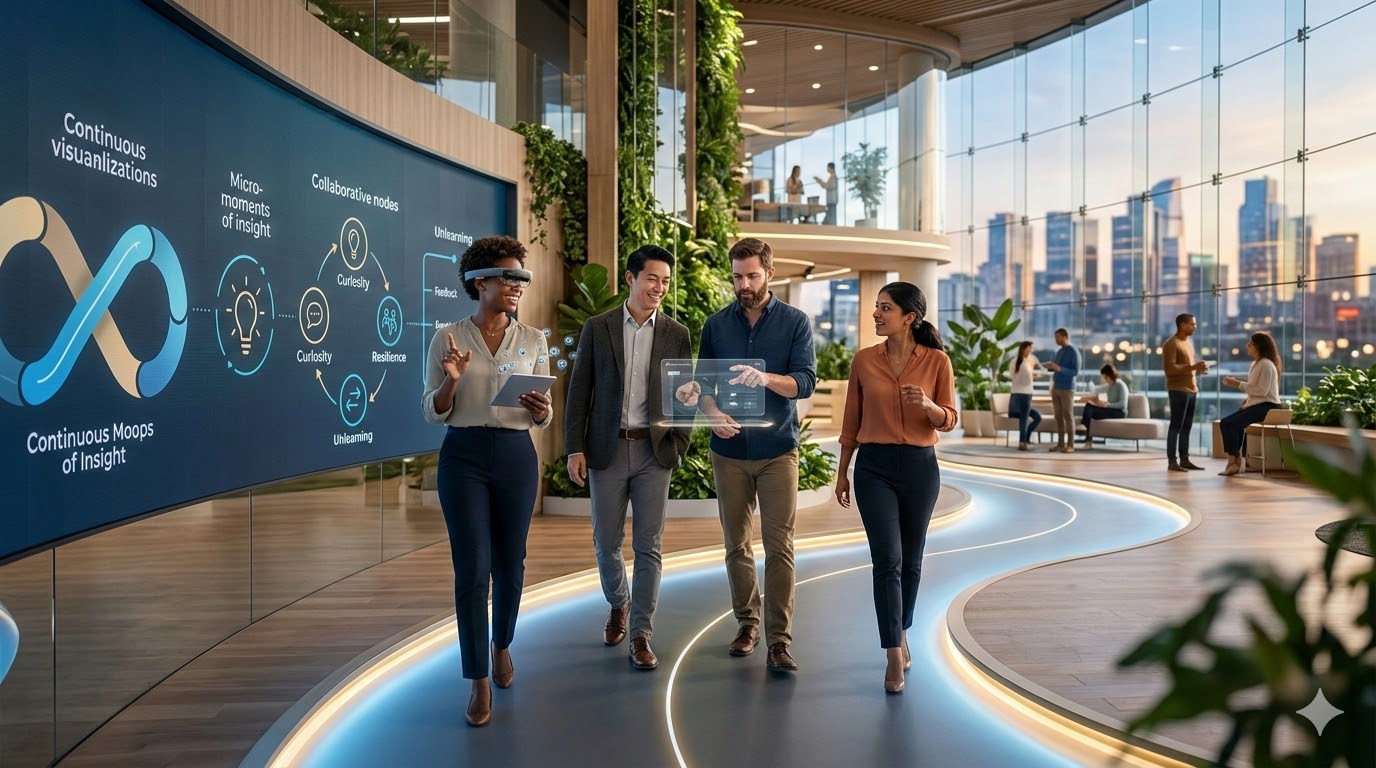
Image credit: Gemini

Subscribe to Human-Centered Change & Innovation WeeklySign up here to get Human-Centered Change & Innovation Weekly delivered to your inbox every week.