Tag Archives: best practices

Change Management Best Practices

Lessons from Successful Change Initiatives

Change Management Best Practices

GUEST POST from Chateau G Pato

Change is inevitable in any organization striving for growth and innovation. However, successfully managing change can often be a daunting task, encompassing various challenges and uncertainties. This thought leadership article delves into the best practices of change management, drawing valuable lessons from two impactful case studies. By examining these successful change initiatives, valuable insights can be gained to inspire and guide future change management efforts.

Case Study 1: Netflix

When Netflix emerged in the late 1990s, it disrupted the traditional video rental industry dominated by brick-and-mortar stores. Recognizing the shift in consumer preferences, Netflix changed its business model from a DVD-by-mail service to an online streaming platform. This transformation required effective change management to maintain and expand its customer base.

1. Crafting a Compelling Vision: Netflix defined a clear and compelling vision that emphasized convenience, variety, and personalization. This vision motivated employees and stakeholders, acting as a guiding light throughout the change process.

2. Agile Organizational Structure: Netflix adopted a more agile and decentralized structure to enable quick decision-making and adaptability. By empowering employees and encouraging innovation, the organization created an environment primed for change acceptance and implementation.

3. Transparent Communication: Effective communication played a central role in Netflix’s successful change initiative. The leadership team consistently communicated the rationale behind the change, its potential impact, and involved employees in decision-making processes. Transparent communication fostered trust and encouraged active participation, resulting in smoother transitions.

Case Study 2: Microsoft

Under the leadership of CEO Satya Nadella, Microsoft successfully transformed its organizational culture, moving away from a traditional software-driven company to a more agile and cloud-oriented enterprise.

1. Embracing the Growth Mindset: Microsoft encouraged employees to embrace a growth mindset, fostering a culture that valued learning, adaptability, and continuous improvement. This mindset shift allowed employees to tackle challenges head-on and view change as an opportunity for personal and professional growth.

2. Prioritizing Employee Enablement: The leadership team at Microsoft understood the importance of equipping employees with the necessary tools, resources, and training to succeed in the new paradigm. By providing ongoing support and enabling employees to acquire new skills, Microsoft ensured a smoother transition and minimized resistance to change.

3. Celebrating Successes: Recognizing and celebrating milestones along the change journey is crucial in reinforcing change initiatives. Microsoft actively celebrated both small and significant victories, acknowledging the efforts of individuals and teams who embraced the transformation. Such positive reinforcement reinforced the new culture and motivated others to follow suit.

Conclusion

Change management is a complex process with no one-size-fits-all approach. However, the valuable lessons extracted from successful change initiatives can serve as guiding principles for organizations seeking to navigate transformative journeys. By focusing on crafting a compelling vision, fostering transparent communication, nurturing a growth mindset, prioritizing employee enablement, and celebrating successes, organizations can increase the likelihood of successfully implementing change. Embracing these best practices allows organizations to adapt and thrive in an ever-evolving business landscape.

SPECIAL BONUS: Futurology is not fortune telling. Futurists use a scientific approach to create their deliverables, but a methodology and tools like those in FutureHacking™ can empower anyone to engage in futurology themselves.

Image credit: Pixabay

Subscribe to Human-Centered Change & Innovation WeeklySign up here to get Human-Centered Change & Innovation Weekly delivered to your inbox every week.
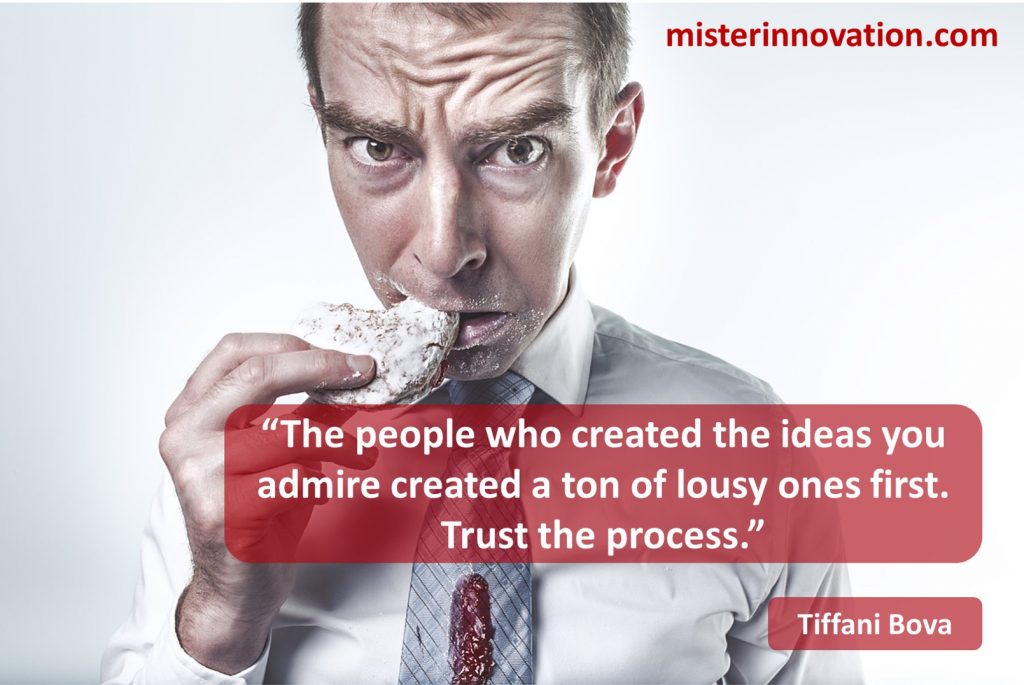
From Idea to Execution: Best Practices for Innovating Successfully

From Idea to Execution: Best Practices for Innovating SuccessfullyGUEST POST from Art Inteligencia

Innovation is at the heart of progress. It drives companies to new heights and fuels economic growth. However, transforming an idea into a successful reality requires careful planning, strategic thinking, and flawless execution. In this article, we will explore the best practices for innovating successfully by analyzing two inspiring case studies.

Case Study 1: Apple Inc.

Apple Inc. is renowned for its innovative products that have revolutionized entire industries. One of their most memorable successes was the launch of the iPhone in 2007. What made this innovation exceptional was not just the creation of a new smartphone but the integration of multiple functions in a single device. Apple not only developed a powerful touchscreen phone but also designed an intuitive operating system and an App Store ecosystem that allowed developers to create versatile applications.

The key lesson from Apple’s success is the importance of thinking holistically. Innovation should not be limited to individual features or products. Instead, organizations should strive to create an ecosystem that provides a seamless experience to customers. By considering the entire user journey and designing complementary products or services, companies can differentiate themselves and capture market share effectively.

Case Study 2: Airbnb

Another remarkable success story is Airbnb. Founded in 2008, this online marketplace disrupted the traditional accommodation sector by connecting travelers with homeowners renting out their properties. The company’s success can be attributed to its ability to understand and adapt to changing customer needs. Airbnb recognized that travelers were seeking unique and personalized experiences rather than conventional hotel stays.

To ensure successful execution, Airbnb built a platform that focused on trust and community. By establishing rigorous verification processes, providing accurate reviews, and fostering a sense of belonging among hosts and guests, the company created a strong foundation for growth. Moreover, Airbnb’s strategy of gradually expanding its offerings beyond accommodations, such as “Experiences,” further strengthened its position in the market.

The key lesson from Airbnb’s success lies in continuous adaptation and responding to evolving customer demands. Successful innovation requires companies to be agile and open to learning from feedback. By staying connected to their customers and actively seeking their input, organizations can develop offerings that cater to their changing needs.

Best Practices for Innovating Successfully

1. Foster a culture of innovation: Encourage employees to think creatively and provide them with the resources and support to explore new ideas. Innovation should be ingrained in the company’s DNA.

2. Identify customer pain points: Truly innovative solutions address real-world problems. Invest time in understanding your customers’ pain points and use them as a basis for your innovation efforts.

3. Focus on the user experience: Innovation should enhance the overall experience for customers. Design products and services that are intuitive, user-friendly, and seamlessly integrated.

4. Build cross-functional teams: Successful innovation requires collaboration across different departments and disciplines. Encourage diverse perspectives by assembling teams with varied skill sets and backgrounds.

5. Test and iterate: Embrace a mindset of continuous improvement. Test your innovations, collect feedback, and iterate based on the insights gained. Rapid prototyping and minimum viable products can help gauge market response before full-scale implementation.

6. Create a supportive ecosystem: Just as Apple and Airbnb understood the importance of building an ecosystem around their innovations, consider how your innovation fits into the broader customer experience. Develop partnerships and collaborations that reinforce the value proposition of your offering.

Conclusion

Innovation is an iterative process that requires a thorough understanding of customer needs, a holistic approach, and continuous adaptation. By drawing inspiration from successful case studies like Apple and Airbnb, organizations can enhance their innovation capabilities and bring groundbreaking ideas to life. Embrace the best practices outlined here, and unleash the potential of your organization to innovate successfully.

Bottom line: Futurology is not fortune telling. Futurists use a scientific approach to create their deliverables, but a methodology and tools like those in FutureHacking™ can empower anyone to engage in futurology themselves.

Image credit: Misterinnovation.com

Subscribe to Human-Centered Change & Innovation WeeklySign up here to get Human-Centered Change & Innovation Weekly delivered to your inbox every week.

Best Practices for Digital Transformation Leadership

Best Practices for Digital Transformation Leadership

GUEST POST from Art Inteligencia

Digital transformation leadership is essential for organizations looking to stay competitive in a rapidly evolving digital economy. Digital transformation leaders can help drive innovation and organizational success by leveraging cutting-edge technology, implementing a data-driven strategy, and improving customer engagement. But what are some best practices for digital transformation leadership? In this article, we will discuss key best practices for digital transformation leaders backed up by two case study examples.

First, successful digital transformation leaders must understand the technologies available to them. This includes understanding the capabilities of the technology and how it can help drive innovation within their organization. The leader should be well-versed in areas like artificial intelligence, the Internet of Things (IoT), big data, and cloud computing, and leverage the technology to create new business models and processes.

Case Study Example 1 (Unilever) – A great example of this is the VP of digital business transformation at Unilever, who implemented a cloud system that allowed the company to better understand customer behavior. This improved customer segmentation, prediction, and customization, allowing Unilever to efficiently respond to customer needs and drive more sales.

In addition to understanding technology, digital transformation leaders should be able to effectively foster collaboration and communications within their organization. This includes promoting the sharing of ideas and leveraging the expertise of those in the organization. Leaders should create an environment where everyone is encouraged to openly share their ideas, and feedback is valued. The goal of this is to build trust among team members and help create a culture of innovation.

Case Study Example 2 (GE Healthcare) – As an example, the CEO of GE Healthcare shifted the company’s leadership culture to be more customer-centric. This was driven by a focus on collaboration and communication between the different departments, allowing for different perspectives to be heard and responded to. This yielded increased customer satisfaction and loyalty.

Finally, an effective digital transformation leader should have a deep understanding of the customer landscape and customer experience. Leaders should stay on top of customer needs and feedback, and make sure customer feedback is incorporated into the organization’s roadmap. The leader should also ensure that customer-facing teams are equipped with the tools and resources they need to provide a great customer experience.

Case Study Example 3 (Amazon) – An example of a successful initiative in this area is Amazon’s digital transformation leadership. The company invested heavily in knowing customer needs and getting feedback from customers, leading to the development of services like Amazon Prime and Amazon Web Services. These services have propelled Amazon to become one of the most successful digital companies in the world.

Conclusion

In summary, successful digital transformation leaders must be well-versed in the latest technology, foster collaboration and communication within their organization, and have a deep understanding of customer needs and experience. Unilever, GE Healthcare, and Amazon have successfully implemented these best practices and achieved great results. Organizations looking to drive digital transformation should keep these best practices in mind and leverage these case study examples to guide their journey.

Image credit: Pixabay

Subscribe to Human-Centered Change & Innovation WeeklySign up here to get Human-Centered Change & Innovation Weekly delivered to your inbox every week.

Building a Resilience Infrastructure

Policies, Practices, Routines

Building a Resilience Infrastructure


GUEST POST from Chateau G Pato

Introduction: Shifting from “Bouncing Back” to “Bouncing Forward”

In an era of continuous and accelerating disruption, we must fundamentally rethink our relationship with change. Resilience is no longer merely a reactive trait—a mechanism for “bouncing back” to the status quo after a shock. Instead, it must become a proactive infrastructure designed for “bouncing forward.” It is time to stop treating change as a frustrating anomaly and start designing organizations where continuous adaptability is the baseline state.

As we view this through a human-centered lens, a critical truth emerges: true resilience doesn’t live in risk-mitigation software or crisis management manuals. It lives entirely in your people. Therefore, a modern resilience infrastructure must be intentionally designed around human capabilities, human behaviors, and human limits. Our goal is to systematically mitigate change fatigue while actively fostering the psychological safety required for a true innovation mindset to thrive.

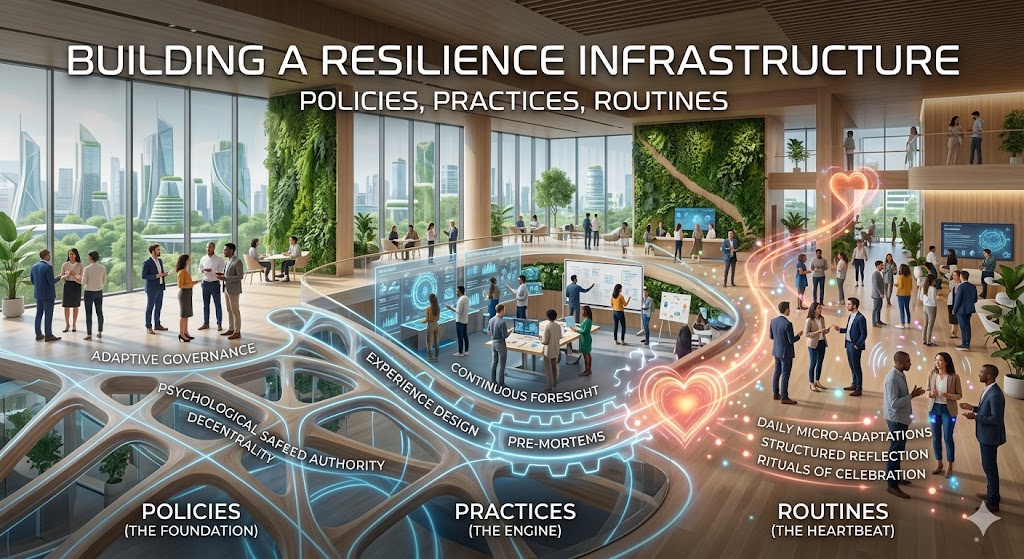
To move from theory to action, we must operationalize adaptability. This requires building a sustainable resilience infrastructure supported by three interconnected pillars:

  • Policies: The structural foundation that provides empowering guardrails rather than bureaucratic roadblocks.
  • Practices: The operational engine and methodologies driving human-centered change.
  • Routines: The cultural heartbeat that makes organizational adaptability a daily habit.

Pillar 1: Policies – The Structural Foundation

In most organizations, policy is synonymous with control. However, in a resilience infrastructure, policy must shift its purpose from control to enablement. To build an organization that can pivot without cracking, we must design structural guardrails that provide clarity without inducing rigidity.

Redefining Policy for Agility

Traditional, rigid policies are the natural enemy of innovation. We must transition toward “adaptive policies”—frameworks that are designed to scale their level of oversight based on the environmental context. When the pace of change accelerates, our policies should facilitate rapid response rather than acting as a bureaucratic anchor. This is about moving from a “rules-based” culture to a “principles-based” culture.

Decentralized Decision-Making

Resilience is strongest at the edges. Experience design teaches us that the employees closest to the customer and the frontline problems are the ones best equipped to navigate a sudden shift. Policies must be rewritten to push decision-making authority down the chain, empowering teams to act on real-time insights without waiting for a centralized hierarchy that may be disconnected from the current reality.

Structural Commitment to Psychological Safety

You cannot build a resilient infrastructure on a foundation of fear. Psychological safety must be more than a leadership buzzword; it must be a structural standard. This means instituting policies that protect employees when they experiment, fail, and share uncomfortable truths. If the “cost of failure” is a career-ending move, your people will choose silence over resilience every time.

Futurology as a Governance Standard

Finally, resilience requires looking beyond the immediate horizon. We must institute policies that make long-term scenario planning and “horizon scanning” a mandatory part of our governance. By making futurology a standard requirement for annual strategic resource allocation, we ensure that the organization is not just reacting to the present, but is structurally prepared for multiple possible futures.

Pillar 2: Practices – The Operational Engine

If policies provide the “why” and the “what,” then practices are the “how.” These are the repeatable methodologies and disciplines that keep the organization’s resilience muscle in a state of constant readiness. To build a resilient operational engine, we must integrate the tools of futurology and experience design into our everyday work flow.

Continuous Foresight and Innovation Portfolios

In a world of constant flux, episodic strategic planning is dead. We must replace the “annual retreat” with a practice of continuous foresight. This involves maintaining a balanced innovation portfolio—investing not just in the “Now” (core business optimization) but also the “Next” (incremental shifts) and the “New” (disruptive breakthroughs). Resilience comes from having multiple bets on the table, ensuring that when one path closes, others are already being paved.

Experience Design in Change Management

The greatest failure in organizational change is treating it as a technical rollout rather than a human transition. We must apply experience design (EX) to the change process itself. By mapping the “Employee Change Journey,” we can identify the specific moments where friction occurs and design interventions that support people emotionally and cognitively. Resilience is maximized when change is designed with people, rather than pushed onto them.

The Practice of “Pre-Mortems”

Resilience isn’t just about surviving a crisis; it’s about anticipating it. We should systematize the “pre-mortem” practice: before any major project or pivot begins, teams must imagine it has failed and work backward to determine why. This disciplined habit of visualizing failure allows us to build preemptive mitigation strategies into the very design of our initiatives, turning potential roadblocks into anticipated turns.

Cross-Pollination and Ecosystem Building

Isolation is the precursor to obsolescence. Resilience requires a radical commitment to cross-pollination. We must develop practices that actively break down departmental silos and encourage collaborative problem-solving across functions. Furthermore, true resilience extends beyond our walls; we must build ecosystems of partners, customers, and even competitors, creating a web of support and shared intelligence that no single organization could maintain on its own.

Pillar 3: Routines – The Cultural Heartbeat

While policies provide the framework and practices provide the tools, it is routines that provide the consistency. Resilience is not a grand gesture performed only during a disaster; it is a muscle built through the daily, mundane interactions of every team member. To make adaptability a permanent part of our culture, we must turn it into a habit.

The Power of Micro-Adaptations

True organizational resilience is the sum of a thousand micro-adaptations. We must design routines that encourage small, low-stakes pivots every day. When teams are accustomed to making minor course corrections in their weekly sprints, the “muscle memory” required for a macro-level organizational shift is already in place. We must stop waiting for the “Big Change” and start practicing the “Small Change” constantly.

The “Sensory” Routine

Resilient leaders don’t guess; they sense. Establishing a routine “sensory” loop—such as a fifteen-minute daily stand-up focused specifically on external signals and internal sentiment—keeps a pulse on the human-centered metrics that matter. We need to monitor change fatigue, creative energy, and engagement levels as rigorously as we monitor revenue. If the human battery is low, the resilience infrastructure will fail regardless of how good the strategy is.

Structured Reflection and Socialized Learning

Learning must be systematized, not left to chance. We must embed structured reflection into our standard weekly cadences. Whether through “after-action reviews” or retrospective routines, the goal is to ensure that every setback is converted into documented, socialized intelligence. A resilient organization is one that never fails at the same thing twice because the routine of learning is faster than the pace of disruption.

Rituals of Celebration

Finally, we must design routines that celebrate the behaviors of resilience, not just the successful outcomes. If we only celebrate “winning,” people will hide their mistakes. Instead, we must create rituals that honor intelligent risk-taking, rapid pivoting, and radical collaboration. By shining a light on the process of adaptation, we reinforce the cultural truth that in this organization, the ability to change is our greatest competitive advantage.

Conclusion: Future-Proofing the Human Experience

Building a resilience infrastructure is not a project with a defined completion date; it is a fundamental shift in how we conceive of organizational existence. We must move away from the fragile architecture of efficiency and toward the robust architecture of adaptability. By aligning our Policies, Practices, and Routines, we create a living system that does not merely survive disruption but is fueled by it.

The synthesis of these three pillars creates a powerful synergy: Policies give your people the permission to act, Practices provide them with the tools to execute, and Routines build the muscle memory necessary to sustain momentum. When these elements work in concert, the organization stops fearing the “Great American Contraction” or the next wave of AI-driven displacement and starts seeing them as canvases for new value creation.

As we look toward the next decade, the ultimate competitive advantage will not be found in the size of your balance sheet or the proprietary nature of your tech stack. It will be found in your Return on Adaptability (ROA). The organizations that thrive will be those that have fundamentally redesigned the human experience of work—transforming change from a perceived threat into a celebrated opportunity for continuous innovation.

The future belongs to the resilient. It’s time to stop waiting for the dust to settle and start building the infrastructure that allows you to dance in the whirlwind.

Frequently Asked Questions

What is the difference between organizational resilience and crisis management?

Crisis management is a reactive function designed to minimize damage during a specific event. Organizational resilience, specifically a “Resilience Infrastructure,” is a proactive, systemic capability that allows an organization to absorb shocks and “bounce forward” into a better state of operation by design.

Why is “Psychological Safety” included in a policy framework?

Innovation and resilience require employees to take risks and report failures early. By codifying psychological safety into policy, an organization moves beyond leadership lip-service and creates a structural guarantee that employees can experiment and adapt without fear of retribution.

How do routines differ from practices in this model?

Practices are the specific “how-to” methodologies and skill sets (like Customer Experience audits or Pre-Mortems). Routines are the rhythmic, daily habits that ensure those practices are actually used. Practices are the tools; routines are the heartbeat that keeps the tools in hand.

Image credit: Google Gemini

Subscribe to Human-Centered Change & Innovation WeeklySign up here to get Human-Centered Change & Innovation Weekly delivered to your inbox every week.

Change Agents and the Future of Change Management

Change Agents and the Future of Change ManagementRecently I was identified in a mini research study as one of the top Key Opinion Leaders in change management on Twitter by Maven7, and they were curious about some of my opinions about organizational change, and asked me these two questions for an article titled ’14 Insightful Quotes from Influencers in Change Management’ on their blog.

1) In your opinion, how will change management evolve in the next 10 years?

2) Why is change agent involvement essential during a change initiative, and what best practices are there to involve them?

The article on their site just highlights a few quotes from the insights I shared with them surrounding these two questions, so if you’re more interested in hearing the full responses, please continue reading.

Question: In your opinion, how will change management evolve in the next 10 years?

I believe that the field of organizational change will evolve first by moving beyond change management. We currently speak about change management and maybe change leadership, but I believe we need to make the conversation about The Five Keys to Successful Change™ more pervasive. These five keys are:

  1. Change Planning
  2. Change Leadership
  3. Change Management
  4. Change Maintenance
  5. Change Portfolio Management

When we start moving the conversation beyond change management, we can start focusing as change professionals on achieving excellence in practice in all five areas, creating more efficient and effective tools and techniques for each. The new Change Planning Toolkit™ introduced in my book Charting Change (Feb 2016) is focused on making the planning of a change effort of any size (up to the level of mergers & acquisition, and down to the level of the project) more visual, more collaborative, and more human.

In today’s environment it is innovate or die, and the reason that most organizations are bad at innovation is that they are bad at change. So, the ability to create a culture of continuous change in an organization, and a commitment to empowering employees with the tools, techniques, and mindsets that lead to the creation of a new organizational capability in change for the organization, will lead to THE most important competitive advantage an organization could possibly possess – greater organizational agility.

This evolution of change management will lead to a group of companies with incredible organizational agility and a collection of companies that will join Blockbuster, Montgomery Ward, Borders, and Tower Records not because of mismanagement, but because of a refusal to move beyond change management to embrace The Five Keys to Successful Change™. Which will you be?

Question: Why is change agent involvement essential during a change initiative, and what best practices are there to involve them?

I don’t like the notion of a change agent. Instead I prefer the notion of a change movement inspired by a motivated change leadership team. The notion of the change agent confers the idea that one person can affect lasting change, and that’s just not reality. We might like to attribute a successful change to a single individual, but the truth is that in those situations a movement was created where people eagerly participated in affecting a certain change, where imagination and creativity were captured and harnessed to create a new reality.

The truth is that successful changes are led by a passionate change leadership team with a clear plan that empowers and engages people with a clear, and often tailored, vision for the new reality they hope to create with the broader team. Successful change leadership teams build a clear plan that can be easily shared in order to start creating movement, in order to overcome the inertia of the organization, and then they focus on building and sustaining the momentum necessary to realize the desired transformation, whether that is a “BIG C” change or a “little c” change.

Successful change leadership teams build a shared vision of the change process, and a common language for the change effort, with the support of something like the Change Planning Toolkit™. Unfortunately, 70% of change efforts fail, and one of the big reasons is the lack of alignment, and frankly, an understanding of why the change is necessary, important, and how it might be achieved. At the same time, organizations fail to provide the support necessary to help the change participants successfully adopt the desired change. If you focus on change agents instead of empowered change leadership teams, people will be less likely to adopt the change, or to sustain it. So, choose wisely.

Accelerate your change and transformation success

Subscribe to Human-Centered Change & Innovation WeeklySign up here to get Human-Centered Change & Innovation Weekly delivered to your inbox every week.

Innovation Best Practices from Microsoft

Innovation Best Practices from Microsoft

“Industries are being commoditized at a faster rate and you have to look for ways to create more value and set yourself apart,” says Braden Kelley of Business Strategy Innovation. “Innovation is one of the few ways to do that because people use the same best practices for operational excellence. The way they innovate and the culture they build are the ways they can differentiate.”

To help companies with their quest to sustain their innovation efforts, Microsoft has reached out to collect a number of innovation best practices into an evolving framework, that I’ve provided a preview of below.

Microsoft’s Innovation Management Framework

Every company serious about innovation should anchor their pursuit in a vision, strategy and goals for innovation. These core innovation components should address not just enabling technology but processes and culture too. Download Microsoft Innovation FrameworkMicrosoft has published this Innovation Management Framework as the culmination of a collaboration with a consortium of visionaries and practitioners to ensure that it includes thought leadership on innovation from Microsoft and its broader ecosystem, including current charter members and contributors to the framework:

  • 3M
  • Avanade
  • Capgemini
  • Ericsson
  • Business Strategy Innovation
  • Microsoft
  • Pcubed
  • PTC
  • Quantum PM
  • Siemens PLM
  • Sopheon
  • Tech-Clarity
  • UMT
  • United Healthcare
  • Wolters Kluwer

“Microsoft’s Innovation Management Framework is designed to help companies develop a comprehensive, integrated approach to implement and support an innovation management strategy. This framework is a repeatable reference architecture for innovation and is intended to allow companies to share and learn about innovation management best practices and enabling technologies as a starting point for strategic discussions for their company’s innovation management strategy.

The framework includes best practice processes and solutions that offer a strategic roadmap. The roadmap offers techniques that are proven through experience to improve innovation and innovation management performance. For example, the framework shares lessons learned from Microsoft’s own innovation strategies and processes that help fuel innovation across the Microsoft enterprise. These processes are used within Microsoft, enabling teams to quickly implement innovation programs that are fit for purpose.”

Microsoft Innovation Management Framework

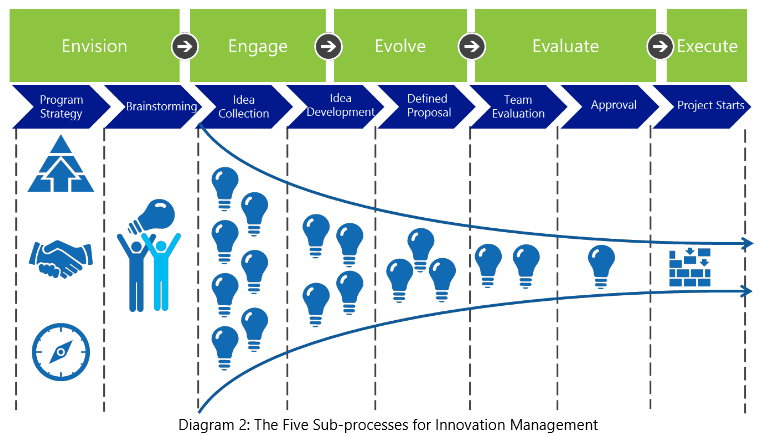
At its core the framework focuses on five main innovation sub-processes that we’ll give you a very brief preview of here:

1. Envision

Innovation is critical to achieving the goals of the modern business strategy. The Envision process should put in place the strategy and plan to achieve the innovation goals in the business strategy.

2. Engage

At the front end of innovation where ideas are generated, sometimes referred to as “ideation,” is where Engage occurs.

In this process, companies engage employees, customers, and partners in an innovation community to capture and share new ideas. Formalizing engagement transforms it from a passive, unfocused, ineffective “suggestion box” to a proactive approach that effectively produces targeted ideas. The goal is to generate ideas that will drive new business value. As Braden Kelley of Business Strategy Innovation explains, “The key in the engage processes is to get closer to the customer, what they desire, how they will make their lives better, and how your product will displace something.”

3. Evolve

The third process, “Evolve,” takes the output of the Engage process to the next level. In this process, companies evolve ideas – as individuals or as teams – to increase their quality and value. Soliciting and capturing ideas is not enough. Early feedback allows great ideas to be improved upon and issues to be raised so they can be resolved (if possible).

4. Evaluate

Simply discussing ideas is not enough. “It’s important to be able to organize, de-duplicate, and merge ideas and take them to the next step in order to turn ideas into money,” offers Newsgator’s Markus von Aschoff. At some point companies must identify the innovations they believe are candidates for further investment. Unfortunately, many companies are drowning in too many ideas.

5. Execute

Of course all of the best ideas, proposals and business plans in the world are of no value unless they can be turned into a reality. The “Execute” sub-process takes the input from the previous processes and executes a formal project to further develop the idea or commercialize it.

Microsoft DIRA Framework

The Microsoft DIRA Framework

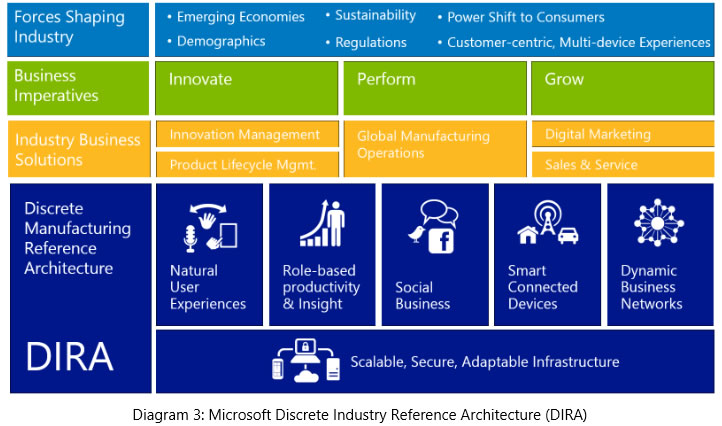
This Innovation Management Framework is tightly aligned with Microsoft’s Discrete Industry Reference Architecture for the discrete manufacturing industry. The DIRA framework covers three primary business imperatives that are critical to the growth and profitability of a manufacturing enterprise. These imperatives are:

  1. Innovate – Manage cross-boundary innovation and accelerate time-to-market
  2. Perform – Deliver operational excellence with reliable business continuity
  3. Grow – “Observe & serve” customers globally to drive growth with profitable proximity

This framework represents the “Innovation Management” portion of the “Innovate” imperative (see diagram). This framework will also align with the Product Lifecycle Management (PLM) Framework, which also falls under the Innovate imperative of DIRA.

Download Microsoft Innovation FrameworkI’m sure you can tell by now, or at least I hope you can tell, that this has just been a teaser of some of the great content that exists in the full document.

For more detail on Microsoft’s DIRA Framework and to see the complete Microsoft Innovation Framework, be sure and download it as a PDF.


Build a common language of innovation on your team

Subscribe to Human-Centered Change & Innovation WeeklySign up here to get Human-Centered Change & Innovation Weekly delivered to your inbox every week.