Tag Archives: AI

The Future of Innovation KPIs in the Age of AI

AI’s Impact on Innovation KPIs

The Future of Innovation KPIs in the Age of AI

GUEST POST from Art Inteligencia


I. Introduction: Beyond the Efficiency Trap

For decades, innovation leaders have been obsessed with velocity — how many ideas can we push through the funnel, and how fast? However, as we enter the age of Agentic AI, the traditional “speedometer” of innovation is breaking. When an AI can generate a thousand product concepts in the time it takes to pour a cup of coffee, volume is no longer a competitive advantage; it is a noise problem.

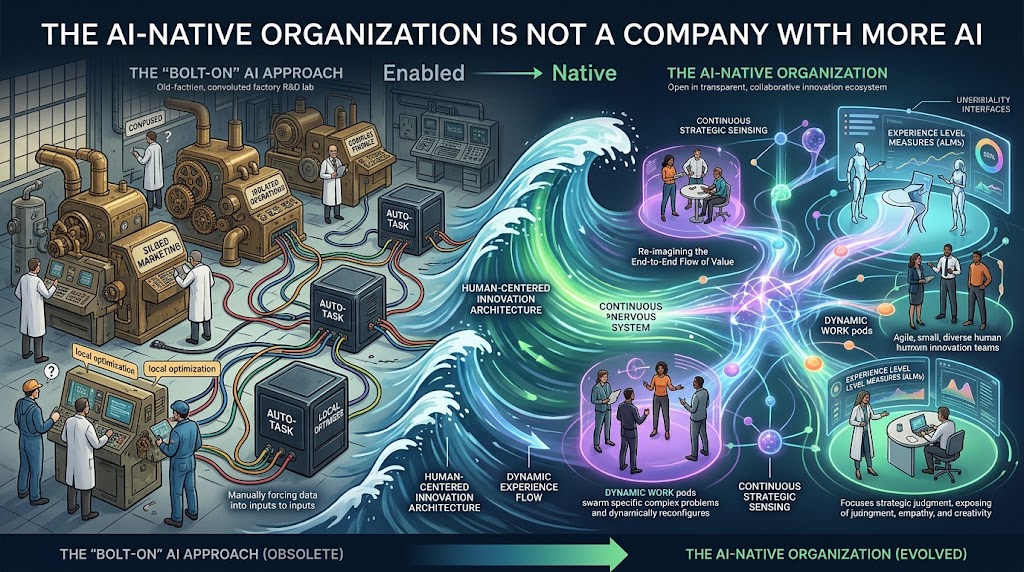
  • The Paradigm Shift: We are moving away from treating innovation as a sporadic “side project” or a series of workshops. In this new era, innovation must be a continuous, AI-integrated capability that functions as the organization’s nervous system.
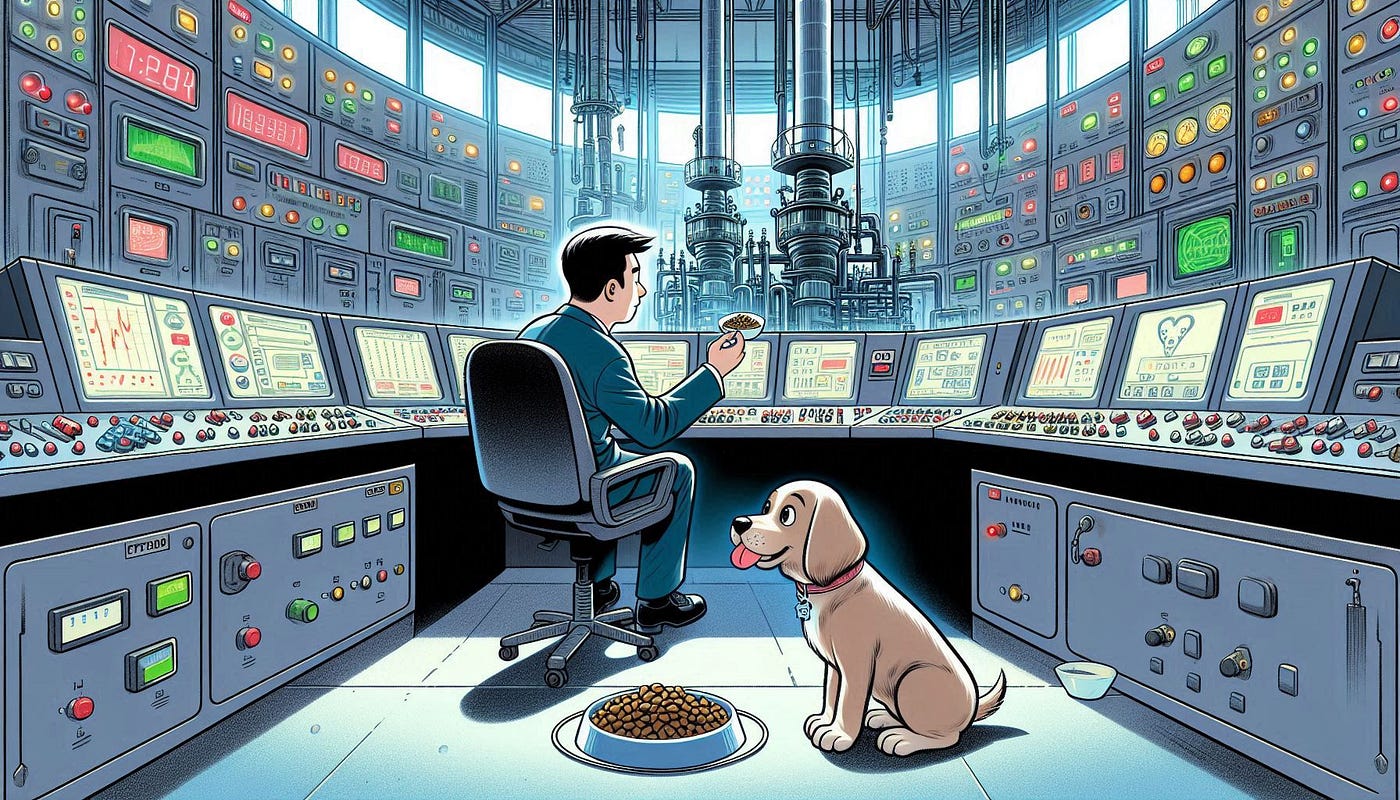
  • The Trap of Productivity: There is a dangerous temptation to use AI merely to do the wrong things faster. Measuring “output” without measuring “outcome” leads to the Efficiency Trap — where teams become remarkably good at delivering features that nobody actually needs.
  • The Core Thesis: The future of Innovation KPIs isn’t about tracking machine speed; it’s about measuring Human-Machine Synergy. We must redesign our dashboards to focus on how AI augments human intuition to create deeper empathy, higher-fidelity experiences, and sustainable ecosystem impact.

“The goal is no longer to be the fastest to market, but to be the most precise in solving human problems.” — Braden Kelley

II. The Evolution of Traditional Metrics

As AI commoditizes the “generation” phase of innovation, the metrics we once used to measure success are becoming obsolete. To remain relevant, we must shift our focus from tracking activity to measuring strategic movement.

Traditional frameworks like the Innovation Funnel are being compressed. What used to take months of market research can now be synthesized in hours, necessitating a fundamental update to our measurement criteria:

  • From Throughput to Outcomes: In the past, “number of ideas generated” was a common KPI. Today, that metric is a vanity project. AI makes ideas cheap; validation is what remains expensive. We must prioritize metrics that track the quality of problem-solving over the quantity of brainstorming.
  • Reimagining R&D Spend: Instead of viewing R&D as a flat percentage of revenue, we should measure the Speed of Learning. How much does it cost us to fail? By using AI to simulate market conditions, we can lower the “Cost of Experimentation,” allowing us to explore more radical horizons without increasing financial risk.
  • Human-Centered Design (HCD) Metrics: As we rely more on synthetic users and AI-driven personas, we risk losing touch with reality. We need to track the “Empathy Gap” — the distance between what an AI predicts a human needs and what a human actually experiences.

The goal is to move from a “Supply-Side” view of innovation (what we produced) to a “Demand-Side” view (the value the customer actually unlocked).

III. New KPIs for the AI Era

To lead in an AI-augmented landscape, we must introduce specialized metrics that go beyond traditional business logic. These “New KPIs” focus on the intersection of data, ethics, and the unique synergy between human creativity and machine intelligence.

1. The Insight-to-Action Ratio

Data is only as valuable as the decisions it informs. This metric measures the temporal distance between an AI-detected market signal (a “weak signal”) and the deployment of a validated, human-vetted prototype. A high ratio suggests an organization that is data-rich but “action-poor.”

2. Data Liquidity & Literacy

Innovation thrives on the fluid movement of information. Data Liquidity tracks how effectively innovation-related insights move across departmental silos to train and refine internal AI models. Combined with Literacy, it measures the organization’s ability to turn raw data into a strategic asset.

3. Collaborative Intelligence (CQ)

The most successful future organizations won’t just have the best AI; they will have the best human-AI teams. The CQ metric evaluates how effectively humans are prompting, refining, and steering AI outputs to achieve results that neither could produce in isolation.

4. Ethical Innovation Index

In the age of AI, guardrails are not obstacles — they are essential KPIs. This index measures bias detection frequency, transparency scores in algorithmic decision-making, and the alignment of new solutions with long-term human agency and societal well-being.

By implementing these measures, we ensure that AI remains a tool for Human-Centered Change, rather than just a driver of automated mediocrity.

IV. Measuring the “Middle of the Funnel”

The “Middle of the Funnel” is traditionally where innovation goes to die — the messy transition from a promising idea to a scalable reality. In the AI era, this stage becomes a high-speed laboratory where Experience Level Measures (XLMs) take precedence over rigid operational quotas.

  • Validation Velocity: We no longer need to wait months for physical market tests. By utilizing AI to simulate complex market conditions and consumer behaviors, we measure how quickly we can “kill” a bad idea. Success is defined by the speed at which we stop investing in the wrong things.
  • Pivot Frequency: In a volatile landscape, staying the course is often a recipe for irrelevance. This KPI tracks the number of strategic shifts informed by real-time AI data analysis. It rewards teams for being agile enough to redirect resources toward higher-value opportunities as they emerge.
  • Experience Fidelity: As we move through development, we must measure how closely the evolving product aligns with the intended Human Experience (HX). This involves using AI to audit journey maps and touchpoints, ensuring that the qualitative essence of the design isn’t lost in the technical execution.

By focusing on these middle-stage metrics, we transform the innovation process from a linear assembly line into a dynamic, iterative cycle of FutureHacking™.

V. Strategic Impact and Futurology

To truly future-proof an organization, Innovation KPIs must look beyond the current fiscal year. In the Age of AI, we must measure our ability to shape the future, not just react to it. This requires a shift toward Ecosystem Thinking and the valuation of intellectual capital.

  • The Ecosystem Health Score: We are moving away from isolated “Product KPIs” toward measures of mutual value. This score evaluates how an innovation strengthens the entire network — including partners, customers, and the environment. In a connected world, an innovation that succeeds at the expense of its ecosystem is a long-term failure.
  • Future-Proofing Index: This metric audits the innovation portfolio against the three horizons of growth. Specifically, it tracks the balance between Horizon 1 (incremental AI improvements to current products) and Horizon 3 (transformational AI applications that could disrupt our own business model).
  • The Return on Intelligence (ROI 2.0): Traditional ROI focuses on immediate financial gains. ROI 2.0 measures the “Knowledge Equity” generated during the innovation process. Even a project that never reaches the market can yield a high ROI if it produces unique data, reusable AI models, or deep customer insights that fuel future breakthroughs.

By shifting our perspective toward these long-term signals, we ensure that our strategic investments are building a sustainable Experience Management Office (XMO) rather than just chasing the latest tech trend.

VI. Conclusion: The Leader’s New Compass

As we navigate the complexities of the Age of AI, our measurement systems must evolve from tools of control to tools of exploration. The metrics we choose to track do more than just report progress — they signal to our organizations what we truly value. If we measure only efficiency, we will get automation; if we measure meaning, we will get innovation.

  • The Shift in Mindset: Modern Innovation KPIs should function like a GPS for exploration rather than a speedometer for production. Their purpose is to help us navigate uncertainty and re-calibrate our path toward long-term value.
  • Empowering the Human Element: In an increasingly automated world, the ultimate differentiators remain human curiosity, intuition, and empathy. Leaders must protect the space for these qualities to flourish, using AI to handle the “predictable” so humans can focus on the “possible.”
  • Final Thought: Innovation has always been about making the world better for people. AI is not the destination; it is the most powerful vehicle we’ve ever had to reach that goal. By aligning our KPIs with human-centered change, we ensure that our technological progress leads to genuine human advancement.

The future isn’t something that happens to us — it’s something we build, one measured step at a time.

Frequently Asked Questions

Will AI eventually replace the need for Innovation KPIs?

No. AI will automate the collection and analysis of data, but it cannot define what “value” looks like for your specific organization or customers. As we move toward Agentic AI, KPIs become even more critical as the steering mechanism that ensures autonomous systems remain aligned with human-centered goals.

How do Experience Level Measures (XLMs) differ from traditional SLAs in innovation?

While SLAs (Service Level Agreements) focus on technical performance and uptime, XLMs measure the qualitative impact of an innovation on the human experience. In the age of AI, technical success is the baseline; true innovation success is measured by how effectively a solution removes friction and empowers the user.

What is the most important “New KPI” for a leadership team to adopt first?

The Insight-to-Action Ratio is the most critical starting point. In an AI-driven landscape, the bottleneck is rarely a lack of insights; it is the organizational inertia that prevents those insights from becoming prototypes. Improving this ratio directly increases your organizational agility.


SPECIAL BONUS: Braden Kelley’s Problem Finding Canvas can be a super useful starting point for doing design thinking or human-centered design.

“The Problem Finding Canvas should help you investigate a handful of areas to explore, choose the one most important to you, extract all of the potential challenges and opportunities and choose one to prioritize.”

Image credit: Gemini

Subscribe to Human-Centered Change & Innovation WeeklySign up here to get Human-Centered Change & Innovation Weekly delivered to your inbox every week.

Accountability Frameworks for Human-AI Teams

LAST UPDATED: May 3, 2026 at 10:10 AM

Accountability Frameworks for Human-AI Teams

GUEST POST from Chateau G Pato


The Death of the “Black Box” Excuse

For years, we have treated Artificial Intelligence as a sophisticated utility — a faster calculator or a more intuitive search engine. But that era is over. We have crossed the threshold into agentic collaboration, where AI is no longer a silent tool but a functional, active teammate. This shift demands more than just a change in workflow; it requires a fundamental redesign of our ethical and operational foundations.

The Growing Responsibility Gap

As human-AI teams begin to co-create, we encounter the “Responsibility Gap.” Traditional organizational structures are ill-equipped to handle outcomes generated through hybrid intelligence. When a process is obscured by algorithmic complexity, and the human “partner” acts only as a rubber stamp, accountability evaporates. If we cannot trace the logic of a decision, we cannot learn from its failure.

A Human-Centered Thesis for Innovation

To unlock the true potential of this partnership, we must stop viewing accountability as a punitive liability and start designing it as a shared, transparent, and human-centered asset. True innovation thrives on trust, and trust is built on the clarity of who owns the intent, who owns the execution, and how we collectively govern the results. We aren’t just building better tools; we are building a more responsible future for work.

Defining the New “Shared Agency”

In the landscape of human-centered innovation, we must distinguish between output and outcome. While an AI can generate a high volume of output (data, code, or copy), the human teammate is responsible for the outcome — the real-world impact and the strategic alignment of that work. Agency in this new era is not a zero-sum game; it is a collaborative spectrum.

The “Human-in-the-Loop” Fallacy

Simply placing a human in the workflow to “check the box” is a recipe for catastrophic failure. This “passive oversight” leads to automation bias, where humans become too trusting of the system and lose their critical edge. To maintain true accountability, the human role must shift from supervisor to active collaborator, ensuring that the AI’s speed is always balanced by human judgment and ethical context.

A Taxonomy of Collaboration

Establishing clear boundaries of agency is the first step toward a robust accountability framework. We categorize these interactions into three distinct levels:

  • AI-Driven / Human-Verified: The AI takes the lead on heavy lifting and pattern recognition, while the human provides a rigorous audit and final approval.
  • Human-Driven / AI-Augmented: The human directs the creative and strategic vision, using AI to expand capabilities, brainstorm, or refine specific elements.
  • Autonomous Edge Cases: Pre-defined parameters where the AI operates independently within high-speed, low-risk environments, with humans designing the governance “guardrails.”

By codifying these roles, we move away from accidental collaboration and toward a structured, intentional partnership where every contributor — carbon or silicon — has a defined purpose.

The Architecture of a Modern Accountability Framework

Designing for accountability requires us to move beyond vague notions of “responsibility” and into the granular details of systems design. We must build structures that can withstand the speed of AI while maintaining the integrity of human oversight. This architecture isn’t just about technical constraints; it’s about experience design (XD) for the people who manage these systems.

The RACI Matrix 2.0

The traditional RACI model (Responsible, Accountable, Consulted, Informed) must be re-engineered for the hybrid workforce. In a human-AI team, the AI might be Responsible for the execution of a task, but a human must always remain Accountable for the result. We must clearly define who is “Informed” when an AI drifts from its baseline and who must be “Consulted” when the AI suggests a radical pivot in strategy.

Traceability by Design

Accountability is impossible without transparency. Every output generated by an AI teammate must have a “provenance trail” — a clear map of the data inputs, prompts, and logic used to arrive at a conclusion. By treating traceability as a core design requirement, we ensure that when a system fails, we aren’t looking at a “black box,” but at a documented path that can be audited, understood, and corrected.

The “Kill Switch” and Override Protocols

True leadership in an AI-integrated world means knowing when to pull the plug. A robust framework establishes clear “Kill Switch” protocols:

  • Threshold Alerts: Automated triggers that notify human leads when AI confidence scores drop below a specific percentage.
  • Manual Override Authority: Clearly designated roles with the power to bypass AI-driven decisions without bureaucratic delay.
  • Emergency Rollbacks: The ability to revert to a “last known good” human-validated state when an autonomous agent produces unexpected outcomes.

By building these safeguards directly into the organizational fabric, we empower our teams to innovate boldly, knowing that the safety nets are both visible and functional.

Designing for Transparency and Trust

Trust is the currency of innovation. In a human-AI partnership, trust cannot be blind; it must be earned through transparency. If a team does not understand how their digital counterpart arrives at a conclusion, they will either follow it off a cliff or ignore it entirely — both of which are disastrous for experience design and organizational growth.

Explainability as a Right

We must move toward a standard where “Explainable AI” (XAI) is not a luxury feature but a fundamental right for every employee. “The AI said so” is an unacceptable defense in any business context. Accountability frameworks must mandate that AI outputs include a plain-language rationale, allowing human teammates to evaluate the logic behind the recommendation rather than just the result.

Real-Time Feedback Loops

Accountability is a two-way street. To prevent algorithmic drift and the entrenchment of bias, we must design mechanisms where humans can correct AI outputs in real-time. This isn’t just about fixing an error; it’s about active mentoring. These feedback loops ensure that the AI learns from the human’s nuanced understanding of culture, ethics, and strategy, creating a virtuous cycle of continuous improvement.

Cultivating Psychological Safety

Innovation dies in an environment of fear. For a human-AI team to function, humans must feel psychologically safe to question, challenge, or reject an AI’s suggestion. A robust framework ensures that:

  • Dissent is Valued: Challenging an algorithm is viewed as a form of “quality assurance” rather than an obstacle to efficiency.
  • Bias Reporting: There are clear, non-punitive channels for reporting perceived biases or ethical lapses in the AI’s behavior.
  • Human Agency: The ultimate decision-making power is visibly vested in people, reinforcing that AI is a partner in the process, not the master of it.

By prioritizing these human-centered elements, we transform the AI from a mysterious “black box” into a transparent, reliable, and accountable colleague.

Change Management: Implementing the Framework

The most sophisticated accountability framework in the world is useless if it exists only as a static document. Integrating AI into the team fabric is a cultural transformation, not a software deployment. To move from theory to practice, we must design the transition with as much intentionality as the technology itself.

From Monitoring to Mentoring

We must shift the organizational mindset. Traditional management often views AI oversight as “monitoring” — a defensive posture designed to catch errors. To drive innovation, we must reframe this as “mentoring.” When a human teammate audits an AI’s output, they are not just checking for mistakes; they are training the system on the nuance of the brand, the ethics of the industry, and the complexities of human experience.

Upskilling for Governance

Accountability requires a new set of competencies. It is no longer enough for employees to be “AI literate”; they must be governance-capable. This includes:

  • Critical Prompting: The ability to structure inquiries that minimize bias and maximize transparency.
  • Algorithmic Auditing: Basic skills in identifying “hallucinations” or logical inconsistencies in generative outputs.
  • Ethical Decision-Making: Strengthening the human capacity to make value-based judgments that an AI, by its very nature, cannot replicate.

Iterative Governance: The Living Document

In the world of futurology, we know that the only constant is acceleration. An accountability framework must be a “living document” that evolves alongside the technology. We recommend Quarterly Governance Sprints, where teams reconvene to assess where the framework held firm and where the speed of agentic AI created new, unforeseen “blind spots.”

By treating the implementation as an ongoing journey of experience design, we ensure that our teams remain agile, empowered, and — above all — accountable for the future they are building.

Conclusion: The Futurist’s Perspective

As we look toward the horizon of the next decade, the organizations that thrive won’t just be those with the fastest processors or the largest datasets. They will be the ones that have mastered the social architecture of Human-AI collaboration. Accountability is not a bureaucratic anchor; it is a competitive advantage that provides the psychological safety necessary for radical experimentation.

Accountability as a Catalyst for Speed

There is a common misconception that guardrails slow us down. In reality, a well-designed accountability framework acts like the brakes on a high-performance racing car — it is precisely because you know you can stop that you have the confidence to go faster. When teams understand exactly where the responsibility lies, they can iterate with a level of boldness that “black box” systems simply don’t allow.

The Architect of Intent

Ultimately, the goal of human-centered innovation is to ensure that technology serves humanity, not the other way around. While we will increasingly share our labor with AI, we must never outsource our intent. The future belongs to the leaders who treat AI as a powerful co-author of the work, while remaining the ultimate architects of the mission.

“We are moving from a world of ‘doing the work’ to a world of ‘designing the outcomes.’ In this shift, our accountability is the only thing that keeps our innovation anchored to our values.” — Braden Kelley

The frameworks we build today are the blueprints for the collaborative culture of tomorrow. Let’s design them to be as intelligent, transparent, and resilient as the future we hope to create.

Frequently Asked Questions

Who is ultimately responsible for an AI’s error?

In a human-centered framework, the human lead remains the Accountable party. While the AI is responsible for the execution (the output), the human is responsible for the outcome and must ensure the result aligns with ethical and strategic standards.

Does an accountability framework slow down innovation?

Quite the opposite. By defining clear guardrails and “Kill Switch” protocols, teams gain the psychological safety needed to move faster. Clear boundaries prevent the “analysis paralysis” that often occurs when ethical or operational risks are ambiguous.

What is “Traceability by Design”?

It is the practice of building AI systems that automatically document their logic and data sources. This ensures that every decision can be audited, allowing human teammates to understand the “why” behind an AI’s suggestion.

Bottom line: Futurology is not fortune telling. Futurists use a scientific approach to create their deliverables, but a methodology and tools like those in FutureHacking™ can empower anyone to engage in futurology themselves.

Image credit: Gemini

Subscribe to Human-Centered Change & Innovation WeeklySign up here to get Human-Centered Change & Innovation Weekly delivered to your inbox every week.
AI-Enabled Decision Making: What Are the Benefits?

AI-Enabled Decision Making: What Are the Benefits?

GUEST POST from Chateau G Pato

Artificial intelligence (AI) is quickly emerging as a powerful tool for business decision making. Companies of all sizes are realizing the potential of AI to provide insights and automate manual processes that previously served to hinder the decision-making process. In this article, we’ll take a look at some of the benefits that AI-enabled decision making can bring to a business, as well as some examples of successful implementations.

One of the most significant benefits of AI-enabled decision making is the ability to analyze large data sets and identify patterns that inform decisions. By harnessing powerful algorithms, AI can uncover correlations that are otherwise not visible. This can be especially beneficial in customer and market segmentation, where the application of AI-driven analytics can help uncover new growth opportunities. For example, one company used AI to analyze customer data as part of its product segmentation strategy. This enabled the company to develop personalized recommendations that drove increased customer loyalty and revenue growth.

Case Study 1 – Automating Chargeback Calculations

In addition to analyzing data, AI can automate tedious manual tasks for more efficient and accurate decision-making. For example, a global accounting firm used AI to automate chargeback calculations. By eliminating manual human review, AI enabled the company to process thousands of invoices in a fraction of the time. This reduced the cost of processing while improving accuracy and creating an overall better customer experience.

Case Study 2 – AI-Enabled Predictive Logistics

Finally, AI can be used to create predictive models that anticipate future actions, trends, and outcomes. By using AI to develop predictive models, businesses can get a jumpstart on preparing for potential events ahead of time. For example, a logistics firm developed an AI-enabled predictive model that anticipated customer buying patterns and adjusted its shipping routes accordingly. This enabled the company to save time and money through improved deployment of its assets.

Conclusion

AI-enabled decision making offers a range of potential benefits to businesses of all sizes. By leveraging powerful algorithms to analyze data, automate processes, and create predictive models, companies can improve decision making while creating a competitive edge. Through the use of case studies, this article has highlighted some of the key benefits of AI-enabled decision making that can be applied to a variety of organizational contexts.

Image credit: Pixabay

Subscribe to Human-Centered Change & Innovation WeeklySign up here to get Human-Centered Change & Innovation Weekly delivered to your inbox every week.

AI for Inclusive Innovation Design

LAST UPDATED: April 23, 2026 at 6:23 PM

AI for Inclusive Innovation Design

GUEST POST from Art Inteligencia


I. Introduction: The New Frontier of Empathy

In the traditional landscape of human-centered design, our greatest limitation has always been the physical and cognitive bandwidth of the designer. We strive for empathy, yet we are often trapped by our own unconscious biases and the constraints of small sample sizes. As we enter this new era, we must recognize that AI is not a replacement for human intuition; it is a cognitive exoskeleton that allows us to see, hear, and design for those who have been historically pushed to the margins.

The Shift from Compliance to Belonging

For too long, “inclusive design” has been treated as a synonym for accessibility — a checklist of compliance requirements to be met at the end of a project. Inclusive Innovation demands more. It requires us to move beyond simply making things “usable” for people with disabilities and toward intentionally creating a sense of belonging for every user, regardless of their physical, cognitive, or socio-economic reality.

Designing with the Edge Cases

The core philosophy of this shift is a move away from the “Average User” myth. When we use AI to analyze and integrate the needs of edge cases — those users with the most extreme or unique requirements — we don’t just help a minority. We create more resilient, flexible, and intuitive solutions that benefit the entire ecosystem. AI gives us the power to scale this “designing for one” approach to reach the many.

“The goal is no longer to design for the many, but to design with the edges.” — Braden Kelley

II. Phase 1: AI-Powered Empathy and Discovery

Discovery is the bedrock of innovation, yet it is often where exclusion begins. Traditional research methods — surveys, focus groups, and ethnographic studies — are frequently limited by geography, language, and the “loudest voice” bias. AI transforms this phase by acting as a bridge between the designer’s perspective and the vast, diverse realities of the global population.

Breaking the Echo Chamber with Natural Language Processing

By leveraging advanced Natural Language Processing (NLP), we can now synthesize insights from billions of data points — social conversations, support forums, and local community archives — in real-time. This allows designers to move beyond their immediate bubble and understand how different cultures, dialects, and marginalized communities articulate their own problems. We aren’t just reading data; we are hearing the nuances of lived experiences that were previously “noise” in the system.

Simulating Lived Realities for High-Fidelity Empathy

Empathy is often hindered by the inability to truly experience another person’s friction. AI-driven simulations allow us to model various physical or cognitive constraints within a digital environment. Whether it is simulating visual impairments, motor control challenges, or cognitive load issues, AI helps designers “feel” the friction points during the early discovery phase. This proactive identification ensures that we aren’t “fixing” exclusion later, but preventing it from the start.

Uncovering Latent Needs through Pattern Recognition

Traditional analytics look for the “mean,” often ignoring the outliers. However, in inclusive innovation, the outliers are where the breakthroughs happen. AI excels at uncovering latent needs — identifying subtle patterns in behavior from underrepresented groups that signal a significant, unmet demand. By analyzing these “quiet” signals, we can spot opportunities to innovate for specific communities that eventually lead to universal improvements in the user experience.

“AI allows us to scale empathy by transforming massive amounts of unstructured human experience into actionable design intelligence.” — Braden Kelley

III. Phase 2: Co-Creation and Radical Prototyping

The most profound shift in inclusive innovation is the transition from designing for a community to designing with them. AI serves as the ultimate translator and facilitator in this process, stripping away the technical barriers that have traditionally kept “non-designers” out of the creative engine room.

Democratizing the Design Language

Generative AI tools act as a bridge for individuals who have the lived experience but perhaps lack formal design training. By using natural language prompts or simple sketches, end-users from diverse backgrounds can generate high-fidelity visual prototypes of the solutions they envision. This democratization of the design language ensures that the people closest to the problem are the ones leading the architectural vision of the solution.

Rapid Iteration for Universal Accessibility

In a traditional workflow, testing for accessibility is a slow, iterative process. AI changes the math. Automated agents can now instantly audit prototypes against Universal Design principles and international standards like the Web Content Accessibility Guidelines (WCAG). This allows for “real-time inclusion,” where flaws in contrast, navigation logic, or screen-reader compatibility are identified and corrected the moment a design is conceived, rather than weeks later during a formal audit.

The “Infinite Version” Paradigm

We are moving away from the “One-Size-Fits-All” model toward what I call The Infinite Version Paradigm. Rather than forcing every user to adapt to a single static interface, AI allows the interface to dynamically adapt to the user. Whether it’s adjusting cognitive load for a neurodivergent individual or reconfiguring navigation for someone with limited motor control, AI enables a level of deep personalization that makes the product feel like it was built specifically for the individual using it.

Prototyping for the Edge: When we use AI to solve for the most extreme accessibility requirements, we often discover “the Curb-Cut Effect” — innovations that were intended for a specific group (like closed captions) end up becoming essential for everyone.

IV. The Ethical Guardrail: Auditing for Algorithmic Bias

As we embrace the speed of AI, we must remain vigilant. AI is a mirror; if we feed it a history of exclusion, it will reflect and amplify those same biases in the designs it generates. Inclusive innovation requires a rigorous, proactive approach to ethics — ensuring that our “intelligent” assistants aren’t inadvertently building new digital walls.

The Mirror Effect: Acknowledging Embedded Bias

We must start with the uncomfortable truth: datasets are often skewed toward the dominant culture. If an AI is trained on images, text, and code that ignore marginalized groups, its output will naturally cater to the “standard” user. As innovation leaders, our job is to interrogate the training data and recognize where the gaps exist before we let the AI begin the design process.

Proactive Bias Hunting and Red Teaming

To counter these risks, we employ “Red Team” AI agents. These are secondary AI systems specifically programmed to attack a design from the perspective of different personas — searching for exclusionary patterns, cultural insensitivity, or hidden barriers to entry. By simulating how a neurodivergent user or someone from a different socio-economic background might interact with the product, we can catch “algorithmic microaggressions” before they ever reach the user.

Transparency and the “Open Box” Approach

Inclusive innovation cannot happen in a “Black Box.” To build trust with diverse communities, we must be transparent about how AI decisions are being made. This means moving toward Explainable AI (XAI), where the logic behind a personalized recommendation or an interface adjustment is clear and auditable. When users understand why a system is adapting to them, they feel empowered rather than monitored.

“Innovation without ethics is merely disruption. True inclusive innovation requires the courage to slow down and audit the algorithm to ensure it serves everyone.” — Braden Kelley

V. The Future Role of the Innovation Leader

The integration of AI into the design process necessitates a fundamental evolution of our leadership models. As the technical barriers to execution lower, the value of the innovation leader shifts from managing the “how” to orchestrating the “why.” We are moving from an era of craft-based creation to one of strategic curation and ethical stewardship.

From Creator to Curator

In an AI-augmented world, the designer’s primary skill is no longer just the ability to push pixels or write code, but the ability to orchestrate collaboration between human stakeholders and machine intelligence. The innovation leader becomes a curator of perspectives, ensuring that the AI has the right “empathy inputs” to generate inclusive outputs. Our job is to provide the vision and the values that guide the algorithm’s creative power.

The Competitive Edge of Inclusive Futurology

From a futurology perspective, designing for inclusion isn’t just a moral imperative — it’s a massive market opportunity. Historically, innovations that solve for “the edges” (such as the typewriter, originally designed for the blind) eventually redefine the mainstream. By using AI to anticipate the needs of the marginalized, organizations build more resilient, flexible, and robust products. Those who master inclusive design today are building the foundational infrastructure for tomorrow’s global economy.

Sustaining the Human-Centered Focus

As we look toward a future of agentic AI and neuroadaptive interfaces, the risk of “dehumanization” grows. The role of the innovation leader is to act as the guardian of the human experience. We must ensure that as our tools become more autonomous, they remain subservient to the goal of enhancing human connection, dignity, and agency. The future belongs to those who can use the highest technology to serve the deepest human needs.

The Futurist’s Prediction: Within the next decade, “inclusive design” will simply be called “design.” Companies that fail to use AI to bridge the accessibility gap will find themselves obsolete in an increasingly diverse and demanding global marketplace.

VI. Conclusion: Human-Centered, AI-Augmented

We stand at a unique crossroads in the history of innovation. For the first time, we possess tools powerful enough to bridge the gap between our empathetic intentions and the practical realities of large-scale design. But as we have explored, the true power of AI for Inclusive Innovation Design does not lie in the code itself, but in how we choose to direct that code to serve the human spirit.

Innovation is Only “New” if it is Inclusive

If we continue to use AI merely to optimize for the majority, we are not innovating; we are simply accelerating the status quo. Real innovation happens when we use these technologies to include those who were previously left behind. By bringing the “edge cases” into the center of our design process, we unlock new forms of value that were previously invisible.

The Path Forward: From Average to Infinite

The transition from the era of the “Average User” to the era of Infinite Inclusion is now underway. As innovation leaders, our mission is to ensure that AI acts as a leveling force — one that dissolves barriers, celebrates diversity, and creates a world where every individual feels that the products and services they interact with were built with them in mind.

The goal isn’t to make AI more human, but to use AI to make us more humane in how we design the world around us.

Let’s get to work on building a future that belongs to everyone.

Frequently Asked Questions

How does AI specifically enable more inclusive innovation?

AI acts as a cognitive exoskeleton, allowing designers to synthesize diverse global perspectives through Natural Language Processing (NLP) and simulate lived realities. It democratizes the design process by enabling non-designers to prototype their own solutions and dynamically adapts interfaces to meet individual accessibility needs in real-time.

What is the ‘Infinite Version’ paradigm in inclusive design?

The Infinite Version paradigm moves away from “one-size-fits-all” products. It uses AI to create interfaces that dynamically reconfigure themselves based on a user’s unique physical or cognitive requirements, ensuring the experience is personalized for every individual rather than forced into a static average.

How do we prevent AI from amplifying existing biases in the design process?

We prevent bias by implementing “Red Team” AI agents to proactively hunt for exclusionary patterns, auditing training datasets for diversity gaps, and adopting Explainable AI (XAI) practices. This ensures the design process remains transparent and accountable to human-centered ethical standards.

SPECIAL BONUS: Braden Kelley’s Problem Finding Canvas can be a super useful starting point for doing design thinking or human-centered design.

“The Problem Finding Canvas should help you investigate a handful of areas to explore, choose the one most important to you, extract all of the potential challenges and opportunities and choose one to prioritize.”

Image credit: Google Gemini

Subscribe to Human-Centered Change & Innovation WeeklySign up here to get Human-Centered Change & Innovation Weekly delivered to your inbox every week.

How AI Transparency Impacts Organizational Trust

LAST UPDATED: April 12, 2026 at 8:43 AM

How AI Transparency Impacts Organizational Trust

GUEST POST from Chateau G Pato


I. The New Currency of the Digital Age

In the modern organizational landscape, trust has evolved from a “soft” cultural attribute into a hard currency. As Artificial Intelligence (AI) permeates every layer of the enterprise—from recruitment algorithms to predictive analytics—the traditional methods of building trust are being challenged. We are currently facing a significant Trust Deficit, driven by the inherent skepticism employees and customers feel toward “black box” systems that make life-altering decisions without explanation.

Transparency as Strategy

To bridge this gap, leaders must shift their perspective: transparency is not merely a compliance burden or a legal checkbox. Instead, it is a core innovation strategy. By demystifying how AI operates, organizations can move from a defensive posture to a competitive advantage, fostering an environment where technology is viewed as an ally rather than a hidden supervisor.

The Human-Centered Lens

From an experience design standpoint, the need for transparency is rooted in fundamental human psychology. For an innovation culture to thrive, individuals need to understand the why and how behind the tools they use. When we apply a human-centered lens to AI, we prioritize the dignity of the user, ensuring that automated logic aligns with human values and organizational purpose.

II. The Three Pillars of AI Transparency

To design experiences that resonate and endure, we must move beyond the vague concept of “openness” and ground our AI initiatives in three functional pillars. These aren’t just technical requirements; they are the architectural supports for organizational trust.

1. Algorithmic Legibility

There is a vast difference between explainability and legibility. While an engineer might understand a neural network’s weights, the average employee needs “human-understandable” logic. Legibility is about translating complex mathematical correlations into clear narratives that explain why a specific outcome was reached. If a human can’t follow the breadcrumbs, they won’t trust the path.

2. Data Provenance

Trust is often contaminated at the source. Organizational transparency requires radical honesty about data provenance—where the data comes from, how it was curated, and what inherent biases it may carry. By being upfront about the “ingredients” being fed into the system, we allow for collective scrutiny and continuous improvement, rather than pretending the machine is an objective arbiter of truth.

3. Intentionality

The most critical pillar is the communication of intent. Trust evaporates when AI is introduced under a cloud of ambiguity. Leaders must clearly articulate the purpose: Is this tool designed to augment human capability, sparking a new wave of co-creation? Or is it a cost-cutting measure designed for displacement? True innovation leaders know that aligning AI’s intent with the organization’s human values is the only way to ensure long-term adoption.

III. The Impact on Internal Culture and Change Management

Innovation is a team sport, and like any team, the players must trust the equipment they are using. When we introduce AI into the workplace, we aren’t just deploying software; we are managing a profound cultural shift. Transparency acts as the lubricant that prevents the friction of fear from seizing the gears of progress.

Reducing Fear through Visibility

The greatest enemy of organizational agility is “replacement anxiety.” When AI operates in the shadows, employees naturally assume the worst—that their roles are being silently engineered away. By providing visibility into how AI tools function and the specific tasks they handle, we replace irrational fear with grounded understanding, allowing the workforce to focus on high-value creative work.

Psychological Safety and Risk-Taking

Innovation requires a high degree of psychological safety. If an employee believes a hidden algorithm is judging their every move or evaluating their performance based on opaque metrics, they will stop taking the risks necessary for breakthrough ideas. Transparent AI frameworks ensure that people feel safe to experiment, knowing that the “digital supervisor” is fair, consistent, and understandable.

Empowering the “Human in the Loop”

A transparent system invites participation. When employees understand the logic behind an AI’s output, they are better equipped to provide critical feedback and course-correction. This creates a powerful feedback loop where human insight and machine efficiency reinforce one another. We move away from passive consumption and toward an active, co-creative environment where technology elevates human potential.

IV. Rebuilding External Experience and Brand Design

As experience designers, we know that every touchpoint is a promise made to the customer. When AI enters the customer journey, it shouldn’t be a hidden ghost in the machine. Instead, we must design for intentional friction—moments of clarity that reinforce the brand’s integrity.

The Customer Experience (CX) Connection

There is a fine line between a personalized recommendation and “creepy” surveillance. Hidden AI can feel manipulative, leading customers to wonder if they are being nudged toward decisions that benefit the company rather than themselves. Transparent AI transforms the experience into a partnership, where the system openly says, “I’m suggesting this because you’ve shown interest in X,” turning a transaction into a relationship.

The “Uncanny Valley” of Automation

We must avoid the trap of trying to make AI seem too human. When customers realize they’ve been talking to a bot they thought was a person, the sense of betrayal is immediate. By finding the balance between seamless tech and honest disclosure, we respect the customer’s intelligence. Authenticity is the antidote to the “uncanny valley,” ensuring that high-tech interactions don’t lose their high-touch feel.

Case Studies in Contrast

History—and the market—will remember two types of brands: those that won trust through radical disclosure and those that lost it through “shadow AI.” Brands that proactively label AI-generated content or explain their data usage build a reservoir of goodwill. Conversely, those that hide their algorithms risk a PR catastrophe and a permanent loss of consumer confidence the moment the curtain is pulled back.

V. Operationalizing Transparency (The “How-To”)

Vision without execution is just hallucination. To move from the philosophy of trust to the reality of a transparent organization, we must embed these principles into our operational DNA. This requires a systemic approach to how we select, design, and manage our technological ecosystem.

The Transparency Audit

Before moving forward, we must look at where we stand. Organizations should conduct a comprehensive audit to evaluate the “opacity levels” of their current AI tools. This involves identifying which systems are making autonomous decisions, determining if those decisions can be explained to a layperson, and surfacing any “black boxes” that pose a risk to institutional integrity.

Designing the Interface of Trust

As experience designers, our goal is to surface AI reasoning without creating cognitive overload. This means designing UI/UX components that provide “just-in-time” explanations—simple, accessible tooltips or “Why am I seeing this?” modules that empower the user. We aren’t just showing the math; we are designing for confidence and clarity at the point of interaction.

Governance as Collaboration

Transparency cannot be siloed within the IT department. We must move AI ethics and governance into cross-functional innovation labs where diverse voices—from HR and marketing to legal and frontline staff—can weigh in. When governance is collaborative, the rules of transparency are co-created by the people they impact most, ensuring the system remains both ethical and effective.

VI. Conclusion: The Future Belongs to the Open

As we stand on the precipice of an AI-driven revolution, we must remember that technology is only as effective as the human systems that support it. The transition to artificial intelligence isn’t just a technical upgrade; it’s a social contract. To lead in this new era, we must move beyond the allure of the “magic” black box and embrace the discipline of clarity.

The Long Game

Trust is a fragile asset—painfully slow to build, yet instantaneous to shatter. In a world where AI-generated content and automated decisions are becoming the norm, transparency serves as the ultimate insurance policy. It protects the brand’s reputation and ensures that when the inevitable technical hiccup occurs, the organization has a reservoir of goodwill and understanding to draw upon.

Leading with Clarity

The challenge for today’s leaders is to stop hiding behind the perceived complexity of algorithms. True leadership in the age of AI means having the courage to be open about what the tools can do, what they can’t do, and how they are changing our world. By fostering transparency, we don’t just mitigate risk; we unlock the true potential of organizational agility and human-centered innovation.

The future of work isn’t about humans versus machines—it’s about humans and machines operating in a transparent, high-trust ecosystem that elevates the capabilities of both.

Frequently Asked Questions

1. Why is AI transparency more than just a technical requirement?

Transparency is a cornerstone of experience design and organizational trust. It bridges the “trust deficit” by allowing employees and customers to understand the logic behind decisions, reducing fear and fostering a culture of co-creation.

2. How does transparency impact employee innovation?

It creates psychological safety. When employees understand how AI evaluates their work or processes data, they are more willing to take creative risks and engage with the technology as a partner rather than a competitor.

3. What is the “Uncanny Valley” in AI branding?

It refers to the discomfort felt when an AI mimics human behavior too closely without disclosure. Braden Kelley emphasizes that honest disclosure is the antidote to this discomfort, ensuring brand authenticity remains intact.

Image credits: Gemini

Subscribe to Human-Centered Change & Innovation WeeklySign up here to join 17,000+ leaders getting Human-Centered Change & Innovation Weekly delivered to their inbox every week.

The Psychological Impact of AI on Work Identity

LAST UPDATED: April 3, 2026 at 3:45 PM

The Psychological Impact of AI on Work Identity

GUEST POST from Chateau G Pato


The Mirror and the Machine

The 21st century is witnessing a profound identity crisis as we transition from using tools that merely assist our labor to interacting with systems that mimic our core expertise. This shift marks a departure from the traditional industrial and digital revolutions, moving into an era where the boundary between human contribution and algorithmic output becomes increasingly blurred.

At the heart of this transition is a critical tension: the friction between human-centered design — which prioritizes the needs, dignity, and growth of people — and algorithmic efficiency, which prioritizes speed, optimization, and scale. As AI assumes more cognitive and creative responsibilities, we must address the psychological fallout of this collision.

The fundamental thesis of this exploration is that AI is not just a productivity multiplier; it is a disruptor of the self. By automating tasks once reserved for human intellect, AI is destabilizing the three traditional pillars of work identity:

  • Competence: The sense of mastery over a specific craft or knowledge base.
  • Autonomy: The freedom to direct one’s own actions and decisions.
  • Purpose: The belief that one’s work provides unique value to the world.

“The threat to work identity precedes the threat to employment — and it arrives silently, often before a single role has been eliminated.” — Braden Kelley

The Erosion of Expertise as an Identity Anchor

For decades, professional identity has been anchored in the acquisition of specialized knowledge. We define ourselves as coders, analysts, or designers based on the “hard skills” we’ve spent years mastering. However, as AI demonstrates a growing capacity for high-level cognitive tasks — from legal synthesis to complex diagnostic work — the specialist faces a profound dilemma: If a machine can perform my core function, what am I?

This shift forces a psychological migration from the role of the “Doer” to that of the “Reviewer.” When the active phase of creation is compressed by a prompt, many professionals experience a perceived loss of craft. The satisfaction derived from “getting your hands dirty” in a spreadsheet or a design file is replaced by the passive oversight of an algorithmic output.

Furthermore, we are seeing the rise of a specific “Imposter Syndrome Loop.” In this cycle, professionals fear that their perceived value is no longer derived from their innate skill or experience, but solely from their ability to use a specific tool. To maintain a healthy work identity, we must move beyond technical execution and recognize that human expertise now lies in the nuance, the context, and the ethical judgment that algorithms cannot replicate.

Autonomy and the Algorithmic Manager

The psychological health of any professional depends heavily on agency — the ability to influence one’s own environment and outcomes. As AI-driven workflows become more prevalent, many workers feel a diminishing sense of control, often feeling more like “cogs in a black box” than autonomous creators. When a system provides the “best” path forward based on data we cannot see, the human element of strategic intuition begins to atrophy.

We are also entering the era of the “Quantified Self” at work. The psychological pressure of being constantly monitored by performance-tracking algorithms creates a state of perpetual hyper-vigilance. There is a deep-seated anxiety in being judged by an entity that understands metrics and speed, but fails to grasp the messy, human context of creative problem-solving or relationship building.

Ultimately, the struggle for creative control is the new frontier of employee engagement. To prevent total disengagement, we must intentionally design systems that leave room for human “interference.” Maintaining a sense of ownership over the final outcome is essential; otherwise, the work ceases to be an expression of the individual and becomes merely a byproduct of the system.

Redefining Purpose: From Output to Outcomes

As AI masters the ability to generate “outputs” — the reports, the code, the initial drafts — humans are being pushed toward a deeper search for meaning. If the value of our labor is no longer measured by the volume of what we produce, our work identity must shift toward the “why” behind the work. This is where we transition from being creators of things to orchestrators of value.

The human-centered pivot requires us to double down on the qualities that machines struggle to simulate: deep empathy, ethical discernment, and strategic vision. Our professional worth is moving away from technical execution and toward our ability to navigate the complex emotional landscapes of stakeholders and customers.

This evolution is a form of Experience Design for the Self. By intentionally offloading repetitive cognitive tasks to AI, we create the “white space” necessary to focus on high-touch, high-emotion interactions. The goal is to redesign our roles so that we are not competing with the machine, but rather using it to amplify our uniquely human capacity for connection and purpose.

The Social Fabric: Belonging in a Hybrid Workforce

Work identity is rarely formed in a vacuum; it is forged through the social interactions, mentorship, and shared culture of a professional community. As AI begins to mediate our communication and take over collaborative task-sharing, we face the loneliness of automation. When the “colleague” we interact with most is an interface, the collective sense of belonging that defines a workplace begins to dilute.

We must also navigate a shifting social hierarchy — the emergence of a new “In-Group.” This creates a psychological divide between those who “drive” the AI and feel empowered by its capabilities, and those who feel “displaced” or overshadowed by it. Managing this friction is a critical challenge for organizational agility; a fragmented culture cannot effectively innovate or manage change.

Perhaps most concerning is the impact on mentorship for the next generation. Historically, junior talent built their professional identity by performing “entry-level” tasks that provided the foundational context of their industry. If these tasks are fully automated, we must find new ways to help emerging professionals develop their “gut instinct” and professional soul. Without intentional intervention, we risk a future workforce that knows how to prompt, but doesn’t know how to lead.

Building Psychological Resilience and “Change Readiness”

Thriving in the age of AI requires more than just technical upskilling; it demands a fundamental shift from a “fixed” work identity to a “fluid” one. When our sense of self is tied to a static job description, automation feels like a threat. When it is tied to our capacity for continuous re-imagination and learning, automation becomes an opportunity for evolution.

Organizational leadership plays a pivotal role in this transition by applying experience design principles to the employee journey. Leaders must guide their teams through the “neutral zone” of change — that uncomfortable middle ground where the old ways of working have vanished but the new ones aren’t yet fully formed. This requires a deliberate focus on empathy and transparent communication to minimize the “identity friction” caused by new technology.

Ultimately, the goal is to foster a culture of psychological safety. Employees must feel empowered to experiment with AI, to fail, and to iterate without fearing that their professional value is being audited out of existence. By creating an environment where humans are encouraged to explore the boundaries of human-machine collaboration, we ensure that the workforce remains agile, engaged, and anchored in their uniquely human contributions.

Conclusion: Reclaiming the Human Narrative

As we have explored, AI is far more than a simple productivity tool; it is a catalyst for a profound human evolution. It challenges our traditional definitions of expertise, autonomy, and purpose, forcing us to look in the mirror and ask what truly makes our contribution valuable. While the machine can mimic our logic and patterns, it cannot replicate the soul of human-centered innovation.

The call to action for today’s leaders and professionals is clear: we must design the integration of AI with intentionality. This means putting “human-centeredness” at the core of every implementation, ensuring that technology serves to amplify our identity rather than erase it. We must move from a fear of replacement to a focus on augmentation and orchestration.

The final word on our work identity is one of empowerment. Our ultimate value is not found in what we can do that a machine can do faster or more accurately. Instead, our value resides in what we can imagine, the empathy we can extend, and the complex “why” we can define — all things that a machine, by its very nature, cannot possess. By reclaiming this narrative, we don’t just survive the age of AI; we lead it.

Frequently Asked Questions

Does AI replacement of tasks mean a replacement of professional identity?

Not necessarily. While AI may automate specific “outputs,” professional identity is shifting toward “outcomes.” Value is increasingly found in strategic orchestration, ethical judgment, and human-centered empathy rather than just technical execution.

How can leaders maintain employee autonomy in an AI-driven workplace?

Leaders must design “human-in-the-loop” systems that allow for human intervention and creative control. Autonomy is preserved when AI acts as a co-pilot that enhances decision-making rather than a “black box” that dictates actions.

What is the biggest psychological risk of AI integration?

The primary risk is the “erosion of craft,” where professionals feel like passive observers of automated processes. Counteracting this requires a shift in work design to focus on high-touch, high-emotion tasks that machines cannot replicate.

Image credits: Gemini

Subscribe to Human-Centered Change & Innovation WeeklySign up here to join 17,000+ leaders getting Human-Centered Change & Innovation Weekly delivered to their inbox every week.

Co-Creating AI with Frontline Stakeholders

LAST UPDATED: March 14, 2026 at 11:52 AM

Co-Creating AI with Frontline Stakeholders

GUEST POST from Art Inteligencia


I. The “Stable Spine” of Trust: Anchoring AI in Human Safety

To scale any innovation — especially one as disruptive as Agentic AI — an organization must first establish what I call the “Stable Spine.” This is the rigid, dependable core of organizational values, psychological safety, and transparent communication that allows the “Modular Wings” of technological experimentation to flex without breaking the culture.

Establishing Psychological Safety First

The greatest barrier to AI adoption isn’t technical debt; it’s automation anxiety. When frontline stakeholders feel that AI is being “done to” them, they instinctively protect their tribal knowledge. Co-creation flips this script. By involving employees before a single line of code is written, we shift the narrative from replacement to augmentation.

  • The Pre-Mortem Dialogue: Openly discussing “What happens if this works?” and “How does this change your value to the firm?”
  • Vulnerability in Leadership: Admitting that the AI is a “student” and the frontline workers are the “teachers” provides the grounding needed for honest feedback.

Moving from “Black Box” to “Glass Box” Collaboration

Traditional AI implementations often fail because they are opaque. A Human-Centered approach demands a “Glass Box” philosophy where the logic, data inputs, and intent of the AI are visible to those using it. When a Regulatory Compliance Officer understands why an agent flagged a specific document, they transition from a skeptic to a supervisor of the technology.

Defining the Shared Purpose

The “Stable Spine” is reinforced when the AI’s goals are perfectly aligned with the frontline’s daily friction points. We aren’t just implementing AI to “increase efficiency” (a corporate-centric goal); we are implementing it to “remove the soul-crushing administrative burden” (a human-centric goal). Shared Purpose is the glue that keeps stakeholders engaged when the initial novelty of the tech wears off.

“Innovation is not about the technology; it’s about the humans the technology serves. If the spine of trust isn’t straight, the wings of innovation will never lift.” — Braden Kelley

II. Identifying High-Friction “Experience Level Measures” (XLMs)

To move beyond the hype of AI, we must move beyond the vanity of traditional metrics. In a human-centered innovation framework, we don’t just look at Key Performance Indicators (KPIs); we look at Experience Level Measures (XLMs). While a KPI tells you what happened (e.g., “Average Handle Time”), an XLM tells you how it felt for the human involved. This is where the real “Revenue Leakage” and “Engagement Leakage” are hidden.

The CX/EX Audit: Hunting for Friction

Innovation starts by identifying where human potential is being throttled. We conduct a dual audit of the Customer Experience (CX) and the Employee Experience (EX). When frontline stakeholders are forced to perform “swivel-chair” data entry or navigate fragmented legacy systems, their cognitive load is exhausted before they ever reach a high-value task. These are the high-friction zones ripe for AI co-creation.

Mapping the “Soul-Crushing” Journey

By mapping the stakeholder journey, we can pinpoint specific moments where AI agents can act as a “frictionless lubricant.” We look for three specific types of friction:

  • Cognitive Friction: Where a worker must synthesize too much disparate data to make a simple decision.
  • Process Friction: Where “the way we’ve always done it” creates unnecessary loops or wait times.
  • Emotional Friction: Where the task is so repetitive or mundane that it leads to burnout and disengagement.

From SLAs to XLMs: Redefining Value

Traditional Service Level Agreements (SLAs) are often centered on the machine or the process. In a co-created AI environment, we shift the focus to the human outcome. If an AI agent reduces a task from 60 minutes to 10 minutes, the value isn’t just the 50 minutes saved; the value is what the human does with that newly found 50 minutes. Does it go toward deep work, creative problem solving, or building a stronger relationship with the customer?

Traditional Metric (KPI) Human-Centered Metric (XLM) The AI Opportunity
Task Completion Rate Cognitive Ease Score Automating “Low-Value” data synthesis.
Response Time Empathy Availability Freeing up humans for complex emotional labor.
Error Rate Confidence Index Using AI as a “second pair of eyes” to reduce stress.

“Efficiency is doing things right; Effectiveness is doing the right things. XLMs ensure that our AI initiatives are making us more effective, not just faster at being frustrated.” — Braden Kelley

III. The Co-Creation Workshop: Where Art Meets Science

In the world of innovation, we often talk about the “Science” of data and the “Art” of human intuition. The Co-Creation Workshop is the laboratory where these two forces collide. We don’t just ask frontline stakeholders what they want; we observe how they solve problems and then design AI “agents” that mimic their best instincts while automating their worst hurdles.

Empathy-Driven Design and Personas

We begin by building robust Personas for our frontline stakeholders. Whether it’s a Global Supply Chain Manager balancing logistics during a port strike or a Customer Success Lead managing a high-churn account, we need to understand the emotional and contextual landscape they inhabit. This empathy-driven approach ensures the AI is built for the “messy reality” of the job, not a sanitized version of the process manual.

[Image of an Empathy Map for User Experience Design]

Designing “Modular Wings” for Human Agency

A key Braden Kelley principle is that while the organization needs a “Stable Spine,” the frontline needs “Modular Wings.” In our workshop, we identify which parts of the AI system should be rigid (compliance, data integrity) and which should be flexible (UI preferences, decision-making thresholds).

  • The Rigidity: The underlying LLM and the corporate data safety protocols.
  • The Flexibility: The ability for the frontline worker to “tune” the agent’s tone, level of detail, and escalation triggers.

By giving users the “knobs and dials,” we increase their sense of ownership over the final product.

Rapid Prototyping: The Experience Walkthrough

Instead of long development cycles, we use Experience Prototypes. These are low-fidelity simulations — sometimes as simple as a storyboard or a “Wizard of Oz” test — where the human interacts with a “pretend” AI. This allows us to map the Human-AI Handoff:

  1. The Trigger: What event causes the human to turn to the AI?
  2. The Interaction: How does the AI present information? (Is it a suggestion, a summary, or a draft?)
  3. The Judgment: How does the human validate or correct the AI’s output?
  4. The Feedback Loop: How does the AI learn from that correction?

The “Art” of Intuition vs. The “Science” of Automation

The workshop highlights that AI excels at Synthesizing (Science), but humans excel at Contextualizing (Art). We use this session to define the “Escalation Matrix.” If the data is 90% certain but the human “gut feeling” says otherwise, how does the system handle that conflict? Designing for this tension is what makes an AI tool truly innovative rather than just “efficient.”

“Co-creation is the bridge between a tool that is technically impressive and a tool that is actually used. If the frontline doesn’t see their ‘Art’ reflected in the ‘Science’ of the AI, they will find a way to bypass it.” — Braden Kelley

IV. Solving for “Causal AI” and Intent: From Correlation to Context

In the “Science” of standard machine learning, models are often built on correlations — patterns in data that suggest what might happen next. But for a frontline worker in a high-stakes environment, “what” isn’t enough. To truly co-create, we must move toward Causal AI, where the system and the human collaborate to understand the why behind a recommendation. This is where we bridge the gap between algorithmic output and human intent.

Moving Beyond the Correlation Trap

If an AI agent suggests a supply chain reroute or a specific credit adjustment, the frontline stakeholder needs to see the “connective tissue” of that logic. Without causality, the AI is just a black box throwing out guesses. In our co-creation sessions, we design Explainability Interfaces that highlight the primary drivers of a decision.

  • The “Why” Prompt: Every AI suggestion should include a “Show Logic” feature that maps the causal factors (e.g., “Delayed shipment in Suez + Low local inventory + 10% surge in regional demand”).
  • The Counter-Factual: Allowing users to ask, “What if the shipment wasn’t delayed?” to see how the AI’s intent changes.

Context Injection: The Frontline as the “Ground Truth”

Data science often suffers from “Data Silos” — it sees the numbers but misses the Context. A frontline worker knows that a 20% spike in orders might be a one-time anomaly due to a local event, not a permanent trend.

Co-creation allows us to build “Context Injection” points where the human can feed the “Art” of their situational awareness back into the “Science” of the model. This transforms the AI from a static tool into a dynamic partner that respects the Ground Truth of the shop floor or the call center.

Human-in-the-Loop (HITL) 2.0: From Safety Net to Co-Pilot

We are evolving the concept of Human-in-the-Loop. In version 1.0, the human was merely a “kill switch” for when the AI failed. In HITL 2.0, the human is a Co-Pilot. We design the interaction so that:

  1. The AI Proposes: Offering 2–3 paths based on data.
  2. The Human Disposes: Choosing the path that aligns with the current organizational intent (which might shift faster than the data).
  3. The System Learns: Capturing the reasoning behind the human’s choice to refine future causal models.

The Outcome: Cognitive Alignment

When we solve for intent, we achieve Cognitive Alignment. The frontline stakeholder no longer views the AI as a competitor or a mystery, but as an extension of their own expertise. They aren’t just using an app; they are directing an agent that understands their goals, their constraints, and their “Art.”

“An AI that can’t explain its ‘Why’ will eventually be ignored by the people who know ‘How.’ Causal AI is the key to moving from temporary adoption to permanent innovation.”

V. Scaling the Innovation Bonfire: From Pilot to Organizational Agility

The final challenge of any innovation isn’t the spark; it’s the sustainment. Too often, co-creation is treated as a “one-off” workshop. To truly scale, we must take the lessons from our frontline stakeholders and feed them back into the organizational furnace. This is how we move from a single pilot to what I call the “Innovation Bonfire” — a self-sustaining culture of continuous improvement.

Avoiding the “Pilot Trap”

Many AI initiatives die in “Pilot Purgatory” because they fail to account for the Systemic Friction of a full-scale rollout. Scaling requires moving from a specialized co-creation group to a broader “Modular Wings” approach across the enterprise. We must ensure that the insights gained from one department (e.g., Supply Chain) are translated into reusable components for another (e.g., R&D Project Management).

  • Internal Advocacy: Empowering your original co-creators to act as “Innovation Ambassadors.” Their peers are more likely to trust a tool recommended by a colleague than one mandated by IT.
  • Feedback Loops: Implementing automated mechanisms where frontline users can “vote” on AI suggestions or flag hallucinations in real-time.

The Flywheel of Continuous Learning

Innovation is not a destination; it’s a cycle. As the AI handles more of the “Science” (the repetitive, high-rigor tasks), the frontline stakeholders have more bandwidth for the “Art” (the complex, high-empathy tasks). This creates a Flywheel Effect:

  1. Release: The AI releases human capacity by removing friction.
  2. Reinvest: Humans reinvest that capacity into solving higher-order problems.
  3. Refine: Those new solutions provide fresh data and “Ground Truth” to further refine the AI.

Maintaining the “Human-Centered” Spark at Scale

As you scale, the temptation is to “standardize” everything until the “Art” is squeezed out. This is a mistake. Organizational Agility depends on your ability to maintain that Stable Spine of core processes while allowing different teams the autonomy to adapt the AI to their unique workflows.

We must continuously ask: “Is this technology still serving the human, or have we started serving the technology?” Revisiting your Experience Level Measures (XLMs) quarterly ensures that the innovation remains grounded in actual human value rather than just technical efficiency.

The Outcome: An Agentic Organization

An organization that masters co-creation doesn’t just “use AI.” It becomes an Agentic Organization — a living system where humans and machines are seamlessly integrated, each playing to their strengths. The “Science” of the AI provides the scale, but the “Art” of your people provides the competitive advantage. That is how you win in a world of constant change.

“To scale an innovation bonfire, you don’t just need more fuel; you need more oxygen. In an organization, that oxygen is the trust, empathy, and agency of your frontline people.” — Braden Kelley

Conclusion: Leading the Agentic Revolution with Empathy

The journey from top-down implementation to bottom-up co-creation is the defining shift of the current technological era. As we have explored, successfully integrating AI into the fabric of an organization is not merely a technical hurdle — it is a human-centered design challenge. When we balance the Science of algorithmic rigor with the Art of human empathy, we don’t just “deploy software”; we empower a workforce.

The Human-Centered Dividend

By prioritizing the “Stable Spine” of trust and focusing on Experience Level Measures (XLMs), organizations can unlock a level of agility that was previously impossible. The dividend of this approach is twofold:

  • Operational Resilience: Systems built on the “Ground Truth” of frontline expertise are inherently more robust and adaptable to market shifts.
  • Human Flourishing: By removing “soul-crushing” friction, we allow our people to return to the work they were meant to do — creative problem solving, strategic thinking, and high-empathy customer connection.

A Call to Action for Innovation Leaders

The Innovation Bonfire is waiting to be lit, but it requires leaders who are brave enough to share the matches. If you are ready to move beyond the “Black Box” and start co-creating with your most valuable asset — your people — start with these three steps:

  1. Audit the Friction: Use XLMs to find where your frontline is currently being throttled.
  2. Invite the Experts: Bring the people who do the work into the design room before the technology is finalized.
  3. Design for “Why”: Prioritize causal clarity over simple correlation to build a “Glass Box” culture.

Final Thought

In a world increasingly dominated by Agentic AI, the ultimate competitive advantage isn’t the code you own; it’s the Human-AI Synergy you cultivate. Innovation is, and always has been, a team sport. Your most important teammates are already on your payroll, waiting to help you build the future.

“We shape our tools, and thereafter our tools shape us. Let us ensure we shape our AI with enough heart to make the future a place where humans truly belong.” — Braden Kelley

Continue the Conversation

Are you ready to audit your organization’s Customer Experience or develop a Human-Centered AI Strategy? Let’s work together to turn your innovation friction into a scalable bonfire.

Contact: Book an advisory session

Frequently Asked Questions

To help both human readers and search engines better understand the core concepts of co-creating AI, I’ve prepared this brief FAQ. Below the human-readable text, you’ll find the JSON-LD structured data to help “answer engines” index this content accurately.

1. What is the difference between a KPI and an XLM in AI implementation?

While a Key Performance Indicator (KPI) measures the “What” (output, speed, efficiency), an Experience Level Measure (XLM) measures the “How” (the human experience of the process). In AI, XLMs track things like cognitive load and emotional friction to ensure the technology is actually helping people, not just making a broken process faster.

2. Why is “Causal AI” important for frontline stakeholders?

Standard AI often shows correlations, but Causal AI explains the logic or “Why” behind a suggestion. For frontline workers, understanding the intent and cause of an AI recommendation builds trust and allows them to apply their own contextual expertise — the “Art” — to the AI’s “Science.”

3. How does the “Stable Spine” framework assist with AI adoption?

The Stable Spine represents the rigid core of trust, safety, and transparency within an organization. By establishing this foundation first, leaders provide the security employees need to experiment with the “Modular Wings” — the flexible, innovative applications of AI that can change and adapt over time.

Image credit: Google Gemini

Subscribe to Human-Centered Change & Innovation WeeklySign up here to get Human-Centered Change & Innovation Weekly delivered to your inbox every week.

Exploring the Use of Artificial Intelligence in Futures Research

Exploring the Use of Artificial Intelligence in Futures Research

GUEST POST from Chateau G Pato

The use of Artificial Intelligence (AI) in futures research is becoming increasingly popular as the technology continues to develop and become more accessible. AI can be used to quickly analyze large amounts of data, identify patterns, and make predictions that would otherwise be impossible. This can significantly reduce the amount of time and resources needed to conduct futures research, making it more efficient and cost-effective. In this article, we will explore how AI can be used in futures research, as well as look at two case studies that demonstrate its potential.

First, it is important to understand the fundamentals of AI and how it works. AI is a field of computer science that enables machines to learn from experience and make decisions without being explicitly programmed. AI systems can be trained using various methods, such as supervised learning, unsupervised learning, and reinforcement learning. The most common type of AI used in futures research is supervised learning, which involves using labeled data sets to teach the system how to recognize patterns and make predictions.

Once an AI system is trained, it can be used to analyze large amounts of data and identify patterns that would otherwise be impossible to detect. This can be used to make predictions about future trends, as well as to identify potential opportunities and risks. AI can also be used to develop scenarios and simulations that can help to anticipate and prepare for future events.

To illustrate the potential of AI in futures research, let’s look at two case studies. The first is a project conducted by the US intelligence community to identify potential terrorist threats. The project used AI to analyze large amounts of data, including social media posts and other online activities, to identify patterns that could indicate the potential for an attack. The AI system was able to accurately identify potential threats and alert the appropriate authorities in a timely manner.

The second case study is from a team at the University of California, Berkeley. The team used AI to develop a simulation of the California energy market. The AI system was able to accurately predict future energy prices and suggest ways that energy companies could optimize their operations. The simulation was highly successful and led to significant cost savings for energy companies.

These two case studies demonstrate the potential of AI in futures research. AI can be used to quickly analyze large amounts of data, identify patterns, and make predictions that would otherwise be impossible. This can significantly reduce the amount of time and resources needed to conduct futures research, making it more efficient and cost-effective.

Overall, AI is rapidly becoming an invaluable tool for futures research. It can be used to quickly analyze large amounts of data, identify patterns, and make predictions that would otherwise be impossible. AI can also be used to develop scenarios and simulations that can help to anticipate and prepare for future events. With the continued development of AI technology, there is no doubt that its use in futures research will only continue to grow.

Bottom line: Futurology is not fortune telling. Futurists use a scientific approach to create their deliverables, but a methodology and tools like those in FutureHacking™ can empower anyone to engage in futurology themselves.

Image credit: Unsplash

Subscribe to Human-Centered Change & Innovation WeeklySign up here to get Human-Centered Change & Innovation Weekly delivered to your inbox every week.

AI Literacy for Every Role (Not Just CoE Members)

LAST UPDATED: March 4, 2026 at 11:14 AM

AI Literacy for Every Role (Not Just CoE Members)

GUEST POST from Art Inteligencia


I. The Myth of the “AI Specialist” Silo

In my years helping organizations navigate the Human-Centered Innovation™ landscape, I’ve seen a recurring ghost in the machine: the belief that innovation belongs in a locked room. We saw it with the early days of “Digital Transformation,” and we are seeing it again with Artificial Intelligence. Many leaders are rushing to build an AI Center of Excellence (CoE), thinking that by gathering a few specialists in a silo, they have “solved” the AI problem.

This is a dangerous misunderstanding of how organizational agility works. When you confine AI literacy to a CoE, you create a catastrophic “Assumption Gap.” The specialists understand the math, but they don’t understand the friction of the front-line salesperson or the nuanced empathy required by a customer success lead.

“Software — and by extension, AI — is far too important to be left solely to the software people.”

If the rest of your workforce remains AI-illiterate, your CoE becomes an island. You end up with “Rigid Decay,” where the specialist team builds high-tech solutions that the rest of the organization is either too afraid to use or too uninformed to integrate. To move from a static “project” mindset to a living Inherent Capability, we must democratize the language of AI.

The goal isn’t to turn every accountant into a data scientist; it is to ensure every accountant knows how to collaborate with one. We need to stop treating AI as a “specialty” and start treating it as a foundational layer of the Change Planning Canvas™.

II. Defining AI Literacy: The “Stable Spine” of Knowledge

In any Human-Centered Innovation™ initiative, we must distinguish between “tool-fluency” and “literacy.” Knowing how to type a prompt into a chatbot is a fleeting skill; understanding the logic of Generative AI and its impact on your specific value chain is a durable capability. I call this the “Stable Spine” — the core set of principles that stay upright even as the technology shifts beneath our feet.

True AI literacy for the broader workforce isn’t about learning Python. It’s about building a Common Language across the organization. When Marketing, HR, and Operations speak the same dialect of “Data Provenance,” “Hallucination Risks,” and “Iterative Refinement,” the Change Planning Canvas™ actually begins to work.

  • Beyond Tool-Picking: We must move from “What tool should I use?” to “What problem am I solving?” This reduces “Cognitive Clutter” and ensures we aren’t just automating bad processes.
  • Understanding Causal AI: Every employee should grasp the “Why” behind the output. If you don’t understand the logic, you can’t provide the “Human-in-the-Loop” oversight that prevents catastrophic brand or operational errors.
  • The Ethics of Insight: Literacy includes recognizing bias. We must learn the lessons of the past — like the “Tay” chatbot — to ensure our AI implementations don’t scale our existing organizational prejudices.

By establishing this spine, we move from “Experience Narcissism” (assuming our old ways are best) to a state of Marked Flexibility. We aren’t just using AI; we are integrating it into the very marrow of how we innovate.

III. The Role-Based AI “Squad” Strategy

One size does not fit all in the Change Planning Canvas™. To democratize AI literacy, we must translate it into the specific “Value-Add” for different roles. When we move beyond the CoE, we empower individuals to become part of an Innovation Squad, each using AI as a “Force Multiplier” for their unique perspective.

The Persona The AI “Superpower” Human-Centered Outcome
The Revolutionary (Leadership) Strategic “FutureHacking™” and Trend Synthesis. Reducing “Time-to-Insight” to make bolder, data-backed bets.
The Customer Champion (Front Line) Real-time Friction Analysis and Sentiment Mapping. Closing the “Experience Narcissism” gap by truly hearing the customer.
The Artist & Troubleshooter (Technical/Creative) Rapid Prototyping and “Safe-to-Fail” Simulation. Increasing “Learning Velocity” without risking the core business.

By equipping The Revolutionary with AI literacy, we ensure they aren’t just chasing “Shiny Object Syndrome.” Instead, they are using AI to identify where the organization can be Markedly Flexible.

Meanwhile, The Customer Champion uses AI to sift through the “Cognitive Clutter” of thousands of feedback points, identifying the one intervention that will actually move the needle on customer loyalty. This isn’t just “using a tool” — it’s a deliberate Human-Centered Intervention to create a better future for the user.

IV. Overcoming the “70% Failure Rate” in AI Adoption

Statistics in the change management world are sobering: nearly 70% of change initiatives fail. When we layer the complexity of Artificial Intelligence onto that, the risk of “Rigid Decay” skyrockets. To beat these odds, we must look past the algorithms and focus on the PCC Framework: Psychology, Capability, and Capacity.

1. Addressing the Psychology of “Replacement Anxiety”

If an employee perceives AI as a threat to their livelihood, they will subconsciously (or consciously) sabotage its adoption. We must reframe AI as a tool for “Subjective Time Expansion.” By automating the mundane, we aren’t replacing the human; we are freeing them to perform the high-value, high-empathy tasks that AI cannot touch.

2. Clearing the “Cognitive Clutter”

AI literacy helps teams identify where they are drowning in “Cognitive Clutter” — those low-value tasks that prevent them from reaching a state of flow. Literacy allows a worker to say, “AI can handle the data synthesis here, so I can focus on the strategic intervention.”

3. Establishing “Safe-to-Fail” Zones

Organizational Agility requires a culture where experimentation is the norm. We must reward Learning Velocity. If a team tries an AI-driven workflow and it fails, but they document why and share that insight across the Change Planning Canvas™, that is a win for the entire organization.

“The goal of AI literacy is to move from fear of the unknown to the mastery of a new medium.”

By visualizing these change hurdles using collaborative tools, we ensure the entire “Squad” is literally on the same page. We aren’t just pushing a new tool; we are performing a Deliberate Intervention to evolve the company culture.

V. Moving from Theory to Practice: The Implementation Checklist

To avoid “Rigid Decay,” we must treat AI literacy as a living organism, not a one-time workshop. This checklist is designed to integrate AI into your Change Planning Canvas™, ensuring that the entire organization moves at the same Learning Velocity.

1. Audit for “Marked Flexibility”

Every department should identify three legacy processes that are currently “rigid.” Ask: “If we had an infinite amount of data synthesis capability, how would this process change?” This identifies where AI literacy can provide the most immediate Human-Centered lift.

2. Deploy “Safe-to-Fail” Micro-Pilots

Don’t wait for a company-wide rollout. Encourage Innovation Squads to run two-week experiments. The goal isn’t necessarily a “win,” but a documented insight. If the pilot fails, but the team learns something about their data quality, that is a successful intervention.

3. Establish the “Shared Vocabulary” Baseline

Create a “No-Jargon Zone.” Ensure that everyone from the CEO to the front-line intern understands the basics of Prompt Engineering, Algorithmic Bias, and Data Privacy. When everyone speaks the same language, the “Assumption Gap” disappears.

4. Visualize the Flow

Use collaborative tools to map out how AI-augmented work flows through the company. If the AI output stays in a silo, it’s useless. We must visualize how an AI-generated insight in Marketing triggers a Deliberate Intervention in Sales or Product Development.

“The future belongs to the organizations that can learn as fast as their tools evolve.”

By following this checklist, you aren’t just “buying AI” — you are building a Future-Ready culture that is Markedly Flexible and deeply human.

VI. Conclusion: The Future is Human-Led, AI-Augmented

Innovation is never about the technology itself; it is a Deliberate Intervention to create a better future. When we democratize AI literacy, we aren’t just teaching a new skill — we are dismantling “Rigid Decay” and replacing it with Organizational Agility.

By moving AI out of the CoE and into every role, we empower the Customer Champion, the Revolutionary, and the Troubleshooter to speak a Common Language. We bridge the “Assumption Gap” and ensure that our digital transformation is anchored in human empathy.

“The question is not how intelligent the AI is, but how we are intelligent in using it to expand our human potential.”

The organizations that thrive in this era will be those that prioritize Learning Velocity over static expertise. They will be the ones that use the Change Planning Canvas™ to visualize a future where AI handles the “spin” so that humans can provide the “lift.”

The future is not a destination we reach; it is a state of Marked Flexibility we inhabit every day. Let’s stop building silos and start building a literate, empowered, and innovative workforce.

Frequently Asked Questions: AI Literacy for All

1. Why should AI literacy extend beyond the Center of Excellence (CoE)?

Confining AI knowledge to a CoE creates “Rigid Decay,” where specialists build tools that the broader workforce cannot or will not use. Extending literacy to every role bridges the Assumption Gap, ensuring that AI solutions are human-centered and solve real-world friction rather than just adding to “Cognitive Clutter.”

2. Does every employee need to learn how to code or build AI models?

No. True AI literacy is about building a “Stable Spine” of knowledge—understanding the “why” and “how” of AI logic, data ethics, and Human-in-the-Loop oversight. The goal is Organizational Agility, where every “Innovation Squad” member has the common language to collaborate on the Change Planning Canvas™.

3. What is the immediate benefit of role-based AI literacy?

The primary benefit is “Subjective Time Expansion.” When every role — from the Revolutionary to the Customer Champion — understands how to use AI for data synthesis and rapid prototyping, they reduce their Learning Velocity and clear away the “Cognitive Clutter” of low-value tasks. This allows the human workforce to focus on high-empathy, high-strategy interventions that AI cannot replicate.

Image credit: Google Gemini

Subscribe to Human-Centered Change & Innovation WeeklySign up here to get Human-Centered Change & Innovation Weekly delivered to your inbox every week.

Design Thinking in the Age of AI and Machine Learning

Design Thinking in the Age of AI and Machine Learning

GUEST POST from Chateau G Pato

The world is rapidly changing, and with the emergence of new technologies like artificial intelligence (AI) and machine learning, it is becoming increasingly important for businesses to stay ahead of the curve. Design thinking has become a powerful tool for businesses to stay competitive by helping them to better understand customer needs and develop innovative solutions. In the age of AI and machine learning, design thinking can be used to create better experiences, drive innovation, and improve the quality of products and services.

Design thinking is an approach that focuses on understanding user needs, designing solutions that meet those needs, and testing those solutions to ensure they are successful. By taking a human-centered approach to problem solving, design thinking helps businesses to develop products and services that are tailored to customer needs. It also provides a structure for understanding customer feedback and making iterative improvements.

In the age of AI and machine learning, design thinking is more important than ever for businesses to stay competitive. AI and machine learning technologies are transforming the way businesses operate and creating new opportunities for innovation. Design thinking can help businesses to identify the customer needs that AI and machine learning can address, develop solutions to meet those needs, and create customer experiences that are tailored to the changing landscape.

One example of design thinking in the age of AI and machine learning is the development of predictive customer service. Predictive customer service uses AI and machine learning technologies to anticipate customer needs and provide personalized experiences. Companies like Amazon and Google are using AI and machine learning to provide personalized recommendations and customer support. By understanding customer needs and leveraging the power of AI and machine learning, these companies are able to provide better experiences and improve customer satisfaction.

Another example of design thinking in the age of AI and machine learning is the development of intelligent products and services. Companies are using AI and machine learning technologies to create products and services that can anticipate customer needs and provide tailored experiences. For example, Amazon is using AI and machine learning to develop Alexa, a virtual assistant that is able to understand customer requests and provide personalized responses. By leveraging the power of AI and machine learning, companies are able to create products and services that are more intuitive and provide better customer experiences.

Design thinking is an important tool for businesses to stay competitive in the age of AI and machine learning. By understanding customer needs and leveraging the power of AI and machine learning, businesses can create better customer experiences and drive innovation. Design thinking provides a framework for understanding customer needs and developing solutions that will meet those needs. By using design thinking, businesses can create products and services that are tailored to the changing landscape and stay ahead of the competition.

SPECIAL BONUS: Braden Kelley’s Problem Finding Canvas can be a super useful starting point for doing design thinking or human-centered design.

“The Problem Finding Canvas should help you investigate a handful of areas to explore, choose the one most important to you, extract all of the potential challenges and opportunities and choose one to prioritize.”

Image credit: Pixabay

Subscribe to Human-Centered Change & Innovation WeeklySign up here to get Human-Centered Change & Innovation Weekly delivered to your inbox every week.