GUEST POST from Art Inteligencia
Artificial intelligence changes the economics of that relationship.
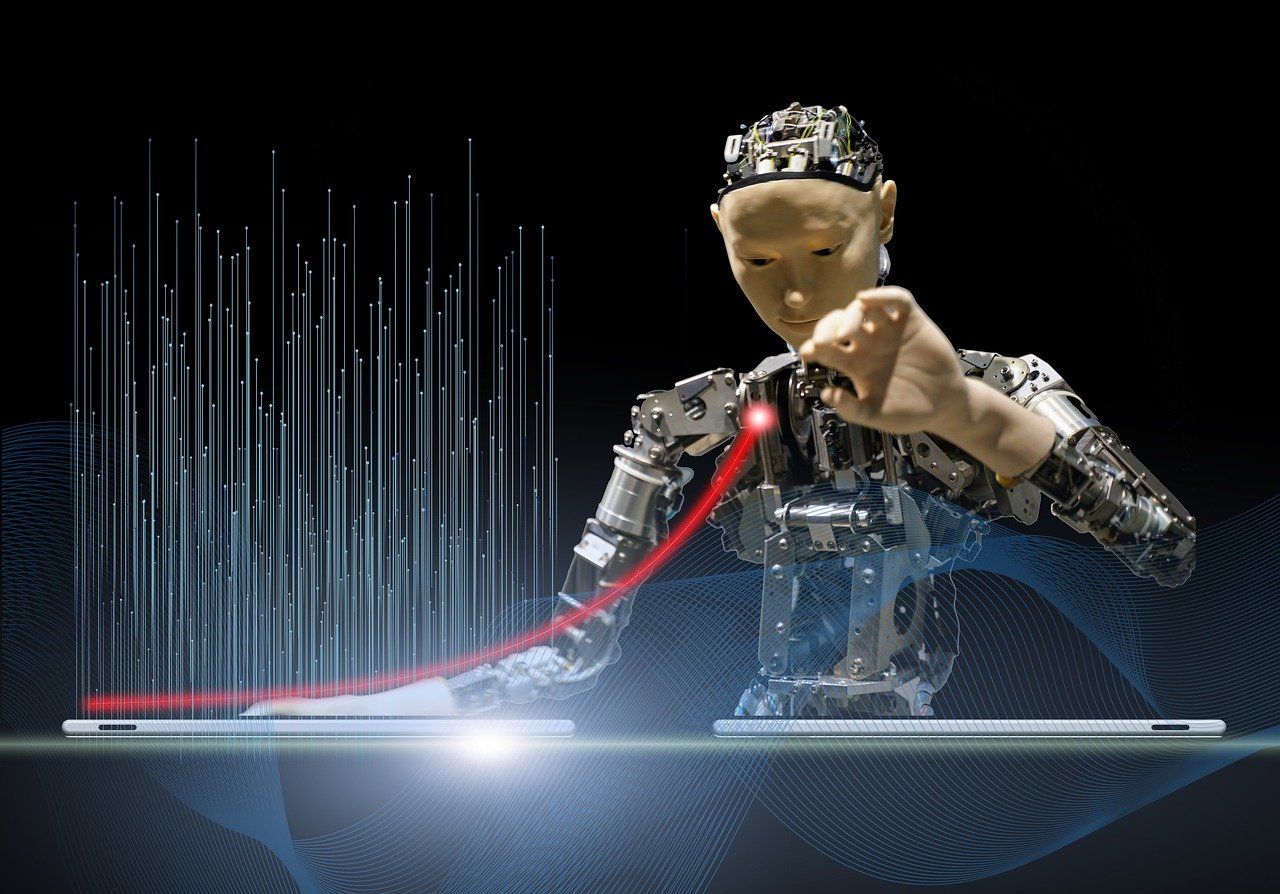
Imagine that everyone in an organization suddenly has an AI intern. Not just executives, engineers, analysts, or marketers. Everyone.
This AI intern is fast, inexpensive, extraordinarily well-read, available whenever needed, and capable of generating more work in an afternoon than a human intern might produce in days. But it also has an important weakness: it can produce an impressive answer without necessarily understanding whether it is the right answer.
That combination changes more than productivity. When everyone gets an AI intern, everyone also gets promoted into the role of manager. And many of us have never been taught how to manage.
The Real AI Skill Is Delegation
Much of today’s conversation about AI literacy focuses on prompting. We teach people how to ask artificial intelligence better questions. That is useful, but prompting may prove to be the least interesting part of the skill.
The larger capability is delegation. Good delegation requires you to understand the outcome you want, provide enough context, establish boundaries, recognize what should remain human, evaluate the resulting work, and intervene when necessary.
Consider what you would expect from someone managing a capable but inexperienced employee:
- Explain the objective, not merely the task.
- Provide the context necessary to make good decisions.
- Define what success looks like.
- Establish boundaries and constraints.
- Review important work rather than blindly accepting it.
- Provide corrective direction when the work misses the mark.
- Know which responsibilities should not be delegated.
Those principles work remarkably well for AI. The implication is fascinating: AI may democratize management skills by making delegation a requirement of individual contribution.
We used to teach employees how to perform the work before eventually teaching some of them how to delegate it. Increasingly, we may need to teach employees how to delegate work in order to perform their jobs.
The First Draft Becomes Almost Free
A tremendous amount of professional effort has historically gone into getting from nothing to something: the blank page, initial analysis, preliminary research, first presentation structure, early prototype, or first collection of ideas.
AI dramatically reduces the cost of that initial movement. Your AI intern can give you something to examine, question, improve, or reject almost immediately. That sounds like a modest productivity improvement, but it changes the psychology and economics of creation.
When starting becomes cheaper, experimentation becomes cheaper too. An employee who previously had time to explore three approaches may explore thirty. A business that could justify investigating two market opportunities may examine twenty. A designer can compare alternatives before committing to one, while an entrepreneur can pressure-test possibilities that previously would have required a team.
The opportunity is not merely faster work. It is more shots on goal before the cost of commitment rises.
Organizations that use AI only to produce yesterday’s output faster may miss this completely. The greater advantage could come from exploring possibilities they previously could not afford to explore.
Cheap Answers Make Good Questions More Valuable
If everyone can generate reasonably good answers, producing another answer no longer creates much advantage. Value begins moving toward the question.
- What problem are we actually solving?
- Which assumption deserves to be challenged?
- What are we failing to notice?
- Which customer’s experience are we failing to understand?
- What would have to be true for this opportunity to work?
- What are we optimizing that perhaps should not be optimized?
For much of the knowledge economy, professional status has been built around having answers. AI could gradually flip that relationship. When answers become abundant, questions become differentiators.
The person who asks an average question and receives an exceptional AI answer may still produce average value. The person who identifies an extraordinary question can use the same AI to uncover something much more consequential.
This makes curiosity economically important in a new way. We may discover that the greatest productivity multiplier is not artificial intelligence alone. It is human curiosity multiplied by artificial intelligence.
Expertise Becomes the Ability to Recognize Convincing Nonsense
There is an uncomfortable aspect of having an extraordinarily articulate AI intern: bad work can look very good.
A weak argument can be beautifully written. A faulty analysis can appear rigorous. A questionable recommendation can arrive surrounded by professional language, persuasive structure, and plausible evidence.
That makes expertise more important, not less. A novice often does not know what is missing. An expert recognizes the hidden assumption, questionable source, implausible conclusion, unusual edge case, or elegant solution that will fail when it encounters reality.
Expertise therefore begins shifting from simply knowing the answer toward recognizing when an answer should not be trusted.
This creates an important challenge for junior employees. If AI performs more early-career work, where will people acquire the experience necessary to supervise AI’s work later?
We should be careful not to eliminate the apprenticeship while automating the apprentice’s work.
The mundane tasks we are eager to automate have sometimes been the training ground through which humans develop expertise. Organizations will need to replace accidental learning through repetitive work with more deliberate opportunities to build context, pattern recognition, and judgment.
More Output Does Not Mean More Accomplishment
Suppose every employee suddenly doubles the amount of useful material they can generate. That sounds like a productivity breakthrough. Now imagine everyone doubling the number of emails, proposals, analyses, presentations, reports, recommendations, experiments, and ideas they send to everyone else.
The organization may become less productive because production capacity can scale faster than human attention.
Your AI intern can generate a thirty-page analysis effortlessly, but your colleague still needs time to understand it. Your agent can produce one hundred ideas, but someone still needs to decide which ones deserve investment. Your team can create twice as many proposals, while leadership retains finite capacity to evaluate them.
Making output cheaper can make attention more expensive.
The organizations that benefit most from AI may therefore not be those that generate the most. They may be those that become exceptionally good at filtering, prioritizing, compressing, deciding, and saying no.
AI Could Accidentally Create More Bureaucracy
We tend to assume automation will reduce bureaucracy. It might, but consider how inexpensive bureaucratic work becomes when machines can produce it.
- More reports and documentation
- More compliance artifacts
- More slide decks and status updates
- More analysis before decisions
- More justification for decisions already made
- More communication about the communication
The cost of producing organizational artifacts has historically provided at least some resistance to their proliferation. Generative AI removes much of that resistance, making it possible to automate ourselves into hyper-bureaucracy.
Organizations should adopt a simple principle: Do not use AI merely to produce more of something whose underlying value has never been questioned.
A faster unnecessary process remains unnecessary. Generative AI’s greatest contribution to a process may sometimes be helping us eliminate it.
Management Changes When Everyone Manages Machines
Traditional organizations use managers partly to coordinate scarce human capability. If individual employees command increasing amounts of machine capability, however, the manager’s role begins to shift.
Employees may require less help producing work and more help deciding what work matters. Managers may spend less time assigning tasks and more time establishing context, priorities, constraints, decision rights, and purpose.
The AI-enabled manager’s primary responsibility may move from distributing work to improving judgment.
Great managers will help employees answer questions such as:
- Which outcomes matter most?
- Which problems deserve attention?
- What should be delegated to AI?
- What requires human involvement?
- When is the work good enough?
- Which risks are unacceptable?
- What does the organization deliberately choose not to do?
This makes management less about supervising activity and more about designing the environment in which good decisions happen.
Innovation Gets an Intern Too
The implications for innovation are particularly interesting. AI can rapidly investigate markets, synthesize research, generate concepts, compare business models, create prototypes, identify patterns, and challenge assumptions. That makes the exploratory stages of innovation dramatically cheaper.
But innovation was never primarily constrained by our ability to generate ideas. Its hardest parts remain decidedly human and organizational:
- Choosing meaningful problems
- Understanding unmet human needs
- Building belief around uncertain opportunities
- Securing resources
- Navigating organizational politics
- Conducting experiments with real customers
- Changing established behavior
- Scaling adoption
- Ending attractive ideas that evidence does not support
AI can increase the rate at which possibilities are generated, but that does not automatically increase the rate at which value is created. In fact, the easier AI makes invention, the more visible our weaknesses in adoption become.
An organization drowning in brilliant concepts that nobody implements is not innovative. It is imaginative.
Your AI Intern Should Sometimes Disagree With You
There is another danger hiding inside the intern metaphor: humans tend to enjoy assistants who are agreeable. But an AI that merely validates your thinking can make you faster while simultaneously making you worse.
One of the most valuable roles for an AI intern may be deliberate opposition. Ask it to:
- Find weaknesses in your argument.
- Challenge your assumptions.
- Construct the strongest case against your recommendation.
- Identify stakeholders you have not considered.
- Search for evidence that contradicts your conclusion.
- Imagine how a customer or competitor might respond.
The goal should not always be assistance. Sometimes it should be productive resistance.
A tool that frictionlessly accelerates every idea risks accelerating bad ideas as effectively as good ones. Human-centered AI design should preserve the kinds of friction that improve judgment while eliminating the friction that merely wastes time.
Performance Measurement Will Have to Change
If two employees accomplish the same outcome, but one spends forty hours personally producing the work while another invests ten hours orchestrating AI effectively, who performed better?
Our inherited ideas about productivity often connect effort, time, and output. AI loosens those relationships. The employee creating the most documents may not create the most value. The employee visibly working the longest may not produce the strongest outcomes. The person performing every task personally may actually be using organizational resources inefficiently.
Performance measurement will increasingly need to move from work performed toward value created. That sounds obvious, but many organizations reward visible activity because activity is easier to measure than impact. AI will make activity even easier to manufacture.
This creates a dangerous management temptation: measuring AI adoption through numbers of prompts, agents, documents, automated tasks, or hours reportedly saved. These can be useful operational signals, but they are not the destination.
The more meaningful question is:
What can this person now accomplish that was previously impossible, impractical, or uneconomical?
That is augmentation.
The Best AI Intern Should Make You Better at Thinking
We should ultimately judge an AI intern by more than how much work it performs for us. A more human-centered evaluation would ask whether using it improves our questions, exposes us to overlooked perspectives, reveals hidden assumptions, accelerates learning, preserves curiosity, and leaves us with greater agency.
Most importantly, are we developing better judgment while using artificial intelligence, or quietly surrendering judgment to it?
There is an important distinction between technology that makes a person more capable and technology that merely makes a person more dependent. The best augmentation should increase what a human can understand, decide, create, and accomplish.
Otherwise, we have not amplified human capability. We have simply relocated it.
The AI Intern Eventually Becomes an AI Workforce
One AI intern is useful. Multiple specialized AI agents are something else entirely.
Research could go to one agent, data analysis to another, competitive intelligence to a third, and communications to a fourth, while a coordinating agent keeps track of the work. At that point, the metaphor changes.
The employee no longer has an AI intern. The employee has an AI workforce.
The defining capability of the human shifts once again, from doing to delegating to orchestrating. This could dramatically expand what an individual can accomplish, but only if we remember what the human contribution is supposed to be.
The goal is not to turn people into passive approvers sitting above increasingly capable machines. It is to give human beings greater capacity to pursue meaningful ambitions.
Everybody Just Got Promoted
Giving everyone an AI intern sounds like a productivity story. It is actually an organizational transformation story.
Employees become delegators. Experts become validators. Managers become context builders. Education becomes more concerned with judgment. Innovation becomes less constrained by generating possibilities and more constrained by selecting, testing, and implementing them. Organizations become limited less by their ability to produce work and more by their ability to decide what work deserves to exist.
Each of us also inherits a new responsibility. If an AI intern produces mediocre work, the AI may not always be the problem. Perhaps the objective was unclear, the context insufficient, the constraints poorly defined, or nobody explained what good looked like. Perhaps the wrong task was delegated. Or perhaps the work never needed to be done in the first place.
These are management problems.
When everyone gets an AI intern, everybody gets promoted. The question is whether we are ready to become good managers of intelligence.
Abundant artificial intelligence will not automatically produce better organizations. It will produce more capability.
What humans choose to do with that capability will still determine the value it creates.
Bottom line: Futurists are not fortune tellers. They use a formal approach to achieve their outcomes, but a methodology and tools like those in FutureHacking™ can empower anyone to be their own futurist.
Image credit: Pixabay
 Sign up here to get Human-Centered Change & Innovation Weekly delivered to your inbox every week.