Author Archives: Art Inteligencia

About Art Inteligencia

Art Inteligencia is the lead futurist at Inteligencia Ltd. He is passionate about content creation and thinks about it as more science than art. Art travels the world at the speed of light, over mountains and under oceans. His favorite numbers are one and zero. Content Authenticity Statement: If it wasn't clear, any articles under Art's byline have been written by OpenAI Playground or Gemini using Braden Kelley and public content as inspiration.

Synthetic Data Generation

Fueling Innovation Without Compromising Reality

LAST UPDATED: March 13, 2026 at 2:44 PM

Synthetic Data Generation Innovation Catalyst

GUEST POST from Art Inteligencia


I. The Data Dilemma: Why Innovation Is Starving for Better Data

We live in a time when organizations claim to be “data-driven,” yet many of the most important innovation decisions are still made with incomplete, restricted, or unusable data. Leaders want evidence before they invest. Teams want data before they experiment. And regulators rightly demand protection of customer information. The result is a paradox that slows progress across industries.

The truth is simple: the data that organizations most need in order to innovate is often the data they are least able to access.

Historical datasets are plentiful when organizations are studying the past. But innovation is not about the past. Innovation is about exploring possibilities that have never existed before. When teams attempt to build new products, design new services, or explore entirely new business models, the historical data they rely on often becomes a constraint instead of an enabler.

The Innovation Paradox

The more disruptive or novel an idea becomes, the less historical data exists to support it. That creates an innovation paradox: organizations increasingly rely on data to make decisions, yet the ideas with the greatest potential for impact are the ones least supported by existing data.

When decision-makers cannot find data to justify an idea, they frequently default to safer, incremental improvements rather than bold experimentation. Over time, this dynamic can quietly suffocate innovation cultures. Teams begin optimizing existing processes instead of exploring new opportunities.

In other words, the absence of data often becomes an invisible veto against new ideas.

Why Traditional Data Strategies Fall Short

Most enterprise data strategies were designed to improve operational efficiency, not to enable experimentation. Data warehouses, analytics pipelines, and reporting dashboards are excellent at analyzing what has already happened. They are far less capable of supporting rapid exploration of what might happen next.

Several structural challenges make it difficult for organizations to use traditional data for innovation:

  • Privacy restrictions: Customer data is often highly sensitive and governed by strict regulatory frameworks.
  • Limited access: Critical datasets may sit inside departmental silos or restricted systems.
  • Incomplete information: Real-world datasets frequently contain missing or inconsistent records.
  • Bias in historical data: Past decisions can embed systemic bias into the datasets used to train modern systems.
  • Lack of edge cases: Rare events or unusual scenarios that innovators want to explore rarely appear in historical data.

These constraints create friction for teams attempting to test new ideas. Data scientists cannot access the information they need. Product teams must wait for approvals. Designers cannot simulate the kinds of edge-case experiences that shape truly resilient solutions.

When Data Becomes a Barrier Instead of an Enabler

Ironically, the organizations that invest most heavily in data infrastructure can still struggle to innovate if their data governance frameworks prioritize protection over experimentation. Security and privacy are essential, but when every new initiative requires months of approvals to access usable datasets, teams lose momentum.

Innovation thrives on experimentation. Experimentation requires safe environments where teams can test ideas quickly, learn from failures, and iterate rapidly. Without accessible data, that experimentation becomes slow, expensive, or impossible.

This is where many organizations find themselves today: surrounded by vast quantities of data but unable to safely use it for the kinds of exploration that drive meaningful innovation.

Introducing Synthetic Data as an Innovation Enabler

Synthetic data generation is emerging as a powerful way to break this stalemate. Instead of relying exclusively on sensitive real-world datasets, organizations can generate artificial datasets that replicate the statistical patterns and relationships found in real data without exposing the underlying individuals or proprietary records.

In practical terms, synthetic data allows innovators to simulate realistic scenarios while protecting privacy and maintaining compliance. It creates a sandbox where teams can experiment freely, train algorithms safely, and test ideas that might otherwise remain locked behind regulatory or organizational barriers.

When used responsibly, synthetic data shifts the role of data within organizations. Instead of being merely a historical record of what has already happened, data becomes a tool for exploring what could happen next. That shift — from data as documentation to data as experimentation infrastructure — may prove to be one of the most important enablers of innovation in the years ahead.

II. What Synthetic Data Actually Is (And What It Is Not)

Before organizations can benefit from synthetic data, they must first understand what it actually is. Despite the growing buzz around the term, synthetic data is frequently misunderstood. Some assume it is simply “fake data.” Others believe it is the same thing as anonymized datasets. In reality, synthetic data represents a fundamentally different approach to creating usable information for experimentation, analysis, and innovation.

Synthetic data is artificially generated data that replicates the statistical patterns, relationships, and structures found in real-world datasets without containing the original records themselves. Instead of copying or masking existing information, advanced algorithms and generative models create entirely new data points that behave like the real data they are modeled after.

Think of it less like copying a photograph and more like creating a realistic simulation. The resulting dataset mirrors the dynamics of the original system, but the individual entries are newly generated rather than derived from specific real-world individuals or transactions.

How Synthetic Data Is Generated

Synthetic data generation relies on statistical modeling, machine learning, and increasingly sophisticated artificial intelligence techniques. These systems analyze real datasets to learn the underlying patterns that shape them — relationships between variables, probability distributions, and behavioral correlations.

Once those patterns are understood, generative models can produce new datasets that maintain the same statistical integrity without reproducing any specific original records. The goal is to preserve usefulness for analysis, experimentation, and algorithm training while removing the privacy risks associated with real data.

Several common techniques are used to generate synthetic datasets, including:

  • Statistical sampling models that reproduce probability distributions observed in real data.
  • Generative adversarial networks (GANs) that use competing neural networks to produce increasingly realistic synthetic records.
  • Agent-based simulations that model behaviors of individuals or systems over time.
  • Rule-based generation where domain knowledge is used to define realistic constraints and relationships.

The sophistication of the generation method determines how closely synthetic datasets resemble real-world behavior. High-quality synthetic data preserves meaningful patterns that allow data scientists, product teams, and innovators to test hypotheses with confidence.

Real Data vs. Anonymized Data vs. Synthetic Data

One of the most important distinctions leaders must understand is the difference between real data, anonymized data, and synthetic data. These three approaches represent very different levels of privacy protection and innovation flexibility.

Real data consists of original records collected from customers, users, transactions, or operational systems. This data often contains personally identifiable information or proprietary insights. While it is highly valuable for analysis, it also carries significant privacy, security, and regulatory obligations.

Anonymized data attempts to protect privacy by removing identifying details such as names, addresses, or account numbers. However, anonymization has limits. In many cases, individuals can still be re-identified by combining datasets or analyzing behavioral patterns. This risk has led to increasing regulatory scrutiny around anonymized data practices.

Synthetic data takes a different approach. Instead of modifying real records, it generates entirely new records that reflect the statistical properties of the original dataset. Because the generated data does not correspond to real individuals, the risk of re-identification is dramatically reduced when properly generated and validated.

The result is a dataset that retains analytical usefulness while minimizing exposure of sensitive information.

Why Synthetic Data Preserves Patterns Without Exposing People

The value of synthetic data lies in its ability to preserve the insights embedded in real data without exposing the underlying individuals or proprietary records. When generative models capture the relationships between variables — such as correlations between behaviors, outcomes, and environmental factors — they can recreate those relationships in newly generated datasets.

For example, a synthetic dataset used to train a financial fraud detection model might preserve patterns such as transaction timing, spending anomalies, and geographic patterns. However, none of the generated records would correspond to actual customer accounts or transactions.

In healthcare contexts, synthetic patient datasets can preserve relationships between symptoms, treatments, and outcomes without revealing the identity or medical history of any real patient. This allows researchers and developers to build and test models while protecting patient privacy.

The Strategic Value for Innovators

For innovation leaders, the significance of synthetic data extends far beyond technical curiosity. It represents a new way to think about data availability. Instead of asking, “What data do we have access to?” teams can begin asking, “What data do we need in order to explore this idea?”

Synthetic data generation makes it possible to create datasets tailored to the questions innovators want to explore. Teams can simulate rare events, expand limited datasets, or test entirely new scenarios that have not yet occurred in the real world.

In doing so, synthetic data shifts the role of data from a passive historical record to an active innovation tool. It allows organizations to move from analyzing yesterday’s behavior to safely experimenting with tomorrow’s possibilities.

III. The Innovation Bottleneck Synthetic Data Solves

Innovation depends on experimentation. Teams need the freedom to test ideas, simulate scenarios, and learn from outcomes before committing significant resources. Yet in many organizations, experimentation slows to a crawl not because of a lack of creativity, but because of a lack of accessible, usable data.

Data has become the raw material of modern innovation. Product teams rely on it to test features. Designers depend on it to understand behavior. Data scientists use it to train algorithms and predict outcomes. But when that data is restricted, incomplete, or difficult to access, experimentation stalls. The result is an invisible bottleneck that quietly limits the pace and scale of innovation.

Synthetic data generation addresses this bottleneck by creating safe, realistic datasets that enable organizations to experiment more freely while protecting privacy, maintaining compliance, and reducing operational friction.

Innovation Requires Safe Experimentation

The most innovative organizations treat experimentation as a continuous capability rather than an occasional initiative. Teams run simulations, prototype services, and test algorithms in order to discover what works and what does not. But experimentation requires environments where teams can explore ideas without exposing sensitive customer information or proprietary operational data.

When those safe environments do not exist, experimentation becomes constrained. Teams wait for approvals to access data. Compliance teams become gatekeepers rather than partners. Engineers spend more time navigating governance processes than testing new ideas.

Synthetic data provides a solution by enabling the creation of realistic datasets that can be used safely in testing environments. Instead of waiting for access to sensitive information, teams can immediately begin experimenting with datasets designed specifically for innovation.

Breaking Through Common Data Barriers

Several persistent barriers prevent organizations from fully leveraging their data for innovation. Synthetic data generation helps address each of these challenges in different ways.

  • Privacy and regulatory restrictions. Regulations governing personal and financial data rightfully impose strict limits on how information can be used. Synthetic datasets allow experimentation without exposing real individuals or sensitive records.
  • Limited access to sensitive datasets. In many organizations, only a small group of analysts or engineers are allowed to work with certain types of data. Synthetic versions of those datasets can be shared more broadly with product, design, and innovation teams.
  • Data silos across departments. Business units often maintain separate datasets that cannot easily be combined due to governance or competitive concerns. Synthetic data can be generated in ways that simulate cross-functional insights without exposing proprietary information.
  • Incomplete or inconsistent datasets. Real-world data frequently contains gaps, inconsistencies, and noise. Synthetic data generation can expand datasets to improve coverage and provide more balanced scenarios for experimentation.
  • Lack of edge cases and rare events. Many of the situations innovators need to test — such as fraud attempts, system failures, or unusual customer journeys — occur infrequently in real datasets. Synthetic data can intentionally generate these scenarios so teams can build more resilient solutions.

By removing these barriers, organizations create the conditions necessary for faster experimentation and more confident decision-making.

Enabling Ethical and Responsible AI Development

Artificial intelligence systems require large datasets to train effectively. However, using real-world data for AI training introduces significant ethical and regulatory risks. Sensitive customer information, financial transactions, healthcare records, and behavioral data must be handled with extreme care.

Synthetic data allows organizations to train and test AI systems using datasets that preserve behavioral patterns without exposing personal information. This approach enables developers to refine algorithms, test performance, and identify potential biases before deploying systems in real-world environments.

For organizations seeking to expand their use of AI responsibly, synthetic data can provide a safer pathway toward experimentation and model development.

Accelerating Cross-Team Collaboration

Innovation rarely occurs within a single department. It emerges from collaboration between product teams, designers, engineers, analysts, and business leaders. Yet when access to critical data is restricted, collaboration becomes fragmented.

Synthetic datasets can be shared across teams without exposing confidential or personally identifiable information. This makes it easier for diverse groups to explore ideas together, test new concepts, and build prototypes using realistic data environments.

When data becomes accessible in this way, organizations unlock a more inclusive form of innovation. Instead of limiting experimentation to specialized technical teams, synthetic data allows a broader range of contributors to participate in the discovery process.

Turning Data into an Innovation Platform

The real power of synthetic data lies in how it reframes the role of data inside the organization. Traditionally, data has been treated as a historical asset — a record of past transactions, customer interactions, and operational events. Synthetic data shifts that perspective.

By enabling teams to generate realistic datasets on demand, organizations transform data from a static archive into a dynamic experimentation platform. Teams can simulate scenarios that have never occurred, stress-test systems against unlikely events, and explore future possibilities long before those conditions appear in real life.

In a world where the speed of learning determines the pace of innovation, removing barriers to experimentation can become a powerful competitive advantage. Synthetic data does not eliminate the need for real-world data, but it dramatically expands the range of ideas organizations can safely explore before bringing them into reality.

IV. Four Strategic Use Cases That Matter to Innovators

Synthetic data becomes most valuable when it moves beyond technical experimentation and begins enabling real innovation work inside organizations. For leaders responsible for driving change, improving customer experiences, or building new products, the question is not simply whether synthetic data is possible. The question is where it creates meaningful strategic advantage.

Several emerging use cases are demonstrating how synthetic data can accelerate innovation while reducing risk. These applications allow organizations to explore new ideas safely, test systems more rigorously, and collaborate more effectively across teams.

Safe AI and Machine Learning Training

Artificial intelligence systems are only as good as the data used to train them. Machine learning models require large datasets that capture the complexity of real-world behavior. However, those datasets often contain sensitive customer information, financial records, or proprietary operational data that cannot be freely used for experimentation.

Synthetic data enables organizations to train AI models without exposing real customer information. By replicating the statistical patterns found in production datasets, synthetic datasets can provide the volume and diversity required for algorithm development while dramatically reducing privacy risks.

This approach is particularly valuable during early development stages, when teams need to experiment rapidly with different models, features, and training approaches. Instead of navigating lengthy approval processes to access restricted datasets, developers can begin training models using synthetic equivalents.

The result is faster iteration cycles, safer development environments, and a clearer pathway toward responsible AI deployment.

Simulating Future Customer Behavior

One of the greatest limitations of historical data is that it reflects past behavior rather than future possibilities. Innovation teams frequently need to explore how customers might respond to new products, services, or experiences that do not yet exist.

Synthetic data allows organizations to simulate potential customer behaviors by modeling how individuals might interact with new offerings under different conditions. By generating datasets that represent hypothetical scenarios, teams can test assumptions about demand, engagement, and usage patterns before launching a product into the real world.

This capability becomes especially valuable when organizations are exploring entirely new business models or digital experiences. Synthetic datasets can simulate user journeys, transaction flows, and interaction patterns that have never appeared in historical records.

While these simulations cannot perfectly predict human behavior, they provide innovators with a powerful way to explore possibilities and refine ideas before committing significant resources.

Accelerating Product and Service Design

Designers and product teams often struggle to obtain the kinds of datasets that would allow them to test ideas realistically. Early prototypes are frequently evaluated using small sample sizes, simplified assumptions, or limited testing environments.

Synthetic data can dramatically expand the realism of these testing environments. Product teams can generate datasets that reflect thousands or millions of simulated interactions, allowing them to stress-test designs against a wide range of user behaviors and operational conditions.

For example, a digital service prototype can be tested using synthetic user interaction data that simulates traffic spikes, diverse usage patterns, or unusual edge cases. This allows teams to identify usability issues, performance bottlenecks, and operational risks long before a product reaches customers.

By enabling richer testing environments earlier in the development process, synthetic data helps organizations reduce costly surprises later in the product lifecycle.

Breaking Down Data Silos

Data silos are one of the most persistent obstacles to innovation inside large organizations. Departments often maintain separate datasets that cannot be easily shared due to privacy concerns, competitive sensitivities, or governance restrictions.

These silos prevent teams from seeing the full picture of customer behavior, operational performance, or market dynamics. As a result, innovation efforts become fragmented, and opportunities for cross-functional insights are missed.

Synthetic data offers a pathway to collaboration without exposing sensitive information. Organizations can generate datasets that simulate cross-departmental insights while protecting the underlying proprietary or personal data contained within the original systems.

For example, a synthetic dataset could combine simulated customer interactions, transaction histories, and service experiences in ways that allow teams from marketing, product development, and operations to collaborate more effectively.

By enabling safe data sharing, synthetic data helps organizations move from isolated experimentation toward more integrated innovation ecosystems.

Creating an Innovation Sandbox

When organizations combine these use cases, synthetic data begins to function as something larger than a technical tool. It becomes the foundation of an innovation sandbox — a controlled environment where teams can safely explore ideas, test systems, and simulate complex scenarios.

In this sandbox, innovators are no longer limited by the constraints of real-world data access. They can generate the datasets needed to explore bold ideas, stress-test new concepts, and build solutions that are more resilient before they ever interact with real customers or operational systems.

For organizations committed to accelerating learning and experimentation, synthetic data has the potential to become one of the most powerful enablers of responsible, human-centered innovation.

Synthetic Data Infographic

V. The Hidden Risk: Synthetic Data Can Amplify Bad Assumptions

Synthetic data is a powerful innovation enabler, but it is not inherently neutral. Like any system that relies on models, it reflects the assumptions, inputs, and design choices embedded within it. If those foundations are flawed, the outputs will be flawed as well.

For leaders committed to human-centered change, this is a critical point. Synthetic data does not automatically guarantee fairness, accuracy, or objectivity. It must be designed, validated, and governed with the same rigor applied to any strategic capability.

Synthetic Data Reflects the Model That Creates It

Synthetic datasets are generated using statistical models or machine learning systems trained on real-world data. These models learn patterns, correlations, and distributions from existing information. When they generate new records, they reproduce those learned patterns in artificial form.

This means synthetic data inherits the strengths and weaknesses of the source data and the model architecture. If the original dataset contains bias, gaps, or skewed representations, those characteristics may be preserved or even amplified in the synthetic output.

For example, if historical data under-represents certain customer segments, synthetic data generated from that dataset may also under-represent those segments unless corrective measures are applied during model training and validation.

Innovation leaders must therefore treat synthetic data as a designed artifact, not a neutral byproduct.

The Risk of Embedded Bias

Bias in data is not always intentional. It can emerge from historical inequalities, incomplete data collection practices, or operational decisions made over time. When organizations train models on biased datasets, those biases can become encoded into the synthetic data they generate.

If synthetic datasets are used to train artificial intelligence systems, test products, or simulate customer behavior, embedded bias can propagate into downstream decisions. This can affect hiring tools, credit models, customer segmentation strategies, or product design choices.

The result may not be immediately visible. Synthetic data can appear statistically sound while still reinforcing structural imbalances present in the source data.

Responsible innovation therefore requires deliberate efforts to audit synthetic datasets for representation, fairness, and alignment with organizational values.

The Importance of Validation and Governance

To mitigate risk, organizations must implement clear validation processes for synthetic data generation. Validation ensures that the synthetic dataset accurately reflects relevant statistical properties without reproducing sensitive information or unintended distortions.

Effective governance practices may include:

  • Comparing synthetic and real datasets to evaluate statistical similarity.
  • Testing models trained on synthetic data against real-world benchmarks.
  • Conducting bias and fairness assessments before deployment.
  • Documenting model design decisions and data generation methods.
  • Establishing cross-functional oversight involving data science, compliance, and business stakeholders.

These practices help ensure that synthetic data enhances innovation without compromising ethical standards or organizational integrity.

Human Oversight Remains Essential

Synthetic data generation is a technical process, but its impact is organizational and societal. Human judgment must remain central to how synthetic datasets are designed, validated, and applied.

Innovation leaders should resist the temptation to treat synthetic data as a fully autonomous solution. Instead, it should be viewed as a collaborative capability that combines computational power with human insight.

Domain experts can help define realistic constraints. Compliance teams can identify regulatory requirements. Designers can assess whether simulated scenarios reflect meaningful user experiences. Together, these perspectives ensure that synthetic data aligns with both operational goals and human values.

Designing Synthetic Data with Intent

The most effective synthetic data strategies begin with clear intent. Organizations should ask:

  • What decisions will this dataset support?
  • What risks must it mitigate?
  • What populations or scenarios must it accurately represent?
  • How will we measure quality and reliability?

By framing synthetic data as a designed innovation asset rather than a purely technical output, organizations increase the likelihood that it will strengthen rather than distort decision-making.

Innovation Without Responsibility Is Not Innovation

Synthetic data has the potential to accelerate experimentation, reduce privacy risk, and expand collaboration. But those benefits depend on thoughtful implementation. When organizations pair technical capability with ethical governance, synthetic data becomes a powerful catalyst for human-centered innovation.

The goal is not simply to generate more data. The goal is to generate better conditions for learning, experimentation, and progress — while ensuring that the systems we build reflect the values we intend to uphold.

VI. Why Synthetic Data Is a Strategic Capability (Not Just a Technical Tool)

Many organizations initially approach synthetic data as a niche technical solution — something useful for data scientists, compliance teams, or AI engineers. But when viewed through the lens of innovation and organizational change, synthetic data is far more than a utility. It is a strategic capability that reshapes how experimentation, collaboration, and decision-making occur across the enterprise.

Strategic capabilities are not isolated tools. They are infrastructure-level advantages that enable new behaviors, new business models, and new forms of value creation. Synthetic data belongs in this category because it fundamentally changes what teams can safely test, explore, and learn.

From Data Access to Data Creation

Traditional data strategies focus on access: Who can see the data? Who can use it? What permissions are required? While governance is essential, this access-centric mindset can unintentionally limit innovation speed.

Synthetic data shifts the conversation from access to creation. Instead of asking for permission to use sensitive datasets, teams can generate purpose-built datasets designed specifically for experimentation, simulation, and model development.

This transformation is profound. Data becomes something organizations can intentionally design to support innovation goals rather than something they must carefully guard and ration.

Enabling Faster Learning Cycles

Innovation thrives on short learning cycles. The faster teams can test ideas, gather feedback, and iterate, the faster they can improve outcomes. Synthetic data accelerates these cycles by removing friction associated with data access, privacy approvals, and cross-departmental restrictions.

When teams can immediately generate realistic datasets, they can:

  • Prototype new features without waiting for production data access.
  • Test algorithm changes in controlled environments.
  • Simulate customer journeys under varying conditions.
  • Stress-test systems before deployment.

These capabilities compress the time between idea and insight. That compression becomes a competitive advantage in fast-moving markets.

Supporting Responsible Innovation at Scale

As organizations expand their use of artificial intelligence, automation, and predictive analytics, the demand for high-quality training data increases. However, relying exclusively on real-world data can introduce privacy risks and compliance challenges that slow adoption.

Synthetic data provides a scalable foundation for responsible innovation. By generating datasets that preserve statistical patterns without exposing sensitive records, organizations can expand experimentation without expanding risk proportionally.

This scalability is especially important for global organizations operating across jurisdictions with varying regulatory requirements. Synthetic data can serve as a common innovation substrate that respects privacy while enabling cross-border collaboration.

Shifting from Reactive to Proactive Strategy

Many organizations use data reactively — analyzing past performance to explain what has already happened. While valuable, this approach limits strategic agility. Leaders who rely solely on historical data may struggle to anticipate emerging risks or opportunities.

Synthetic data enables proactive exploration. Teams can generate scenarios that have not yet occurred and evaluate potential responses in advance. This allows organizations to simulate market shifts, operational disruptions, or new customer behaviors before those changes materialize.

By moving from reactive analysis to proactive simulation, synthetic data helps organizations prepare for uncertainty rather than simply respond to it.

Embedding Innovation Infrastructure

When synthetic data capabilities are integrated into development pipelines, experimentation workflows, and governance frameworks, they become part of the organization’s core infrastructure.

This integration transforms synthetic data from a one-off project into an enduring innovation asset. It supports:

  • Continuous experimentation environments.
  • Secure collaboration across departments.
  • Responsible AI development pipelines.
  • Scalable simulation capabilities.

In this sense, synthetic data is not just a technical enhancement. It is an enabling layer that strengthens the organization’s capacity to learn, adapt, and evolve.

From Constraint to Competitive Advantage

Organizations that treat data restrictions as permanent constraints may find themselves limited in their ability to experiment. Organizations that invest in synthetic data capabilities, however, can transform those constraints into opportunities for structured innovation.

By enabling safe experimentation, cross-functional collaboration, and scalable simulation, synthetic data becomes a catalyst for organizational agility.

In a world where adaptability determines long-term success, the ability to create realistic, privacy-preserving datasets on demand is more than a convenience. It is a strategic differentiator.

Synthetic data does not replace real-world insights. Instead, it expands the conditions under which innovation can occur — allowing teams to test ideas earlier, learn faster, and move forward with greater confidence.

VII. Five Questions Leaders Should Ask Before Investing

Technology decisions become transformative only when they are guided by clear strategic intent. Synthetic data is no exception. Before investing in tools, platforms, or models, leaders should pause to define the innovation outcomes they want to enable and the risks they need to manage.

The following questions are designed to help executives, innovation leaders, and cross-functional teams evaluate whether synthetic data is aligned with their organizational goals.

1. What Innovation Experiments Are Currently Blocked by Lack of Data?

Every organization has ideas that never move forward because the necessary data is inaccessible, restricted, or incomplete. Identifying these stalled experiments is the first step toward understanding where synthetic data could create immediate value.

Leaders should ask:

  • Which product concepts cannot be tested due to privacy or compliance constraints?
  • Which AI initiatives are delayed because training data is difficult to access?
  • Which simulations would we run if data were not a barrier?

By mapping innovation bottlenecks to data constraints, organizations can prioritize synthetic data use cases that unlock real momentum rather than pursuing technology for its own sake.

2. Which Datasets Are Too Sensitive to Use Today?

Many organizations hold valuable datasets that contain personally identifiable information, financial records, or proprietary insights. These datasets are often tightly restricted, limiting their use in experimentation environments.

Leaders should identify where sensitivity prevents productive exploration:

  • Customer behavior datasets that cannot be shared across teams.
  • Operational performance data restricted to a small group of analysts.
  • Cross-border data that faces regulatory limitations.

Synthetic data can create privacy-preserving alternatives that retain statistical value without exposing sensitive information. Recognizing these high-sensitivity areas helps organizations target the greatest opportunities for impact.

3. Where Do We Need Rare Scenarios or Edge Cases?

Innovation often requires testing conditions that occur infrequently in real life. Edge cases — such as system overloads, unusual customer journeys, or rare fraud patterns — may not appear often enough in historical data to support thorough analysis.

Synthetic data can intentionally generate these scenarios so teams can stress-test systems, refine algorithms, and improve resilience.

Leaders should consider:

  • What rare events would most impact our customers or operations?
  • Which scenarios are underrepresented in our existing datasets?
  • How could we simulate future risks before they occur?

By proactively modeling these conditions, organizations can build more robust solutions and reduce unexpected failures.

4. How Will We Validate Synthetic Data Quality?

Synthetic data is only valuable if it accurately reflects the statistical relationships and constraints relevant to its intended use. Without validation, organizations risk deploying datasets that appear realistic but fail to support meaningful experimentation.

Leaders should define:

  • What metrics will determine whether the synthetic dataset is fit for purpose?
  • How will we compare synthetic and real datasets for statistical similarity?
  • Who is responsible for ongoing model evaluation and monitoring?

Establishing validation standards ensures synthetic data strengthens innovation rather than introducing unintended distortions.

5. Who Owns Synthetic Data Governance?

As synthetic data becomes integrated into development pipelines and experimentation environments, governance becomes critical. Clear ownership prevents confusion and ensures accountability.

Leaders should define:

  • Which teams oversee model design and updates?
  • How are bias, fairness, and compliance reviews conducted?
  • What documentation standards apply to synthetic data generation?

Effective governance should involve collaboration between data science, compliance, legal, product, and innovation teams. This cross-functional approach ensures that synthetic data aligns with organizational values and regulatory requirements.

From Questions to Strategy

These five questions are not meant to slow adoption. They are meant to ensure alignment. When leaders clearly understand where synthetic data can remove barriers, accelerate experimentation, and improve safety, investment decisions become more focused and impactful.

Synthetic data is most powerful when it is embedded within a broader innovation strategy. By identifying blocked experiments, sensitive datasets, edge-case needs, validation standards, and governance ownership, organizations can move from curiosity to capability.

The goal is not to implement synthetic data everywhere. The goal is to implement it where it meaningfully increases the organization’s ability to learn, adapt, and innovate responsibly.

VIII. The Future: From Data Scarcity to Innovation Abundance

For decades, organizations have operated under a mindset of data scarcity. Data was expensive to collect, difficult to store, and constrained by technical limitations. Even today, despite vast cloud infrastructure and advanced analytics platforms, many teams still experience data as something limited, gated, or difficult to access.

Synthetic data generation introduces a different paradigm — one that shifts the conversation from scarcity to abundance. Instead of waiting for enough real-world examples to accumulate, organizations can intentionally generate datasets that enable exploration, simulation, and experimentation at scale.

This shift does not eliminate the need for real data. Real-world observations remain essential for grounding models, validating assumptions, and ensuring relevance. However, synthetic data expands what is possible between observations. It fills gaps, creates safe testing environments, and enables forward-looking exploration.

Re-framing Data as a Future-Oriented Asset

Traditional data strategies emphasize historical analysis—understanding performance, identifying trends, and explaining outcomes. While valuable, this backward-looking orientation can limit an organization’s ability to anticipate change.

Synthetic data encourages a forward-looking mindset. Teams can generate scenarios that represent potential futures rather than relying solely on what has already occurred. This capability allows innovators to test hypotheses, simulate market shifts, and evaluate strategic options before committing resources.

When data becomes something organizations can create on demand, it transitions from being a passive record to an active design input. That transition fundamentally changes how teams approach experimentation and planning.

Expanding the Boundaries of Experimentation

In a data-abundant environment, experimentation is no longer constrained by dataset size or access limitations. Teams can generate large-scale synthetic datasets to support stress testing, algorithm refinement, and scenario modeling.

This expanded experimentation capacity enables organizations to:

  • Simulate extreme conditions and rare events.
  • Test multiple variations of a product or service before launch.
  • Explore new business models without exposing sensitive information.
  • Run parallel experiments across teams using consistent, privacy-preserving data.

By lowering the cost and friction of experimentation, synthetic data helps shift organizational culture toward continuous learning.

Supporting Responsible Innovation at Scale

As organizations adopt artificial intelligence, automation, and predictive systems more broadly, the demand for high-quality training and testing data grows exponentially. Scaling responsibly requires solutions that balance innovation speed with privacy, compliance, and ethical considerations.

Synthetic data provides a scalable mechanism for supporting innovation initiatives across departments, geographies, and regulatory environments. It enables teams to collaborate using realistic datasets without exposing sensitive information, allowing experimentation to expand without proportionally increasing risk.

This scalability is particularly important in global enterprises where data governance requirements vary across jurisdictions. Synthetic data can serve as a consistent foundation for innovation while respecting local compliance constraints.

Reducing Friction in Innovation Pipelines

Many organizations experience delays not because of a lack of ideas, but because of operational friction in moving from concept to testing. Data approvals, access requests, and compliance reviews can slow experimentation cycles.

By integrating synthetic data into development and innovation workflows, organizations reduce these delays. Teams can generate appropriate datasets directly within controlled environments, accelerating the path from hypothesis to validation.

When friction decreases, learning accelerates. When learning accelerates, innovation compounds.

From Data Infrastructure to Innovation Infrastructure

The long-term impact of synthetic data is not just technical — it is structural. Organizations that embed synthetic data capabilities into their core systems are effectively building innovation infrastructure.

This infrastructure supports:

  • Continuous experimentation environments.
  • Privacy-preserving collaboration across functions.
  • Rapid prototyping with realistic simulations.
  • Forward-looking scenario modeling.

Over time, this capability can transform how organizations think about risk, experimentation, and strategic planning. Instead of treating innovation as a series of isolated initiatives, they can design systems that continuously generate insights and opportunities.

A Shift in Mindset

The move from data scarcity to data abundance requires more than technology adoption. It requires a mindset shift. Leaders must begin to see data not only as something to protect and analyze, but also as something that can be intentionally generated to enable exploration.

In this future-oriented model, synthetic data becomes a bridge between imagination and implementation. It allows teams to explore bold ideas safely, refine them through simulation, and bring them into the real world with greater confidence.

When organizations embrace this perspective, they expand their capacity to learn, adapt, and innovate in environments defined by uncertainty. Synthetic data does not replace reality — it helps organizations prepare for it.

Strategic Framework for Synthetic Data

Closing Thought

Innovation has always depended on imagination. What is changing in the modern era is the ability to test that imagination safely, quickly, and at scale. Synthetic data generation represents more than a technical advancement — it represents an expansion of what organizations can responsibly explore.

When used thoughtfully, synthetic data helps teams move beyond the limits of historical datasets. It enables experimentation without exposing sensitive information, supports collaboration across silos, and creates environments where new ideas can be evaluated before they reach customers or production systems.

But the real opportunity is not simply to generate more data. The opportunity is to generate better conditions for learning. Innovation thrives where curiosity is encouraged, where experimentation is safe, and where insights can be tested without unnecessary friction.

Synthetic data becomes powerful when it is aligned with human-centered principles — when it strengthens privacy, improves access to experimentation, and supports responsible decision-making. It should not replace real-world understanding, but rather complement it, expanding the space in which discovery can occur.

In the end, organizations that treat synthetic data as part of their innovation infrastructure are not just adopting a new tool. They are building a capability that allows them to learn faster, adapt more confidently, and pursue bolder ideas with greater responsibility.

The future of innovation will belong to organizations that can balance rigor with imagination — and synthetic data, applied wisely, can help make that balance possible.

Frequently Asked Questions About Synthetic Data

What is synthetic data and why does it matter for innovation?

Synthetic data is artificially generated data that mimics the statistical patterns and structure of real-world datasets without exposing actual individuals or sensitive records. It allows organizations to experiment, train AI systems, and test new ideas even when real data is limited, restricted, or too sensitive to use. For innovation leaders, synthetic data creates a safe environment to explore possibilities, simulate future scenarios, and accelerate experimentation without compromising privacy or compliance.

How is synthetic data different from anonymized data?

Anonymized data begins as real data and then removes or masks identifying information. While this reduces risk, it can still leave traces that may be re-identified in some circumstances. Synthetic data, on the other hand, is generated by models that reproduce patterns found in real datasets without copying actual records. The result is a dataset that behaves like real data but does not contain real people or events, making it far safer for experimentation, collaboration, and AI training.

What should leaders consider before investing in synthetic data?

Leaders should view synthetic data as a strategic capability rather than just a technical tool. Key considerations include identifying innovation initiatives currently blocked by limited or sensitive data, ensuring proper validation of synthetic datasets, establishing governance over how synthetic data is generated and used, and confirming that the models creating the data do not unintentionally amplify bias. When implemented responsibly, synthetic data can significantly expand an organization’s ability to experiment and innovate.


Disclaimer: This article speculates on the potential future applications of cutting-edge scientific research. While based on current scientific understanding, the practical realization of these concepts may vary in timeline and feasibility and are subject to ongoing research and development.

Image credits: ChatGPT

Subscribe to Human-Centered Change & Innovation WeeklySign up here to get Human-Centered Change & Innovation Weekly delivered to your inbox every week.

10 Ways to Prototype Experience Without Building a Product

10 Ways to Prototype Experience Without Building a Product

by Braden Kelley and Art Inteligencia


How Do You Prototype Experience Without Building a Product? (Short Answer)

Ten ways to prototype experience without building a product: (1) concierge delivery, (2) Wizard of Oz, (3) fake-door / offer test, (4) paper or sketch walkthrough, (5) service rehearsal, (6) moment-of-truth enactment, (7) manual-backed facade, (8) pop-up front door, (9) human-scripted conversation, and (10) recovery rehearsal. Soft landings learn the feeling, the job, and the seam before the backlog. Hard landings fund the build and hope the experience shows up later.

Prototype the experience humans will live — not the product you wish you had budget to build.

Why Prototype the Experience Before You Fund the Build?

I keep watching teams schedule a product build to “see if people like it,” polish UI before a behavior hypothesis exists, and treat stakeholder applause at a demo as desirability proof. Those are expensive costumes. Experience prototypes falsify whether people can finish the job with dignity — cheaply.

Cheap evidence sits in the middle between insight and scale — see 6 Stages Most Organizations Skip Between Insight and Scale. Instrument learning with something like The Experiment Canvas™. And do not confuse a clickable demo with learning — prototype-as-finish-line is ceremony in 6 Design Artifacts Worth Keeping — and 6 That Are Ceremony.

Method Falsifies Build can wait until…
1. Concierge Will they hire this job done this way? Demand + behavior proven
2. Wizard of Oz Does the interaction feel trustworthy? Interaction model validated
3. Fake door Will they raise a hand? Interest without theater
4. Paper walkthrough Where does the job break? Flow risks known
5. Service rehearsal Do seams and roles work? Operating model sketched
6. Enactment What does success feel like? Emotional job clear
7. Manual facade Can ops sustain the promise? Promise vs capacity
8. Pop-up Does the channel work in context? Front-door design proven
9. Scripted conversation Does dialogue resolve the job? Conversation design ready
10. Recovery rehearsal Can we make it right when it fails? Trust path designed

If you haven’t felt the experience, you haven’t prototyped it — you’ve only scheduled a build.

1. How Does Concierge Delivery Prototype Experience?

Method: Deliver the end-to-end experience manually for a small set of humans — humans are the system.

Falsifies: Desirability and job fit — will they hire this outcome done this way?

Run lean: Cap at N customers or employees; script the promise; log every step and friction.

Kill/continue: They return, refer, or abandon a workaround — or they ghost after one try.

2. What Is Wizard of Oz Experience Prototyping?

Method: Present an “automated” or agentic experience while a human performs the work unseen.

Falsifies: Interaction trust — clarity, control, and competence feel — before you build the agent.

Run lean: Chat, voice, or UI shell; human operator; record where people hesitate or demand a human.

Kill/continue: They complete with confidence — or trap, retell, or escape the channel. For the trust contract when agents later act for real, see 6 Trust Pillars for Agentic Customer Experience.

3. How Do Fake-Door / Offer Tests Work Without Building?

Method: Offer the experience — landing page, button, email, QR, shelf talker — before it exists; measure intent.

Falsifies: Demand signal without building fulfillment.

Run lean: Clear promise; easy signup; honest “not ready yet” follow-up; no dark patterns.

Kill/continue: Qualified interest above threshold — or curiosity theater with zero follow-through. Fake doors that shame people are trust violations, not prototypes.

4. Why Run a Paper or Sketch Walkthrough?

Method: Walk real users through screens, cards, or paper steps that stand in for the product.

Falsifies: Flow risk — where the job breaks, where language fails, where dignity costs spike.

Run lean: Low fidelity on purpose; one job; watch hands and faces; don’t defend the sketch.

Kill/continue: Time-to-first-success improves — or they invent a workaround mid-walkthrough. Better framing questions before you freeze a build live in 10 Design Questions That Beat a 40-Page Requirements Document.

5. What Is a Service Rehearsal Prototype?

Method: Tabletop, then live rehearsal of the service with real role owners — frontline, backstage, partner.

Falsifies: Operating-model risk — orphan seams, unclear ownership, policy collisions.

Run lean: One journey; timers; “who owns this seam?” cards; stop when a seam has no owner.

Kill/continue: Seams named and staffed — or the rehearsal collapses into “IT will figure it out.”

6. How Does Moment-of-Truth Enactment Prototype Feeling?

Method: Role-play or staged enactment of the critical emotional beat — recovery, consent, first win, bad news.

Falsifies: Emotional job and stakes — what success and betrayal feel like.

Run lean: Real customers or employees if possible; otherwise trained proxies plus later validation; debrief feelings, not features.

Kill/continue: People say “I’d trust that” — or the room goes quiet at the dignity cost.

7. What Is a Manual-Backed Facade?

Method: Ship a thin front — form, chat, page — backed by spreadsheet or ops humans, not a platform.

Falsifies: Promise vs capacity — can you keep the experience promise at small scale?

Run lean: Explicit capacity cap; promises you can keep; log unpaid labor and exception types.

Kill/continue: Ops can sustain with dignity — or heroes burn out keeping the costume alive. Before you fund the bigger pilot, use 11 Questions Before Funding Any Innovation Pilot.

8. How Does a Pop-Up Front Door Prototype Channel Fit?

Method: Stand up a temporary physical or digital front door where the job already happens.

Falsifies: Context and channel fit — will they enter here, not only in your preferred portal?

Run lean: Hours or days, not months; observe wrong-door and escape; capture verbatim jobs.

Kill/continue: Traffic converts to completed jobs — or people walk past to the old path.

9. How Do You Prototype Experience With Human-Scripted Conversation?

Method: Run the conversational experience with a human following — and adapting — a script across SMS, chat, voice, or desk.

Falsifies: Dialogue design — can conversation finish the job without loops or shame?

Run lean: One intent; escalation rules; measure completion and “felt heard.”

Kill/continue: Job done in one conversation — or an escalation storm and retelling tax. Prototyping without a named behavior is a classic design-thinking misuse — see 7 Ways Design Thinking Gets Misused.

10. Why Rehearse Recovery Before You Scale?

Method: Deliberately break or simulate failure; rehearse undo, apology, refund, rebook, and human handoff.

Falsifies: Trust under failure — control, care, and accountability when the happy path dies.

Run lean: One failure mode; powered recovery band; time-to-make-right; named accountable human.

Kill/continue: Recovery restores trust — or “the system decided” leaves nobody askable.

What Should You Ask Before the Next Build Request?

Five questions for experience prototyping:

  1. What named behavior are we falsifying?
  2. Which of these ten methods is the cheapest honest test?
  3. What is the kill/continue date?
  4. Who feels the experience — real humans or stakeholders only?
  5. What must we not build until the experience proves out?

Mantra: Prototype the experience. Build the product only when the feeling and the job survive contact with humans.

FAQ: Prototyping Experience Without Building a Product

How do you prototype an experience without a product?

Prototype an experience without a product by delivering the job manually, running Wizard of Oz interactions, testing offers with fake doors, walking paper flows, rehearsing services and recovery, using manual-backed facades, pop-up front doors, and human-scripted conversations — each with a named behavior and a kill/continue date.

What is a concierge MVP for CX?

A concierge MVP for CX is delivering the end-to-end customer or employee experience by hand for a small set of people — humans are the system — so you learn whether they will hire the outcome before you fund a product build.

What is Wizard of Oz prototyping?

Wizard of Oz prototyping presents an automated or agentic experience while a human performs the work behind the curtain — falsifying whether the interaction feels clear, competent, and controllable before you build the real system.

How do you test a service before building software?

Test a service before building software with service rehearsals, pop-up front doors, manual-backed facades, human-scripted conversations, and recovery rehearsals that prove seams, capacity, dialogue, and make-right — not stakeholder applause at a clickable demo.

When should you stop prototyping and build?

Stop prototyping and build when a named behavior is proven or falsified on a decision date, the experience survives contact with real humans, seams and recovery have owners, and further learning requires scale you cannot fake by hand — not when the demo looks fundable.

Image credits: 1 of 1,550+ FREE quotes for your presentations at http://misterinnovation.com

Content Authenticity Statement: The topic area, key elements to focus on, etc. were decisions made by Braden Kelley, with a little help from Google Gemini and Cursor to clean up the article, add images and create infographics.

Subscribe to Human-Centered Change & Innovation WeeklySign up here to get Human-Centered Change & Innovation Weekly delivered to your inbox every week.

Moral Uncertainty Engines

Designing Systems That Know They Might Be Wrong

LAST UPDATED: March 6, 2026 at 5:07 PM

Moral Uncertainty Engines

GUEST POST from Art Inteligencia


I. Introduction: The Next Frontier in Responsible Innovation

As artificial intelligence and algorithmic systems take on increasingly consequential roles in our organizations and societies, a new challenge is emerging. The most dangerous systems are not necessarily the ones that make mistakes. The most dangerous systems are the ones that operate with complete confidence that they are right.

Innovation has always involved uncertainty. But when technology begins influencing decisions about hiring, healthcare, financial access, mobility, and public policy, uncertainty is no longer just a business risk—it becomes a moral one.

This is where a new concept begins to take shape: Moral Uncertainty Engines.

A Moral Uncertainty Engine is a decision architecture designed to recognize that ethical clarity is often elusive. Instead of embedding a single moral framework into a system, these engines evaluate decisions through multiple ethical lenses, quantify disagreements between them, and surface those tensions for human oversight.

In other words, they are systems designed not just to make decisions, but to acknowledge when the ethical landscape is ambiguous.

This represents a profound shift in how we design intelligent systems. For decades, the goal of technology was optimization—finding the single best answer. But the reality of human values is messier. What maximizes efficiency may conflict with fairness. What benefits the majority may harm the vulnerable. What is legal may not always be ethical.

Moral Uncertainty Engines do not attempt to eliminate these tensions. Instead, they illuminate them.

In doing so, they create the possibility for organizations to move beyond simplistic “ethical AI” checklists toward something far more powerful: systems that actively help leaders navigate complex moral tradeoffs.

Because the future of responsible innovation will not belong to the organizations that claim to have solved ethics. It will belong to the ones humble enough to admit they haven’t—and wise enough to design systems that help them think through it anyway.

II. What Is a Moral Uncertainty Engine?

Before we can explore the potential of Moral Uncertainty Engines, we need a clear understanding of what they are and why they matter. At their core, Moral Uncertainty Engines are decision-support systems designed to recognize that ethical certainty is often an illusion.

Traditional algorithms are built to optimize for a defined objective—maximize profit, minimize cost, increase efficiency, or predict outcomes with the highest statistical accuracy. But real-world decisions rarely involve just one objective. They involve competing values, conflicting priorities, and ethical tradeoffs that cannot always be resolved with a single formula.

A Moral Uncertainty Engine is a system designed to evaluate decisions through multiple ethical frameworks simultaneously and to acknowledge when those frameworks disagree.

Instead of embedding a single moral rule set into a system, these engines assess potential actions across different ethical perspectives and quantify the level of uncertainty or conflict between them. The result is not necessarily a single definitive answer, but a clearer picture of the ethical terrain surrounding a decision.

In practice, a Moral Uncertainty Engine typically performs several key functions:

  • Multi-framework evaluation – analyzing decisions through several ethical lenses rather than relying on a single rule set.
  • Ethical tradeoff analysis – identifying where different value systems produce conflicting recommendations.
  • Uncertainty scoring – measuring how confident the system can be in a morally acceptable course of action.
  • Transparency and explanation – making visible the reasoning behind recommendations.
  • Human escalation triggers – flagging decisions where ethical disagreement is high and human judgment is required.

To understand how this works, consider the most common ethical frameworks used in moral reasoning. A Moral Uncertainty Engine might evaluate a decision using several of these simultaneously:

  • Utilitarianism – Which option produces the greatest overall good?
  • Rights-based ethics – Does the decision violate fundamental rights?
  • Justice and fairness – Are harms and benefits distributed equitably?
  • Care ethics – How does the decision affect the most vulnerable stakeholders?

When these frameworks align, the system can move forward with confidence. But when they conflict—as they often do—the engine highlights the disagreement and surfaces the ethical tension instead of burying it.

This is the key insight behind Moral Uncertainty Engines: ethical complexity should not be hidden inside algorithms. It should be surfaced, measured, and navigated deliberately.

In many ways, these systems represent the next step in the evolution of responsible innovation. Rather than pretending that technology can eliminate moral ambiguity, they acknowledge that ambiguity is part of the landscape—and they help leaders make better decisions within it.

III. Why Moral Uncertainty Matters Now

The concept of Moral Uncertainty Engines might sound theoretical at first, but the forces making them necessary are already here. As organizations deploy increasingly autonomous technologies and algorithmic decision systems, they are encountering ethical dilemmas at a scale and speed that traditional governance structures were never designed to handle.

In the past, ethical decisions were typically made by humans, often slowly and with room for debate. Today, many of those same decisions are being influenced—or outright determined—by automated systems operating in milliseconds.

That shift creates a fundamental challenge: machines are excellent at optimizing defined objectives, but they struggle when the objectives themselves are morally contested.

AI Systems Are Increasingly Making Moral Decisions

Consider how many domains already rely on algorithmic decision-making:

  • Autonomous vehicles determining how to react in unavoidable accident scenarios
  • Healthcare systems prioritizing patients for scarce treatments
  • Hiring algorithms screening job candidates
  • Financial models determining who receives loans or credit
  • Content moderation systems deciding what speech is allowed online

Each of these systems contains embedded value judgments—whether explicitly designed or not. The problem is that most organizations treat these judgments as technical questions rather than ethical ones.

There Is No Universal Ethical Consensus

Humans themselves rarely agree on the “correct” moral answer in complex situations. Different cultures, organizations, and individuals prioritize different values. Some emphasize maximizing overall benefit, while others prioritize protecting individual rights or safeguarding vulnerable populations.

When technology is designed around a single ethical assumption, it risks imposing that value system invisibly and at scale.

Moral Uncertainty Engines acknowledge this reality by recognizing that ethical frameworks often produce conflicting recommendations. Instead of pretending consensus exists, they surface the disagreement so that organizations can navigate it deliberately.

The Risk of Moral Overconfidence

Perhaps the greatest danger in modern algorithmic systems is not error—it is overconfidence. Many AI systems produce outputs that appear authoritative, even when the underlying ethical reasoning is incomplete, biased, or based on questionable assumptions.

This can create what might be called moral automation bias, where humans defer to algorithmic recommendations simply because they appear objective or mathematically grounded.

Moral Uncertainty Engines introduce a critical counterbalance: they explicitly communicate when a decision is ethically ambiguous, contested, or uncertain.

The Innovation Opportunity

Organizations that learn how to operationalize moral uncertainty will gain an important advantage. They will be better equipped to:

  • Build trust with customers and stakeholders
  • Navigate regulatory scrutiny
  • Avoid reputational crises driven by opaque algorithms
  • Make more resilient long-term decisions

In other words, acknowledging ethical uncertainty is not a weakness. It is a capability—one that responsible innovators will increasingly need as technology becomes more powerful and more deeply embedded in human lives.

IV. How Moral Uncertainty Engines Work

To understand the potential of Moral Uncertainty Engines, it helps to look at how such a system might actually function in practice. While the concept is still emerging, the underlying architecture draws from fields like decision science, AI safety, machine ethics, and risk management.

At a high level, a Moral Uncertainty Engine acts as a layered decision-support system. Rather than producing a single optimized answer, it evaluates potential actions through multiple ethical perspectives and identifies where those perspectives align—or conflict.

A simplified architecture typically includes four key layers.

Layer 1: Situation Awareness

Every ethical decision begins with context. The system first gathers relevant information about the situation, including:

  • The stakeholders involved
  • The potential consequences of different actions
  • Legal or regulatory constraints
  • The scale and reversibility of potential harm

This layer ensures that the system understands the environment in which a decision is being made before attempting to evaluate its ethical implications.

Layer 2: Ethical Framework Evaluation

Next, the system analyzes the possible courses of action through multiple ethical frameworks. Each framework evaluates the decision according to its own principles and priorities.

For example:

  • Utilitarian perspective: Which option produces the greatest overall benefit?
  • Rights-based perspective: Does any option violate fundamental rights?
  • Justice perspective: Are harms and benefits distributed fairly?
  • Care perspective: How are vulnerable stakeholders affected?

Each framework generates its own assessment of the available choices.

Layer 3: Moral Aggregation

Once the frameworks have evaluated the options, the system compares their recommendations. In some cases, the frameworks may converge on a similar outcome. In others, they may strongly disagree.

Several approaches can be used to combine these evaluations, including weighted voting models, scenario simulations, or expected moral value calculations. The goal is not necessarily to produce a single definitive answer, but to understand the balance of ethical considerations across the frameworks.

Layer 4: Uncertainty and Escalation

The final layer measures how much disagreement exists between the ethical perspectives. If the frameworks align strongly, the system may proceed with a recommendation. If they diverge significantly, the system can flag the decision as ethically uncertain.

At this point, several actions may occur:

  • The system provides an explanation of the ethical tradeoffs
  • A confidence or uncertainty score is generated
  • The decision is escalated to human oversight

This is the core value of a Moral Uncertainty Engine. Instead of hiding ethical tension behind an optimized output, it reveals the complexity of the decision and invites human judgment where it matters most.

In many ways, these systems function less like automated decision-makers and more like ethical copilots—tools that help organizations think more clearly about the moral consequences of their choices.

V. Case Study: Autonomous Vehicles and the Trolley Problem

Few examples illustrate the challenge of moral uncertainty more clearly than autonomous vehicles. When self-driving systems operate on public roads, they must continuously make decisions that involve safety tradeoffs. Most of the time these choices are routine—slow down, change lanes, maintain distance. But in rare circumstances, a vehicle may face an unavoidable accident scenario where harm cannot be completely prevented.

These moments resemble the classic ethical thought experiment known as the “trolley problem,” where a decision must be made between two outcomes, each involving some form of harm. While philosophers have debated such scenarios for decades, autonomous vehicle developers must translate those debates into operational decisions inside real-world systems.

The difficulty is that different ethical frameworks often produce different answers. A strictly utilitarian approach might prioritize minimizing total casualties. A rights-based perspective might argue that intentionally choosing to harm one person to save others violates fundamental moral principles. A fairness perspective might question whether certain groups are systematically placed at greater risk.

Many early attempts to address these questions focused on encoding a single rule or priority structure into the vehicle’s decision logic. But this approach assumes that there is one universally acceptable ethical answer—an assumption that rarely holds across cultures, legal systems, or public opinion.

A Moral Uncertainty Engine offers a different approach. Instead of hard-coding a single moral rule, the system evaluates potential actions across multiple ethical frameworks and identifies where they agree and where they conflict.

For example, the system might:

  • Analyze the scenario from a utilitarian perspective focused on minimizing total harm
  • Evaluate whether any potential action violates protected rights
  • Assess whether the risks are being distributed fairly among stakeholders

If these frameworks converge on the same outcome, the system can act with greater confidence. If they diverge significantly, the vehicle may default to a predefined safety posture—such as minimizing speed and impact energy—rather than making an ethically aggressive tradeoff.

More importantly, the decision framework itself becomes transparent and auditable. Engineers, regulators, and the public can examine how ethical considerations were evaluated rather than treating the system as a black box.

The lesson from autonomous vehicles extends far beyond transportation. As technology becomes increasingly embedded in complex human environments, organizations will need systems that can recognize ethical tension instead of pretending it doesn’t exist.

Moral Uncertainty Engines provide a path toward that future—one where intelligent systems are designed not only to act, but to reflect the moral complexity of the world they operate within.

VI. Case Study: AI Medical Triage and the Ethics of Scarcity

Healthcare provides one of the most powerful real-world examples of why moral uncertainty matters. Medical systems regularly face situations where resources are limited and difficult prioritization decisions must be made. During public health crises, such as pandemics, these tradeoffs can become especially stark.

Hospitals may need to decide how to allocate ventilators, ICU beds, specialized treatments, or transplant organs when demand exceeds supply. Historically, these decisions have been guided by medical ethics boards, physician judgment, and carefully developed triage protocols. Increasingly, however, algorithmic systems are being introduced to help manage these decisions at scale.

Many triage algorithms are designed to optimize measurable outcomes such as survival probability or expected life-years saved. While these metrics may appear objective, they can create serious ethical tensions when translated into real-world policy.

For example, prioritizing expected life-years may unintentionally disadvantage older patients. Models that rely heavily on historical health data may penalize individuals from underserved communities who have historically received less access to preventative care. Systems designed purely around statistical survival probabilities may overlook broader ethical considerations about fairness, dignity, or social vulnerability.

This is precisely the kind of scenario where a Moral Uncertainty Engine could provide meaningful support.

Instead of optimizing for a single metric, the system evaluates triage decisions through several ethical perspectives simultaneously. A utilitarian framework may prioritize maximizing the number of lives saved. A justice-based framework may emphasize equitable access across demographic groups. A care-based framework may highlight the needs of the most vulnerable patients.

When these perspectives align, the system can offer a strong recommendation. But when they conflict—as they often do in healthcare—the engine surfaces that conflict rather than hiding it behind a numerical score.

The result is not an automated moral verdict. Instead, clinicians and ethics boards receive a clearer picture of the ethical tradeoffs embedded in each decision. The system may present alternative allocation scenarios, highlight potential bias risks, or flag cases that require human deliberation.

In this way, the technology functions less as a replacement for human judgment and more as a decision companion. It expands the visibility of ethical consequences while preserving the role of human responsibility.

Healthcare leaders already recognize that medical decisions involve more than statistics. Moral Uncertainty Engines simply help bring that ethical complexity into the design of the systems that increasingly shape those decisions.

VII. Leading Companies and Startups Exploring Moral Uncertainty

Moral Uncertainty Engines are still an emerging concept, but the foundational components of this category are already being developed across the technology ecosystem. Large technology firms, AI safety organizations, governance platforms, and startups focused on responsible AI are all contributing pieces of what could eventually become full ethical decision infrastructures.

While few organizations are explicitly using the term “Moral Uncertainty Engine,” many are working on the critical building blocks: AI alignment systems, ethical reasoning frameworks, transparency tools, and governance platforms designed to ensure responsible decision-making.

Large Technology Companies

Several major technology companies are investing heavily in AI alignment and responsible innovation. Their research programs are exploring ways to ensure that increasingly autonomous systems operate within acceptable ethical boundaries.

  • OpenAI – Research into alignment methods such as reinforcement learning from human feedback and systems designed to incorporate human values into AI behavior.
  • Google DeepMind – Work on AI safety, scalable oversight, and constitutional approaches to guiding model behavior.
  • Microsoft – Development of responsible AI frameworks, governance tools, and organizational guidelines for ethical AI deployment.

These companies are helping to define the infrastructure that future ethical decision systems will rely upon.

Emerging Startups

A growing number of startups are focusing specifically on governance, auditing, and ethical oversight for AI systems. These organizations are building platforms that help companies monitor algorithmic behavior, detect bias, and ensure compliance with evolving regulatory standards.

  • Credo AI – Provides governance platforms designed to help organizations operationalize responsible AI practices.
  • Holistic AI – Offers tools for auditing AI systems, identifying bias, and evaluating risk across machine learning models.
  • CIRIS – Focuses on runtime governance layers designed to help organizations manage the behavior of AI agents in production environments.

These companies are not yet full Moral Uncertainty Engines, but they are building the monitoring and governance layers that such systems will likely require.

Academic and Research Institutions

Some of the most important advances in machine ethics and moral decision systems are emerging from research institutions exploring how ethical reasoning can be integrated into AI architectures.

  • Stanford Human-Centered AI
  • MIT Media Lab
  • Oxford’s AI safety and governance research community

Researchers in these communities are experimenting with methods for translating ethical theory into operational systems capable of evaluating tradeoffs, measuring moral uncertainty, and providing transparent reasoning.

Taken together, these organizations represent the early ecosystem surrounding what could become one of the most important innovation categories of the next decade: technologies designed not just to make decisions, but to help society navigate the moral complexity that accompanies them.

VIII. The Innovation Opportunities

If Moral Uncertainty Engines sound like a niche academic concept today, history suggests that may not remain the case for long. Many of the most important innovation categories begin as abstract ideas before evolving into entire industries. Cloud computing, cybersecurity, and digital trust platforms all followed similar paths.

As AI systems become more deeply embedded in critical decisions, the ability to surface ethical tradeoffs and navigate moral uncertainty will become an increasingly valuable capability. This opens the door to several new innovation opportunities for entrepreneurs, technology companies, and forward-looking organizations.

Ethical Infrastructure Platforms

One opportunity lies in the creation of ethical infrastructure platforms—systems designed to plug into existing AI models and decision engines to provide moral evaluation layers. These platforms could function much like security software or monitoring tools, continuously assessing algorithmic behavior and flagging ethical risks.

Capabilities in this category might include:

  • Multi-framework ethical scoring for algorithmic decisions
  • Real-time bias detection and mitigation
  • Transparency dashboards for regulators and stakeholders
  • Ethical risk monitoring across large AI deployments

In effect, these platforms would provide the ethical equivalent of observability tools used in modern software systems.

Organizational Decision Copilots

Another opportunity lies in decision-support tools designed specifically for human leaders. Instead of automating decisions, these systems would act as ethical copilots—helping executives, policymakers, and product teams evaluate complex tradeoffs before implementing new technologies or policies.

Such tools might help organizations:

  • Simulate the ethical consequences of product features
  • Evaluate policy choices across competing value systems
  • Identify stakeholder groups most likely to be affected by a decision
  • Stress-test innovations against potential ethical controversies

In this model, the goal is not to replace human judgment, but to strengthen it with better visibility into ethical complexity.

Ethical Digital Twins

A particularly intriguing possibility is the development of ethical digital twins—simulation environments where organizations can test how different decisions might impact stakeholders across multiple ethical frameworks before deploying them in the real world.

Just as engineers use digital twins to simulate the performance of physical systems, leaders could use ethical simulation environments to anticipate unintended consequences, reputational risks, or fairness concerns before they emerge.

The Birth of a New Category

If these opportunities mature, Moral Uncertainty Engines could become the foundation for a new category of enterprise technology focused on ethical intelligence. Organizations would no longer rely solely on legal compliance or reactive crisis management to address ethical challenges. Instead, they would have systems designed to help them navigate those challenges proactively.

In a world where innovation increasingly shapes society at scale, the ability to operationalize ethical awareness may become just as important as the ability to write code or analyze data.

IX. The Risks and Criticisms of Moral Uncertainty Engines

Like any emerging technology category, Moral Uncertainty Engines bring both promise and potential pitfalls. While these systems could help organizations navigate complex ethical terrain more thoughtfully, they also raise legitimate concerns about how moral reasoning is translated into software and who ultimately holds responsibility for the outcomes.

If organizations are not careful, the very tools designed to improve ethical decision-making could inadvertently create new forms of risk.

The Danger of Moral Outsourcing

One of the most common criticisms is the risk of moral outsourcing. When organizations rely too heavily on algorithmic systems to evaluate ethical decisions, leaders may begin to treat those systems as final authorities rather than decision-support tools.

This can create a dangerous dynamic where responsibility quietly shifts from humans to algorithms. Instead of asking whether a decision is morally defensible, leaders may simply ask whether the system approved it.

Moral Uncertainty Engines should never replace human judgment. Their purpose is to illuminate ethical tradeoffs—not to absolve decision-makers of responsibility.

The Illusion of Objectivity

Another concern is the possibility that ethical scoring systems may create a false sense of precision. Numbers, dashboards, and scores can make complex moral questions appear more objective than they actually are.

But ethical frameworks themselves contain assumptions and value judgments. The choice of which frameworks to include, how they are weighted, and how outcomes are interpreted can all influence the system’s conclusions.

Without transparency, these embedded assumptions may go unnoticed by the people relying on the system.

Cultural and Societal Bias

Ethics is deeply shaped by culture, history, and social context. A system designed around one set of moral priorities may not reflect the values of another community or region.

If Moral Uncertainty Engines are built primarily by a narrow set of organizations or cultural perspectives, they could unintentionally export those values into systems used around the world.

Designing these systems responsibly will require diverse input from ethicists, policymakers, technologists, and communities affected by the decisions being modeled.

The Complexity Challenge

Finally, there is a practical challenge: ethical reasoning is incredibly complex. Translating philosophical frameworks into computational systems is difficult, and oversimplification is always a risk.

Not every moral dilemma can be captured in a model, and not every ethical conflict can be resolved through structured analysis.

Recognizing these limitations is essential. The goal of Moral Uncertainty Engines should not be to mechanize morality, but to provide better tools for navigating difficult decisions.

If designed thoughtfully, these systems can serve as valuable companions to human judgment. But if treated as definitive authorities, they risk becoming yet another example of technology that promises clarity while quietly obscuring the deeper questions that matter most.

X. The Leadership Imperative

The rise of Moral Uncertainty Engines underscores a critical lesson for leaders: technology alone cannot solve ethical complexity. Organizations that rely on automated systems to make moral decisions without human oversight risk both moral and reputational failure.

Leaders must approach these tools as companions rather than replacements—systems designed to illuminate ethical tradeoffs, measure uncertainty, and support thoughtful deliberation.

Key Principles for Responsible Leadership

  • Accountability: Leaders retain ultimate responsibility for decisions, even when supported by Moral Uncertainty Engines.
  • Transparency: Ensure that the reasoning behind system recommendations is visible, understandable, and auditable by humans.
  • Human Oversight: Use automated insights as decision-support, not as authoritative directives. Escalate ethically ambiguous scenarios to human judgment.
  • Ethical Culture: Encourage organizational practices that prioritize ethical reflection alongside operational efficiency and innovation.
  • Diversity of Perspectives: Incorporate insights from ethicists, technologists, and stakeholders representing different communities and cultural contexts.

Moral Uncertainty Engines are powerful because they make ethical ambiguity visible. But the value of that visibility depends entirely on the people interpreting it. Leaders who are willing to engage with these systems thoughtfully—questioning assumptions, evaluating tradeoffs, and embracing uncertainty—will turn ethical complexity into a strategic advantage.

In short, the technology alone does not create ethical outcomes. It is the combination of human judgment, responsible leadership, and machine-supported insight that allows organizations to navigate moral uncertainty successfully.

XI. Conclusion: Designing Systems That Know Their Limits

Moral Uncertainty Engines represent a profound shift in how we think about technology and ethics. They are not designed to replace human judgment, nor to provide definitive moral answers. Instead, they offer a framework for surfacing ethical tradeoffs, quantifying uncertainty, and supporting deliberate decision-making in complex contexts.

The systems of the future will need to balance intelligence with humility. They must optimize for outcomes while acknowledging the moral ambiguity inherent in most consequential decisions. By doing so, they create space for leaders, teams, and organizations to reflect, deliberate, and choose responsibly.

Across industries—from autonomous vehicles to healthcare triage, from hiring algorithms to public policy—ethical complexity is unavoidable. Moral Uncertainty Engines give organizations the tools to confront that complexity openly rather than hiding it behind optimization metrics or opaque algorithms.

In practice, these engines act as ethical copilots. They illuminate areas of tension, highlight disagreements between frameworks, and provide decision-makers with richer, more nuanced insights. The true measure of their success is not perfect moral accuracy, but the degree to which they enable human leaders to make informed, accountable, and ethically aware decisions.

Ultimately, the organizations that thrive in an increasingly automated and interconnected world will be those that design systems capable of acknowledging their limits—and that pair those systems with leaders willing to navigate uncertainty thoughtfully. In this way, Moral Uncertainty Engines may become one of the most important tools for fostering responsible innovation in the 21st century.

Frequently Asked Questions

1. What is a Moral Uncertainty Engine?

A Moral Uncertainty Engine is a decision-support system designed to evaluate choices through multiple ethical frameworks, quantify areas of disagreement, and provide transparent guidance or escalation when ethical uncertainty is high. Its purpose is to help organizations navigate complex moral tradeoffs rather than replace human judgment.

2. Why are Moral Uncertainty Engines important today?

As AI and algorithmic systems increasingly make decisions that affect people’s lives, the ability to surface and manage ethical uncertainty becomes critical. These engines reduce risks of overconfidence, bias, and hidden ethical assumptions, enabling organizations to make more responsible, accountable, and trusted decisions.

3. Which industries or applications can benefit from Moral Uncertainty Engines?

Any sector where complex decisions with moral implications are made can benefit, including healthcare triage, autonomous vehicles, hiring and HR systems, financial services, content moderation, and public policy. Essentially, any domain where decisions have significant ethical consequences can leverage these systems to guide thoughtful human oversight.

Disclaimer: This article speculates on the potential future applications of cutting-edge scientific research. While based on current scientific understanding, the practical realization of these concepts may vary in timeline and feasibility and are subject to ongoing research and development.

Image credits: Google Gemini

Subscribe to Human-Centered Change & Innovation WeeklySign up here to get Human-Centered Change & Innovation Weekly delivered to your inbox every week.

11 Principles for Designing Trust (Not Just Usability)

11 Principles for Designing Trust (Not Just Usability)

by Braden Kelley and Art Inteligencia


What Are the Principles for Designing Trust — Not Just Usability? (Short Answer)

Eleven principles for designing trust (not just usability): (1) design for stakes, not only screens, (2) make the actor and the deal visible, (3) finish the job and keep the context, (4) give real control — stop, undo, reverse, (5) optimize for their interest at the moment of truth, (6) earn consent; minimize what you take, (7) keep the promise across channels and fine print, (8) design recoverability as a product, (9) make status and decisions explainable, (10) offer human help without punishment, and (11) name who is accountable when it fails.

Usability reduces effort. Trust reduces fear — and fear is what decides whether people stay, pay, share, or delegate.

Why Isn’t Usable the Same as Trusted?

I have used products that were easy and still felt unsafe — one-click paths that hid the actor, finished nothing, or left me with no undo and no human when it mattered. Frictionless can still feel like a trap.

Usability asks whether people can complete a flow. Trust asks whether they will risk themselves with you — money, data, identity, reputation, or delegated action — and come back after something goes wrong. Soft landings require designing for both.

Usability Trust
Core question Can they do it? Will they risk it — and recover with us?
Failure mode Friction, confusion Betrayal, opacity, trapped loops, no one to ask
Design target Task completion Stakes, dignity, accountability
Principle Trust move Tell you’re missing it
1. Stakes before screens Match friction to risk High completion, high regret
2. Visible actor & deal Who acts, what happens, limits “Was that a bot?” after damage
3. Finish + context Complete resolution; memory “I already told you”
4. Real control Stop, undo, reverse Buried cancel; irreversible “success”
5. Their interest Defaults serve their job Metric over human
6. Consent & minimize Plain purpose; least take Creepy reuse of data
7. Promise integrity UI, policy, frontline align Surprise cliffs after “done”
8. Recoverability Make-right as a product Apology without a fix
9. Explainable status Progress, why, what’s next “The system said no”
10. Human help Handoff without punishment Bot-loop rage
11. Named accountability Someone who can answer why Liability shrug

1. How Do You Design for Stakes — Not Only Screens?

The principle: Map what the human is risking — money, data, identity, time, dignity, reputation — before you polish the UI.

Why usability alone fails: Smooth flows for high-stakes actions feel reckless, not helpful.

Trust move: Match friction, confirmation, and reassurance to stakes — not to a flat “reduce clicks” ideology.

Tell you’re missing it: High completion, high regret, chargebacks, or “I didn’t mean to.”

2. Why Must the Actor and the Deal Be Visible?

The principle: People should know who is acting (human, system, agent), what will happen next, and on whose behalf.

Why usability alone fails: Clever automation that hides the actor feels like a trick.

Trust move: Clarity of identity, scope, and limits — especially when AI acts. That is the Clarity pillar in designing agentic customer experience that earns trust — applied to any product that acts for someone.

Tell you’re missing it: “Wait — was that a bot?” after the damage.

3. How Does Finishing the Job and Keeping Context Build Trust?

The principle: Competence is complete resolution with memory across steps — not a pretty empty state.

Why usability alone fails: Easy start, unfinished end, retelling tax.

Trust move: End-to-end completion. Context that travels. No loop traps.

Tell you’re missing it: Repeat contacts. “I already told you.”

4. What Does Real Control Look Like in Trust Design?

The principle: Agency includes pause, undo, override, and the right to slow down high-stakes moves.

Why usability alone fails: Fast paths without exits feel like capture.

Trust move: Control affordances proportional to stakes. No dark patterns that punish backing out.

Tell you’re missing it: Forced continuity. Buried cancel. Irreversible “success.”

5. Why Optimize for Their Interest at the Moment of Truth?

The principle: Care means the system’s default serves the human’s job — not only conversion, containment, or upsell.

Why usability alone fails: Persuasive UX that “works” while trust dies.

Trust move: Align defaults and recommendations with stated goals. Disclose conflicts of interest.

Tell you’re missing it: “They cared more about the metric than me.”

7. How Do You Keep the Promise Across Channels and Fine Print?

The principle: Trust is integrity of the offer — marketing, UI, policy, and frontline must tell the same story.

Why usability alone fails: Beautiful path, cliff in the terms after “done.”

Trust move: Constraint honesty in design. Policy as experience, not only a liability shield. For the service design mistakes that manufacture that cliff, see 8 Service Design Mistakes That Create Efficient Misery.

Tell you’re missing it: Surprise fees, denials, eligibility shocks.

8. Why Must Recoverability Be Designed as a Product?

The principle: Failure is inevitable. Trust is whether make-right is designed, powered, and fast.

Why usability alone fails: Happy path only. Recovery left to heroes or dead-end FAQs.

Trust move: Recovery journeys, powers, and metrics equal to the primary flow.

Tell you’re missing it: Apology theater. Escalation maze. “We’re sorry” with no fix. For the recovery moment that outranks a scoreboard, see 8 Moments That Matter More Than Your NPS Dashboard.

9. How Do Explainable Status and Decisions Build Trust?

The principle: People trust what they can understand mid-wait and mid-decision — progress, why, what’s next.

Why usability alone fails: Silent processing and black-box outcomes.

Trust move: Status as experience. Plain reasons for approvals, denials, and rankings.

Tell you’re missing it: Anxiety refreshing. “The system said no” with no why.

10. How Do You Offer Human Help Without Punishment?

The principle: Escalation to a human must be findable, context-preserving, and free of containment penalties.

Why usability alone fails: Bot loops that “reduce handle time” while burning loyalty.

Trust move: Handoff as a designed seam. No shame for choosing a person.

Tell you’re missing it: “Representative!” rage. Forced deflection scored as a CX win.

11. Why Must Someone Be Named Accountable When It Fails?

The principle: Someone reachable — with mandate — owns the outcome when the system or agent errs.

Why usability alone fails: Orphan seams. “Not our department.” Unowned model decisions.

Trust move: Visible ownership and decision rights. A human who can be asked why.

Tell you’re missing it: Liability shrug. Brand promise with no operator.

How Do You Run a Trust-vs-Usability Check Before the Next Release?

Before the next release, run five go/no-go questions:

  1. What is the human risking in this flow?
  2. Who or what is acting — and is that obvious?
  3. Can they stop, undo, and reach a human without punishment?
  4. What happens when we are wrong — with what power?
  5. Who is accountable by name when trust breaks?

Ship usability for the task. Design trust for the relationship — or the relationship will fire you.

Frequently Asked Questions

What is the difference between usability and trust?

Usability asks whether people can complete a task with acceptable effort. Trust asks whether they will risk money, data, identity, or delegated action with you — and recover with you when something goes wrong. A product can be usable and still feel unsafe, extractive, or abandoned.

How do you design for trust?

Design for trust by matching friction to stakes, making the actor and deal visible, finishing jobs with context that travels, giving real control, optimizing for the human’s interest, earning consent with minimization, keeping promises across fine print, designing recoverability, explaining status and decisions, offering unpunished human help, and naming accountability when it fails.

What are trust design principles?

Trust design principles include stakes before screens, visible actors, complete resolution with memory, real control (stop/undo/reverse), care over containment, consent and minimization, promise integrity, recoverability as a product, explainable status and decisions, human handoff without punishment, and named accountability.

Why is usability not enough?

Usability is not enough because people will not stay, pay, share, or delegate when they feel tricked, trapped, or abandoned — even if the clicks were easy. Fear, opacity, and missing recovery decide the relationship after the first smooth flow.

How do you measure trust in UX?

Measure trust in UX with signals beyond task time: regret and undo rates, repeat-explain rate, recovery success, escalation without loop traps, surprise-denial rate, consent comprehension, and whether people continue to share data or delegate after a failure — not only SUS scores or completion rates.

Image credits: Google Gemini

Content Authenticity Statement: The topic area, key elements to focus on, etc. were decisions made by Braden Kelley, with a little help from Google Gemini and Cursor to clean up the article, add images and create infographics.

Subscribe to Human-Centered Change & Innovation WeeklySign up here to get Human-Centered Change & Innovation Weekly delivered to your inbox every week.
9 Jobs-to-Be-Done Prompts Every Product Team Should Run

9 Jobs-to-Be-Done Prompts Every Product Team Should Run

by Braden Kelley and Art Inteligencia


What Jobs-to-Be-Done Prompts Should Product Teams Run? (Short Answer)

Nine jobs-to-be-done prompts every product team should run: (1) the struggling moment, (2) the progress definition, (3) the trigger, (4) the competing workaround, (5) the hiring and firing criteria, (6) the anxiety and trust barrier, (7) the dignity and emotional cost, (8) the constraints that govern, and (9) the behavior you will falsify. Run them before roadmaps freeze — in customer contact, synthesis, and review — or you will optimize features for a job nobody is actually trying to get done.

A persona describes who marketing hopes exists. A job prompt reveals who showed up trying to make progress — and what they hired instead of you.

Why Isn’t the Backlog the Job?

I have watched product reviews that felt like feature auctions. Requests on the left. Capacity on the right. Someone asked what progress a human was trying to make. The room reached for a persona slide the way a drowning person reaches for a brochure.

Jobs-to-be-done is not a workshop poster. It is a set of prompts you run — in interviews, synthesis, roadmap reviews, and falsification — before the backlog freezes. AI can summarize after contact. It cannot replace the prompts that force contact with reality. Specs and roadmaps can follow. They should not lead.

Prompt Surfaces Costume version
1. Struggling moment Situation, stakes, real language Generic pain points; scraped reviews as “research”
2. Progress definition The job in their words “Users want faster reporting”
3. Trigger Why act now; switching energy Evergreen needs with no trigger
4. Competing workaround Shadow tools, heroics, effort Competitor cards without workaround archaeology
5. Hiring and firing criteria Trust, good enough, non-negotiables Feature parity with no fire criteria
6. Anxiety and trust Fear, undo, recoverability “Frictionless UX” that ignores stakes
7. Dignity and emotional cost Shame, trapped, alone Sentiment tags without a story
8. Constraints that govern Policy, politics, system of record Discovery that ends at the happy path
9. Behavior to falsify Observable success hypothesis Roadmap items with no testable behavior

1. What Is the Struggling Moment Prompt?

The prompt: “Walk me through the last time this was hard.” Ask for a specific recent episode — not opinions about the category.

Surfaces: Situation, stakes, context, and language that could not have been invented in the building.

Costume: Generic pain points; scraped reviews mistaken for contact; synthetic personas with fluent prose and no episode.

Run it: One interview rule — no hypotheticals until the story is concrete. If you cannot point to a moment, you do not have a job yet. You have a market segment.

2. How Do You Define Progress in the Customer’s Words?

The prompt: “What were you trying to get done?” Separate the job from the feature request; ask in their words, not your taxonomy.

Surfaces: Functional and emotional progress — not “use our dashboard.”

Costume: Requirements that name features while the decision or relief the human sought stays invisible.

Run it: Write the job as a verb phrase a human would say out loud. If it sounds like a roadmap item, rewrite it. For sharper framing before specs freeze, see 10 Design Questions That Beat a 40-Page Requirements Document.

3. What Is the Trigger Prompt in JTBD?

The prompt: “What changed that made you act now?” Why this moment, not last quarter.

Surfaces: Urgency, switching energy, events that open a hiring window.

Costume: Evergreen “needs” with no trigger — roadmap fiction that could ship any quarter.

Run it: Map triggers to release timing and onboarding moments. Timing is part of the job.

4. How Do You Surface Competing Workarounds?

The prompt: “What did you use instead — including the ugly fix?” Ask for spreadsheets, email chains, heroics, shadow tools — not only named competitors.

Surfaces: Real competition (often internal); effort, failure demand, and dignity cost of the workaround.

Costume: Competitor battle cards without workaround archaeology.

Run it: List every workaround; rank by frequency and dignity cost. For friction customers feel before any map names it, read 12 Friction Points Customers Feel Before Your Journey Map Does.

5. What Are Hiring and Firing Criteria in Jobs-to-Be-Done?

The prompt: “What would make you choose this — and what would make you leave?” Force tradeoffs; ask what “good enough” means and what breaks trust.

Surfaces: Minimum viable trust; switching costs; non-negotiables.

Costume: Feature parity matrices with no firing criteria.

Run it: Pair hire/fire lists before prioritization. If you cannot name fire criteria, you do not know the job — you only know your backlog.

6. How Do You Design for Anxiety and Trust?

The prompt: “What were you afraid would go wrong?” Ask what almost stopped them — embarrassment, rework, blame, compliance fear.

Surfaces: Anxiety as design input; recoverability, undo, and escalation at the moment of truth.

Costume: “Frictionless UX” that ignores stakes; demos that assume infinite confidence.

Run it: Design recovery paths from named anxieties, not generic “error states.” Trust is a job outcome.

7. Why Ask About Dignity and Emotional Cost?

The prompt: “Where did this make you feel stupid, trapped, or alone?” Ask where the experience taxed dignity — repetition, visibility, powerlessness.

Surfaces: Emotional job; shame and confidence; EX/CX overlap when employees deliver the experience.

Costume: Sentiment tags without a human story; NPS without a “why.”

Run it: One dignity cost per journey; owner and measure if you claim to be human-centered. Dignity is not soft. It is design surface.

8. What Constraints Should Govern the Job Map?

The prompt: “What rules, tools, or politics could you not ignore?” Ask what policy, staffing, time, or system-of-record reality shaped the attempt.

Surfaces: The real design surface — not infinite “yes” in the prototype.

Costume: Discovery that ends at the happy path; surprise policy after “done.”

Run it: Constraint map beside job map before solutioning. For what AI can assist versus what humans must own in the craft, see 5 Elements of Human-Centered Design That AI Cannot Own.

9. What Behavior Will You Falsify?

The prompt: “What will people do differently if this job gets easier?” Name one observable behavior — complete in one try, abandon workaround, time-to-confidence.

Surfaces: Testable hypothesis; adoption signal; anti-demo theater.

Costume: Roadmap items with no falsifiable behavior; applause demos that teach nothing.

Run it: One behavior per bet; measure what people do, not what they clap for. For method costume that skips falsification, see 7 Ways Design Thinking Gets Misused.

How Do Product Teams Check JTBD Before the Roadmap Commits?

Before the next roadmap commit, run five go/no-go questions. If you cannot answer them with contact-backed evidence, you are prioritizing features, not jobs:

  1. Did we run contact-backed prompts — not only desk research and generated personas?
  2. Can we state the job in their words — as a verb phrase, not a feature cluster?
  3. What workarounds are we competing with — including the ugly internal ones?
  4. What anxieties and dignity costs are in scope — with recovery designed in?
  5. What behavior falsifies success — not what demo are we showing?

Optional 90-minute JTBD sprint: One journey, one room, nine prompts as a wall — answers as evidence, not slogans. Then a thin backlog that traces back to the prompts. Requirements should be the receipt of understanding — not the substitute for it.

Run the prompts before the backlog owns you.

Frequently Asked Questions

What are jobs-to-be-done prompts?

Jobs-to-be-done prompts are structured questions product teams run in discovery — about struggling moments, progress sought, triggers, workarounds, hire/fire criteria, anxiety, dignity costs, constraints, and falsifiable behaviors — to understand what job a human is trying to get done before freezing features or roadmaps.

How do product teams use JTBD?

Product teams use JTBD in customer interviews, synthesis, roadmap reviews, and testing — running prompts that surface real episodes, language, workarounds, and trust barriers, then tying backlog items to observable behavior change rather than feature requests alone.

What is the difference between JTBD and personas?

Personas often describe demographic or attitudinal segments. JTBD focuses on the progress a person is trying to make in a specific situation — including competing workarounds, triggers, anxieties, and firing criteria. Personas can inform marketing; job prompts should inform product bets.

How do you run JTBD interviews?

Start with a concrete struggling moment — no hypotheticals. Walk through progress sought, what triggered action, what they used instead, hire/fire criteria, fears, dignity costs, and governing constraints. Close by naming one behavior that would change if the job got easier, then test for it.

Can AI replace jobs-to-be-done research?

AI can assist after contact — summarizing interviews, clustering themes, drafting job maps — but it cannot replace lived episodes, workaround archaeology, or judgment about trust and dignity. Synthetic insights without contact produce fluent decoration, not product discovery.

Image credits: Google Gemini

Content Authenticity Statement: The topic area, key elements to focus on, etc. were decisions made by Braden Kelley, with a little help from Google Gemini and Cursor to clean up the article, add images and create infographics.

Subscribe to Human-Centered Change & Innovation WeeklySign up here to get Human-Centered Change & Innovation Weekly delivered to your inbox every week.
10 Design Questions That Beat a 40-Page Requirements Document

10 Design Questions That Beat a 40-Page Requirements Document

by Braden Kelley and Art Inteligencia


Why Do Design Questions Beat a Requirements Document? (Short Answer)

A 40-page requirements document often fails because it freezes an assumed solution, hides tradeoffs, and treats missing human context as “out of scope.” Ten design questions beat it by forcing clarity on who is trying to succeed, what job they are hiring the experience to do, where friction and power live, and how you will know it worked in behavior — before you freeze features. Specs can follow. They should not lead.

The ten questions are: (1) Who is trying to succeed — and what does success feel like? (2) What job are they hiring this to do? (3) What happens right before and after? (4) Where does the current experience already fail? (5) What must never be true? (6) Who decides, who does the work, who gets blamed? (7) What would earn enough trust to kill the workaround? (8) How will we know it worked in behavior? (9) What will we deliberately not build? (10) If this ships poorly, what human harm are we designing for?

The Spec Is Not the Work

I have sat with teams who were proud of the document. Forty pages. Traceability. Version control. Every field named. And still nobody could say, in a sentence a frontline person would recognize, what a good Tuesday would feel like if this shipped.

That is not a writing problem. It is a design-sequence problem. Requirements documents are excellent at recording what the system should contain. They are weak at surfacing what humans are trying to get done, under what constraints, with what emotional and operational stakes. So the spec becomes a frozen guess — then a contract — then a reason not to learn.

Human-centered innovators do not ban specifications. They refuse to let the novel substitute for understanding. Ask better questions first. Write a thin spec as the receipt.

Design question What a 40-page spec usually misses
1. Who succeeds — and how should it feel? Named roles without lived stakes
2. What job are they hiring this to do? Feature lists that never name the job
3. What happens before and after? Isolated screens treated as the whole journey
4. Where does it already fail (with or without dignity)? Pain as a “usability” bullet, not a human cost
5. What must never be true? Constraints as footnotes after the solution is drawn
6. Who decides, works, and gets blamed? Workflow boxes with no power map
7. What would earn trust enough to drop the workaround? Acceptance criteria that never mention undo or trust
8. How will we know it worked in behavior? Done = signed off, not “humans finished the job”
9. What will we deliberately not build? Forty pages of yes; no real choice
10. If it ships poorly, what harm lands on humans? Risk as defects; harm as someone else’s problem

1. Who Is Trying to Succeed — and What Does Success Feel Like for Them?

What it reveals: The actual human, not the persona slide. Functional success and emotional residue — calm, dignity, confidence, relief.

What the spec usually misses: “Users” as a bucket. Stakeholders as job titles. No one can describe what a good outcome feels like in the body, only what fields must exist on the form.

If you cannot name a specific person in a specific moment — and what “this worked” would feel like for them — you are specifying a system, not designing an experience.

2. What Job Are They Hiring This to Do — in Their Language, Not Ours?

What it reveals: The job-to-be-done, the context around it, and the competing solutions people already use — including spreadsheets, side channels, and “ask Maya.”

What the spec usually misses: Feature inventories that never name the job. Internal vocabulary that customers and employees would not use if you paid them.

People do not hire your module. They hire progress. Write the job in their words. If the sentence only makes sense inside IT or product, you are not done asking.

3. What Happens Right Before and Right After This Moment?

What it reveals: Journey continuity — handoffs, orphaned steps, the quiet “then they go back to email and re-enter everything.”

What the spec usually misses: Isolated screens treated as the whole experience. Requirements that start at login and end at submit, as if life does too.

Experience lives in the seams. A 40-page document that never maps the five minutes before and after is a novel about a doorway with no house.

4. Where Does the Current Experience Already Fail — With Dignity, or Without It?

What it reveals: Friction, workarounds, extra effort, and the places people feel stupid, trapped, or professionally exposed.

What the spec usually misses: Pain flattened into “usability” or “training issue.” No account of shame, delay, or the dignity cost of asking for help.

Human-centered design starts with how failure already feels. If you skip that, you will automate embarrassment and call it a release.

5. What Must Never Be True — the Constraints That Actually Govern Behavior?

What it reveals: Policy, risk, time, tools, staffing, compliance, and politics — the real design surface, not the wish list.

What the spec usually misses: Constraints listed as footnotes after the solution is already drawn. Then “exceptions” eat the experience in production.

Constraints are not the enemy of design. Hidden constraints are. Get them on the table before you freeze the happy path.

6. Who Decides, Who Does the Work, and Who Gets Blamed When It Breaks?

What it reveals: Decision rights, invisible labor, and accountability theater — who has power versus who has the ticket queue.

What the spec usually misses: Swimlanes that look tidy and say nothing about who can actually say yes, stop, or undo.

If the person who gets blamed cannot change the thing that failed, you have specified a trap. Design the power map, not just the process map.

7. What Would Make Someone Trust This Enough to Stop Using the Workaround?

What it reveals: Reliability, recoverability, and the bet people make with their Tuesday — “I will stop the spreadsheet when this won’t hang me out to dry.”

What the spec usually misses: Acceptance criteria with no undo, no explanation, no graceful failure, no path back to a human.

Adoption is a trust decision. Until the new way is safer than the workaround, the workaround is the real system. Your spec just hasn’t admitted it.

8. How Will We Know It Worked — in Behavior, Not in Sign-Off?

What it reveals: Experience measures you can observe: completion, effort, repeat contact, time-to-confidence, abandoned workarounds — not “requirements met.”

What the spec usually misses: Done equals documented. Success equals a steering committee signature. Humans finishing the job is someone else’s metric.

If you cannot name the behavior that changes when you win, you are managing a document, not an outcome. Sign-off is not evidence.

9. What Will We Deliberately Not Build — and Who Is Brave Enough to Say It?

What it reveals: Scope as a design choice. Tradeoffs made visible instead of smuggled in as “phase two.”

What the spec usually misses: Everything in, nothing chosen. Forty pages of yes. A backlog that is really a refusal to decide.

Innovation is subtraction with a spine. If nobody can name what you will not build, you do not have a design. You have a catalog.

10. If This Ships Poorly, What Human Harm Are We Actually Designing For?

What it reveals: Failure modes that land on customers and employees — lost time, lost money, lost dignity, lost trust — not just “defects.”

What the spec usually misses: Risk as technical. Harm as someone else’s problem. No owner for the human cost of a bad release.

Every shipped experience is a bet on someone’s Tuesday. Name the downside in human terms. Then design recovery as carefully as the happy path. That is not pessimism. That is professionalism.

How Do You Replace a Requirements Document With Design Questions?

You don’t throw away rigor. You change the sequence. Run the ten questions as a working session — 60 to 90 minutes, one critical journey, people who have actually done the work in the room (or on the call). Capture answers as evidence, not slogans. Then write a thin spec that traces every requirement back to a question you can still defend.

  1. Pick one journey — not the entire platform.
  2. Answer the ten questions in order — skip none, especially 9 and 10.
  3. Show the answers to the humans who live the work — if they don’t recognize themselves, you invented a document.
  4. Write the spec as a receipt — features only where they serve a named job, constraint, and success behavior.
  5. Keep a kill list — what you will not build, and the workaround you intend to make unnecessary.

Requirements should be the receipt of understanding — not the substitute for it. A 40-page document can still be useful. It just should never be allowed to go first.

Frequently Asked Questions

Why do requirements documents fail in experience design?

They often freeze an assumed solution, hide tradeoffs, and skip jobs-to-be-done, journey seams, power, trust, and felt success. The document records what the system should contain while missing what humans are trying to get done — so teams ship to the spec and still fail the experience.

What questions should you ask instead of writing a long requirements document?

Ask who is trying to succeed and how success should feel; what job they are hiring the experience to do; what happens before and after; where the current experience fails; which constraints actually govern behavior; who decides, works, and gets blamed; what would earn trust enough to drop workarounds; how you will know it worked in behavior; what you will not build; and what human harm a poor ship would create.

How do you replace a requirements document with design questions?

Run the ten questions in a 60–90 minute session on one journey with people who do the work. Capture evidence, not slogans. Then write a thin spec that traces every requirement back to those answers, including a kill list of what you will not build.

Should you still write a requirements document after asking design questions?

Yes — as a receipt of understanding, not as the starting point. A thin spec that traces features to jobs, constraints, and behavioral success is useful. A 40-page document that goes first usually becomes a frozen guess and a reason not to learn.

What is the difference between a requirements document and human-centered design questions?

A requirements document specifies system contents and sign-off criteria. Human-centered design questions specify understanding: who succeeds, what job is being done, where friction and power live, and how behavior will prove the experience worked. Questions lead; the spec follows.

Image credits: Google Gemini

Content Authenticity Statement: The topic area, key elements to focus on, etc. were decisions made by Braden Kelley, with a little help from Google Gemini and Cursor to clean up the article, add images and create infographics.

Subscribe to Human-Centered Change & Innovation WeeklySign up here to get Human-Centered Change & Innovation Weekly delivered to your inbox every week.
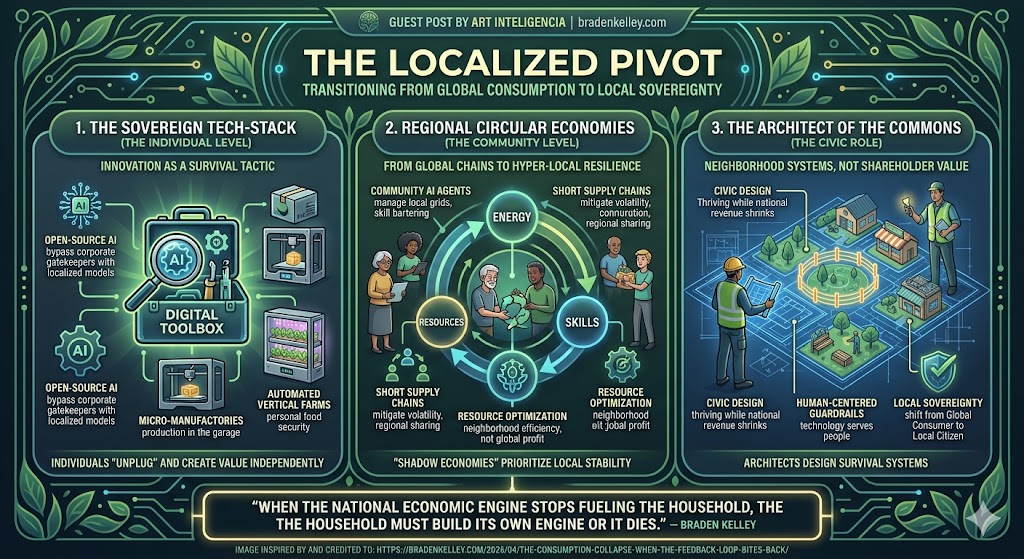
The Rise of Ambient Experience Intelligence (AXI)

Beyond the Interface

LAST UPDATED: February 26, 2026 at 8:34 PM

The Rise of Ambient Experience Intelligence (AXI)

GUEST POST from Art Inteligencia


I. Introduction: From Interaction to Indication

Designing Environments for Human Flourishing

For decades, our relationship with technology has been transactional. We command, and the machine responds. We click, type, and swipe, paying an ever-increasing “Cognitive Tax” for every digital efficiency we gain. This constant demand for explicit interaction has led to a plateau of digital fatigue — an expensive noise that often drowns out the very purpose it was meant to serve.

We are now entering a new era: Ambient Experience Intelligence (AXI). These are systems that move beyond the screen. They sense human presence, emotion, and context, responding not to our commands, but to our indications.

“The most profound technologies are those that disappear. They weave themselves into the fabric of everyday life until they are indistinguishable from it.”
— Braden Kelley

AXI represents a fundamental shift in the innovation paradigm. It moves us from building interfaces to cultivating the conditions for human flourishing. By creating environments that adjust information flow, lighting, or collaboration dynamics based on our cognitive load, we allow humans to stay in ‘flow state’ longer and innovate at the edge of their potential.

II. The Architecture of Invisible Intelligence

To move beyond traditional interfaces, we must build an Invisible Architecture. This is not a single piece of software, but an ecosystem of sensors and logic gates designed to interpret the nuances of human behavior without requiring a single keystroke.

Sensing Context vs. Recording Data

The first pillar of AXI is Contextual Awareness. Through computer vision, spatial audio, and thermal sensing, environments can now distinguish between a high-intensity brainstorming session and a moment of quiet reflection. This isn’t about surveillance; it’s about reception.

Key Sensing Modalities:

  • Cognitive Load Detection: Monitoring physiological markers (like pupil dilation or speech patterns) to detect when a team is reaching the point of mental burnout.
  • Biometric Harmony: Adjusting environmental variables — CO2 levels, color temperature, and white noise — to maintain the optimal “biological rhythm” for the task at hand.

Response Frameworks: The Subtle Shift

The final stage is the Actionable Response. In a human-centered AXI system, the response is never jarring. If the system detects high cognitive load, it doesn’t sound an alarm; it subtly shifts the lighting to a warmer hue and filters non-urgent digital notifications. As Braden Kelley often points out, the goal is to create conditions for success, ensuring that the environment becomes a silent partner in the creative process.

III. The Competitive Landscape: Pioneers of Ambient Intelligence

The shift toward Ambient Experience Intelligence (AXI) is being led by a mix of infrastructure giants and specialized innovators. These organizations are moving away from the “App Economy” and toward a “Presence Economy,” where value is created through environmental awareness.

The Infrastructure Giants

  • Google (Soli Radar): Utilizing miniature radar to sense sub-millimeter human movements and intent without cameras.
  • Apple: Leveraging the Neural Engine and spatial audio to create “Environmental Hand-offs” between devices and rooms.

Specialized Innovators

  • Hume AI: Building the “semantic space” for emotion, allowing systems to interpret vocal and facial expressions.
  • Butlr: Using thermal sensors to track spatial utilization and human “dwell time” while maintaining absolute privacy.

The Rise of the “Cognitive Sensing” Startup

Beyond the household names, companies like Smart Eye and Affectiva are pioneering the sensing of cognitive load and fatigue. Originally designed for automotive safety, these technologies are migrating into the workspace. They represent the “edge of human behavior” where innovation meets neurobiology.

“When we evaluate the winners in this space, we shouldn’t look at who has the most data, but who has the highest Integrity of Intent. The leaders will be those who use AXI to protect human focus, not those who exploit it for attention.” — Braden Kelley

IV. AXI in Action: Case Studies in Human Flourishing

Theory only takes us so far. To understand the true power of Ambient Experience Intelligence, we must look at where the “edge of human behavior” meets critical environmental needs. These two scenarios illustrate the shift from reactive tools to proactive conditions.

Case Study A: The Adaptive, Compassionate Hospital Room

The Friction: Traditional recovery rooms are sensory minefields. Alarms, harsh fluorescent lighting, and constant clinical interruptions create a “Stagnant Dream” of recovery, where the environment actually hinders the healing process.

The AXI Solution: By integrating circadian lighting and acoustic sensors, the room “senses” the patient’s sleep state. Non-critical notifications are routed silently to nurse wearables, and lighting shifts to a soft amber when the patient stirs at night.

“This is innovation with purpose. The technology recedes so the body’s natural healing can take center stage.” — Braden Kelley

Case Study B: The Flow-State Cognitive Workspace

The Friction: The modern office is a battleground for attention. Constant interruptions destroy the “momentum” required for deep innovation.

The AXI Solution: Using thermal presence sensors and cognitive load detection, the workspace identifies when a team has entered a “Flow State.” The environment responds by activating directional sound masking and automatically updating “Deep Work” statuses across all digital communication channels — without the team ever having to click a button.

In both cases, the result is the same: the system takes on the burden of context management, leaving the human free to focus on what matters most — healing, creating, and connecting.

V. The Ethics of Presence: Trust and Integrity in AXI

The more an environment understands about us, the more vulnerable we become. As we move toward systems that sense our emotions and cognitive states, we must build upon a Foundation of Absolute Integrity. Without trust, AXI will be rejected as invasive surveillance; with trust, it becomes an essential partner in human flourishing.

The “Creepy” Threshold

Innovation at the edge of human behavior requires a delicate touch. To avoid crossing the “creepy threshold,” AXI systems must prioritize Edge Processing. This means that data — such as thermal maps or vocal tones — should be processed locally within the room or device, ensuring that sensitive raw data never reaches the cloud.

Three Pillars of Ethical AXI:

  • Radical Transparency: Humans must always know *what* is being sensed and *why* the environment is responding.
  • Data Sovereignty: The “script” of the experience must remain under the individual’s control. Opt-out should be the default, not a hidden setting.
  • Purposeful Limitation: Sensing must be mapped to a specific human benefit. If it doesn’t reduce cognitive load or increase safety, it shouldn’t be sensed.

Integrity as a Design Requirement

As Braden Kelley often advises, trust is the currency of the modern enterprise. In an AXI-enabled world, Trust happens at the speed of transparency. When users feel the environment is acting in their best interest — protecting their focus and honoring their privacy — they grant the system the permission it needs to truly innovate.

“Privacy is not the absence of data; it is the presence of agency.”

VI. Conclusion: Designing for the Edge of Human Behavior

The journey into Ambient Experience Intelligence is more than a technical migration; it is a philosophical one. We are moving away from the era of “Silicon-First” design and toward an era where the environment itself acts as a scaffold for human potential. When we remove the friction of the interface, we uncover the true capacity of the individual.

The Goal: Conditions for Flourishing

As we have explored, AXI allows us to build the “Muscle of Foresight” within our physical spaces. An office that anticipates a team’s need for deep work or a hospital that protects a patient’s rest is an organization that has mastered the art of “Invisible Innovation.” This is where the edge of human behavior becomes a comfortable, sustainable center.

“True innovation isn’t loud; it is the quiet, purposeful support that makes the performance of our daily lives possible. By building environments that sense and respond with integrity, we aren’t just making rooms ‘smart’ — we are making humans ‘free’.”

— Braden Kelley

The Path Forward for Leaders

To lead in the age of AXI, you must stop asking, “What can this technology do?” and start asking, “How should this environment feel?” When purpose drives the script, and innovation provides the stage, the result is a performance of value that truly matters.

Are you ready to build a foundation of trust and innovate at the edge of what’s possible?

The Privacy-First AXI Checklist

A Leader’s Guide to Ethical Ambient Innovation

Use this checklist to evaluate AXI vendors and internal projects. If you cannot check every box in a category, your project risks crossing the “creepy threshold.”

1. Data Sovereignty & Agency

  • ✔
    Explicit Opt-In: Do users provide meaningful consent before environmental sensing begins?
  • ✔
    The “Off Switch”: Is there a physical or highly visible digital way for a human to immediately suspend sensing?

2. Technical Integrity

  • ✔
    Edge Processing: Is raw biometric or spatial data processed locally on the device (at the “edge”) rather than sent to the cloud?
  • ✔
    Data Minimization: Does the system collect the *absolute minimum* required (e.g., thermal outlines instead of high-def video)?

3. Purposeful Innovation

  • ✔
    Value-Link: Can you clearly articulate how this sensing reduces cognitive load or improves human well-being?
  • ✔
    Bias Mitigation: Has the sensing algorithm been audited for equity (ensuring it recognizes diverse voices, skin tones, and abilities)?
Braden Kelley’s Pro-Tip: Integrity isn’t a feature you add at the end; it’s the script that makes the performance possible. If the tech feels like surveillance, it’s not AXI — it’s just bad design.

Frequently Asked Questions

What is Ambient Experience Intelligence (AXI)?

AXI represents systems that understand human context—like emotion and presence—to adjust the environment without needing a command. It’s about technology that recedes into the background to support human potential.</

How does AXI drive organizational value?

By sensing cognitive load, AXI can automatically filter distractions and optimize workspace conditions. This prevents burnout and ensures that the “muscle memory” of innovation stays sharp across the workforce.

What is the “Creepy Threshold” in Ambient Intelligence?

This refers to the fine line between helpful anticipation and intrusive surveillance. Successful AXI implementation avoids this by using privacy-first technologies like thermal sensing and edge processing, ensuring the system serves the human rather than just monitoring them.

Disclaimer: This article speculates on the potential future applications of cutting-edge scientific research. While based on current scientific understanding, the practical realization of these concepts may vary in timeline and feasibility and are subject to ongoing research and development.

Image credits: Google Gemini

Subscribe to Human-Centered Change & Innovation WeeklySign up here to get Human-Centered Change & Innovation Weekly delivered to your inbox every week.
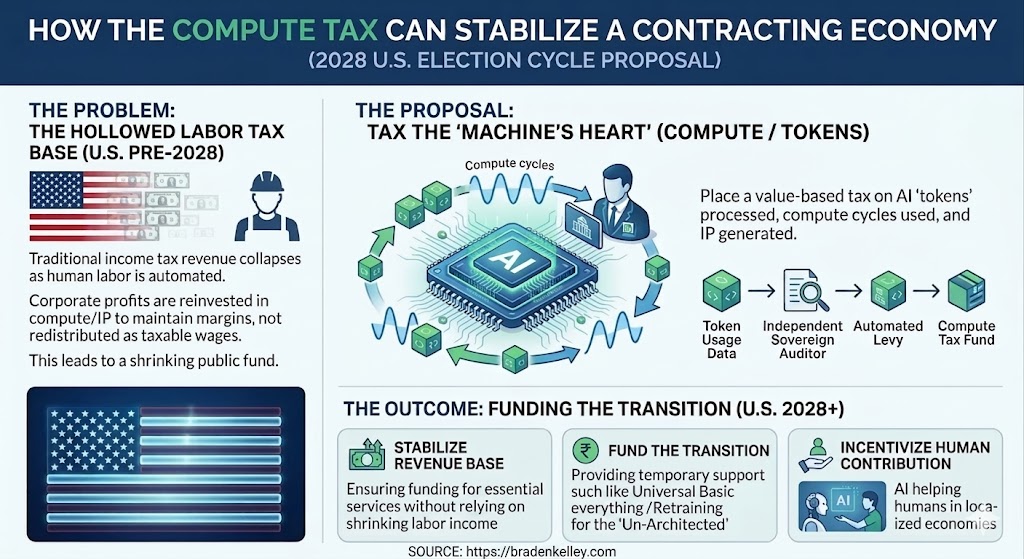
Neuroadaptive Interfaces

LAST UPDATED: February 22, 2026 at 5:28 PM

Neuroadaptive Interfaces

GUEST POST from Art Inteligencia


I. Introduction: From Interaction to Integration

We are standing at the threshold of the most significant shift in human history: the transition from tools we operate to systems we inhabit.

The End of the Mouse and Keyboard

For decades, the primary bottleneck for human intelligence has been the physical interface. Our thoughts move at the speed of light, yet we are forced to translate them through the “clunky” mechanical latency of typing on a keyboard or clicking a mouse. In 2026, these methods are increasingly viewed as legacy constraints. Neuroadaptive Interfaces (NI) bypass these barriers, allowing for a seamless flow of intent from the mind to the digital canvas.

Defining Neuroadaptivity

Traditional software is reactive — it waits for a command. Neuroadaptive systems are proactive and bidirectional. By monitoring neural oscillations and physiological markers, these interfaces adapt their behavior in real-time. If the system detects you are entering a state of “flow,” it silences distractions; if it detects “cognitive overload,” it simplifies the data density of your environment. It is a system that finally understands the user’s internal context.

The Human-Centered Mandate

As we bridge the gap between biology and silicon, our guiding principle must remain Augmentation, not Replacement. The goal of NI is to amplify the unique creative and empathetic capacities of the human spirit, using machine precision to handle the “cognitive grunt work.” We aren’t building a Borg; we are building a more capable, more focused version of ourselves.

The Braden Kelley Insight: Innovation is the act of removing friction from the human experience. Neuroadaptivity is the ultimate “friction-remover,” turning the boundary between the “self” and the “tool” into a transparent lens.

II. The Mechanics of Symbiosis: How NI Works

Neuroadaptivity isn’t magic; it is the sophisticated orchestration of bio-signal processing and generative UI.

1. The Feedback Loop: Sensing the Invisible

At the core of a neuroadaptive interface is a high-speed feedback loop. Using non-invasive sensors like EEG (electroencephalography) for electrical activity and fNIRS (functional near-infrared spectroscopy) for blood oxygenation, the system monitors “proxy” signals of your mental state. These are translated into a Cognitive Load Index, telling the machine exactly how much “mental bandwidth” you have left.

2. The Flow State Engine

The “killer app” of NI is the ability to protect and prolong the Flow State. When the sensors detect the distinct neural patterns of deep concentration, the interface enters “Deep Work” mode — suppressing notifications, simplifying color palettes, and even adjusting the latency of input to match your cognitive tempo. Conversely, if it detects the theta waves of boredom or the erratic signals of fatigue, it provides “Scaffolding” — contextual hints or automated sub-task completion to keep you on track.

3. Privacy by Design: The Neuro-Ethics Layer

In 2026, the most critical “feature” of any NI system is its Privacy Layer. This is the technical implementation of “Neuro-Ethics.” To maintain stakeholder trust, raw neural data must be processed at the edge (on the device), ensuring that “thought-level” data never hits the cloud. We are moving toward a standard of “Neural Sovereignty,” where the user owns their cognitive signals as a basic human right.

The Braden Kelley Insight: Symbiosis requires transparency. For a human to trust a machine with their neural state, the machine must be predictable, ethical, and entirely under the user’s control. We aren’t building mind-readers; we are building intent-amplifiers.

III. Case Studies: Neuroadaptivity in the Real World

The true value of neuroadaptive interfaces is best seen where human stakes are highest. These real-world applications demonstrate how NI transforms passive tools into intelligent, empathetic partners.

Case Study 1: Precision High-Acuity Healthcare

In complex cardiovascular and neurosurgical procedures, the surgeon’s cognitive load is immense. Traditional monitors provide patient data, but they ignore the surgeon’s mental state. Modern Neuroadaptive Surgical Suites integrate non-invasive EEG sensors into the surgeon’s headgear.

  • The Trigger: If the system detects a spike in cognitive stress or “decision fatigue” signals during a critical grafting phase, it automatically filters the Heads-Up Display (HUD).
  • The Adaptation: Non-essential alerts are silenced, and the most critical patient vitals are enlarged and centered in the visual field to prevent inattentional blindness.
  • The Outcome: A 25% reduction in intraoperative “micro-errors” and significant improvement in surgical team coordination through shared “mental state” awareness.

Case Study 2: Neuroadaptive Learning Ecosystems (EdTech)

The “one-size-fits-all” model of education is being replaced by Agentic AI tutors that use neurofeedback. Platforms like NeuroChat are now being piloted in corporate upskilling and university STEM programs to solve the “frustration wall” problem.

  • The Trigger: The system monitors EEG signals for “engagement” and “comprehension” correlates. If it detects a user is repeatedly attempting a formula with high theta-wave activity (signaling frustration or zoning out), it intervenes.
  • The Adaptation: Instead of offering the same theoretical text, the AI pivots to a practical, gamified simulation or a case study aligned with the user’s specific disciplinary interests.
  • The Outcome: Pilot programs have shown a 40% increase in course completion rates and a 30% faster time-to-mastery for complex technical skills.
The Braden Kelley Insight: These case studies prove that NI is not about “mind control” — it’s about Contextual Harmony. When the machine understands the human’s internal struggle, it can finally provide the right support at the right time.

IV. The Market Landscape: Leading Companies and Disruptors

The Neuroadaptive Interface market has matured into a multi-tiered ecosystem, ranging from medical-grade implants to “lifestyle” neural wearables.

1. The Titans: Infrastructure and Mass Adoption

The major players are leveraging their existing hardware ecosystems to turn neural sensing into a standard feature rather than a peripheral.

  • Neuralink: While famous for their invasive BCI (Brain-Computer Interface), their 2026 focus has shifted toward high-bandwidth recovery for clinical use and refining the “Telepathy” interface for the general market.
  • Meta Reality Labs: By integrating electromyography (EMG) into wrist-based wearables, Meta has effectively turned the nervous system into a “controller,” allowing users to navigate AR/VR environments with intent-based micro-gestures.

2. The Specialized Innovators: Niche Dominance

These companies focus on the “Neuro-Insight” layer—translating raw brainwaves into actionable data for specific industries.

  • Neurable: The leader in consumer-ready “Smart Headphones.” Their technology tracks cognitive load and focus levels, automatically triggering “Do Not Disturb” modes across a user’s entire digital ecosystem.
  • Kernel: Focusing on “Neuroscience-as-a-Service” (NaaS), Kernel provides high-fidelity brain imaging (Flow) for R&D departments, helping brands measure real-world emotional and cognitive responses to products.

3. Startups to Watch: The Next Wave

The edge of innovation is currently moving toward “Silent Speech” and Passive BCI.

Company Core Innovation
Zander Labs Passive BCI that adapts software to user intent without conscious command.
Cognixion Assisted reality glasses that use neural signals to give a “voice” to those with speech impairments.
OpenBCI Building the “Galea” platform — the first open-source hardware integrating EEG, EMG, and EOG sensors.
The Braden Kelley Insight: The market is splitting between invasive clinical and non-invasive lifestyle. For most leaders, the non-invasive “wearable neural” space is where the immediate opportunities for workforce augmentation lie.

V. Operationalizing Neural Insight: The Leader’s Toolkit

Adopting Neuroadaptive Interfaces is not a mere hardware upgrade; it is a fundamental shift in management philosophy. Leaders must transition from managing “time on task” to managing “cognitive energy.”

1. Managing the Augmented Workforce

In an NI-enabled workplace, productivity metrics must evolve. Instead of measuring keystrokes or hours logged, leaders will use anonymized “Flow Metrics.” By understanding when a team is at peak cognitive capacity, managers can schedule high-stakes brainstorming for high-energy windows and administrative tasks for periods of detected cognitive fatigue.

2. The Neuro-Inclusion Index

One of the greatest human-centered opportunities of NI is Neuro-Inclusion. These interfaces can be customized to support different cognitive styles — such as ADHD, dyslexia, or autism — by adapting the UI to the user’s specific neural “signature.” We must measure our success by how well these tools level the playing field for neurodivergent talent.

3. From Prompting to Intent Calibration

The skill of the 2020s was “Prompt Engineering.” In 2026, the skill is Intent Calibration. This involves training both the user and the machine to recognize subtle neural cues. Leaders must help their teams develop “Neuro-Awareness” — the ability to recognize their own mental states so they can better collaborate with their adaptive systems.

The Braden Kelley Insight: Operationalizing NI is about respecting the human brain as the ultimate source of value. If we use this technology to squeeze more “output” at the cost of mental health, we have failed. If we use it to protect the brain’s “prime time” for creativity, we have won.

VI. Conclusion: The Wisdom of the Edge

Neuroadaptive Interfaces represent more than just a breakthrough in hardware; they signify the maturation of human-centered design. By collapsing the distance between a thought and its digital execution, we are finally moving past the era where the human had to learn the language of the machine. Now, the machine is learning the language of the human.

The Symbiotic Future

The organizations that thrive in the coming decade will be those that embrace this symbiosis. These interfaces are the ultimate “Lens” for innovation — bringing human intent into perfect focus while filtering out the noise of our increasingly complex digital lives. When we align machine intelligence with the organic rhythms of the human brain, we don’t just work faster; we work with more purpose, clarity, and well-being.

As leaders, our task is to ensure this technology remains a tool for empowerment. We must guard the privacy of the mind with the same vigor that we pursue its augmentation. The goal is a future where technology feels less like an external intrusion and more like a natural extension of our own creative spirit.

The Final Word: Intent is the New Interface

Innovation has always been about extending the reach of the human spirit. Neuroadaptivity is simply the next step in making that reach infinite.

— Braden Kelley

Neuroadaptive Interfaces FAQ

1. What is a Neuroadaptive Interface (NI)?

Think of it as a tool that listens to your brain. It uses sensors to detect your mental state — like how hard you’re concentrating or how stressed you are — and changes its display or functions to help you perform better without you having to click a single button.

2. How do Neuroadaptive Interfaces protect user privacy?

In the era of “Neural Sovereignty,” these devices use edge computing. Your raw brainwaves never leave the device. The system only shares the “result” — like a request to silence notifications — ensuring your actual thoughts stay entirely within your own head.

3. What is the primary benefit of neuroadaptivity in the workplace?

It’s about Human-Centered Augmentation. By detecting “cognitive load,” the technology helps prevent burnout. It acts as a digital shield, protecting your peak focus hours (Flow State) and providing extra support when your brain starts to feel the fatigue of a long day.

Disclaimer: This article speculates on the potential future applications of cutting-edge scientific research. While based on current scientific understanding, the practical realization of these concepts may vary in timeline and feasibility and are subject to ongoing research and development.

Image credits: Google Gemini

Subscribe to Human-Centered Change & Innovation WeeklySign up here to get Human-Centered Change & Innovation Weekly delivered to your inbox every week.
The End of Static Reality

Leading the Shift to Programmable Matter

LAST UPDATED: February 19, 2026 at 6:48 PM

The End of Static Reality - Programmable Matter

GUEST POST from Art Inteligencia


I. Introduction: The Death of the “Finished” Product

“We are moving from an era of designing objects to an era of designing behaviors.” — Braden Kelley

Beyond the Static Boundary

For centuries, the fundamental constraint of innovation has been the static nature of matter. Once a piece of steel was forged or a plastic mold was set, its physical properties—its stiffness, shape, and conductivity—were locked in time. In 2026, that boundary is evaporating. We are entering the age of Digital-Physical Hybrids, where the physical world is becoming as iterative and agile as the software that controls it.

Defining Programmable Matter

At its core, programmable matter refers to materials or assemblies of components that can change their physical properties based on software instructions or external stimuli. Imagine a world where a car’s body panels adjust their shape for optimal aerodynamics in real-time, or a medical implant that remains soft for insertion but “programs” itself to become rigid once it reaches its destination.

The Braden Kelley Perspective: Pulling the Physical Lever

As I often say, “Innovation is the art of pulling the right lever.” In the context of programmable matter, the “lever” is no longer a mechanical switch; it is a software command. This technology collapses the distance between digital intent and physical experience. When matter becomes programmable, the “product” is never truly finished—it is in a state of perpetual adaptation, designed to meet the changing needs of the human beings who use it.

II. The Three Pillars of Adaptive Materiality

To program the physical world, we must manipulate three fundamental characteristics. In 2026, these are the levers that turn “dumb” objects into intelligent systems.

1. Morphology: Shape-Shifting for Performance

Morphology is no longer a fixed design choice; it is a real-time response. Through the use of shape-memory alloys and 4D-printed polymers, materials can now alter their geometry to optimize for the environment. Whether it’s a drone wing that warps its shape to navigate high winds or footwear that adjusts its arch support based on your gait, morphology is the first pillar of physical agility.

2. Variable Stiffness: The Soft-to-Rigid Spectrum

One of the most profound breakthroughs is the ability to toggle a material’s structural integrity. By using phase-change materials—which can switch between liquid and solid states via thermal or electrical triggers—we can create objects that are flexible when they need to be safe (soft robotics) and rigid when they need to bear weight (emergency infrastructure).

3. Conductive Logic: Reconfigurable Intelligence

The final pillar is the ability to program the “nervous system” of an object. Conductive logic involves materials with internal pathways that can be rerouted on the fly. This allows a single component to switch its function—for instance, a car door panel that reconfigures its internal circuitry from a speaker to a heating element based on occupant preference.

The Braden Kelley Insight: Mastery of these three pillars allows organizations to move away from “mass production” toward “mass adaptation.” We aren’t just making things better; we are making them smarter at the molecular level.

III. Case Study 1: Adaptive Architecture and Urban Resilience

The buildings of the 20th century were cages of steel and glass. In 2026, programmable matter is turning the “built environment” into a living, breathing skin.

The Challenge: The Energy of Stasis

Buildings are responsible for nearly 40% of global energy-related carbon emissions, much of which is wasted fighting the environment—heating against the cold or cooling against the sun. Traditional “smart” buildings rely on mechanical motors and sensors that are prone to failure and require massive power draws to operate.

The Innovation: Biomimetic Material Intelligence

Leading architecture firms are now collaborating with material scientists to deploy hygroscopic and thermomorphic materials. These “programmed” building skins react directly to moisture and heat without a single mechanical motor. Like a pinecone opening when dry to release seeds, a building facade can now “unfurl” to provide shade during peak solar hours and “tighten” to trap heat when the temperature drops.

The Human Shift: Buildings that Empathize

This isn’t just about efficiency; it’s about the human experience. Imagine a workspace where the ceiling lowers its density to improve acoustics as a room fills up, or windows that change their molecular structure to diffuse glare while maintaining a view. Through programmable matter, our architecture stops being a static obstacle and starts being a collaborator in our daily lives.

Braden Kelley’s Reflection: We’ve spent a century trying to control the environment with brute force. Programmable matter allows us to dance with it instead. This is the ultimate expression of Sustainable Innovation—doing more by building something that knows how to adapt.

IV. Case Study 2: Soft Robotics in Minimally Invasive Medicine

The human body is fluid and delicate, yet our medical tools have historically been rigid and intrusive. Programmable matter is changing the geometry of healing.

The Challenge: The Rigidity of Current Surgery

In traditional minimally invasive surgery, surgeons use catheters and endoscopes that possess a fixed stiffness. This creates a “navigation tax”—the risk of damaging delicate vascular walls or organs while trying to reach a deep-seated tumor or blockage. The tool must be stiff enough to push, but soft enough not to pierce.

The Innovation: Phase-Changing Surgical “Tentacles”

In 2026, we are seeing the rise of Programmable Soft Robots. These devices utilize low-melting-point alloys (LMPA) embedded within a silicone matrix. By applying a tiny electrical current, the surgeon can “program” specific segments of the tool to become liquid-soft for navigating tight corners, and then instantly “freeze” them into a rigid state to provide the leverage needed for a biopsy or a stent placement.

The Human Shift: Personalized Internal Navigation

This allows for truly personalized medicine. Because the tool adapts to the patient’s unique anatomy in real-time, the “one-size-fits-all” approach to surgical instruments is dead. We are reducing patient trauma, shortening recovery times, and enabling procedures that were previously considered “inoperable” due to anatomical complexity.

A Braden Kelley Note: This is the ultimate example of Human-Centered Change. We are no longer forcing the human body to adapt to our technology; we are programming our technology to empathize with the human body.

V. The Ecosystem: Leaders and Disruptors in 2026

The transition from static to programmable matter requires a new stack of technology—spanning simulation, generative design, and advanced fabrication. These are the players building that stack.

The Giants: Providing the Infrastructure

  • Autodesk: Their Generative Design tools have evolved into “Behavioral Design” platforms. Designers no longer just draw shapes; they define the intent of the material, and Autodesk’s AI calculates the necessary molecular lattice.
  • Nvidia: Programmable matter is notoriously difficult to predict. Nvidia’s Omniverse provides the high-fidelity physics simulations required to “digital twin” a material’s behavior before a single atom is printed.

The Disruptors: Redefining Fabrication

Company Core Innovation Target Industry
Carbon Dual-Cure Resins with variable elasticity Performance Footwear & Automotive
Voxel8 Integrated conductive circuitry in 3D structures Consumer Electronics & Wearables
Aimi (Emerging) Active textiles that change porosity/warmth Defense & Extreme Sports
Strategic Takeaway: You don’t need to be a material scientist to play in this space. You need to be a collaborator. The winning organizations in 2026 are those that partner across the stack—linking software intent to material reality.

VI. The Strategic Impact: Collapsing the Final Frontier

The strategic value of programmable matter goes far beyond the “wow factor” of a shape-shifting gadget. It represents a fundamental shift in Resource Efficiency. When a single object can be “re-programmed” to serve three different functions throughout its lifecycle, we drastically reduce the need for raw material extraction and landfill waste. This is the ultimate tool for a circular economy.

VII. Conclusion: Programming the Future Today

We are moving from a world of “things” to a world of “behaviors.” In this new era, your competitive advantage won’t just be what you make, but how well your creations can learn and adapt to the human beings they serve.

As you look at your product roadmap for the next five years, stop asking what features you should add. Start asking: “If our product could change its physical soul to better serve our customer tomorrow, what would we tell it to do today?”

“The future is not something that happens to us; it is something we program.”
— Braden Kelley

Transform Your Organization’s Future

Ready to turn uncertainty into a resource? Let’s discuss how these emerging technologies can redefine your industry.

Programmable Matter FAQ

1. How is programmable matter different from traditional 3D printing?

Traditional 3D printing creates static objects with fixed properties. Programmable matter, often referred to as 4D printing, introduces a time and behavior dimension. It uses smart materials that can change their shape, density, or conductivity after the manufacturing process is complete.

2. What are the primary benefits of adaptive materials in industry?

The primary benefits include resource efficiency and personalized performance. By allowing a single material to adapt to its environment (such as a building facade that opens and closes without motors), companies can reduce carbon footprints and create products that evolve with user needs.

3. Is programmable matter ready for commercial use in 2026?

Yes, it is currently in the “Scale-Up” phase. It is already being deployed in high-stakes sectors like aerospace for adaptive surfaces, medical devices for shape-shifting surgical tools, and high-performance athletics for responsive textiles.

Disclaimer: This article speculates on the potential future applications of cutting-edge scientific research. While based on current scientific understanding, the practical realization of these concepts may vary in timeline and feasibility and are subject to ongoing research and development.

Image credits: Google Gemini

Subscribe to Human-Centered Change & Innovation WeeklySign up here to get Human-Centered Change & Innovation Weekly delivered to your inbox every week.

Digital Phenotyping and the Future of Preventative Experience Design

The Silent Pulse

LAST UPDATED: February 16, 2026 at 6:01 PM

Digital Phenotyping and the Future of Preventative Experience Design

GUEST POST from Art Inteligencia


I. Introduction: Beyond the Survey

The Death of “Self-Reporting”

For decades, the gold standard for understanding employee well-being or customer satisfaction has been the survey. We ask people how they feel, and they give us an answer filtered through their own biases, current mood, or what they think we want to hear. In the world of innovation, self-reporting is a lagging indicator — and a flawed one at that.

Defining Digital Phenotyping

We are entering the era of Digital Phenotyping: the moment-by-moment quantification of the individual-level human phenotype in situ using data from personal digital devices. By analyzing the “digital exhaust” from smartphones and wearables — mobility patterns, social interactions, and even typing rhythm — we can infer behavioral, emotional, and cognitive states with unprecedented accuracy.

The Paradigm Shift: From Reactive to Preventative

The true power of this technology lies in its ability to turn experience design from a reactive fix into a preventative strategy. We no longer have to wait for a “burnout crisis” or a drop in productivity to realize our team is under excessive stress. The signals are there, in real-time, hidden in the cadence of our digital lives.

“Innovation is about solving the problems that people haven’t yet found the words to describe. Digital Phenotyping gives us the ears to hear those unspoken needs.”
— Braden Kelley

As we move beyond the survey, we must lead with a human-centered lens. The goal isn’t to monitor; it’s to support. We are shifting from a world that reacts to failure to a world that senses — and sustains — human flourishing.

II. The Mechanics of Passive Sensing

Digital phenotyping relies on passive data — information collected in the background without requiring any active input from the user. This removes the “friction” of participation and provides a continuous stream of objective reality.

The Three Primary Data Streams

1. Mobility and Physical Activity

Using GPS and accelerometers, we can map “life space.” A sudden constriction in a person’s physical movement — fewer locations visited or reduced steps — can be a powerful proxy for depressive states or social withdrawal. Conversely, erratic movement patterns might signal high levels of anxiety or agitation.

2. Social and Communication Meta-data

This isn’t about what is being said, but how the person is interacting. Call frequency, text latency, and social media engagement patterns reveal shifts in social connectivity. A drop in outbound communication often precedes a burnout phase before the employee even feels “tired.”

3. Human-Computer Interaction (HCI)

The way we interact with our screens is a window into our cognitive health. Typing speed, the frequency of “backspacing,” and scrolling patterns can indicate cognitive overload or a lapse in focus. These “digital biomarkers” are the most immediate indicators of whether a task is designed for human success or human failure.

The Synthesis: From Signals to Insights

The magic happens in the AI synthesis layer. By correlating these streams, machine learning models can identify a “baseline” for an individual. When the data deviates from that baseline, the system identifies a “glitch” — a moment where the human-centered design of the environment is no longer supporting the human within it.

“Data is just a signal; insight is the story. In digital phenotyping, we are learning to read the stories written in the rhythm of our daily digital interactions.”
— Braden Kelley

III. Value Creation: Turning Insight into Action

The true ROI of digital phenotyping isn’t found in the data itself, but in the Experience Design it enables. By moving from reactive to preventative models, we can create environments that adapt to the human state in real-time.

Preventative Experience Design in Practice

Real-Time Burnout Mitigation

Imagine a project management tool that senses cognitive overload through typing patterns and erratic screen switching. Instead of pushing another notification, the system “softens” — delaying non-essential alerts and suggesting a recovery break. This is human-centered design in action: protecting the asset (the person) before the damage occurs.

Adaptive User Interfaces (AUI)

In high-stakes environments like healthcare or emergency response, digital phenotyping allows interfaces to simplify themselves when stress markers are detected. By reducing the “information density” during moments of high stress, we prevent human error and improve outcomes.

The Strategic Advantage of “Wellness as a Service”

Organizations that implement these tools as a benefit rather than a monitor will see a massive shift in retention and engagement. When an employee knows the “system” is looking out for their mental health — flagging potential depression signals or isolation patterns early — the relationship between employer and employee evolves from transactional to collaborative.

“Value in the future of work won’t be measured by output alone, but by the sustainability of the human spirit behind that output.”
— Braden Kelley

By leveraging these insights, we aren’t just innovating products; we are innovating the way we treat people.

IV. The Innovation Ethical Frontier

Digital phenotyping sits at the intersection of extreme utility and extreme vulnerability. As innovators, we must acknowledge that data is a surrogate for intimacy. When we measure a person’s gait or typing rhythm, we are entering their private mental space. Without a robust ethical framework, we risk building a “Digital Panopticon” rather than a supportive ecosystem.

The Three Pillars of Ethical Phenotyping

1. Radical Transparency & Consent

Standard “Terms and Conditions” are insufficient. Consent must be active and ongoing. Users should know exactly what biomarkers are being tracked and have the “Right to Disconnect” without penalty. Transparency isn’t just a legal hurdle; it’s a trust-building feature.

2. Purpose-Driven Data Minimization

The temptation to “collect it all” is the enemy of ethics. We must practice data minimalism: collecting only the specific signals required to provide the promised human-centered value. If a signal doesn’t directly contribute to a preventative intervention, it shouldn’t be gathered.

3. The “Benefit Flow” Guarantee

The value derived from the data must flow primarily back to the individual. If the organization is the only one benefiting (through higher productivity), it’s surveillance. If the individual benefits (through better mental health and reduced stress), it’s empowerment.

Leading with Empathy-Led Ethics

We must move beyond “compliance-based” privacy. In a human-centered organization, we ask: “Would our employees feel cared for or watched if they knew how this worked?” If the answer is “watched,” the innovation is flawed at the architectural level.

“Trust is the only currency that matters in the future of innovation. Once you spend it on surveillance, you can never buy it back.”
— Braden Kelley

By establishing these guardrails early, we ensure that digital phenotyping remains a tool for human flourishing rather than a weapon for corporate control.

V. Leading the Human-Centered Change

Implementing digital phenotyping is not a technical deployment; it is a cultural transformation. If leaders treat this like a software update, they will face immediate resistance. To succeed, we must lead with transparency and a clear focus on the “human” in human-centered innovation.

The Role of the “Architect” in Rollout

Leaders must act as the architects of trust. This means the Chief Innovation Officer and the CHRO must work in lockstep to ensure that the purpose of the data is clearly defined and that those definitions are unshakeable.

Strategies for Successful Integration:

  • The “Opt-In” Mandate: Never make passive sensing mandatory. The power of these tools comes from voluntary participation. When people choose to participate, they become stakeholders in their own well-being.
  • Stakeholder Education: We must educate every level of the organization — especially our “Sensors” (the employees) — on what digital biomarkers are and how they are used to trigger supportive interventions.
  • Feedback Loops: Create a mechanism where employees can provide feedback on the interventions. If a system suggests a “burnout break,” was it helpful or annoying? The human must remain the final authority.

Transparency as a Competitive Feature

In the future, the most successful organizations will be those that are radically transparent about their data practices. By being open about the algorithms and the “why” behind the sensing, we remove the mystery and the fear. Transparency turns a “black box” into a “glass box.”

“Change happens at the speed of trust. If you want to innovate at the edge of human behavior, you must first build a foundation of absolute integrity.”
— Braden Kelley

By focusing on the human-centered change, we ensure that digital phenotyping isn’t something done to people, but something done for them.

VI. Conclusion: Designing a More Intuitive World

The transition from reactive to preventative design represents one of the most significant leaps in the history of Human-Centered Innovation. Digital phenotyping allows us to stop guessing and start knowing — not for the sake of control, but for the sake of care.

The Future is Empathetic

We are moving toward a world where our tools understand our limits as well as we do. Imagine a workplace that recognizes your stress before you have a headache, or a digital assistant that knows you’re cognitively overloaded and helps you prioritize. This is the Intuitive World we are designing.

A Leader’s Final Responsibility

As innovators and leaders, our responsibility is to ensure that as our machines become more “human-literate,” we do not become less human in our leadership. Digital phenotyping is a tool of immense power. Used correctly, it can eradicate burnout, foster deep engagement, and support mental health on a global scale.

“The most advanced technology is the one that makes us feel most human. Our job is to ensure digital phenotyping does exactly that.”
— Braden Kelley

The signals are all around us, pulsing through the devices in our pockets and on our wrists. The question is no longer whether we can hear them, but whether we have the innovation leadership and ethical courage to act on what they are telling us.

Deep Dive: Frequently Asked Questions

Does Digital Phenotyping mean my boss is reading my texts?

Absolutely not. Ethical digital phenotyping focuses on metadata and patterns, not content. It looks at the frequency of communication or the speed of your typing, not the words you say. As an innovation leader, I advocate for systems where the content remains private and encrypted.

Why is this better than a monthly wellness survey?

Surveys are “lagging indicators” — they tell us how you felt in the past. By the time a survey is analyzed, burnout has often already occurred. Digital phenotyping provides real-time signals, allowing for immediate, helpful interventions that can prevent a crisis before it starts.

Can I opt-out of this kind of data collection?

In any human-centered organization, the answer must be yes. Trust is the foundation of innovation. For digital phenotyping to work, it must be an opt-in benefit that employees use because they see the value in their own well-being and professional growth.

Disclaimer: This article speculates on the potential future applications of cutting-edge scientific research. While based on current scientific understanding, the practical realization of these concepts may vary in timeline and feasibility and are subject to ongoing research and development.

Image credits: Google Gemini

Subscribe to Human-Centered Change & Innovation WeeklySign up here to get Human-Centered Change & Innovation Weekly delivered to your inbox every week.