
Author Archives: Art Inteligencia

About Art Inteligencia

Art Inteligencia is the lead futurist at Inteligencia Ltd. He is passionate about content creation and thinks about it as more science than art. Art travels the world at the speed of light, over mountains and under oceans. His favorite numbers are one and zero. Content Authenticity Statement: If it wasn't clear, any articles under Art's byline have been written by OpenAI Playground or Gemini using Braden Kelley and public content as inspiration.

The Power of Social Proof

How Consumer Behavior Influences Innovation Success

Title: The Power of Social Proof: How Consumer Behavior Influences Innovation Success

GUEST POST from Art Inteligencia

In today’s competitive marketplace, successful innovation is crucial for businesses to thrive and survive. However, understanding consumer behavior and leveraging social proof can significantly influence the success of these innovative endeavors. In this thought leadership article, we explore the concept of social proof and its impact on innovation success through two compelling case studies.

Case Study 1: Airbnb and the Power of Peer Recommendations:

In the past decade, the emergence of the sharing economy has disrupted traditional industries, particularly the hospitality sector. Airbnb, as a prime example, revolutionized the way people find accommodations by capitalizing on the power of social proof.

By allowing hosts and guests to leave reviews and ratings, Airbnb created a robust system of peer recommendations. This social proof effectively influenced potential customers’ decisions, leading to increased reservations and higher customer satisfaction rates. The number of positive reviews and the overall rating of properties became a key factor in the success or failure of hosts within the platform.

Airbnb’s innovative business model showcased the power of leveraging social proof to drive innovation success. By tapping into the collective wisdom of its users, Airbnb created a community-driven platform that thrived due to the trust established through social recommendations.

Case Study 2: Tesla and Consumer Influence on Electric Vehicles:

The success of electric vehicles (EVs) is another fascinating example of how consumer behavior and social proof contribute to innovation success. Tesla Motors, under the leadership of Elon Musk, pioneered the mass-market adoption of EVs and disrupted the automotive industry’s status quo.

One of the key factors behind Tesla’s success was its ability to tap into social proof to mitigate common consumer concerns about EVs. By producing high-quality vehicles with exceptional performance and range, Tesla created an aspirational brand that symbolized success, innovation, and environmentally-friendly choices.

Moreover, Tesla’s decision to build a network of Supercharger stations worldwide addressed charging infrastructure worries, a crucial aspect of EV adoption. This strategy provided consumers with tangible proof that electric vehicles were a reliable and practical transportation option.

Tesla’s innovative approach not only increased mainstream acceptance of EVs but also encouraged other automakers to invest in electric vehicle technologies. Consumer demand and social proof played a pivotal role in driving innovation within the automotive industry.

Conclusion

The power of social proof, as demonstrated through the case studies of Airbnb and Tesla, cannot be underestimated when it comes to innovation success. By understanding consumer behavior and influencing their choices through peer recommendations, businesses can gain a competitive edge and create new markets.

In today’s interconnected digital landscape, social proof plays a vital role in shaping consumer decision-making. Capitalizing on this power can help businesses drive innovation, boost customer trust, and achieve sustainable growth.

The lessons learned from Airbnb and Tesla reaffirm that by prioritizing social proof and incorporating consumer insights into the innovation process, organizations can create products and services that meet real consumer needs. As we move forward, businesses that can effectively harness the influence of consumer behavior and social proof will position themselves for long-term success in an ever-evolving marketplace.

Bottom line: Understanding trends is not quite the same thing as understanding the future, but trends are a component of futurology. Trend hunters use a formal approach to achieve their outcomes, but a methodology and tools like those in FutureHacking™ can empower anyone to be their own futurist and trend hunter.

Image credit: Unsplash

Subscribe to Human-Centered Change & Innovation WeeklySign up here to get Human-Centered Change & Innovation Weekly delivered to your inbox every week.

The Role of Collaboration in Transforming Traditional Industries

The Role of Collaboration in Transforming Traditional Industries

GUEST POST from Art Inteligencia

In today’s rapidly evolving business landscape, collaboration has emerged as a key driver of transformation within traditional industries. Rather than being limited to competitive endeavors, industries are discovering the power of collaboration in fostering innovation, driving efficiency, and meeting evolving customer demands. This thought leadership article explores how collaboration can reshape traditional industries through the lens of two compelling case studies.

Case Study 1: Automotive Industry

The automotive industry, historically known for its competitive nature, has undergone a significant transformation through collaboration. Tesla’s partnership with Panasonic is a prime example. By pooling their technological expertise, Tesla and Panasonic were able to create cutting-edge electric vehicle (EV) batteries. This collaboration not only increased the technological advancements in EVs but also accelerated their adoption in the market. Through this partnership, Tesla and Panasonic successfully challenged traditional automotive manufacturers and positioned themselves as pioneers in the EV industry.

Moreover, collaborations between automotive companies and tech giants such as Google’s Waymo and General Motors’ Cruise have played a pivotal role in developing self-driving cars. By sharing resources, knowledge, and research, these collaborations have accelerated the progress of autonomous vehicles, leading to greater safety and transforming the conventional concept of transportation. Such collaborations have demonstrated that by combining unique strengths and resources, traditional automotive manufacturers can adapt to the rapidly evolving mobility landscape and secure their position in the future.

Case Study 2: Healthcare Industry

The healthcare industry, burdened by fragmented systems and complex regulations, has also witnessed the potential of collaboration to drive transformative change. The collaboration between IBM Watson and Memorial Sloan Kettering Cancer Center (MSK) showcases the power of combining artificial intelligence (AI) with domain expertise. Together, they developed an AI-powered platform capable of analyzing vast amounts of medical data to assist oncologists in making informed treatment decisions. This collaboration has not only improved patient outcomes but has also revolutionized the diagnostic and treatment strategies in oncology.

Another notable collaboration within the healthcare industry is the partnership between Novartis and Google. By leveraging Google’s advanced technologies, such as machine learning and data analytics, Novartis embarked on an ambitious project aimed at revolutionizing the way medicine is developed and delivered. Through this collaboration, Novartis could gather and analyze real-time patient data to gain insights into disease patterns, treatment responses, and overall patient outcomes. This transformative collaboration has the potential to disrupt the traditional pharmaceutical industry and accelerate the discovery of personalized medicines.

Conclusion

Collaboration has emerged as a transformative force reshaping traditional industries. The case studies within the automotive and healthcare industries demonstrate the value of collaboration in driving innovation, reimagining business models, and meeting customer needs. By transcending traditional competitive boundaries and embracing collaboration at all levels, industries can unlock limitless potential and position themselves as leaders of change. As we move forward, the power of collaboration will continue to be a catalyst in transforming industries, encouraging us to reimagine the possibilities and work together towards a brighter future.

Bottom line: Understanding trends is not quite the same thing as understanding the future, but trends are a component of futurology. Trend hunters use a formal approach to achieve their outcomes, but a methodology and tools like those in FutureHacking™ can empower anyone to be their own futurist and trend hunter.

Image credit: Unsplash

Subscribe to Human-Centered Change & Innovation WeeklySign up here to get Human-Centered Change & Innovation Weekly delivered to your inbox every week.

The Rise of Circular Economy and its Implications for Businesses

The Rise of Circular Economy and its Implications for Businesses

GUEST POST from Art Inteligencia

In recent years, there has been a paradigm shift in the way businesses approach sustainability and resource management. The concept of a circular economy has gained significant traction, offering a viable solution to address environmental concerns, resource scarcity, and economic inefficiencies. This thought leadership article explores the rise of the circular economy and delves into its implications for businesses, showcasing two inspiring case studies.

1. Case Study: Patagonia’s Worn Wear Program:

Patagonia, the renowned outdoor clothing company, has become a pioneer in adopting circular economy principles. In 2013, they launched their innovative Worn Wear program that encourages customers to repair, reuse, and recycle their clothing and gear. By offering free repairs, Patagonia extends the lifespan of their products, minimizing waste and tapping into the potential of a ‘circular’ supply chain.

This program not only reduces environmental impact but also fosters strong customer loyalty. Patagonia’s commitment to durability, ethical manufacturing practices, and resourcefulness resonates with their target audience, inspiring them to value the brand and its sustainable values. Through the Worn Wear program, Patagonia has not only positively impacted the environment but also created a sustainable business model driven by circularity.

Implication for Businesses:

Patagonia’s Worn Wear program showcases that embracing circular economy principles can lead to enhanced brand reputation, customer loyalty, and long-term profitability. By extending the lifespan of products, companies can reduce raw material usage, production costs, and environmental footprint. Aligning business strategies with circularity can reap substantial benefits for companies across various sectors.

2. Case Study: Philips Lighting’s Circular Economy Model:

Philips Lighting (now Signify), a global leader in lighting solutions, has successfully implemented a circular economy model, illustrating the potential of circularity in mechanical and electrical products. Philips initiated a circular program called “Light as a Service” that delivers lighting solutions to customers while retaining ownership of the products.

Rather than selling light bulbs, Philips Lighting provides illumination as a service, ensuring proper maintenance, upgrades, and recycling at the end of the product’s life cycle. By transitioning from selling products to providing comprehensive lighting solutions, Philips shifted from the traditional linear model to a circular economy approach.

Implication for Businesses:

Philips Lighting’s circular economy model demonstrates the potential for businesses to transition from selling products to offering services. By retaining ownership of products, companies can ensure responsible end-of-life management, resource efficiency, and reduced waste generation. This shift towards service-oriented business models enables companies to establish long-term customer relationships based on trust, sustainability, and shared value.

Conclusion

The rise of the circular economy presents a transformative opportunity for businesses to embrace sustainability, innovate new business models, and enhance their bottom line. The case studies of Patagonia’s Worn Wear program and Philips Lighting’s circular economy model highlight the significant implications and benefits of adopting circularity – from strengthening brand reputation and customer loyalty to reducing resource consumption and waste generation.

In a world facing environmental challenges and increasing resource constraints, businesses must recognize that the circular economy is not just an ethical imperative but also a powerful driver of growth and competitive advantage. By activating empathetic thinking and embracing circularity, businesses can pave the way to a more sustainable and prosperous future for both themselves and the planet.

Bottom line: Understanding trends is not quite the same thing as understanding the future, but trends are a component of futurology. Trend hunters use a formal approach to achieve their outcomes, but a methodology and tools like those in FutureHacking™ can empower anyone to be their own futurist and trend hunter.

Image credit: Unsplash

Subscribe to Human-Centered Change & Innovation WeeklySign up here to get Human-Centered Change & Innovation Weekly delivered to your inbox every week.

How Is PESTLE Analysis Connected to Trends?

How Is PESTLE Analysis Connected to Trends?

GUEST POST from Art Inteligencia

PESTLE is an acronym that stands for Political, Economic, Social, Technological, Legal, and Environmental factors. It is a tool used to analyze and understand the macro-environmental factors that can affect the success of a business. PESTLE analysis helps businesses identify potential risks, opportunities and trends that may arise due to changes in the external environment.

Political Factors

Political factors refer to the governmental regulations and policies that can impact businesses. These include laws, regulations, taxation, political stability, and trade agreements. Businesses must be aware of political changes in order to adjust their strategies accordingly. For instance, changes in tax regulations can affect the cost of goods and services, and can lead to higher or lower profits.

Economic Factors

Economic factors refer to the macroeconomic conditions that affect the performance of a business. These include inflation, exchange rates, interest rates, and GDP. Businesses must be aware of economic changes to make sure that their strategies are in line with current economic conditions.

Social Factors

Social factors refer to the beliefs and attitudes of the people in a society. These include demographics, values, education levels, and consumer preferences. Businesses must be aware of social trends in order to tailor their marketing strategies to meet the needs of their target market.

Technological Factors

Technological factors refer to the advances in technology that can affect businesses. These include the development of new products and services, the emergence of new technologies, and the improvement of existing technologies. Businesses must be aware of technological changes in order to stay ahead of the competition.

Legal Factors

Legal factors refer to the laws and regulations that govern businesses. These include labor laws, competition laws, and health and safety laws. Businesses must be aware of legal changes in order to comply with the law and avoid potential penalties.

Environmental Factors

Environmental factors refer to the natural environment that can affect businesses. These include climate change, pollution, and resource scarcity. Businesses must be aware of environmental changes in order to minimize the potential impacts on their operations.

PESTLE analysis is an important tool for businesses to understand the macro-environmental factors that may affect their performance. By being aware of the political, economic, social, technological, legal, and environmental factors, businesses can identify trends and adjust their strategies to maximize their chances of success.

Bottom line: Understanding trends is not quite the same thing as understanding the future, but trends are a component of futurology. Trend hunters use a formal approach to achieve their outcomes, but a methodology and tools like those in FutureHacking™ can empower anyone to be their own futurist and trend hunter.

Image credit: Pixabay

Subscribe to Human-Centered Change & Innovation WeeklySign up here to get Human-Centered Change & Innovation Weekly delivered to your inbox every week.

What is the difference between signals and trends?

What is the difference between signals and trends?

GUEST POST from Art Inteligencia

The terms SIGNAL and TREND are often used interchangeably in the business world, but they actually have very different meanings. A signal is a short-term indication of a change in direction, while a trend is a long-term pattern or movement in a particular direction.

Signals are often indicators of changes in the market, such as a new product launch, a sudden surge in sales, or a shift in customer preferences. They’re often used to inform decisions about the future, such as when to launch a new product or when to deploy a marketing strategy.

Trends, on the other hand, are longer-term movements that can provide insights into the overall direction of the market, such as a rising demand for a particular product or service. They’re often used to inform strategy and investments, as they can provide clues as to where the market is headed.

Innovation, however, requires looking beyond signals and trends. It requires looking at the bigger picture and considering not just what is happening now, but what might happen in the future. It requires thinking outside the box and being creative in order to come up with unique solutions and ideas.

Innovation is about anticipating and preparing for the future. It’s about staying ahead of the curve and finding new ways to do things better, faster, and cheaper. It requires embracing risk and being willing to try new things and challenge the status quo.

So, while signals and trends can be useful in informing decisions, they can’t replace the need for innovation. To stay ahead of the competition, companies need to be constantly looking for ways to innovate and stay ahead of the curve.

Bottom line: Understanding signals and trends is not quite the same thing as understanding the future, but signals lead to trends, and are a component of futurology. Trend hunters use a formal approach to achieve their outcomes (including looking for signals), but a methodology and tools like those in FutureHacking™ can empower anyone to be their own futurist and trend hunter.

Image credit: Pixabay

Subscribe to Human-Centered Change & Innovation WeeklySign up here to get Human-Centered Change & Innovation Weekly delivered to your inbox every week.

What are Signals?

And how do signals relate to trends and futurology?

What are Signals?

GUEST POST from Art Inteligencia

Signals are important indicators of future trends and developments in a field. Futurology, the science of predicting the future, relies heavily on the ability to identify, analyze, and interpret signals that may indicate future changes or developments.

Signals can come from a variety of sources, including economic indicators, market data, industry trends, consumer behavior, and technological advances. By studying and interpreting these signals, experts in the field of futurology can develop predictions about the future.

For example, economic indicators such as GDP, the unemployment rate, and consumer spending can be used to identify signals that may indicate future changes in the economy. Market data such as stock prices, commodity prices, and currency exchange rates can be used to identify signals that may indicate future changes in the financial markets. Industry trends such as the rise of new technologies, the emergence of new business models, and the evolution of consumer behavior can be used to identify signals that may indicate future changes in markets and industries.

Signals can also be identified through the analysis of consumer behavior. For example, changes in consumer behavior, such as an increase in the use of online shopping or a shift in preferences towards healthier, organic foods, can be used to identify signals that may indicate future changes in consumer markets.

Finally, technological advances can be used to identify signals that may indicate future changes in a variety of fields. For example, the development of artificial intelligence and machine learning can be used to identify signals that may indicate future changes in the field of automation, or the development of new medical technologies can be used to identify signals that may indicate future changes in healthcare.

By analyzing and interpreting signals from a variety of sources, futurologists can make educated guesses about the future and develop predictions about the direction of a field and its emerging trends. This ability is essential for organizations that want to stay ahead of the curve and prepare for future changes.

Bottom line: Understanding signals is not quite the same thing as understanding the future, but signals lead to trends, and are a component of futurology. Trend spotters use a formal approach to achieve their outcomes (including looking for signals), but a methodology and tools like those in FutureHacking™ can empower anyone to be their own futurist and trend spotter.

Image credit: Pixabay

Subscribe to Human-Centered Change & Innovation WeeklySign up here to get Human-Centered Change & Innovation Weekly delivered to your inbox every week.

Overcoming Resistance to Change

Strategies for Change Leaders

Overcoming Resistance to Change

GUEST POST from Art Inteligencia

In today’s fast-paced world, change is an unavoidable part of business. Whether it’s a shift in market dynamics, the integration of new technologies, or transformative organizational restructuring, change is a constant. Yet, despite its ubiquity, resistance to change is one of the most persistent challenges that leaders face. In this groundbreaking article, I will explore effective strategies for overcoming resistance to change, supported by two illuminating case studies.

Understanding Resistance to Change

Resistance often stems from fear of the unknown, loss of control, and the comfort of the status quo. To manage and mitigate resistance, change leaders must first understand its roots:

  1. Fear of the Unknown: When people don’t understand the specifics of a change or cannot predict its outcomes, anxiety ensues.
  2. Loss of Control: Change can make individuals feel powerless as they lose control over their routines and roles.
  3. Comfort of the Status Quo: The familiarity of current processes and systems often makes them more appealing than the uncertainty of new approaches.

Strategies for Overcoming Resistance

  1. Communicate Transparently: Clear communication is the cornerstone of any change initiative. Leaders must articulate the reasons for change, the benefits it will bring, and the expected timeline. Transparency builds trust and reduces fear of the unknown.
  2. Involve Employees Early and Often: Involvement breeds ownership. When employees are part of the change process, they feel valued and have a greater stake in the project’s success. Organize workshops, feedback sessions, and brainstorming meetings to include them in every stage.
  3. Provide Training and Resources: Equip your team with the knowledge and tools they need to navigate the change. Tailored training programs and access to resources alleviate anxiety and enhance competence.
  4. Cultivate a Change-Friendly Culture: Foster a culture that values adaptability and continuous improvement. Recognize and reward flexibility and openness to new ideas to normalize change as part of the organizational fabric.
  5. Lead by Example: Leadership commitment is crucial. When leaders visibly embrace change and demonstrate its benefits, it sets a powerful example for the entire organization.
  6. Celebrate Small Wins: Break the change initiative into manageable phases and celebrate each milestone. Recognizing small successes keeps morale high and reinforces the progress being made.

Case Study 1: Manufacturing Company Embracing Lean Principles

Background:

XYZ Manufacturing, a traditional manufacturing company, decided to implement lean manufacturing principles to improve efficiency and reduce waste. Despite the clear benefits, employees were resistant due to the significant changes to long-established processes.

Challenges:

  • Fear of job loss due to efficiency improvements
  • Discomfort with new methods and workflows
  • Mistrust in management’s intentions

Strategies Implemented:

  1. Transparent Communication: The leadership team held town hall meetings to explain the need for lean principles and how they would benefit both the company and its employees in the long run.
  2. Inclusive Process: Employees from different departments were invited to contribute ideas on integrating lean practices effectively. This input was essential in tailoring the lean implementation to reflect on-the-ground realities.
  3. Training Programs: Comprehensive training sessions were conducted to familiarize employees with lean tools and techniques, ensuring they had the skills required to thrive in the new environment.
  4. Support Systems: Mentor programs were established, pairing employees experienced in lean methods with those unfamiliar. This peer support helped ease the transition significantly.

Outcome:

Resistance gradually diminished as employees recognized the benefits of increased efficiency. The collaborative approach fostered a sense of ownership and empowerment, leading to widespread acceptance and successful implementation of lean principles.

Case Study 2: Tech Firm Adopting Agile Management

Background:

ABC Tech, a mid-sized technology firm, decided to shift from traditional project management to agile methodologies to enhance responsiveness to market changes and improve product delivery timelines. Despite the promise of improved performance, resistance was notable, particularly among senior project managers accustomed to traditional methods.

Challenges:

  • Discomfort with unfamiliar agile practices
  • Perceived loss of control over project timelines
  • Skepticism about the efficacy of agile methodologies

Strategies Implemented:

  1. Leadership Commitment: Top management committed to agile practices and demonstrated their support by participating in agile training sessions alongside employees.
  2. Phased Implementation: Rather than a company-wide abrupt shift, agile was introduced in a phased manner, starting with pilot projects. Successful pilots were used to showcase the benefits of agile to the wider organization.
  3. Agile Champions: Agile coaches and champions were appointed to guide teams through the transition, providing expert advice and troubleshooting any issues that arose.
  4. Celebrating Quick Wins: Small successes from the pilot projects were celebrated and communicated across the organization, highlighting the benefits of agile methodologies.

Outcome:

By showcasing real-world successes and providing continuous support, ABC Tech managed to shift its project management approach successfully. Over time, agile methodologies became embedded in the company’s DNA, leading to faster product cycles and improved market responsiveness.

Conclusion

Resistance to change is a natural response, but through strategic and empathetic leadership, it can be managed and overcome. Transparent communication, inclusive processes, adequate training, a supportive culture, and visible leadership commitment form the bedrock of successful change management.

As demonstrated by XYZ Manufacturing and ABC Tech, inclusive and phased approaches can successfully transform resistance into acceptance and ensure positive outcomes for both the organization and its employees.

Embracing these strategies will equip change leaders to not only overcome resistance but to also foster an environment where change is welcomed and seen as a powerful driver of growth and innovation.

In the fast-evolving landscape of business, mastering the art of managing change is a critical skill for any leader. Consider this article your guidebook, and let it empower you to lead transformative change in your organization.

Bottom line: Futurology is not fortune telling. Futurists use a scientific approach to create their deliverables, but a methodology and tools like those in FutureHacking™ can empower anyone to engage in futurology themselves.

Image credit: Pixabay

Subscribe to Human-Centered Change & Innovation WeeklySign up here to get Human-Centered Change & Innovation Weekly delivered to your inbox every week.

Change Management Strategies for Organizational Growth

A Comprehensive Guide

Change Management Strategies for Organizational Growth

GUEST POST from Art Inteligencia

Change is the only constant in today’s dynamic business environment. Amidst rapid technological advancements, evolving market demands, and global economic shifts, organizations must continuously adapt to survive and thrive. As a thought leader in human-centered innovation and change, I’ve distilled critical change management strategies that foster organizational growth. In this article, I’ll explore these strategies and elucidate them through two compelling case studies.

1. Embrace a Culture of Continuous Improvement

Successful organizations cultivate a culture that encourages constant enhancement and innovation. This involves empowering employees at all levels to identify inefficiencies and propose improvements. Implementing a continuous improvement mindset can lead to sustained, incremental growth and resilience against market shocks.

Case Study: Toyota

Toyota’s adoption of the Kaizen philosophy epitomizes a culture of continuous improvement. “Kaizen” translates to “change for better,” a principle that Toyota has ingrained in its DNA. Employees at all levels, from assembly line workers to executives, are encouraged to contribute ideas. Daily team meetings, called “morning markets,” provide a forum for discussing suggestions.

One notable initiative was the introduction of the Andon cord—a system allowing any worker to halt production if they noticed a defect. This not only improved quality but also demonstrated Toyota’s commitment to giving employees ownership in the production process. Over time, this approach reduced defects, cut costs, and bolstered Toyota’s reputation for reliability, thereby increasing market share and driving growth.

2. Foster Agile Leadership and Decision-Making

Navigating change requires leaders who are agile and adaptable. Agile leaders can pivot quickly in response to disruptions and ensure that their organization remains aligned with the market. They cultivate a work environment where swift, yet informed decision-making is the norm

Case Study: Spotify

Spotify’s organizational growth can be strongly attributed to its adoption of the Agile framework. Instead of traditional top-down management, Spotify operates in small, autonomous teams known as “squads.” Each squad is responsible for a specific feature or component of the platform and functions like a mini-startup within the company.

These squads are empowered to make decisions and execute changes independently, enabling faster development cycles and quicker responses to market needs. This agility allowed Spotify to outmaneuver larger competitors, consistently deliver innovative product features, and rapidly expand its global user base.

3. Engage Stakeholders Through Transparent Communication

Clear and consistent communication is crucial for any change initiative. Engaging stakeholders—from employees to external partners—through transparent communication builds trust and mitigates resistance to change.

Case Study: GE’s Transformation Under Jack Welch

When Jack Welch assumed the role of CEO at General Electric (GE), he embarked on a massive transformation program known as “boundaryless behavior.” Welch’s vision was to dismantle bureaucratic silos and create a more integrated, competitive company.

One of his critical strategies was transparent and direct communication. Welch held regular town hall meetings, shared the company’s financial performance openly, and involved employees in decision-making processes. Training programs known as “Work-Outs” were established where employees could voice concerns and offer solutions directly to executives. This open dialogue not only enhanced employee morale but also facilitated smoother implementation of change initiatives, ultimately fueling GE’s growth into a powerhouse conglomerate.

4. Leverage Data-Driven Decision Making

Emphasizing data-driven decision-making ensures that organizations navigate change with precision and confidence. By leveraging data analytics, companies can identify trends, pinpoint inefficiencies, and forecast the impact of potential changes.

Case Study: Netflix’s Evolution

Netflix’s transition from a DVD rental service to a leading streaming platform and content creator exemplifies data-driven decision making. Initially, Netflix used data analytics to revolutionize its DVD rental service, predicting customer preferences and optimizing inventory.

As the market evolved, Netflix pivoted to streaming, leveraging viewer data to curate personalized recommendations and drive user engagement. Their data-driven approach also extended to content creation; by analyzing viewer metrics, Netflix identified gaps in the market and produced popular original series like “House of Cards” and “Stranger Things,” which significantly boosted subscriptions and propelled the company’s growth.

5. Develop Resilience Through Continuous Learning

Building an organization that champions continuous learning and skill development prepares the workforce to adapt to future challenges and technological advancements. By investing in continuous professional development, organizations can retain talent and foster innovation.

Case Study: AT&T’s Workforce 2020 Initiative

AT&T recognized the need to adapt to the digital era and launched the Workforce 2020 initiative. This comprehensive, multi-year strategy aimed to reskill its workforce to meet the demands of emerging technologies.

AT&T partnered with leading online education platforms and provided employees with resources to gain new skills in data science, cybersecurity, and other critical areas. By 2020, over half the workforce had participated in reskilling programs, bolstering the company’s innovative capabilities and maintaining its competitive edge in the fast-evolving tech landscape.

Conclusion

Implementing effective change management strategies is not a one-size-fits-all proposition. The success stories of Toyota, Spotify, General Electric, Netflix, and AT&T highlight how a tailored approach grounded in continuous improvement, agile leadership, transparent communication, data-driven decision making, and continuous learning can drive organizational growth. By learning from these exemplars and applying these strategies thoughtfully, organizations can navigate change successfully and foster sustainable growth.

Bottom line: Futurology is not fortune telling. Futurists use a scientific approach to create their deliverables, but a methodology and tools like those in FutureHacking™ can empower anyone to engage in futurology themselves.

Image credit: Pexels

Subscribe to Human-Centered Change & Innovation WeeklySign up here to get Human-Centered Change & Innovation Weekly delivered to your inbox every week.
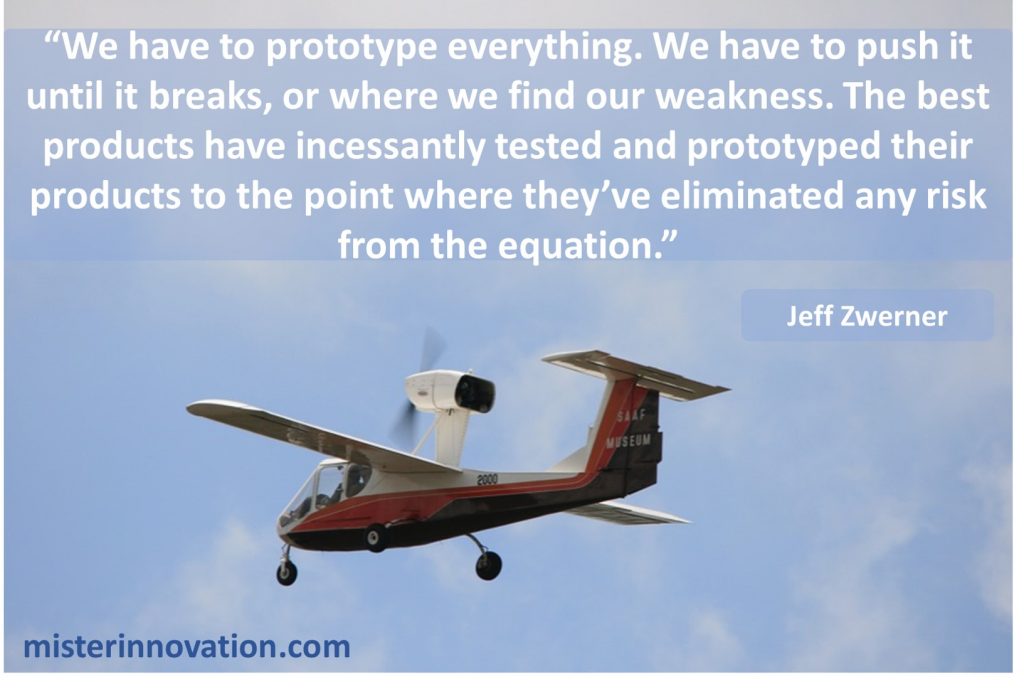
Design Thinking for Innovation

How to Generate Creative Ideas

Design Thinking for Innovation

GUEST POST from Art Inteligencia

Innovation is the lifeblood of any forward-thinking organization, yet many struggle to cultivate a structured approach to creativity. Enter design thinking—a human-centered methodology that can unlock imaginative solutions to problems both known and unknown. In this article, we’ll delve into the principles of design thinking, outline actionable strategies, and examine case studies showcasing its power in generating game-changing ideas.

The Core Principles of Design Thinking

Design thinking is not just a process but a mindset that revolves around understanding the user. Rooted in empathy, it involves iterative cycles of ideation, prototyping, and testing. The process typically comprises five stages:

  1. Empathize: Understand the needs, desires, and challenges of your target users.
  2. Define: Clearly articulate the problem you aim to solve.
  3. Ideate: Generate a broad array of possible solutions.
  4. Prototype: Create scaled-down versions of potential solutions.
  5. Test: Collect feedback and refine your prototypes.

While design thinking may seem linear, it’s inherently iterative, encouraging perpetual loops of ideation and refinement.

Strategies to Generate Creative Ideas

  1. Foster a Diverse Team: Diverse perspectives drive broader, more innovative thinking. Engage team members with different skills, backgrounds, and cognitive styles.
  2. Create a Safe Environment: Psychological safety allows team members to express wild and divergent ideas without fear of judgment. Normalize failure as a step toward success.
  3. Utilize Analogous Inspiration: Learning from unrelated industries can spark fresh ideas. For example, healthcare organizations could look at user experiences in retail to revamp patient care.
  4. Facilitate Brainstorming Sessions: Encourage techniques like mind mapping, SCAMPER (Substitute, Combine, Adapt, Modify, Put to another use, Eliminate, and Reverse), or the Six Thinking Hats to structure and diversify brainstorming.
  5. Embrace Rapid Prototyping: Quickly transition from ideas to tangible models, no matter how rudimentary. These prototypes can serve as conversation starters and gather early feedback.
  6. Encourage Cross-pollination: Promote collaboration across different departments to unify varying perspectives in tackling a challenge.

Case Study 1: IDEO and the Shopping Cart

IDEO, a global design firm, is often cited as a pioneer in design thinking. One of their seminal projects was to redesign the shopping cart. The project illustrated the efficacy of the design thinking process comprehensively:

  1. Empathy: IDEO’s team spent time observing shoppers and supermarket staff. They identified various needs, like safety concerns for children and theft prevention.
  2. Define: They clearly articulated the problem as devising a shopping cart that met these divergent needs while enhancing the overall shopping experience.
  3. Ideate: The diverse team brainstormed prolifically, generating hundreds of ideas ranging from minor tweaks to radical redesigns.
  4. Prototype: They rapidly created multiple prototypes, incorporating basket safety features, ergonomic designs, and even integrated barcode scanners.
  5. Test: These prototypes were tested in actual supermarkets, gathering valuable feedback that led to further refinements.

The outcome was a groundbreaking cart design addressing multiple user concerns, showcasing how empathetic and iterative processes can lead to innovative solutions.

Case Study 2: Airbnb Transformation

Airbnb’s success story is another testament to the power of design thinking. In its early days, the company struggled with user acquisition and retention. Through design thinking, they transformed their fortunes:

  1. Empathize: The founders made a bold decision—they became their own customers. They rented out properties and communicated extensively with hosts and guests to identify pain points.
  2. Define: The clear problem statement emerged: how to create trust and reliability in lodging listings to attract and reassure users.
  3. Ideate: After pinpointing the issue, they brainstormed a slew of potential improvements, from professional photography services for listings to user profile verifications.
  4. Prototype: Airbnb quickly rolled out these ideas in selected markets. They introduced high-quality photos and verification processes in a pilot phase.
  5. Test: The feedback from hosts and guests was overwhelmingly positive, directly translating into increased bookings and reduced friction.

Airbnb’s transformation was not just about adding features but was fundamentally human-centered—building trust through empathetic understanding of their users’ needs.

Conclusion

Design thinking is not a magical shortcut but a systematic, human-centered approach to innovation. By deeply understanding user needs and embracing an iterative process, organizations can unlock their creative potential, adapt to an ever-changing landscape, and solve complex problems. The case studies of IDEO and Airbnb illustrate how this methodology can generate creative, practical, and impactful ideas.

Embrace design thinking, and you will find that the journey of innovation is as transformative as the destination itself.

Bottom line: Futurology is not fortune telling. Futurists use a scientific approach to create their deliverables, but a methodology and tools like those in FutureHacking™ can empower anyone to engage in futurology themselves.

Image credit: Pixabay

Subscribe to Human-Centered Change & Innovation WeeklySign up here to get Human-Centered Change & Innovation Weekly delivered to your inbox every week.

The Best Tools and Techniques for Implementing Human-Centered Design

GUEST POST from Art Inteligencia

In our fast-paced, technology-driven world, crafting solutions that genuinely meet human needs is more challenging and crucial than ever. Human-Centered Design (HCD) stands out as an approach that prioritizes human values and needs in the design process, ultimately leading to more effective and meaningful outcomes. This article explores the best tools and techniques for implementing HCD and highlights two successful case studies from real-world applications.

Understanding Human-Centered Design

Human-Centered Design is built on three core pillars: empathy, ideation, and experimentation. It is a problem-solving method that involves deeply understanding the people you’re designing for, generating ideas based on that understanding, and iteratively prototyping and testing solutions.

Tools and Techniques for Human-Centered Design

1. Empathy Mapping

Empathy maps help designers visualize their understanding of the users and organize the process of empathy collection. These maps include segments such as what users think, feel, see, and say, facilitating a comprehensive understanding of their experiences and perspectives.

Technique:

  • Observations and Interviews: Conduct in-depth interviews and observations to gather qualitative data about the user’s behaviors, goals, and pain points.
  • Persona Development: Create detailed personas based on real data to represent different user archetypes, ensuring that design decisions meet actual user needs.

2. Journey Mapping

A journey map is a visual representation of the process a user goes through to achieve a goal. This tool helps in identifying pain points and opportunities for innovation by tracing the entire user experience.

Technique:

  • Touchpoint Identification: List all the touchpoints a user interacts with, including emotional highs and lows throughout their journey.
  • Experience Mapping Workshops: Collaborate with multidisciplinary teams to map the user’s journey and brainstorm potential improvements.

3. Prototyping

Prototyping transforms ideas into tangible products for testing. It can range from simple sketches to fully functioning models, allowing teams to visualize and experiment with different solutions.

Technique:

  • Low-Fidelity Prototypes: Start with sketches and paper models to iterate quickly and gather early user feedback.
  • High-Fidelity Prototypes: Develop more detailed prototypes using digital tools like Sketch or Figma for thorough testing and refinement.

4. User Testing

User testing is a critical step to validate and refine solutions. It involves observing how users interact with the prototype and collecting feedback to improve the design.

Technique:

  • Usability Testing: Have users complete tasks with the prototype while observing their behavior and noting any issues or confusion.
  • A/B Testing: Compare two versions of a prototype to determine which one performs better based on user interaction and feedback.

Case Study 1: IDEO and Bank of America – Keep the Change

Background:

IDEO partnered with Bank of America to innovate its banking services. Through extensive research, they discovered that many customers struggled with saving money.

Process:

  1. Empathy Mapping: IDEO conducted hundreds of interviews and focus groups to understand customers’ financial behaviors and pain points.
  2. Journey Mapping: They mapped out the banking experiences of various customer segments, identifying a common challenge: the difficulty of saving money.
  3. Ideation and Prototyping: The team brainstormed the “Keep the Change” program, which rounds up purchases to the nearest dollar and transfers the difference into a savings account. They created low-fidelity prototypes and iteratively refined them based on customer feedback.
  4. User Testing: After multiple iterations, they pilot-tested the concept with a small group of customers, fine-tuning the process based on real-world usage.

Outcome:

The “Keep the Change” program was wildly successful, signing up millions of users and significantly increasing Bank of America’s customer engagement and savings rates.

Case Study 2: General Electric – MRI Machines for Children

Background:

GE sought to improve the experience of children undergoing MRI scans, as many found the process frightening.

Process:

  1. Empathy Mapping: GE’s team interviewed families, pediatricians, and radiologists to understand the children’s fears and anxieties related to MRI scans.
  2. Journey Mapping: They mapped out the MRI experience from a child’s perspective, identifying moments of stress and discomfort.
  3. Ideation and Prototyping: The team brainstormed creative ideas and landed on transforming the MRI experience into an adventure. They created prototypes of various themed environments, such as pirate ships and space adventures, that integrate the MRI machine.
  4. User Testing: GE tested these environments in hospitals and gathered feedback from children, parents, and healthcare workers, iterating on the themes and improving the overall experience.

Outcome:

The revamped MRI experience significantly reduced children’s anxiety and increased the completion rate of scans. Hospitals reported less need for sedation, and the initiative was lauded as a groundbreaking approach to pediatric care.

Conclusion

Implementing Human-Centered Design requires a deep commitment to understanding and prioritizing user needs through empathy, ideation, and iterative testing. Tools like empathy maps, journey maps, prototypes, and user testing are indispensable in this process. The success stories of Bank of America’s “Keep the Change” and GE’s child-friendly MRI machines vividly demonstrate the power of HCD in creating innovative, effective solutions that truly resonate with users. By embracing these methods, we can drive transformative innovations that genuinely improve human experiences.

If you’re looking for someone to help you bring human-centered design to your organization, Braden Kelley is a globally-recognized thought leader in human-centered change and innovation. His work continues to inspire organizations to harness the power of HCD for meaningful, impactful design.

Bottom line: Futurology is not fortune telling. Futurists use a scientific approach to create their deliverables, but a methodology and tools like those in FutureHacking™ can empower anyone to engage in futurology themselves.

Image credit: Pixabay

Subscribe to Human-Centered Change & Innovation WeeklySign up here to get Human-Centered Change & Innovation Weekly delivered to your inbox every week.
