
Monthly Archives: April 2021

The Rise of Employee Relationship Management (ERM)

The Rise of Employee Relationship Management (ERM)

by Braden Kelley

What’s in a name?

From the early days when HR was referred to as workforce management or personnel management, to the emergence of scientific management and labor unions, the practice of human resources has been constantly evolving.

The name for the practice and principles of getting the most out of people in business has continued to change too, with the latest term ‘human resources’ coming into being along with an acceptance that human factors were more important than physical factors and monetary rewards for motivation.

The Accelerating Pace of Change

But, in an era when the pace of change and transformation are constantly accelerating and innovation is increasingly important to maintaining relevance, should we still be focused on ‘human resources’? Or does our view and language need to evolve?

Every day customer experience becomes more crucial to market success, and more people are talking about happy employees as being the key to happy customers. But, are employers backing up this talk?

Today most digital transformations have at their heart, several elements of an evolved customer relationship management (CRM) approach and often one or more customer journey maps.

The Shift from HCM to ERM

So, should we be shifting our views from a focus on Human Capital Management (HCM) to a focus on ERM (Employee Relationship Management) and EX (Employee Experience) to mirror how we are thinking about the importance of employees as something not to be managed but instead to be empowered, supported and developed?

And how will Generation Z change expectations of employers?

Making a shift in our mindset and our language when it comes to employees, could also cause us to focus on different metrics – shifting from a focus on controlling the costs of salaries and benefits to optimizing employee lifetime value (ELV).

Unlocking the True Value of Employees

Employees are not just a cost, they are a source of incredible value and to unlock their full potential we must invest in helping them maximize the value they can create, access, and translate for customers. Me must go beyond training and invest in even more powerful initiatives like human libraries and internal internships to help each employee not just do the job they were hired to do, but to do the job they were born to do.
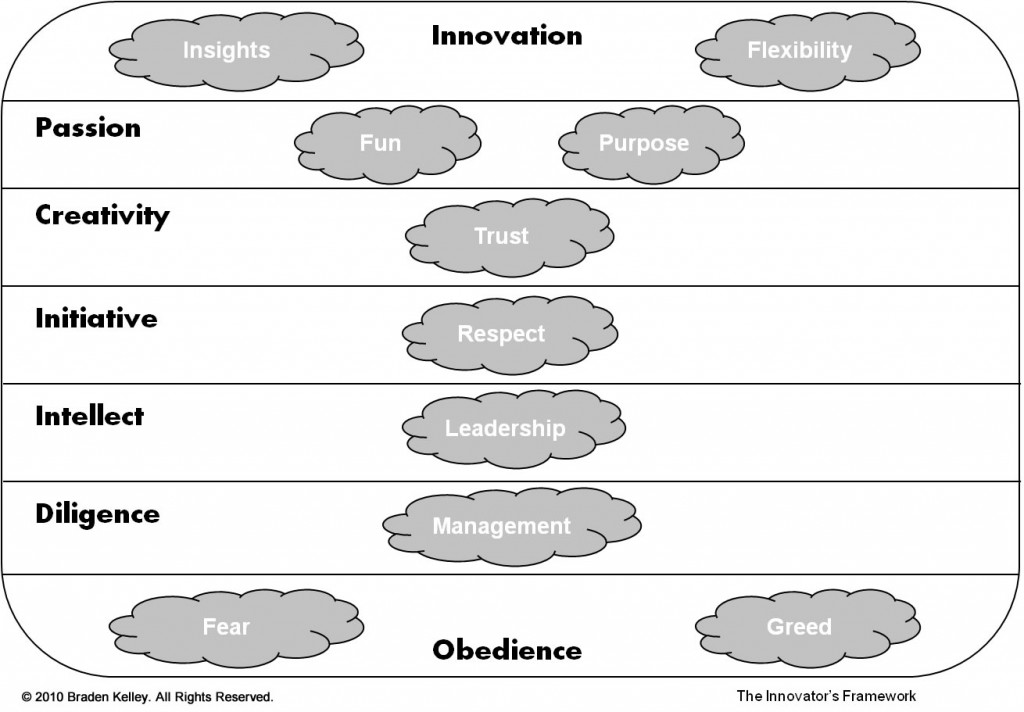
Innovators Framework(one of the many concepts introduced in my first book Stoking Your Innovation Bonfire)

Building on the work of London Business School’s Gary Hamel and shifting to an Employee Relationship Management (ERM) mindset we can get beyond the obedience, diligence and intellect that fear, greed, management and leadership can deliver, and instead focus on unlocking the initiative, creativity, passion and innovation that will drive the organization to higher levels of success and continuing relevance with customers.

Employee Relationship Management (ERM) is the Future of HR

We must reimagine our approach to the humans in our organizations and to recognize and leverage their uniqueness instead of treating them as replaceable cogs in a machine.

The time has come for organizations to manage both the experiences and the relationships with each of their employees as individuals to make the collective stronger, healthier, and more resilient.

Now is the time to build a conscious, measured, professional approach to Employee Relationship Management (ERM).

What say you?

Accelerate your change and transformation success

Subscribe to Human-Centered Change & Innovation WeeklySign up here to get Human-Centered Change & Innovation Weekly delivered to your inbox every week.

Co-creating Change

Involving Employees in the Change Process

Co-creating Change

GUEST POST from Chateau G Pato

Change is inevitable in today’s rapidly evolving business environment. To ensure successful and sustainable change initiatives, organizations are increasingly recognizing the importance of involving employees in the change process. By harnessing the collective wisdom and creativity of their workforce, companies can effectively co-create change, driving innovation and fostering a culture of continuous improvement. This thought leadership article explores the benefits of employee involvement in change and presents two case studies demonstrating the positive impact of this approach.

Case Study 1: Zappos – Holacracy and Cultural Transformation

Zappos, an online shoe and clothing retailer, embarked on a radical change journey by embracing a self-management system called Holacracy. The company’s CEO, Tony Hsieh, understood the significance of involving employees in the decision-making process to empower and engage them during the change.

Using a participatory approach, Zappos invited employees to provide feedback, suggestions, and ideas through town hall meetings, online forums, and workshops. By involving employees at all levels, they were able to garner a sense of ownership and commitment towards the change initiative.

The shift towards Holacracy resulted in increased employee autonomy, flattened hierarchies, and improved decision-making. By embracing employee perspective and experience, Zappos successfully transformed its organizational culture, fostering a work environment that encourages innovation and collaboration.

Case Study 2: Toyota – Kaizen and Continuous Improvement

Toyota, a pioneer of lean manufacturing practices, exemplifies the power of involving employees in the change process through their Kaizen philosophy. Kaizen, which means “continuous improvement,” is a systematic approach that encourages employees at every level to contribute their ideas to enhance processes, eliminate waste, and drive efficiency.

Toyota prioritizes employee involvement in identifying operational bottlenecks, exploring improvement opportunities, and implementing solutions. They achieve this through suggestion systems, team meetings, and regular communication channels that ensure employees feel heard and valued.

By involving employees in the change journey, Toyota has achieved remarkable results. With over 60 years of continuous improvement, their production facilities have become more flexible, efficient, and capable of delivering higher quality products. The Kaizen mindset, nurtured through employee involvement, has become deeply ingrained in the company’s culture and serves as a foundation for sustained growth and innovation.

Key Benefits of Employee Involvement in Change:

1. Enhanced Ownership and Commitment: Involving employees in the change process creates a sense of ownership, empowering them to actively contribute and take responsibility for the results.

2. Increased Engagement and Motivation: When employees are engaged in change initiatives, they feel valued, leading to higher levels of motivation, job satisfaction, and improved performance.

3. Access to Diverse Perspectives and Ideas: By involving employees, organizations can tap into the collective wisdom and experience of their workforce, generating a broader range of innovative solutions and fostering a culture of creative problem-solving.

4. Improved Change Adoption and Sustainability: Employee involvement increases the chances of successful change adoption and sustainability as employees become advocates for the change, helping their colleagues adapt and overcome resistance.

Conclusion

Involving employees in the change process is vital in today’s dynamic business landscape. The case studies of Zappos and Toyota demonstrate the transformative power of co-creating change with employees. By fostering a culture that embraces employee involvement, organizations can unlock the full potential of their workforce, enhancing innovation, productivity, and adaptability. Ultimately, organizations that recognize and leverage the contributions of their employees stand the best chance of achieving long-term success in an ever-evolving business world.

SPECIAL BONUS: Futurology is not fortune telling. Futurists use a scientific approach to create their deliverables, but a methodology and tools like those in FutureHacking™ can empower anyone to engage in futurology themselves.

Image credit: Pexels

Subscribe to Human-Centered Change & Innovation WeeklySign up here to get Human-Centered Change & Innovation Weekly delivered to your inbox every week.

How to Perform a Technology Assessment

How to Perform a Technology Assessment

GUEST POST from Art Inteligencia

Technology assessments are essential to any organization that wants to remain competitive and to stay up-to-date with the latest technological advancements. A technology assessment is a comprehensive analysis of the current and future state of an organization’s technology infrastructure, including hardware, software, networking and communications, and processes.

The purpose of a technology assessment is to identify areas in which the organization’s technology can be improved, and to recommend strategies and solutions to improve performance and reliability. A technology assessment can also help organizations identify opportunities to take advantage of new technology.

The following steps can help organizations conduct a successful technology assessment:

1. Gather Information

Before starting a technology assessment, it is important to first gather information about the organization’s current technology infrastructure and usage. This includes gathering data on hardware, software, networking, and communications. It can also be beneficial to collect information from users and other stakeholders about their technology needs and preferences.

2. Analyze Data

Once the data has been collected, it is important to analyze it to identify areas for improvement. This analysis should include an examination of the organization’s current technology infrastructure and usage, as well as an assessment of the organization’s future needs and goals.

3. Develop Technology Strategies

After analyzing the data, the next step is to develop technology strategies to meet the organizational goals. These strategies should consider both short-term and long-term goals and take into account the organization’s budget and other resources.

4. Create a Plan

Once the strategies have been developed, it is important to create a plan to implement them. This plan should include timelines and milestones, as well as budgets and resources needed to meet the goals.

5. Monitor and Adjust

Finally, it is important to monitor the progress of the technology assessment and make adjustments as needed. This will ensure that the assessment remains on track and that the organization is able to keep up with the latest technological advancements.

By following these steps, organizations can conduct a successful technology assessment and ensure that their technology infrastructure is up-to-date and optimized for the greatest efficiency and productivity.

If you’re still not clear what a technology assessment is, then check out my previous post:

What is a Technology Assessment?

Image credit: Pixabay

Subscribe to Human-Centered Change & Innovation WeeklySign up here to get Human-Centered Change & Innovation Weekly delivered to your inbox every week.

What is Trend Monitoring?

Trend Monitoring: How to Track the Latest Market Developments

What is Trend Monitoring?

GUEST POST from Art Inteligencia

In today’s fast-paced business world, staying ahead of the competition is a must. Companies need to stay on top of the latest trends in the market to ensure they’re not left behind. That’s where trend monitoring comes in.

Trend monitoring is the process of researching and tracking emerging trends in the market. It’s a critical tool for staying competitive and staying ahead of the competition. By tracking the latest developments in the market, you’ll be able to spot opportunities and capitalize on them.

The most effective way to monitor trends is to have a dedicated team of professionals who are constantly researching the latest developments and tracking the market. This team should include experts in the industry and market analysts who can provide the latest information on trends.

Once you have a team in place, you’ll need to set up a process for monitoring trends. This process should include identifying key trends to monitor, researching the latest developments, and tracking the market on a regular basis.

To identify key trends, you’ll need to look at the market both broadly and narrowly. Start by looking at larger trends such as macroeconomic and demographic changes. Then drill down and look at narrower trends such as industry-specific changes.

Once you’ve identified the key trends, you’ll need to research them. This includes gathering data, analyzing it, and drawing conclusions. You’ll also need to track the market on a regular basis to spot any changes.

Finally, you’ll need to act on the information you’ve gathered. This could include adjusting your marketing strategy, launching new products, or changing your pricing model.

By monitoring trends in the market, you’ll be better equipped to stay ahead of the competition and take advantage of new opportunities. It’s a critical tool for any business looking to stay competitive and profitable.

Now, some of you may be wondering how to spot trends in the first place or what trend spotting is. If so, then check out my previous article – What is Trend Spotting?

Bottom line: Trend monitors are not quite the same thing as futurists, but trend monitoring is a component of futurology. Trend monitors use a formal approach to achieve their outcomes, but a methodology and tools like those in FutureHacking™ can empower anyone to be their own futurist and trend monitor.

Image credit: Pexels

Subscribe to Human-Centered Change & Innovation WeeklySign up here to get Human-Centered Change & Innovation Weekly delivered to your inbox every week.
An Innovation Evangelist Can Increase Your Reputation and Innovation Velocity

Chief Evangelist Braden Kelley

by Braden Kelley

Building upon my popular article Rise of the Evangelist, I wanted to create an article for the global innovation community focused specifically on the importance of the innovation evangelist role.

In my previous article I defined five different types of evangelists that organizations may already have, or may want to hire, including:

  1. Chief Evangelist
  2. Brand Evangelists
  3. Product Evangelists
  4. Service Evangelists
  5. Innovation Evangelists

This specialization occurs when the evangelism an organization needs become too big for one evangelist to handle. At that point, a Chief Evangelist creates the evangelism strategy and manages the execution across the team of brand, innovation, and other evangelism focus areas.

When should an organization focus on innovation evangelism?

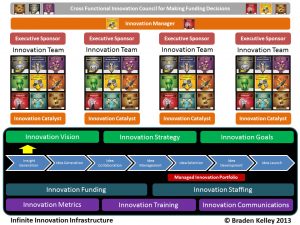
To continue to exist as a business, every organization should build an infrastructure for continuous innovation, but many don’t. If you’re not sure what this looks like, here is my Infinite Innovation Infrastructure (which leverages the Nine Innovation Roles):

Infinite Innovation Infrastructure

For those organizations investing in innovation, it is crucial to also invest in innovation evangelism when:

  1. Innovation is part of the company’s strategy
  2. Innovation is central to competitive differentiation
  3. The company wants to share their innovation stories
  4. The company wants to partner with customers to innovate
  5. The company wants to partner with suppliers to innovate
  6. The company wants to engage experts in innovation
  7. The company wants to engage the general public in innovation

You’ll notice many of these points hint at the need for an external talent strategy, and Innovation Evangelism must play a key role. Because of this, I encourage you to download and consult the success guide I created for Innocentive on Harnessing the Global Talent Pool to Accelerate Innovation which focuses on the elements and importance of external talent in any company’s innovation efforts.

Bill Joy, a co-Founder of Sun Microsystems, once famously said:

“There are always more smart people outside your company than within it.”

Any external talent strategy must accumulate energy and then unleash it in a focused direction. And part of the way to do that is by establishing a common language of innovation. The process begins by defining what innovation means to your organization. Consider looking at this as the WHO – WHAT – WHEN – WHERE – WHY – HOW of innovation:

  • WHO is to be involved in your innovation efforts?
  • WHAT does innovation mean to you? WHAT types of innovation are you focused on?
  • WHEN will you be looking for innovation input?
  • WHERE can people go to find out more? WHERE do they go to contribute?
  • WHY should people want to participate?
  • HOW can they participate?

Continue reading this article on InnovationManagement.se

… where we will answer these questions and more:

  • Should innovation evangelism be a role or a job?
  • What does an innovation evangelist do?
  • What makes a good innovation evangelist?


Accelerate your change and transformation success

Subscribe to Human-Centered Change & Innovation WeeklySign up here to get Human-Centered Change & Innovation Weekly delivered to your inbox every week.
What is Trend Analysis?

What is Trend Analysis?

GUEST POST from Art Inteligencia

Trend analysis is an important tool for businesses, and it’s essential to understand how to use it in order to stay competitive. Trend analysis is the process of looking at data points over time to identify patterns and changes in behavior. It can help businesses identify opportunities, risks, and trends in the market, and it’s a great way to measure performance and plan for the future.

Trend analysis can be used to analyze past and current data, and it can also be used to predict future trends. By looking at patterns in the data, businesses can identify correlations and relationships between different variables that can inform decision-making. This can help businesses anticipate changes in the market and develop strategies to capitalize on them.

Trend analysis can be used to measure customer behavior, demand for products and services, and the effectiveness of marketing campaigns. It can also be used to identify seasonal trends, such as shopping habits during the holidays, and to monitor the performance of competitors.

Businesses can use trend analysis to identify potential opportunities and risks in the market. By analyzing past data, businesses can identify potential opportunities and create strategies to take advantage of them. They can also use trend analysis to identify potential risks and develop strategies to mitigate them.

PESTLE analysis can be used in trend analysis to identify key drivers of change.

PESTLE stands for Political, Economic, Social, Technological, Legal, and Environmental factors. It is an acronym used to analyze and assess the external environment of an organization in order to identify any potential opportunities or threats that may affect its operations. PESTLE analysis provides a comprehensive view of the external environment in which a business operates and can be used to identify potential risks and advantages that may not be immediately obvious.

This can help to identify potential opportunities and threats that may arise from changes in the external environment. By understanding how trends in these factors may impact your business, you can better plan for the future and ensure that your business remains competitive.

Trend analysis can also be used to track progress and measure the success of a business. By looking at data points over time, businesses can track their progress and measure the success of their strategies. This can help them identify areas of improvement and adjust their strategies accordingly.

Trend analysis is a powerful tool for businesses, and it’s essential to understand how to use it in order to stay competitive. By analyzing data points over time, businesses can identify trends, opportunities, and risks in the market and develop strategies to capitalize on them. It’s a great way to measure performance and plan for the future, and it can help businesses stay ahead of the competition.

Bottom line: Futurology is not fortune telling. Futurists use a scientific approach to create their deliverables, but a methodology and tools like those in FutureHacking™ can empower anyone to engage in futurology themselves.

Image credit: Pixabay

Subscribe to Human-Centered Change & Innovation WeeklySign up here to get Human-Centered Change & Innovation Weekly delivered to your inbox every week.
What is Trend Spotting?

What is Trend Spotting?

GUEST POST from Art Inteligencia

I am sure everyone has heard the term “trend spotting”, but what does it actually mean? Trend spotting is the process of identifying emerging trends in the marketplace and using them to inform strategic decision-making. Businesses have been using trend spotting to stay ahead of their competition and capitalize on emerging markets for decades.

Trend spotting can be used to identify new customer demographics, changing tastes and preferences, and upcoming products and services. It is a way to stay ahead of the curve, as trends can provide insights into what will be popular in the future.

There are several methods used to spot trends. Some businesses use surveys and polls to gauge customer sentiment and get an idea of what people are looking for. Others use competitive analysis to identify what their rivals are doing and where they are succeeding. Businesses can also use market research to track changes in the marketplace and stay ahead of the curve.

However, it’s important to remember that trend spotting isn’t an exact science. Trends can change quickly and the results of trend spotting can be unpredictable. Businesses should use a variety of methods and sources when trying to spot trends. They should also be aware that trends can be short-lived and should always be open to new ideas.

Trend spotting is an important tool for businesses looking to stay ahead of the competition and capitalize on emerging markets. However, it’s important to remember that it is not an exact science and can be unpredictable. Businesses should always be open to new ideas and use a variety of methods and sources when trying to spot trends.

Bottom line: Trend spotters are not quite the same thing as futurists, but trend spotting is a component of futurology. Trend spotters use a formal approach to achieve their outcomes, but a methodology and tools like those in FutureHacking™ can empower anyone to be their own futurist and trend spotter.

Image credit: Pixabay

Subscribe to Human-Centered Change & Innovation WeeklySign up here to get Human-Centered Change & Innovation Weekly delivered to your inbox every week.