Author Archives: Robyn Bolton

About Robyn Bolton

Robyn M. Bolton is the founder and chief navigator of MileZero, a consultancy that helps leaders use innovation to confidently and consistently grow revenue. She is also an assistant professor at the Massachusetts College of Art and Design, where she teaches innovation and strategy courses. She is the author of "Unlocking Innovation: A Leader’s Guide for Turning Bold Ideas into Tangible Results." She previously worked at Innosight, the innovation and strategy firm founded by Clayton Christensen; the Boston Consulting Group; and Procter & Gamble, where she helped develop and launch Swiffer. Bolton holds an MBA from Harvard Business School and a BS in marketing from Miami University. If you are frustrated that your innovation efforts are not producing results, she offers a free one-sheet with 5 Ways to Get Rapid Results from Innovation at www.MileZero.io

Five Must Reads for 2025

Five Must Reads for 2025

GUEST POST from Robyn Bolton

‘Tis the season for “year in review” and “top 10 lists.”  As fun (and sometimes frightening) as it is to look back, it is just as fun (and sometimes frightening) to look ahead.  After all, as innovators, that is what we naturally do.  So, in anticipation of the year ahead, here are 5 Must Reads to make 2025 far more fun than frightening.

(listed in alphabetical order by author’s last name so I can’t be accused of playing favorites)

Pay Up! Unlocking Insider Secrets of Salary Negotiation by Kate Dixon
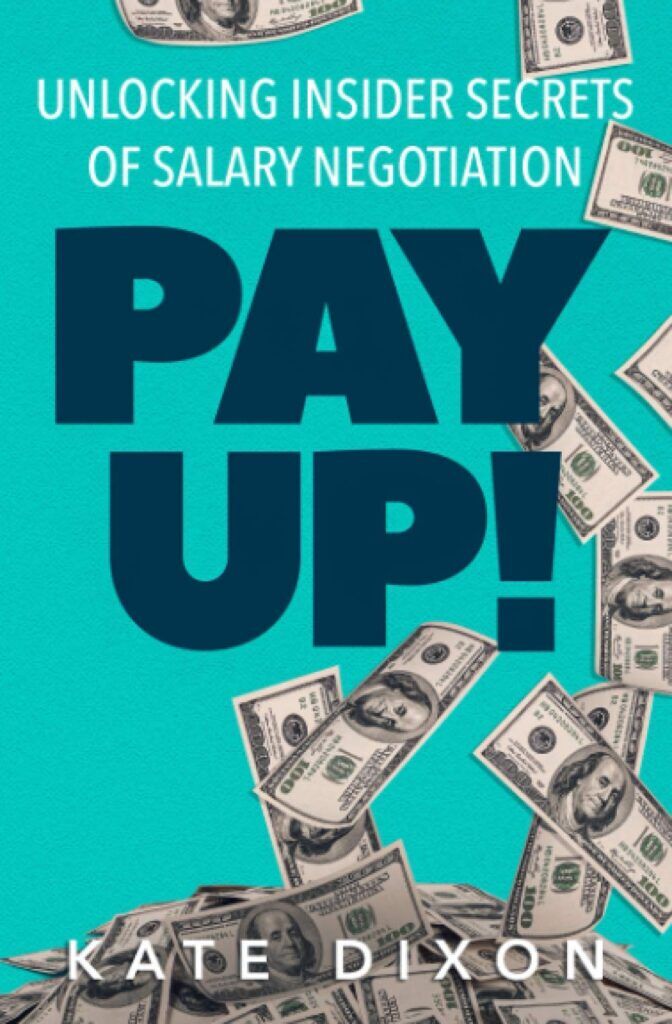
Pay Up! Unlocking Insider Secrets of Salary Negotiation
  • This book is for everyone, especially… people who want to earn what they deserve
  • This book solves the problem of…the black box that is compensation and the fear of negotiating for what you’re worth
  • This book creates value by… Outlining a step-by-step system to:
    • Understand key terms and concepts and apply them to your situation
    • Research the information you need to confidently and competently negotiate
    • Know what to say and do (and NOT say or do) in the moment
  • Why I love this book: Full disclosure – Kate and I are friends, so I’ve had a front-row seat to her wisdom and humor (how many compensation books invoke Beyonce?) and the jaw-dropping impact she gets for her clients.  I’ve even gifted this book to others because I know it works!

Disrupt Yourself: Putting the Power of Disruptive Innovation to Work by Whitney Johnson
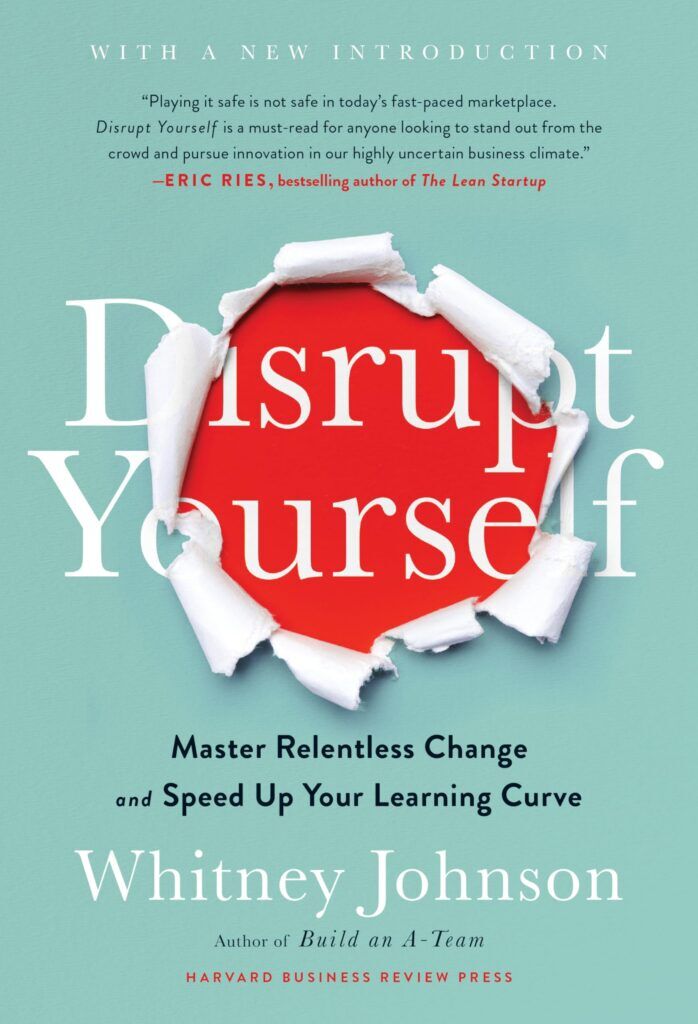
Disrupt Yourself - Putting the Power of Disruptive Innovation to Work
  • This book is for everyone, especially… people who are rethinking their careers and are ready for change
  • This book solves the problem of… knowing how to start redefining your career (and yourself)
  • This book creates value by… Turning Clayton Christensen’s Theory of Disruption into four principles for self-disruption, including:
    • Identifying your disruptive strengths
    • Stepping backward or sideways to grow
    • Patiently waiting for your career (and legacy) to emerge
  • Why I love this book: Two quotes: (1) “Disruption starts as an inside game” and (2) “Constraints can be the perfect remedy if you are having a difficult time.”

Live Big! A Manifesto for a Creative Life by Rochelle Seltzer
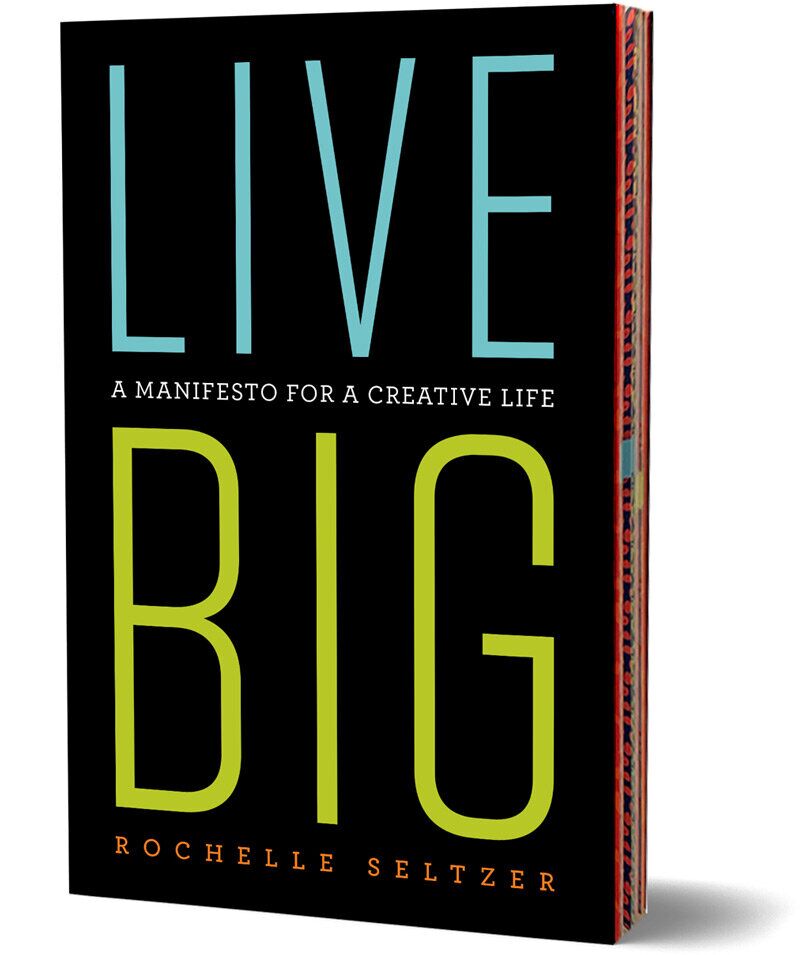
Live Big! A Manifesto for a Creative Life
  • This book is for everyone, especially… people who want to experience daily joy and creativity
  • This book solves the problem of…feeling stuck in the day-to-day reality of life, uncertain whit how to begin, and afraid to make big, drastic changes
  • This book creates value by… Offering 20 tips for:
    • Becoming a person who Lives Big, including slowing down, aligning to your purpose, and being patient
    • Acting big, including listening to your intuition, embracing change, and carrying on
    • Savoring the small joys of life, including the gorgeous design of the book
  • Why I love this book: Rochelle’s Discovery Dozen exercise is a game-changer.  I learned this tool when she was my coach, and I have continued to use it for everything from naming my business, to deciding if/when/how to act on an opportunity, and writing articles.

The Coaching Habit: Say Less, Ask More & Change the Way You Lead Forever by Michael Bungay Steiner
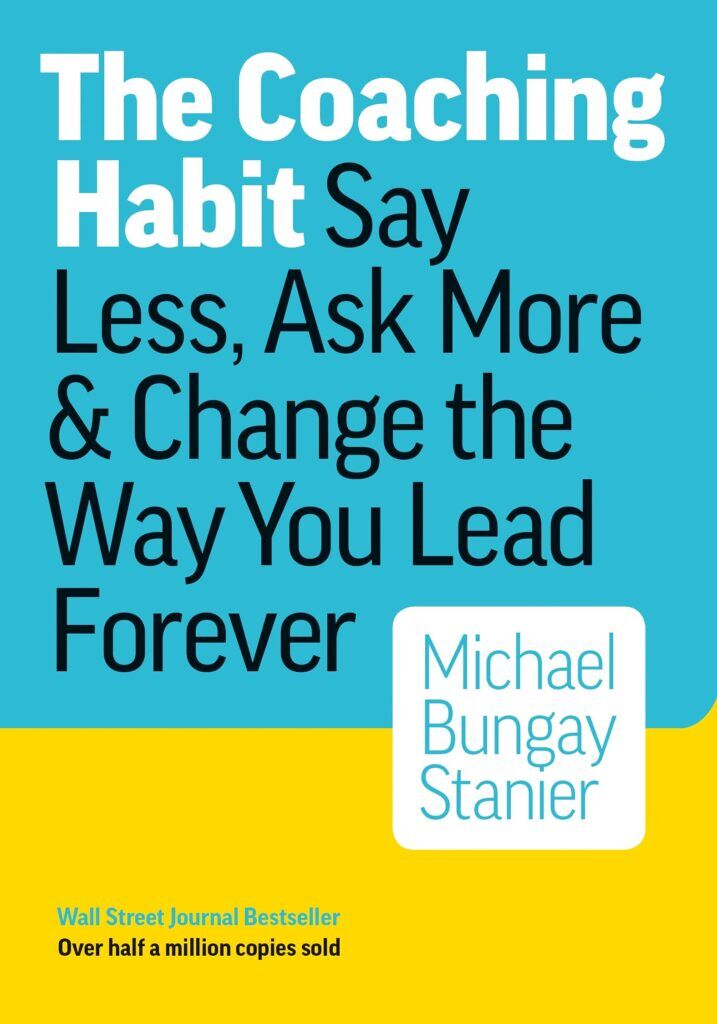
The Coaching Habit - Say Less, Ask More - Change the Way You Lead Forever
  • This book is for everyone, especially... busy managers who want to be better people leaders
  • This book solves the problem of…balancing hands-on management with team empowerment and individual development
  • This book creates value by… Guiding you through seven questions that help you:
    • Work less hard while having more impact
    • Break cycles of team overdependence and workplace overwhelm
    • Turn coaching and feedback from an occasional formal event into a daily habit
  • Why I love this book: A copy of the 7 questions sits just below my monitor, reminding me to be curious, dig deeper, and that every decision is a choice to do one thing and not another.

Readers Choice!

Version 1.0.0
Version 1.0.0

It’s audience participation time!  In the comments below, drop YOUR recommendation for a 2025 Must Read.

Bonus points for telling us:

  • Who it’s for
  • Problem it solves
  • Value it creates
  • Why you love it

Image credit: MileZero, Misterinnovation.com

Subscribe to Human-Centered Change & Innovation WeeklySign up here to join 17,000+ leaders getting Human-Centered Change & Innovation Weekly delivered to their inbox every week.


The Twelve Killers of Innovation

A Corporate Carol About Why You’re Not Getting Results

The Twelve Killers of Innovation

GUEST POST from Robyn Bolton

Last week, InnoLead published a collection of eleven articles describing the root causes and remedies for killers of innovation in large organizations.  Every single article is worth a read as they’re all written by experts and practitioners whose work I admire.

I was also inspired.

In the spirit of the hustle and bustle of the holiday season, I gave into temptation, added my own failure mode, and decided to have a bit of fun.

The Twelve Killers of Innovation

(Inspired by the Twelve Days of Christmas yet relevant year-round)

On the twelfth day of innovating, management gave to me:

Twelve leaders short-term planning

Eleven long projects dragging

Ten cultures resisting

Nine decisions made too quickly

Eight competing visions

Seven goals left unclear

Six startups mistrusted

Five poorly defined risks

Four rigid structures

Three funding black holes

Two teams under-staffed

And a bureaucracy too entrenched to change

Want to write a happier song?

Each of the innovation killers can be fended off with enough planning, collaboration, and commitment.  To learn how, check out the articles:

Twelve leaders short-term planning – 3 Examples of Why Innovation is a Leadership Problem by Robyn Bolton, MileZero

Eleven long projects dragging – Failing Slow by Clay Maxwell, Peer Insight

Ten cultures resisting – How to Innovate When Resistance is Everywhere by Trevor Anulewicz, NTT DATA

Nine decisions made too quickly – Red Light, Green Light by Doug Williams, SmartOrg Inc.

Eight competing visions – The Five Most Common Innovation Failure Modes by Parker Lee, Territory Global

Seven goals left unclear – Mitigating Common Failure Modes by Jim Bodio, BRI Associates

Six startups mistrusted – Developing a New Corporate Innovation Model by Satish Rao, Newlab

Five poorly defined risks – Strategic Innovation is too Scary by Gina O’Connor, Babson College

Four rigid structures – Corporate Innovation is Dead by Ryan Larcom, High Alpha Innovation

Three funding black holes – Failure Modes by Jake Miller, The Engineered Innovation Group

Two teams under-staffed – Why Innovation Teams Fail by Jacob Dutton, Future Foundry

And a bureaucracy too entrenched to change – Building Resilient Teams by Frank Henningsen, HYPE Innovation

How are you going to make sure that you receive gifts and not coal this year for all your innovation work?

Image credit: Pexels

Subscribe to Human-Centered Change & Innovation WeeklySign up here to join 17,000+ leaders getting Human-Centered Change & Innovation Weekly delivered to their inbox every week.

The Fears of Your Colleagues

The Fears of Your Colleagues

GUEST POST from Robyn Bolton

“We identified four opportunities for market expansion, all adjacent to our current business, and entry into any one of them is almost guaranteed to materially grow our business.   But no one is doing anything.”

I wanted to be surprised.  Instead, I sighed and asked the question I knew he couldn’t answer.

“What are your colleagues afraid of?”

The Four Horsemen of the Innovation Apocalypse

Most of the time, when opportunities are clear, but action is absent, it’s because one of the first three horsemen of the innovation apocalypse appeared:

  • Short-termism: “The CFO is worried we may miss the quarter, so we’re starting to make cuts.”
  • Size:  “We have a new President coming in who wants to put his stamp on things, so he’s cutting anything that won’t double our business in three years.”
  • Scarcity: “We’re implementing a new process, and this would just be one thing too many for people to handle.”

The business my client described has doubled in the past five years. After fifty years of steady, reliable, and predictable revenue, its top line suddenly became the mythical “hockey stick of growth.”  The technological driver of this change is more likely to be the “new normal” than a fad, so the business is expected to double again in the next five years.

Leadership isn’t worried about delivering the next quarter, year, or five years. They know that they have the resources they need and can access more when the time is right.  They’re confident that the opportunities identified are feasible and meaningful.

Yet, they will not act.

I’m not afraid.  I’m biased!

Behavioral economists, psychologists, and sociologists explain situations like the above by pointing out our “cognitive biases”—the “irrational errors that are programmed into our brains.”  For example, the first three horsemen could be known as Present Bias, the hard-easy effect, and Loss Aversion. 

As of 2024, over 150 cognitive biases have been identified.

While it’s comforting to blame programming bugs beyond our awareness and control for our “irrational errors,” this approach lets us off the hook a bit too easily.

I’m not biased.  I’m afraid!

Fear is at the root of most, if not all, of these biases because emotions, not programming bugs in our brains, drive our decisions. 

The study of how our emotions impact decision-making didn’t take off until the early 2000s. It really accelerated in 2015 when professors from Harvard, UC Riverside, Claremont McKenna College, and Carnegie Mellon published a meta-study on the topic and declared:

The research reveals that emotions constitute potent, pervasive, predictable, sometimes harmful and sometimes beneficial drivers of decision making. Across different domains, important regularities appear in the mechanisms through which emotions influence judgments and choices.

Bottom line – we decide with our hearts and justify with our heads.

Our hearts are afraid that we’ll lose the respect of our peers and loved ones, the reputations we’ve worked decades to build, the physical goods and intangible experiences that project our societal status, or the financial safety of a regular paycheck.

And, as my brilliant and kind sister told me, “These feelings we feel, these feelings are real.”

I’m afraid and biased and brave!

Next time you see someone (maybe you?) do something “irrational,”  get curious and ask:

  • What cognitive bias are they falling prey to? 
  • What is the fear that’s driving that bias? 
  • How can you help them to be brave, live with the fear, and move forward?

I’m curious…when was the last time you were afraid, biased, and brave?

Image credit: Pixabay

Subscribe to Human-Centered Change & Innovation WeeklySign up here to join 17,000+ leaders getting Human-Centered Change & Innovation Weekly delivered to their inbox every week.

‘Twas the Night Before Launch Day

Twas the Night Before Launch Day

GUEST POST from Robyn Bolton

‘Twas the night before launch day, when throughout HQ,
Not a worker had left, there was too much to do;
The plans were laid out by the whiteboard with care,
While our Innovation Chief Sarah planned with great flair;

The team was all nestled all snug at their posts,
While visions of success inspired them the most;
And Sarah in her blazer, so sharp and so bright,
Had just settled in for a long working night,

When out in the hall there arose such a clatter,
She sprang from her desk to see what was the matter.
When what to her wondering eyes should appear,
But the CEO and board, spreading holiday cheer!

“Now, ARCHITECTURE!” they cried, “We need strategy and rules!
Now BEHAVIORS and CULTURE!” – these ABC tools.
“Tell us Sarah,” they said, “how you’ll lead us to glory,
Through bringing new value – tell us your story!”

She smiled as she stood, confidence in her stance,
“The ABCs of Innovation aren’t left up to chance.
Architecture’s our framework, our process and measure,
Our governance model not built at our leisure;

“The Behaviors we foster? Curiosity leads,
With courage and commitment to meet future needs.
And Culture,” she said, with a twinkle of pride,
“Is how innovation becomes our natural stride.”

Her cross-functional team gathered ’round with delight,
Each bringing their skills to help win this big fight:
“From concept to testing, from planning to more,
We’re ready to launch what we’ve worked toward before!”

The CEO beamed and the board gave a cheer,
“This is exactly the progress we’d hoped for this year!
With Architecture to guide us, and Behaviors so strong,
Plus Culture to fuel us – well, nothing could go wrong!”

Then Sarah exclaimed, as they turned out the light,
“Happy launching to all, and to all a good night!
For tomorrow we share what’s been worth all the wait,
Guided by ABCs, we’ll make something great!”

Image credit: Microsoft CoPilot

Subscribe to Human-Centered Change & Innovation WeeklySign up here to join 17,000+ leaders getting Human-Centered Change & Innovation Weekly delivered to their inbox every week.

Ignoring Your Customers is the Key to Happiness

Ignoring Your Customers is the Key to Happiness

GUEST POST from Robyn Bolton

“Now I know why our researchers are so sad.”

Teaching at The Massachusetts College of Art and Design (MassArt) offers a unique perspective. By day, I engage with seasoned business professionals. By night, I interact with budding designers and artists, each group bringing vastly different experiences to the table.

Customer-centricity is the hill I will die on…
In my Product Innovation Lab course, students learn the innovation process and work in small teams to apply those lessons to the products they create.

We spend the first quarter of the course to problem-finding. It’s excruciating for everyone. Like their counterparts in business and engineering, they’re bursting with ideas, and they hate being slowed down. Despite data proving that poor product-market fit a leading cause of start-up failure and that 54% of innovations launched by big companies fail to reach $1M in sales (a paltry number given the scale of surveyed companies), they’re convinced their ideas are flawless.

We spend two weeks exploring Jobs to be Done and practicing interviewing techniques. But their first conversations sound more like interrogations than anything we did in class.

They return from their interviews and share what they learned. After each insight, I ask, “Why is that?” or “Why is that important?

Amazingly, they have answers.

While their first conversations were interrogations, once the nervousness fades, they remember their training, engage in conversations, and discover surprising and wonderful answers.

Yet the still prioritize the answers to “What” over answers to “Why?”

…Because it’s the hill that will kill me.
Every year, this cycle repeats. This year, I finally asked why, after weeks of learning that the answers to What questions are almost always wrong and Why questions are the only path to the right answers (and differentiated solutions with a sustainable competitive advantage), why do they still prioritize the What answers?

The answer was a dagger to my heart.

“That’s what the boss wants to know,” a student explained. “Bosses just want to know what we need to build so they can tell engineering what to make. They don’t care why we should make it or whether it’s different. In fact, it’s better if it’s not different.”

I tried to stay professional, but there was definitely a sarcastic tone when I asked how that was working.

“We haven’t launched anything in 18 months because no one likes what we build. We spend months on prototypes, show them to users, and they hate it. Then, when we ask the researchers to do more research because their last insights were wrong, they get all cra….OOOOHHHHHHHH…..”

(insert clouds parting, beams of sunlight shining down, and a choir of angels here)

“That’s why the researchers are so sad all the time! They always try to tell us the “Whys” behind the “Whats” but no one wants to hear it. We just want to know what to build to get to work. But we could create something people love if we understood why today’s things don’t work!”

Honestly, I didn’t know whether to drop the mic in triumph or flip the table in rage.

Ignorance may be bliss but obsolescence is not
It’s easy to ignore customers.

To send them surveys with pre-approved answers choices that can be quickly analyzed and neatly presented to management. To build exactly what customers tell you to build, even though you’re the expert on what’s possible and they only know what’s needed.

It’s easy to point to the surveys and prototypes and claim you are customer-centric. If only the customers would cooperate.

It’s much harder to listen to customers. To ask questions, listen to answers you don’t want to hear, and repeat those answers to more powerful people who want to hear them even less. To have the courage to share rough prototypes and to take the time to be curious when customers call them ugly.

So, if you want to be happy, keep pretending to care about your customers.

Pretty soon, you won’t have any left to bother you.

Image credit: Pexels

Subscribe to Human-Centered Change & Innovation WeeklySign up here to join 17,000+ leaders getting Human-Centered Change & Innovation Weekly delivered to their inbox every week.

How to Design Offsites That Generate Revenue

How to Design Offsites That Generate Revenue

GUEST POST from Robyn Bolton

Corporate offsites – the phrase conjures images of everything from “mandatory fun” with colleagues to long and exhausting days debating strategy with peers.  Rarely are the images something that entice people to sit up and shout, “YEA!” But what if the reality could be something YEA! worthy?

That’s exactly what the authors of the recent Harvard Business Review (HBR) article, “Why Offsites Work – and How to Get the Most Out of Them,” describe and offer a guide to accomplish.

Offsites May Be the Answer to the WFH vs. RTO Debate

Offsites aren’t new but they’ve taken on a new role and new significance as companies grapple with how to manage Work from Home (WFH) and Return To Office (RTO) policies. 

As with most things in life, the pendulum swings from one extreme to another until eventually, finally, landing in a stable and neutral midpoint.  When the pandemic hit, we swung from every day in the office to every day at home.  Then society opened back up and corporate landlords came calling for rent, whether or not people were in the offices, so we swung back to Return to Office mandates.

Offsites, the authors suggest, may be the happy medium between the two extremes because offsites:

“give people opportunities for interactions that otherwise might not happen. Offsites create unique opportunities for employees to connect in person, forming new relationships and strengthening existing ones. As a result, offsites help people learn about others’ knowledge and build interpersonal trust, which are both critical ingredients for effective collaboration.”

Offsite Connections Lead to Collaborations that Generate ROI

After analyzing eight years of data from a global firm’s offsites and 350,000 “instances of formal working relationships”  for 750 employees, the authors found that intentionally designed offsites (more on that in a moment) yield surprisingly measurable and lasting results:

  • 24% more incoming requests for collaboration amongst attendees post vs. pre-offsite (silos busted!)
  • 17% of new connections were still active two years after the offsite (lasting change!)
  • $180,000 in net new revenue from collaborations within the first two months post offsite (real results!)

The benefits event extended to non-attendees because they “seemed to get the message that collaboration is important and wanted to demonstrate their commitment to being collaborative team players” and “likely identified new collaborators after the offsite through referrals.”

How to Design Offsites That Get Results

Four key strategies emerged from the authors’ research and work with over 100 other organizations:

  1. Design for the people in the audience, not the people on stage.  Poll attendees to understand their specific needs and goals, then design collaborative activities, not management monologues.
  2. Design for the new hires, not the tenured execs.  Create opportunities for new hires to meet, connect with, and work alongside more experienced colleagues.
  3. Set and communicate clear goals and expectations.  Once the offsite is designed and before it happens, tell people what to expect (the agenda) and why to expect it (your design intentions and goals).  Also, tell them how to make the most of the offsite opportunities by thinking about the skill and network gaps they want to fill.
  4. Track activities to measure ROI.  The connections, collaborations, and commitments that start at the offsite need to continue after it in the form of ongoing communication, greater collaboration, and talent engagement.  Yes, conduct a post-event survey immediately after the event but keep measuring every 2-3 months until the next offsite.  The data will reveal how well you performed against your goals and how to do even better the next time.

Offsites can be a powerful tool to build an organization’s culture and revenue, but only if they are thoughtfully designed to go beyond swanky settings, sermons from the stage, and dust-collecting swag and build the connections and collaborations that only start when people are together, in-person, outside of the office.

Image credit: Unsplash

Subscribe to Human-Centered Change & Innovation WeeklySign up here to join 17,000+ leaders getting Human-Centered Change & Innovation Weekly delivered to their inbox every week.

You Are Doing Strategic Planning Wrong

(According to Seth Godin)

You Are Doing Strategic Planning Wrong

GUEST POST from Robyn Bolton

It’s that time of year again – the annual ritual of strategic planning. But as Seth Godin points out in “How to Avoid Strategy Myopia,” we often mistake annual budgets and operational efficiency plans for true strategy. Strategies are not plans or guarantees; they’re informed choices to pursue possibilities that may or may not work.

Godin’s insights, while often associated with innovation, are fundamentally about strategy in its purest form. They challenge us to look beyond next quarter’s earnings and focus on transformative potential just beyond our current vision.

The Myth of “Strategic Planning”

Consider for a moment the last strategic planning session you attended. Was it dominated by discussions of cost-cutting measures, market share percentages, and incremental improvements? If so, you’re not alone. Many organizations focus on optimizing their current operations, behavior that is reinforced by the processes, templates, and forms required to secure next year’s funding.

However, as Godin warns, “When the boss demands a strategy that comes with certainty and proof, we’re likely to settle for a collection of chores, tasks, and tactics, which is not the same as an elegant, resilient strategy. To do strategy right, we need to lean into possibility.”

The Realities We Must Confront

Godin challenges us to confront several uncomfortable truths:

Today’s data doesn’t predict tomorrow: Executives rely heavily on easily measurable metrics based on false proxies when they make decisions. While these metrics provide a sense of control and comfort, they close our eyes to emerging opportunities and threats.  When AT&T’s executives considered exiting the cell phone market in the 1980s, they turned to McKinsey to find data to inform their decision.  Estimating that the total worldwide market for cell phones was 900,000, AT&T executives were comfortable exiting.   It’s unknown if that comfort was worth the $11.5 billion AT&T spent to acquire McCaw Cellular in 1995.

Serving everyone serves no one: “Strategy myopia occurs when we fail to identify who we seek to serve and focus on what we seek to produce instead.”  AMEN!  True strategy begins with a deep understanding of our customers’ evolving needs, not just their current preferences. This requires empathy, foresight, and a willingness to challenge our assumptions.  It also requires us to listen and act on what we hear from customers and not just from our bosses.

“All of the Above” is not an option: Strategy requires that we make choices and is as much about what we choose not to do as what we commit to doing. It requires the courage to say no to good opportunities in service of great ones.  It requires facing your FOMO (Fear of Missing Out), loss aversion bias, and finding the courage to keep going.

5 Practical Steps You Can Take

If any of these sound familiar, it’s because they’re also innovation best practices. 

  1. Dedicate One Day per Month for Strategic Thinking: Set aside one full day each month for long-term strategic questions, free from the “Tyranny of Now.”
  2. Cultivate Diverse Perspectives: Invite and listen to voices from different backgrounds, disciplines, and levels within the organization.
  3. Embrace Small-Scale Experimentation: Run a series of small, low-cost, low-profile experiments instead of betting everything on a single initiative.
  4. Redefine Success Metrics: Move beyond traditional financial metrics to include indicators of future potential, such as customer lifetime value and adaptability to change.
  5. Foster a Culture of Questioning: Channel your inner two-year-old and ask “why” with genuine curiosity. Encourage your team to challenge assumptions because the most transformative strategies often emerge from questioning the status quo.

As we continue through this season of strategic planning, let’s challenge ourselves to think beyond the annual budget. Let’s envision the future we want to create and chart a course to get there. After all, in the words of Godin himself, “It doesn’t matter how fast you’re going if you’re headed in the wrong direction.”

Image credit: Pexels

Subscribe to Human-Centered Change & Innovation WeeklySign up here to join 17,000+ leaders getting Human-Centered Change & Innovation Weekly delivered to their inbox every week.

Why Reason Matters

Why Reason Matters

GUEST POST from Robyn Bolton

How many times a day do you ask someone to do something? If you total all the requests you make of coworkers, family members, friends, people at restaurants and shops, and even strangers, the total is somewhere between 100 and 1 bazillion.  Now, what if I told you that by including just one word in your request, the odds of receiving a positive response increase by 50%?

And no, that word is not “please.”

The real magic word

Harvard 1978.  Decades before everyone had access to computer labs, home computers, and personal printers, students had to line up at the copy machine to make copies.  You could easily spend hours in line, even if you only had a few copies to make.  It was an inefficient and infuriating problem for students.

It was also a perfect research opportunity for Ellen Langer, a professor in Harvard’s Psychology Department.

Prof. Langer and her colleagues asked students to break into the line using one of three phrases:

  1. “Excuse me, I have five pages.  May I use the xerox machine?”
  2. “Excuse me, I have five pages.  May I use the xerox machine, because I have to make copies?”
  3. “Excuse me, I have five pages.  May I use the xerox machine, because I’m in a rush?”

The results were definitive and surprising.  Students who used the first phrase were successful 60% of the time, but those who used the phrases with “because” were successful 93% and 94% of the time.

“Because” matters.  The reason does not.

Note that in phrases two and three, the reason the student is asking to cut in line isn’t very good. You can practically hear the snarky responses, “Of course, you have to make copies; why else would you be at the copy machine?” or “We’re all in a rush,” and the request is denied.

But that didn’t happen.

Instead, the research (and hundreds of subsequent studies) showed that when the ask is simple or familiar,  people tend to follow instructions or respond positively to requests without paying attention to what’s said, even if the instructions don’t make sense or the request disadvantages them in some way.   Essentially, people hear “because,” assume it’s followed by a good reason and comply.

“Because” matters.  How you use it matters more.

The power of “because” isn’t about manipulation or coercion. It’s about fostering a culture of transparency, critical thinking, and effective communication.

Taking the time to think about when and how to communicate the Why behind your requests increases your odds of success and establishes you as a strategic and thoughtful leader.  But building your “Because’ habit takes time, so consider starting here:

Conduct a “Because” Audit: For one day, track your use of “because.” How many times do you make a request?  How many times to you explain your requests with “because?”  How many times do you receive a request, and how many of those include “because?”  Simply noticing when “because” is used and whether it works provides incredible insights into the impact it can have in your work.

Connect your “Becauses” As leaders, we often focus on the “what” and “how” of directives, but the “why” is equally crucial. Take your top three strategic priorities for the quarter and craft a compelling “because” statement that clearly articulates the reasoning behind it. For instance, “We’re expanding into the Asian market because it represents a $50 billion opportunity that aligns perfectly with our core competencies.” This approach not only provides clarity but also helps in rallying your team around a common purpose.

Cascade the “Because” Habit: Great leaders don’t just adopt best practices; they institutionalize them. Challenge your direct reports to incorporate “because” into their communications. When they bring you requests, ask them for the “because” if they don’t offer it.  Make it a friendly competition and celebrate people who use this technique to drive better outcomes.

Tell me how you’ll start because then you’re more likely to succeed.

(see what I did there?)

Image credit: Pexels

Subscribe to Human-Centered Change & Innovation WeeklySign up here to join 17,000+ leaders getting Human-Centered Change & Innovation Weekly delivered to their inbox every week.

An Innovation Leadership Fable

Wisdom from the Waters

An Innovation Leadership Fable

GUEST POST from Robyn Bolton

Once upon a time, in a lush forest, there lived a colony of industrious beavers known far and wide for their magnificent dams, which provided shelter and sustenance for many.

One day, the wise old owl who governed the forest decreed that all dams must be rebuilt to withstand the increasingly fierce storms that plagued their land. She gave the beavers two seasons to complete it, or they would lose half their territory to the otters.

The Grand Design: Blueprints and Blind Spots

The beaver chief, a kind fellow named Oakchew, called the colony together, inviting both the elder beavers, known for their experience and sage advice and the young beavers who would do the actual building.

Months passed as the elders debated how to build the new dams. They argued about mud quantities, branch angles, and even which mix of grass and leaves would provide structural benefit and aesthetic beauty.  The young beavers sat silently, too intimidated by their elders’ status to speak up.

Work Begins: Dams and Discord

As autumn leaves began to fall, Oakchew realized they had yet to start building. Panicked, he ordered work to commence immediately.

The young beavers set to work but found the new method confusing and impractical. As time passed, progress slowed, panic set in, arguments broke out, and the once-harmonious colony fractured.

One group insisted on precisely following the new process even as it became obvious that they would not meet the deadline.  Another reverted to their old ways, believing that a substandard something was better than nothing.  And one small group went rogue, retreating to the smallest stream to figure it out for themselves.

As the deadline grew closer, the beavers worked day and night, but progress was slow and flawed. In desperation, Oakchew called upon the squirrels to help, promising half the colony’s winter food stores.

Just as the first storm clouds gathered, Oakchew surveyed the completed dams. Many were built as instructed, but the rushed work was evident and showed signs of weakness. Most dams were built with the strength and craftsmanship of old but were likely to fail as the storms’ intensity increased. One stood alone and firm, roughly constructed with a mix of old and new methods.

Wisdom from the Waters: Experiments and Openness

Oakchew’s heart sank as he realized the true cost of their efforts. The beavers had met their deadline but at a great cost. Many were exhausted and resentful, some had left the colony altogether, and their once-proud craftsmanship was now shoddy and unreliable.

He called a final meeting to reflect on what had happened.  Before the elders could speak, Oakchew asked the young beavers for their thoughts.  The colony listened in silent awe as the young builders explained the flaws in the “perfect” process. The rogue group explained that they had started building immediately, learning from each failure, and continuously improving their design.

“We wasted so much time trying to plan the perfect dam,” Oakchew admitted to the colony. “If we had started building sooner and learned from our mistakes, we would not have paid such a high cost for success. We would not have suffered and lost so much if we had worked to ensure every beaver was heard, not just invited.”

From that day forward, the beaver colony adopted a new approach of experimentation, prototyping, and creating space for all voices to be heard and valued.  While it took many more seasons of working together to improve their dams, replenish their food stores, and rebuild their common bonds, the colony eventually flourished once more.

The Moral of the Story – (just in case it isn’t obvious)

The path to success is paved not with perfect plans but with the courage to act, the wisdom to learn from failures, and the openness to embrace diverse ideas. True innovation arises when we combine the best of tradition with the boldness of experimentation.

Image credit: Pixabay

Subscribe to Human-Centered Change & Innovation WeeklySign up here to join 17,000+ leaders getting Human-Centered Change & Innovation Weekly delivered to their inbox every week.

Collaboration Being Killed by Collaboration Software

Collaboration Being Killed by Collaboration Software

GUEST POST from Robyn Bolton

In our race to enable and support hybrid teams, our reliance on collaboration software has inadvertently caused us to forget the art of true collaboration. 

The pandemic forced us to rely on digital platforms for communication and creativity. But as we embraced these tools, something essential was lost in translation. Last week, I watched team members sitting elbow-to-elbow spend two hours synthesizing discovery interviews and debating opportunity areas entirely by chat.

What collaboration is

“Collaboration” seems to have joined the ranks of meaningless corporate buzzwords.  In an analysis of 1001 values from 172 businesses, “collaboration” was the #2 most common value (integrity was #1), appearing in 23% of the companies’ value statements. 

What it means in those companies’ statements is anyone’s guess (we’ve all been in situations where stated values and lived values are two different things).  But according to the dictionary, collaboration is “the situation of two or more people working together to create or achieve the same thing.”

That’s a short definition with a lot of depth. 

  • “The same thing” means that the people working together are working towards a shared goal in which they have a stake in the outcome (not just the completion). 
  • “Working together” points towards interdependence, that everyone brings something unique to the work and that shared goal cannot be achieved without each person’s unique contribution. 
  • “Two or more people” needing each other to achieve a shared outcome requires a shared sense of respect, deep trust, and vulnerability.

It’s easy to forget what “collaboration” means.  But we seem to have forgotten how to do it.

What collaboration is not

As people grow more comfortable “collaborating” online, it seems that fewer people are actually collaborating.   

Instead, they’re:

  • Transacting: There is nothing wrong with email, texts, or messaging someone on your platform of choice.  But for the love of goodness, don’t tell me our exchange was a collaboration. If it were, every trip to the ATM would be a team-building exercise.
  • Offering choices:  When you go out to eat at a fast-food restaurant, do you collaborate with the employee to design your meal?  No.  You order off a menu.  Offering a choice between two or three options (without the opportunity to edit or customize the options), isn’t collaboration.  It’s taking an order.
  • Complying: Compliance is “the act of obeying a law or rule, especially one that controls a particular industry or type of work.”  Following rules isn’t collaboration, it’s following a recipe
  • Cooperating:  Cooperation is when two or more people work together independently or interdependently to achieve someone else’s goal.  Collaboration requires shared objectives and ownership, not just shared tasks and timelines.

There’s nothing wrong with any of these activities.  Just don’t confuse them with collaboration because it sends the wrong message to your people. 

Why this matters

This isn’t an ivory-tower debate about semantics.

When people believe that simple Q&A, giving limited and unalterable options, following rules, and delivering requests are collaboration, they stop thinking.  Curiosity, creativity, and problem-solving give way to efficiency and box-checking.  Organizations stop exploring, developing, and innovating and start doing the same thing better, faster, and cheaper.

So, if you truly want your organization to grow because it’s filled with creative and empathetic problem-solvers, invest in reclaiming the true spirit of collaboration.  After all, the next big idea isn’t hiding in a chat log—it’s waiting to be born in the spark of genuine collaboration.

Image credit: Unsplash

Subscribe to Human-Centered Change & Innovation WeeklySign up here to join 17,000+ leaders getting Human-Centered Change & Innovation Weekly delivered to their inbox every week.