Author Archives: Chateau G Pato

About Chateau G Pato

Chateau G Pato is a senior futurist at Inteligencia Ltd. She is passionate about content creation and thinks about it as more science than art. Chateau travels the world at the speed of light, over mountains and under oceans. Her favorite numbers are one and zero. Content Authenticity Statement: If it wasn't clear, any articles under Chateau's byline have been written by OpenAI Playground or Gemini using Braden Kelley and public content as inspiration.

Exploring the Use of Artificial Intelligence in Futures Research

Exploring the Use of Artificial Intelligence in Futures Research

GUEST POST from Chateau G Pato

The use of Artificial Intelligence (AI) in futures research is becoming increasingly popular as the technology continues to develop and become more accessible. AI can be used to quickly analyze large amounts of data, identify patterns, and make predictions that would otherwise be impossible. This can significantly reduce the amount of time and resources needed to conduct futures research, making it more efficient and cost-effective. In this article, we will explore how AI can be used in futures research, as well as look at two case studies that demonstrate its potential.

First, it is important to understand the fundamentals of AI and how it works. AI is a field of computer science that enables machines to learn from experience and make decisions without being explicitly programmed. AI systems can be trained using various methods, such as supervised learning, unsupervised learning, and reinforcement learning. The most common type of AI used in futures research is supervised learning, which involves using labeled data sets to teach the system how to recognize patterns and make predictions.

Once an AI system is trained, it can be used to analyze large amounts of data and identify patterns that would otherwise be impossible to detect. This can be used to make predictions about future trends, as well as to identify potential opportunities and risks. AI can also be used to develop scenarios and simulations that can help to anticipate and prepare for future events.

To illustrate the potential of AI in futures research, let’s look at two case studies. The first is a project conducted by the US intelligence community to identify potential terrorist threats. The project used AI to analyze large amounts of data, including social media posts and other online activities, to identify patterns that could indicate the potential for an attack. The AI system was able to accurately identify potential threats and alert the appropriate authorities in a timely manner.

The second case study is from a team at the University of California, Berkeley. The team used AI to develop a simulation of the California energy market. The AI system was able to accurately predict future energy prices and suggest ways that energy companies could optimize their operations. The simulation was highly successful and led to significant cost savings for energy companies.

These two case studies demonstrate the potential of AI in futures research. AI can be used to quickly analyze large amounts of data, identify patterns, and make predictions that would otherwise be impossible. This can significantly reduce the amount of time and resources needed to conduct futures research, making it more efficient and cost-effective.

Overall, AI is rapidly becoming an invaluable tool for futures research. It can be used to quickly analyze large amounts of data, identify patterns, and make predictions that would otherwise be impossible. AI can also be used to develop scenarios and simulations that can help to anticipate and prepare for future events. With the continued development of AI technology, there is no doubt that its use in futures research will only continue to grow.

Bottom line: Futurology is not fortune telling. Futurists use a scientific approach to create their deliverables, but a methodology and tools like those in FutureHacking™ can empower anyone to engage in futurology themselves.

Image credit: Unsplash

Subscribe to Human-Centered Change & Innovation WeeklySign up here to get Human-Centered Change & Innovation Weekly delivered to your inbox every week.

Using Human-Centered Design to Create Meaningful Connections

Using Human-Centered Design to Create Meaningful Connections

GUEST POST from Chateau G Pato

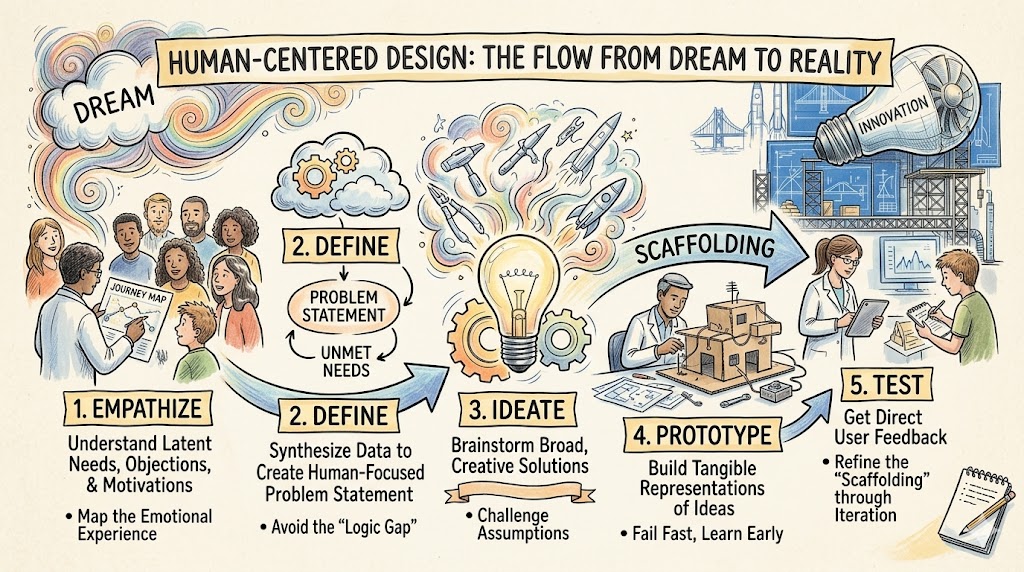
Humans crave meaningful connections with each other, and human-centered design can help facilitate that. Human-centered design is a creative approach to problem solving that focuses on the needs of people and their environment, rather than just the technical aspects of the problem. It takes into account the user’s feelings, values, and motivations to create solutions that are not only effective, but also create meaningful connections between people.

Human-Centered Design helps create meaningful connections by allowing designers to empathize with their users and create products and services that are tailored to their needs. This approach puts users at the center of the design process, allowing for a deeper understanding of their needs, desires, and limitations. This understanding helps designers create products and services that are more meaningful, relevant, and useful to users. By creating meaningful connections, Human-Centered Design can help create products and services that are not only useful but also emotionally satisfying to users.

Case Study 1

Apple’s success is largely attributed to its focus on human-centered design. The company’s products are designed with the user in mind, taking into account the user’s values, feelings, and motivations. By understanding the user and their needs, Apple is able to create products that are not only technically advanced, but also create meaningful connections with its users.

Case Study 2

Microsoft has also adopted a human-centered design approach. The company has developed products that focus on the user’s experience and provide solutions that are tailored to the user’s needs. For example, its Xbox gaming console was designed with the intention of creating a meaningful connection between the user and the game. The console is designed to be intuitive and easy to use, and the games themselves are designed to be enjoyable and engaging.

Conclusion

Human-centered design is an effective approach to creating meaningful connections between people. By understanding the user’s needs, values, and motivations, companies can create products and services that are tailored to the user’s experience. This approach has been successfully used by companies such as Apple and Microsoft to create meaningful connections with their users.

SPECIAL BONUS: Braden Kelley’s Problem Finding Canvas can be a super useful starting point for doing design thinking or human-centered design.

“The Problem Finding Canvas should help you investigate a handful of areas to explore, choose the one most important to you, extract all of the potential challenges and opportunities and choose one to prioritize.”

Image credit: Pixabay

Subscribe to Human-Centered Change & Innovation WeeklySign up here to get Human-Centered Change & Innovation Weekly delivered to your inbox every week.

Exploring the Role of Media and Technology in Shaping the Future

Exploring the Role of Media and Technology in Shaping the Future

GUEST POST from Chateau G Pato

The rapid advancement of technology and the ubiquitous presence of media have had a profound impact on the way we live and interact with the world around us. Our lives are now inextricably intertwined with media and technology, and as such, our future is being shaped by the way in which we engage with these two forces. This article will explore the role of media and technology in shaping the future, with a particular focus on two case studies.

The first case study is the impact of social media on the modern world. Social media has had a massive influence on the way we communicate, interact and consume information. For example, it has been credited with creating new forms of political activism, allowing people to organize and create communities around shared ideologies and causes. Social media has also had a tremendous impact on the way businesses operate, allowing companies to reach new customers, build relationships and gain insights into consumer behavior. The role of social media in shaping the future of our society is undeniable, as it continues to influence and shape the way we interact and engage with each other.

The second case study is the impact of artificial intelligence (AI) on our lives. AI has had a tremendous effect on the way we work, play, and interact with each other. AI-powered algorithms are being used to automate processes and improve efficiency, while AI-powered chatbots are becoming increasingly popular for customer service and support. AI is also being used to create personalized experiences for users, as well as to create intelligent recommendations for products and services. AI has the potential to dramatically change the way we interact with our environment, as well as the way we work, play, and live our lives.

In conclusion, media and technology have had a profound impact on the way we live and interact with the world around us. Our lives are now inextricably intertwined with media and technology, and as such, our future is being shaped by the way in which we engage with these two forces. Two case studies have been explored to illustrate this point, namely the impact of social media and the impact of AI. As technology continues to advance and media continues to be ubiquitous, it is clear that these two forces will continue to shape the future of our society and the way we live our lives.

Bottom line: Futurology is not fortune telling. Futurists use a scientific approach to create their deliverables, but a methodology and tools like those in FutureHacking™ can empower anyone to engage in futurology themselves.

Image credit: Pixabay

Subscribe to Human-Centered Change & Innovation WeeklySign up here to get Human-Centered Change & Innovation Weekly delivered to your inbox every week.

Exploring the Benefits of Automating Business Processes

Exploring the Benefits of Automating Business Processes

GUEST POST from Chateau G Pato

Over the last decade, automation technology has revolutionized the way businesses operate. Automation can improve efficiency, reduce costs, and streamline processes, allowing businesses to maximize their profits while minimizing their overhead. Automating business processes can also improve customer service, reduce risk, and increase accuracy. The benefits of automating business processes are numerous, and companies of all sizes are beginning to capitalize on them.

One of the most prominent benefits of automating business processes is improved efficiency. Automation can automate mundane tasks such as data entry or customer service inquiries, freeing up employees to focus on more important tasks. Automation can also reduce the time needed to complete certain tasks, and can even reduce the number of steps involved in completing certain processes. Automation can also improve accuracy, as automated systems are less likely to make mistakes than humans.

Another benefit of automating business processes is cost reduction. Automation can reduce the need for manual labor, resulting in lower labor costs. Additionally, automated systems are often more efficient than manual processes, resulting in fewer resources being used and therefore lower costs. Automation can also reduce the time needed to complete certain processes, resulting in reduced overhead costs.

Automation can also improve customer service. Automation can automate mundane tasks such as data entry or customer service inquiries, freeing up employees to focus on more important tasks. Automation can also reduce the time needed to complete certain tasks, resulting in faster response times and better customer service. Automation can also improve accuracy, as automated systems are less likely to make mistakes than humans.

Finally, automating business processes can reduce risk. Automation can automate processes that involve risk, such as accounts receivable or payroll. Automating such processes can reduce the risk of mistakes and help ensure accuracy. Automation can also reduce the risk of data loss or theft, as automated systems are often more secure than manual processes.

Case Study – Amazon:

One company that has successfully leveraged the benefits of automation is Amazon. Amazon has automated many of its processes, from its inventory management system to its customer service platform. Automating these processes has allowed Amazon to reduce costs, improve efficiency, and provide better customer service. Amazon has also been able to reduce the risk of mistakes, as automated systems are less likely to make errors than humans.

Case Study – Microsoft:

Another company that has successfully leveraged the benefits of automation is Microsoft. Microsoft has automated many of its processes, from its software development process to its customer service platform. Automating these processes has allowed Microsoft to reduce costs, improve efficiency, and provide better customer service. Additionally, automating processes has allowed Microsoft to reduce the risk of mistakes, as automated systems are less likely to make errors than humans.

Conclusion

Overall, businesses of all sizes can benefit from automating their processes. Automation can improve efficiency, reduce costs, and streamline processes, allowing businesses to maximize their profits while minimizing their overhead. Automation can also improve customer service, reduce risk, and increase accuracy. The benefits of automating business processes are numerous, and companies of all sizes are beginning to capitalize on them.

Image credit: Pixabay

Subscribe to Human-Centered Change & Innovation WeeklySign up here to get Human-Centered Change & Innovation Weekly delivered to your inbox every week.

Unpacking the Impact of 5G on the Future of Connectivity

Unpacking the Impact of 5G on the Future of Connectivity

GUEST POST from Chateau G Pato

As the world becomes increasingly interconnected, the need for faster, more reliable communication technology is becoming more pressing than ever. In the past decade, we have seen the rise of 4G networks, which have enabled faster data speeds and improved network reliability. Now, the world is turning its attention to 5G, the next generation of mobile technology that promises even faster speeds and greater reliability than 4G. But what is the real impact of 5G on the future of connectivity?

To begin, it is important to understand the technical aspects of 5G. 5G networks operate on higher frequency radio waves than their 4G predecessors, which enables them to deliver data at up to 20 times the speed of 4G. This means that 5G networks can provide faster speeds and more reliable connections, even in high-density areas. Additionally, 5G networks can accommodate more connected devices without compromising performance, making them ideal for applications such as the Internet of Things.

The impact of 5G on the future of connectivity can be seen in many different contexts. On a consumer level, 5G networks are expected to revolutionize the way people access the internet. By providing faster speeds and more reliable connections, 5G networks have the potential to bring internet access to previously underserved areas and to make web-based services more accessible to everyone.

On a business level, 5G networks can enable companies to communicate more effectively and leverage the power of the cloud. With faster speeds and greater reliability, businesses can use 5G networks to easily transfer large amounts of data, collaborate with remote teams, and access cloud-based resources. This could have a huge impact on the way businesses operate in the future, allowing them to become more agile and efficient.

To put it simply, 5G networks are expected to revolutionize the way the world connects. With the potential to revolutionize the way people access the internet, enable businesses to collaborate more effectively, and make the Internet of Things a reality, 5G networks are poised to have an enormous impact on the future of connectivity.

To illustrate the potential for 5G networks, let’s look at two case studies.

Case Study #1

The first case study is of a small rural town in the United States. Before 5G, the town had no access to high-speed internet, which hindered economic development and limited educational opportunities. Thanks to the introduction of 5G networks, the town now has access to high-speed internet, opening up new opportunities for economic growth and educational advancement.

Case Study #2

The second case study is of a large multinational company. Before 5G, the company relied on 4G networks to transfer data between its various offices around the world. With the introduction of 5G networks, the company has been able to use 5G to transfer large amounts of data more quickly and reliably, allowing them to become more agile and efficient.

Conclusion

5G networks are expected to revolutionize the way the world connects in the near future. By providing faster speeds and more reliable connections, 5G networks have the potential to bring internet access to previously underserved areas, enable businesses to collaborate more effectively, and make the Internet of Things a reality. The two case studies discussed above show the potential of 5G networks and how they can have a positive impact on the future of connectivity.

Bottom line: Futurology is not fortune telling. Futurists use a scientific approach to create their deliverables, but a methodology and tools like those in FutureHacking™ can empower anyone to engage in futurology themselves.

Image credit: Pixabay

Subscribe to Human-Centered Change & Innovation WeeklySign up here to get Human-Centered Change & Innovation Weekly delivered to your inbox every week.

Change Leadership Strategies for Small Businesses

Change Leadership Strategies for Small Businesses

GUEST POST from Chateau G Pato

Change is a constant in the business world, and small businesses are no exception. In order to stay competitive and remain profitable, small business owners must be able to effectively lead and manage change initiatives. Change leadership strategies can be used to successfully transition a business to a new direction, and these strategies can be adapted to fit the needs of any small business.

When it comes to leading change in a small business, the leader must first set a clear vision and direction for the company. This vision should be communicated to the entire team in an effective manner. The leader should also ensure that the team understands the importance of the change and is fully on board with the plan. It is also essential to have a detailed plan that outlines the steps needed to reach the new goal.

Once the vision is established, the leader must then create an environment of trust and collaboration. This will involve creating an environment that encourages open communication, active listening, and creativity. It is also important to involve team members in the decision-making process. This will give them the opportunity to provide valuable input and feedback.

In addition to fostering an environment of trust and collaboration, the leader should also provide team members with the resources they need to succeed. This might include providing additional training, implementing new technology, or adjusting the workflow. The leader should also work to build a culture of innovation, where employees are encouraged to think outside the box and come up with new ideas.

Finally, the leader should have a system in place to measure progress and success. This will help ensure that the change is making a positive impact on the company and that the team is on track to reach the desired goal.

Case Study 1

A small business owner was looking to expand the company’s product offerings. He implemented a change leadership strategy that included establishing a clear vision for the company, creating an environment of trust and collaboration, and providing team members with the resources they needed to succeed. He also implemented a system for measuring progress and success. As a result, the business was able to expand its product offerings and increase its sales.

Case Study 2

A small business owner was looking to transition the company to a remote-based model. He implemented a change leadership strategy that included establishing a clear vision for the company, creating an environment of trust and collaboration, and providing team members with the resources they needed to succeed. He also implemented a system for measuring progress and success. As a result, the company was able to successfully transition to a remote-based model and improve its efficiency.

Conclusion

These are just two examples of how change leadership strategies can be used to successfully manage change initiatives in small businesses. By establishing a clear vision, creating an environment of trust and collaboration, and providing team members with the resources they need to succeed, small business owners can effectively lead and manage change initiatives. With the right strategies in place, small businesses can remain competitive and remain profitable in the ever-changing business world.

Image credit: Pexels

Subscribe to Human-Centered Change & Innovation WeeklySign up here to join 17,000+ leaders getting Human-Centered Change & Innovation Weekly delivered to their inbox every week.

The Benefits of Change Management for Project Managers

The Benefits of Change Management for Project Managers

GUEST POST from Chateau G Pato

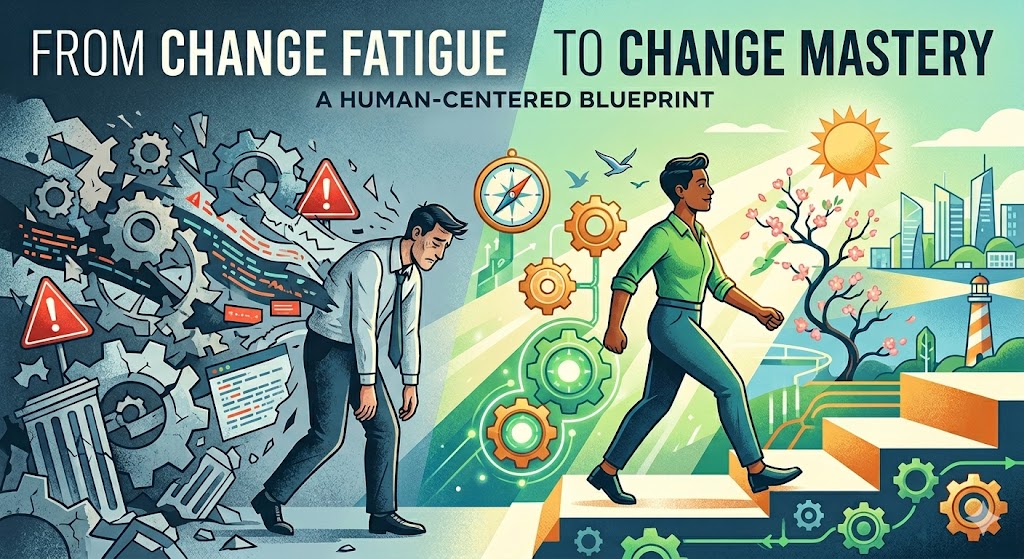
Change management is becoming increasingly important for project managers in today’s fast-paced digital world. As more and more organizations adopt digital transformation strategies, project managers must be equipped to handle the changes that come along with it. Change management is the process of managing organizational change and helping people transition to the new normal. It involves analyzing the impact of the change, planning the implementation, communicating the plan, and monitoring progress. Change management can help project managers ensure that projects remain on track during periods of transition.

The benefits of change management for project managers can range from increased efficiency to improved morale. By using change management, project managers can ensure that the whole team is on the same page and that all stakeholders understand the implications of the changes. This helps to reduce the risk of miscommunication or misinterpretation of the new process, thus ensuring that projects stay on track. Additionally, change management can help project managers to reduce resistance to change, as employees can be provided with the support they need to adapt. This can help to improve morale, as employees feel like their voices are being heard and their concerns are being addressed.

Case Study 1: The UK National Health Service

The UK National Health Service is a good example of how change management can help project managers successfully tackle organizational change. The NHS recently implemented a large-scale digital transformation project, which included the introduction of new technology and processes. To ensure that the project ran smoothly, the NHS tapped into their existing change management process. This included creating a communication plan to ensure that stakeholders were informed of the changes, providing training for staff to help them adapt to the new system, and monitoring progress to ensure that the project stayed on track. Thanks to their effective change management process, the project was a success, and the NHS is now reaping the rewards of their digital transformation.

Case Study 2: Microsoft

Microsoft is another example of how change management can help project managers. Microsoft recently introduced a new organizational structure that was designed to improve efficiency and productivity. To ensure that the change was implemented smoothly, Microsoft applied their change management process. This included providing clear communication to stakeholders, offering training to ensure that employees were well-prepared, and monitoring progress to ensure that the transition was successful. The end result was a successful transition that has resulted in increased efficiency and improved morale.

Conclusion

In conclusion, change management is a valuable tool for project managers. By applying an effective change management process, project managers can ensure that projects remain on track during periods of transition. This can lead to increased efficiency, improved morale, and ultimately, a successful project.

Image credit: Pexels

Subscribe to Human-Centered Change & Innovation WeeklySign up here to join 17,000+ leaders getting Human-Centered Change & Innovation Weekly delivered to their inbox every week.

The Benefits of Iterative Design Thinking

The Benefits of Iterative Design Thinking

GUEST POST from Chateau G Pato

Iterative design thinking has become a critical part of many successful businesses today. This approach is focused on creating solutions that require continuous improvement, testing, and feedback. It involves taking an idea, breaking it down into small components, and then working through each component iteratively until the desired result is achieved. This method of working encourages creative problem solving and allows teams to develop ideas that are both innovative and practical.

One of the primary benefits of iterative design thinking is that it allows teams to work more efficiently. Iterative design thinking involves breaking down complex tasks into smaller, more manageable parts. This allows teams to quickly identify areas that need improvement and make changes accordingly. Additionally, teams can use iterative design thinking to test different solutions to a problem and quickly identify which one is the most effective.

Another benefit of iterative design thinking is that it encourages creative problem solving. By breaking down a problem into smaller components and working through each component iteratively, teams can come up with creative solutions that they might not have developed through traditional methods. This can help teams come up with innovative solutions to difficult problems and can help them stay ahead of their competitors.

Case Study 1: Amazon

Amazon is a prime example of a company that has successfully used iterative design thinking to improve their products and services. By breaking down complex tasks into smaller, more manageable units and then testing different solutions to each unit, Amazon has been able to quickly identify areas of improvement and develop solutions that have enabled them to stay ahead of their competitors.

For example, Amazon uses iterative design thinking to continually improve their customer experience. By breaking down customer complaints and feedback into smaller components, Amazon can quickly identify areas that need improvement and then develop solutions that will benefit their customers. This has allowed Amazon to stay ahead of their competitors and provide their customers with an exceptional experience.

Case Study 2: Apple

Apple is another excellent example of a company that has implemented iterative design thinking to great success. Apple uses iterative design thinking to rapidly develop and improve their products and services. By breaking down tasks into smaller components and then testing different solutions, Apple can quickly identify areas that need improvement and develop solutions that are both innovative and practical.

For example, Apple has used iterative design thinking to develop and improve their products. By breaking down their products into smaller components, Apple can quickly identify areas that need improvement and then develop solutions that will benefit both their customers and their business. This has allowed Apple to stay ahead of their competitors and create products that are both innovative and practical.

Conclusion

In conclusion, iterative design thinking is a powerful tool that can be used to quickly identify areas of improvement and develop solutions that are both innovative and practical. By breaking down complex tasks into smaller components and then testing different solutions, teams can come up with creative solutions to difficult problems and stay ahead of their competitors. Amazon and Apple are both excellent examples of companies that have successfully implemented iterative design thinking to great success.

SPECIAL BONUS: Braden Kelley’s Problem Finding Canvas can be a super useful starting point for doing design thinking or human-centered design.

“The Problem Finding Canvas should help you investigate a handful of areas to explore, choose the one most important to you, extract all of the potential challenges and opportunities and choose one to prioritize.”

Image credit: Unsplash

Subscribe to Human-Centered Change & Innovation WeeklySign up here to get Human-Centered Change & Innovation Weekly delivered to your inbox every week.

Design Thinking in the Age of AI and Machine Learning

Design Thinking in the Age of AI and Machine Learning

GUEST POST from Chateau G Pato

The world is rapidly changing, and with the emergence of new technologies like artificial intelligence (AI) and machine learning, it is becoming increasingly important for businesses to stay ahead of the curve. Design thinking has become a powerful tool for businesses to stay competitive by helping them to better understand customer needs and develop innovative solutions. In the age of AI and machine learning, design thinking can be used to create better experiences, drive innovation, and improve the quality of products and services.

Design thinking is an approach that focuses on understanding user needs, designing solutions that meet those needs, and testing those solutions to ensure they are successful. By taking a human-centered approach to problem solving, design thinking helps businesses to develop products and services that are tailored to customer needs. It also provides a structure for understanding customer feedback and making iterative improvements.

In the age of AI and machine learning, design thinking is more important than ever for businesses to stay competitive. AI and machine learning technologies are transforming the way businesses operate and creating new opportunities for innovation. Design thinking can help businesses to identify the customer needs that AI and machine learning can address, develop solutions to meet those needs, and create customer experiences that are tailored to the changing landscape.

One example of design thinking in the age of AI and machine learning is the development of predictive customer service. Predictive customer service uses AI and machine learning technologies to anticipate customer needs and provide personalized experiences. Companies like Amazon and Google are using AI and machine learning to provide personalized recommendations and customer support. By understanding customer needs and leveraging the power of AI and machine learning, these companies are able to provide better experiences and improve customer satisfaction.

Another example of design thinking in the age of AI and machine learning is the development of intelligent products and services. Companies are using AI and machine learning technologies to create products and services that can anticipate customer needs and provide tailored experiences. For example, Amazon is using AI and machine learning to develop Alexa, a virtual assistant that is able to understand customer requests and provide personalized responses. By leveraging the power of AI and machine learning, companies are able to create products and services that are more intuitive and provide better customer experiences.

Design thinking is an important tool for businesses to stay competitive in the age of AI and machine learning. By understanding customer needs and leveraging the power of AI and machine learning, businesses can create better customer experiences and drive innovation. Design thinking provides a framework for understanding customer needs and developing solutions that will meet those needs. By using design thinking, businesses can create products and services that are tailored to the changing landscape and stay ahead of the competition.

SPECIAL BONUS: Braden Kelley’s Problem Finding Canvas can be a super useful starting point for doing design thinking or human-centered design.

“The Problem Finding Canvas should help you investigate a handful of areas to explore, choose the one most important to you, extract all of the potential challenges and opportunities and choose one to prioritize.”

Image credit: Pixabay

Subscribe to Human-Centered Change & Innovation WeeklySign up here to get Human-Centered Change & Innovation Weekly delivered to your inbox every week.

Outlining the Benefits of Using Backcasting in Futures Research

Outlining the Benefits of Using Backcasting in Futures Research

GUEST POST from Chateau G Pato

Backcasting is a method of futures research that helps organizations and individuals to better plan for the future. It is a structured approach that enables organizations to develop a shared understanding of their desired future and then work backwards to create a plan for how to get there. Backcasting combines elements of both scenario planning and visioning, allowing organizations to envision and plan for their future.

This method of futures research has several distinct benefits for organizations. Firstly, it encourages a comprehensive and holistic approach to planning for the future. By beginning with the desired end state, organizations can ensure that their plans are comprehensive and consider all of the factors necessary for success. Additionally, backcasting allows organizations to consider the impact of various strategies on their desired future. This helps organizations to identify potential risks and opportunities that they may not have anticipated.

Backcasting also helps organizations to manage their resources effectively. By starting with their desired end state, organizations can ensure that resources are being allocated in the most effective way possible. Additionally, by considering the full range of potential strategies, organizations can maximize the impact of their resources.

Finally, backcasting helps to create a shared understanding of the organization’s desired future. By starting with the desired end state, organizations can ensure that everyone is working towards the same goal. This encourages collaboration and enables organizations to create a unified vision of the future.

Case Studies

To illustrate the benefits of backcasting, here are two examples of organizations that have successfully employed the technique in their futures research.

First, consider the case of the Massachusetts Institute of Technology (MIT). In 2018, the university launched a backcasting project aimed at identifying the risks and opportunities associated with the future of higher education. By beginning with their desired end state, the university was able to create a comprehensive plan for how to reach their goals. As a result, the university was able to identify a range of potential strategies for achieving their desired future and ensure that their resources were being allocated effectively.

Second, consider the case of the World Bank. In 2017, the Bank conducted a backcasting exercise to identify the potential implications of climate change on global development. By beginning with the desired end state, the Bank was able to develop a comprehensive understanding of the potential risks and opportunities associated with climate change. This enabled the Bank to create a shared understanding of the potential implications of climate change and develop strategies for mitigating its effects.

Conclusion

In conclusion, backcasting is a powerful tool for futures research. It encourages a comprehensive and holistic approach to planning for the future and allows organizations to identify potential risks and opportunities. Additionally, backcasting helps organizations to manage their resources effectively and create a shared understanding of the organization’s desired future. The cases of MIT and the World Bank demonstrate the real-world benefits of backcasting and illustrate how it can be used to develop an effective plan for the future.

Bottom line: Futurology is not fortune telling. Futurists use a scientific approach to create their deliverables, but a methodology and tools like those in FutureHacking™ can empower anyone to engage in futurology themselves.

Image credit: Unsplash

Subscribe to Human-Centered Change & Innovation WeeklySign up here to get Human-Centered Change & Innovation Weekly delivered to your inbox every week.