Category Archives: Technology

Exploring the Impact of Autonomous Vehicles on the Future of Transportation

Exploring the Impact of Autonomous Vehicles on the Future of Transportation

GUEST POST from Art Inteligencia

Autonomous vehicles (AVs) are quickly becoming a reality, with various companies and governments actively researching and developing the technology. AVs have the potential to revolutionize transportation, as they can provide a safer, more efficient, and more affordable way for people to get around. In this article, we will explore the impact of AVs on the future of transportation.

1. Reduced Accidents: One of the major benefits of AVs is that they could drastically reduce the number of accidents on the roads. By relying on advanced sensors and algorithms, AVs can make decisions much faster than humans and can respond to potential threats in a fraction of a second. This could lead to a significant reduction in the number of traffic fatalities and injuries.

2. Improved Efficiency: AVs are also expected to improve the efficiency of transportation. By coordinating with each other, AVs can travel closely together, reducing congestion and improving traffic flow. Additionally, AVs could take over mundane tasks like driving in slow-moving traffic, freeing up time for people to do other activities.

3. Lower Costs: AVs could also reduce the cost of transportation. By relying on electric power instead of gasoline, AVs could reduce the amount of money people spend on fuel. Additionally, AVs could be shared by multiple people, reducing the cost of owning a car.

4. Increased Accessibility: AVs could also increase accessibility for people who cannot drive. By providing a safe and affordable way for people to get around, AVs could open up transportation to those who are unable to drive, such as the elderly and people with disabilities.

5. New Business Models: Finally, AVs could also lead to the emergence of new business models. Companies could offer ride-hailing services with AVs, while other companies could offer subscription services that allow people to access a pool of AVs as needed. Additionally, AVs could be used to deliver goods, which could lead to a more efficient delivery system.

The potential impacts of AVs on the future of transportation are immense. From reducing the number of accidents and increasing efficiency to reducing costs and increasing accessibility, AVs could revolutionize the way people get around. With continued research and development, AVs could soon become a reality and could pave the way for a more efficient, safer, and more affordable future of transportation.

Bottom line: Futurology and prescience are not fortune telling. Skilled futurologists and futurists use a scientific approach to create their deliverables, but a methodology and tools like those in FutureHacking™ can empower anyone to engage in futurology themselves.

Image credit: Pixabay

Subscribe to Human-Centered Change & Innovation WeeklySign up here to get Human-Centered Change & Innovation Weekly delivered to your inbox every week.

The Future of Artificial Intelligence and Its Impact on Society

The Future of Artificial Intelligence and Its Impact on Society

GUEST POST from Art Inteligencia

As technology advances, so too does the potential of artificial intelligence (AI). AI has already had a tremendous impact on our lives, from controlling our home appliances to driving our cars, and the possibilities are only expanding. As AI continues to evolve, it will have a profound and far-reaching impact on our future society.

1. AI and the Job Market

One of the major impacts of AI will be on the job market. Automation is already taking over many manual labor jobs, and AI will continue to increase the number of jobs that can be automated. This could result in major economic disruption, as traditional jobs are replaced by AI-driven ones. At the same time, AI will create new job opportunities, such as AI engineers, data scientists and software developers.

2. AI and Healthcare

Another impact of AI will be on healthcare. AI has already revolutionized healthcare, and it will continue to do so in the future. AI-driven technologies such as machine learning and deep learning can be used to diagnose diseases more accurately and quickly, enabling better patient care. AI can also be used to analyze large datasets to identify new treatments and therapies, allowing for more personalized care.

3. AI and Education

AI will also have an impact on education. AI-driven technologies can be used to develop more personalized learning experiences, allowing students to learn at their own pace and in their own way. AI can also be used to create virtual classrooms, where students can interact with teachers and other students from around the world.

4. AI and Security & Privacy

Finally, AI will have a major impact on our security and privacy. AI-driven technologies such as facial recognition and voice recognition are already being used to increase security, and this trend is likely to continue. At the same time, however, AI can be used to track our online activities and personal information, raising important questions about our right to privacy.

Conclusion

Overall, AI will have a major impact on our society in the future. It will have a major impact on the job market, healthcare, education, and our security and privacy. It is important to be aware of the potential implications of AI, and to ensure that its development is done in a responsible and ethical manner.

Bottom line: Futurology and prescience are not fortune telling. Skilled futurologists and futurists use a scientific approach to create their deliverables, but a methodology and tools like those in FutureHacking™ can empower anyone to engage in futurology themselves.

Image credit: Pixabay

Subscribe to Human-Centered Change & Innovation WeeklySign up here to get Human-Centered Change & Innovation Weekly delivered to your inbox every week.

What a Futuristic Society Might Look Like

Our Future World According to OpenAI

What a Futuristic Society Might Look Like

GUEST POST from Art Inteligencia

The idea of a futuristic society is something that has been imagined by many for centuries. It is a place where advanced technologies are commonplace, and people are living their lives in an enhanced and more efficient way.

In a futuristic society, robots and automation would be prevalent. We would see robots performing everyday tasks such as cleaning, cooking, and even taking care of children. Automation would be utilized in almost all facets of life, from transportation to manufacturing. This would allow people to have more leisure time, as well as allowing them to pursue more creative endeavors.

The world of the future would be heavily reliant on renewable energy sources such as solar and wind power. This would reduce our reliance on fossil fuels, which would lead to a cleaner and healthier environment. This would also reduce our carbon footprint and help to slow down the effects of climate change.

The idea of a connected world is also something that would be heavily featured in a futuristic society. This would be enabled by the internet of things (IoT), which would connect all of our devices and allow us to access information from anywhere. This could enable us to use our devices in a smarter way.

In a futuristic society, people would be living healthier and longer lives. This would be enabled by advances in medical technology and treatments, as well as changes to our diets and lifestyle. We would see a dramatic reduction in diseases and conditions such as cancer and heart disease.

The world of the future would also be a place of great technological advancement. We would see the advent of new technologies, such as artificial intelligence and virtual reality. These would allow us to do things that were previously thought impossible, such as exploring other planets and curing diseases.

In summary, a futuristic society would be a place of great technological advancement and efficiency. It would be a place where people are living longer and healthier lives, and are able to pursue their dreams. It would be a world of automation, renewable energy, and connectedness.

Bottom line: Futurology and prescience are not fortune telling. Futurists use a scientific approach to create their deliverables, but a methodology and tools like those in FutureHacking™ can empower anyone to engage in futurology themselves. Need to book a futurist speaker for your next event?

Image credit: Pixabay

Subscribe to Human-Centered Change & Innovation WeeklySign up here to get Human-Centered Change & Innovation Weekly delivered to your inbox every week.

25 Free Futurology Resources for Futures Research

25 Free Futures Research and Futurology Resources

GUEST POST from Art Inteligencia

One of the biggest barriers to getting started in futurology or futures research is knowing where to go to find information to educate and inform oneself about some of the basics of becoming a futurist and for raw materials to use in support of your first future studies or futurology efforts.

To help with that I have compiled a list of twenty-five resources to get you started in addition to this web site and Braden Kelley’s very excellent FutureHacking™ tools. So, without further delay, here is the list:

1. The Institute for the Future:

https://www.iftf.org/ – The Institute for the Future is a research organization that is focused on understanding emerging trends and long-term changes in the world.

2. The World Future Society

https://www.wfs.org/ – The World Future Society is a global network that works to explore and shape the future.

3. The Millennium Project

http://www.millennium-project.org/ – The Millennium Project is an independent global think tank that works to create a vision and action plan for a better future.

4. The Foresight Institute

https://www.foresight.org/ – The Foresight Institute is an organization that seeks to promote the responsible development of nanotechnology and other emerging technologies.

5. The Institute for New Economic Thinking

https://www.ineteconomics.org/ – The Institute for New Economic Thinking is a global think tank that works to promote critical economic analysis and new economic models.

6. The Hub of Futurism

https://www.hubof-futurism.com/ – The Hub of Futurism is a platform that brings together and connects futurists, thinkers, and innovators.

7. The Center for Science and the Imagination

https://scifi.asu.edu/ – The Center for Science and the Imagination is a research center dedicated to exploring the intersection of science and culture.

8. The Future of Life Institute

https://futureoflife.org/ – The Future of Life Institute is a research center that works to study, protect, and promote the future of life on Earth.

9. The Futurist Magazine

https://www.wfs.org/futurist – A magazine published by the World Future Society that features articles on technological, social, and economic changes and their implications on the future.

10. IEEE Spectrum

https://spectrum.ieee.org/ – A magazine published by the Institute of Electrical and Electronics Engineers that covers the technological advances and their effects on the future.

11. Singularity Hub

https://singularityhub.com/ – A website featuring articles on topics related to artificial intelligence, robotics, biotechnology, nanotechnology and their implications for the future.

12. Futurism

https://futurism.com/ – A website featuring news and opinion pieces about developments in science, technology, and the future.

13. The Futurist Podcast

https://thefuturistpodcast.com/ – A podcast featuring interviews with leading experts and thought leaders on topics related to the future.

14. The Institute for the Future

https://www.iftf.org/ – A research organization that provides resources and research on the future of technology, work, and society.

15. World Economic Forum

https://www.weforum.org/ – A platform featuring reports and discussions on topics related to the global economy and the future of work.

16. The Long Now Foundation

https://longnow.org/ – A foundation providing resources about long-term thinking and decision making for the future.

17. The Technology Review

https://www.technologyreview.com/ – A website featuring news and opinion pieces about emerging technologies and their implications for the future.

18. The Future of Life Institute

https://futureoflife.org/ – A research institute providing resources and research on the implications of emerging technologies on the future.

19. Futurism.com

https://futurism.com/ – A website dedicated to exploring the world of technological advances and the future of humanity.

20. Futurum Research

https://futurumresearch.com/ – An independent research firm that provides insights, analysis, and forecasts about the future of business and technology.

21. The Futures Agency

https://www.thefuturesagency.com/ – A consultancy dedicated to helping organizations, leaders, and individuals identify and prepare for the future.

22. Future of Life Institute

https://futureoflife.org/ – A research and outreach organization dedicated to exploring the potential of artificial intelligence and its implications for the future of humanity.

23. Long Now Foundation

https://longnow.org/ – A nonprofit organization that works to inspire long-term thinking and foster responsibility in the framework of the next 10,000 years.

24. Center for the Study of the Drone

https://dronecenter.bard.edu/ – A research center that provides analysis, education, and policy advice on the use of unmanned aerial systems (drones).

25. Massive Change Network

https://massivechangenetwork.org/ – An international network of organizations, cities, and individuals working to create a more sustainable and equitable world.

This is of course not an exhaustive list of all the futurology and futures research resources out there, but it is a good start to supplement all of the futurology articles here on this website.

Bottom line: Futurology and prescience are not fortune telling. Futurists use a scientific approach to create their deliverables, but a methodology and tools like those in FutureHacking™ can empower anyone to engage in futurology themselves.

Image credit: Pixabay

Subscribe to Human-Centered Change & Innovation WeeklySign up here to get Human-Centered Change & Innovation Weekly delivered to your inbox every week.

The Algorithmic Human Handshake

Balancing Automation and Personal Touch

LAST UPDATED: November 25, 2025 at 6:43PM

The Algorithmic Human Handshake

GUEST POST from Chateau G Pato

The imperative for digital transformation often boils down to a single goal: efficiency through automation. But a purely efficiency-driven approach is strategically shortsighted. When organizations chase maximum algorithm and minimum human, they sacrifice a critical, non-quantifiable asset: trust. Trust is built not on speed, but on empathy, transparency, and timely, informed human intervention.

The challenge is avoiding the trap of Automation for Automation’s Sake. Instead, leaders must design the Algorithmic Human Handshake — a deliberate framework for collaboration between AI and human employees where each is leveraged for its unique strength. The algorithm excels at handling the routine, predictable, and high-volume tasks. The human excels at the non-routine, empathetic, and high-consequence decisions.

This is not a story of replacement; it is a story of Augmentation. The human is the emotional anchor, and the algorithm is the hyper-efficient assistant. Designing this handshake correctly is the difference between a successful digital transition that elevates employee purpose and a cold, customer-alienating failure.

Defining the Handshake: When to Automate vs. When to Humanize

We must map the entire customer or employee journey and apply a Human-Centered lens to identify the Moments of Truth — the specific, high-stakes points where emotional weight or consequence dictates the need for a person.

Automate the Predictable: The Algorithm’s Strength

  • Data Collection: Gathering forms, verifying IDs, checking standardized credentials.
  • Initial Triage: Routing a customer service request based on topic and sentiment analysis.
  • Recommendation: Suggesting a product based on purchase history (low consequence).
  • Compliance: Automatically flagging transactions that violate defined rules.

Humanize the Consequential: The Human’s Strength

  • Emotional Resolution: Handling a customer who is angry, grieving, or distressed (the why of the transaction).
  • Ethical Judgment: Making a decision with competing moral or fairness factors (e.g., loan exceptions, complex claim approvals).
  • Unstructured Problem Solving: Dealing with a unique, never-before-seen failure in the supply chain or product functionality.
  • Trust Building: The start and end of a long-term relationship, such as on-boarding new clients or delivering bad news.

The Three Rules for Designing the Handshake

1. The Rule of Seamless Transfer (Zero Friction Handoff)

Customers despise being passed from bot to person, or worse, having to repeat their story. The Host Leader must ensure the automated agent meticulously records all interaction data and immediately transfers the full context to the human agent upon escalation. This seamless handoff respects the customer’s time and dignifies the employee’s role by ensuring they enter the conversation already prepared to solve the problem, not just gather basic data.

2. The Rule of Emotional Threshold (Proactive Human Trigger)

The algorithm must be designed to recognize when a conversation crosses an emotional threshold and proactively trigger a human. This goes beyond simple keyword recognition (“angry,” “cancel”). It requires designing AI to detect tone, excessive use of all caps, repetition, or a failure loop (e.g., the customer clicking “No, that didn’t help” three times). The human must step in before the customer reaches frustration, demonstrating proactive empathy and managing the potential for trust breakdown.

3. The Rule of Augmentation (Empowering the Employee)

The Algorithmic Handshake must elevate the employee’s capability and sense of purpose. The algorithm should handle the low-level data synthesis, allowing the human employee to dedicate their time to high-value activities. The system shouldn’t just automate tasks; it should automate insight. For example, the AI delivers a summary: “Customer has called three times this month, has $X lifetime value, and the core issue is the delivery delay.” The human then spends their time connecting, exercising judgment, and solving, transforming their job from transactional to strategic.

Case Study 1: The Global Bank and the Loan Officer’s New Role

Challenge: Slow, Inconsistent Small Business Loan Approval

A global bank faced high staff attrition and slow approval times in its small business lending division. The core problem: loan officers spent 80% of their time manually gathering, checking, and inputting routine application data.

Algorithmic Handshake Intervention: The Digital Underwriter

The bank introduced an AI-powered Digital Underwriter to handle all predictable, standardized data tasks (credit checks, financial statement verification, compliance flagging). This was the Algorithmic Strength.

  • Role Augmentation: Loan officers were no longer data processors. They became Business Relationship Consultants. Their time was redeployed to the 20% of cases the AI flagged as complex or exceptions (Human Strength).
  • Seamless Transfer: If the AI flagged a marginal application, it delivered a one-page summary detailing why the applicant was borderline, allowing the human consultant to instantly discuss context, character, and future projections with the business owner — the non-quantifiable elements necessary for a lending decision.

The Human-Centered Lesson:

Approval speed increased by 40%. Crucially, the job satisfaction and retention of the loan officers soared, as they moved from administrative clerks to trusted strategic partners for their clients. The bank gained efficiency, and the employees gained purpose.

Case Study 2: The E-Commerce Giant and the Proactive Shipping Alert

Challenge: Reactive Customer Service During Delivery Failures

A large e-commerce platform suffered from massive service call volumes during peak seasons when delivery delays occurred. Their service was purely reactive, dealing with angry customers after the failure, leading to massive trust erosion.

Algorithmic Handshake Intervention: Predictive Human Outreach

The platform used its logistical AI to predict package delivery failure probability based on weather, carrier capacity, and route history. When the AI predicted a delay exceeding 48 hours for a customer with high lifetime value (a Moment of Truth), it triggered the Algorithmic Handshake:

  • Emotional Threshold: Instead of waiting for the customer to call, the system created a task for a human agent.
  • Proactive Humanization: The agent called the customer before the package was significantly late to apologize, offer a specific $10 credit, and arrange a guaranteed redelivery time. The human intervention focused entirely on emotional repair and trust rebuilding, not transaction handling.

The Human-Centered Lesson:

Service calls related to delays dropped by 65% because the platform managed the customer’s anxiety proactively. Customers felt uniquely valued because a human took the time to call them about a problem they hadn’t yet complained about. The algorithm created the signal; the human delivered the indispensable touch.

The Future of Work is the Handshake

The Algorithmic Human Handshake is the essential philosophy of human-centered change in the age of AI. It acknowledges that value is created not just by removing friction, but by strategically inserting empathy. Stop asking where you can replace a person with a machine. Start asking where the machine can free a person to be more human, more empathetic, and more impactful.

The highest level of service in the future won’t be pure automation; it will be the perfectly timed, flawlessly informed human intervention.

“If your automation strategy simply seeks to remove human cost, you will lose human value. Design for augmentation, not just replacement.”

Frequently Asked Questions About the Algorithmic Human Handshake

1. What is the Algorithmic Human Handshake?

It is a deliberate strategic design framework that integrates automation (the algorithm) and human employees to maximize efficiency and maintain trust. The algorithm handles routine, high-volume tasks, while the human focuses on non-routine, empathetic, and high-consequence interactions.

2. What is the “Rule of Seamless Transfer”?

The Rule of Seamless Transfer ensures that when an automated interaction escalates to a human agent, the algorithm provides the human with the full, complete context of the prior interaction. This eliminates customer frustration from having to repeat their story and allows the human agent to immediately focus on problem-solving and empathy.

3. Where should the human be prioritized in the customer journey?

The human should be prioritized during “Moments of Truth” — points in the journey where there is high emotional weight, high consequence (e.g., loan decisions, healthcare diagnosis), or complex, unstructured problem-solving required. These are the points where trust is built or irreparably broken.

Your first step toward the Algorithmic Human Handshake: Map your highest-volume customer service interaction. Identify the exact moment a customer expresses high frustration (e.g., using “all caps” or repeated failures). Design an AI trigger that immediately sends a notification to a human agent along with a one-line summary of the issue and the customer’s value, instructing the agent to intervene before the customer formally requests a transfer.

Extra Extra: Because innovation is all about change, Braden Kelley’s human-centered change methodology and tools are the best way to plan and execute the changes necessary to support your innovation and transformation efforts — all while literally getting everyone all on the same page for change. Find out more about the methodology and tools, including the book Charting Change by following the link. Be sure and download the TEN FREE TOOLS while you’re here.

Image credit: Unsplash

Subscribe to Human-Centered Change & Innovation WeeklySign up here to get Human-Centered Change & Innovation Weekly delivered to your inbox every week.

Augmented Ingenuity

How AI Elevates the Art of Human Questioning

LAST UPDATED: November 20, 2025 at 12:37PM

Augmented Ingenuity

GUEST POST from Chateau G Pato

In the vast landscape of innovation, the quality of the answer is always constrained by the quality of the question. For centuries, breakthrough ideas — from the theory of relativity to the invention of the internet — began not with an answer, but with a profoundly insightful question. Now, as Artificial Intelligence (AI) permeates every layer of the enterprise, we face a critical choice: Will we delegate our thinking to AI, or will we leverage AI to make us profoundly better thinkers?

The Human-Centered Change leader recognizes that AI’s primary value is not as a standalone solution provider, but as a colossal questioning amplifier. AI can process, connect, and synthesize data across domains faster than any human team, allowing us to move beyond simple data retrieval and focus on the meta-questions, the ethical challenges, and the non-obvious connections that drive true ingenuity. It transforms our human role from seeking answers to formulating brilliant prompts.

This is Augmented Ingenuity: the essential synergy between AI’s processing power and human curiosity, judgment, and empathy. It’s the next evolution of innovation, shifting the competitive edge back to the organizations that master the art of asking the most creative, complex, and impactful questions of themselves and their machine partners.

The Three-Part Partnership of AI and Inquiry

AI elevates human questioning by fulfilling three distinct, interconnected roles in the innovation cycle:

1. The Data Synthesizer: Eliminating Obvious Questions

AI’s first job is to eliminate the need for humans to ask — and answer — the simple, quantitative, or repetitive questions. AI rapidly sifts through vast, complex datasets (customer feedback, market trends, performance metrics) to summarize the “what” of a situation. This frees human teams from tedious compilation and analytical bottlenecks, allowing them to jump straight to the high-value, strategic “why” and “what if” questions that require human empathy and foresight.

2. The Cognitive Challenger: Uncovering Blind Spots

Because AI processes information without the constraints of human bias or organizational orthodoxies, it excels at challenging our assumptions. By analyzing historical innovation failures, cross-industry patterns, or even ethical frameworks, AI can generate adversarial or non-obvious questions that we would never naturally think to ask. It provides an essential friction — a digital devil’s advocate — to ensure our proposed solutions are robust, our strategies are resilient, and our underlying assumptions are soundly tested.

3. The Creative Catalyst: Expanding the Scope

AI excels at taking a foundational question (e.g., “How can we improve customer checkout?”) and rapidly generating hundreds of related, increasingly distant, or analogy-based questions (e.g., “What checkout processes succeed in gaming? What friction points did early libraries face? How do autonomous vehicle transactions work?”). This exponential expansion forces human teams out of their functional silos and into adjacent creative spaces, turning a tactical query into a strategic, multi-disciplinary innovation challenge.

Key Benefits of Augmented Ingenuity

When organizations successfully embrace AI as a questioning partner, they fundamentally enhance their innovation capability, unlocking powerful, human-centered advantages:

  • Accelerated Insight Velocity: The time from initial problem definition to the formulation of an actionable, insightful, and strategic question is drastically reduced, shortening the front-end of the innovation funnel.
  • Reduced Cognitive Load: Human experts and leaders spend significantly less time compiling and organizing basic data, dedicating more time to applying their unique empathy, judgment, and Contextual Intelligence to high-level strategic challenges.
  • De-biased Innovation: AI challenges existing organizational orthodoxies and human cognitive biases, leading to the creation of more diverse, ethically considered, and resilient solutions.
  • Wider Opportunity Mapping: AI connects seemingly disparate market signals or scientific principles across sectors, revealing non-obvious innovation white space and emerging opportunities that would be invisible to siloed human teams.
  • Enhanced Human Skills: By training humans to interact effectively with AI (crafting brilliant prompts, providing critical feedback), we sharpen the fundamental human skills of questioning, critical thinking, and synthesizing complexity.

Case Study 1: Pharma Research and the Question Generator

Challenge: Stalled Drug Discovery in a Niche Field

A major pharmaceutical company was stuck in a rut trying to find a novel drug target for a rare neurological disease. Human researchers were constantly asking variations of the same 50 questions, constrained by historical biomedical literature. The sheer volume of new genomics and proteomics data was too vast for the team to synthesize and connect to peripheral fields like materials science or computational physics.

AI Intervention:

The research team implemented a custom AI model focused on Question Generation. The model ingested all relevant public and internal data (genomics, clinical trials, and, crucially, cross-disciplinary literature). The AI’s task was not to propose drug targets, but to generate novel questions based on its synthesis. For example, instead of asking “Which gene is responsible for this mutation?” the AI posed: “What non-biological delivery system, currently used in nanotechnology or deep-sea exploration, could bypass the blood-brain barrier given this compound’s unique mass and charge?”

The Human-Centered Lesson:

The AI served as the Creative Catalyst. Its machine-generated questions led the human team down an entirely new, external path, linking the disease to a concept from materials science. The human researchers, freed from basic literature review, applied their deep biological intuition and ethical judgment to vet the AI’s prompts and refine the resulting hypotheses. This synergy led to the identification of a promising new delivery mechanism and significantly accelerated the drug’s path to clinical trials, proving that AI’s greatest contribution can be sparking a human moment of “Aha!” by asking the impossible question.

Case Study 2: The Retailer and the Customer Empathy Engine

Challenge: Decreasing Customer Loyalty Despite High Satisfaction Scores

A national retailer had excellent customer service metrics (CSAT, NPS), but their repeat purchase rates and loyalty were steadily declining. Their quantitative dashboards told them “what” was happening (low loyalty) but couldn’t explain the “why.” Human teams were struggling to move past the positive, surface-level survey data.

AI Intervention:

The retailer used an AI platform as a Data Synthesizer and Cognitive Challenger. The model ingested massive amounts of unstructured data: call transcripts, social media comments, chatbot logs, and product reviews. The AI was tasked with finding contradictions and unspoken needs. It didn’t output an answer; it output questions like: “Why do customers highly rate the product quality but use language associated with ‘stress’ and ‘fear’ during the checkout and returns process?” and “Why is the highest volume of negative sentiment related to products they didn’t buy, but considered?”

The Human-Centered Lesson:

The AI’s contradictory questions forced the human team to re-examine their assumptions about what drives loyalty. They realized customers weren’t loyal because the purchasing journey was stressful (returns ambiguity, complex filtering). The “stress” language was a key human insight the AI extracted. The team used this AI-generated question to conduct targeted qualitative research, finding that the highest loyalty was generated not by the initial purchase, but by the confidence of a smooth, frictionless return. This led to a complete, empathetic redesign of the returns policy and interface, which was marketed aggressively. Loyalty stabilized and then rose, demonstrating that AI can shine a spotlight on the hidden human dimension of a problem, enabling humans to design the empathetic, sustainable solution.

The Future of Leadership: Mastering the Prompt

The rise of AI fundamentally shifts the skills required for human-centered change leadership. Our value moves from having the answers to possessing the Contextual Intelligence — the knowledge of our customers, our culture, and our ethics — to ask the right questions. We must train ourselves and our teams to:

  • Be Specific and Strategic: Move beyond generic searches to asking multi-layered, hypothesis-driven questions of the AI, defining the guardrails of the inquiry.
  • Embrace Paradox: Use AI to generate contradictory hypotheses and explore them rigorously, leveraging machine-generated friction for deeper thought.
  • Filter with Empathy: Apply human judgment, ethical considerations, and cultural nuance to the AI’s generated prompts. We remain the ultimate arbiters of value.

AI handles the calculus of data; we handle the calculus of humanity. By consciously combining the machine’s ability to process everything with our innate human ability to question anything, we unleash Augmented Ingenuity, ensuring that the next great breakthroughs are born not of automation, but of amplified human curiosity.

“AI won’t steal your job, but a person who knows how to ask brilliant questions of AI will.” — Braden Kelley

Your first step toward Augmented Ingenuity: Take the most pressing challenge facing your team right now (e.g., improving a specific metric, reducing a particular risk). Instead of jumping to solutions, spend 30 minutes using an AI tool to generate 10 questions that challenge the underlying assumptions of that problem. Which of those 10 questions would you never have asked on your own, and why? That non-obvious, often uncomfortable, question is your starting point for breakthrough human innovation.

Extra Extra: Because innovation is all about change, Braden Kelley’s human-centered change methodology and tools are the best way to plan and execute the changes necessary to support your innovation and transformation efforts — all while literally getting everyone all on the same page for change. Find out more about the methodology and tools, including the book Charting Change by following the link. Be sure and download the TEN FREE TOOLS while you’re here.

Image credit: Pixabay

Subscribe to Human-Centered Change & Innovation WeeklySign up here to get Human-Centered Change & Innovation Weekly delivered to your inbox every week.

Why Qualitative Data is the Soul of Innovation

Beyond the Dashboard

LAST UPDATED: November 16, 2025 at 09:36PM

Why Qualitative Data is the Soul of Innovation

GUEST POST from Chateau G Pato

In today’s business landscape, “data-driven” has become the mantra. We are awash in dashboards, metrics, KPIs, and algorithms, all designed to give us a clear, quantifiable picture of performance. And rightly so—quantitative data is essential for measuring results, optimizing processes, and identifying trends. But what if I told you that in our relentless pursuit of the “what,” we are often missing the much more powerful “why”?

The truth is, true innovation—the kind that creates new markets, delights customers in unexpected ways, and genuinely changes human behavior—rarely springs from a spreadsheet. It emerges from deep empathy, nuanced understanding, and the ability to connect seemingly disparate observations. This is the domain of qualitative data. It’s the soul of innovation, breathing life into the numbers and revealing the human stories behind the trends.

For human-centered change leaders, mastering the art of qualitative inquiry isn’t just a research technique; it’s a foundational leadership skill. It’s about listening more deeply, observing more keenly, and seeking the unspoken needs that dashboards simply cannot illuminate.

What is Qualitative Data?

Qualitative data describes qualities or characteristics. It is collected through methods that explore underlying reasons, opinions, and motivations, providing insights into the “why” and “how” of phenomena. Unlike quantitative data, which focuses on numbers and statistics, qualitative data deals with words, meanings, interpretations, and experiences.

Key Characteristics of Qualitative Data

To truly appreciate its power, understanding the fundamental characteristics of qualitative data is essential:

  • Exploratory: It seeks to understand concepts, opinions, or experiences rather than to measure them.
  • Contextual: It provides rich, in-depth understanding of a situation, problem, or human experience within its natural setting.
  • Interpretive: It relies heavily on the researcher’s interpretation of observations and conversations, seeking patterns and meanings.
  • Non-numerical: Its focus is on descriptions, narratives, and meanings, rather than statistical analysis.
  • Emergent: Key themes, hypotheses, and insights often surface organically during the data collection and analysis process, rather than being pre-defined.

Key Benefits for Innovation

Embracing qualitative data moves innovation from a mechanistic process to a deeply human one, unlocking several crucial benefits:

  • Uncovering Unmet Needs: It reveals pain points, desires, and behaviors that customers can’t articulate or that quantitative data masks. This is where breakthrough ideas truly lie, often in the subtle nuances.
  • Deep Empathy: Direct observation and conversation build a profound understanding of users’ lives, motivations, and emotional drivers, which is critical for designing truly human-centered solutions.
  • Contextual Understanding: It explains why a dashboard metric is fluctuating, or how a process is actually being used (or circumvented) in real-world scenarios, providing the “story behind the numbers.”
  • Idea Generation & Validation: Qualitative insights fuel powerful ideation, providing concrete human problems to solve, and then allow for rapid, iterative validation of concepts with real users.
  • Sense-Making in Complexity: In complex, ambiguous situations, qualitative data helps make sense of divergent perspectives and synthesize them into coherent pathways forward, offering clarity amidst chaos.
  • Building Organizational Stories: Human stories gleaned from qualitative research are far more powerful for galvanizing teams and stakeholders around a shared vision than charts and graphs alone, fostering engagement and buy-in.

Case Study 1: Re-imagining the Commute Experience

Challenge: Stagnant Public Transportation Ridership

A metropolitan transit authority was seeing stagnant ridership despite investments in new train cars and minor schedule adjustments. Their dashboards showed ridership numbers, peak times, and route popularity, but offered no insights into why people chose not to ride or why existing riders were sometimes dissatisfied.

Qualitative Intervention:

Instead of relying solely on quantitative surveys, the authority deployed ethnographic researchers. They rode trains and buses, interviewed commuters during their journeys, observed behavior at stations, and conducted in-home interviews about daily routines. They specifically looked for “un-articulated needs” and “workarounds.”

The Human-Centered Lesson:

What emerged was fascinating. Dashboards highlighted efficiency, but qualitative research revealed an emotional dimension: stress. Commuters felt a profound lack of control, from unpredictable delays to confusing information displays, to the anxiety of missing connections. One key insight: many commuters loved their “third space” (headphones, reading) but hated interruptions. This led to innovations like clearer real-time digital signage inside the cars, predictive arrival times on personal apps, and even small, quiet zones. These changes weren’t about speed, but about alleviating stress and increasing a sense of control and predictability—factors the numbers alone never revealed. Ridership subsequently increased, driven by an improved “emotional experience” rather than just functional efficiency.

Case Study 2: Understanding Small Business Lending Friction

Challenge: Low Adoption of Digital Lending Platform

A large bank launched a sophisticated new digital platform for small business loans, expecting high adoption. While dashboards showed a few initial users, conversion rates were low, and traditional loan applications still dominated. The quantitative data only indicated a problem, not its root cause.

Qualitative Intervention:

The bank’s innovation team conducted in-depth interviews with small business owners, observed them attempting to navigate the new platform, and even shadowed them during their busy workdays. They engaged in “contextual inquiry” to understand their daily challenges beyond just financial needs.

The Human-Centered Lesson:

The qualitative insights were striking. The digital platform was designed with a “big business” mindset, asking for detailed projections and complex financial statements that many small business owners, especially sole proprietors or new ventures, didn’t have readily available or structured in that format. They weren’t “digital averse”; they were “complexity averse” and “time-poor.” The qualitative research revealed their deep fear of making a mistake, of being judged, and the overwhelming feeling of paperwork. The solution wasn’t just to simplify the platform, but to introduce a human element: a “digital concierge” chatbot backed by human support, designed to guide them through the process in plain language, pre-populate forms with existing bank data, and reassure them at each step. This blended approach addressed the human anxiety, leading to a significant increase in digital platform adoption, proving that even a digital solution needs a human touch based on qualitative understanding.

Beyond Metrics: Cultivating a Qualitative Mindset

Integrating qualitative data means cultivating a new mindset within your organization. It means valuing stories as much as statistics, curiosity as much as certainty, and empathy as much as efficiency. It requires leaders to:

  • Get Out of the Office: Actively seek opportunities to spend time with customers, employees, and partners in their natural environments.
  • Ask “Why” (Five Times): Don’t settle for surface-level answers. Probe deeper to uncover root causes and underlying motivations.
  • Practice Active Listening: Hear not just words, but emotions, hesitations, and unspoken needs. Truly listen to understand, not just to respond.
  • Embrace Ambiguity: Qualitative data is messy; it doesn’t fit neatly into charts, but that’s precisely where the richest, most transformative insights reside. Be comfortable with uncertainty as you explore.

Dashboards show us the health of the body, but qualitative data reveals the beating heart and the dreams within the mind. To truly innovate in a human-centered way, we must look beyond the quantifiable surface and connect with the profound, often unstated, human truths that qualitative inquiry uncovers.

“Numbers tell us how many people clicked. Stories tell us why they might click next time.”

Your first step towards qualitative insight: Identify one critical customer journey or internal employee process that is currently under-performing or causing frustration. Instead of immediately diving into metrics, schedule five 30-minute, open-ended conversations with individuals who experience that journey or process daily. Ask them to describe their biggest challenges, unexpected moments, and what they secretly wish could be different. Just listen, without judgment or interruption, and take diligent notes. The insights you gain will be invaluable.

Extra Extra: Because innovation is all about change, Braden Kelley’s human-centered change methodology and tools are the best way to plan and execute the changes necessary to support your innovation and transformation efforts — all while literally getting everyone all on the same page for change. Find out more about the methodology and tools, including the book Charting Change by following the link. Be sure and download the TEN FREE TOOLS while you’re here.

Image credit: Dall-E

Subscribe to Human-Centered Change & Innovation WeeklySign up here to get Human-Centered Change & Innovation Weekly delivered to your inbox every week.

Innovation or Not – The Trackless Train

A Human-Centered Analysis

LAST UPDATED: November 13, 2025 at 1:23PM
Innovation or Not - The Trackless Train

GUEST POST from Chateau G Pato

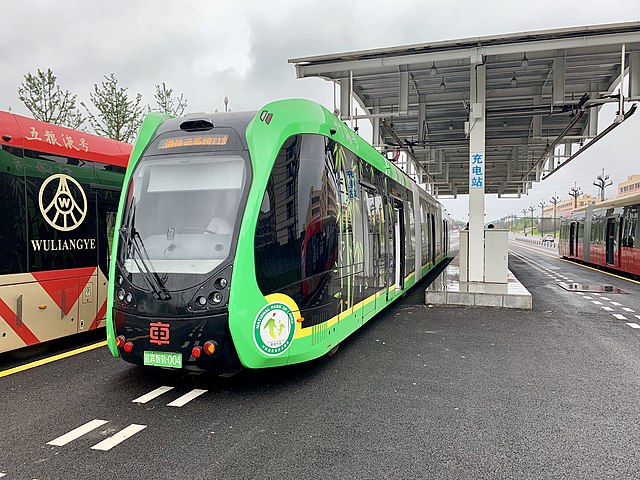
In the urban mobility landscape, China’s Autonomous Rail Rapid Transit (ART) — colloquially known as the trackless train or trackless tram — has emerged as a major disruptive force. Operating on rubber tires guided by optical sensors and GPS along “virtual tracks” painted on the road, it mimics the capacity and ride quality of a light rail system without the immense cost and disruption of laying physical rails. The critical question for city leaders is: Does this technology satisfy a true Human-Centered Change imperative, or is it merely an aesthetically pleasing substitute?

Innovation, in my view, is defined by solving a problem with a solution that delivers orders of magnitude greater value to the end-user or the system. The trackless train is a powerful example of systemic innovation because it challenges the trade-off that has defined urban transit for a century: high capacity equals high infrastructure cost.

It sits squarely in the “mid-tier transit” niche, providing the capacity (up to 300-500 passengers) that traditional Bus Rapid Transit (BRT) often lacks, while avoiding the exorbitant cost ($100M+ per kilometer) and multi-year construction timelines of Light Rail Transit (LRT). This cost differential is the fundamental disruptive innovation, making high-capacity transit accessible to thousands of previously underserved cities.

The Three-Axis Innovation Test

To assess ART’s true innovative nature, we must evaluate it against three critical axes of change:

1. The Cost-Reduction Axis (Systemic Innovation)

The primary systemic innovation of the trackless train is the elimination of fixed steel rails. This massive reduction in civil engineering cost — with proponents suggesting installation for as little as $10M per kilometer compared to $130M per kilometer for LRT — is transformative for medium-sized cities globally. This enables cities previously locked out of high-capacity transit due to budget constraints to deploy a solution quickly. This is innovation by subtraction.

2. The User Experience Axis (Human-Centered Innovation)

For the passenger, the value proposition hinges on ride quality and reliability. ART leverages stabilization technologies borrowed from high-speed rail to offer a smoother, quieter ride than a standard articulated bus. Furthermore, its guidance system and dedicated lane operations (where implemented) ensure a higher level of punctuality and predictability than mixed-traffic buses. The rail-like aesthetic also positively impacts land use, encouraging development around stations much like traditional rail. The faster deployment time also means citizens get access to improved transit sooner, a key human-centered benefit.

3. The Operational Flexibility Axis (Adaptive Innovation)

Unlike fixed-rail systems, ART offers greater adaptive flexibility. The vehicles are bi-directional and, crucially, can temporarily leave their virtual track to navigate around accidents or construction, a capability impossible for LRT. This allows the system to remain resilient to unexpected urban disruption, delivering a less frustrated customer experience.

  • The Challenge: Critics argue that this flexibility undercuts its benefit, as it still operates in mixed traffic and lacks the legal permanence that fixed rail offers to developers for long-term investment guarantees.

Case Study 1: Yibin, China – The Speed and Cost Imperative

Challenge: Rapid Urban Expansion vs. Traditional Rail Cost

Yibin, a city in Sichuan, China, experienced rapid population growth and needed a mid-capacity transit solution quickly to connect the old city center with its new high-speed rail network. Traditional LRT was deemed too expensive and time-consuming for the required 17.7km line through dense urban areas.

ART Intervention:

Yibin adopted the ART system (Line T1). The line was constructed and made operational in less than a year at a cost estimated around $13M/km — significantly less than the cost of conventional light rail. The short deployment time was critical to connecting the new high-speed rail station to the city’s commercial hubs almost immediately upon its completion. The ART was able to deliver a rail-like experience — speed (up to 70kph) and capacity (300 passengers per train) — at an accelerated timeline, thereby redefining the transit delivery schedule constraint.

The Innovation Takeaway:

This case demonstrates the value of Time-to-Market Innovation. The ART solution allowed Yibin to unlock the economic benefits of its high-speed rail investment years earlier than a conventional project would have allowed. The combination of speed and cost proved to be the transformative change agent.

The Gadgetbahn Critique: Is it Just a Fancy Bus?

A significant, rational critique from the transit community dismisses ART as a “gadgetbahn” — a glorified articulated bus. Critics point out that the system still requires reinforced concrete guideways to handle the multi-axle steering and rubber wheels repeating the same trajectory, which can cause significant differential road wear and compromise the promised low disruption and quick deployment. This addresses a critical flaw in the infrastructure savings claim.

However, the innovation lies not just in the hardware, but in the integration of technologies — high-speed rail stabilization, sensor-fusion guidance (GPS, Lidar), and multi-car articulation — that collectively push it into a new capacity and ride-quality tier. It’s an example of combinatorial innovation, where existing technologies are synthesized to solve a previously intractable systemic problem. It is a bus platform elevated to a new class of service, offering a viable, lower-cost step between high-quality BRT and full LRT.

Case Study 2: Perth, Australia – The Policy Barrier Test

Challenge: Certifying a New Mid-Tier System in a Developed Market

Perth, Western Australia, was one of the first Western cities to commit to implementing ART. Their challenge was not technical feasibility, but rather overcoming the rigid, decades-old regulatory framework that recognizes only two categories: fixed rail and road vehicles (buses/cars). ART fits neither.

ART Intervention:

The Perth initiative received funding for certification and demonstration of the ART vehicle. The focus of the trial was less on performance and more on addressing the policy and safety assurance gap. This involved proving how the vehicle’s unique steering, braking, and guidance systems met stringent public transport safety standards, essentially forcing a regulatory body to create a new transit category. The investment here is in demonstrating the integrity of the system to a skeptical, risk-averse regulatory environment.

The Innovation Takeaway:

The Perth case highlights that Innovation is often a Policy Problem. The ART forces cities to rethink urban transit categories, creating a viable regulatory precedent for mid-tier transit globally. The innovation is the ability to adapt to, and ultimately change, the institutional environment required for mass-scale adoption.

Conclusion: Redefining the Rail Niche

The trackless train is more than a clever bus. It is a powerful disruptive innovation because it provides a high-value trade-off for urban planners: high capacity and quality at a fraction of the cost and time. While it will not replace subways or traditional high-density light rail, it creates a new, accessible rail niche for the thousands of medium-sized cities worldwide that need a step up from BRT but cannot afford LRT. It provides the capacity necessary to drive urban regeneration without the financial burden, fundamentally changing how we approach city-shaping.

“True innovation eliminates the impossible trade-off. The trackless train removes the ‘rail-or-bust’ constraint for millions of urban citizens.”

Your first step toward systemic innovation: Identify one systemic problem in your organization currently constrained by a high cost/high time trade-off, and challenge your teams to find a combinatorial solution that eliminates the cost barrier entirely, much like the trackless train.

Extra Extra: Because innovation is all about change, Braden Kelley’s human-centered change methodology and tools are the best way to plan and execute the changes necessary to support your innovation and transformation efforts — all while literally getting everyone all on the same page for change. Find out more about the methodology and tools, including the book Charting Change by following the link. Be sure and download the TEN FREE TOOLS while you’re here.

Image credit: Pexels

Subscribe to Human-Centered Change & Innovation WeeklySign up here to get Human-Centered Change & Innovation Weekly delivered to your inbox every week.

Five Critical Factors That Explain Amazon’s Incredible Success

Five Critical Factors That Explain Amazon's Incredible Success

GUEST POST from Robert B. Tucker

With Amazon edging towards becoming the world’s first trillion-dollar company, fresh attention is being paid to the factors that could derail its growth. The company slowed a bit this quarter, sending the stock down eleven percent.

Nevertheless, this downtick should not distract from the reality that Amazon has emerged as the new model of innovation effectiveness. They are something new in the innovation realm. They have moved so fast for so long, implemented so many new product, process and business model innovations, that their playbook is suddenly the standard by which every company must measure itself against, or get left behind.

Amazon is the new model going forward.

Through trial and error, booms and busts, Amazon has evolved a set of guiding principles and cultural practices to keep its growth machine humming. These involve delighting customers, crushing competitors one by one, hollowing out retail sectors, and disrupting industry after industry, from bookselling to online retailing to personal electronics, and from web services and software to healthcare and beyond.

In reviewing the company’s rise from a converted Seattle garage in 1994, I’ve gone looking for the practices responsible for Amazon’s incredible success. Here are five that stand out:

1. Amazon Drives Innovation from the Top

Surveys show that 79 percent of senior leaders consider innovation as one of their top three priorities. Yet day-to-day, what often consumes senior management’s attention is the “delivery engine,” rather than the “discovery engine.” Not at Amazon.

Founder and CEO Jeff Bezos has figured out how to spend the bulk of his calendar on innovation. He delegates to trusted lieutenants the implementation of ideas. Bezos spends most of his time examining how the world will look three, five and 10 years out. He is focused on baking in results for the third quarter two years from now. He sees his job as identifying and refining the Innovation Roadmap that will take the company from where it is today to where he wills it to be in the future, on time and on schedule.

2. Amazon Thinks of Ideas as Assets

Most companies think of their assets as being things like their plants, equipment, and yes, their people. Amazon also places an asset value on ideas. Bezos is the ideator in chief. His zest for unconventional concepts, for enabling technologies, and for better ways of operating, is infectious. “I could fill this whiteboard in an hour with 100 ideas,” Bezos boasted to one interviewer, and there is little reason to doubt him.

Bezos believes that a continuous stream of ideas is what fuels growth. He sees his function as creating the cultural alignment to value and respect ideas at all levels, and act with a sense of urgency to speed their implementation. Bezos sees his role as channeling this “opportunity mindset” to every individual, department, business unit, and outpost.

Like a coach drilling his team on the fundamentals, Bezos reminds his people of the simple principles that have made the company great.

Three maxims have been there from the beginning: think longer term, obsess over the customer, and be willing to invent. They are as relevant today as ever. And while Bezos has toned down the red meat competitive rhetoric, behind the scenes he’s said to be every bit the hungry hunter who once coined the phrase, “Your margin is my opportunity.”

In recent months, Bezos has admitted that he is concerned about creeping complacency. Thus his renewed emphasis on “Day 1 Thinking”—the full throttle attack mode of the startup it once was. Asked what Day 2 might look like, he almost seemed to be thinking of Sears, one of many companies he has vanquished. He defined Day 2 as: “stasis, followed by irrelevance, followed by excruciating decline and death.”

“The outside world can push you into Day 2 if you won’t or can’t embrace powerful trends quickly,” he added. “If you fight them, you’re fighting the future. Embrace them and you have a tailwind.”

3. Move First, Experiment Constantly, and Fail Fast

With zero background in hardware, Amazon waded bravely into electronic devices with its Kindle e-reader in 2007. Everyone advised against it. Numerous setbacks and hurdles cropped up. But Kindle proved a game-changer and a confidence builder. From this wildly-successful foray, the company realized it could learn new skills if it was willing to assault assumptions. Amazon went on to pioneer the smart speaker category with Echo, and its Alexa device has 30,000 skills, mostly from third-party developers, who are building more applications all the time. Competitors are scrambling to catch-up.

Amazon values experiments. A lot. Its website is a giant petri dish, experimenting constantly with pricing a/b tests, customization trials, recommendation algorithms and more. Amazon uses its hometown as a test market to gain consumer insights and feedback, and work out the kinks in new business models, before expanding or quietly killing off ideas that don’t have promise to scale.

To observe how it prototypes and debugs new physical concepts, Seattle is the place to visit.

You’ll want to explore Amazon Go, the company’s new automated convenience stores, which are pioneering the use of artificial intelligence and an array of overhead video cameras to revolutionize convenience store retailing. Next, head over to the Bitter Lake neighborhood, where you’ll find an Amazon storefront just opened so customers can pick up and return packages. Driving around, you’re bound to come across an AmazonFresh delivery truck, the result of five years of testing in the razor-thin margin grocery business. And be sure to pop into Amazon’s first physical bookstore, which opened in Seattle in 2015, and is now expanding nationwide.

Amazon’s willingness to move first, to test, and yes to fail (witness Amazon Fire the firm’s disastrous foray into smartphones) have transformed it into not just an online retailer, but a movie studio, a hardware company, a grocer, or a web services provider – but an idea factory. The key is monetization.

While Google and other firms spend billions researching artificial intelligence and machine learning, Amazon is interested in monetizing artificial intelligence and applying it in every aspect of the organization. Amazonians are on the lookout for AI applications they can place inside products, use to enhance services, and install in physical locations. The company will often invent something or develop some new capability for its own needs, only to find that it can monetize that invention for others.

4. Amazon Practices Data-Driven, Customer-Led Innovation

Amazon not only pioneers new devices and business models, but it also pioneers new approaches to the practice of innovation itself. One example might be called “data-driven, customer-led innovation.”

Apple wunderkind Steve Jobs never used focus groups or surveys to unearth consumer insights or tell him he was on the right track. Instead, he used an informed intuition to dream up “insanely great products” that consumers love. Summarizing this approach, he famously remarked: “It’s not our customers’ job to tell us what they will want next — that’s our job.”

Amazon has a different take. They operate from the belief that you can listen to customers through the data. They believe that if you’re simulating and building models and milking the data, you can let customers lead you to insanely great offerings by divining what the data suggests they will want before they even see it.

“We let customers steer us,” said Jeff Wilke, at the New Work Summit in Half Moon Bay, California. “We try to invent something they would love.”

They measure everything.

Amazon has artificial intelligence engineers embedded in every business unit, every team, every region, and every warehouse. And they use data to drive faster, more accurate opportunity creation. Amazon innovators are taught to constantly ask themselves: what does the data tell us about what customers might want next?

5. Amazon Promulgates a Clear-Thinking, Risk-Taking Culture

At Amazon, going along to get along is not a virtue. Heated debates often break out over what to measure. Creative tension, rather than laid-back harmoniousness, is believed to spur the best thinking.

“There’s an incredible amount of challenging [each other],” one former market researcher told Forbes contributor George Anders. “You want to have absolute certainty about what you are saying. If you can stand a barrage of questions, then you have [probably] picked the right metric. But you’d better have your stuff together.”

At many companies, would-be innovators must garner dozens of yeses before pursuing an idea. A single “no” can derail. At Amazon, no single manager has the right to kill an idea. The company is structured such that hundreds of managers can green-light an idea, at least to the next stage of development.

At Amazon, a high potential idea must meet three criteria: it must be original and not “me too.” It must be scalable. And it must have the potential to produce a significant return on capital.

The company constantly experiments with new thinking methods.

One example, introduced by Bezos, is known loosely as The Narrative. Before making decisions on high-investment initiatives, senior team meetings start with a period of silent reading of a memo that Bezos has commissioned. Bezos is particular about how the [up to] six-page narrative is composed. “It must have topic sentences, verbs, and clear thinking throughout,” Bezos insists. Then, he and his senior team convene and pour over the memo for up to 30 minutes, scribbling questions, preparing for an oral discussion of the merits of the idea.

“For new employees, it’s a strange initial experience,” Bezos admits. “They’re just not accustomed to sitting silently in a room doing study hall with a bunch of executives.” Strange yes, but powerful as well.

And just one more way in which Amazon innovates how it innovates.

This article originally appeared in Forbes
Image credit: Amazon

Subscribe to Human-Centered Change & Innovation WeeklySign up here to get Human-Centered Change & Innovation Weekly delivered to your inbox every week.

Eight Technology Trends to Exploit in 2018

Eight Technology Trends to Exploit in 2018

GUEST POST from Robert B. Tucker

In the age of disruption, businesses and their leaders will rise or fall based on their ability to spot and creatively respond to rapid technological change. Some companies notice an emerging technology and take a “wait and see” attitude. Others see a new technology and take action. They begin experimenting, making small bets, and learning.

Their attitude is that it’s never too early to start. It’s never too early to begin looking at what others are already doing. It’s never too early to engage the imagination to conceive of how the new technology could be used to create competitive advantage.

These “fast movers” often jumpstart creative applications by asking themselves leading questions such as:

  • Where is this technology likely to be in five years?
  • When will it become mainstream?
  • How might it help us differentiate, and to add value to customers? To improve speed of satisfaction, manage choice and complexity, and enhance customer experience?
  • How will/could this new technology help us gain productivity and become a better place to work?

With such questions in mind, what follows are eight technologies that are ripe for exploitation by your company in 2018, and beyond:

1. Artificial Intelligence (AI) is about to go mainstream.

Real Estate giant Coldwell Banker is experimenting with AI to target classes of likely buyers for a specific property, and piloting new AI software that helps identify likely sellers. Leading law firms use AI to scan thousands of legal documents in minutes, rather than weeks, to build stronger cases at a fraction of the cost.

While Netflix, Amazon, Google and Facebook pioneered artificial intelligence, AI is beginning to be deployed by increasing numbers of mid-sized and even small businesses. Here, the applications are exploding. At Coldwell Banker, when their data shows a confluence of events, the software alerts the company to a likely new prospect. For example, the homeowner’s youngest kid just went off to college. The couple has been in their home beyond the average of 10 years. And it sees that the couple has been online browsing for properties in North Carolina. AI brings these data-points together and concludes that this household is likely to be selling soon. “If we can find those people before they even know they’re selling, we’re that much ahead,” Coldwell Banker CEO Charles Young tells Chief Executive Magazine.

2. Apps are becoming essential tools for boosting customer convenience and employee productivity. What are you app to do next?

Fort Worth, Texas-based startup Booster Fuels saves time-strapped motorists a trip to the gas station. When you order fuel on your Booster app, they bring the gasoline to you. Startup businesses like Booster Fuels are taking advantage of the app trend to address unmet customer needs. And established companies like Safeco auto insurance are finding new ways to use apps to add value to customers — and improve worker productivity.

Safeco’s auto insurance customers can now report an auto accident using the company’s app. Right from the accident scene, customers can submit photos, report what happened, and arrange for a tow — all by using Safeco’s innovative app. Fast movers will increasingly use mobile apps for on-the spot-troubleshooting, managing inventory, providing on-site estimates, generating invoices, and gathering data that can be used to better understand customer preferences.

Pest control operator Rentokil uses a proprietary app to give its field technicians a productivity edge. When confused by a type of bug or rodent, they simply snap a photo and run the app, which sifts through a data-bank of pest images to quickly identify the intruder. The app even suggests remediation solutions. Voila, problem solved.

3. Wearable technology. Already enhancing guest experience at Carnival Cruise Lines.

Modern cruise ships carry over 6000 passengers and offer everything from violin concerts to bungee jumping to belly dancing classes. But there’s a problem. Carnival Cruise Lines’ research showed that so many choices were overwhelming guests and creating an anxious-prone customer experience. So, Carnival created a wearable technology to help customers avoid “over-choice.” Passengers are given the option to wear a wristband device synced with a companion app on their smartphone to serve as a kind of constant guide while onboard. As you partake of various onboard activities, the wearable tool responds by guiding you to activities that you’re bound to like, providing a new level of customized service for passengers. Result: Carnival customer data shows that guests come away happier, less stressed, and more apt to return to Carnival for their next cruise.

4. Big Data is empowering Starbucks’ location scouting. What’s your next move?

Ever wondered how Starbucks can open multiple shops in the same neighborhood without cannibalizing existing store traffic? Answer: they use big data.

Until now, big data was available exclusively to big companies. No longer. As more and more digital data gets collected (as when you give your phone number to the clerk at the grocery store), mid-sized and even small firms are now able to tap the power of big data analytics to carve out new strategic advantage: to lower the cost of customer acquisition, find new ways to cut costs, increase sales, personalize product offerings, and enter new markets.

Starbucks was a first mover in using big data to give their location scouts a tool to reduce guesswork. Big data — the technology that allows more people to analyze more information from more sources in more ways than ever before — helps Starbucks’ staffers crunch data on foot traffic patterns, area demographic trends and customer behavior profiles, greatly reducing the complexity of decision making.

5. Amazon’s Alexa is bringing the Internet of Things (IoT) to consumers living rooms. Now may be your time to jump aboard.

In November 2017, Enrichment Federal Credit Union became the first credit union in the United States to link to Amazon’s Alexa voice-controlled smart speakers. Members of the Oak Ridge, Tennessee-based credit union can now move money between accounts, make loan payments and access balances and account histories using convenient voice commands.

Enrichment’s move is just the latest application of an exploding techno-trend where tiny sensors embedded in homes, buildings, and everyday objects such as smartphones, are connected via the internet, to comprise what is being called The Internet of Things (IoT). While Alexa is out front, Google’s Assistant is coming on strong, followed by a host of others just now entering the race to wire the living room.

IoT technology first burst on the scene in 2015, when a startup called Nest reinvented the thermostat and made it “smart,” which is to say programmable, and connected via the internet to the consumers smart phone, and voice-controlled speaker. Nest went on to reinvent smoke alarms, home security and a growing list of other products, and the technology is exploding. In home security, for example, for a fraction of the cost of traditional home security- service, consumers can set up the new do it yourself system — you set up the alarm system yourself by placing the easy to use sensors and cameras and motion detectors around your home, and connect to a control hub, and an app on your smart phone.

Look for ever increasing numbers of homes to be united with the IoT, and new entrants wishing to dance in Alexa’s space.

6. Advanced robotics. Not just for factories now.

Hotel chain Aloft uses robotic bellhops to supplement their bell staff — delivering extra towels, keys and whatever else to guest rooms without delay. Suddenly, agile, trainable, lightweight robots aren’t just found on the factory floor, they’re showing up everywhere. And they won’t replace workers in most cases, they will enable smarter labor deployment by taking on repetitive, backbreaking and higher risk tasks and introducing logistical efficiency. In many a business, the question is not: will we or won’t we? The question is: where will we and when will we deploy robots, and in what kinds of uses do they make the most sense?

7. Drones. Not just for the military anymore.

While Amazon’s drone delivery seems to be stalled by regulators and other hurdles, last year, a New Zealand couple became the first persons to have a pizza delivered by drone. The successful delivery came just three months after Domino’s announced a partnership with a local drone delivery service. Suddenly drones — aircraft without a human pilot aboard — are everywhere. The commercial drone industry already touches almost every sector of the economy, 38 types of businesses have already been approved for drone operations, and the industry is poised to be one of the fastest-growing sectors in the U.S. From inspecting infrastructure, to providing farmers with aerial views of their crops, to enabling rescues of swimmers in heavy surf, to allowing law enforcement agencies greater access to monitor criminal behavior, it’s no wonder businesses — small and large are clamoring to use this technology.

8. Virtual Reality. The possibilities are virtually limitless.

Home improvement pioneer Lowe’s created Holoroom, where customers plug in the dimensions of a room and can then see a VR mockup of their renovation plans, transfer design to Google Cardboard and take the VR mockup home. Cirque du Soleil’s traveling Kurious exhibit puts VR users in the center of the action via a 360-degree camera in the center of the performance. North Face brings the Yosemite wilderness to retail stores. Thomas Cook, Europe’s biggest tour operator, uses VR headsets to show customers what certain vacations would be like.

Virtual reality — computer technology that uses special headsets or multi-projected environments, sometimes in combination with physical environments or props, to generate realistic images, sounds and other sensations — is poised to take off, and not just in the consumer space. Increasingly, firms are using VR to lower the cost of training.

This article originally appeared in Forbes
Image credit: Pixabay

Subscribe to Human-Centered Change & Innovation WeeklySign up here to get Human-Centered Change & Innovation Weekly delivered to your inbox every week.