As wages and shipping costs rise abroad, unemployment stays high at home, and strategic discontent with offshoring grows, U.S. Manufacturing finds itself facing its best chance at staging a comeback.
American companies are considering a reversal of offshoring and outsourcing to reduce risk, improve agility, shorten product development cycle, and improve their ability to simplify increasingly complex supply chain management.
Missing from this list is innovation, but US companies that commit to engaging American workers in their innovation efforts may also increase their ability to justify manufacturing their products at home.
As wages and shipping costs rise abroad, unemployment stays high at home, and strategic discontent with offshoring grows, U.S. Manufacturing finds itself facing its best chance at staging a comeback.
American companies are considering a reversal of offshoring and outsourcing to reduce risk, improve agility, shorten product development cycle, and improve their ability to simplify increasingly complex supply chain management.
Missing from this list is innovation, but US companies that commit to engaging American workers in their innovation efforts may also increase their ability to justify manufacturing their products at home.
Moreover, Chinese workers are now three-to-five times more expensive than some other Asian workers, leading American firms to reconsider their sites of production.
One such firm is Nike, whose innovative Flyknit technology could allow it to make shoes easily anywhere in the world by having a machine make the most labor-intensive parts of the shoe. To bring production back to the United States allows Nike to react faster to competitors or to increase the speed of scheduled product launches. In the fashion industry, speed is crucial, and onshore production could create a competitive advantage.
Other firms are taking a second look at their reliance on contract manufacturers in China and elsewhere. Companies that once saw contract manufacturing as a strategic or economic necessity are questioning the wisdom of the arrangement as they watch original design manufacturers like HTC move up-market and strengthen their brands to compete with Apple, Motorola and others.
Adding fuel to the fire are rumors of workers at plants like Foxconn smuggling out plans and components to sell to pirates to make a little cash on the side.
But more importantly, an almost religious focus on cost and increased use of standard components across whole industries has made it more difficult for one brand to differentiate their products from another in the industry – increasing price competition and squeezing margins for all.
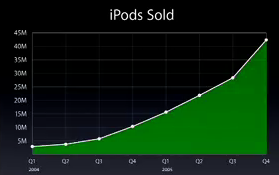
As a result, companies like Apple are now looking to reverse some elements of their standardization and outsourcing strategy and instead become more vertically integrated. Apple has acquired a chip design firm — and even their own chip fabrication plant (fab) — in its quest to differentiate itself and control some of its basic inputs and it may still acquire another fab to continue this strategic direction. Not to be outdone, Google is acquiring Motorola, and Nokia and Microsoft are working together closer than before.
It is possible for companies to manufacture their products in the United States and make a profit. When you invest in your workers, engage their hearts and minds and involve them in the innovation process, you can not only optimize your manufacturing processes but also uncover new growth opportunities that no contract manufacturer will ever bring to you.
Companies like New Balance, Snapper Mowers, American Apparel, Caterpillar, Syntax-Brillian (Olevia TV’s), Case IH, American Bicycle Group and many others have been working hard to keep making their products in the United States.
Now is the time for the Obama administration and state and local governments to step up their encouragement of US manufacturing. In these difficult economic times, Americans would love nothing more than to stroll down the aisles of their local Walmart, Target, or independent retailer and find more products on the shelves that say Made in the USA.
This article originally appeared on The Atlantic

 Sign up here to get Human-Centered Change & Innovation Weekly delivered to your inbox every week.
 It is much easier to lose your nerve than it is to regain it, so better not to lose it in the first place. I have lost my nerve before and made decisions I regretted for a long time after they were made. Acting out of fear leads to poor decision making and a lack of leverage that, in turn, leads to unfavorable outcomes. That is why you must maintain your nerve and focus on the actions you need to take to create positive change, rather than allowing yourself to be overtaken by fear. Fear is one of those emotions that grows to fill the space.
 The old way of winning the talent wars was to search for and hire the very best talent and keep them inside your own four walls by offering them competitive compensation, benefits, and perks. Your hope was that your talent is better than your competitors’ talent. But over the last couple of decades, companies have increasingly found that employees who pursue what they do with passion will outperform an employee with a gun to their head every time. Circuit City learned very publicly that people are not commodities and went out of business from treating them as if they were. At the same time, we know that diversity is very important and hard to foster internally. And so it is to get to this diversity of thought in order to accelerate product launch and innovation timelines that companies must open up – it is a global economy with a global talent pool.
 While most individuals and organizations natural reaction to an economic downturn is fear and retrenchment, they also present a time of great opportunity.