Category Archives: Leadership

Technology Strategies for Change Leadership Success

Technology Strategies for Change Leadership Success

GUEST POST from Chateau G Pato

Change leadership is a critical skill for organizations today. As the pace of technology and market changes continues to accelerate, it is essential to have an agile and adaptable leadership team that can manage transitions and stay ahead of the competition. Technology strategies can help organizations to successfully navigate the change process and ensure that changes are implemented effectively and efficiently.

One of the most important aspects of effective change leadership is the ability to properly assess the current situation and develop strategies to address it. To do this, organizations need to leverage the latest technological advances to gain insights into their current operations and identify areas for improvement. This includes utilizing predictive analytics and artificial intelligence (AI) to assess the impact of potential changes and identify potential solutions. By leveraging data and analytics, organizations can gain a better understanding of their operations and develop strategies to address identified issues.

Organizations should also take advantage of the latest tools and technologies to facilitate collaboration and communication throughout the change process. This includes leveraging cloud-based platforms and tools to enable employees to collaborate on projects in real time and to provide feedback to change leaders. Social media platforms can also be utilized to keep employees informed and provide a platform for discussion and feedback.

In addition to leveraging technology to assess and communicate changes, organizations should also focus on developing a culture that encourages and supports change. A successful change strategy requires the participation and engagement of all stakeholders, including employees, customers, and other partners. Leaders should ensure that all members of the organization are given the opportunity to provide input and feedback, and ensure that their opinions are taken into consideration.

Finally, organizations should focus on developing strategies to manage the implementation of change. This includes utilizing project management tools to track progress and ensure that changes are implemented in a timely manner. Additionally, organizations should develop training and education programs to ensure that employees are able to effectively manage the transition. By leveraging technology, change leaders can ensure that the change process is successful and that changes are implemented quickly and effectively.

By utilizing technology strategies, organizations can ensure that change leadership is successful and that changes are implemented efficiently and effectively. By leveraging data and analytics to assess current operations, developing collaborative tools to ensure participation, and building a culture that encourages change, organizations can ensure that their change leadership strategies are successful.

Image credit: Pexels

Subscribe to Human-Centered Change & Innovation WeeklySign up here to join 17,000+ leaders getting Human-Centered Change & Innovation Weekly delivered to their inbox every week.

Why Your Employees Resist Change

(It’s Not What You Think)

Why Your Employees Resist Change

GUEST POST from Chateau G Pato

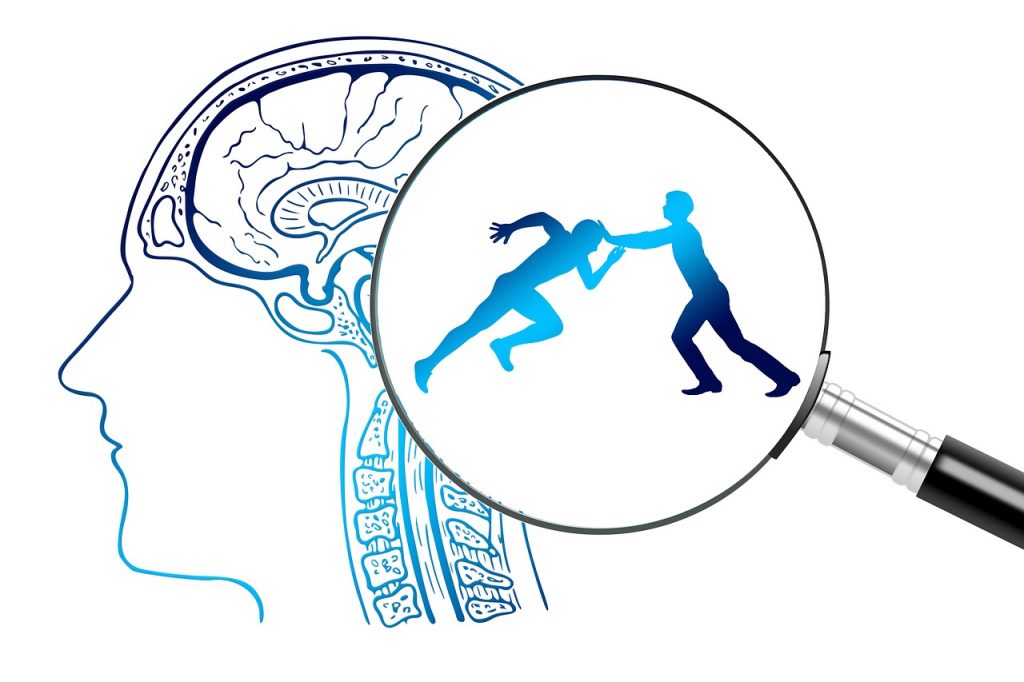
When a major organizational change initiative stalls — a digital transformation, a new market strategy, or a culture shift — the natural reaction from leadership is often to blame the resistors. “They’re afraid of the unknown,” is the common refrain. “They lack the right mindset.”

As a Human-Centered Change leader, I can tell you that this is dangerously simplistic. Employees are not inherently resistant to change; they are resistant to poorly executed change. The root of resistance is not fear of the future, but a deep-seated, rational rejection of four specific dysfunctions that sabotage otherwise brilliant strategies. We must move beyond blaming the people and start fixing the process.

The true sources of resistance are rational, structural, and predictable. They can be found in the failure of leadership to properly define, communicate, and support the shift — creating a gap between the organizational mandate and the employee’s lived reality.

The Four Rational Pillars of Resistance

Resistance is a logical defense mechanism against threats to an employee’s professional identity, competence, and time. These four pillars must be addressed proactively:

1. Loss of Competence and Identity (The “Unlearning” Tax)

When you implement a new system or process, you are telling long-tenured employees that the specific knowledge and skills they spent years mastering — their professional currency — are suddenly devalued. This is the Unlearning Tax. Resistance here is not about being anti-technology; it is a fear of becoming incompetent and losing professional identity.

  • The Fix: Validate the past. Leaders must explicitly thank employees for their past mastery and redefine their new role as one that leverages their institutional knowledge while mastering new tools. Invest heavily in high-support, low-stakes training environments. The cost of “unlearning” must be acknowledged and managed.

2. Lack of Strategic Connection (The “Why” Deficit)

Employees are not robots; they need to understand the Strategic Connection of the change. When change is presented as a mandate (“Do this new thing because we said so”) rather than as a solution (“This new thing is how we win in the next decade”), resistance flares. A lack of transparent, two-way communication causes employees to fill the information void with negative speculation and fear.

  • The Fix: Connect the change to the customer, the competition, and the collective mission. The “Why” must be constantly reiterated by mid-level managers who have been empowered with the full strategic context. It must be a clear, simple narrative that everyone can repeat.

3. Perceived Workload Saturation (The “Capacity” Crisis)

The number one killer of change initiatives is the failure to stop doing old work. Employees are often asked to implement the new process while maintaining 100% of the old one. Resistance arises from the rational belief that they simply lack the capacity to take on more work. This creates anxiety, stress, and burnout — all precursors to outright resistance. The employee is rationally protecting their sanity.

  • The Fix: Institute a “Stop Doing” List. For every new process introduced, the change leadership team must mandate the retirement or deferral of an equal amount of current work. If the change promises efficiency, that time must be visibly and immediately freed up for adoption and learning.

4. History of Failure (The “Cynicism” Debt)

If your organization has a history of launching sweeping, flavor-of-the-month initiatives that disappear after six months, resistance is a rational, learned behavior. Employees who resisted the last abandoned project were ultimately right, and they were rewarded with less effort. This historical pattern creates a “Cynicism Debt” that must be repaid with consistent, sustained follow-through and visible executive commitment.

  • The Fix: Start small, prove success quickly, and maintain commitment relentlessly. Avoid the grand, vague launch. Focus on demonstrated integrity through pilot programs that deliver visible, small wins before attempting scaling. Leadership commitment must be structural, not just rhetorical.

Case Study 1: The ERP Implementation and the Loss of Identity

The Scenario: ERP Implementation in a Supply Chain Firm

A global supply chain firm implemented a new, centralized ERP system to improve efficiency. The implementation was technically flawless, yet adoption by long-term logistics managers was below 20%. Leadership saw it as Luddite resistance.

The True Resistance:

The old, fragmented system had allowed logistics managers to leverage their deep, tacit knowledge to manually override system suggestions and execute complex, non-standard shipments, making them operational heroes. The new, rigid ERP system removed all manual controls, making the process cleaner but rendering the managers’ deep, personal expertise obsolete. Their resistance was a rational defense of their value and expertise (Loss of Competence and Identity).

The Lesson:

Leadership failed to design a new role that valued their institutional knowledge (e.g., training them to be “ERP Process Architects” who could optimize the system parameters) instead of marginalizing them as simple data entry clerks. The change was perceived as a demotion, regardless of the technology’s benefits.

The Human-Centered Change Intervention

The Human-Centered Change™ Methodology treats resistance as feedback. It forces the change team to map the “As-Is” employee experience and the “To-Be” experience, specifically identifying and mitigating the transition costs associated with the four pillars above.

  1. Diagnosis: Stop surveying satisfaction with the change. Start surveying capacity and belief (e.g., “Do you believe this change will still be a priority six months from now?”).
  2. De-risking: Partner with the most resistant employees. They are often the most knowledgeable about the current system’s limitations. Treat their resistance as a rational design constraint, not a personality flaw.
  3. Dedicated Capacity: Budget not just for training, but for **”Transition Overload Pay”** or mandating a temporary 20% reduction in baseline tasks for adopting teams. This addresses the Capacity Crisis directly.

Case Study 2: The Culture Shift and the Cynicism Debt

The Scenario: Agile Transformation at an IT Firm

An IT consulting firm attempted to switch from waterfall to Agile methodologies for the third time in four years. Despite expensive training, teams were performing “fake Agile,” simply relabeling old processes without real behavior change.

The True Resistance:

This was a classic case of Cynicism Debt. Employees had seen two previous, failed attempts at “transformation.” The rational response was to wait it out. Their resistance wasn’t to Agile itself (they knew it worked for competitors) but to the leadership’s proven lack of sustained commitment. They were betting, correctly, that if they simply dragged their feet, the initiative would die, saving them the effort of learning a new system that would be abandoned.

The Lesson:

Leadership failed to repay the Cynicism Debt. They launched the third attempt with the same high-hype, low-follow-through approach. The only way to overcome this is through a painful, sustained demonstration of commitment, starting with non-negotiable changes in the Executive team’s behavior and metrics, proving the commitment is structural, not superficial. Only integrity repays cynicism.

Conclusion: Resistance as Data

Resistance is not a challenge to be overcome with morale posters; it is critical data that reveals the flaws in your change strategy. When employees push back, they are telling you: 1) You haven’t adequately valued their past, 2) You haven’t clearly connected the strategy, 3) You haven’t freed up their time, or 4) You haven’t earned their trust.

Stop blaming your people. Start designing a change process that respects their knowledge, their capacity, and their intelligence.

“Resistance is the organization’s way of telling you where your plan lacks integrity, clarity, or capacity.” — Braden Kelley

Your first step toward overcoming resistance: Select your most vocal resistor and invite them to be an unpaid, official ‘Red Team’ consultant on the change project, making their critique central to your de-risking strategy.

Extra Extra: Because innovation is all about change, Braden Kelley’s human-centered change methodology and tools are the best way to plan and execute the changes necessary to support your innovation and transformation efforts — all while literally getting everyone all on the same page for change. Find out more about the methodology and tools, including the book Charting Change by following the link. Be sure and download the TEN FREE TOOLS while you’re here.

Image credit: Pexels

Subscribe to Human-Centered Change & Innovation WeeklySign up here to get Human-Centered Change & Innovation Weekly delivered to your inbox every week.

Psychological Safety in Hybrid Work Models

LAST UPDATED: February 18, 2026 at 11:31AM

Psychological Safety in Hybrid Work Models

GUEST POST from Chateau G Pato


I. Introduction: The Invisible Barrier to Hybrid Innovation

The Hybrid Paradox

We find ourselves in a peculiar moment in organizational history. We possess an unprecedented arsenal of collaboration tools — Slack, Teams, Zoom, Miro — yet many employees report feeling more “monitored” and less “seen” than ever before. The Hybrid Paradox lies in this friction: we have gained geographical flexibility but, in many cases, lost the psychological safety required for true creative collision.

Defining the Stakes: Safety as Infrastructure

In the hybrid era, Psychological Safety is no longer a “nice-to-have” HR initiative; it is the essential infrastructure for performance. When safety is high, teams experiment, share half-baked ideas, and challenge the status quo. When safety is low, employees focus on “performing productivity” — staying “green” on chat apps and avoiding the risks necessary for breakthrough innovation.

The Braden Kelley Perspective: Out of the Shadows

Innovation thrives in the light, but hybrid work naturally creates new “shadows” where ideas go to die. As a proponent of human-centered innovation, I’ve observed three specific threats to the modern workplace:

  • Asynchronicity: The loss of real-time nuance and tone in text-based communication.
  • Proximity Bias: The unconscious tendency to favor those we see physically in the office.
  • Digital Exhaustion: The cognitive load of constant surveillance eroding the mental space needed for curiosity.

To build a future-ready organization, we must move beyond the screen and intentionally design
cultures of courage.

II. The Five Pillars of Hybrid Safety

Psychological safety in a hybrid world isn’t a monolith; it’s a multifaceted structure that requires intentional maintenance. As we move from physical offices to digital ecosystems, we must reinforce these five pillars.

1. Inclusion Safety: Solving the “Distance Gap”

Inclusion safety is the belief that you belong, regardless of your physical coordinates. In hybrid models, Proximity Bias is the silent killer of inclusion. We must design rituals where the “Zoom square” has as much weight as the person sitting in the corner office.

2. Learner Safety: The Digital Sandpit

When we introduce new collaborative tech every quarter, we risk creating “tech-shame.” Learner safety allows employees to say, “I don’t know how to use this Miro board yet,” without fear of looking incompetent. Innovation requires a “sandbox” mindset where the tools are as flexible as the ideas.

3. Contributor Safety: From “Face Time” to “Value Time”

Safety to contribute is eroded by “productivity theater.” Leaders must shift the metric of success from hours logged to outcomes achieved. When employees feel safe to manage their own energy and schedule, their contribution quality skyrockets.

4. Challenger Safety: Speaking Up Across the Screen

It is naturally harder to “read the room” through a camera lens. Challenger safety ensures that a junior developer in a different time zone feels safe to “stop the line” or question a strategy via a Slack thread without it being perceived as insubordination.

5. Well-being Safety: Permission to Disconnect

The ultimate form of safety in 2026 is the safety to turn off. In a hybrid model, the “home” is now the “office,” making it harder to escape work stress. Well-being safety is the organizational blessing to be “offline” to recharge the creative batteries.

III. Identifying the “Safety Gaps” in a Remote Environment

In a physical office, you can feel the tension in the elevator or see the slumped shoulders in the breakroom. In a hybrid world, the red flags are digital. We must learn to read the “binary body language” of our teams.

The Silence of the Muted Mic

One of the most dangerous myths in hybrid leadership is that a quiet meeting is a productive one. When cameras are off and the “Mute” button is the default state, it often signals Challenger Safety erosion.

The Red Flag:

If the same three people dominate every video call while the rest of the “tiles” remain silent, your team is likely self-censoring to avoid the perceived friction of digital interruption.

The “Always-On” Anxiety and Surveillance

The rise of “bossware” and activity tracking has created a culture of fear. When employees feel they are being judged by the movement of their mouse rather than the quality of their insights, innovation stalls.

The Red Flag:

Rapid-fire responses to non-urgent pings at odd hours. This isn’t “dedication” — it’s a defensive maneuver to prove presence in the absence of trust.

Micro-Exclusions and the “In-Group”

In hybrid models, a two-tier citizenship often emerges. Those physically present in the office have “hallway conversations” that lead to decisions, while remote members are simply informed of the outcome.

The Red Flag:

Remote team members expressing confusion over the rationale behind a decision, indicating they were excluded from the informal ideation phase.

IV. Strategies for Leaders: Building the Human-Centered Bridge

Building psychological safety in a hybrid world isn’t a passive act; it requires intentional design. Leaders must stop managing “work” and start architecting “environments” where humans can thrive regardless of their physical location.

Radical Transparency and the “Context Gap”

In a physical office, context is absorbed through osmosis. In hybrid work, context must be broadcast. Leaders must over-communicate the why behind decisions to prevent the “assumptive gap” that naturally fills with employee anxiety.

The Tactic:

Default to “Public by Design.” Move project discussions out of private DMs and into open channels where the entire team can learn from the evolution of an idea.

The “Check-In” vs. The “Check-Up”

A “check-up” is a clinical interrogation about status updates and deadlines. A Check-In is a human-centered inquiry into the person behind the screen.

The Tactic:

Start every 1:1 with a “Red/Yellow/Green” emotional pulse check. This signals that the employee’s mental state is a valid priority, not just their output.

Modeling Vulnerability at the Top

If a leader acts like they have all the answers in a volatile hybrid landscape, the team will hide their own uncertainties.

The Tactic:

Openly share your own hybrid struggles — whether it’s “Zoom fatigue” or the difficulty of balancing home life. When a leader says, “I’m struggling with this too,” it grants the team permission to be human.

Designing for “Remote-First” Equity

To kill proximity bias, you must treat the office as just another “remote site.”

The Tactic:

If one person is remote, everyone is remote. Even those in the office should join the meeting from their individual laptops to ensure everyone has equal “screen real estate” and access to the chat and hand-raising features.

V. Measuring Success: The Innovation Output

If you can’t measure it, you can’t manage the change. In a hybrid environment, we move away from “vanity metrics” (like office occupancy) and toward “value metrics” that correlate psychological safety directly with your organization’s ability to innovate.

The Psychological Safety Index (PSI) in Hybrid Teams

Using the Amy Edmondson framework, we track the delta between in-office and remote perceptions of risk-taking. A healthy hybrid team shows no significant “safety gap” based on location.

Key Hybrid Safety KPIs:

  • 🚀 Idea Velocity: The frequency of unsolicited ideas submitted via digital channels (Slack/Miro) by remote vs. on-site staff.
  • 🎤 Meeting Equity Score: The ratio of “voice time” between remote participants and those physically in the room.
  • 🛠️ Knowledge Base Contribution Rate: How often are employees updating shared wikis asynchronously? This indicates trust in the collective intelligence.
  • 📉 The “Silence Metric”: Tracking the decrease in “dead air” or muted-mic time during collaborative brainstorming sessions.

Connecting Safety to the Bottom Line

Data from 2025 and 2026 consistently shows that teams in the top quartile for Learner Safety bring innovative products to market 25% faster. When it is safe to fail digitally, the “Pivot Time” — the time it takes to change direction after a mistake — is cut in half.

Continuous Feedback Loops

Human-centered innovation is iterative. Use “Pulse Surveys” not as a yearly report card, but as a weekly navigational tool. If the “Challenger Safety” score dips on a Tuesday, the leader should be addressing the cultural friction by Thursday.

VI. Conclusion: The Future of Work is Human

As we navigate the complexities of 2026, one thing has become abundantly clear: Hybrid work is not a location strategy; it is a trust strategy. The physical walls of our offices have been replaced by digital interfaces, but the human need for safety, belonging, and the freedom to fail remains unchanged.

“If you want to unlock innovation in a hybrid world, you must stop trying to control where people work and start focusing on how they feel while they’re doing it.”

The Call to Action: Design for Courage

Leaders, the challenge before you is to become Architects of Psychological Safety. Don’t just hand your team a laptop and a headset; give them the organizational permission to speak up, the cultural safety to experiment, and the human-centered support to thrive in a distributed world.

Ready to lead the change?

The next time you open a virtual meeting, don’t just check the agenda. Check the pulse of your people.

Frequently Asked Questions

1. How does proximity bias affect psychological safety in hybrid teams?

Proximity bias erodes inclusion safety by creating a two-tier system where those physically present in an office receive more visibility and opportunities than remote workers. This leads to “micro-exclusions” where remote team members feel their input is less valued, causing them to withdraw and stop contributing innovative ideas.

2. What is the “Silence of the Muted Mic” and why is it a red flag?

The “Silence of the Muted Mic” refers to virtual meetings where only a few dominant voices participate while others remain muted and off-camera. This is a critical red flag for Challenger Safety, indicating that team members may feel it is too risky or difficult to interrupt or offer dissenting opinions in a digital format.

3. How can leaders transition from “check-ups” to “check-ins”?

Leaders can transition by shifting the focus of 1:1 meetings from task status (the check-up) to the individual’s wellbeing and obstacles (the check-in). A human-centered check-in asks questions like “What is your energy level today?” or “What barriers can I remove for you?” rather than just asking for project updates.

Image credits: Google Gemini

Subscribe to Human-Centered Change & Innovation WeeklySign up here to get Human-Centered Change & Innovation Weekly delivered to your inbox every week.

Building a Leadership Pipeline for Complexity

LAST UPDATED: February 17, 2026 at 11:19AM

Building a Leadership Pipeline for Complexity

GUEST POST from Chateau G Pato


I. Introduction: The End of Complicated, The Rise of Complex

For decades, leadership development has been treated like an engineering problem. We designed succession plans as if we were replacing parts in a machine—linear, predictable, and “complicated.” But the modern business landscape has graduated from complicated to complex.

The Shift: In a complicated system, cause and effect are linked; if you follow the manual, you get the result. In a complex environment, everything is interdependent, volatile, and non-linear. You cannot manage complexity; you can only navigate it.

The Failure of the Traditional Pipeline

The “follow-the-leader” model is officially broken. Traditional pipelines focus on historical case studies and rigid competencies that reward efficiency over adaptability. This creates leaders who are excellent at maintaining the status quo but paralyzed when the map no longer matches the terrain.

The New Thesis: Capability Cultivating

To thrive, we must move away from static succession planning and toward Capability Cultivating. We aren’t just looking for the next person to sit in the big chair; we are building a network of human-centered change agents.

“The goal is no longer to produce managers who command and control, but to orchestrate collective intelligence across the entire organizational ecosystem.”
— Braden Kelley

This article explores how we move from the industrial-age mindset of “predict and provide” to a modern leadership philosophy of “sense and respond.”

II. Core Competencies for the Complexity Era

In a stable environment, we hired for experience. In a complicated environment, we hired for expertise. But in a complex environment, we must hire and develop for adaptability. To lead through the “Permanent Whitewater” of modern business, our pipeline must prioritize three non-negotiable human-centered traits.

1. Systemic Empathy

Moving beyond interpersonal kindness to ecosystem awareness. Leaders must understand how a decision in R&D ripples through Supply Chain and impacts Customer Experience. It is the ability to see the organization as a living organism rather than a mechanical org chart.

2. Iterative Agility

Complexity kills “Big Bang” transformations. We need leaders who favor continuous, human-scale experiments. This involves the courage to “fail fast, learn faster” and the discipline to scale what works while discarding what doesn’t before it becomes a liability.

3. Ambiguity Tolerance

The “Hero Leader” who has all the answers is a myth that causes bottlenecks. True leaders in complexity possess the humility to co-create. They are comfortable standing in the “gray zone,” holding space for diverse perspectives to emerge into a solution.

The Shift in Talent Identification

When we evaluate our high-potentials, we are no longer looking for the loudest voice in the room or the person who hits their KPIs through sheer force of will. We are looking for the connectors — those who naturally bridge silos and empower others to navigate uncertainty.

“Leadership in complexity is not about being the smartest person in the room; it’s about ensuring the room is smart enough to solve the problem.”
— Braden Kelley

III. Designing the Pipeline: From Static to Dynamic

The traditional leadership pipeline is often a rigid, vertical ladder. In a complex world, a ladder is a liability — it only goes in two directions. To build a resilient organization, we must transform the pipeline into a dynamic lattice that encourages fluid movement and cross-pollination.

1. Breaking the Silos: Cross-Functional “Tours of Duty”

Depth of expertise is no longer enough; we need breadth of perspective. By implementing mandatory “Tours of Duty” across disparate departments (e.g., moving a Marketing lead into Operations for six months), we force potential leaders to solve problems outside their comfort zones. This builds the systemic empathy we discussed in Section II.

2. The Innovation Lab as a Training Ground

How do you identify who can handle complexity before they reach the C-Suite? You place them in high-uncertainty environments.

  • Real-World Stress Tests: Assign high-potentials to “Horizon 3” innovation projects where there is no established playbook.
  • Observing Response: Watch how they lead when the data is incomplete and the “right” answer doesn’t exist yet.
  • Psychological Safety: Use these labs to reward the process of learning, not just the final ROI.

3. Mentorship vs. Sponsorship

Mentorship is about advice; Sponsorship is about access. A dynamic pipeline requires sponsors who:

Role Action in Complexity
The Mentor Helps the leader refine their internal compass and emotional intelligence.
The Sponsor Uses their political capital to give the leader “air cover” to take calculated risks.

By diversifying who we sponsor, we ensure the pipeline isn’t just a mirror of the past, but a bridge to a more inclusive and innovative future.

“The most effective way to prepare for an unpredictable future is to build a leadership team that is as diverse and interconnected as the challenges they will face.”
— Braden Kelley

IV. Human-Centered Selection Criteria

If we continue to use 20th-century benchmarks to select 21st-century leaders, we will continue to get 20th-century results. To build a pipeline for complexity, we must look beyond the “Alpha” archetypes and identify those who can navigate the “Beta” reality of constant flux.

“We don’t need leaders who can predict the future; we need leaders who can respond to it alongside their people.”
— Braden Kelley

Beyond IQ and EQ: Introducing CQ (Change Quotient)

While Intelligence (IQ) and Emotional Intelligence (EQ) remain foundational, they are insufficient for complexity. We must measure a candidate’s Change Quotient (CQ).

  • Adaptability: How quickly can they unlearn an outdated strategy when the market shifts?
  • Resilience: How do they manage the psychological safety of their team after a failed experiment?
  • Visionary Realism: Can they maintain a long-term “North Star” while pivoting the short-term tactics?

The “Un-Leader” Traits

When vetting high-potentials, we should look for traits that were historically seen as “soft” but are now “strategic”:

Traditional Trait (Complicated) Complexity Trait (Human-Centered)
Command & Control Curiosity & Coaching
Individual Heroism Collective Orchestration
Perceived Invincibility Strategic Vulnerability
Risk Mitigation Risk Literacy

Identifying Potential in the “Fringes”

Complexity often reveals the best leaders in unexpected places. Look for the “Positive Deviants” — those individuals who are already finding innovative workarounds to legacy problems without being asked. These are your natural human-centered change agents.

V. Operationalizing Complexity Leadership

Strategy without execution is just a hallucination. To build a sustainable pipeline, we must move these human-centered principles out of the HR manual and into the daily operating rhythm of the business. This requires shifting the structural “gravity” of the organization.

1. Real-Time Feedback Loops: The Death of the Annual Review

In a complex environment, waiting twelve months to give feedback is a strategic failure. We must replace static performance management with dynamic pulse checks.

  • 360-Degree Visibility: Feedback should flow upward and laterally, measuring a leader’s ability to remove friction for their team.
  • Micro-Coaching: Using digital tools to provide “just-in-time” coaching nudges based on current project challenges.

2. Rewarding Collaborative Outcomes

If you reward individual department KPIs, you will get silos. If you want a pipeline that navigates complexity, you must incentivize the “in-between” spaces.

Pro-Tip: Implement “Shared Success” metrics where a leader’s bonus is tied to the performance of a cross-functional partner’s project. This forces systemic thinking.

3. Scaling the Mindset: Leading at the Edge

Complexity leadership isn’t just for the C-Suite. We must democratize these capabilities so that the “edge” of the organization—those closest to the customer—can make autonomous decisions.

Operational Lever Action for Scalability
Decision Rights Pushing authority down to the lowest possible level of competence.
Information Flow Radical transparency — ensuring everyone has the context needed to lead.
Learning Rituals “After Action Reviews” that focus on how we decided, not just the outcome.

By operationalizing these behaviors, we ensure that leadership isn’t a title held by a few, but a capacity held by many. This is how an organization becomes truly anti-fragile.


VI. Conclusion: A Call to Action

Building a leadership pipeline for complexity is not a “nice-to-have” HR project; it is a fundamental survival strategy for the 21st century. The world is moving too fast for a single leader at the top to possess all the answers. The most successful organizations of the future will be those that treat leadership as a distributed capability rather than a concentrated authority.

The Innovation Leader’s Perspective

When I speak to global audiences about the future of work, the message is clear: Innovation is a team sport, and leadership is the coaching that makes it possible. If your pipeline only produces “players” who follow a rigid playbook, you will be defeated by the first team that knows how to improvise.

As an innovation speaker, I challenge you to look at your “high-potentials” and ask: Are they prepared to lead through the unknown, or are they just experts at navigating the known?

The Path Forward

The most famous and effective leaders of tomorrow — those who truly leave a legacy — will be the ones who viewed their role as a service to the innovators and change-makers within their ranks. By focusing on human-centered change, you aren’t just filling seats; you are future-proofing your culture.

Complexity is here. The question is: Are your leaders ready to dance with it?


Frequently Asked Questions

1. What is the difference between a complicated and a complex leadership environment?

A complicated environment is linear and predictable, where expertise and established manuals lead to consistent results. A complex environment is volatile and interdependent, where small changes can have unpredictable, non-linear effects. Leading in complexity requires shifting from “command and control” to “sense and respond.”

2. What is “Change Quotient” (CQ) and why does it matter?

Change Quotient (CQ) is a measure of a leader’s ability to navigate and lead through constant flux. It goes beyond IQ and EQ by evaluating a leader’s adaptability, resilience after failure, and their ability to maintain a strategic “North Star” while pivoting tactics in real-time.

3. How can organizations practically start building a dynamic leadership pipeline?

Organizations should move from vertical ladders to a dynamic lattice. This involves implementing cross-functional “Tours of Duty,” using innovation labs as stress tests for high-potentials, and shifting from individual KPIs to shared success metrics that reward systemic collaboration.

Image credits: Google Gemini

Subscribe to Human-Centered Change & Innovation WeeklySign up here to get Human-Centered Change & Innovation Weekly delivered to your inbox every week.

How Institutions Earn and Lose Trust Over Time

LAST UPDATED: February 13, 2026 at 11:11AM

How Institutions Earn and Lose Trust Over Time

GUEST POST from Chateau G Pato

In the landscape of organizational evolution, we frequently mistake innovation for a simple output of technology or R&D spending. However, after years of helping organizations navigate the complexities of Human-Centered Change™, I have realized that the most sophisticated technology is useless without the foundation of trust. Trust is the “wiring” of an institution. If that wiring is corroded by hidden agendas or rigid silos, the most brilliant ideas will never illuminate the room.

“Innovation is not about the lightbulb; it is about the wiring. If the wiring is clogged with bureaucratic corrosion, the light will never turn on.”
— Braden Kelley

The Erosion of Institutional Integrity

Trust is earned in small increments—through every meeting, every email, and every strategic pivot that prioritizes the human experience. Conversely, it is lost in giant leaps. When institutions focus solely on short-term KPIs at the expense of their employees’ or customers’ well-being, they create “trust debt.” Like financial debt, trust debt eventually comes due, and the interest rates are devastatingly high.

Case Study: The Volkswagen “Dieselgate” Crisis

For decades, Volkswagen built a reputation on reliable engineering. They held what I call “Institutional Legacy Trust.” However, the decision to engineer a workaround for emissions testing was a fundamental failure of the wiring. They prioritized market dominance over ecological and ethical truth. The resulting fallout cost the company billions, but the harder cost was the decade-long journey to rebuild the trust of a global audience. They learned that transparency is not a PR tactic; it is a structural necessity.

Creating a Culture of “The Gardener”

I often tell leaders that AI and automation can provide the seeds of innovation, but the institution must provide the soil, the water, and the fence. Ownership of the future belongs to the gardener, not the seed-producer. When an organization loses trust, it is usually because the “gardener” (leadership) has stopped tending to the soil and started blaming the seeds.

Case Study: Microsoft’s Cultural Pivot

Before the current era, Microsoft’s internal culture was famously combative. Low internal trust led to stagnant products because departments were more focused on protecting their territory than collaborating on the future. By shifting toward a “Learn-it-all” culture, they repaired the internal wiring. This high-trust environment allowed them to become a leader in the cloud and AI space because employees finally felt safe enough to take bold, collaborative risks.

To remain relevant, institutions must move from a command-and-control model to a collaborative ecosystem model. Trust is the lubricant that makes this transition possible. Without it, the friction of change is too great for any organization to survive.

How Institutions Earn and Lose Trust Over Time

Institutions are invisible agreements made visible. Governments, corporations, media outlets, universities, and nonprofits exist because people collectively choose to believe in them. That belief is called trust. Without it, authority weakens, legitimacy erodes, and influence fragments.

Trust is not a marketing asset. It is a behavioral outcome. It accumulates slowly through consistent experience and can evaporate quickly through contradiction. Institutions that endure understand this asymmetry. Those that ignore it eventually pay the price.

“Trust is not granted by authority; it is extended by experience. Institutions earn it in drops and lose it in buckets.”
— Braden Kelley

The Architecture of Trust

Institutional trust rests on three reinforcing pillars:

Competence: The ability to reliably deliver promised outcomes.
Integrity: The alignment between stated values and actual behavior.
Empathy: Demonstrated understanding and care for those affected by decisions.

Competence earns respect. Integrity earns credibility. Empathy earns connection. Together, they create resilience. When one falters, trust strains. When two collapse, legitimacy falters.

The Compounding Nature of Trust

Trust compounds through consistent deposits: transparent communication, fulfilled commitments, ethical governance, and visible accountability. Stakeholders extend grace during isolated missteps when history supports confidence.

But trust also decays cumulatively. Patterns of opacity, inconsistency, or arrogance accelerate erosion. In a hyperconnected world, contradictions surface quickly and spread widely.

Institutions no longer control narratives. They participate in them. Trust is now co-created in public view.

The Human-Centered Path Forward

Institutions that earn durable trust adopt a human-centered posture. They engage stakeholders early. They measure lived experience alongside financial metrics. They design feedback loops that visibly inform decisions.

Trust strengthens when people see responsiveness. It weakens when institutions appear detached or dismissive.

Leadership determines which path prevails. Incentives signal priorities. Tolerated behaviors define culture. When leaders reward transparency and accountability, trust grows. When they reward concealment and short-term optics, corrosion begins.

Institutions earn trust over time through disciplined alignment between purpose and practice. They lose it when convenience overrides conviction. In the end, trust is not a slogan. It is a system. And like any system, it must be intentionally designed, maintained, and renewed.

Frequently Asked Questions

Why is trust considered the “wiring” of innovation?

Trust facilitates the flow of ideas and feedback. Just as electricity requires a clear path to power a bulb, innovation requires a clear, honest channel of communication to move from a concept to a reality. Bureaucracy and fear act as corrosion in that path.

Can an organization innovate while trust is low?

It is possible to have “accidental” innovation in low-trust environments, but it is never sustainable. Sustainable innovation requires a “psychologically safe” culture where failure is treated as a learning data point rather than a fireable offense.

What is the first step to repairing institutional trust?

The first step is radical honesty. Leaders must acknowledge where the “wiring” is broken, take full accountability for the corrosion, and then demonstrate a consistent pattern of human-centered actions over a long period of time.

Image credits: Pixabay

Subscribe to Human-Centered Change & Innovation WeeklySign up here to get Human-Centered Change & Innovation Weekly delivered to your inbox every week.

Measuring the Impact of Removing Bureaucracy

Valuing the Void

LAST UPDATED: February 7, 2026 at 9:28AM

Measuring the Impact of Removing Bureaucracy

GUEST POST from Chateau G Pato

In the high-stakes theater of global business, we are obsessed with the act of addition. We add features, we add departments, we add “oversight,” and we certainly add more layers to the organizational chart. But as a human-centered change and innovation leader, I have observed a recurring tragedy: organizations are so busy building the “perfect” structure that they inadvertently build a tomb for their best ideas. To reach a state of continuous innovation, we must stop asking what we can add and start asking what we can subtract. We must learn to value the void.

Most leaders treat bureaucracy as a necessary evil — a sort of administrative tax on doing business. But in Braden Kelley’s book Stoking Your Innovation Bonfire, I highlight that bureaucracy is actually a form of innovation friction. It is the primary reason why “Value Creation” fails to translate into “Value Access.” If your organization’s internal hurdles are higher than the market’s barriers to entry, you aren’t just slow; you are obsolete. Measuring the impact of removing these hurdles is the key to unlocking what I call the Innovation Multiplier.

Organizations have spent decades perfecting the art of adding process. New rules are layered on top of old ones. Approval steps multiply. Forms proliferate. Metrics are created to manage other metrics. Over time, bureaucracy quietly expands until it becomes the invisible tax on every employee’s time, energy, and creativity.

Yet when leaders ask how much bureaucracy costs, the room often goes quiet. Bureaucracy is rarely measured directly. Instead, it hides inside cycle times, disengagement scores, missed opportunities, and innovation theater. To lead meaningful change, we must learn how to value the void — to measure not just what we add, but what we intentionally remove.
hype

“Bureaucracy is the only organizational asset that appreciates without ever creating value. The moment you remove it, value appears.”

— Braden Kelley

Why Removing Bureaucracy Creates Value

Bureaucracy exists for understandable reasons: risk management, coordination, compliance, and control. But over time, processes outlive their purpose. What once reduced risk begins to create it. What once enabled scale begins to suffocate adaptability.

Removing bureaucracy creates value not by doing more, but by enabling better work. When unnecessary steps disappear, organizations reclaim:

  • Time that can be reinvested in customers
  • Cognitive bandwidth for problem-solving and creativity
  • Decision velocity that matches market reality
  • Employee trust and ownership

The challenge is that absence is hard to measure. You can’t easily see the meeting that never happened or the approval that was never required. That is why leaders must adopt new ways of measuring impact.

The Metrics of Subtraction: Defining the Void

How do we measure “nothing”? We don’t. We measure the energy released when the nothingness is created. When you remove a layer of middle management or a redundant approval process, you create a “void” that is immediately filled by three critical things: Velocity, Autonomy, and Cognitive Surplus.

Velocity is easy to track — it’s the Cycle Time of Insight. How long does it take for a customer complaint to become a product feature? If the answer is “six months and four committee meetings,” your bureaucracy is costing you market share. Autonomy is measured by the Decision-to-Execution Ratio. Finally, Cognitive Surplus is the most human-centered metric of all. It is the mental energy previously wasted on navigating politics that is now spent on solving customer problems.

How to Measure the Impact of Removing Bureaucracy

Valuing the void requires leaders to rethink measurement. Traditional KPIs focus on outputs. Bureaucracy removal demands metrics that capture regained capacity and enabled outcomes.

  • Time Recovered: Hours returned to value-creating work
  • Decision Latency: Time from insight to action
  • Employee Effort Scores: How hard it feels to get work done
  • Opportunity Throughput: Ideas acted on versus stalled

The goal is not anarchy. It is intentional simplicity — designing just enough structure to support trust, speed, and accountability.

Case Study 1: Bayer’s Radical Decentralization

A few years ago, Bayer — a company with a history dating back to 1863 — realized it was being outpaced by more nimble competitors. The culprit was a rigid hierarchy where a simple marketing decision might require ten levels of approval. In 2024, they launched Dynamic Shared Ownership (DSO), a model designed to “delete” the bureaucracy from the inside out.

By shifting decision-making power to small, customer-centric teams, Bayer saw an immediate impact. In Southeast Asia, launch timelines for new consumer health products were slashed by 40% to 60%. The “void” created by removing middle-management bloat resulted in an additional €2 million in revenue within a single quarter. More importantly, employee engagement skyrocketed because the “friction” of daily work had finally been addressed.

Case Study 2: Haier and the Death of the Manager

The Chinese giant Haier offers perhaps the most extreme example of valuing the void. They famously eliminated 12,000 middle-management positions and restructured into 4,000 autonomous Microenterprises (MEs). In the Haier model, there are no “bosses” — only “entrepreneurs” and “customers.” By removing the bureaucratic layer that typically separates the two, they created a RenDanHeYi ecosystem where value is created in real-time.

When Haier acquired the legacy-heavy GE Appliances, many skeptics thought the model would fail. Instead, GE Appliances saw a massive surge in innovation, launching more products in three years than they had in the previous decade. The “void” here was the removal of the corporate antibody that resists change, allowing the American brand to pivot 3ith the speed of a startup while maintaining the scale of a global leader.

“Innovation is not about the lightbulb; it is about the wiring. If the wiring is clogged with bureaucratic corrosion, the light will never turn on. Removing bureaucracy is the act of polishing the connection between a human need and a technological solution.”

Braden Kelley

Case Study 3: A Financial Services Firm Reclaims Decision Speed

A global financial services organization faced growing frustration from both customers and employees. Product changes required an average of fourteen approvals across compliance, legal, risk, and operations. While each step had once served a purpose, together they created months-long delays.

Instead of digitizing the process, leadership chose to question it. A cross-functional team mapped every approval step and asked a simple question: What risk does this step actually mitigate today?

The outcome was striking. Nearly 40 percent of approvals were found to be redundant, outdated, or symbolic rather than functional. By removing those steps and clarifying decision rights, the firm reduced:

  • Product change cycle time by 52 percent
  • Internal escalations by 33 percent
  • Employee-reported frustration in engagement surveys

The most telling metric, however, was opportunity capture. Teams launched new offerings while competitors were still navigating internal approvals. The value came not from a new system, but from the intentional removal of friction.

Case Study 4: Healthcare Administration Without the Paper Chase

A regional healthcare provider struggled with clinician burnout. While leadership invested in wellness programs, exit interviews revealed a different story. Doctors and nurses were spending more time navigating administrative requirements than caring for patients.

Using a time-based bureaucracy audit, the organization tracked how much clinician time was consumed by non-clinical documentation, approvals, and reporting. The results were sobering: nearly 30 percent of working hours were absorbed by low-value administrative tasks.

By eliminating redundant documentation, simplifying reporting requirements, and trusting clinical judgment within defined boundaries, the organization achieved measurable outcomes:

  • Patient-facing time increased by 18 percent
  • Clinician burnout scores declined within six months
  • Patient satisfaction scores improved without adding staff

In this case, the value of removing bureaucracy showed up not just in efficiency, but in humanity.

The Landscape of Lean Transformation

The quest to measure and remove bureaucracy has birthed a specialized ecosystem of companies. Companies like HYPE Innovation and Brightidea remain the gold standard for managing the “Innovation Pipeline” while bypassing traditional silos. Startups like Fairgen are using synthetic data to speed up consumer insights, effectively removing the “bureaucracy of research.” In the realm of organizational design, Boundaryless provides the frameworks for companies to transition into platform-based structures like Haier’s. Additionally, Perceptyx has revolutionized the way we measure the “Human Experience,” providing the hard data needed to prove that eliminating bureaucracy is the #1 driver of employee workload satisfaction in 2025.

In conclusion, the “void” is not empty space; it is potential energy. As an innovation speaker, I urge you to look at your organization’s “Chart of Innovation” and find the places where the lines stop or circle back on themselves. Those are the places where value goes to die. If you want to be a leader of Human-Centered Change, you must become an architect of the void. You must be willing to tear down the walls of bureaucracy so that the light of innovation can finally reach every corner of your company.

Insight & FAQ for Innovation Leaders

1. How do you define Value Access in the context of bureaucracy?
Value Access is the measure of how easily a customer or employee can interact with the value created. Bureaucracy acts as “friction” — the more layers and signatures required, the lower the Value Access, which ultimately devalues the innovation itself.

2. What is the most effective metric for measuring bureaucratic impact?
The most effective metric is “Time-to-Value.” By tracking how long an idea spends in “waiting states” versus “active development,” you can quantify the exact financial cost of your organization’s bureaucracy.

3. Can bureaucracy ever be a positive force for innovation?
Bureaucracy is often a mutation of necessary governance. The goal isn’t to remove all structure, but to ensure that the structure serves the human, not the other way around. We aim for “Minimum Viable Governance” that ensures safety and scale without sacrificing speed.

Image credits: 1 of 1,050+ FREE quotes for your meetings & presentations available at http://misterinnovation.com

Subscribe to Human-Centered Change & Innovation WeeklySign up here to get Human-Centered Change & Innovation Weekly delivered to your inbox every week.

The Role of Change Leadership in Transforming Your Business

The Role of Change Leadership in Transforming Your Business

GUEST POST from Art Inteligencia

Change is a constant in the business world, and the ability to lead and manage change is more important than ever. Change leadership is a critical part of transforming your business, and it involves creating a culture that is open to change and allowing it to happen. It is a process that allows you to identify, plan and implement changes that will drive long-term success.

Change leaders are responsible for driving organizational change and managing the process of transformation. They must be able to identify and diagnose change initiatives, facilitate communication and collaboration between stakeholders, and provide guidance to ensure successful implementation. Change leaders must create a shared vision that inspires and motivates employees and stakeholders to embrace change.

Effective change leaders must have the skills to assess the organization’s current state, identify areas of improvement, develop strategies to achieve desired outcomes, and implement change initiatives. They must also be able to manage resistance to change and ensure that all stakeholders are on board with the transformation process.

Change leadership is a combination of strategy, communication, and people management. To be effective, change leaders must understand the importance of communication and collaboration in order to create a culture of openness to change. They must also have the skills to lead and manage people through change.

Change leaders must also be able to identify areas of improvement and develop strategies to achieve desired outcomes. This includes creating a clear vision, setting achievable goals and objectives, and developing a plan to implement the change. They must also be able to manage resistance to change and ensure that all stakeholders are on board with the transformation process.

Change leadership is a critical part of transforming a business. It requires a combination of strategic thinking, communication, and people management skills. Change leaders must be able to create a culture of openness to change, identify areas of improvement, develop strategies to achieve desired outcomes, and manage resistance to change. With effective change leadership, businesses can achieve long-term success.

Image credit: Unsplash

Subscribe to Human-Centered Change & Innovation WeeklySign up here to join 17,000+ leaders getting Human-Centered Change & Innovation Weekly delivered to their inbox every week.

The Generational Innovation Gap

Leading a Multi-Age, Multi-Mindset Workforce

LAST UPDATED: February 3, 2026 at 6:34PM

The Generational Innovation Gap

GUEST POST from Chateau G Pato

For the first time in modern history, we have five generations—from the Silent Generation to Generation Alpha—occupying the same digital and physical workspaces. While some see this as a recipe for friction, human-centered change leaders see it as the ultimate innovation playground. Yet, a silent chasm is widening: the Generational Innovation Gap.

This gap isn’t just about age; it is about identity and mental models. As I’ve explored in my work on Human-Centered Change, our professional identities are often tethered to the models we mastered early in our careers. When a new generation enters with a different set of tools—be it Agentic AI or decentralized collaboration—the older guard often feels their identity is being challenged, while the younger guard feels their potential is being stifled by “the way we’ve always done it.”

To lead effectively in 2019, we must stop managing age groups and start designing for career stages. We need to move from generational stereotypes to a focus on shared purpose and cognitive diversity.


From Hierarchy to Wirearchy

Traditional bureaucracy was built on the Boomer-era social contract: “Pay your dues, climb the ladder.” But Generation Z and Alpha don’t want to pay dues; they want to find purpose. They view the organization not as a pyramid to be climbed, but as a wirearchy—a dynamic network of connections and flow.

Leading this multi-mindset workforce requires a Human-Centered approach that emphasizes psychological safety. If a junior employee feels that challenging a legacy process will be seen as “insubordination,” they will withhold the very insights that could prevent your organization’s disruption. Conversely, if a senior leader feels that their decades of experience are being dismissed as “obsolete,” they will resist change with every fiber of their being.

The goal is to create “ageless teams” where the wisdom of experience meets the audacity of fresh perspectives. This requires cognitive slack—giving people the time and emotional safety to experiment without the immediate fear of failure.


Case Studies in Cross-Generational Synergy

Case Study A: The “Reverse Mentorship” Revolution at a Global Tech Firm

A legacy hardware manufacturer noticed a stagnation in their software-as-a-service (SaaS) transition. The senior leadership (primarily Gen X and Boomers) understood the physics of the hardware but struggled with the “as-a-service” mindset. They paired senior VPs with Gen Z “Digital Natives” in a formal Reverse Mentorship program. The younger employees taught the seniors about the creator economy and subjective time agency, while the seniors provided the juniors with context on systemic complexity and stakeholder navigation. Result: A 30% increase in internal innovation proposals that successfully bridged the gap between hardware reliability and software agility.

Case Study B: The Manufacturing Giant’s “Career Stage” Design

Faced with a massive wave of retirements, a Fortune 500 manufacturer stopped using generational labels and started designing for career stages. They created “Phased Wisdom” roles for late-career professionals, allowing them to focus on coaching and high-level strategic audits rather than daily operations. For early-career talent, they implemented “Rotation Cycles” that emphasized skills over job descriptions. By aligning the workplace to what people value at different points in their lives—professional development for the young, social connection and legacy for the veteran—they reduced turnover by 22% across all age cohorts.


“Innovation is the byproduct of an ecosystem where experience is respected but not worshipped, and where freshness is welcomed but not unchecked. The strongest organizations are those that treat age diversity as a competitive advantage in the war against stagnation.”

— Braden Kelley


Why Generational Diversity Complicates Innovation

Each generation arrives with a unique mental model of progress. Some equate innovation with efficiency and reliability. Others associate it with experimentation and reinvention. These models influence how people approach risk, authority, collaboration, and time.

When innovation frameworks implicitly reward one mindset, disengagement follows. Younger employees may feel constrained by bureaucracy, while experienced professionals may feel dismissed in environments that value speed over wisdom.

Human-centered leaders recognize that innovation does not require uniform behavior. It requires complementary behavior.

Case Study C: Manufacturing Innovation Through Reciprocal Learning

A multinational manufacturing organization faced declining innovation outcomes despite heavy investment in digital tools. The root cause was cultural: younger engineers dismissed legacy processes as outdated, while veteran employees distrusted unproven technologies.

Leadership introduced reciprocal learning teams where experience and experimentation were intentionally paired. Innovation challenges required both historical insight and future-facing thinking to advance.

The result was not only improved collaboration but measurable outcomes, including reduced downtime, faster problem resolution, and a renewed sense of shared ownership over innovation.

Designing Innovation for Multiple Tempos

One of the most powerful shifts leaders can make is recognizing that innovation has multiple speeds. Some ideas benefit from rapid iteration. Others require deliberate reflection and validation.

By designing parallel innovation pathways, organizations allow contributors to engage in ways aligned with their strengths while still moving toward shared goals. Speed becomes situational, not ideological.

When leaders stop equating speed with competence, innovation becomes more sustainable and inclusive.

Case Study D: Financial Services Rebuilds Trust Across Generations

A financial services firm found that innovation sessions were dominated by early-career employees fluent in emerging technologies. Senior professionals attended but rarely contributed.

Through interviews, leaders learned that experienced employees feared being seen as irrelevant if they asked foundational questions. In response, innovation workshops were redesigned to emphasize inquiry, reflection, and cross-generational storytelling.

As psychological safety increased, so did participation. Several breakthrough concepts emerged by combining digital experimentation with long-established customer trust principles.

Leadership Moves That Close the Gap

Bridging the generational innovation gap requires leaders to act as architects rather than referees.

  • Create multiple modes of contribution so innovation is not limited to vocal or fast-moving participants.
  • Rotate authority intentionally to prevent dominance by any single generational group.
  • Build shared understanding through common language, expectations, and learning experiences.

When systems are designed for inclusion, generational diversity becomes a catalyst rather than a constraint.

Bridging the Gap: 2019 Leadership Checklist

  • Standardize the Tools, Not the People: Use collaborative frameworks like the Change Planning Canvas to get everyone “on the same page” regardless of their age.
  • Audit the Friction: Conduct an Employee Experience Audit to see where generational “micro-moments” of friction are killing productivity.
  • Build Portfolio Careers: Recognize that many workers now want “portfolio careers”—project-based engagements rather than lifetime tenure.
  • Deploy AI as a Bridge: Use AI to handle the “drudge work” of all generations, freeing up cognitive bandwidth for human connection and creative problem-solving.

Conclusion: Designing the Future Together

The organizations that thrive will not be those that choose between tradition and transformation. They will be the ones that learn to compose innovation from many perspectives, tempos, and lived experiences.

Leading a multi-age, multi-mindset workforce is not about harmony at all costs. It is about intentional design that turns difference into durable advantage.


Frequently Asked Questions

What is the biggest barrier to innovation in a multi-generational workforce?

The biggest barrier is Identity-Based Resistance. Leaders often tie their professional identity to legacy models. When new generations suggest changes, it feels like an attack on that identity rather than a process improvement.

How can an innovation speaker like Braden Kelley help bridge this gap?

An innovation speaker like Braden Kelley uses human-centered change methodologies and visual tools to move the conversation from “who is right” to “what is the best way forward,” aligning all generations toward a shared future.

Why is “designing for career stage” better than generational labels?

Generational labels rely on stereotypes. Career-stage design focuses on what an individual actually needs at their current point in life—such as mentorship, flexibility, or the opportunity to build a legacy—leading to higher engagement.

To increase your organization’s speed of innovation and build a culture of continuous transformation, consider booking Braden Kelley for your next keynote or workshop.

Image credits: ChatGPT

Subscribe to Human-Centered Change & Innovation WeeklySign up here to get Human-Centered Change & Innovation Weekly delivered to your inbox every week.

The Anti-Bureaucracy Toolkit

Removing Roadblocks for Internal Startups

LAST UPDATED: February 2, 2026 at 12:54PM

The Anti-Bureaucracy Toolkit

GUEST POST from Chateau G Pato

In most large organizations, the immune system is hyper-active. It is designed to find anything “foreign”—a new business model, a non-standard procurement request, or a disruptive technology—and neutralize it. While these systems excel at protecting the core business and maintaining operational excellence, they are the primary cause of death for internal startups.

To innovate at the speed of the market, we must move beyond the “Innovation Theater” of colorful sticky notes and beanbag chairs. We need to dismantle the invisible fences of bureaucracy. This toolkit is about creating a “Green Lane” for innovation—a set of protocols that allow internal ventures to bypass the friction of the legacy machine without breaking the company.


The Core Components of the Toolkit

1. The “Metabolic Rate” Alignment

Bureaucracy thrives on annual budget cycles and quarterly reviews. Internal startups, however, operate on a weekly or even daily metabolic rate. Removing roadblocks starts with shifting from “Annual Budgeting” to “Metered Funding.” Instead of a massive upfront investment, provide small tranches of capital tied to the validation of specific hypotheses.

2. The Legal and Procurement “Sandbox”

Nothing kills a pilot faster than a 60-page Master Service Agreement (MSA) for a $5,000 experiment. The Anti-Bureaucracy Toolkit requires a pre-negotiated “Lite” contract framework. This allows internal teams to engage with external startups or vendors in days rather than months.

3. Governance as a Service (GaaS)

Instead of the innovation team seeking permission from HR, IT, and Finance, these departments should provide dedicated liaisons whose job is to say “How can we make this happen?” rather than “Here is why you can’t.”


Case Studies in Bureaucracy Busting

Case Study A: The Global Financial Services Pivot

A major European bank struggled to launch a mobile-first micro-investment app because the internal IT compliance checklist involved over 200 security gates designed for core banking systems. The innovation lead implemented a “Risk-Tiering” model. Since the app didn’t touch the core ledger in its Alpha phase, they bypassed 80% of the gates. Result: The app launched in 4 months instead of the projected 18, capturing a demographic the bank had previously ignored.

Case Study B: Manufacturing Giant’s Procurement Hack

A Fortune 500 manufacturer found that its internal startups were failing because they couldn’t buy specialized components from non-approved vendors. The solution was the creation of a “Strategic Experimentation Fund” with its own corporate credit card and a modified compliance charter. This empowered teams to source materials instantly, reducing prototype iteration time by 65%.


“Innovation is not a department; it is the byproduct of an ecosystem that values velocity over validation and curiosity over compliance. If your processes are designed to prevent failure, they are simultaneously designed to prevent growth.”

— Braden Kelley


The Real Cost of Bureaucracy

Bureaucracy is often invisible to those who benefit from it. For internal startups, it shows up as endless approvals, premature financial scrutiny, and rigid processes that assume certainty where none exists.

Every extra form, meeting, or gate sends a signal: avoid risk, avoid attention, avoid change. Over time, innovation teams stop behaving like startups and start behaving like survivors.

The cost is not just speed. It is lost insight, missed markets, and talent that learns to stop trying.

Designing Governance for Exploration

The goal of anti-bureaucracy is not chaos. It is alignment. Exploration requires different constraints than execution. Leaders must intentionally design operating models that reflect this reality.

The Anti-Bureaucracy Toolkit focuses on enabling movement while maintaining trust:

  • Exploration charters that define boundaries instead of permissions
  • Incremental funding tied to evidence, not forecasts
  • Pre-approved tools and vendors for rapid experimentation
  • Executive sponsors who remove friction in real time
  • Metrics that reward learning velocity

The Leadership Imperative

Anti-bureaucracy is a leadership behavior, not a process initiative. Leaders must actively protect internal startups from being measured by the wrong standards at the wrong time.

This means rewarding teams for evidence over polish, curiosity over certainty, and progress over perfection.

If bureaucracy is left unchallenged, it will always win. If it is redesigned with intent, innovation has a fighting chance.

Frequently Asked Questions

What is the biggest roadblock for internal startups?

The primary roadblock is often “organizational friction”—legacy processes in procurement, legal, and IT that are designed for risk mitigation in the core business rather than the speed and agility required for new ventures.

How can an innovation speaker help change this culture?

An innovation speaker like Braden Kelley provides the external perspective and framework necessary to align leadership, helping them see that bureaucracy is a choice and providing the tools to dismantle it.

What is metered funding?

Metered funding is an investment approach where capital is released in small increments based on the startup hitting specific learning milestones, rather than providing a large lump sum upfront.

To learn more about human-centered change and organizational agility, visit the work of Braden Kelley.

Image credits: ChatGPT

Subscribe to Human-Centered Change & Innovation WeeklySign up here to get Human-Centered Change & Innovation Weekly delivered to your inbox every week.

Balanced Scorecard for Change

A Holistic View of Innovation Performance

Balanced Scorecard for Change - A Holistic View of Innovation Performance

GUEST POST from Chateau G Pato
LAST UPDATED: January 27, 2026 at 2:47PM

In the quest for sustainable innovation, organizations often fall into the trap of measuring what’s easy, not what’s impactful. They focus on R&D spend, patent counts, or the number of new products launched. While these metrics have their place, they paint an incomplete and often misleading picture. Just like a financial balance sheet, innovation requires a balanced scorecard — a holistic framework that evaluates performance across multiple dimensions, recognizing that true change is about more than just a new product; it’s about a new way of being.

The traditional Balanced Scorecard, pioneered by Kaplan and Norton, offered four perspectives: Financial, Customer, Internal Business Processes, and Learning & Growth. While foundational, for innovation, we need a slight recalibration — a shift towards metrics that capture the dynamic, human-centered aspects of driving change. We must look beyond the immediate output and assess the organizational health that fuels ongoing adaptability and purposeful transformation.

“Measuring innovation isn’t just about counting new ideas; it’s about evaluating how well we’re cultivating the soil in which those ideas grow and thrive.” —

Braden Kelley

The Four Perspectives of the Innovation Balanced Scorecard

Here are the four refined perspectives crucial for assessing innovation performance holistically:

  1. Value Creation (Financial & Customer Impact): This isn’t just about revenue from new products, but the broader value delivered. Think of customer lifetime value, market share shifts, cost reductions from process innovations, and the societal or environmental impact of your solutions. It ties innovation directly to tangible, measurable benefits for both the business and its stakeholders.
  2. Organizational Agility & Process Excellence: How quickly can your organization sense changes, adapt, and execute? Metrics here include cycle time from idea to market, the number of successful pivots, efficiency gains from new processes, and the reduction of bureaucratic roadblocks. It measures your ability to move with intention and purpose.
  3. Cultural & Talent Development: This is arguably the most critical and often overlooked perspective. It assesses the human infrastructure for innovation. Look at employee engagement in innovation initiatives, the diversity of innovation teams, training hours in new skills (e.g., design thinking, agile methodologies), psychological safety scores, and retention rates of key innovators. This perspective ensures you are cultivating a culture where “purposeful learning” thrives.
  4. Ecosystem Engagement & Learning: Innovation rarely happens in a vacuum. This perspective measures how well you connect with the external world. Metrics include the number of strategic partnerships, active participation in industry forums, adoption of open innovation practices, insights gained from customer co-creation efforts, and the ability to integrate external knowledge. It reflects your capacity for continuous adaptation and external sensing.

Case Study 1: Transforming a Legacy Manufacturing Giant

A global manufacturing company, traditionally focused on incremental improvements, recognized the need for radical innovation. They implemented an Innovation Balanced Scorecard. Under “Value Creation,” they tracked not just new product revenue but also the reduction in material waste from new sustainable processes, which resonated with environmentally conscious customers. For “Organizational Agility,” they measured the average time it took for a pilot project to move from concept to MVP. Crucially, “Cultural & Talent Development” saw them introducing innovation sabbaticals, allowing employees to spend time on passion projects, leading to a 30% increase in patent applications and a significant boost in employee satisfaction scores related to creativity and autonomy. Their “Ecosystem Engagement” expanded to include partnerships with startups specializing in AI and advanced robotics, which diversified their knowledge base significantly.

Case Study 2: The E-commerce Pivot

An online retailer, facing intense competition, used an Innovation Balanced Scorecard to guide a strategic pivot. Their “Value Creation” metrics shifted from pure sales volume to customer retention rates and average order value, driven by personalized recommendations. Under “Organizational Agility,” they tracked the success rate of A/B tests and the speed of implementing user experience (UX) improvements. Their “Cultural & Talent Development” perspective emphasized cross-functional hackathons and a mentorship program to foster digital skills. They saw a 25% improvement in their Net Promoter Score (NPS) within two years. Finally, “Ecosystem Engagement” involved actively participating in industry consortia focused on future retail technologies and forming alliances with logistics providers for last-mile innovation, ensuring they were always ahead of emerging trends.

The Measurement Trap

Traditional innovation metrics tend to reward certainty. Business cases must be precise, forecasts must be confident, and returns must be predictable. This creates a paradox: the more radical the idea, the less likely it is to survive the measurement process.

The result is an innovation portfolio optimized for incrementalism. Safe ideas flourish. Transformative ones die quietly.

A Balanced Scorecard for Change re-frames success. It asks not only What did we deliver? but What did we learn, and how did we grow?

The Four Perspectives That Matter

Strategic Relevance

Innovation without strategic relevance becomes distraction. This dimension ensures efforts are anchored to real organizational challenges.

Learning Velocity

Learning velocity measures progress under uncertainty. Fast feedback loops outperform detailed plans in complex environments.

Capability Maturity

This perspective tracks whether people, teams, and leaders are becoming better at innovating, not just busier.

Sustained Impact

Outcomes are evaluated over time, recognizing that early learning creates future options long before revenue appears.

“Measurement is never neutral. It shapes behavior, reinforces values, and ultimately determines whether innovation survives or suffocates.”

— Braden Kelley

Leading With Balance

A Balanced Scorecard for Change does more than track progress. It legitimizes learning, protects exploration, and aligns leadership behavior with the realities of innovation.

When leaders measure what matters, they create permission for people to do the hard, uncertain work of meaningful change.

Implementing Your Balanced Scorecard for Change

The beauty of this framework lies in its flexibility. It encourages you to think beyond silos and see innovation as an enterprise-wide capability. Start by identifying 2-3 key metrics within each perspective that genuinely reflect your strategic innovation goals. These shouldn’t be abstract numbers but tangible reflections of the human judgment, creativity, and systems thinking that drive real change. Regular review — quarterly, not annually — ensures that the scorecard remains a living document, guiding your organization toward a future where “wisdom, purpose, and synthesis” are the true measures of success.


Frequently Asked Questions

Why is a Balanced Scorecard important for innovation?

A Balanced Scorecard ensures that innovation performance is measured holistically, going beyond just financial returns to include organizational health, agility, culture, and external engagement, providing a more complete picture of success.

How do these innovation perspectives differ from the traditional Balanced Scorecard?

While building on the traditional framework, the innovation perspectives are specifically tailored to capture the dynamic, human-centered elements of change, focusing more on adaptability, cultural development, and ecosystem collaboration as drivers of innovation.

What is the first step to implementing an Innovation Balanced Scorecard?

Begin by clearly defining your organization’s strategic innovation goals. Then, identify 2-3 specific, measurable metrics for each of the four perspectives (Value Creation, Organizational Agility, Cultural & Talent Development, Ecosystem Engagement) that directly align with those goals.

To discuss how a Balanced Scorecard for Change can transform your organization, connect with me to explore strategic consulting or speaking engagements.


Extra Extra: Because innovation is all about change, Braden Kelley’s human-centered change methodology and tools are the best way to plan and execute the changes necessary to support your innovation and transformation efforts — all while literally getting everyone all on the same page for change. Find out more about the methodology and tools, including the book Charting Change by following the link. Be sure and download the TEN FREE TOOLS while you’re here.

Image credits: ChatGPT

Subscribe to Human-Centered Change & Innovation WeeklySign up here to get Human-Centered Change & Innovation Weekly delivered to your inbox every week.