Author Archives: Robert B. Tucker

About Robert B. Tucker

Robert B. Tucker is a globally recognized business futurist and president of The Innovation Resource Group in Santa Barbara, California. He has advised clients in 54 countries and authored eight books, including the bestsellers Managing the Future and Driving Growth Through Innovation. Tucker’s insights have guided organizations from IBM, Citibank, and American Express to the U.S. Army Corps of Engineers and the Dubai government. As one of the founders of the Innovation Movement, Robert has appeared on Bloomberg, Channel News Asia, Network 18 India, PBS, and was a featured guest on the CNBC series The Business of Innovation. A regular contributor to Forbes.com, Robert’s latest book is Build a Better Future: 7 Mindsets for Navigating the Age of Acceleration.

Nine Traits of Innovation Team Success

Nine Traits of Innovation Team Success

GUEST POST from Robert B. Tucker

It’s no secret that innovation is tough to pull off, and even the “most innovative” companies, such as General Electric (No. 18 on Boston Consulting Groups’ most recent list) and Whirlpool (tariffs aside, consumers favor Korean and European styling and brands) and Proctor & Gamble (sinking to No. 47 on BCG’s list) can fall fast, despite great effort on the part of their innovation leaders. With even the stalwarts being disrupted, do innovation teams really matter? And if so, what does a sustainable and well-developed innovation program look like in the Age of Disruption?

Innovation Leader, the Boston-based community for large company innovation, strategy, and R&D executives, has just produced Benchmarking Innovation Impact 2018, an important new study that examines such questions, based on input from 270 participating executives. Researchers, under the direction of editor and cofounder Scott Kirsner, analyzed data from innovation programs that had been in place for several years, and were delivering tangible results. The following shared traits stood out:

1. Standout programs spend more time on transformational innovation, less on incremental.

Winning innovation teams set their sights on moving the growth needle. They help their companies anticipate and navigate disruption in their industry. And they spend more time on “transformational” innovation, which the report defines as “entirely new offerings or business models.” Many innovation groups within large companies spend as much as 50% of their time working on incremental improvements to today’s products and services; 30% on adjacent innovation opportunities; and only 20% on transformational innovation. But the more mature, successful, growth-driving programs allocate even more time and energy to transformational activities. For them, the mix looks like 40% incremental, 30% adjacent, and 30% transformational.

2. They get the right people on the innovation bus.

In other words, they know who should be doing what, and they get people busy doing what they do best. Mature companies know who should be involved in the different “horizons” of innovation. They get their business units to carry more of the load in everyday incremental innovation. And this frees up their central innovation groups, R&D departments, and corporate VC teams to spend time exploring adjacent and transformational opportunities.

3. They create effective incentives to support innovation.

The report clarifies a failing that I commonly see in corporate America. Surprisingly few companies offer any kind of incentive specifically geared at fostering more innovative behaviors among their employees. More than 35% of respondents in the Innovation Leader survey said that their company doesn’t have any kind of innovation-related incentives. But the story is dramatically different for the more innovation adept companies. Almost 80% of companies have an incentive program in place. Of those, incentives vary greatly and are always in flux. They can run the gamut from dedicated time or space for employees to work on their projects to spot awards for “above and beyond” dedication such as an all-expenses paid trip to a destination of choice. Successful programs know that recognition is the biggest incentive of all.

4. They put real dollars to work.

The more successful innovation company programs are more willing to put financial resources behind their innovation ambitions. Fully 60% of these companies are investing at least $5 million annually in innovation, and almost one quarter have annual budgets north of $50 million. Those bigger budgets come from demonstrating traction, internal and external impact, and wins in the market. (But that can be a tall order to do that when you may start with a tiny team and a budget that is a rounding error: About 23% of the respondents said their budgets were under $1 million annually.)

5. They make innovation a part of the organizational DNA.

Because innovation is part of the DNA at these more sophisticated companies, many different individuals across business units, functions, and departments are involved with innovation initiatives — even if they don’t have “innovation” in their formal titles. Still, there is often a good-sized central team to coordinate this work or provide additional resources; 47% of these more mature companies say they have 25 or more employees assigned to a central innovation or R&D team.

6. They bring investment groups into the mix.

Rather than isolating themselves, mature innovation groups team up with the corporate venture and corporate development arms to achieve their adjacent and transformational innovation objectives. These mash-ups often involve collaborating with, funding, or buying smaller companies and startups that corporate VC groups initially scout or incubate.

7. They get funded from multiple sources and stay flexible.

Mature innovation teams are not married to the annual budget process. Instead, they need the flexibility to move fast, so they run separately-governed innovation investment processes. Having the means to get funding outside of the annual corporate process gives mature teams the agility to attack new opportunities and trends without waiting around for the next fiscal cycle.

8. They avoid politics and turf wars by partnering effectively with the business units.

The biggest obstacle to innovation, according to Innovation Leader’s data, is politics and turf wars. More than half of all respondents – mature or not – admitted this was a problem standing in the way of innovation progress. But fewer of the more mature companies cited politics and turf wars as an issue. The reason? Mature companies are more likely to have created alignment on their strategy, put the right people on the right projects with the right incentives, and created clear duties and responsibilities about who is expected to be moving innovation forward. That means they experience fewer internal conflicts that can get in the way of launching or experimenting with new lines of business.

9. Standout programs are aligned with the overall strategy.

Another important hallmark of a mature innovation program is that the internal teams are all gathered around the same campfire. Mature companies have a unified strategy and vision that the entire company is aware of. That means employees can spend less time fighting for support or budget, and more time delivering real results.

This article originally appeared in Forbes
Image credit: 1 of 1,250+ FREE quote images available at http://misterinnovation.com

Subscribe to Human-Centered Change & Innovation WeeklySign up here to get Human-Centered Change & Innovation Weekly delivered to your inbox every week.

Eight Technology Trends to Exploit in 2018

Eight Technology Trends to Exploit in 2018

GUEST POST from Robert B. Tucker

In the age of disruption, businesses and their leaders will rise or fall based on their ability to spot and creatively respond to rapid technological change. Some companies notice an emerging technology and take a “wait and see” attitude. Others see a new technology and take action. They begin experimenting, making small bets, and learning.

Their attitude is that it’s never too early to start. It’s never too early to begin looking at what others are already doing. It’s never too early to engage the imagination to conceive of how the new technology could be used to create competitive advantage.

These “fast movers” often jumpstart creative applications by asking themselves leading questions such as:

  • Where is this technology likely to be in five years?
  • When will it become mainstream?
  • How might it help us differentiate, and to add value to customers? To improve speed of satisfaction, manage choice and complexity, and enhance customer experience?
  • How will/could this new technology help us gain productivity and become a better place to work?

With such questions in mind, what follows are eight technologies that are ripe for exploitation by your company in 2018, and beyond:

1. Artificial Intelligence (AI) is about to go mainstream.

Real Estate giant Coldwell Banker is experimenting with AI to target classes of likely buyers for a specific property, and piloting new AI software that helps identify likely sellers. Leading law firms use AI to scan thousands of legal documents in minutes, rather than weeks, to build stronger cases at a fraction of the cost.

While Netflix, Amazon, Google and Facebook pioneered artificial intelligence, AI is beginning to be deployed by increasing numbers of mid-sized and even small businesses. Here, the applications are exploding. At Coldwell Banker, when their data shows a confluence of events, the software alerts the company to a likely new prospect. For example, the homeowner’s youngest kid just went off to college. The couple has been in their home beyond the average of 10 years. And it sees that the couple has been online browsing for properties in North Carolina. AI brings these data-points together and concludes that this household is likely to be selling soon. “If we can find those people before they even know they’re selling, we’re that much ahead,” Coldwell Banker CEO Charles Young tells Chief Executive Magazine.

2. Apps are becoming essential tools for boosting customer convenience and employee productivity. What are you app to do next?

Fort Worth, Texas-based startup Booster Fuels saves time-strapped motorists a trip to the gas station. When you order fuel on your Booster app, they bring the gasoline to you. Startup businesses like Booster Fuels are taking advantage of the app trend to address unmet customer needs. And established companies like Safeco auto insurance are finding new ways to use apps to add value to customers — and improve worker productivity.

Safeco’s auto insurance customers can now report an auto accident using the company’s app. Right from the accident scene, customers can submit photos, report what happened, and arrange for a tow — all by using Safeco’s innovative app. Fast movers will increasingly use mobile apps for on-the spot-troubleshooting, managing inventory, providing on-site estimates, generating invoices, and gathering data that can be used to better understand customer preferences.

Pest control operator Rentokil uses a proprietary app to give its field technicians a productivity edge. When confused by a type of bug or rodent, they simply snap a photo and run the app, which sifts through a data-bank of pest images to quickly identify the intruder. The app even suggests remediation solutions. Voila, problem solved.

3. Wearable technology. Already enhancing guest experience at Carnival Cruise Lines.

Modern cruise ships carry over 6000 passengers and offer everything from violin concerts to bungee jumping to belly dancing classes. But there’s a problem. Carnival Cruise Lines’ research showed that so many choices were overwhelming guests and creating an anxious-prone customer experience. So, Carnival created a wearable technology to help customers avoid “over-choice.” Passengers are given the option to wear a wristband device synced with a companion app on their smartphone to serve as a kind of constant guide while onboard. As you partake of various onboard activities, the wearable tool responds by guiding you to activities that you’re bound to like, providing a new level of customized service for passengers. Result: Carnival customer data shows that guests come away happier, less stressed, and more apt to return to Carnival for their next cruise.

4. Big Data is empowering Starbucks’ location scouting. What’s your next move?

Ever wondered how Starbucks can open multiple shops in the same neighborhood without cannibalizing existing store traffic? Answer: they use big data.

Until now, big data was available exclusively to big companies. No longer. As more and more digital data gets collected (as when you give your phone number to the clerk at the grocery store), mid-sized and even small firms are now able to tap the power of big data analytics to carve out new strategic advantage: to lower the cost of customer acquisition, find new ways to cut costs, increase sales, personalize product offerings, and enter new markets.

Starbucks was a first mover in using big data to give their location scouts a tool to reduce guesswork. Big data — the technology that allows more people to analyze more information from more sources in more ways than ever before — helps Starbucks’ staffers crunch data on foot traffic patterns, area demographic trends and customer behavior profiles, greatly reducing the complexity of decision making.

5. Amazon’s Alexa is bringing the Internet of Things (IoT) to consumers living rooms. Now may be your time to jump aboard.

In November 2017, Enrichment Federal Credit Union became the first credit union in the United States to link to Amazon’s Alexa voice-controlled smart speakers. Members of the Oak Ridge, Tennessee-based credit union can now move money between accounts, make loan payments and access balances and account histories using convenient voice commands.

Enrichment’s move is just the latest application of an exploding techno-trend where tiny sensors embedded in homes, buildings, and everyday objects such as smartphones, are connected via the internet, to comprise what is being called The Internet of Things (IoT). While Alexa is out front, Google’s Assistant is coming on strong, followed by a host of others just now entering the race to wire the living room.

IoT technology first burst on the scene in 2015, when a startup called Nest reinvented the thermostat and made it “smart,” which is to say programmable, and connected via the internet to the consumers smart phone, and voice-controlled speaker. Nest went on to reinvent smoke alarms, home security and a growing list of other products, and the technology is exploding. In home security, for example, for a fraction of the cost of traditional home security- service, consumers can set up the new do it yourself system — you set up the alarm system yourself by placing the easy to use sensors and cameras and motion detectors around your home, and connect to a control hub, and an app on your smart phone.

Look for ever increasing numbers of homes to be united with the IoT, and new entrants wishing to dance in Alexa’s space.

6. Advanced robotics. Not just for factories now.

Hotel chain Aloft uses robotic bellhops to supplement their bell staff — delivering extra towels, keys and whatever else to guest rooms without delay. Suddenly, agile, trainable, lightweight robots aren’t just found on the factory floor, they’re showing up everywhere. And they won’t replace workers in most cases, they will enable smarter labor deployment by taking on repetitive, backbreaking and higher risk tasks and introducing logistical efficiency. In many a business, the question is not: will we or won’t we? The question is: where will we and when will we deploy robots, and in what kinds of uses do they make the most sense?

7. Drones. Not just for the military anymore.

While Amazon’s drone delivery seems to be stalled by regulators and other hurdles, last year, a New Zealand couple became the first persons to have a pizza delivered by drone. The successful delivery came just three months after Domino’s announced a partnership with a local drone delivery service. Suddenly drones — aircraft without a human pilot aboard — are everywhere. The commercial drone industry already touches almost every sector of the economy, 38 types of businesses have already been approved for drone operations, and the industry is poised to be one of the fastest-growing sectors in the U.S. From inspecting infrastructure, to providing farmers with aerial views of their crops, to enabling rescues of swimmers in heavy surf, to allowing law enforcement agencies greater access to monitor criminal behavior, it’s no wonder businesses — small and large are clamoring to use this technology.

8. Virtual Reality. The possibilities are virtually limitless.

Home improvement pioneer Lowe’s created Holoroom, where customers plug in the dimensions of a room and can then see a VR mockup of their renovation plans, transfer design to Google Cardboard and take the VR mockup home. Cirque du Soleil’s traveling Kurious exhibit puts VR users in the center of the action via a 360-degree camera in the center of the performance. North Face brings the Yosemite wilderness to retail stores. Thomas Cook, Europe’s biggest tour operator, uses VR headsets to show customers what certain vacations would be like.

Virtual reality — computer technology that uses special headsets or multi-projected environments, sometimes in combination with physical environments or props, to generate realistic images, sounds and other sensations — is poised to take off, and not just in the consumer space. Increasingly, firms are using VR to lower the cost of training.

This article originally appeared in Forbes
Image credit: Pixabay

Subscribe to Human-Centered Change & Innovation WeeklySign up here to get Human-Centered Change & Innovation Weekly delivered to your inbox every week.

Six Driving Forces of Change Shaping 2018 and Beyond

Six Driving Forces of Change Shaping 2018 and Beyond

GUEST POST from Robert B. Tucker

As we enter the New Year, there are no lack of issues to be concerned about. But if you take a step back and look at the big picture today, there are developments happening that are cause for tremendous optimism as well.

As a futurist and innovation speaker, my work involves studying the driving forces of change: technological, demographic, social, and economic — and helping people translate change into opportunity. In ruminating over the important trends that will shape 2018, I see that more than ever before, businesses and their leaders will rise or fall based on their ability to anticipate and creatively respond to rapid change.

The challenge is one we all face. Busy fighting fires, we often fail to take stock, or take the time to separate trends from mere fads. And we fail to devise plans to translate change into opportunity. Here are six driving forces of change that demand your attention going into 2018:

1. America’s economic recovery is real. Don’t let the current boom pass you by.

Positive economic indicators are popping up everywhere. Consumer confidence is up. GDP growth is up. Tax cuts will soon put more money in consumers’ pockets. Stock markets here and abroad are setting records. Granted, there could be a correction coming, or even a recession at some point, but now is the time to take advantage of favorable conditions — or miss losing out.

Action steps: Challenge yourself and your team with a series of questions. Are you bringing “this is the way we’ve always done it” assumptions to bear on future opportunities? How can you and your team take advantage of rising consumer confidence and a buoyant market to drive growth and enter new markets? What career changes (a pay raise, graduate degree, lateral move, etc.) should you make this year to take advantage of this seller’s market in human talent? How can you turbocharge your personal value proposition in 2018?

2. In 2018, Millennials will reach a demographic tipping point.

Already the majority in the workplace, Millennials are poised in 2018 to become the dominant demographic cohort in the marketplace, eclipsing Generation X and Boomers in buying power, economic influence, and political clout. Today’s Millennials are no longer in a delaying mode. The oldest Millennials are in their mid-30s, getting married, starting families, starting businesses, buying houses, investing savings, and moving up the career ladder. Millennials are ethnically and racially diverse, open-minded, and tech-savvy. They are not just cutting the cord to cable television, but to businesses, brands, and institutions that are unresponsive to their needs. This is a generation of ultra time-starved shoppers that have more information at their fingertips than any generation in history. Where and how they spend will determine winners and losers in the marketplace going forward.

Action steps: Regardless of what you make or sell, seek to align with Millennials in both the marketplace and the workplace. Update outdated perceptions about this rising generation. Talk with members of this generation and ask them questions about their lifestyles, buying behavior, aspirations. Aim marketing, workplace environment, and recruiting efforts on being relevant to this 80 million-member cohort. Anticipate their burgeoning needs and help them resolve contradictions. For example: while they yearn for the convenience of online shopping, they are now acutely aware that where they spend their hard-earned dollars will depend on whether local shops (especially surviving bookstores and independent retailers) continue to wither away, or whether that experience will be available to them and their offspring in years to come.

3. Big brands, incumbents, and entire industries will continue to face the forces of disruption. But in 2018, small businesses and new entrants have unique advantages as well.

Digital disruption will continue to radically destabilize industries ranging from textbook publishing to cable television to advertising. Big global brands and incumbents in every category are facing an additional threat as well. Brands such as Procter & Gamble, Unilever, Nestle, Kraft Heinz, and others are all facing what amounts to consumer revolt. Their once-loyal consumers are deserting them for store brands, and smaller, niche, and locally sourced products, services, and business models.

Startups ranging from Shave Club for Men (sold recently to Unilever) to Warby Parker to The Honest Company are making inroads into incumbents’ territory at every turn. How? By introducing new choices, offering better pricing, and appealing to social responsibility. The Honest Company, founded by actress Jessica Alba, sells an array of household products from diapers to vitamins, to consumers concerned about “ethical consumerism.” Manufacturing costs and barriers to entry are falling, enabling startups to capitalize on consumers’ desire to support the local brand, help the independent producer. Social media and e-commerce enable startups to establish direct relationships with customers and avoid middlemen.

Action steps: Count on further disruptions ahead, both digital and societal. Ask: how can you and your company capitalize on local or regional differences to offer unique choices? How can you pounce on consumer disappointment with incumbent poor service, prices, or terms to offer unique value? How can new technology – artificial intelligence, wearables, big data, etc. — give you advantages?

4. Real time responsiveness and convenience will become key competitive differentiators to firms that exploit them.

In 2018, businesses that eliminate customer waiting will win, whether online, in-store or over a period of days. Financial institutions will provide instant approval of every service, and mobile banking will soon be derigueur. The quest for speed and convenience is insatiable. An ATM machine gives you cash faster than a bank teller, but even better is not having to use cash in the first place. What about making a simple motion with your smartphone to pay the babysitter instead? Brick and mortar stores will upgrade their “convenience quotient” or continue to lose customers to e-commerce. Even mighty Amazon cannot rest, innovations such as same-day delivery, “anticipatory shipping” and (possibly) drone delivery attest to Amazon’s weakness in this arena.

Action steps: Continue to challenge your company’s hassle factor, and make doing business with you easier and easier. Chip away at the time gap that exists between the customer saying “I want” and “I am satisfied.” Ask: in what ways might we reduce the elapsed time at every step of our operation in order to make speed our competitive advantage?

5. Small and mid-sized businesses will begin to adopt artificial intelligence (A.I.) in 2018, changing the nature of work and life.

Real estate broker Coldwell Banker is experimenting with A.I. to target classes of likely buyers for a specific property. Fidelity is trying to find ways to apply artificial intelligence, computer algorithms, and voice recognition software to the hidebound world of money management and investing. Your company could be next.

A.I. encompasses computer systems that are able to perform tasks that heretofore required human intelligence to perform. Things like speech recognition, visual perception, enhanced decision-making, and language translation all come under this tech-category. And while Netflix, Amazon, Google and other tech giants have been pioneering artificial intelligence for well over a decade, look at growing numbers of non-tech companies in 2018 to begin using this tool.

Action steps: Identify places where artificial intelligence could differentiate your company, both internally and with external customers. Start by becoming better informed about A.I. and its potential. How might it help you add tangible value to your customer’s overall experience? An edge in customer acquisition? Look at what needs to be done or could be done better, cheaper and faster using A.I., and look to vendors willing to partner with you to make it happen.

6. Social Trust is on the decline. Businesses and leaders that offer trust will gain.

Wells Fargo employees, under pressure to meet sales goals, created two million phony accounts, charged improper and unauthorized fees, and withdrew money from customers’ accounts. A data breach at Equifax caused the release of sensitive personal information on 143 million Americans. Volkswagen was fined $30 billion for cheating on emissions requirements. It doesn’t take a clairvoyant to see that trust will be a huge issue in 2018 and beyond.

“Social trust,” according to researchers, has been declining gradually since the early ‘70s, but has dropped noticeably in recent years. The social impacts of rampant technology are occurring faster than anyone can digest them, and there’s a great reckoning afoot. Social media was supposed to connect us (and it does), but it also divides us. Personal technology was supposed to liberate us, but recent research shows that it debilitates us as well, if overused.

Take action: Seek to prove trust-worthiness both with internal employees and external customers and suppliers. Make the demonstration of trust-worthiness a strategic priority.

In summary: While explosive technological change is the driver today, other changes must not be ignored. If not duly observed, taken into account and acted on, they can spell doom for an organization. Or boom, if they are. This “spot a change, create a response” mindset will become the touchstone of innovation for the vast majority of businesses going forward. Not always breakthroughs, but constant adjustments and constant improvements that add value to customers, and make your company an exciting place to work. Leaders with imagination and foresight, who can keep a positive attitude about the unrelenting pace of change will have unprecedented opportunities in the years ahead.

This article originally appeared in Forbes
Image credit: ChatGPT

Subscribe to Human-Centered Change & Innovation WeeklySign up here to get Human-Centered Change & Innovation Weekly delivered to your inbox every week.

Pitfalls to Avoid When Starting an Innovation Lab

Pitfalls to Avoid When Starting an Innovation Lab

GUEST POST from Robert B. Tucker

If you work for a big, established company, you’ve probably been noticing the sudden rise of a new trend: the innovation lab. Companies as diverse as Delta Air Lines, Target, Google, Pfizer, Marriott, Autodesk, Fidelity Investments, Ford, Verizon, and Stanley Black & Decker are jumping on the bandwagon.

Often, it appears, companies are seeing the need to showcase how innovative they are. And the solution seems to be to build a flashy new work environment, install bean bags, foosball tables, whiteboards, and cold-brew some coffee and voila, we’ve got ourselves a lab.

I’m a bit of a skeptic about these labs. It turns out so is Scott Kirsner, editor and co-founder of Innovation Leader, the Boston-based information provider that assists large companies in innovating faster, smarter, and cheaper. Innovation Leader regularly tours executives inside these labs, as part of their Field Study series. In fact, the next Field Study happens in Los Angeles next month. Along the way, Scott has been researching the traits of highly successful labs – and the pitfalls to avoid when building them. I recently sat down with him to check in on what he’s finding.

Robert Tucker: So Scott, first of all, what’s the difference between an innovation lab and an innovation center? I was in China recently and visited Ten Cent’s innovation center. It was a cool way for them to showcase some of their new products, and their vision of what’s ahead. Is there a difference in the two?

Scott Kirsner: We see people calling them “centers,” “labs,” and even “studios,” but generally there isn’t a difference. It’s a new kind of physical environment that companies create, and generally the mission is to serve as a focal point for innovation programs and activities.

Many of the first iterations of innovation labs that we saw in the early days of Innovation Leader were basically “showcase” labs. The spaces were designed to show off cool stuff the company had prototyped, and were places to have meetings or bring in visiting executives or customers. While these spaces can be a nice way to communicate capabilities to customers, prospects and business partners, they also have a lifespan.

Tucker: And it’s short, right. What are some examples of this?

Kirsner: Well Humana, the healthcare giant, had a showcase on the 10th floor of their Louisville headquarters, where they had demonstration areas and kiosks, and it was cool. But they spent a lot of time giving tours rather than building stuff. They shuttered it a couple years ago. As the Humana team told us in 2015; showcase labs can quickly become a high-profile target when cost cuts happen, or the strategy shifts. They’re just not seen as delivering enough value. On the other hand, Visa’s innovation center in San Francisco is a good example of a lab that has demos about the future of payment, yet they also bring in customers to collaborate and co-create and map out that future together.

Tucker: So it’s possible to be a PR demo center, and also get real work done? Cap-Gemini’s research on the innovation lab phenomenon indicated that this desire to “get closer to customer needs” that seems to be driving a lot of companies to build one in the first place. What are the pitfalls to avoid when it comes to building a lab that’s not a flash in the pan?

Kirsner: The big thing to ask yourself is: are we simply putting on ‘tech company’ clothes and trying to look more like a startup? With no real strategy, no plan for what to do inside the lab on a daily basis, and no strong ties to the business units, we see a lot of these labs lasting for two or three years. Then the shine wears off, and everyone realizes that nothing came out of it.

Tucker: How do these labs align with the overall corporate strategy?

Kirsner: The best ones are trying to do some kind of exploratory work in service of the overall strategy. They may be at a service company that is very paper-based and call center based, and trying to understand how to be more digital. Or a product company trying to explore service-based business models. Or simply a company with really slow product development cycles that wants to understand “lean startup” or other methodologies to get ideas in front of customers more quickly.

But in general, the really successful innovation labs are ones that are the tied to a strategic imperative, rather than just creating a cool space and holding meetings or training sessions in it. Johnson & Johnson’s innovation centers, for example, were created to fulfill a specific, identified need within the organization: Connect the company’s business units with external innovations in the startup and academic world that meet specific criteria. J&J even rotates key business unit and functional leaders into their innovation centers, which enables them to bring their expertise to bear. This kind of thing encourages information sharing, gets leaders closer to the action, and ensures that investments have built-in support within the business units. And they set up these centers in geographies that matter to the company, but where they hadn’t previously been active, like Cambridge, Mass. and Palo Alto, Calif. It’s really critical that your innovation lab deliver value to the corporate strategy, whatever that may be.

Tucker: How should a lab be tied to the core business? Do they need to be a “skunkworks” with their own building far from headquarters, or does distance detract?

Kirsner: Typically, innovation labs that are closely tied to the core business are best for incremental or adjacent innovations. And labs that are a bit distant or separate from the core business are best for pursuing truly disruptive innovations. Fidelity Labs, for example, is closely tied to the core business — both physically and strategically — and is appropriately focused on incremental or adjacent innovations that are directly tied to the financial lives of Fidelity’s customers, and how they’re going to invest in the future. Lowe’s Innovation Labs, by contrast, is really thinking about the future of retail and how their customers are going to think about home renovation and repair in 10 years, and how they’ll want to buy products and services related to that. So they have labs in Seattle, San Francisco, and Bangalore — the headquarters are in North Carolina — and they’re not worried about how to cut two percent off the stores’ heating costs next quarter.

Tucker: Distance from the parent company is always a struggle for companies to assess.

Kirsner: Right. I mean the innovation labs we’ve seen fail here are typically too close, or too far, from the parent company, based on their strategy. The innovation lab of a $15 billion global retailer, for example, was shuttered after management clashed over this distance issue; the Chief Innovation Officer wanted to work on “Horizon three” or disruptive innovations, but the lab was tethered to business units that were expecting ideas they could deploy this year.

So make sure there’s clarity on focus and distance: If you’re working on disruptive innovations, then get away from the core business (but be sure you have the funding commitment to give you a long enough lifespan). And if you’re working on incremental or adjacent innovations, then step closer, and make sure you’ve got business-unit buy-in and support.

Tucker: How are these labs similar to the R&D labs of the past? How are they different?

Kirsner: The 20th century approach to innovation and R&D was typically to develop isolated, closed-door labs that were secretive, well-funded, and impermeable. Think of a castle surrounded by a moat. Often focused on theoretical research that yielded patents (but not always products or profits), these R&D labs were best exemplified by places like Xerox PARC in Silicon Valley, General Motors’ Technical Center, Bell Labs, and others.

And while some companies do remain secretive when it comes to R&D (Apple and Amazon come to mind here), most companies have begun taking a new, open approach to innovation when they open innovation labs.

This shift away from the hermit-like “Everything Must Be Invented Here” approach has yielded a more permeable 21st century corporation — one that interacts more openly with startups, entrepreneurs, accelerators, academic researchers, and even nonprofits and government agencies.

Some of the most successful approaches we’ve seen employ a more open innovation framework, whether it’s the FirstBuild makerspace in Louisville (originally set up by GE Appliance), or the Barclay’s “Rise” accelerator in New York City. Both labs are located away from the corporate headquarters, and are premised on working more closely with the innovation ecosystem in each city.

We’re even seeing the most conservative, closed-off R&D organizations in the world — including military contractors and aerospace & defense giants — begin to open their doors to the broader ecosystems. As PepsiCo Vice Chairman and Chief Scientific Officer Mehmood Kahn told us, “In the past, discovery was about something that you discovered in your own lab. In today’s world, discovery is about discovering ideas, no matter where they are, inside or outside.” A lot of the labs we’re visiting in our Los Angeles Field Study next month fit that model, whether Northrop Grumman’s or CBRE’s.

So don’t be isolated and open doors, and develop programs that leverage the innovations within your company’s broader ecosystem. That’s great advice for lab developers. Talk about the people who run these labs. I imagine some of them are hired from outside the organization, and some are promoted from within? What works best?

We’re seeing both happen. But we’ve found that strong, personal ties between executives can be the most important criteria for success, which can favor people with a few years of experience at the company, versus the newcomer hired from the startup or tech world.

It helps to have personal relationships that can be leveraged for success. These relationships are often built on decades of trust, during which executives worked together on myriad initiatives. The SVP and Head of Innovation and Ventures at New York Life, for example, had spent nearly two decades at the company, establishing trust and relationships in finance, sales, legal, strategy, and M&A that he can now leverage in his innovation role.

On the contrary, the innovation labs we’ve seen flounder or restructure have often been led by executives brought in from the outside — the “cool kid from Silicon Valley.” Those executives often exacerbate the “Not Invented Here” syndrome that you see when a lab tries to hand things over to a business unit. You see communication breakdowns and pilots projects that go nowhere.

Tucker: Sounds like relationships are fundamental to success.

Kirsner: Relationships matter tremendously, no question. I would urge practitioners to make sure your innovation lab is led by someone who is known, trusted, respected, and deeply connected to others in the building. Or someone who can build that trust and those connections, fast.

Tucker: That’s great advice, Scott. Tell us a little bit more about the labs you’ll visit in December when you bring your Field Study to Los Angeles, where I’m based. Who will you be visiting and what’s the value of these visits to your participants?

Kirsner: This is the first time we’ve been to L.A. for our Field Study series. (We’ve done previous ones in San Francisco, Seattle, New York, Boston, Atlanta, and other places.) While a lot of outsiders think of L.A. as simply the entertainment capital of the world, there’s a really interesting mix of innovation happening there in the startup and Fortune 500 worlds across lots of industries. So we’re taking participants to the Los Angeles Cleantech Incubator, which is home to energy and sustainability startups; the headquarters of the commercial real estate firm CBRE, which is thinking about the way office space supports a more creative and nimble corporate culture; JibJab, a digital media studio that was really one of the first creators of “viral” video content on the web; the aerospace and defense giant Northrop Grumman, which has a “FabLab” makerspace where employees can prototype all sorts of new concepts; and The Platform, a new kind of retail environment that is definitely not the shopping mall you grew up with.

Tucker: What’s the value?

Kirsner: It’s a chance for our participants — who are all corporate innovation, strategy, and R&D execs — to get a look at what other companies are doing to foster innovation and lay the foundation for future growth. And we also hold small group conversations throughout the event so that these leaders can learn from one another and talk in an “off the record” way about some of the challenges they’re facing. We hold ourselves to a pretty high standard with these events. Since we have the word “innovation” in our name, we always try to innovate, see new things, and make our Field Studies interactive and engaging in different ways every time we do one.

This article originally appeared in Forbes
Image credit: ChatGPT

Subscribe to Human-Centered Change & Innovation WeeklySign up here to get Human-Centered Change & Innovation Weekly delivered to your inbox every week.

Seven Brainstorming Techniques for Ideation Sessions

Seven Brainstorming Techniques for Ideation Sessions

GUEST POST from Robert B. Tucker

Over the years, I’ve seen a lot of innovation tools come and go. They get introduced with great fanfare at conferences. Perhaps a high-profile company or two starts touting the tool. Case studies get written up, and then comes the inevitable book.

More often than not that’s where it ends. The tool fades away. Nothing more is heard. But brainstorming is the exception.

Brainstorming is a tool with staying power. Invented by advertising executive Alex Osborn in the early 1940s, it is, arguably, more popular today than ever. Silicon Valley is all in. Startups start the day doing it. Walls and desk surfaces at Nike headquarters in Portland, Oregon feature whiteboards for brainstorming ideas.

Why has brainstorming enjoyed staying power, when so many other tools fade away? Perhaps because it works for generating ideas. Provided you do it right, and comply with some fairly simple rules. Over the years of leading ideation sessions for a wide range of clients, I’ve identified some guidelines to insure success. Here are seven to keep in mind when you’re planning your next ideation session:

1. Make sure the facilitator sets the right tone. Without a strong and enthusiastic leader, the session can easily veer off course. Participants may be reluctant to let loose and engage in a sense of playfulness. At the outset, the facilitator should stress the need for brevity in making comments, and simple things like one person speaking at a time, refraining from analyzing another person’s idea, and the importance of building on other’s ideas. The facilitators’ job is to build trust. When in this role, I walk around the teams of participants and observe the body language. I observe the way the team is approaching the assignment. If they’ve bogged down, I’ll go into coaching mode, encouraging and even temporarily becoming part of the group to model the behavior that encourages risk-taking.

2. Use challenge questions to focus the session. While brainstorming is fun and mind-expanding, mostly we do it because we need fresh solutions to vexing problems. A fuzzy or unclear mission will produce fuzzy and unclear ideas. One way to clarify is with crisply defined challenge questions. My favorite is one I call “in what way?” In what way might we improve employee engagement? In what way might we add value to this customer segment? Such challenge questions spur the brain to search for alternative answers, and that’s what creativity is all about.

3. Go for quantity, not quality.  This technique is the bedrock of Osborne’s tool. It is a means of discouraging judgement and analysis, aiming to surface the maximum number of raw ideas. Shoot for 100 raw ideas in 30 minutes, and set a time limit to keep the pressure on. The greater the number of ideas generated the higher the chance of producing a radical and unconventional solution. My informal research with ideation groups over the years suggests that it takes 80 to 100 raw ideas to find one that is worth further consideration.

4. Discourage judgment and analysis. The natural human tendency is to want to analyze and discuss the merits of ideas, but the objective of a brainstorming exercise is to dream up lots of ideas and withhold judgement during the process. The more experienced and educated the group (i.e. the more degrees you’re working with) the more of a friendly drill sergeant you need to be as facilitator to get people out of their heads and into the flow. All criticism of ideas must be discouraged. It is the death knell to effective brainstorming. Instead, encourage participants to focus on turning their minds inside out for yet more ideas, for piggybacking on other’s ideas, and for finding additional ideas after they feel “tapped out.”

5. Encourage wild and even “absurd” ideas. To paraphrase Einstein, “If at first an idea doesn’t sound absurd, then there’s no hope for it.” By encouraging participants to suspend judgment of ideas, participants will feel free to generate unusual ideas, bold ideas, humorous ideas and even absurd ideas. As facilitator, if you’re not hearing frequent bursts of laughter and enthusiastic cheers now and then, somebody out there is playing the role of Debbie Downer. Find her and put a sock in her mouth! If your group is known to be overly-linear and prematurely analytical, plan a fun exercise to start the session that has nothing to do with the main brainstorm objective. Lately, for example, I’ve started sessions by doing an exercise where participants design better shopping carts, coach airline seats, or driverless cars, just to get folks thinking out of the box.

6. Make sure everyone’s ideas get captured and displayed. This is essential. To ensure that introverts as well as extraverts feel their ideas have been received, all ideas must be captured and eventually displayed on some common medium. Sometimes I’ll start a session by displaying the challenge question (“In what ways might we do X differently?”) on an easel pad, and kick off the brainstorm by having participants jot down their ideas on individual sticky notes for a period of quiet time before coming together as a team to consolidate the ideas (eliminating duplicate ideas). The trick here is having a common medium to display ideas and everybody feels an equal contributor to the session, and no idea gets lost.

7. Use “dot-voting” to rank the ideas. After you’ve brainstormed and stormed yet again, you’ll observe that participants are tapped out. At this point it’s important to take a break before beginning the analysis and idea selection phase. One method I often use to energize the idea selection phase is the simple tool called dot-voting. It works like this: each participant is given five or more sticky dots (available at office supplies stores) and instructed to place their dots as votes on the ideas they believe have the most potential. Participants are free to vote all their dots on a single idea (if they believe it’s particularly compelling) or to spread their dots to different ideas.

Once the voting is completed, you’ll have a visual representation of the group’s thinking. Rearrange the ideas so that the ones with the most dots are grouped together and ranked from most dots to least. Talk about the ideas that received the most votes and decide on next steps.

Leading these sessions is one of the most fascinating roles I am invited to lead, and I’m always learning. I’d love to hear from you as to what some of your favorite techniques are for getting groups to generate ideas. I invite you to share them with me, and perhaps I’ll write them up in a future Forbes blog post.

This article originally appeared in Forbes
Image credit: Pexels

Subscribe to Human-Centered Change & Innovation WeeklySign up here to get Human-Centered Change & Innovation Weekly delivered to your inbox every week.

Four Modes of Thinking That Impact Performance

Four Modes of Thinking That Impact Performance

GUEST POST from Robert B. Tucker

Hi there, this is your brain speaking. Just wondering what thinking mode you are operating in today? Seems simple, but it’s important to know what’s going on up there. Success in today’s hyper-competitive world depends on what’s happening upstairs in that frontal lobe of your brain where problem-solving, creativity and other cognitive functions take place. Our research with thousands of managers and individual contributors throughout North America and in 48 countries suggests that we need three to four times as many ideas every day to perform at peak levels in our work. Anything less than a constant flow of ideas won’t be sufficient as we enter a future of constant change.

Fortunately, doing a quick, unannounced spot check on your thinking mode couldn’t be easier. Use the list below to identify which of the four dominant thinking modes you are operating in right now. Then check out the tips following on how to alter your thinking style.

Defeatist Mode: This mental state is dominated by worry, frustration, and fear of what might go wrong. Guess what: we’re all thrust into this mode some of the time. It’s an inescapable part of the human experience. In Defeatist Mode, our monkey mind (as the Buddhists call it) feeds us all kinds of negative and unproductive chatter of the doom and gloom variety. We’re rehashing painful past events and replaying tapes of personal setbacks and sadness. We dwell on things we “could have, should have, and would have” done. Defeatist Mode is a negative use of the imagination. Our “idea factories” are shut down, and our idea-producing performance is stalled.

Sustainer Mode: In this state of mind, we’re mostly “going through the motions,” sustaining the status quo. We incessantly check our devices. We multitask, and we grind it out – on autopilot. In Sustainer Mode, if an idea does happen to flutter into mind, we’re apt to ignore it or conjure reasons it will never work, or will be shot down by bosses, spouses or others. Our voice of judgment, that inner critic we all have to deal with, is temporarily in charge. “Ah, that will never work,” or “the boss wouldn’t go for that,” or “you’ve got way too much to do already, you can’t possibly find time to do something with that,” are all indicators of this frame of mind. From a performance standpoint, this mode is also an inevitable part of life. Many jobs are primarily about execution and following established policies, procedures and protocols. The downside of spending long periods in this mode is that it can deaden and diminish creativity, rather than causing us to challenge the status quo with game changing ideas.

Dreamer Mode: If this is your mental state at present, give your brain a kiss! You’re on a performance path, at least as far as generating ideas is concerned. Something has stimulated these endorphins of possibility and it’s important to identify what. Perhaps you took a walk in nature, or had a pleasant conversation with an old friend who genuinely listens to you and is supportive. Maybe you got some good news that set you off in a positive direction. In Dreamer Mode, you come up with ideas easily and without too much effort —lots of them in fact. You have thoughts like: “wouldn’t it be great if.” Functional MRI brain scans show the brain’s pleasure centers lighting up when we’re in this state. We’re all here occasionally, enjoying that dopamine rush of feelings that the future is bright, and all is right with the world, if only for a little while.

Opportunity Mode: In this mode, our idea factories are operating at peak performance levels. Opportunity Mode builds upon the Dreamer Mode, but there’s an added element: an action-taking component. You are not content just to hatch ideas – you have intention to make those dreams a reality. Since innovation is not only coming up with ideas, but also bringing them to life, the downside of Dreamer Mode is that we never execute, never really enjoy the rewards of accomplishing, or of performing at peak levels. When Martin Luther King told the crowd “I have a dream” from the steps of the Washington Monument, he wasn’t just fantasizing. This was the visual embodiment of a man in manifestation mode, and his speech changed the course of history. Opportunity Mode is a confident, positive, glass-is-half-full, can-do state of mind. Your attitude is of unbridled enthusiasm; you’re willing to try anything and everything until you succeed. Problems turn into opportunities. Obstacles are simply challenges to be overcome. The impossible just takes you a little longer.

How to Shift Modes and Raise Performance

As an innovation coach, a big part of my job is helping clients a) become conscious of their predominant mode, and b) learn techniques for consciously altering their mode (yes it’s possible to do this) to unleash the opportunity mindset. Here are four suggestions on how to take charge and shift modes:

  1. Check up on your mode of thinking frequently. The great personal development trainer and speaker Zig Ziglar used to recommend “a checkup from the neck up.” The most important dialogue you’ll have today is with yourself. As you drive home from work, ask yourself: What mode of thinking have I been operating in today? In recent days? What’s my self-talk been and why? What changes to your external environment might you make to coax you into Opportunity Mode more of the time?
  2. Take action on an idea. Take a look at your “things to do” list. Pick one out and make it happen! Action calms fear, cures inertia, and can alter a negative mindset. The satisfaction of accomplishing even a little task or eliminating an irritant, can lead to further action, feeding on itself in a virtuous cycle. There’s nothing more fun than striking through a task on the proverbial “to do” list and here’s why: it shifts your mental mode from Defeatist/Sustainer to Dreamer/Opportunity.
  3. Count to ten and win. To shift out of Defeatist Mode, literally count your blessings. List all the things in your life you have going for you: your friends, job, faith in a higher power, etc. To shift from Sustainer Mode to Opportunity Mode, invite yourself to come up with as many solutions as possible to a challenge or problem your currently face. Literally force yourself to summon from that part of your brain: What are ten ways you might address this problem? What are ten reasons why you’re happy to be alive? After you’ve proven to yourself that you can do this, consider how you might help others jumpstart their thinking and shift into performance enhancing modes.
  4. Let your Dreamer Mode come out to play. One of my favorite techniques is called WIBGI, which stands for “wouldn’t it be great if…?” To help yourself or your colleagues shift to a more visionary state of mind, invite people to weigh in with statements starting with: “wouldn’t it be great if” and vocalize whatever comes to mind. Wouldn’t it be great if we could eliminate this source of customer complaints once and for all? Wouldn’t it be great if we could halt company email after 6 pm and before 8 am? To use this technique, invite people to think about a customer irritant, a task, a policy, product, or procedure that is in need of an upgrade. Then take a step back and look at how doing this has shifted the predominant mode of thinking.

It’s very easy to fall into one of the less productive thinking modes without even being aware of it. It’s an inescapable part of human existence to sometimes operate from the Defeatist or Sustainer Modes. But in awareness there is power. Become self aware and identify when you’re in a negative mode and use the strategies above to shift. Opportunity Mode is what you’re in search of; it’s where productivity originates, performance is dramatically increased, and it’s where your ideas flow like a mighty river.

This article originally appeared in Forbes
Image credit: Pexels

Subscribe to Human-Centered Change & Innovation WeeklySign up here to get Human-Centered Change & Innovation Weekly delivered to your inbox every week.
Cultivating A Risk-taking Culture

Inside Li & Fung’s Innovation Journey

Cultivating A Risk-taking Culture

GUEST POST from Robert B. Tucker

When it comes to building a more innovative culture, lots of companies wring their hands. A few actually take bold steps to make it happen.

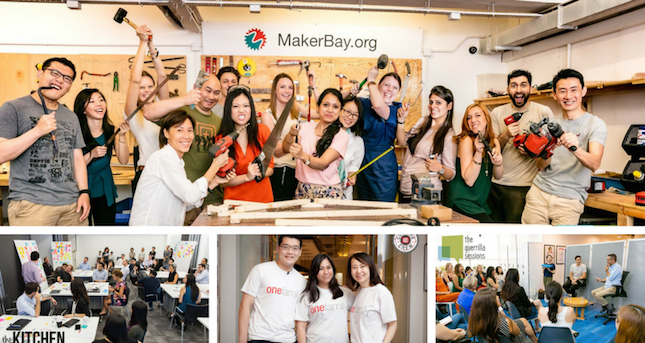
One such organization is Hong Kong-based Li & Fung, which manages the supply chains for hundreds of retailers and brands around the world. With market changes brought on by e-commerce disrupting its business model, the company’s vision is to “create the supply chain of the future.” To deliver on the culture piece, Li & Fung formed a five-person open innovation unit under the direction of Lale Kesebi, Chief Communications Officer & Head of Strategic Engagement. The team is focused on finding new ways of working, and discovering new ways to grow revenue.

What follows is a condensed version of my conversation with Kesebi, a native of Halifax, Nova Scotia, which took place at the Ignite 2017 crowdsourcing conference in San Francisco on May 4th, 2017.

Robert Tucker: Lale, what an inspiring and detailed presentation of Li & Fung’s culture journey. Where did you start this initiative?

Lale Kesebi: Our journey started three years ago with the creation of the Strategic Engagement unit. We were interested in thinking deeply about how to get to transformation in the company through the core initiatives that were focused on the employee as an individual and as a whole person across our 22,000-person organization. We began asking “WII-FM”, what’s in it for me? We knew that every project we were going to run needed to be able to translate itself to WII-FM, and that we needed to be able to connect with colleagues in our company globally, in 40 countries. That turned out to be a pretty profound question to ask. We needed to connect with the “why” of the change we wanted to bring about, and pair that with creative storytelling to make the change real.

Tucker: What was your rollout strategy?

Kesebi: We asked ourselves how we could role model the change to a traditional culture that was looking to bust out and create transformation in its business model. Could we identify the motivators and create the environment that would truly inspire interesting work? And could we invite others into our work from inside and outside the company so that they could not only see the difference, but feel it.

Tucker: What was the journey like?

Kesebi: We could never have predicted where this journey would go. We experimented a ton. Some of the things we tried didn’t work out, but many of them exceeded our expectations. We built a broadly skilled creative team that was designed to be collaborative. We focused on creating sightlines from company goals to team goals to individual goals that were both professional and personal. We ran mentoring circles to get to individual performance that uplifted the entire team. We drew heavily on crowdsourcing our ideas from far-flung companies and organizations. We began giving out random Rock Star awards to people on our team for great work on a project. We collaborated across Slack and connected personally through our wellness room. We did whatever we could do to bring feeling and emotion and connection and a sense of belonging to a team of extremely high-performing individuals.

Tucker: You also made physical changes to your headquarters offices. How come?

Kesebi: To get people’s attention, we felt we needed to move away from a traditional office structure with cubicle farms surrounded by managers’ offices on the perimeter, and towards an open structure for everybody. I know this kind of thing is typical in Silicon Valley, but not for Hong Kong. We were really trying to create a high-performance team atmosphere that was naturally collaborative, and where we could co-create together. And we asked, how do we honor people’s ability to bring their full selves to work and unleash their full potential?

Tucker: How did you scale the change to all of Li & Fung’s 250 offices?

Kesebi: One thing we did that worked amazingly was we dispatched a three-person team from headquarters that visit our offices around the world sharing our company values. We call them the Culture Crew. These folks are amazing. They volunteered to spend the next eight months of their lives — on top of their day jobs — traveling the world, meeting people in our field offices. They ended up going around the world seven times, ate a lot of really bad airline food, and got to about 100 offices, but it was a game-changer for us. They were out there listening and figuring out the stories of our people in those markets. They would engage people, asking them what were the values of the company as far as they were concerned, and they were, as we say, spreading the love.

Tucker: They did a lot of social media on these visits, right?

Kesebi: They sure did. It was an amazing project to chronicle their journey and see the response to their tour. The Culture Crew would travel with their GoPro cameras and shoot and edit videos, and they’d push out vlogs and blogs through our internal channels. They became rock stars inside our company. Everyone was learning from everyone else what was going on because the stream was coming through to everybody. We used WeChat a lot as a social channel. Our little group was on it daily. Whoever was in market was giving the rundown of what happened during that day and what new innovators they were meeting in market. The buzz was extraordinary.

Tucker: What was the payoff?

Kesebi: For a shoestring budget of less than fifty thousand U.S. dollars, the Culture Crew created an impact that’s still paying dividends. We launched an experiment where we didn’t really know what the output might be. But by taking a chance on creating something original, and by getting stories out of these Culture Crew drop-ins, we were plugged in to individual innovators everywhere in the organization. And the word got around. We would have our colleagues say “you’ve got to meet so and so because he’s cracked a solution to a problem that can help the company. And by the way the he’s also a racecar driver in his free time!” We’d hear incredible stories like this of some incredible people out there who were innovating alone. So the Culture Crew was connecting innovation without that even having been the point of the original experiment.

Tucker:How did you come to use crowdsourcing software to accelerate your sharing?

Kesebi: We had been racking our brains trying to figure out how to pull these global innovators together once the tour ended. And we were struck by the fact that maybe we could use a scalable technology around ideating. So that’s what we did. A chance encounter in Singapore with Spigit, our software provider, helped to launch our first open innovation challenge on a platform we called The Kitchen.

Tucker: What was your first challenge?

Kesebi: We challenged everybody everywhere with the question: what innovative product can you create to delight a customer? We held idea jams, both online and offline. We got over 600 ideas in 4 weeks. One was a simple redesign of a body brush for back cleaning. We’ve since held open idea jams around our company’s moonshot purpose of Making Life Better for a billion people in the supply chain. Another idea around that was a system for building sensors that enable emergency response after natural disasters. That idea came from our team out of Turkey. They were looking at how they might be able to find people after earthquakes, which was an issue that had impacted them. And we got so many more ideas it was incredible.

Tucker: Out of all this culture-enhancing activity, a community of innovators started to emerge. Tell us about that.

Kesebi: We started pulling this group together because they needed to actually have a conversation with each other beyond the time limits of the challenge. This group now regularly talks to each other through Slack. They’re just basically a global community of innovative and creative people. That led us to launch something called Guerilla Sessions, where we invite speakers from anywhere in the world to our local offices to share their innovations with LF innovators. Those stories encourage a broader culture of innovation.

Tucker: I must ask: did you get pushback? How did you deal with risk averse resistance to change?

Kesebi: Well, first of all, I’m an optimist. I’ve always believed where you find friction points, your first job is to try to eliminate them with experiments and projects and to find people who can work with you to fuel the change you’re looking to make inside an organization. If the culture itself is the sticking point, then you need to change the behaviors that are manifestations of your company’s real values. As an innovator, you know you’re innovating and making strides when you get pushback. You’re taking people into the unknown. That’s scary for humans.

Tucker: So how did you do that?

Kesebi: By engaging in what I call artful communication. You really have to communicate with human beings, not just through emails but actually eye-to-eye standing in front of them having conversations about the change you’re trying to make. My advice is keep going where there is friction. That’s the noble work to be done. Inspire the change, and lead with empathy.

Tucker: Empathy is huge in the innovation field. What role does empathy play?

Kesebi: Empathy takes you a long way towards understanding. If you can truly embody the principles of design thinking and lead with empathy, you will find in many cases you’re not dealing with opposition so much as with fear. It could be fear of being displaced by a change that you can’t cope with yourself. Often, you’re dealing with a tremendous amount of ego which is a very traditional leadership characteristic of ‘I already have all of the answers”. Or “I need to look like I know what I’m doing. I can’t possibly ask for help’. Put simply it all amounts to politics. If you can figure out why somebody isn’t supporting your agenda, then that’s the first step to figuring out how to convert them [to your cause]. And in some cases if they’re holding a tremendous amount of influence on your organization, you need to lean in and get that support. If they are not supportive, then you just have to realize it’s about neutralizing them.

Tucker: You’re never going to bring everybody on board.

Kesebi: Right, but if you have a whole group of passionate people talking about the positives of your agenda or the change and you only have one person who’s not supportive, that group of people is going to be the place where you’re going to find your support. And you’re going to need to keep doing that over and over. And there will eventually be a tipping point. In the end, the obstacle person can’t possibly vocalize their opposition any more because they won’t have any political capital — everyone else will be at the party. So you’ve got to get people into your party. And you’ve got to keep them in your party!

Tucker: Lale, this is great! Final question, where do you go from here?

Kesebi: At the end of the day our audacious goal for our open innovation group is to eventually put ourselves out of business. If we can create a real culture of innovation enabled throughout the company so that it becomes our new DNA, the air that we breathe and the way that we work all the time, our work will then be done.

This article originally appeared in Forbes
Image credit: Li and Fung

Subscribe to Human-Centered Change & Innovation WeeklySign up here to get Human-Centered Change & Innovation Weekly delivered to your inbox every week.
Six Ways Crowdsourcing Can Enhance Innovation Performance

Six Ways Crowdsourcing Can Enhance Innovation Performance

GUEST POST from Robert B. Tucker

Disruption and digitization are changing the game for more and more industries, and more and more companies. As a result, traditional ways of approaching innovation are coming up short. What I’m beginning to see is that there’s a new way of practicing innovation being embraced by a growing number of companies, not just in tech. An important component of this new all enterprise approach is the use of crowdsourcing, the process of inviting ideas from groups – usually online — to solve a common problem.

Here are six ways organizations are using crowdsourcing to drive results:

1. Engage people across the enterprise.

Gallup surveys show that 50.8% of American workers are not engaged, while One in four are actively disengaged – and they want to disrupt meetings, cause chaos, and sabotage results.

Eighty six percent of crowdsourcing companies report that increasing employee engagement is one of their primary motivators, according to surveys by Spigit, an idea management software purveyor to industry. “Inviting ideas from employees at every level, about issues that affect everybody is a proven way of engaging the disengaged and kicking off a crowdsourcing program,” says Amy Millard, Spigit’s vice president of marketing.

Instead of passive “we want your feedback” electronic suggestion boxes, crowdsourcing experts now favor “campaigns” — limited duration contests that invite the crowd to submit ideas on a particular problem or question. Such engagement in turn creates opportunities to collaborate across departmental lines. It empowers people with a new means to effect change within the organization. Crowdsourcing campaigns often bring talented associates to the attention of management. They become a gateway to spreading innovation across the enterprise.

2. Cultivate a culture of innovation.

Hong Kong based Li & Fung is the world’s largest sourcing agent for Wal-Mart and hundreds of other retailers. With the rise of the Internet and e-commerce, the firm is facing market shifts that threaten to destabilize it. To focus on new ways of working, the company formed a five-person innovation unit with new mantra is “creating the supply chain of the future.”

“We challenged everybody everywhere with the question: what innovative product can you create to delight a customer,” says Lale Kesebi, chief communications officer and head of strategic engagement, for the company. “We did four week idea jams, both online and offline. We held one innovation week for our Grand Challenge winner and we did 14 one-hour brainstorm sessions on separate topics and we got over 600 ideas in four weeks. One submission was a simple redesign of a body brush for back cleaning. Another was a system for building sensors and digital maps that enable emergency response after natural disasters. That idea came from our team out of Turkey that was looking at how they might be able to find people after earthquakes, which was an issue that had impacted them. And we got so many more ideas it was incredible.”

3. Combat disruption with employee brainpower.

KPMG predicts that, within 25 years, the $200 billion auto industry could shrink to less than 40% of its current size. An Accenture report titled Banking 2020 notes that “disruptive fin-tech business models threaten up to 32% of banks revenue by 2020.” And so it goes in the age of disruption.

When we first started hearing about disruption 20 years ago, it was confined to a few industries, like disk drives. Today virtually every industry is susceptible. Brick and mortar retail is said to be at a tipping point as retailer after retailer closes stores, or slink into bankruptcy.

Often, when I’m on a speaking engagement, I put up a slide with logos of disrupted companies, such as Blockbuster or Blackberry or Nokia. No CEO wants to see their logo on this list. So if you’ve got a way to tap the brainpower of thousands of employees, there’s no reason it has to. There’s so much crowdsourcing has to offer those who are challenged with fighting back against disruptors. But you do need all hands on deck and this new tool is vital.

4. Invite customers to contribute ideas.

Denmark-based Lego Group uses crowdsourcing to solicit ideas from fans all over the world. While the company employs 180 designers, they know that among their many fans (some of whom are well beyond childhood) may lurk the company’s next blockbuster — if only they are receptive to customer ideas. Lego personnel review all idea submissions that garner 10,000 “likes” from site visitors. Lego customer contributors whose ideas get chosen to go into production receive 1% of their idea’s revenue.

Other organizations are crowd-sourcing for solutions to vexing technical problems or to discover winning algorithms (Netflix), while snack giant Lay’s, a division of Frito Lay, asks the crowd to suggest new chip flavors or even whole snack categories via its website. Visit Clorox Connects and you’ll see dozens of ideas submitted by Clorox consumers. Fact is, we’ve been crowdsourcing since the time of the Romans. What’s different today is the scale and scope of this new method of interacting with the wider world, and this dynamic will only grow in the years ahead.

5. Revamp new product development.

Polaris Industries, a Roseau, Minnesota-based manufacturer of ATVs, uses its crowdsourcing platform to discover and deliver breakthrough products that help it compete with Harley-Davidson. Before they began rethinking new product development, the company’s innovation approach was very much 2.0 and top-down.

Under the old approach, new product development was difficult for Polaris to discover unconventional ideas. And even when they did, the path to development was tortuous. Polaris had no way to predict the risk, value, or viability of an idea, which made it hard to secure executive sponsorship and budget for innovation projects. But when it turned to the crowd, Polaris achieved an 80% reduction in the time it takes to discover, assess, and execute new ideas, according to a Spigit white paper.

One byproduct of Polaris’ new approach has been the its three-wheel motorcycle called the Slingshot, and three other bestselling vehicles. Tapping the internal crowd has energized Polaris’ R&D process. It’s also reduced time-to-market dramatically – a distinct advantage in a highly competitive market.

6. Embrace new methods of driving growth through innovation.

My research study of the best practices of the world’s leading companies suggests they do five things amazingly well: 1) They make innovation a strategic leadership imperative, 2) they manage ideas as critical assets to future growth, 3) they collaborate with customers using a variety of customer insight tools, 4) they cultivate cultures of risk-taking and experimentation, and 5) they involve everyone in the enterprise.

This final factor may be the most significant. Creative, original, and impactful ideas can come from anywhere, notes Spigit’s 2017 Business Innovation Report. “When asked how often ideas selected for implementation are submitted by someone outside the group or business unit sponsoring the challenge, 24% of our customers say this happens more than half the time.”

Crowdsourcing’s most significant contribution may be that it breaks up monopolies in an organization, and readies it for fundamentally new approaches to coming up with ideas and bringing them to life. No department has a lock on ideas pertaining to its work product. The research and development group is no longer the only place where new technologies can originate. The human resources department is no longer the only place where morale and engagement can be nurtured. The marketing department is not the only place where customer experience improvements can originate. And the innovation department no longer has a monopoly on innovation.

Crowdsourcing is not a silver bullet. Organizations must focus the approach on real business challenges. Otherwise, ideas languish for lack of sponsorship. But its rise seems inevitable, given the inadequacy of traditional approaches and given the promise of applying the collective intelligence of the larger community to the opportunities at hand.

This article originally appeared in Forbes
Image credit: Freepik

Subscribe to Human-Centered Change & Innovation WeeklySign up here to get Human-Centered Change & Innovation Weekly delivered to your inbox every week.

Building Your Personal Innovation Strategy

Building Your Personal Innovation Strategy

GUEST POST from Robert B. Tucker

Most of the discussion around disruption these days revolves around companies, but very little around individual careers. In a time of exponential change and dislocation, with job functions being automated and algorithms doing more of the work humans used to do, it’s more important than ever to develop a personal career road-map that keeps you on course, no matter what comes at you.

As companies get disrupted, their people do too. Hewlett-Packard, as it struggles to cope with product commoditization and cloud computing, has laid off 30,000 employees over the past five years. Publishing giant Pearson is cutting 4000 staffers as it attempts to deal with the meltdown in textbook publishing. Money managers, facing billion dollar withdrawals from actively managed funds, face diminution of their value proposition. Brick and mortar retailers face dislocation as consumers gravitate to shopping online, and thousands of retail employees are no longer needed.

The best way to avoid the trauma of sudden disruption is to develop a Personal Innovation Strategy — a written out plan that keeps you on course through good times and bad. Not only do you avoid personal obsolescence, you roll with the punches. And you build resilience. Here are six key components to building a personal innovation strategy:

1. Take time to develop your strategy.

A Personal Innovation Strategy is a well-conceived and written set of goals, habits, and daily actions that alert you to threats, helps you seize opportunities, and insures your viability over time. Whether you’re an independent contractor (part of the “gig” economy), or a corporate employee, think of yourself as You, Inc. Since the likelihood is almost 100 percent that you’ll be independent at some point, think of yourself in this context already.

Action step: Take at least fifteen minutes daily to strategize and invest time in contemplating your future. Make it a point to learn something new every day about the changing fortunes in your profession or industry. Collect articles, ask questions, read books, do research, and take notes. Lifelong learning begins here.

2. Rate your employer’s disruption factor.

A common lament of the dislocated: “we didn’t see it coming.” Busy executing and meeting deadlines, they ignored signals of change. They buried themselves in work, and hoped for the best. My advice: develop your early warning system starting right now. Do a deep dive into the viability of your company’s value proposition in light of technological, political, regulatory, consumer and social trends.

Action step: Rate your employer’s Disruption Factor by understanding how your company’s business model is holding up in today’s world of disruption and change — and how it’s likely to hold over the next three to five years. What are the analysts saying about your company? What threats are on the horizon? Don’t allow yourself to be blindsided when the signs were there all along.

3. Manage your future. Set both short and longer-term goals.

If you’re serious about taking charge of your future, start by daydreaming. Fantasize about the future as you want it to emerge. Let your imagination go. How do you want life to unfold in its most ideal form? Sketch out a portrait of your life on a day in the future five and ten years out. What’s the view over the breakfast table? What kind of leisure activities are you engaged in?

Action step: Ask yourself: how is what you are doing in your job and in your life right now helping you manifest the future as you most want it to be?

4. Prepare yourself by taking on new responsibilities.

In today’s world, if you’ve grown comfortable in your career, something must be wrong. If you’re feeling your work life is in stasis, it’s probably time to raise your game. Challenge yourself to plan your next strategic move by taking on new duties.

Even a lateral move in your company could enlarge your experience and get you into what I call Opportunity Mode. Volunteer to take on challenges that take you out of your comfort zone. Develop new aptitudes and attitudes. And remember: your next big break could be in your present occupation or in an entirely new context.

Action step: Get ready by regularly taking on new learning experiences.

5. Build soft skills.

Think about the skills you use regularly and how they can be improved: communication skills, technology skills, writing skills, functional skills and especially interpersonal skills. Part of your Personal Innovation Strategy should involve raising your game in each of these areas.

A recent study, “The Rise of Women in the High-Skilled Labor Market,” made a troubling discovery, if you happen to be male, that is. Over the past several decades, researchers found, high paying occupations – from physicians to software engineers to money managers – require increasing levels of interpersonal skills. Those professionals who only have cognitive skills (like problem-solving and analysis) are vulnerable to being replaced by those with a diverse set of skills where women tend to excel. Chief among them: empathy.

Action step: Continue to build upon both hard and soft skills.

6. Strive to become indispensable.

Your functional and technical skills are what got you your current job. But as industry disruption impacts more and more professions and industries, the most valuable skills you can add to your repertoire are not just soft skills but innovation skills. These skills include not just soft skills like empathy, but the ability to create the future.

As I often tell my audiences: Whatever your position, profession or industry, your ability to innovate – to find new and better ways to add value, to discover opportunity where others see only problems, to get new things done, to be entrepreneurial, to energize and motivate people around you, to build the buy in and gain consensus to move forward – these skills, will give you a personal competitive advantage that can never be outsourced. And they, along with your Personal Innovation Strategy, will serve you well in the years ahead. No matter how the future unfolds.

This article originally appeared in Forbes
Image credit: Pixabay

Subscribe to Human-Centered Change & Innovation WeeklySign up here to get Human-Centered Change & Innovation Weekly delivered to your inbox every week.

Get Creatively Unstuck with These Seven Techniques

Get Creatively Unstuck with These Seven Techniques

GUEST POST from Robert B. Tucker

If you solve problems for a living, you’ve probably had it happen. Just when you least expect it — and just when you need to be brilliant — you’re suddenly blocked. You pour on the coffee and tell yourself you’ll power it out. But all you produce is the jitters. You try burning the midnight oil, and all you do is exhaust yourself. Face it: your “idea factory” has decided to shut down. You’re stuck.

The condition can be so jarring that authors have a name for it: writers block. For them, it’s the inability to produce satisfactory new work. In some cases, it can last for years, as it did for such luminaries as Stephen King, Harper Lee, and Truman Capote. For the rest of us, it’s usually a temporary condition, but no less frustrating if you’re coming up on an important deadline and your well is suddenly, inexplicably dry.

Getting stuck doesn’t have to become a personal crisis. Not if you have a few tools in your toolkit for just such times. Here are seven surefire ways to avoid the time- wasting, agonizing period of non-productivity known as being stuck — and get quickly back on track:

1. Recognize that you’re stuck. But don’t panic.

“Getting stuck is all part of the process,” the senior engineer at a defense contractor remarked recently. “It doesn’t scare me like it did when I was younger.” Don’t let it scare you either, but learn to recognize the symptoms. If you find yourself aimlessly surfing the Internet and avoiding the project you’re on, this could be a sign. If you draw a mind-map but can only come up with several options, this could be a heads up that you’re stuck. If you call a meeting to discuss solutions to a problem and silence fills the air –your team is stuck.

Try this: Interview yourself: why do you feel you are stuck? What’s happening in your work or your personal life that may have precipitated this state? What has worked for you in the past to get back on track? The simple solution might be to get a good night’s sleep. Focusing on something else for a day or two can also work. But if the condition persists, your strategy needs to be to shift and keep shifting until you get your groove back.

2. Consciously shift your environment.

Start shifting your environment, your perspective, and your approach to the problem you’re working on till you get back into a flow state. How? Start by changing where you’re working on the problem. Change your physical environment. Go work in the conference room, or at the coffee shop down the street. Work from home.

In a recent session I led for an engineering firm, one participant said this: “If stuck, I’ll put [the project] aside, take a walk, visit a museum, or sleep on it. I often awake with complete solutions. I keep paper and pencil next to my bed and in my car at all times.”

Other ideas: Visit a toy store with your kids and let them lead you around. Go to a museum. Go for a walk in the woods or take a spin on your bike. Nature is God’s environment to help get us unstuck. Use it.

3. Consciously shift your approach.

Tried and true problem-solving steps can sometimes be ignored as we try to cut corners and produce brilliant work on the fly. If you’re feeling stuck, revisit these steps: identifying the problem, setting goals, brainstorming possibilities, and assessing alternatives. Solutions to the bigger problems and projects often come, not when we command them to appear, but because we’ve incubated ideas for a period of time. They are the result of gathering inputs from others, mulling over alternatives, and seeking inspiration to carry us to a higher level.

Here are comments I’ve heard:

  • If stuck, I’ll talk with a creative colleague in another field.”
  • “If stuck, I work at my white-board or sketch pad. If I’m still stuck, I’ll switch to another task and allow the first one to go in the background for a while.”
  • “When I get stuck, I walk out and clear my head and then query somebody on the idea. This isn’t easy at my company because I have to find someone with enough technical knowledge to understand what I’m talking about. And they’ve got to have a mind open enough to hear something that is not completely thought out.”

4. Shift your perspective.

“If stuck, I try to bounce the problem off others, thinking out loud,” observed one manager. “This always worked for me when I used to do software development.” Assumption assaulting is necessary because the human brain is designed for efficiency. It takes what neuroscientists call “perceptual shortcuts” to save energy. Only by forcing our minds to move beyond habitual thinking patterns can we imagine truly new solutions.

Years of experience in an industry, profession or job can give us invaluable experience. But they can also be a block. “It’s always been done that way” or “we already tried that” are often a sign that you and your team need to shift perspective to move beyond habitual thinking blocks in order to imagine alternate possibilities. To get unstuck and spawn fresh thinking, ask such questions as “I wonder if we…” or “what would an entirely different way of handling this situation look like?”

Try this: Bombard the brain with alternatives and possibilities. Actively challenge assumptions. Invite new thinking.

5. Avoid using the pressure of deadlines to ignite creativity.

Harvard professor Teresa Amibole studies creativity in the workplace. At the end of each day, she asks participants in her studies to report on their creative experience, by writing about it in their journals. After reviewing over 12,000 days of diary entries, Amibole made a surprising discovery. She found that people universally believed they were most creative when they were working under severe deadline pressure. But their diaries showed otherwise. They were actually least creative when fighting the clock. “Time pressure stifles creativity because people can’t deeply engage with the problem,” Amibole told one interviewer. “People need time to soak in a problem and let the ideas bubble up.”

Key message: We’ve all used a tight deadline to motivate us to get creative. But suppose you wait till the last minute and develop a case of stuck? Research indicates this is a bad habit worth breaking.

6. Develop creative muscle.

For much of my professional life, I’ve been involved in an ongoing study of the creative habits of highly successful innovators and the organizations they lead. In personal observation and countless interviews, I find they develop what I call creative muscle almost every waking hour. That is to say, they have or develop a conscious internal process to stimulate the input, throughput and output of ideas on a constant basis. They use a series of routines, habits, and techniques to keep their idea factories operating at peak levels day in and day out.

To take one example, Silicon Valley marketing guru Regis McKenna told me about his personal process for generating ideas. Whether attending board meetings, relaxing with his family, or conversing with colleagues, he takes along a moleskin idea notebook and jots down ideas as they occur. “You’re sitting there in that meeting, and something is said that relates to something else you’re working on, and boom – you get an idea. I’m always in this mode of looking for better ways of doing things.”

Action step: Become “idea-oriented” as you go through your day. Ideas are everywhere. Avail yourself to them by observing and being curious.

7. Know when to multitask and when to unitask.

It’s important to recognize the difference between being stuck, and simply being distracted. We may think we are more productive when we work on multiple projects at once, but research shows otherwise. Comparing multitaskers with non-multitaskers, Stanford professor Clifford Nass concluded that multitaskers performed poorly on a variety of tasks, were easily distracted, and had difficulty focusing.

It’s a challenge to cut out multitasking when creative concentration would serve us better. We all get a sense of being productive from being able to keep several balls in the air at once. But sustained periods of multitasking can lead to burnout, and increase the risk of getting stuck. So if you’re doing routine work, multitask to your heart’s content. But when you’re doing important non-routine work, make it a point to eliminate distractions and work on one project at a time. During these periods, put your phone on silent mode; close all web browsers and shut your door. Even when your thoughts wander, or you get sidetracked, remind yourself of the importance of focusing singularly rather than scattering your mental force across multiple issues.

Conclusion: There are lots of different ways to get unstuck. Use the ones that work for you.

This article originally appeared in Forbes
Image credit: Unsplash

Subscribe to Human-Centered Change & Innovation WeeklySign up here to get Human-Centered Change & Innovation Weekly delivered to your inbox every week.