Author Archives: Braden Kelley

About Braden Kelley

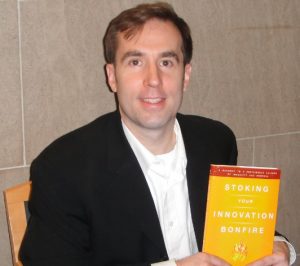
Braden Kelley is a Human-Centered Experience, Innovation and Transformation consultant at HCL Technologies, a popular innovation speaker, and creator of the FutureHacking™ and Human-Centered Change™ methodologies. He is the author of Stoking Your Innovation Bonfire from John Wiley & Sons and Charting Change (Second Edition) from Palgrave Macmillan. Braden is a US Navy veteran and earned his MBA from top-rated London Business School. Follow him on Linkedin, Twitter, Facebook, or Instagram.

Every 60 Seconds Amazing Things Happen on the Internet

I found a couple of great infographics over on BusinessInsider that you’ll find below.

They highlight some truly astounding activity numbers from what happens in the world of technology and on the Internet.

Did you know that in a single minute there are over 168 million emails are sent? That’s just one example of the mind blowing online activity that takes place every sixty seconds.

Here are some of the other amazing things that happen in 60 seconds (click to enlarge):

Every 60 Seconds Amazing Things Happen on the Internet

Every 60 Seconds Amazing Things Happen on the Internet

Subscribe to Human-Centered Change & Innovation WeeklySign up here to get Human-Centered Change & Innovation Weekly delivered to your inbox every week.

Twelve Days of Innovation

Twelve Days of InnovationAs we are now in the middle of the Twelve Days of Christmas, I thought it might be fun to do a post from the innovator’s perspective of the kinds of gifts that might mean the most to an innovator during the holidays when it comes to their quest for innovation excellence. The song however does get quite repetitive so instead of running through it in song format, let’s look at the Twelve Days of Innovation as a list:

1. On the first day of Innovation, my CEO gave to me – Top Level Support for Innovation

There is no doubt that whatever the Chief Executive takes the time to talk about (repeatedly) and measure, is what people focus on and support in the organization. Having the CEO or even the whole top level of management talking about the importance of innovation by itself isn’t of course enough to make innovation happen. When we talk about Top Level Support, it may include the top level talking about their support for innovation, but it is more important that they show their support for innovation by giving the innovation efforts of the company a voice and making resources available to support them and in some cases even measuring and rewarding the level of innovation contribution of the staff in order to make it go.

2. On the second day of Innovation, my CEO gave to me – A Common Language of Innovation

What is your definition of innovation? We all have one, and they are all different. If your company hasn’t taken the time to define what innovation means in your organization or to lay out how you are going to talk about innovation internally and externally, and captured somewhere what kinds of innovation you’re after, then exactly what kind of innovation do you expect to get?

3. On the third day of Innovation, my CEO gave to me – A Chief Innovation Officer

While top-level support is crucial, it definitely helps to have someone in charge of organizing the innovation efforts of the organization. A Chief Innovation Officer (CIO) or VP of Innovation or Innovation Director or whatever you choose to call them is not responsible for coming up with all of the innovations for a company, but instead helps to organize and own things like the common language acquired on the second day, and the gift coming next on the fourth day. In short the CIO manages the process and acts as a facilitator to help put the right innovation resources against the right innovation projects.

4. On the fourth day of Innovation, my CEO gave to me – Separate Funding for Innovation Projects

If you try and fund innovation projects from within existing budget categories, usually you will end up only with incremental, product-group specific innovations. Having separate funding for innovation means that you can fund the promising innovation projects that your organization identifies and that you can be more strategic about the kinds of innovation projects that you fund. It also allows you fund the gift coming next on the fifth day.

5. On the fifth day of Innovation, my CEO gave to me – A Balanced Innovation Portfolio

The innovation needs of any organization are diverse, and that is what makes a balanced innovation portfolio so important. If you received enough dedicated innovation funding on the fourth day, you’ll have no trouble putting together a balanced innovation portfolio of innovation projects focused on a variety of innovation types, projects with different risk profiles and time horizons. A balanced innovation portfolio will allow you to manage risk and ensure that you always have innovations ready to launch.

6. On the sixth day of Innovation, my CEO gave to me – Access to Customer Insights

In the innovation diatribes of many authors they talk about the importance of engaging your employees in your innovation efforts while also talking about the importance of understanding the customer and trying to discover unmet customer needs when trying to come up with new innovations. The problem is that most organizations don’t share their customer insight or voice of the customer information beyond their market researchers, product managers, and possibly a handful of executives. The problem? Successful innovations are often deeply linked to a novel or reinterpreted customer insight. How can employees maximize their innovation contributions if they don’t have access to customer insight information? Organizations that help their employees better understand the organization’s customers stand to accelerate their innovation efforts. Just do it.

7. On the seventh day of Innovation, my CEO gave to me – A Global Sensing Network

Innovation insights and ideas can come from anywhere. So, if you’re only looking in a few different places and asking a handful of people, how can you possibly maximize your innovation efforts? The solution is to build a Global Sensing Network. The purpose of a Global Sensing Network is to allow an organization to collect and connect the partial insights and ideas that will form the basis of the organization’s next generation of customer solutions. This involves collecting and connecting customer insights, core tech trends, adjacent tech trends, distant tech trends, local social mutations, expert communities, and more. To actually build a Global Sensing Network you need to start from the inside out. You have to take a look around inside your organization and see what employees you have, what natural connections they have, and where they are currently located on the globe. This will get you off to a good start – I can help you if you would like – but this article can help too.

8. On the eighth day of Innovation, my CEO gave to me – An External Talent Strategy

Does your organization want to increase its speed to market? Is innovation on the minds of your leadership? Does management insist that the smartest people in the world work for your organization? Or, do they acknowledge that there are more smart people outside your four walls than inside? The truth is that the nature of the organization is changing from a talent ownership mindset to a talent attraction mindset. We now do business in an integrated, global economy with an interconnected web of suppliers and distribution channels where having a partner of choice mentality will be increasingly important. We also live in a world where in the near future the most valuable employees will be those that not only good work, but also who serve as a force multiplier for their organizations by being good at organizing the efforts of others who don’t even work for the company. As an organization you’ll want to evolve to a place where ideally, even those who don’t work FOR you, want to work WITH you. This will require that organizations craft an external talent strategy to maximize not only the productivity of their employees on their payroll, but also to accelerate their innovation efforts. A link to the free webinar I did with Innocentive on this topic is coming soon, along with a white paper on the subject in early January.

9. On the ninth day of Innovation, my CEO gave to me – More Tolerance for Risk and Failure

When I speak at corporate events and conferences around the world with innovation practitioners trying to champion innovation in their organization and do the hard work in the trenches, I often hear the comment that their organization struggles to innovate because the culture of the organization is risk averse, or even worse, failures are punished so severely nobody wants to do anything risky or innovative. This is a leadership and a management problem that requires the gifts from the first, fourth and fifth days because the fact is that some of your innovation projects will fail and ideally you want to have a balanced portfolio of innovation projects that sit outside the business units and product groups so that the eventuality of this is acceptable and manageable. AND, at the same time it is also equally important that you work to establish a culture where people do not obsess on their fear of failure or the risk they are taking but instead on how fast they are learning – from both successes and failure. When learning balances failure and when portfolios manage risk, you’ll create more room for innovation.

10. On the tenth day of Innovation, my CEO gave to me – A Flexible, Adaptable Organization

If there are two characteristics that should be at the top of any wish list of organization capabilities besides innovation – flexibility and adaptability should be in the running for the top two spots. Flexibility and adaptability are not the same thing. A flexible organization is able to move resources from where they normally sit in the organization to where they are needed most in the organization at any one time. An adaptable organization is capable of quickly adapting to changes in the marketplace based on changes in the competitive structure of the industry, changing customer preferences, or a myriad of other changes that require the organization’s strategy, policies, processes, and even structure to change to better serve their profitable customers. Think Nokia moving from making tires to making mobile phones, think about Amazon switching from being a traditional e-tailer to welcoming third-party sellers onto the site and starting a cloud services business. Flexible, adaptable organizations are capable of surviving massive marketplace shifts caused by innovation. Flexible and adaptable employees capable of coping with all of the change required by flexible, adaptable, innovative organizations will be in high demand in the 21st century.

11. On the eleventh day of Innovation, my CEO gave to me – A Long-Term Commitment to Innovation

It’s great that the CEO threw you a bone on day one and gave you some top-level support for innovation, but unless your organization is willing to make a long-term commitment to innovation at all levels, and continually work to put the common language, training, policies, processes, and funding in place to sustain your innovation efforts, you won’t be successful. A long-term commitment to innovation is required. One that will survive a few failed innovation efforts (that of course yield a lot of learning), and a few defections of top talent to other organizations as you build out your innovation programs (innovation talent will be highly desired by other organizations after all). Over the long haul, you must as an organization work to embed innovation capability across the organization and not only use your efforts to produce new innovations but to also innovate your innovation efforts themselves if you want to pursue innovation excellence and make innovation a deep capability of the organization. Innovation is a marathon, not a sprint.

12. On the twelfth day of Innovation, my CEO gave to me – Idea and Insight Management Software

And finally, if you want to engage your employees, or eventually your partners, suppliers, customers, or even the general public in your future innovation efforts, you are going to need to have a system for gathering ideas and tracking their progress through the evaluation and execution phases of innovation. But at the same time you should also look at how you gather and share your customer insights and evaluate whether you need a system to manage that important resource as well. Don’t let great insights or ideas fall through the cracks because someone misplaced them.

Conclusion

Of course there are more ingredients necessary for making innovation a deep sustainable, renewable capability of the organization, but for the innovator in our song, these would be a great start. Innovation is hard work, and the organizations that invest in deepening their innovation abilities AND capabilities will over time be more successful than those that don’t. Building a strong innovation effort takes time and dedication, so if you’ve already started – keep pushing! And if you haven’t started yet, what are you waiting for?

I hope you all have a great finish to the holiday season and a prosperous start to the new year!
Build a Common Language of Innovation

Subscribe to Human-Centered Change & Innovation WeeklySign up here to get Human-Centered Change & Innovation Weekly delivered to your inbox every week.

The Geoffrey Moore Interview – Escape Velocity

The Geoffrey Moore Interview – ‘Escape Velocity’

I had the opportunity recently to interview Geoffrey A Moore, the best-selling author of such popular books as Crossing the Chasm, Inside the Tornado, The Gorilla Game and Dealing with Darwin. He has a new book out called Escape Velocity: Free Your Company’s Future from the Pull of the Past and having had some of his books on the Innovation Excellence Reading List for a while I thought it made sense to sit down and pose him some questions to get some of his latest perspectives, thoughts and insights on innovation.

Here is the text from the interview:

1. When it comes to innovation, what is the biggest challenge that you see organizations facing?

The biggest challenge is understanding that they are three types of return on innovation which are largely incompatible with one another, and the importance therefore of declaring which type of return you are seeking. The first type is differentiation innovation, and that’s one everyone understands. But the key there is to be “beyond compare” so that you capture your returns in bargaining power. The second type is neutralization innovation, where the focus is on meeting all the performance standards of your category, to make sure you do not get eliminated from consideration or lose your customers to churn because of some dissatisfiers in your offer set. And the third type is productivity innovation, where the return comes from eliminating waste, ideally to repurpose resources for one of the other two types of innovation. Most people associate innovation only with the first type, which unfortunately is relatively hard to achieve. The other two types represent lots of low hanging fruit that people neglect.

2. In ‘Dealing with Darwin’ you identified 13 different types of innovation. Which is the most difficult for companies? Which presents the most opportunity?

Each type of innovation has its strengths and weaknesses, so choosing a focus is a lot about where your category is in its life cycle and what kind of crown jewels you can bring to the table. In the age of the Internet, marketing innovation has been a real challenge, as the old models of marketing do not apply very well and the new ones are still being developed. On the other hand, also because of the Internet, business model innovation has never been easier.

3. What is the biggest obstacle to generating future growth within an established enterprise?

Established enterprises struggle whenever they are required to reallocate resources away from established lines of business in order to fund the growth of new lines of business. The period of greatest pain is when the new business is big enough to demand a material amount of resource but not yet big enough to create a material return. Management teams are continually under pressure to raise the performance bar every quarter, and this makes it increasingly painful for them to invest in the future. But eventually this policy leads to a future state where the cupboard is bare and the company is in real trouble.

4. Tell us about the importance of reallocating resources across an enterprise in deliberately asymmetrical ways

One of the ways enterprises waste their innovation resources is by “peanut-buttering” them across way to many initiatives in way too many areas of the business. It is much more effective to concentrate on a few must-win bets, even when that means some areas get no additional funding whatsoever. This is not a popular decision, which is why peanut-buttering is so common. Unfortunately, however, it is a sure path to a slow death.

5. Why is it important to be swift to neutralize competitors’ innovations and to be laser-focused on driving in-house innovations?

Neutralization innovation ensures you keep up with your industry’s changing norms. The key here is to be “good enough, quick enough,” conserving both on the level investment (don’t go any further than the norm requires) nor taking a second longer (every second you are out of compliance with the norm gives your competitors a license to poach on your turf). The laser-focus is all about spending just the right amount of resources here, as opposed to with differentiation innovation, where the rule is to spend whatever it takes. Needless to say, you cannot do a lot of differentiation innovation, so laser focus there includes keeping discipline as to what projects get this tag.

6. What do you feel is the most important takeaway from your new book ‘Escape Velocity’?

Contemporary management protocols and practices overweight a focus on performance and underweight a focus on power. The primary purpose of this book is to rectify the balance by creating a vocabulary and a context for addressing the current and future state of power of your enterprise, and driving innovation initiatives to ensure that power is replenished instead of exhausted. Too often the latter occurs, which ends with the demise of the enterprise.

7. What skills do you believe that managers need to acquire to succeed in an innovation-led organization?

We make a big distinction between leadership and management because success depends both on making the bets needed to create future power (leadership) and converting those positions of power into economic returns to reward the current bet’s investment and to fund the next series of bets (management). Contemporary financial markets are very pro-management and anti-leader because they have disconnected themselves from long-term returns. This creates a fundamental imbalance in the politics of governance which is driving established enterprises to marginalize themselves along a path of quiet self-liquidation. It is critical that boards of directors retake the reins here and reassert a more healthy balance between long and short term, which in turns involves taking strong leadership positions.

8. If you were to change one thing about our educational system to better prepare students to contribute in the innovation workforce of tomorrow, what would it be?

Compared to the rest of the world we have a great educational system—really, better than any other—for the elite. That’s because our system really does encourage students to take risk, explore views, etc. in ways that no other system does. Our huge challenge is that this system does not scale to the entirety of our population, and all attempts to scale it have actually made overall results worse, not better. So we have a real conundrum here. Our crown jewels are not aligned with our social values, and the most probable outcome of that is that we will try to destroy our crown jewels. Needless to say, we need to find a better path forward than that.

Build a Common Language of Innovation

Subscribe to Human-Centered Change & Innovation WeeklySign up here to get Human-Centered Change & Innovation Weekly delivered to your inbox every week.

Harnessing the Global Talent Pool to Accelerate Innovation

FREE Innocentive Webinar on December 13, 2011 at 2PM EST

Harnessing the Global Talent Pool to Accelerate InnovationAs more industries become commoditized and innovation becomes more of a focus, organizations are being forced to move beyond a talent ownership mindset to a talent attraction and engagement mindset.

In this webinar, we will explore how organizations can utilize open innovation and crowdsourcing resources as an essential talent management strategy to harness the growing numbers of retired scientists, unemployed experts, and underemployed talent around the world to generate ideas, solve problems, and further the goals of the business. The webinar will also explore how individuals can bolster their incomes and credentials by participating in open competitive challenges.

Three things you’ll learn:

1. Why having an external talent network strategy is becoming increasingly important
2. How leading organization manage their open innovation and crowdsourcing efforts
3. Strategies for attracting and engaging talent to your organization’s innovation efforts

Register for this FREE Webinar

Subscribe to Human-Centered Change & Innovation WeeklySign up here to get Human-Centered Change & Innovation Weekly delivered to your inbox every week.

What is Your External Talent Strategy?

What is Your External Talent Strategy?I am currently doing research for a white paper and a webinar on harnessing the global talent pool to accelerate innovation, and I need your help to add to the case studies I’ve already gathered. Here is the premise:

As more industries become commoditized and innovation becomes more of a focus, organizations are being forced to move beyond a talent ownership mindset to a talent attraction and engagement mindset.

There are many reasons for this. In the United States this includes a growing percentage of researchers approaching retirement age and post 9/11 immigration policies that make it increasingly difficult for foreigners to come to this country to study and work. The intersection of an aging scientific workforce, tighter immigration policies, and a growing need for innovation to reinvigorate the economy is causing more organizations to make plans to engage talent outside their four walls. But this is not just an American problem…

Forward-thinking organizations are now seeking to harness the growing numbers of retired scientists, unemployed experts, and underemployed talent around the world to generate ideas, solve problems, and further the goals of the business.

This begs the question:

What is your organization’s external talent strategy?

Or, how does your organization plan to leverage the brains outside your four walls to achieve its goals?

Please leave a comment or contact me to share your story.

I’ll be sharing the results of my research and my thinking in a FREE webinar on December 13, 2011 and then later in a white paper in the new year.

Build a Common Language of Innovation

Subscribe to Human-Centered Change & Innovation WeeklySign up here to get Human-Centered Change & Innovation Weekly delivered to your inbox every week.

4 Days to Innovate

4 Days to InnovateThe clock is ticking on the congressional “supercommittee” – a panel comprised of six Republicans and six Democrats charged with issuing a plan to balance the nation’s budget. The bipartisan gathering has only four days until their deadline to submit such a plan. But how well can they, or anyone, innovate while the clock is ticking?

Continue reading the rest of this article on The Washington Post

Subscribe to Human-Centered Change & Innovation WeeklySign up here to get Human-Centered Change & Innovation Weekly delivered to your inbox every week.

Innovation Curiosity

Innovation Curiosity

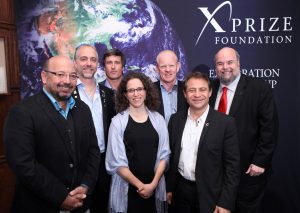
I had the opportunity to meet several amazing explorers of land, sea, and space at the announcement of Shell’s sponsorship of the XPrize Foundation’s exploration prize group recently. The explorers they had present at the event included:

  • Richard Garriott, Vice Chair, Space Adventures, Ltd., legendary video game developer and entrepreneur; among first private citizen astronauts to board International Space Station, America’s first second-generation astronaut; and X PRIZE Foundation trustee
  • David Gallo, Woods Hole Oceanographic Institute, renowned undersea explorer, among first oceanographers combining manned submersibles and robots to map ocean world; co-leader of recent Titanic exploration; project leader, successful search for missing Air France Flight 447
  • Mark Synnott, global mountain climber who has climbed some of the biggest rock faces and ice walls on the planet, ventured into among the least-visited locales on earth, photographed the globe’s most spectacular sites; and is a senior contributing editor of Climbing magazine.
  • Chris Welsh is a co-founder of Virgin Oceanic and is an accomplished entrepreneur, sailor and aviator who recently finished 25,000 miles of intense competitive sailing. Chris has made five LA-Hawaii crossings and one LA-Tahiti-Tonga-Auckland-Tasmania crossing.

Encouraging Curiosity

XPrize Mark SynnottI had the opportunity to hear Mark Synnott speak of how despite the enormous risk he undertakes in his climbing explorations, that the thing that scares him most is the possibility of slipping on easy ground. When he is attempting a difficult portion of a climb, he is always thinking about what his exposure to risk is, but on easy portion it is easy to forget to take proper precautions. Yet, when it comes to his kids Mark thinks he is probably one of the world’s most over-protective parents, but at the same time he wants to inspire his kids to be curious about the world.

Gerald Schotman of Shell hopes that the challenges they pursue with the XPRIZE Foundation will stimulate curiosity in children and adults around the world, and that it will help to encourage people (even their own employees) to embrace their explorer mindset.

My conversation with Mark and Gerald led me to think to myself:

I wonder what the role of curiosity is in innovation?

While I was pondering this question, my conversations continued and I probed further to examine the link between curiosity and innovation.

The Role of Curiosity in Innovation

Peter Diamandis of the XPRIZE Foundation talked about how for him the link between curiosity and innovation is the following:

“What should be possible that doesn’t yet exist?”

This is a great question to inspire curiosity and stimulate thinking that could lead to innovation.

Different Approaches to Innovation

XPrize Peter DiamandisPeter Diamandis talked about how we need to ask where a breakthrough should be possible and focus on structuring an innovation challenge to help harness people’s curiosity to push past current obstacles in thinking or execution. Peter has learned first-hand that small teams are amazingly powerful, and talked about how big organizations focus on reducing risk by throwing lots of money and resources at a challenge. On the flip side though, when you put a box around a challenge with a small budget and a small team, then that small team of people will know the traditional approach will fail – and try a different approach.

One of the things that the XPRIZE Foundation does with their challenge prizes is to force people to build and demonstrate something. Ideas are easy and people’s perspectives on what’s possible changes when they have to build and demonstrate their solution.

Challenges uncovered during exploration and execution often prove more challenging to solve than anticipated. Chris Welsh of Virgin Oceanic talked about how both he and James Cameron thought they were working on 18 month projects that for both have turned into 4 to 5 year journeys. For those of you not familiar with Virgin Oceanic’s mission, they are hoping to send one person to the deepest point in each of the world’s five oceans.

Bringing Curiousity Out of Its Shell

When I spoke to Gerald Schotman of Shell about curiosity he spoke about trying to recruit curious people into Shell, leading by example, and attempting to trigger curiosity by setting scary targets:

“If your dreams don’t scare you, you’re not being ambitious enough”

Exploration of the Exploitation

XPrize Polar BearWeIn speaking with David Gallo about exploration of the seas, he spoke about how when we oversell a danger like climate change in the media, it is damaging – there is no plastic island the size of Texas in the middle of the ocean. But there is a chemistry change in the ocean, a soup, a film leads to us eating our own garbage as plastic, flame retardants, and other runoff embed themselves in the tissue of the fish we eat. We have changed the temperature and the chemistry of the oceans, and anyone who has an aquarium knows that’s a bad idea.
Xprize Polar BearWe must reduce the runoff into the oceans and stop over-fishing if they are going to be able to help sustain us for the long-term. In the meantime, we must explore more of the oceans that cover 70% of the earth. To date, we have only mapped 5% of the ocean floor, meaning there are huge areas of the ocean that we’ve never been to.

Chris Welsh talked about how at the bottom of the ocean it might be possible to find a liquid CO2 reservoir deep down, and that at its edges we might be able to observe chemosynthesis taking place instead of photosynthesis. There were people talking about underwater rivers, waterfalls, and lakes – all of it a bit challenging for me to understand – but exciting to see where continued exploration of our undersea world might lead.

Expected and Unexpected Outcomes from Exploration

One of the outcomes that we would expect from exploration is the commercialization of some of what we find. In Richard Garriott’s case he has a business selling novel proteins from the ocean floor and crystallized proteins from space.

At the same time, Chris Welsh talked about the recovery of rock life from 30 meters within the rock at the bottom of the ocean and how this microbial was 140 million years old and had been consuming the sulphur out of the rock. Then Russ Conser of Shell added that most oil comes not from plants and dinosaurs but from microbial life.

Meanwhile, one of Mark Synnott’s stories was from a National Geographic climb of a cliff in the Amazon rainforest where they discovered nine new species living on the cliff face – including a giant green earthworm. I’m not sure anyone expected that. And that is the thing about exploration. If you don’t explore, you don’t know what you’ll miss finding or what further discoveries a single exploration might lead to because of the curiosity it stimulates.

Final Thoughts on Curiosity

After spending the day amazed at some of the things these people are exploring and discovering, I think I crystallized my thoughts on the link between curiosity and innovation that I wondered about at the beginning of this article, and here it is:

Curiosity drives invention, invention empowers innovation, and innovation delivers increased value to our lives.

So, if we want to increase the volume of innovation in our organizations and societies, we need to inspire and foster curiosity in our employees, citizens, and children. But more than that, we need to encourage people to explore in the areas they are curious about. From that exploration, discoveries will take place that could change the world.

This leaves us with three final questions:

  1. What are you curious about?
  2. What are they curious about?
  3. What can you provide that would help them pursue their curiosity?

Xprize Group Photo

Image credits: Braden Kelley, XPrize

Subscribe to Human-Centered Change & Innovation WeeklySign up here to get Human-Centered Change & Innovation Weekly delivered to your inbox every week.

The Story Behind X PRIZE and Shell Partnership

I had the opportunity to chat with Russ Conser about Shell’s three year partnership with the XPRIZE Foundation to sponsor the Exploration Prize Group.

This video explores the journey that Shell went through to end up partnering with the X PRIZE Foundation and the implications internally for Shell.

Subscribe to Human-Centered Change & Innovation WeeklySign up here to get Human-Centered Change & Innovation Weekly delivered to your inbox every week.

Free Event – Social Product Innovation Summit

Free Event – Social Product Innovation SummitOn October 18, 2011 I spoke at a free virtual event focused on social product innovation, called coincidentally the Social Product Innovation Summit 2011. The event took place on October 18, 2011 but the sessions are still available.

This free, four-hour event offers opportunities to learn, discuss and celebrate the best uses of Social Product Innovation across the product lifecycle, including open innovation, crowdsourcing, expert identification, collaboration platforms, social product development, sentiment analysis and more.

Top industry speakers and winners from the 2010 SPIKE Awards will present real examples of success and attendees will have the opportunity to network with experts, vendors and each other to maximize value.

Sessions will be presented in a flexible, a-la-carte format. Attend the sessions you want, when you want.

In addition to featuring presentations and chats with several industry thought leaders, the event will also feature the announcement of the 2011 Spike Awards.

Here is a snapshot of the agenda:

11:00-11:20am – Trends and Insights on Social Product Innovation
– Jim Brown, Tech-Clarity

This session will introduce the use of social computing techniques to enhance product innovation and product development, including some exiting results from a related research project. The presentation will share some insights from the recent survey, discuss trends in social innovation, and help establish a common scope and language for our discussions.

11:20-11:40am – Get Real – Practical Starting Points for Social Product Innovation
– Bill Poston, Kalypso

This session will examine the various touch points for Social Product Innovation and the existing innovation and product development processes. It will also offer a pragmatic approach to getting started in the Front End of Innovation. Companies have tried to use open innovation initiatives to help drive growth through innovation, but they often end up being more costly and work-intensive than originally assumed. Semi-open innovation models like Virtual Private Expert Networks (vPEN) with a defined, contingent social network of external experts are a practical way to get started.

12:30-12:50pm – Connecting with Employees and Customers for Innovation
– Braden Kelley

Innovation is a team sport, and in this session we will take a look at how to engage your workforce and customer base in the innovation process by building engagement with these communities and ideally – loyalty. Engaging a broad cross-section of employees and customers can help you be more successful in identifying new value creation opportunities that will resonate with your customer base and help you attract new customers. Engaging your employee and customer bases can help you mobilize an army of eyes to drive your innovation efforts forward – but only if you’re ready to truly connect with them. Are you ready?

12:50-1:10pm – Web 3.0 – Your Product Innovation Strategy
– David Feinleib

Investor and entrepreneur David Feinleib will discuss the future of social product innovation – Web 3.0. Mr. Feinleib will discuss how integrating social and mobile into new products from the start will deliver a wider, monetizable audience, key customer insights and customer feedback and input for new products.

1:45-2:00pm – 2011 SPIKE Award Announcements

The event will culminate in the announcement of the 2011 SPIKE Award winners for the best use of social strategies, processes and supporting technologies to improve innovation, product development and product management. 2011 Winners will be announced for the following categories – CPG, Life Sciences, Technology, Manufacturing and People’s Choice. The winners will share their stories of success.

I hope to see you there!

Build a Common Language of Innovation

Subscribe to Human-Centered Change & Innovation WeeklySign up here to get Human-Centered Change & Innovation Weekly delivered to your inbox every week.