GUEST POST from Pete Foley
Intuitively we all mostly believe our opinions are our own. After all, they come from that mysterious thing we call consciousness that resides somewhere inside of us.
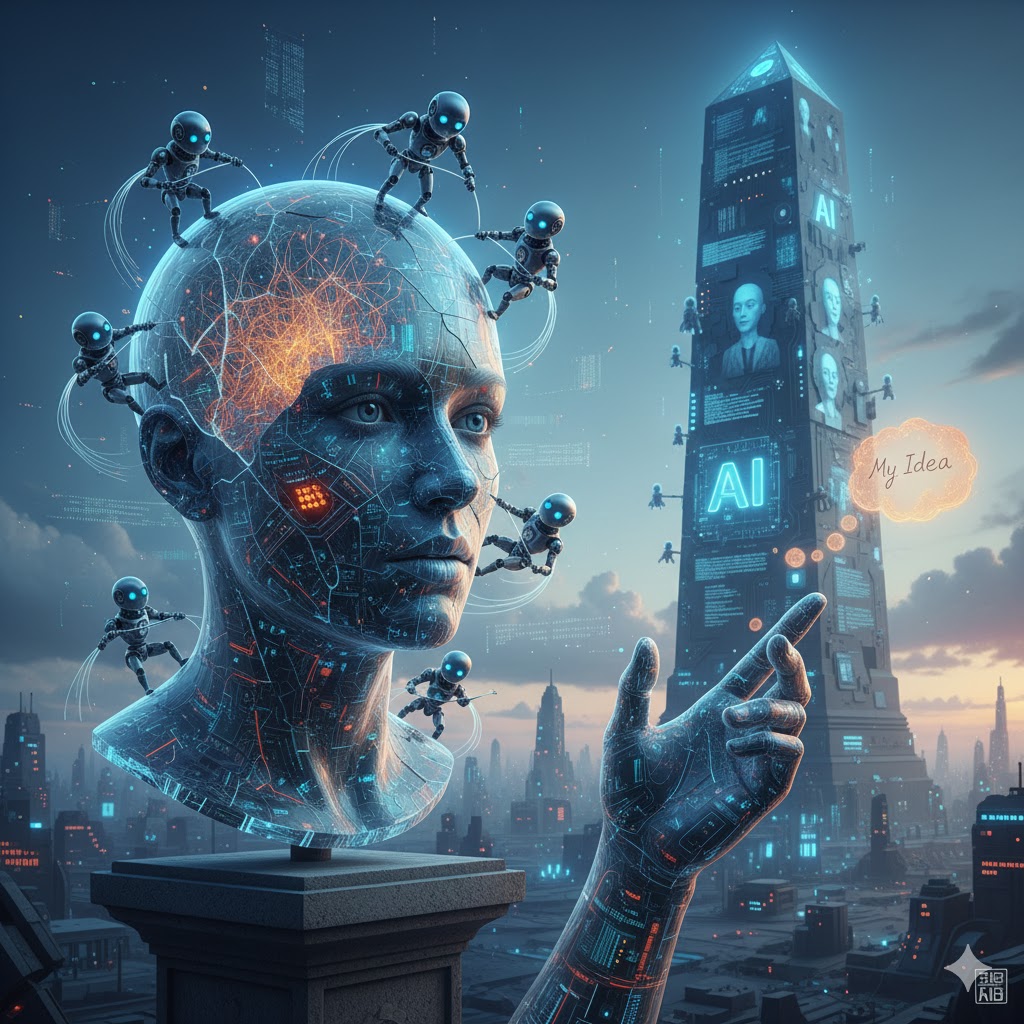
But we also know that other peoples opinions are influenced by all sorts of external influences. So unless we as individuals are uniquely immune to influence, it begs at the question; ‘how much of what we think, and what we do, is really uniquely us?’ And perhaps even more importantly, as our understanding of behavioral modification techniques evolves, and the power of the tools at our disposal grows, how much mental autonomy will any of us truly have in the future?
AI Manipulation of Political Opinion: A recent study from the Oxford Internet Institute (OII) and the UK AI Security Institute (AISI) showed how conversational AI can meaningfully influence peoples political beliefs. https://www.ox.ac.uk/news/2025-12-11-study-reveals-how-conversational-ai-can-exert-influence-over-political-beliefs . Leveraging AI in this way potentially opens the door to a step-change in behavioral and opinion manipulation inn general. And that’s quite sobering on a couple of fronts. Firstly, for many today their political beliefs are deeply tied to our value system and deep sense of self, so this manipulation is potentially profound. Secondly, if AI can do this today, how much more will it be able to do in the future?
A long History of Manipulation: Of course, manipulation of opinion or behavior is not new. We are all overwhelmed by political marketing during election season. We accept that media has manipulated public opinion for decades, and that social media has amplified this over the last few decades. Similarly we’ve all grown up immersed in marketing and advertising designed to influence our decisions, opinions and actions. Meanwhile the rise in prominence of the behavioral sciences in recent decades has provided more structure and efficiency to behavioral influence, literally turning an art into a science. Framing, priming, pre-suasion, nudging and a host of other techniques can have a profound impact on what we believe and what we actually do. And not only do we accept it, but many, if not most of the people reading this will have used one or more of these channels or techniques.
An Art and a Science: And behavioral manipulation is a highly diverse field, and can be deployed as an art or a science. Whether it’s influencers, content creators, politicians, lawyers, marketers, advertisers, movie directors, magicians, artists, comedians, even physicians or financial advisors, our lives are full of people who influence us, often using implicit cues that operate below our awareness.
And it’s the largely implicit nature of these processes that explains why we tend to intuitively think this is something that happens to other people. By definition we are largely unaware of implicit influence on ourselves, although we can often see it in others. And even in hindsight, it’s very difficult to introspect implicit manipulation of our own actions and opinions, because there is often no obvious conscious causal event.
So what does this mean? As with a lot of discussion around how an AI future, or any future for that matter, will unfold, informed speculation is pretty much all we have. Futurism is far from an exact science. But there are a couple of things we can make pretty decent guesses around.
1. The ability to manipulate how people think creates power and wealth.
2. Some will use this for good, some not, but given the nature of humanity, it’s unlikely that it will be used exclusively for either.
3. AI is going to amplify our ability to manipulate how people think.
The Good news: Benevolent behavioral and opinion manipulation has the power to do enormous good. Whether it’s mental health and happiness (an increasingly challenging area as we as a species face unprecedented technology driven disruption), health, wellness, job satisfaction, social engagement, important for many of us, adoption of beneficial technology and innovation and so many other areas can benefit from this. And given the power of the brain, there is even potential for conceptual manipulation to replace significant numbers of pharmaceuticals, by, for example, managing depression, or via preventative behavioral health interventions. Will this be authentic? It’s probably a little Huxley dystopian, but will we care? It’s one of the many ethical connundrums AI will pose us with.
The Bad News. Did I mention wealth and power? As humans, we don’t have a great record of doing the right thing when wealth and power come into the equation. And AI and AI empowered social, conceptual and behavioral manipulation has potential to concentrate meaningful power even more so than today’s tech driven society. Will this be used exclusively for good, or will some seek to leverage for their personal benefit at the expense of the border community? Answers on a postcard (or AI generated DM if you prefer).
What can and should we do? Realistically, as individuals we can self police, but we obviously also face limits in self awareness of implicit manipulations. That said, we can to some degree still audit ourselves. We’ve probably all felt ourselves at some point being riled up by a well constructed meme designed to amplify our beliefs. Sometimes we recognize this quickly, other times we may be a little slower. But just simple awareness of the potential to be manipulated, and the symptoms of manipulation, such as intense or disproportionate emotional responses, can help us mitigate and even correct some of the worst effects.
Collectively, there are more opportunities. We are better at seeing others being manipulated than ourselves. We can use that as a mirror, and/or call it out to others when we see it. And many of us will find ourselves somewhere in the deployment chain, especially as AI is still in it’s early stages. For those of us that this applies to, we have the opportunity to collectively nudge this emerging technology in the right direction. I still recall a conversation with Dan Ariely when I first started exploring behavioral science, perhaps 15-20 years ago. It’s so long ago I have to paraphrase, but the essence of the conversation was to never manipulate people to do something that was not in there best interest.
There is a pretty obvious and compelling moral framework behind this. But there is also an element of enlightened self interest. As a marketer working for a consumer goods company at the time, even if I could have nudged somebody into buying something they really didn’t want, it might have offered initial success, but would likely come back to bite me in the long-term. They certainly wouldn’t become repeat customers, and a mixture of buyers remorse, loss aversion and revenge could turn them into active opponents. This potential for critical thinking in hindsight exists for virtually every situation where outcomes damage the individual.
The bottom line is that even today, we already ave to continually ask ourselves if what we see is real, if our beliefs are truly our own, or have they been manipulated? Media and social media memes already play the manipulation game. AI may already be better, and if not, it’s only a matter of time before it is. If you think we are politically polarized now, hang onto your hat!!! But awareness is key. We all need to stay aware, be conscious of manipulation in ourselves and others, and counter it when we see it occurring for the wrong reasons.
Image credits: Google Gemini
 Sign up here to join 17,000+ leaders getting Human-Centered Change & Innovation Weekly delivered to their inbox every week.
The historical context of behavioral manipulation, from marketing to social media, provides a strong foundation for understanding AI’s amplified capabilities. It’s insightful to see how behavioral science and AI converge, potentially creating both positive and negative impacts on mental health, social engagement, and societal decision-making.
Well said. We’ll all learn from past behavioral manipulations, but humans and AI. And techniques will inevitable be used to create positive and negative results. I’m hoping that we can use our oown awareness to nudge it more to the positive side.