
Monthly Archives: October 2020

Change Leadership: Overcoming Resistance and Managing Stakeholders

Change Leadership: Overcoming Resistance and Managing Stakeholders

GUEST POST from Chateau G Pato

In today’s rapidly evolving business landscape, change is not only inevitable but also a key driver of success and competitiveness. However, successfully implementing change within organizations is often met with resistance and challenges from stakeholders. Change leaders play a crucial role in navigating these obstacles and ensuring a smooth transition. In this article, we will explore two case studies that exemplify effective change leadership, including strategies to overcome resistance and manage stakeholders.

Case Study 1: Microsoft’s Transformation Journey

Microsoft, one of the world’s largest technology companies, embarked on a significant organizational transformation under the leadership of Satya Nadella. The change involved shifting the company culture, adopting a growth mindset, and focusing on cloud-based services. While this transformation was necessary for Microsoft’s long-term success, it faced resistance from internal stakeholders fearful of change.

To overcome resistance, Nadella employed several strategies:

1. Visionary Leadership: Nadella clearly communicated the vision of the transformation, emphasizing the potential benefits and aligning it with Microsoft’s core values. By painting a compelling picture of the future, he inspired stakeholders and created a shared purpose.

2. Empowering Employees: Nadella empowered employees to embrace change by fostering a culture of learning and experimentation. He encouraged risk-taking and provided resources and support to develop new skills. This approach instilled confidence in employees and helped them overcome fear and resistance.

3. Continuous Communication: To manage stakeholders effectively, Nadella prioritized transparent and consistent communication. Regular updates, town hall meetings, and open forums allowed employees to voice concerns or ask questions while understanding the rationale behind the change. This approach built trust, minimizing resistance.

These strategies facilitated Microsoft’s successful transformation, resulting in a renewed market position and increased innovation capabilities.

Case Study 2: Zappos Holacracy Implementation

Zappos, an online shoe and clothing retailer, aimed to transition from a traditional hierarchical structure to a Holacracy-driven organization. The Holacracy model involves self-management and distributed decision-making authority. However, implementing such a radical change faced resistance not only from employees but also from external stakeholders like investors and customers.

Zappos utilized the following tactics to manage stakeholders and overcome resistance:

1. Transparent Communication: CEO Tony Hsieh communicated the motivations and goals behind the Holacracy implementation clearly. He engaged employees in ongoing conversations about the change, ensuring they understood the long-term benefits of self-management and decision-making authority.

2. Piloting Approach: Zappos implemented the Holacracy in pilot teams, allowing employees to experience the system and provide feedback. This approach enabled leadership to address concerns and iterate on the implementation strategy based on real-world experiences.

3. Customized Training and Support: Zappos invested in comprehensive training and development programs to equip employees with the necessary skills to thrive in the new decentralized structure. They also provided ongoing support and coaching to help employees navigate the change successfully.

Despite challenges, Zappos achieved a remarkable transformation by aligning stakeholders and empowering employees. The Holacracy implementation led to increased autonomy, creativity, and employee engagement, fostering a culture of innovation.

Conclusion

Change leadership is about more than merely implementing new processes or structures. It involves effectively managing stakeholders and overcoming resistance to ensure the change’s successful adoption. Microsoft and Zappos provide valuable insights into how change leaders can navigate these challenges by fostering a shared vision, empowering employees, and maintaining open lines of communication. By applying these strategies, organizations can drive transformation and position themselves for long-term success in an ever-evolving business environment.

SPECIAL BONUS: Braden Kelley’s Problem Finding Canvas can be a super useful starting point for doing design thinking or human-centered design.

“The Problem Finding Canvas should help you investigate a handful of areas to explore, choose the one most important to you, extract all of the potential challenges and opportunities and choose one to prioritize.”

Image credit: Pixabay

Subscribe to Human-Centered Change & Innovation WeeklySign up here to get Human-Centered Change & Innovation Weekly delivered to your inbox every week.

Creating a Culture of Change

Building Organizational Resilience

Creating a Culture of Change

GUEST POST from Art Inteligencia

Change is inevitable in today’s fast-paced and ever-evolving business landscape. Organizations that are unable to adapt to change often become stagnant or face the risk of becoming obsolete. However, building organizational resilience is crucial to survive and thrive amidst constant disruption. This article discusses the importance of creating a culture of change within an organization and presents two case study examples of companies that have successfully navigated through turbulent times.

Case Study 1: IBM

IBM is a prime example of a company that transformed its culture to embrace change and build resilience. In the 1990s, IBM was facing immense pressure due to the rise of personal computers and software providers. Their traditional mainframe business was slowly losing relevance. Recognizing the need for change, IBM initiated a cultural shift by investing heavily in research and development, focusing on emerging technologies such as cloud computing and artificial intelligence.

To foster a culture of change, IBM encouraged employees at all levels to embrace innovation and take risks. They established internal programs that encouraged intrapreneurship, allowing employees to develop new ideas and transform them into successful ventures. Furthermore, IBM created robust communication channels to ensure that ideas flowed freely across different departments. This openness and willingness to adapt enabled IBM to not only survive but thrive in the face of disruption, ultimately becoming a leader in the technology industry once again.

Case Study 2: Netflix

Netflix, the global streaming giant, is another prime example of how building a resilient culture can lead to tremendous success. In the early 2000s, Netflix was primarily a DVD rental-by-mail company. However, they recognized the emerging trend of online streaming and understood that the traditional DVD business was going to become obsolete. To adapt, Netflix underwent a radical transformation by shifting their entire business model towards digital streaming.

Building a culture that embraced change and innovation was critical in Netflix’s success. Their CEO, Reed Hastings, believed in empowering employees and giving them the freedom to make decisions. They fostered a culture of experimentation and learning from failures, even famously allowing employees to take unlimited vacation days. This approach encouraged risk-taking and allowed the company to quickly iterate and adapt to consumer demands. Today, Netflix is not only the dominant player in the streaming industry but has also become a major content producer.

Key Strategies for Creating a Culture of Change

These case studies offer valuable insights into the strategies that organizations can adopt to build a culture of change and resilience:

1. Leadership Commitment: Building a culture of change starts at the top. Leaders must commit to fostering an environment that encourages innovation, risk-taking, and open communication.

2. Empowerment and Autonomy: Employees should be given the freedom to experiment, make decisions, and take ownership of their work. Encouraging intrapreneurship can lead to unexpected breakthroughs and foster a culture of resilience.

3. Continuous Learning: Organizations that prioritize learning and development create an adaptable workforce. Invest in training programs, mentorship, and cross-functional collaborations to nurture a learning culture.

4. Effective Communication: Establish channels for open and transparent communication across all levels of the organization. Encourage employees to share ideas, provide feedback, and collaborate across departments.

Conclusion

In today’s rapidly changing business landscape, creating a culture of change is essential for building organizational resilience. The case studies of IBM and Netflix demonstrate that by embracing innovation, empowering employees, and fostering an environment of continuous learning, organizations can not only survive but thrive in the face of disruption. To remain competitive and resilient, organizations must prioritize building a culture that embraces change as its core value.

SPECIAL BONUS: Braden Kelley’s Problem Finding Canvas can be a super useful starting point for doing design thinking or human-centered design.

“The Problem Finding Canvas should help you investigate a handful of areas to explore, choose the one most important to you, extract all of the potential challenges and opportunities and choose one to prioritize.”

Image credit: Pixabay

Subscribe to Human-Centered Change & Innovation WeeklySign up here to get Human-Centered Change & Innovation Weekly delivered to your inbox every week.
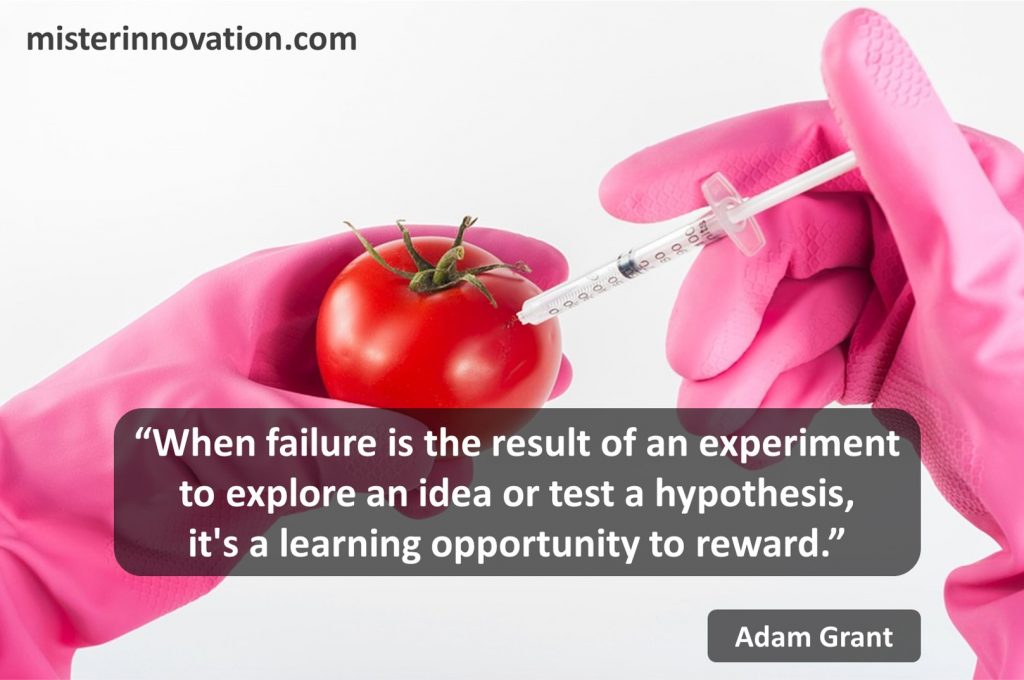
How to Foster a Culture of Experimentation

Unlocking Innovation Potential

How to Foster a Culture of Experimentation

GUEST POST from Chateau G Pato

In today’s fast-paced and ever-changing business environment, innovation has become a vital aspect of success for organizations across industries. Companies must constantly explore new ideas, products, and processes to stay ahead of the competition. However, fostering a culture of experimentation within an organization can be challenging. It requires a mindset that embraces failure as a stepping stone to success and encourages employees to think outside the box. In this article, we will explore the importance of experimentation and highlight two case studies that demonstrate how organizations have successfully unlocked their innovation potential.

Case Study 1: Google’s 20% Time

Google is a pioneer in fostering a culture of experimentation through its well-known “20% time” policy. Starting in the early 2000s, Google allowed its employees to dedicate 20% of their workweek to pursue projects of their own choosing, even if those projects were unrelated to their current roles. This policy encouraged employees to think creatively, take risks, and work on innovative ideas that were not part of their daily responsibilities.

This culture of experimentation led to the creation of successful products like Gmail, Google Maps, and AdSense, which all began as side projects during employees’ 20% time. By giving employees the freedom to explore their passions and experiment with new ideas, Google was able to tap into the collective potential of its workforce, resulting in groundbreaking innovations.

The success of Google’s 20% time policy illustrates the power of fostering a culture that promotes experimentation and risk-taking within an organization. By providing employees with the space and autonomy to dedicate time to their own projects, companies can unlock new perspectives, drive creativity, and spark innovation.

Case Study 2: Amazon’s Fail Fast Culture

Another excellent example of fostering a culture of experimentation is demonstrated by Amazon. Amazon has a “fail fast” approach, which encourages employees to test out new ideas quickly, learn from failures, and iterate rapidly. This mindset emphasizes the importance of taking calculated risks and accepting that not all experiments will succeed.

One notable example is Amazon’s foray into the smartphone market with the launch of the Fire Phone in 2014. Despite heavy investments, the Fire Phone failed to gain traction in the market and faced significant backlash. Instead of dwelling on this failure, Amazon quickly learned from the experience, pivoted its strategy, and went on to introduce successful products like the Kindle Fire tablet and the Amazon Echo.

Amazon’s fail fast culture allowed the company to bounce back from setbacks and leverage the knowledge gained through experimentation to drive future successes. By fostering a culture that embraces failure as a valuable learning experience, Amazon encourages its employees to take risks and explore new possibilities, spurring innovation throughout the organization.

Conclusion

Unlocking innovation potential and fostering a culture of experimentation is crucial for organizations looking to stay competitive in today’s dynamic business landscape. By learning from real-life case studies like Google’s 20% time policy and Amazon’s fail fast culture, businesses can gain insights into how to create an environment that encourages creativity, risk-taking, and continuous learning.

To foster a culture of experimentation, organizations should empower employees with autonomy, provide dedicated time for innovative projects, and foster an environment where failures are seen as learning opportunities rather than obstacles. By embracing experimentation and cultivating a mindset that values and encourages innovation, organizations can unlock their full potential and drive sustainable growth in the long run.

Bottom line: Futurology is not fortune telling. Futurists use a scientific approach to create their deliverables, but a methodology and tools like those in FutureHacking™ can empower anyone to engage in futurology themselves.

And to help you with your culture of experimentation, please be sure to download Braden Kelley’s FREE Experiment Canvas, which you can print as a 35″x56″ poster or an 11″x17″ or use as a background in online whiteboarding tools like Miro, Mural, Lucidspark, Google Jamboard and Microsoft Whiteboard.

Image credit: Misterinnovation.com

Subscribe to Human-Centered Change & Innovation WeeklySign up here to get Human-Centered Change & Innovation Weekly delivered to your inbox every week.

Difference Between Possible, Potential and Preferred Futures

Difference Between Possible, Potential and Preferred Futures

GUEST POST from Art Inteligencia

The role of possible, potential and preferred futures is an often-discussed topic within the field of futures studies. Futures studies, also known as “foresight”, is an interdisciplinary field of study focused on understanding and anticipating the future. Within the field, there are three distinct concepts of the future – possible, potential and preferred futures – each with their own distinct roles and implications.

Possible futures are those that are considered to be theoretically feasible and within the realm of reality. These futures are often explored through scenario planning, a technique used to identify possible future states and their potential consequences. Possible futures are important to consider as they provide a starting point for deeper exploration and analysis.

Potential futures are those that are considered to be likely to happen, based on current trends and technological developments. Potential futures are important to consider as they provide an indication of what is likely to happen in the future and can be used to inform decisions and strategies.

Preferred futures are those that are desired, often based on values, visions and goals. Preferred futures are important as they act as a guiding light for decision-making and help to ensure that actions are taken in line with desired outcomes.

The role of possible, potential and preferred futures is to provide a comprehensive view of the future, and to enable informed decision-making and strategy development. By exploring the potential implications of each type of future, it is possible to gain a better understanding of the future and make decisions accordingly.

Bottom line: Futurology is not fortune telling. Futurists use a scientific approach to create their deliverables, but a methodology and tools like those in FutureHacking™ can empower anyone to engage in futurology themselves.

Image credit: Pixabay

Subscribe to Human-Centered Change & Innovation WeeklySign up here to get Human-Centered Change & Innovation Weekly delivered to your inbox every week.

Role of World Building in Futurology

Role of World Building in Futurology

GUEST POST from Art Inteligencia

The concept of world building for futurology, or the study of how technology and society are likely to develop and change in the future, has been around for some time. However, the practice is increasingly being embraced by industry leaders and innovators as a way to explore the potential of different ideas and solutions, and plan for the future.

World building is the process of creating a fictional world where anything is possible. It involves developing a detailed story and setting, complete with characters, events, and technology, to explore the possibilities of a particular idea or solution. By creating a world that is both believable and exciting, world builders can gain insights into how their ideas may work in practice and how they might shape the future of society and technology.

One of the key advantages of world building for futurology is that it allows for the exploration of multiple scenarios. Rather than just looking at one potential future, world building allows us to consider all the different possibilities, from the most optimistic to the most pessimistic. By considering different scenarios and playing out the consequences of each, we can gain a better understanding of the potential implications of our decisions and actions.

World building also provides a platform for creativity and collaboration. By working together to create a world, individuals and teams can come up with new ideas and solutions that may not have been considered otherwise. This is particularly useful for organizations that are looking to create new products or services, as it allows them to explore the potential of their ideas in a safe and controlled environment.

Finally, world building offers an opportunity to plan for the future. By using world building to explore different scenarios and possible outcomes, organizations can create more effective strategies and plans that are better prepared to handle the changing landscape in the years ahead.

Overall, world building is an invaluable tool for futurology. It allows us to explore the potential of different ideas and solutions, consider multiple scenarios, and plan for the future. By embracing the practice of world building, organizations can gain a better understanding of the future and be better prepared for whatever lies ahead.

Bottom line: Futurology is not fortune telling. Futurists use a scientific approach to create their deliverables, but a methodology and tools like those in FutureHacking™ can empower anyone to engage in futurology themselves.

Image credit: Pixabay

Subscribe to Human-Centered Change & Innovation WeeklySign up here to get Human-Centered Change & Innovation Weekly delivered to your inbox every week.

How to Make Creativity an Everyday Habit Inside Your Organization

An Exclusive Interview with Scott D. Anthony

Scott D AnthonyI had the opportunity recently to interview fellow author Scott D. Anthony of consulting firm Innosight to talk with him about his new book Eat, Sleep, Innovate: How to Make Creativity an Everyday Habit Inside Your Organization, which is his eighth book with his co-authors Paul Cobban, Natalie Painchaud, and Andy Parker. Congratulations Scott!
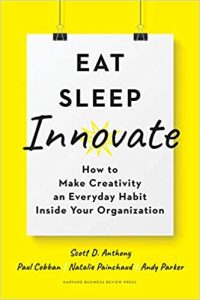
1. Given all the innovation books already written (including yours), what did you see missing to make you write another one?

This book traces back to a conversation with a client about five years ago. We were doing a workshop with the top team of a global logistics company, and talking about all of our usual stuff about the need to create organizational space for disruptive innovation and whatnot. The CEO stopped the discussion and said basically, “I’ve read all of your books and we’ve done what you would tell us to do. I have a small team focused on disruption. They are doing great. But what should I do with the 28,000 other people in my organization?” We didn’t have a great answer to the question! In 2017-2018, we did a project for DBS Bank here in Singapore that forced us to push the thinking on the topic, so decided that we would take what we learned, augment it with additional research and case studies, and create a book.

2. Why do behaviors command such a central role in innovation?

Innovation doesn’t happen magically. It happens from people doing things. Much of the innovation literature focuses on the end output, on the strategy, on the supporting organizational structures and processes, but of course all of that only works if people follow certain day-to-day behaviors. One simple way we remind people of this is to return to the basic definition we have of innovation: something different that creates value. You can’t do something different that creates value if you don’t do something!

3. What behaviors are most important to innovation?

There has been good research and writing on this from a range of different scholars and thought leaders. Our synthesis of this work and our own field work suggests that five behaviors are the most critical. It starts with curiosity. You have to question the status quo and ask “What if?” to begin the innovation journey. Next is being customer obsessed. Ultimately, for innovation to take root it must solve a real problem that matters to customers, so great innovators take the time to find problems worth solving, what we call a job to be done. The third behavior is collaboration. One of the most time tested findings in the innovation literature is that magic happens at intersections, when different mindsets and skills collide together. Great innovators recognize that none of us is as smart as all of us. The fourth is being adept in ambiguity. Innovation success comes from trial-and-error experimentation, and requires being willing to fumble, take false steps, and sometimes fail. Finally, innovation requires being empowered. To be a broken record, you can’t do something different that creates value unless you do something!

How to Make Creativity an Everyday Habit Inside Your Organization4. What are BEANs and why are they important?
A BEAN is a behavior enabler, artifact and nudge. They are important because they get at a hidden barrier to innovation inside organizations: institutional inertia. Let me explain this by describing a puzzle. Over the last 15 years, I’ve watched my four children grow up in parallel to working with large organizations all around thew world. I didn’t have to teach my children to follow behaviors that drive innovation success. Like all humans, they are naturally curious, collaborative, and love to experiment. Yet organizations, filled with people that once followed these behaviors naturally, struggle with innovation. Why? Established organizations focus on doing what they are currently doing better. Innovation is doing something different. Ingrained habits constrain innovation energy. A BEAN draws on the habit change literature to break this inertia and encourage innovation.

5. What makes a successful BEAN?

There’s a basic answer and a more complex answer. The basic answer is that a BEAN engages the two decision making frames that Daniel Kahneman identified in his book Thinking, Fast and Slow: behavior enablers trigger the rational, logical part of our brain where we carefully consider decisions (System 2) and artifacts and nudges trigger the portion of our brain where we make quick, subconscious decisions (System 1). The more complex answer is that a successful BEAN has six criteria. A good BEAN is simple, making it easy to do regularly, practical, lowering barriers to use, reinforced, making it stronger, organizationally consistent, making it natural to do, unusual, making it easy to remember, and trackable, allowing it to be further refined and improved. Yes, those words form the acronym SPROUT. So, a good BEAN needs to SPROUT.

Continue reading the article on InnovationManagement.se


Accelerate your change and transformation success

Subscribe to Human-Centered Change & Innovation WeeklySign up here to get Human-Centered Change & Innovation Weekly delivered to your inbox every week.

What is Future Studies?

What is Future Studies?

GUEST POST from Art Inteligencia

Future Studies is an interdisciplinary field that focuses on forecasting and anticipating the future. Its purpose is to help people, organizations, and governments make decisions about the future in order to have a better impact on society and the environment. It involves examining and forecasting the future of technology, politics, science, the environment, economics, and other aspects of society.

Future Studies is made up of various disciplines such as economics, sociology, political science, psychology, anthropology, and technology. By looking into the future, Future Studies are able to provide insight on how various aspects of society will be affected by current and future trends, and help people prepare for what may come.

Future Studies look at a variety of topics, such as the effects of climate change, economic changes, population growth, technology, and other changes in society. These topics are examined using a range of methods, such as trend analysis, scenario building, and environmental scanning. These methods help to provide a better understanding of the future and help people take action to prepare for it.

One of the main goals of Future Studies is to help create a better, more sustainable future. It helps people understand current trends, anticipate potential changes, and prepare for them. It also helps to identify potential risks, opportunities, and challenges that may arise in the future, and to plan for them.

Future Studies is a rapidly growing field, and is becoming increasingly important as the world continues to change and evolve. It is an important tool for helping people, organizations, and governments make informed decisions about the future.

Image credit: Pixabay

Subscribe to Human-Centered Change & Innovation WeeklySign up here to get Human-Centered Change & Innovation Weekly delivered to your inbox every week.