Tag Archives: AI

The Algorithmic Human Handshake

Balancing Automation and Personal Touch

LAST UPDATED: November 25, 2025 at 6:43PM
The Algorithmic Human Handshake

GUEST POST from Chateau G Pato

The imperative for digital transformation often boils down to a single goal: efficiency through automation. But a purely efficiency-driven approach is strategically shortsighted. When organizations chase maximum algorithm and minimum human, they sacrifice a critical, non-quantifiable asset: trust. Trust is built not on speed, but on empathy, transparency, and timely, informed human intervention.

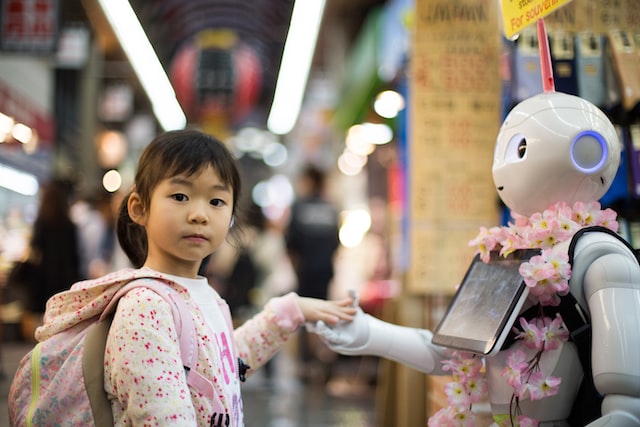
The challenge is avoiding the trap of Automation for Automation’s Sake. Instead, leaders must design the Algorithmic Human Handshake — a deliberate framework for collaboration between AI and human employees where each is leveraged for its unique strength. The algorithm excels at handling the routine, predictable, and high-volume tasks. The human excels at the non-routine, empathetic, and high-consequence decisions.

This is not a story of replacement; it is a story of Augmentation. The human is the emotional anchor, and the algorithm is the hyper-efficient assistant. Designing this handshake correctly is the difference between a successful digital transition that elevates employee purpose and a cold, customer-alienating failure.

Defining the Handshake: When to Automate vs. When to Humanize

We must map the entire customer or employee journey and apply a Human-Centered lens to identify the Moments of Truth — the specific, high-stakes points where emotional weight or consequence dictates the need for a person.

Automate the Predictable: The Algorithm’s Strength

  • Data Collection: Gathering forms, verifying IDs, checking standardized credentials.
  • Initial Triage: Routing a customer service request based on topic and sentiment analysis.
  • Recommendation: Suggesting a product based on purchase history (low consequence).
  • Compliance: Automatically flagging transactions that violate defined rules.

Humanize the Consequential: The Human’s Strength

  • Emotional Resolution: Handling a customer who is angry, grieving, or distressed (the why of the transaction).
  • Ethical Judgment: Making a decision with competing moral or fairness factors (e.g., loan exceptions, complex claim approvals).
  • Unstructured Problem Solving: Dealing with a unique, never-before-seen failure in the supply chain or product functionality.
  • Trust Building: The start and end of a long-term relationship, such as on-boarding new clients or delivering bad news.

The Three Rules for Designing the Handshake

1. The Rule of Seamless Transfer (Zero Friction Handoff)

Customers despise being passed from bot to person, or worse, having to repeat their story. The Host Leader must ensure the automated agent meticulously records all interaction data and immediately transfers the full context to the human agent upon escalation. This seamless handoff respects the customer’s time and dignifies the employee’s role by ensuring they enter the conversation already prepared to solve the problem, not just gather basic data.

2. The Rule of Emotional Threshold (Proactive Human Trigger)

The algorithm must be designed to recognize when a conversation crosses an emotional threshold and proactively trigger a human. This goes beyond simple keyword recognition (“angry,” “cancel”). It requires designing AI to detect tone, excessive use of all caps, repetition, or a failure loop (e.g., the customer clicking “No, that didn’t help” three times). The human must step in before the customer reaches frustration, demonstrating proactive empathy and managing the potential for trust breakdown.

3. The Rule of Augmentation (Empowering the Employee)

The Algorithmic Handshake must elevate the employee’s capability and sense of purpose. The algorithm should handle the low-level data synthesis, allowing the human employee to dedicate their time to high-value activities. The system shouldn’t just automate tasks; it should automate insight. For example, the AI delivers a summary: “Customer has called three times this month, has $X lifetime value, and the core issue is the delivery delay.” The human then spends their time connecting, exercising judgment, and solving, transforming their job from transactional to strategic.

Case Study 1: The Global Bank and the Loan Officer’s New Role

Challenge: Slow, Inconsistent Small Business Loan Approval

A global bank faced high staff attrition and slow approval times in its small business lending division. The core problem: loan officers spent 80% of their time manually gathering, checking, and inputting routine application data.

Algorithmic Handshake Intervention: The Digital Underwriter

The bank introduced an AI-powered Digital Underwriter to handle all predictable, standardized data tasks (credit checks, financial statement verification, compliance flagging). This was the Algorithmic Strength.

  • Role Augmentation: Loan officers were no longer data processors. They became Business Relationship Consultants. Their time was redeployed to the 20% of cases the AI flagged as complex or exceptions (Human Strength).
  • Seamless Transfer: If the AI flagged a marginal application, it delivered a one-page summary detailing why the applicant was borderline, allowing the human consultant to instantly discuss context, character, and future projections with the business owner — the non-quantifiable elements necessary for a lending decision.

The Human-Centered Lesson:

Approval speed increased by 40%. Crucially, the job satisfaction and retention of the loan officers soared, as they moved from administrative clerks to trusted strategic partners for their clients. The bank gained efficiency, and the employees gained purpose.

Case Study 2: The E-Commerce Giant and the Proactive Shipping Alert

Challenge: Reactive Customer Service During Delivery Failures

A large e-commerce platform suffered from massive service call volumes during peak seasons when delivery delays occurred. Their service was purely reactive, dealing with angry customers after the failure, leading to massive trust erosion.

Algorithmic Handshake Intervention: Predictive Human Outreach

The platform used its logistical AI to predict package delivery failure probability based on weather, carrier capacity, and route history. When the AI predicted a delay exceeding 48 hours for a customer with high lifetime value (a Moment of Truth), it triggered the Algorithmic Handshake:

  • Emotional Threshold: Instead of waiting for the customer to call, the system created a task for a human agent.
  • Proactive Humanization: The agent called the customer before the package was significantly late to apologize, offer a specific $10 credit, and arrange a guaranteed redelivery time. The human intervention focused entirely on emotional repair and trust rebuilding, not transaction handling.

The Human-Centered Lesson:

Service calls related to delays dropped by 65% because the platform managed the customer’s anxiety proactively. Customers felt uniquely valued because a human took the time to call them about a problem they hadn’t yet complained about. The algorithm created the signal; the human delivered the indispensable touch.

The Future of Work is the Handshake

The Algorithmic Human Handshake is the essential philosophy of human-centered change in the age of AI. It acknowledges that value is created not just by removing friction, but by strategically inserting empathy. Stop asking where you can replace a person with a machine. Start asking where the machine can free a person to be more human, more empathetic, and more impactful.

The highest level of service in the future won’t be pure automation; it will be the perfectly timed, flawlessly informed human intervention.

“If your automation strategy simply seeks to remove human cost, you will lose human value. Design for augmentation, not just replacement.”

Frequently Asked Questions About the Algorithmic Human Handshake

1. What is the Algorithmic Human Handshake?

It is a deliberate strategic design framework that integrates automation (the algorithm) and human employees to maximize efficiency and maintain trust. The algorithm handles routine, high-volume tasks, while the human focuses on non-routine, empathetic, and high-consequence interactions.

2. What is the “Rule of Seamless Transfer”?

The Rule of Seamless Transfer ensures that when an automated interaction escalates to a human agent, the algorithm provides the human with the full, complete context of the prior interaction. This eliminates customer frustration from having to repeat their story and allows the human agent to immediately focus on problem-solving and empathy.

3. Where should the human be prioritized in the customer journey?

The human should be prioritized during “Moments of Truth” — points in the journey where there is high emotional weight, high consequence (e.g., loan decisions, healthcare diagnosis), or complex, unstructured problem-solving required. These are the points where trust is built or irreparably broken.

Your first step toward the Algorithmic Human Handshake: Map your highest-volume customer service interaction. Identify the exact moment a customer expresses high frustration (e.g., using “all caps” or repeated failures). Design an AI trigger that immediately sends a notification to a human agent along with a one-line summary of the issue and the customer’s value, instructing the agent to intervene before the customer formally requests a transfer.

Extra Extra: Because innovation is all about change, Braden Kelley’s human-centered change methodology and tools are the best way to plan and execute the changes necessary to support your innovation and transformation efforts — all while literally getting everyone all on the same page for change. Find out more about the methodology and tools, including the book Charting Change by following the link. Be sure and download the TEN FREE TOOLS while you’re here.

Image credit: Unsplash

Subscribe to Human-Centered Change & Innovation WeeklySign up here to get Human-Centered Change & Innovation Weekly delivered to your inbox every week.
Augmented Ingenuity

How AI Elevates the Art of Human Questioning

LAST UPDATED: November 20, 2025 at 12:37PM

Augmented Ingenuity

GUEST POST from Chateau G Pato

In the vast landscape of innovation, the quality of the answer is always constrained by the quality of the question. For centuries, breakthrough ideas — from the theory of relativity to the invention of the internet — began not with an answer, but with a profoundly insightful question. Now, as Artificial Intelligence (AI) permeates every layer of the enterprise, we face a critical choice: Will we delegate our thinking to AI, or will we leverage AI to make us profoundly better thinkers?

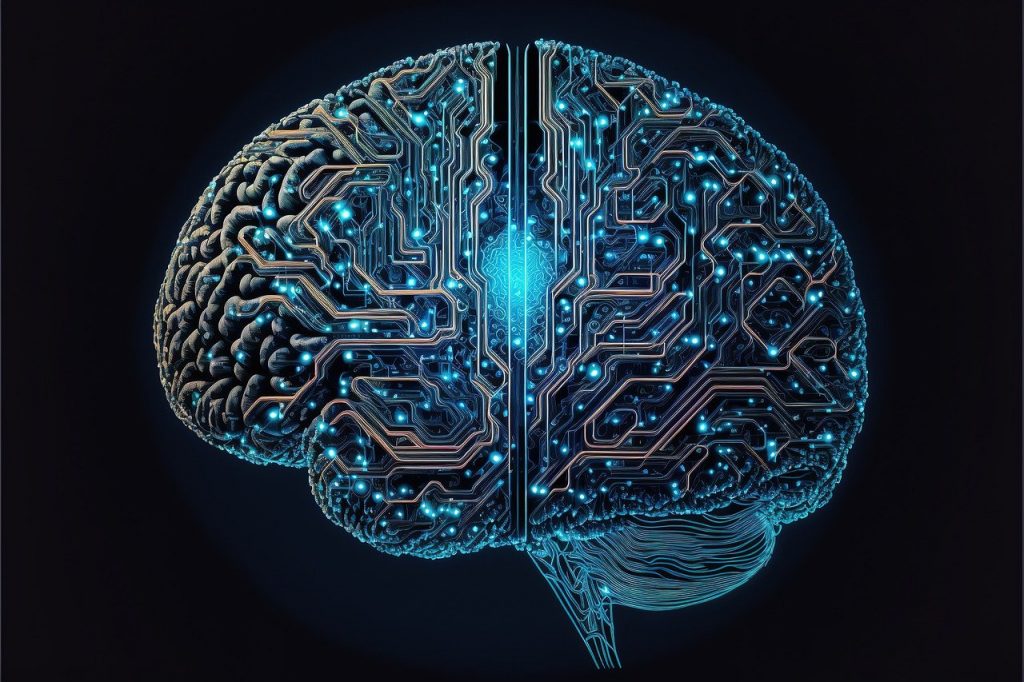
The Human-Centered Change leader recognizes that AI’s primary value is not as a standalone solution provider, but as a colossal questioning amplifier. AI can process, connect, and synthesize data across domains faster than any human team, allowing us to move beyond simple data retrieval and focus on the meta-questions, the ethical challenges, and the non-obvious connections that drive true ingenuity. It transforms our human role from seeking answers to formulating brilliant prompts.

This is Augmented Ingenuity: the essential synergy between AI’s processing power and human curiosity, judgment, and empathy. It’s the next evolution of innovation, shifting the competitive edge back to the organizations that master the art of asking the most creative, complex, and impactful questions of themselves and their machine partners.

The Three-Part Partnership of AI and Inquiry

AI elevates human questioning by fulfilling three distinct, interconnected roles in the innovation cycle:

1. The Data Synthesizer: Eliminating Obvious Questions

AI’s first job is to eliminate the need for humans to ask — and answer — the simple, quantitative, or repetitive questions. AI rapidly sifts through vast, complex datasets (customer feedback, market trends, performance metrics) to summarize the “what” of a situation. This frees human teams from tedious compilation and analytical bottlenecks, allowing them to jump straight to the high-value, strategic “why” and “what if” questions that require human empathy and foresight.

2. The Cognitive Challenger: Uncovering Blind Spots

Because AI processes information without the constraints of human bias or organizational orthodoxies, it excels at challenging our assumptions. By analyzing historical innovation failures, cross-industry patterns, or even ethical frameworks, AI can generate adversarial or non-obvious questions that we would never naturally think to ask. It provides an essential friction — a digital devil’s advocate — to ensure our proposed solutions are robust, our strategies are resilient, and our underlying assumptions are soundly tested.

3. The Creative Catalyst: Expanding the Scope

AI excels at taking a foundational question (e.g., “How can we improve customer checkout?”) and rapidly generating hundreds of related, increasingly distant, or analogy-based questions (e.g., “What checkout processes succeed in gaming? What friction points did early libraries face? How do autonomous vehicle transactions work?”). This exponential expansion forces human teams out of their functional silos and into adjacent creative spaces, turning a tactical query into a strategic, multi-disciplinary innovation challenge.

Key Benefits of Augmented Ingenuity

When organizations successfully embrace AI as a questioning partner, they fundamentally enhance their innovation capability, unlocking powerful, human-centered advantages:

  • Accelerated Insight Velocity: The time from initial problem definition to the formulation of an actionable, insightful, and strategic question is drastically reduced, shortening the front-end of the innovation funnel.
  • Reduced Cognitive Load: Human experts and leaders spend significantly less time compiling and organizing basic data, dedicating more time to applying their unique empathy, judgment, and Contextual Intelligence to high-level strategic challenges.
  • De-biased Innovation: AI challenges existing organizational orthodoxies and human cognitive biases, leading to the creation of more diverse, ethically considered, and resilient solutions.
  • Wider Opportunity Mapping: AI connects seemingly disparate market signals or scientific principles across sectors, revealing non-obvious innovation white space and emerging opportunities that would be invisible to siloed human teams.
  • Enhanced Human Skills: By training humans to interact effectively with AI (crafting brilliant prompts, providing critical feedback), we sharpen the fundamental human skills of questioning, critical thinking, and synthesizing complexity.

Case Study 1: Pharma Research and the Question Generator

Challenge: Stalled Drug Discovery in a Niche Field

A major pharmaceutical company was stuck in a rut trying to find a novel drug target for a rare neurological disease. Human researchers were constantly asking variations of the same 50 questions, constrained by historical biomedical literature. The sheer volume of new genomics and proteomics data was too vast for the team to synthesize and connect to peripheral fields like materials science or computational physics.

AI Intervention:

The research team implemented a custom AI model focused on Question Generation. The model ingested all relevant public and internal data (genomics, clinical trials, and, crucially, cross-disciplinary literature). The AI’s task was not to propose drug targets, but to generate novel questions based on its synthesis. For example, instead of asking “Which gene is responsible for this mutation?” the AI posed: “What non-biological delivery system, currently used in nanotechnology or deep-sea exploration, could bypass the blood-brain barrier given this compound’s unique mass and charge?”

The Human-Centered Lesson:

The AI served as the Creative Catalyst. Its machine-generated questions led the human team down an entirely new, external path, linking the disease to a concept from materials science. The human researchers, freed from basic literature review, applied their deep biological intuition and ethical judgment to vet the AI’s prompts and refine the resulting hypotheses. This synergy led to the identification of a promising new delivery mechanism and significantly accelerated the drug’s path to clinical trials, proving that AI’s greatest contribution can be sparking a human moment of “Aha!” by asking the impossible question.

Case Study 2: The Retailer and the Customer Empathy Engine

Challenge: Decreasing Customer Loyalty Despite High Satisfaction Scores

A national retailer had excellent customer service metrics (CSAT, NPS), but their repeat purchase rates and loyalty were steadily declining. Their quantitative dashboards told them “what” was happening (low loyalty) but couldn’t explain the “why.” Human teams were struggling to move past the positive, surface-level survey data.

AI Intervention:

The retailer used an AI platform as a Data Synthesizer and Cognitive Challenger. The model ingested massive amounts of unstructured data: call transcripts, social media comments, chatbot logs, and product reviews. The AI was tasked with finding contradictions and unspoken needs. It didn’t output an answer; it output questions like: “Why do customers highly rate the product quality but use language associated with ‘stress’ and ‘fear’ during the checkout and returns process?” and “Why is the highest volume of negative sentiment related to products they didn’t buy, but considered?”

The Human-Centered Lesson:

The AI’s contradictory questions forced the human team to re-examine their assumptions about what drives loyalty. They realized customers weren’t loyal because the purchasing journey was stressful (returns ambiguity, complex filtering). The “stress” language was a key human insight the AI extracted. The team used this AI-generated question to conduct targeted qualitative research, finding that the highest loyalty was generated not by the initial purchase, but by the confidence of a smooth, frictionless return. This led to a complete, empathetic redesign of the returns policy and interface, which was marketed aggressively. Loyalty stabilized and then rose, demonstrating that AI can shine a spotlight on the hidden human dimension of a problem, enabling humans to design the empathetic, sustainable solution.

The Future of Leadership: Mastering the Prompt

The rise of AI fundamentally shifts the skills required for human-centered change leadership. Our value moves from having the answers to possessing the Contextual Intelligence — the knowledge of our customers, our culture, and our ethics — to ask the right questions. We must train ourselves and our teams to:

  • Be Specific and Strategic: Move beyond generic searches to asking multi-layered, hypothesis-driven questions of the AI, defining the guardrails of the inquiry.
  • Embrace Paradox: Use AI to generate contradictory hypotheses and explore them rigorously, leveraging machine-generated friction for deeper thought.
  • Filter with Empathy: Apply human judgment, ethical considerations, and cultural nuance to the AI’s generated prompts. We remain the ultimate arbiters of value.

AI handles the calculus of data; we handle the calculus of humanity. By consciously combining the machine’s ability to process everything with our innate human ability to question anything, we unleash Augmented Ingenuity, ensuring that the next great breakthroughs are born not of automation, but of amplified human curiosity.

“AI won’t steal your job, but a person who knows how to ask brilliant questions of AI will.” — Braden Kelley

Your first step toward Augmented Ingenuity: Take the most pressing challenge facing your team right now (e.g., improving a specific metric, reducing a particular risk). Instead of jumping to solutions, spend 30 minutes using an AI tool to generate 10 questions that challenge the underlying assumptions of that problem. Which of those 10 questions would you never have asked on your own, and why? That non-obvious, often uncomfortable, question is your starting point for breakthrough human innovation.

Extra Extra: Because innovation is all about change, Braden Kelley’s human-centered change methodology and tools are the best way to plan and execute the changes necessary to support your innovation and transformation efforts — all while literally getting everyone all on the same page for change. Find out more about the methodology and tools, including the book Charting Change by following the link. Be sure and download the TEN FREE TOOLS while you’re here.

Image credit: Pixabay

Subscribe to Human-Centered Change & Innovation WeeklySign up here to get Human-Centered Change & Innovation Weekly delivered to your inbox every week.

Microsoft’s Seeing AI Glasses

Microsoft Seeing AI Glasses

Saqib Shaikh lives is blind, lives in London, and is a core Microsoft developer. He lost the use of his eyes at age 7. Saqib found inspiration in software development and is helping build Seeing AI, a research project helping blind or visually impaired people to better understand who and what is around them. The app is built using intelligence APIs from Microsoft Cognitive Services.

Pretty amazing that an app can use a camera to capture an image or a video feed, and using artificial intelligence, to analyze the scene and vocalize to the user what it sees. In this example this is being done for the benefit of a human user, but imagine what could be possible if one computer program is used to serve instead, another computer program as the user of the analysis. What might that make possible?

How might you or your organization make use of technology like this?

What direction do you think technology like this will take?

Subscribe to Human-Centered Change & Innovation WeeklySign up here to get Human-Centered Change & Innovation Weekly delivered to your inbox every week.