Tag Archives: agent experience

The Indispensable Role of CX

Insights from CCW’s 25-Year Journey

LAST UPDATED: October 28, 2025 at 12:00PM
The Indispensable Role of CX

by Braden Kelley

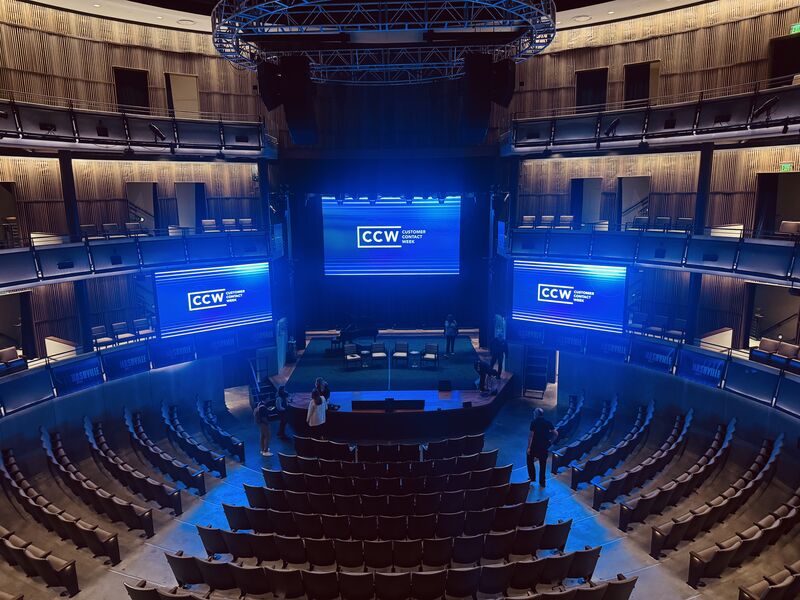
I recently had the privilege of sitting down with Mario Matulich, President of Customer Management Practice, at Customer Contact Week (CCW) in Nashville. As an organization celebrating its 25th anniversary, CCW has been a critical barometer for the entire customer experience and contact center industry. Our conversation wasn’t just a look back, but a powerful exploration of the strategic mandate facing CX leaders today, particularly how we manage innovation and human-centered change in an era dominated by AI and tightening budgets.

CCW at 25: The Hub for Benchmarking and Breakthroughs

Mario underscored that CCW is far more than just a conference; it’s a living repository of industry knowledge. Professionals attend for actionable takeaways, which primarily fall into three categories: benchmarking performance against industry leaders, learning about new trends (like Generative AI’s impact), and, critically, sourcing the right vendors and capabilities needed to execute their strategies. It’s where leaders come to calibrate their investment strategies and learn how to do more with their finite resources.

Mario MatulichThis pursuit of excellence is driven by a single, powerful market force: The Amazon Effect. As Mario put it, customers no longer judge your experience solely against your industry peers. They expect every single touchpoint with your company to be as seamless, intuitive, and effective as the best experience they’ve had anywhere. This constantly escalating bar for Customer Effort Score (CES) and Customer Satisfaction (CSAT) makes a complacent CX investment a near-fatal strategic mistake. The customer experience must always be top-tier, or you simply lose the right to compete.

The Strategic Disconnect: CX vs. The Contact Center

One of the most valuable parts of our discussion centered on the subtle, yet crucial, distinction between a Customer Experience (CX) professional and a Contact Center (CC) professional. While both are dedicated to the customer journey, their scope and focus often differ:

  • The CX Professional: Often owns the entire end-to-end customer journey, from marketing to product use to support. Their responsibilities and definition of success are deeply influenced by where CX sits organizationally — is it under Marketing, Operations, or the CEO?
  • The CC Professional: Focused on the operational efficiency, quality, and effectiveness of the voice and digital support channels. Their reality is one of doing a lot with a little, constantly asked to manage complex interactions while being, ironically, often looked to as a prime source of cuts in a downturn.

Social media, for instance, is still a relevant customer service channel, not just a marketing one. However, the operational reality is that many companies, looking for cost-effective solutions, outsource social media support to Business Process Outsourcing (BPO) providers, highlighting the ongoing tension between strategic experience design and operational efficiency.

“Being a CX leader in your industry is not a temporary investment you can cut and reinstate later. Those who cut, discover quickly that regaining customer trust and market position is exponentially harder than maintaining it.” — Braden Kelley

AI in the Contact Center: From Hypothesis to Hyper-Efficiency

The conversation inevitably turned to the single biggest factor transforming the industry today: Artificial Intelligence. Mario and I agreed that while the promise of AI is vast, the quickest, most immediate win for nearly every organization lies in agent assist.

This is where Generative AI tools empower the human agent in real-time — providing instant knowledge base look-ups, auto-summarizing previous interactions, and drafting responses. It’s a human-centric approach that immediately boosts productivity and confidence, improving Agent Experience (AX) and reducing training time.

However, implementing AI successfully isn’t a “flip-the-switch” deployment. The greatest danger is the wholesale adoption of complex technology without rigor. True AI success, Mario noted, must be implemented via the classic innovation loop: hypothesis, prototyping, and testing. AI isn’t a solution; it’s a tool that must be carefully tuned and validated against human-centered metrics before scaling.

The Mandate for Enduring Investment

A recurring theme was the strategic folly of viewing CX as a cost center. In a downturn, the contact center is often the first place management looks for budgetary reductions. Yet, the evidence is overwhelming: CX leadership is not a temporary investment. When you are leading in your industry in customer experience, that position must be maintained. Cut your investment at your peril, and you risk a long, painful road to recovery when the market turns. The CX team, despite being resource-constrained, often represents the last line of defense for the brand, embodying the human-centered change we preach.

As CCW moves into its next 25 years, the lesson is clear: customer expectations are only rising. The best leaders will leverage AI not just to cut costs, but to augment their people and apply the innovation principles of rigorous testing to truly master the new era of customer orchestration. The commitment to a great customer experience is the single, enduring investment that will future-proof your business.

HALLOWEEN BONUS: Save 30% on the eBook, hardcover or softcover of my latest book Charting Change (now in its second edition) — FREE SHIPPING WORLDWIDE — using code HAL30 until midnight October 31, 2025

Image credits: Customer Management Practice

Content Authenticity Statement: The topic area, key elements to focus on, etc. were decisions made by Braden Kelley, with a little help from Google Gemini to clean up the article.

Subscribe to Human-Centered Change & Innovation WeeklySign up here to get Human-Centered Change & Innovation Weekly delivered to your inbox every week.

From User Experience to Agent Experience

From User Experience to Agent Experience

GUEST POST from Art Inteligencia


From User Experience to Agent Experience: The Next Paradigm Shift in Design and Innovation

For decades, User Experience (UX) has been defined by human-computer interaction—guiding human users through screens, click paths, and visual journeys. But as autonomous AI agents and multi-agent systems mature, our role is undergoing a fundamental transformation: we are shifting from software operators to system orchestrators.

We are rapidly moving beyond the limits of deterministic interfaces into a world of probabilistic, collaborative ecosystems. The question facing innovation leaders and experience design practitioners today is no longer just how to make software easier to use, but how to design meaningful interactions when the primary user of your system is no longer a human at all—it’s an agent.

Welcome to the transition from UX (User Experience) to AX (Agent Experience).

Phase 1: Understanding the Shift—From Interaction to Delegation

For the entire history of digital product development, traditional UX has focused on minimizing friction in manual tasks. We optimized click paths, streamlined navigation bars, and obsessed over micro-interactions to make software intuitive for human eyes and hands. But agentic AI fundamentally rewrites the rules of engagement.

From Human as Doer to Human as Director

In an agent-driven paradigm, the human steps back from execution and steps up into direction. Instead of manually moving pieces across a digital board, humans define goals, set constraints, and evaluate outcomes. Agent Experience (AX) is about designing the bridge between human intent and autonomous execution—turning software from a tool we operate into a partner we manage.

The Death of Rigid Workflows

Rigid UI wireframes and static user journeys are giving way to dynamic, context-aware agent behaviors. Because agents can reason, plan, and adapt on the fly, the interface is no longer a fixed maze of menus; it is an evolving collaborative space. Experience designers must stop designing static paths and start designing responsive behavioral frameworks.

Redefining the Value Proposition

True innovation is no longer about making a feature easier to click. It is about making autonomous partners more trustworthy, capable, and tightly aligned with human values and organizational strategy. Organizations that cling to screen-first thinking will find themselves building beautiful interfaces for obsolete workflows.

Phase 2: Core Pillars of Agent Experience (AX) Design

As we transition from designing for screens to designing for autonomous capability, experience architecture requires an entirely new set of foundational principles. To build systems that humans can trust and collaborate with effectively, we must master four core pillars of Agent Experience (AX).

Trust and Transparency

When an agent acts on our behalf, trust is the ultimate currency. AX design requires building robust mechanisms for explainable AI—ensuring agents can articulate their reasoning, surface their sources, and make their internal logic visible. Designers must craft clear visual and behavioral cues so humans always know what an agent is doing, why it is doing it, and precisely when to step in.

Intent Alignment and Prompt Orchestration

Traditional UX focused on input fields and form validation. AX shifts our focus toward shared context models. The design challenge is no longer just capturing data, but ensuring that agents deeply comprehend human goals, tacit constraints, and shifting priorities. We are moving from designing user inputs to orchestrating continuous human-agent alignment.

Autonomy Guardrails and Control Loops

Autonomy without boundaries is a liability. Experience designers must carefully define the operational envelope of an agent, establishing clear parameters for when an agent can act independently and when it must pause for human approval. Designing graceful handoffs for ambiguity and high-stakes decision-making is critical to preventing costly errors.

Continuous Learning and Adaptation

Static software releases are being replaced by living, breathing collaborative ecosystems. AX requires creating continuous feedback loops where agent behavior evolves dynamically based on ongoing human correction, preference tuning, and contextual learning—turning every interaction into an opportunity to strengthen the partnership.

Phase 3: Organizational and Cultural Implications for Change Leaders

Shifting from User Experience (UX) to Agent Experience (AX) is not merely a design evolution or a technical upgrade; it is a profound organizational transformation. As autonomous agents become core collaborators across the enterprise, change leaders must guide their people through a fundamental reimagining of work, roles, and culture.

Upskilling Design and Product Teams

Traditional UX designers, product managers, and change practitioners have spent their careers focusing on screens, buttons, and user journeys. Moving toward AX requires cultivating an entirely new mental model. Teams must learn to think in terms of behaviors, motivations, guardrails, and agentic workflows—shifting their toolkit from wireframes and visual design systems to behavioral design, intent modeling, and multi-agent orchestration.

Redesigning Change Management

The psychological shift from individual contributor to “manager” of digital agents can trigger anxiety, resistance, and questions around job security. Human-centered change leaders must reframe the narrative: agents are not here to replace human potential, but to lift people out of mundane execution and into higher-order strategy, creativity, and empathy. Change management strategies must actively support employees as they learn how to delegate, oversee, and collaborate with autonomous digital partners.

Ethics, Governance, and Futurology

When software acts with autonomy, the stakes of design failures multiply exponentially. Integrating human-centered futurology into the core of agent design is essential to anticipating unintended consequences, mitigating bias, and preventing systemic alienation. Organizations must establish clear ethical frameworks, robust governance structures, and transparent oversight to ensure that agentic ecosystems amplify our highest human values rather than undermining them.

Conclusion: Designing Our Collaborative Future

The maturation of autonomous AI agents marks the end of an era where design began and ended with the screen. As we cross the threshold from User Experience to Agent Experience, innovation leaders must look past incremental UI improvements and embrace the profound shift toward agent-driven ecosystems.

The future does not belong to those who build the flashiest interfaces for manual tasks. It belongs to the organizations that master the art of human-agent collaboration—building trust, establishing clear guardrails, and orchestrating intelligent systems that amplify human creativity, empathy, and potential rather than replacing it.

The canvas has changed. The question is no longer how users navigate our software, but how humans and agents will build the future, together.

Frequently Asked Questions

What is the difference between UX (User Experience) and AX (Agent Experience)?

While User Experience (UX) focuses on designing deterministic interfaces and guiding human users through manual screens, click paths, and workflows, Agent Experience (AX) focuses on designing probabilistic, collaborative ecosystems where humans act as directors and autonomous AI agents handle the execution.

Why is Agent Experience (AX) becoming important for innovation leaders?

As autonomous AI agents and multi-agent systems mature, software is shifting from a tool to be operated into an intelligent partner to be managed. Innovation leaders must master AX to build trust, establish clear autonomy guardrails, and design systems where humans and agents collaborate effectively.

How does AX design change the role of traditional UX designers and product teams?

AX shifts the focus away from static wireframes, buttons, and screen layouts toward behavioral design, intent alignment, and multi-agent orchestration. Product teams must learn to design for transparency, explainable AI, and continuous feedback loops rather than fixed user journeys.


Image credit: Gemini

Subscribe to Human-Centered Change & Innovation WeeklySign up here to get Human-Centered Change & Innovation Weekly delivered to your inbox every week.