Tag Archives: Pixar

The Importance of Diversity in Driving Innovation within Organizations

The Importance of Diversity in Driving Innovation within Organizations

GUEST POST from Art Inteligencia

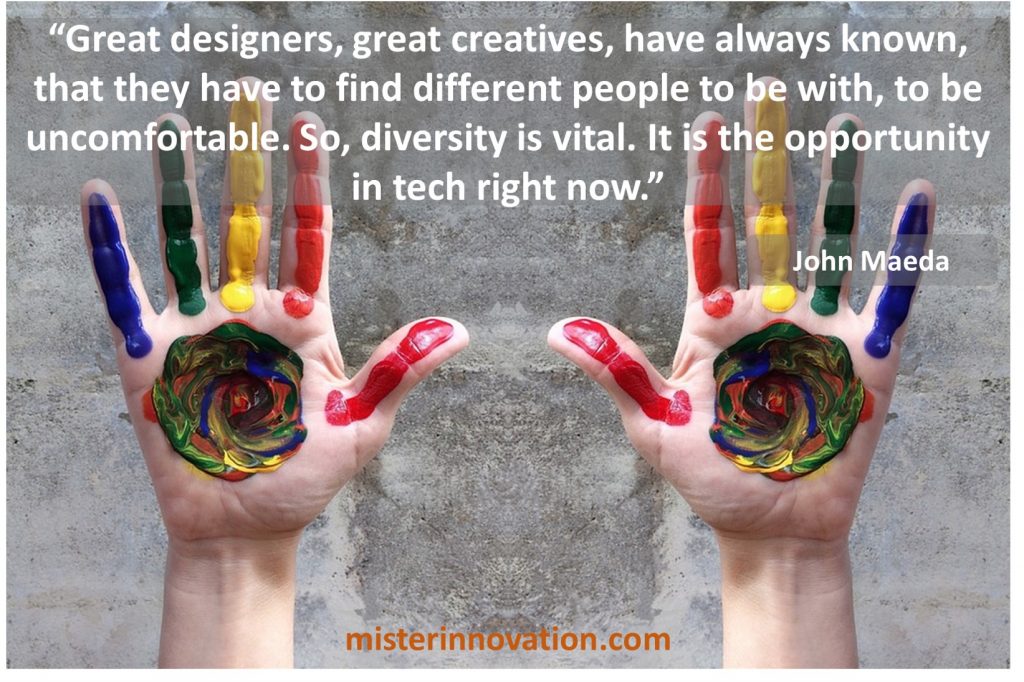
In today’s rapidly evolving business landscape, organizations worldwide are recognizing the critical role that diversity plays in driving innovation. As industries become more competitive and consumer demands continually shift, companies that embrace and promote diversity within their workforce are finding themselves at an advantage. Not only does diversity foster a multitude of perspectives, it also enhances problem-solving capabilities, boosts creativity, and ultimately leads to greater innovation. To underscore these points, this article will highlight two real-life case studies that demonstrate the importance of diversity in driving innovation within organizations.

Case Study 1: IBM’s Focus on Diversity

IBM, a global powerhouse in technology, has long been a champion of diversity and inclusion. The company recognizes the importance of tapping into a broad range of perspectives, experiences, and talents in order to drive innovation effectively. IBM’s commitment to diversity is deeply embedded in their corporate culture and is consistently reinforced through various initiatives.

One such initiative is their Global Women’s Initiative, aimed at empowering female employees and promoting gender diversity. Through this program, IBM has bolstered the representation of women at all levels of the organization, encouraging their active contribution to decision-making processes. As a result, gender diversity has become a driving force behind the company’s innovative capabilities.

IBM’s focus on diversity led to the launch of their AI-driven product, Watson. The team behind Watson recognized that diversity was critical to building a technology that could effectively understand and respond to the diverse needs and perspectives of its users. By assembling a diverse group of engineers, data scientists, and researchers, IBM successfully developed Watson into a revolutionary innovation that is transforming industries such as healthcare, finance, and education.

Case Study 2: Pixar’s Creative Collaboration

Pixar Animation Studios, renowned for its groundbreaking films, thrives on diversity and collaboration. The company understands that diversity encompasses not only nationality, culture, and gender but also a range of talents and skill sets. Pixar’s commitment to diversity is apparent in their hiring practices, ensuring they bring together individuals from various disciplines and backgrounds who can contribute unique and innovative ideas to the creative process.

One of the best examples of diversity driving innovation at Pixar is their film “Inside Out.” In the development of this animated feature, the creative team included professionals from the fields of psychology, neuroscience, and child development. By combining the talents of animators, storytellers, and experts in different fields, Pixar was able to create a film that not only captivated audiences but also contributed to the understanding of emotional intelligence and mental health.

Beyond the film industry, Pixar’s focus on diversity also extends to their storytelling. With diverse voices and perspectives, they have been able to address a wide range of social and cultural issues, making their films highly relatable to audiences worldwide. This diversity-driven innovation has significantly contributed to Pixar’s enduring success.

Conclusion

The case studies of IBM and Pixar highlight the transformative power of diversity within organizations. By fostering diverse teams, these companies have harnessed a wealth of perspectives, experiences, and talents that drive their innovation and market leadership. Embracing diversity not only enhances problem-solving capabilities and creativity but also opens doors to new markets, ideas, and perspectives. As organizations navigate an increasingly complex and dynamic business landscape, investing in diversity becomes paramount for ensuring sustainable growth and competitive advantage.

Bottom line: Futurists are not fortune tellers. They use a formal approach to achieve their outcomes, but a methodology and tools like those in FutureHacking™ can empower anyone to be their own futurist.

Image credit: Misterinnovation.com

Subscribe to Human-Centered Change & Innovation WeeklySign up here to get Human-Centered Change & Innovation Weekly delivered to your inbox every week.

Driving Cross-Functional Innovation

The Power of Collaboration

Driving Cross-Functional Innovation

GUEST POST from Chateau G Pato

Collaboration is a key driver of innovation, enabling diverse teams to leverage their expertise, perspectives, and skills to solve complex problems. In today’s fast-paced and interconnected world, cross-functional collaboration has become increasingly essential for businesses to stay competitive and drive meaningful change. This article explores the benefits of collaboration in fostering cross-functional innovation through two compelling case studies.

Case Study 1 – Pixar’s Creative Collaboration

Pixar, the renowned animation studio, is celebrated for its consistent delivery of groundbreaking and critically acclaimed films. One of the critical factors contributing to their success is their commitment to cross-functional collaboration. From directors to animators, writers, and technical experts, Pixar brings together diverse talents from different disciplines to create their films.

By fostering an environment of open communication and collaboration, Pixar teams challenge conventions and push boundaries. They encourage cross-pollination of ideas, creating an iterative process where different perspectives enrich the creative process. This cross-functional approach has led to numerous breakthroughs in storytelling, animation techniques, and technological advancements, enabling Pixar to create immersive and emotionally impactful films loved by audiences worldwide.

Case Study 2 – GE’s Global Research Collaboration

General Electric (GE), a multinational conglomerate, places a strong emphasis on collaboration as a catalyst for innovation. GE’s Global Research Center, one of the world’s most extensive and diverse industrial research organizations, brings together scientists, engineers, and experts from various disciplines.

By fostering cross-functional collaboration, GE harnesses the collective knowledge and expertise of its researchers. This collaborative environment has yielded groundbreaking innovations across industries, including advancements in renewable energy sources, healthcare technologies, aerospace, and more. GE’s collaboration efforts not only drive innovation but also contribute to addressing global challenges and improving the world we live in.

Benefits of Cross-Functional Collaboration:

1. Enhanced Problem-Solving: Cross-functional teams bring a range of perspectives and expertise to the table, enabling them to approach problems from different angles. This collaborative approach fosters innovative thinking and generates well-rounded solutions that address diverse needs.

2. Increased Creativity and Innovation: Collaboration sparks creativity by enabling the collision of ideas, encouraging out-of-the-box thinking, and challenging traditional paradigms. The synergy between team members from different backgrounds stimulates new perspectives and innovative solutions.

3. Improved Communication and Knowledge Sharing: Cross-functional collaboration facilitates open communication, breaking down silos and enabling the sharing of expertise and insights. This exchange of knowledge drives continuous learning, enabling teams to stay current with industry trends and leverage emerging opportunities.

4. Enhanced Decision Making: Collaboration encourages collective decision-making processes, leveraging diverse viewpoints and expertise. This approach leads to more informed and well-rounded decisions, reducing the risk of biases and improving overall organizational performance.

Conclusion

Cross-functional collaboration is a powerful tool for driving innovation and achieving organizational success. As demonstrated by the case studies of Pixar and GE, collaboration fosters creativity, problem-solving, knowledge sharing, and effective decision-making. By embracing and promoting cross-functional collaboration, businesses can harness the collective intelligence of their teams and unlock new avenues for growth, ensuring their continued relevance and competitiveness in an ever-evolving world.

Image credit: Pixabay

Subscribe to Human-Centered Change & Innovation WeeklySign up here to get Human-Centered Change & Innovation Weekly delivered to your inbox every week.

Building the Team Habit of Learning and Pivoting

Continuous Calibration

LAST UPDATED: December 17, 2025 at 11:49AM

Building the Team Habit of Learning and Pivoting

GUEST POST from Chateau G Pato

The pace of change has exposed a dangerous illusion in modern organizations: the belief that certainty is achievable if we plan hard enough. In reality, performance today depends on how quickly teams can sense change, learn from experience, and adapt. This is the discipline I call continuous calibration.

Continuous calibration is not about abandoning strategy or creating instability. It is about treating learning as a core operating capability rather than a retrospective activity. Teams that calibrate continuously do not panic when conditions shift. They pivot with intention.

Why Planning Alone Is No Longer Enough

Traditional planning assumes a relatively stable environment. But markets, technologies, and customer expectations now evolve faster than planning cycles. When teams cling too tightly to static plans, they confuse consistency with effectiveness.

Continuous calibration replaces rigid adherence with disciplined learning. Teams set direction, test assumptions, observe outcomes, and adjust course. The goal is not to change constantly, but to change deliberately.

Case Study One: Pixar and Learning Before It Is Too Late

Pixar’s creative success is powered by its commitment to early and frequent learning. Through the Braintrust, filmmakers receive candid feedback at multiple stages of development. Problems are surfaced while they are still solvable.

Because the Braintrust cannot impose decisions, teams remain accountable for outcomes while benefiting from diverse perspectives. This creates a powerful calibration loop that improves quality without eroding ownership.

The Human Conditions for Calibration

Calibration fails when people feel unsafe speaking honestly. Psychological safety is the foundation that allows teams to share weak signals, question assumptions, and admit when something is not working.

Leaders who reward transparency and curiosity create conditions where learning outpaces fear. Without this foundation, teams default to defending decisions instead of improving them.

Case Study Two: Microsoft’s Cultural Recalibration

Microsoft’s resurgence under Satya Nadella was driven by a shift in mindset. The organization embraced learning as a core expectation, not a remedial activity. Teams were encouraged to experiment, reflect, and adjust quickly.

This cultural recalibration enabled Microsoft to pivot effectively toward cloud platforms and ecosystem partnerships. Learning velocity became a competitive advantage.

Turning Calibration into a Team Habit

Continuous calibration is sustained through simple, repeatable behaviors. Effective teams hold regular retrospectives, define clear success criteria, and shorten feedback loops wherever possible.

What matters most is frequency. Small, regular adjustments outperform dramatic pivots made too late.

Leadership in a Calibrating Organization

In calibrating teams, leaders shift from being decision authorities to sense-making partners. They ask better questions, surface patterns, and help teams interpret signals.

This does not weaken leadership. It strengthens it by distributing intelligence across the organization.

Conclusion: Learning Is the Strategy

Continuous calibration is not a process you install. It is a habit you cultivate. Organizations that embed learning into daily work adapt faster, waste less effort, and build greater resilience.

In an unpredictable world, the most reliable strategy is the ability to learn and pivot together.

Frequently Asked Questions

What is continuous calibration?

Continuous calibration is the ongoing practice of learning from results, adjusting direction, and realigning team behaviors based on real-world feedback.

How does continuous calibration improve performance?

It allows teams to identify problems early, adapt deliberately, and avoid costly late-stage corrections.

What role do leaders play in continuous calibration?

Leaders create the conditions for learning by encouraging honesty, asking reflective questions, and supporting informed pivots.

Extra Extra: Because innovation is all about change, Braden Kelley’s human-centered change methodology and tools are the best way to plan and execute the changes necessary to support your innovation and transformation efforts — all while literally getting everyone all on the same page for change. Find out more about the methodology and tools, including the book Charting Change by following the link. Be sure and download the TEN FREE TOOLS while you’re here.

Image credit: Pexels

Subscribe to Human-Centered Change & Innovation WeeklySign up here to get Human-Centered Change & Innovation Weekly delivered to your inbox every week.