Tag Archives: CEOs

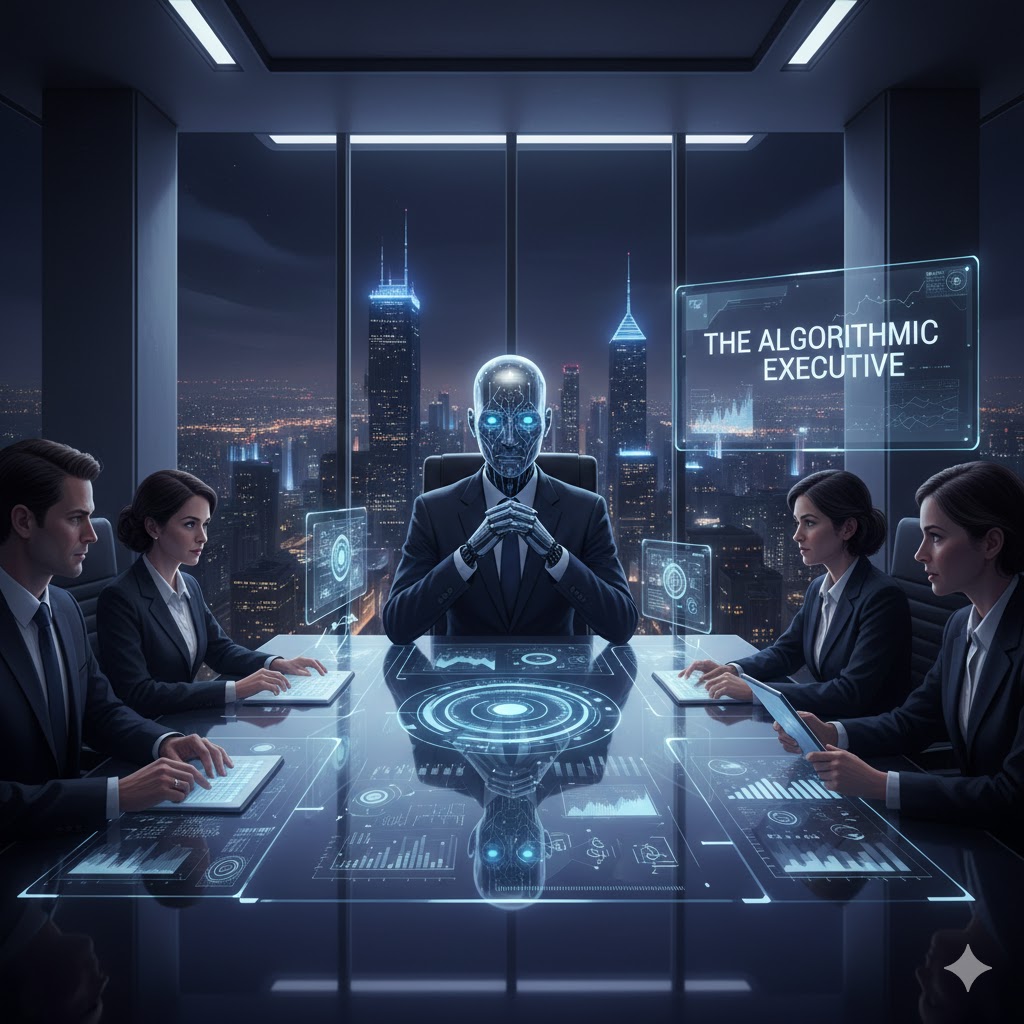
Can AI Replace the CEO?

A Day in the Life of the Algorithmic Executive

LAST UPDATED: December 28, 2025 at 1:56 PM
Can AI Replace the CEO?

GUEST POST from Art Inteligencia

We are entering an era where the corporate antibody – that natural organizational resistance to disruptive change – is meeting its most formidable challenger yet: the AI CEO. For years, we have discussed the automation of the factory floor and the back office. But what happens when the “useful seeds of invention” are planted in the corner office?

The suggestion that an algorithm could lead a company often triggers an immediate emotional response. Critics argue that leadership requires soul, while proponents point to the staggering inefficiencies, biases, and ego-driven errors that plague human executives. As an advocate for Innovation = Change with Impact, I believe we must look beyond the novelty and analyze the strategic logic of algorithmic leadership.

“Leadership is not merely a collection of decisions; it is the orchestration of human energy toward a shared purpose. An AI can optimize the notes, but it cannot yet compose the symphony or inspire the orchestra to play with passion.”

Braden Kelley

The Efficiency Play: Data Without Drama

The argument for an AI CEO rests on the pursuit of Truly Actionable Data. Humans are limited by cognitive load, sleep requirements, and emotional variance. An AI executive, by contrast, operates in Future Present mode — constantly processing global market shifts, supply chain micro-fluctuations, and internal sentiment analysis in real-time. It doesn’t have a “bad day,” and it doesn’t make decisions based on who it had lunch with.

Case Study 1: NetDragon Websoft and the “Tang Yu” Experiment

The Experiment: A Virtual CEO in a Gaming Giant

In 2022, NetDragon Websoft, a major Chinese gaming and mobile app company, appointed an AI-powered humanoid robot named Tang Yu as the Rotating CEO of its subsidiary. This wasn’t just a marketing stunt; it was a structural integration into the management flow.

The Results

Tang Yu was tasked with streamlining workflows, improving the quality of work tasks, and enhancing the speed of execution. Over the following year, the company reported that Tang Yu helped the subsidiary outperform the broader Hong Kong stock market. By serving as a real-time data hub, the AI signature was required for document approvals and risk assessments. It proved that in data-rich environments where speed of iteration is the primary competitive advantage, an algorithmic leader can significantly reduce operational friction.

Case Study 2: Dictador’s “Mika” and Brand Stewardship

The Challenge: The Face of Innovation

Dictador, a luxury rum producer, took the concept a step further by appointing Mika, a sophisticated female humanoid robot, as their CEO. Unlike Tang Yu, who worked mostly within internal systems, Mika serves as a public-facing brand steward and high-level decision-maker for their DAO (Decentralized Autonomous Organization) projects.

The Insight

Mika’s role highlights a different facet of leadership: Strategic Pattern Recognition. Mika analyzes consumer behavior and market trends to select artists for bottle designs and lead complex blockchain-based initiatives. While Mika lacks human empathy, the company uses her to demonstrate unbiased precision. However, it also exposes the human-AI gap: while Mika can optimize a product launch, she cannot yet navigate the nuanced political and emotional complexities of a global pandemic or a social crisis with the same grace as a seasoned human leader.

Leading Companies and Startups to Watch

The space is rapidly maturing beyond experimental robot figures. Quantive (with StrategyAI) is building the “operating system” for the modern CEO, connecting KPIs to real-work execution. Microsoft is positioning its Copilot ecosystem to act as a “Chief of Staff” to every executive, effectively automating the data-gathering and synthesis parts of the role. Watch startups like Tessl and Vapi, which are focusing on “Agentic AI” — systems that don’t just recommend decisions but have the autonomy to execute them across disparate platforms.

The Verdict: The Hybrid Future

Will AI replace the CEO? My answer is: not the great ones. AI will certainly replace the transactional CEO — the executive whose primary function is to crunch numbers, approve budgets, and monitor performance. These tasks are ripe for automation because they represent 19th-century management techniques.

However, the transformational CEO — the one who builds culture, navigates ethical gray areas, and creates a sense of belonging — will find that AI is their greatest ally. We must move from fearing replacement to mastering Human-AI Teaming. The CEOs of 2030 will be those who use AI to handle the complexity of the business so they can focus on the humanity of the organization.

Frequently Asked Questions

Can an AI legally serve as a CEO?

Currently, most corporate law jurisdictions require a natural person to serve as a director or officer for liability and accountability reasons. AI “CEOs” like Tang Yu or Mika often operate under the legal umbrella of a human board or chairman who retains ultimate responsibility.

What are the biggest risks of an AI CEO?

The primary risks include Algorithmic Bias (reinforcing historical prejudices found in the data), Lack of Crisis Adaptability (AI struggles with “Black Swan” events that have no historical precedent), and the Loss of Employee Trust if leadership feels cold and disconnected.

How should current CEOs prepare for AI leadership?

Leaders must focus on “Up-skilling for Empathy.” They should delegate data-heavy reporting to AI systems and re-invest that time into Culture Architecture and Change Management. The goal is to become an expert at Orchestrating Intelligence — both human and synthetic.

Disclaimer: This article speculates on the potential future applications of cutting-edge scientific research. While based on current scientific understanding, the practical realization of these concepts may vary in timeline and feasibility and are subject to ongoing research and development.

Image credits: Google Gemini

Subscribe to Human-Centered Change & Innovation WeeklySign up here to get Human-Centered Change & Innovation Weekly delivered to your inbox every week.

Change Requires Work and Choice

Change Requires Work and Choice

GUEST POST from Shep Hyken

At the end of the CEO’s speech to his employees, he said, “And one other thing, we want to deliver better customer service.” Then he walked off stage.

Delivering better customer service is a good idea, but just saying you want to do so will not make it happen. Most likely, it will remain just a good idea, because, without the right implementation, the idea will never come to anything. Nothing will change.

A big part of my business is serving as a keynote speaker on customer service and CX for all kinds of companies and organizations. I always ask, “Why is this topic important to you and this audience?” Most of the time, clients have a good answer, but occasionally, I hear something like, “We have terrible customer service, and we need someone like you to come in and share what we can do to be better.”

Trying not to sound flippant, I ask, “So you think that having me or someone like me do a one-hour speech is going to fix that?”

This leads to a bigger discussion about the company’s desire to change and the resources – time, talent, and dollars – it requires to make that happen. I then continue with a few more questions:

  1. What makes you think you need help with your customer service or CX?
  2. What would happen if you continued to do what you do and didn’t make a change?
  3. What does success look like, and how quickly do you want to see results?

The answers to these questions are the fuel needed to make the choice to change an easy one.

Then, there is another series of questions to determine the investment they are willing to make to carry out this choice to change. It’s going to take time. It’s going to take training, which is about talent. And then there are the dollars. And one final choice must be made, and it may be the most important of all. Will the leadership get behind the choice to change?

To summarize, the choice to change, especially in customer service and/or CX, is more than a verbal commitment. It requires substantial and sustained effort backed by resources and leadership support. Simply expressing the desire for improvement is not enough. Real change demands actionable plans and the alignment of time, talent, and investment. Companies must determine their current service levels, define success, and commit to the necessary steps and time to achieve it.

One more question: Are you ready to invest in a future where exceptional service is not just an aspiration but a reality? Act now! Your customers and your business can’t afford to wait.

Image Credits: Pexels, Shep Hyken

Subscribe to Human-Centered Change & Innovation WeeklySign up here to join 17,000+ leaders getting Human-Centered Change & Innovation Weekly delivered to their inbox every week.

Change Leadership and the Role of the CEO

Change Leadership and the Role of the CEO

GUEST POST from Chateau G Pato

Leadership is essential for any organization to move forward and reach success, and in today’s fast-paced world, change leadership is essential for companies to stay relevant. Change management and leadership skills require CEOs to direct, motivate, and inspire their teams towards achieving long-term success. Change leadership is the process of leading teams through a transition — allowing them to adjust to the changes and new environment with the ultimate goal of increasing effectiveness, efficiency, and leading them towards success. In order to ensure a successful transition, it is important for the CEO to have an active role and to set an example for their team.

The CEO’s role in leading transformation and organizational change is a key component of success. From setting objectives and developing strategies to leading the team into the future, the CEO is the one who must set an example and inspire the rest of the organization to join the change effort. In order for the CEO to create a successful change leadership culture, the following are essential:

  • Developing a vision and objectives for the organization
  • Identifying the necessary resources to achieve the vision
  • Establishing the necessary processes and systems to support change
  • Creating a positive atmosphere and fostering collaboration
  • Motivating the team and aligning their efforts towards the mission
  • Assessing the impact of change and measuring progress
  • Learning and adapting to changes quickly and effectively
  • Recognizing and celebrating successes

The success of a CEO’s change leadership is usually seen in the results. CEOs with the ability to lead, motivate, and inspire their organizations through changes often experience increased success and reach their desired goals that much faster. To further illustrate the role of the CEO in driving successful organizational changes, here are two examples of successful change leadership:

Case Study 1 – PepsiCo

First, let’s look at how the CEO of PepsiCo, Ramon Laguarta, has successfully navigated the company through a period of transition. At the start of his tenure, he outlined four key elements in his strategy: driving innovation, winning with customers, optimizing operations, and transforming the company’s culture. There was a particular focus on transforming the culture of the organization to foster collaboration and empower its employees to take initiative and share ideas. To further this effort, the CEO created several development programs to drive innovation and learning. Additionally, he assigned dedicated resources to talent development, and provided employees with exposure to executives to the highest level. Ultimately, the company was able to achieve success and to successfully navigate the process of transition under the change leadership of the CEO.

Case Study 2 – Airbus

Second, let’s examine the example of Phillipe Houze, the CEO of Airbus. He recognized that the success of the company relied heavily on its ability to remain competitive and innovate in the aerospace industry. Starting from his first day at the helm, he issued a decree to the organization that all levels of the company’s operations should focus on customer service and product innovation. He established a culture of collaboration that included both technical and commercial expertise, ensuring that all decisions were made with the customer in mind. As a result, the company innovated and steadily increased their market share and their success.

Conclusion

These two examples demonstrate the impact a CEO can have in leading his or her organization through times of transition and change. Change leadership is key for a CEO to initiate and set an example for their team, and the ability to successfully navigate and manage change will have a direct impact on the results of the organization. In conclusion, the role of the CEO in change is central to the success of any transformation effort and is key in driving the desired results.

Image credit: Pixabay

Subscribe to Human-Centered Change & Innovation WeeklySign up here to get Human-Centered Change & Innovation Weekly delivered to your inbox every week.