Category Archives: Strategy

Following the Line to Innovation

Following the Line to InnovationOK, it may not really be an innovation, but I appreciated the following operational efficiency anyway:

Going to check out of the Hilton New York City, there was a queue in spite of the several available kiosks and multiple employees staffing the counter to help customers with various requests. Hilton had obviously invested in some business process consulting (or possibly listened to an employee suggestion) because in addition to the kiosks and the employees staffing the counter, they had an employee staffing the line to identify the needs of guests while they waited in line.

In my case, she asked how my stay was and I told her the story about how I had difficulty with the WiFi not allowing me back into my work e-mail after the connection went down and came back up again. I told her that the first night it worked fine and that I expected not to pay for the second night because it didn’t work properly (leaving important time-critical messages stuck in my outbox). She was sympathetic, but I halfway expected to have to tell the story all over again when I got up to the counter (as this is the typical bad customer experience on the phone or in person). I was surprised and impressed when she told the counter person to take off the second night’s WiFi and that I was ready to check out. Thankfully, I didn’t have to tell the story again.

This is good operational practice for a couple of reasons:

  1. It gave them a way of increasing throughput during busy times when they would otherwise be limited by the number of computer workstations.
  2. It provided a good customer experience. I only had to tell the story once.
  3. I was on my way much more quickly as a result, and the counter person was on to their next customer more quickly as well
  4. The poor person behind me didn’t have to wait while I told my story again, and potentially argued with the counter person because this had already been taken care of while we were both waiting in line (except no arguing was necessary).
  5. If the customer has no special needs, the employee can direct the customer to an available kiosk.

This example, while more about good operational practice and customer service than innovation, does provide the opportunity to identify process innovation opportunities if we look at our own business through a lens of separating the customer experience into the following parts:

  1. Information Gathering
  2. Information Evaluation
  3. Information Processing

Are there times in your business when your customers are waiting? Why are they waiting?
Innovation Training for your whole organization from Braden Kelley

Do you have certain resources that reach capacity quickly or for sustained periods during busy times that you can’t expand easily?

Is there a way to utilize that waiting time to separate out the information gathering or information evaluation components of a customer interaction, to allow for a division of labor that can be more easily flexed to accommodate demand spikes?

In a phone scenario, could you not implement an interactive voice response phone system that notifies the customer how long they can expect to wait and then transitions to a “While you are waiting…” message and then asks the customer for their name, account number, and phone number to either be played for the agent before transferring the call, or maybe even trying to do some kind of speech to text and facilitate a record-lookup using that information?

Maybe you need to allow your skilled people to focus on information evaluation and processing, while lower skilled people focus on information gathering. Or, maybe in your industry the skilled people are at the front end, focusing on information gathering and evaluation and need to be separated from the information processing tasks.

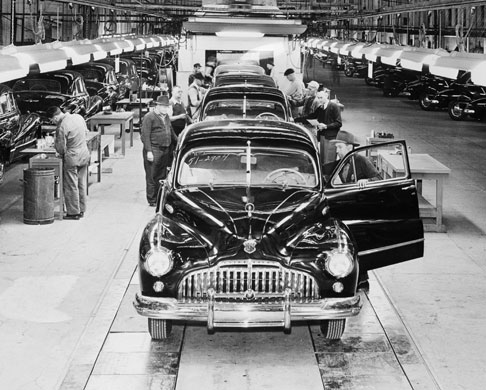
In a manufacturing environment, while we don’t talk about information gathering, evaluation, or processing, we still use the same logic to evaluate the overall system throughput. Then, break it down into components so that we can identify and manage critical constraints and manage them in a way that maximizes throughput.

So whether you are in a manufacturing or a service environment, are you constantly looking for ways to optimize throughput and maximize profits or customer service (or maybe even both)?

What are your favorite stories of process innovations that have led to improved customer service or manufacturing efficiencies?

P.S. Continue reading on this topic by reading – Followup – Following the Line to Innovation at Costco

Subscribe to Human-Centered Change & Innovation WeeklySign up here to get Human-Centered Change & Innovation Weekly delivered to your inbox every week.

Retained Innovation

Retained InnovationAs a provider of innovation coaching services along with training and innovation speaking, I try to talk to as many other fellow practitioners as my schedule allows to keep abreast of what others are experiencing and doing. What I have found in the area of billing clients is that there are a myriad of ways of receiving compensation for the work that we do. Everything from traditional hourly/daily/weekly to at-risk payment types like graduated rates, milestone payments, equity stakes, contingencies based on achieved savings, royalties, and even retainers.

Of all the different methods that I’ve seen, I think that royalties and savings contingencies make the most sense in revenue augmentation and cost reduction scenarios. Companies should be willing to reward those practitioners that deliver real revenue increases and cost savings, and practitioners should be willing to accept lower compensation if they don’t.

But when it comes to looking at innovation projects and innovation process then I think that the retainer model is the best way to go. Innovation is about competitive advantage and in today’s competitive environment, companies can’t afford to wait around until their favorite practitioner is available to fully engage, and at the same time they can’t afford to go with whoever is available regardless of quality and fit.

I believe the retainer model works best for innovation projects and innovation process because the guidance is there when you need it. It can be as proactive or reactive as the needs of the client dictate, and it provides the continuity necessary to keep program improvements on track. The retainer model also allows the company to access their practitioner a few hours at a time, something that would be unworkable for both sides if a new contract was needed each time.

The retainer model also can be quite useful to companies who would like to have a Chief Innovation Officer (a steward of the innovation process and culture for a company), but can’t justify the overhead of a full-time resource.

But regardless of how a company chooses to resource their innovation capability, every company should have an innovation strategy, and that should include continuous re-evaluation and improvement using both inside and outside resources to preserve freshness and to introduce new thinking.

So what is your innovation strategy?

Innovation Training for your whole organization from Braden Kelley

Subscribe to Human-Centered Change & Innovation WeeklySign up here to get Human-Centered Change & Innovation Weekly delivered to your inbox every week.

Innovating Through Downturns

Innovating Through DownturnsWhile most individuals and organizations natural reaction to an economic downturn is fear and retrenchment, they also present a time of great opportunity.
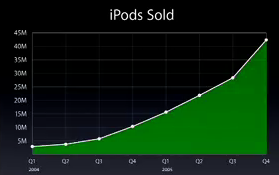

Where would Microsoft be if they hadn’t continued investing through the downturn of the early 90’s?

  • Microsoft may never have finished the hugely successful Windows 95.

Where would Apple be if they hadn’t continued investing through the technology crash of 2001-2003?

  • Apple may never have fully realized the promise of the iPod and subsequent iPhone.

  • The unemployment rate increases (more available workers)
  • Interest rates drop (lower cost of capital)
  • People become fearful of losing their jobs making it easier to recruit from companies reducing or eliminating their innovation investments (increased labor mobility)
  • People are more open to moving if a spouse’s job is eliminated or at risk (increased labor mobility)
  • When a recession arrives, it is easier to acquire tax breaks or other incentives for expansion, new sites, etc. (lower investment costs)

So, if companies have positive cash flows or significant amounts of cash on their balance sheet, or promising ideas to invest in, then there is no better time to invest. Companies with the courage and financial capability to invest in innovation through a downturn, absolutely should.

In addition to all of the other benefits, there is no better opportunity to achieve competitive separation through continued investment in innovation.

It does, however, take a strong CEO and steady board to have the courage and conviction to make such an investment. Innovation is not a perfect science and requires a tolerance for failure and a long-term commitment.

In today’s short-term Wall Street quarterly profit-driven corporate reality, investors’ short-term outlook may be the biggest impediment of all. But, smart organizations will find strategic solutions to overcome this impediment.

Organizations should take the following strategic actions to maintain or expand their innovation initiatives, despite the current global economic downturn:

  1. Secure the leadership flexibility capable of continuing to invest in innovation despite financial pressures
  2. Identify resources that you would like to have had access to during good times, that you might now have access to such as:
    • Labor in scarce specialties
    • Affordable capital
    • Scarce real estate

  3. Increase competitive monitoring to identify opportunities that may be created in areas where the competition reduces previous innovation investment
  4. Increase customer research to identify opportunities to refine your ability to deliver products and services that deliver increased customer value, ideally at lower cost
  5. Improve your innovation processes to improve your ability to innovate more quickly and effectively than your competition
  6. Improve your organizational agility to increase its flexibility to adapt to changes in market conditions caused by the downturn and to shift resources efficiently and with increased speed

Organizations that take these necessary strategic actions, will come out the other side stronger than the competition, stronger than ever before, and create opportunities to preserve or attain market leadership.

Happy innovating!

Build a Common Language of Innovation

Subscribe to Human-Centered Change & Innovation WeeklySign up here to get Human-Centered Change & Innovation Weekly delivered to your inbox every week.

The Nine Innovation Roles

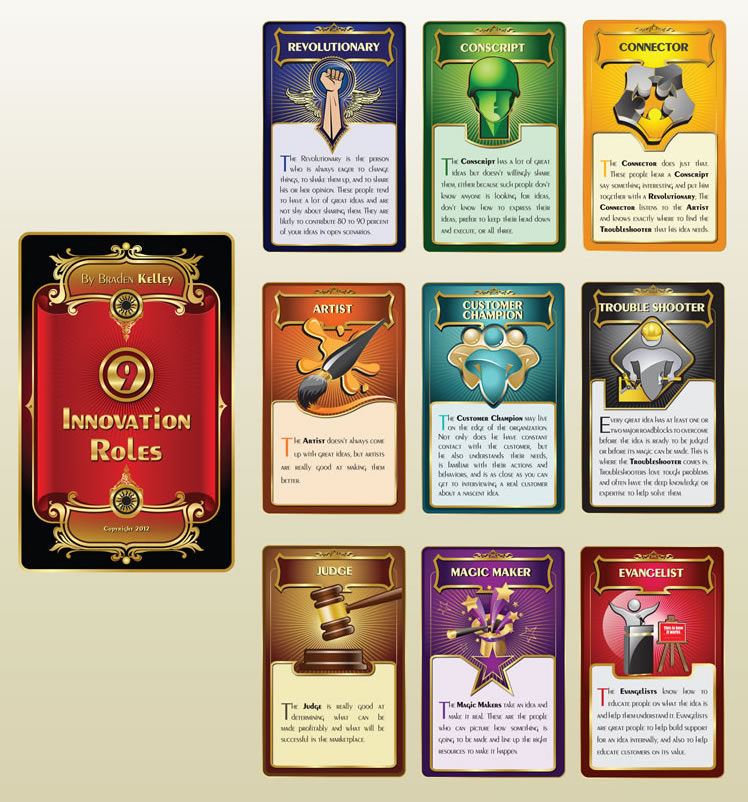
I’m seeing an increasing number of articles about innovation personalities and the like, and I’m a firm believer that it’s not personalities that matter so much when it comes to innovation, it’s the roles that we play in making innovation happen (or not). So, I would like to add my Nine Innovation Roles to the conversation.

The Nine Innovation RolesThe following is an excerpt from my book Stoking Your Innovation Bonfire:

Too often we treat people as commodities that are interchangeable and maintain the same characteristics and aptitudes. Of course, we know that people are not interchangeable, yet we continually pretend that they are anyway — to make life simpler for our reptile brain to comprehend. Deep down we know that people have different passions, skills, and potential, but even when it comes to innovation, we expect everybody to have good ideas.

I’m of the opinion that all people are creative, in their own way. That is not to say that all people are creative in the sense that every single person is good at creating lots of really great ideas, nor do they have to be. I believe instead that everyone has a dominant innovation role at which they excel, and that when properly identified and channeled, the organization stands to maximize its innovation capacity. I believe that all people excel at one of nine innovation roles, and that when organizations put the right people in the right innovation roles, that your innovation speed and capacity will increase.

Here are The Nine Innovation Roles:

1. Revolutionary

  • The Revolutionary is the person who is always eager to change things, to shake them up, and to share his or her opinion. These people tend to have a lot of great ideas and are not shy about sharing them. They are likely to contribute 80 to 90 percent of your ideas in open scenarios.

2. Conscript

  • The Conscript has a lot of great ideas but doesn’t willingly share them, either because such people don’t know anyone is looking for ideas, don’t know how to express their ideas, prefer to keep their head down and execute, or all three.

3. Connector

  • The Connector does just that. These people hear a Conscript say something interesting and put him together with a Revolutionary; The Connector listens to the Artist and knows exactly where to find the Troubleshooter that his idea needs.

4. Artist

  • The Artist doesn’t always come up with great ideas, but artists are really good at making them better.

5. Customer Champion

  • The Customer Champion may live on the edge of the organization. Not only does he have constant contact with the customer, but he also understands their needs, is familiar with their actions and behaviors, and is as close as you can get to interviewing a real customer about a nascent idea.

6. Troubleshooter

  • Every great idea has at least one or two major roadblocks to overcome before the idea is ready to be judged or before its magic can be made. This is where the Troubleshooter comes in. Troubleshooters love tough problems and often have the deep knowledge or expertise to help solve them.

7. Judge

  • The Judge is really good at determining what can be made profitably and what will be successful in the marketplace.

8. Magic Maker

  • The Magic Maker takes an idea and makes it real. These are the people who can picture how something is going to be made and line up the right resources to make it happen.

9. Evangelist

  • The Evangelist knows how to educate people on what the idea is and help them understand it. Evangelists are great people to help build support for an idea internally, and also to help educate customers on its value.

As you can see, creating and maintaining a healthy innovation portfolio requires that you develop the organizational capability of identifying what role each individual is best at playing in your organization. It should be obvious that a failure to involve and leverage all nine roles along the idea generation, idea evaluation, and idea commercialization path will lead to suboptimal results. To be truly successful, you must be able to bring in the right roles at the right times to make your promising ideas stronger on your way to making them successful. Most organizations focus too much energy on generating the ideas and not enough on developing their ideas or their people.

If you would prefer, here is a slide deck that I posted to slideshare.net:

Action Items

  1. Download the simple Nine Innovation Roles Worksheet from my FREE STUFF page and use it in your groups to help understand what innovation roles people tend towards and which ones are underrepresented.
  2. Do you believe these are the roles that drive successful innovation? If not, why not.
  3. Book a Nine Innovation Roles Group Diagnostic Workshop
  4. This is just an excerpt. Please check out the whole book.

Sound off in the comments below.

Book a Nine Innovation Roles Group Diagnostic Workshop

Download the PDF version of the Nine Innovation Roles:

Subscribe to Human-Centered Change & Innovation WeeklySign up here to get Human-Centered Change & Innovation Weekly delivered to your inbox every week.

Rise and Fall of Innovation at Yahoo!

Rise and Fall of Innovation at Yahoo!Can people really innovate when they have to tend to all of their day-to-day responsibilities?

Unfortunately, people don’t get promoted for being innovative, they get promoted for getting stuff done, developing people, and meeting or exceeding goals or stretch targets. If people are busy making sure they do all that, when are they supposed to innovate? And if they do come up with a good idea while they are in the shower (after all they don’t have time to do it at work), how many hours of sleep are they willing to give up to help move it forward?

This is one of the key problems established organizations have in making innovation happen in their organizations. First, people get rewarded for executing not creating. Second, everyone is so overworked that getting funding and staffing up a project team to make the business more profitable or to ensure its longevity, is incredibly difficult.

So, what’s the answer?

I came across an article in 2007 that showed that Yahoo! believed the key was a set of dedicated off-site resources charged with taking employee ideas and suggestions and developing them. In the article they cite a product development example in which the product was developed in a third of the time it would have taken within the normal Yahoo! reality. 65% faster than an internal project. What does that say?

What this article reinforces is that people must have time to execute new ideas. Top levels of management have to commit to ring-fence a portion of people’s time to develop new product or process ideas that will improve the efficiency and profitability of the enterprise OR they have to commit the resources to a group external to the normal operations of the company. 3M has its 15% time and Google has its 20% time (if your 20% time project is approved), but Intuit’s group-focused, aggregated percent time seems the most sustainable because it allows managers to schedule and plan for innovation time away like they do vacation.

Bringing in outsiders is a third alternative, but not that different from number two with the exception of a little more of an outside perspective that comes from working with multiple clients and living outside the political culture.

So, which approach are you prepared to commit to? Or, are you committed to driving the best ideas and people out of your company and seeing your competitors blow by you?

P.S. Yahoo! Brickhouse opened in 2006 and closed in 2008.

Build a Common Language of Innovation

Subscribe to Human-Centered Change & Innovation WeeklySign up here to get Human-Centered Change & Innovation Weekly delivered to your inbox every week.

Innovate Thyself (aka Personal Innovation)

Innovate Thyself (aka Personal Innovation)Many people have written previously about how difficult it is to innovate within an established organization. Trying to transform oneself can be just as incredibly difficult. I wouldn’t call it a re-invention, per se, because of the distinction I draw between invention and innovation.

The distinction is that invention is all about coming up with useful products and services, while innovation truly occurs when a person or group of people take that useful invention the last mile to make it truly valuable. As a result, I like to call this incredibly difficult transformation “Personal Innovation” instead, because transforming oneself is also about more than coming up with a useful idea. Personal Innovation is more about creating a new existence that is even more valuable to you and those around you. So, why is Personal Innovation so incredibly difficult?

Well, it is difficult for the exact same reasons that innovation in established organizations is difficult:

  1. Limited Resources (money and time)
  2. Existing Jobs/Interests
  3. Resistance to Change

To achieve a Personal Innovation in the realm of employment, you first have to overcome the time and financial limitations caused by your current employment. We’ll talk about employment in the broad sense, so it incorporates starting a business. This is because in both cases someone owns the job and pays you to do it. In the case of starting a business, you own the job and pay yourself to do the job of running the business.

The challenge begins with finding the time to move yourself towards your dream job or business. Obviously you have to spend a lot of your time on the existing job or business just to keep the lights on. If you have a have a family finding the time to pursue your Personal Innovation is even more difficult (because, after all, you do want to spend time with them). If your new direction requires acquiring new knowledge (formally or informally), then that has to squeeze into the limited time available and may take a long time to complete as a result.

Quitting your existing job or selling your existing business will condense the time needed to acquire the new knowledge, but of course this comes at a financial cost. If your transformation involves starting a business then you also have to wait to begin until you can save or raise the funds necessary to get your venture off the ground.

If all of this isn’t difficult enough, then there is also the challenge you will face of truly moving away from the current job or interests that are the subject of your transformation. The job or interests you are pursuing now always have some kind of payoff, otherwise you would have transformed yourself before now. Maybe your current job pays better than the job you think you might want to do or the business you might want to run. Maybe your current job doesn’t pay enough and so you have to work two jobs to make ends meet (further reducing your time available to make a transition). You may also have to face the enticement of a future payoff in terms of a promotion (in the case of a job), or the temptation of delaying the transformation to some future date when it might be more “convenient” for you or your family.

Finally, change is scary. The thought of making a big change and moving away from the familiar might be too much stress for some people’s systems to keep pursuing the transformation. Those who stay the course will have to overcome criticism and even ridicule from those who they share their current job or interests with. There is also self-doubt to contend with. Sometimes, you will feel that you are not talented enough or smart enough or deserving enough to make the switch. You might find yourself unconsciously sabotaging yourself to avoid making the change. We all sometimes find excuses for why we are not doing the things we should be doing to realize a change. Sometimes we blow an interview because inside we ourselves don’t believe we are truly ready for the change.

All of these things that happen in a personal context are very similar to the reasons that innovation is difficult in established organizations. This is why startups sometimes catch established competitors off-guard, allowing them to disrupt entire industries (aka disruptive innovation). But, some established organizations still manage to innovate and stay ahead of the competition however, which begs the question:

What can we do as individuals to achieve the disruptive innovation in our personal lives that we seek?

Well, it all comes down to recognizing our limitations, both personal and circumstantial, and then being determined to succeed in spite of them. By acknowledging the challenges, we simultaneously provide ourselves with excuses, but if committed, also with exciting challenges to find solutions for. It has been proven time and again that difficult situations and daunting constraints often result in the brightest solutions.

Put yourself in the role of the underdog even if you’re not, and challenge yourself to find solutions to the things you see as limitations. Share these challenges with those you trust and enlist their help in finding solutions. By putting the message into your universe about the change you are trying to make, the efforts that you are putting forth, and the approaches you are taking to overcome the requisite challenges, you will be surprised by the unexpected answers that you receive from unlikely sources.

Be ready to listen when the answers come, and don’t be afraid to go over, under, through, or around any obstacles that get between you and achieving your Personal Innovation. Celebrate the little victories and don’t get discouraged if it takes time. In fact, expect it to take longer than you initially imagine. This may sound daunting, but we really are capable of transforming ourselves.

Are you ready to create your own Personal Innovation?

Subscribe to Human-Centered Change & Innovation WeeklySign up here to get Human-Centered Change & Innovation Weekly delivered to your inbox every week.

Innovate Yourself – Becoming Overpaid

Innovate Yourself - Becoming OverpaidA fun one from the archive (2007)

I came across this article from MarketWatch on the Ten most overpaid jobs in the U.S. and thought it was worthy of discussing. I don’t want to focus on whether these occupations are overpaid or not (I’m sure the people working in these roles would disagree with the author), but instead on what we can all learn from this article. First here is a list of the ten occupations:

  1. Wedding photographers
  2. Major airline pilots
  3. West Coast longshoremen
  4. Skycaps at major airports
  5. Real estate agents selling high end homes
  6. Motivational speakers and ex-politicians on the lecture circuit
  7. Orthodontists
  8. CEOs of poorly performing companies
  9. Washed-up pro athletes in long-term contracts
  10. Mutual-fund managers

Next, here is my list of some of the common threads amongst the ten occupations chosen by Chris Pummer of CBS MarketWatch with the input from anonymous compensation experts, and an academic examination of how someone might approach the “problem” of increasing their income by looking at these common threads:

  1. Power
    • Create a situation where meeting your demands becomes an extremely attractive alternative to not meeting them. Some people would refer to this as identifying points of leverage.
    • Banding together with other highly skilled co-workers into a union is one approach that people take.
    • Another is to take create sufficient revenue for an organization so that the company doesn’t want to risk interruption of that cashflow.
  2. Fear
    • People are afraid of someone messing up their wedding photos, their investments, or their safe journey.
    • Put yourself in a position to directly protect a customer’s memories, finances, or their life itself.
  3. Establish a “tradition”
    • Pro-actively create the perception that it is the usual way of doing things for a customer to tip you or pay you a percentage of their bill (regardless how big).
    • The people at the airport taking your bags at the check-in counter do the same job as curbside check-in (they give you a ticket and check your bag), but we all believe it is accepted practice to tip the curbside check-in person and not the person at the check-in counter inside. We tip a “waiter” for taking our order and giving us food and drink, but we don’t do the same for the “cashier” at McDonald’s do we?
  4. Create a shortage
    • Organize the people in your “profession” and work to create barriers to entry that can be used to control supply.
    • Trade unions do this to some extent with apprenticeship programs and the like.
    • In addition to Orthodonists, Pharmacists and Veterinarians have been accused of this.
  5. Turning garbage into gold
    • Identifying a job that most people wouldn’t want to take, but where a highly qualified person is desired, can result in a job that might pay quite well.
    • If you are a supervisor, try to position yourself to supervise the group of people in your organization that makes more money than the group you supervise now (usually a supervisor will make more than the people he/she supervises).
    • Most talented managers won’t take on a position at a struggling company, and as a result the company will either have to over-pay to get good talent to join or be satisfied with hiring people who want to stay in the local area or couldn’t get hired by a better performing company in the industry. If you have a tolerance for risk, seek out opportunities at underperforming companies in your industry and play up the career risk about moving from your successful company to their unsuccessful one in the compensation discussions.

Would it be wrong for an individual or a group of employees to look to game these common threads consciously?

Organizations are constantly looking for ways to put downward pressure on wages, so would it be wrong for individuals to look after their own self-interests and attempt to maximize their ability to take care of their family?

I would argue that it is the responsibility of the individual to protect their own self-interests and look to maximize their wages in the same way it is the responsibility of the organization to look to minimize wages for the self-interest of the shareholders.

Build a Common Language of Innovation

Subscribe to Human-Centered Change & Innovation WeeklySign up here to get Human-Centered Change & Innovation Weekly delivered to your inbox every week.

Business Strategy Innovation Diamond (BSID)

Continuing my quest to surface some classics that the Innovation Excellence audience will have never seen, here is another from 2007:

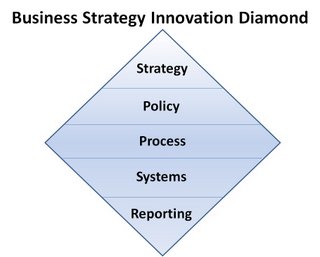
I would like to introduce a visual metaphor that the consultants use at Business Strategy Innovation. It’s called, predictably enough, the Business Strategy Innovation Diamond, or the BSID. There is another reason we use it, to “ID” the “BS” in an organization. Now a lot of people would represent strategy as the top of a pyramid, processes in the middle, and systems as the base of a pyramid, but that ignores two of the most important tools in any organization – policies and reporting. Business Strategy Innovation instead starts with a diamond that looks like this:

Business Strategy Innovation Diamond (BSID)

Here is an example of how the Business Strategy Innovation Diamond can help you structure an organizational analysis project:

  1. Strategy
    • We want to be the leading Internet retailer
  2. Policy
    • Free shipping on orders over $25
  3. Processes
    • Create marketing program to promote this benefit
  4. Systems
    • Modify shopping cart application
    • Build on-page messaging to alert customers of additional purchase $$$ required to reach the $25 threshold for free shipping
  5. Reporting
    • Establish any infrastructure required to measure orders above/below $25
    • Measure benchmark period
    • Create report measuring % of orders greater than $25 in current period versus benchmark period to measure effect

The BSID focuses your organization on making sure that the policies support the strategy, that the processes facilitate the policies, that the systems enable the processes, and the reporting measures the execution of the strategy. Not focusing on the BSID, may result in just BS instead of strategic innovation.

Build a Common Language of Innovation

Subscribe to Human-Centered Change & Innovation WeeklySign up here to get Human-Centered Change & Innovation Weekly delivered to your inbox every week.

Business Model Innovation?

Business Model Innovation?

Nearly five years ago I wrote this article, but I think it is worth dredging it up out of the archives because there is such misunderstanding out there about what business model innovation is. This article highlights some of the misconceptions people have about what business model innovation truly is and looks quickly at a couple of more appropriate examples of business model innovation. But of course I’d love to hear your thoughts in the comments, including your favorite business model innovation examples.

Here’s the article from 2007:

I came across an article on BusinessWeek.com that I just have to write about because it asserts that GM has achieved a business model innovation by shunting its retiree medical obligations onto the Union (and getting away with only contributing 70% of the outstanding obligations to the fund).

This is not a business model innovation, but purely a negotiation outcome and nothing that will give GM any sustainable competitive advantage. Ford and Chrysler will end up doing the same thing and the parity of competition amongst US manufacturers will be restored. A business model innovation is Southwest Airlines establishing a new airline focused on providing low fare point to point air travel instead of creating another airline based on a hub and spoke model, or Saturn selling their cars for a fixed price, not GM pushing obligations off their balance sheet.

GM is not losing in the automobile industry because of health care costs for retirees. They are losing because their operations result in cars that less and less people want to buy. GM needs to stop complaining about peripheral issues and trying to be like Toyota and instead focus on how they can be better than Toyota.

When workers come back on the job, nothing will have changed in their business, the business of designing, manufacturing and selling cars. If anything the workers are going to come back to work feeling like they have just given even more away to the corporation, just so that the CEO’s balance sheet look better. This is not a business model innovation. The Big Three will not avoid the inevitable by simply squeezing their union workforce, they need to design and manufacture better cars. This deal with the unions may slow the inevitable, but not avoid it. Toyota is passing GM, the Korean manufacturers are quickly improving their quality, and the Chinese will begin entering the US market in the next few years. One of the Big Three will go out of business in the next ten years. The real question is which one?

Build a Common Language of Innovation

Subscribe to Human-Centered Change & Innovation WeeklySign up here to get Human-Centered Change & Innovation Weekly delivered to your inbox every week.

Innovation Passing Lane Ahead

Innovation Passing Lane Ahead

I noticed an interesting phenomenon the other day on a 200 mile drive back from the Oregon coast to Seattle that I would like to share with you and then discuss the potential implications for innovation success.

Now let me first say that I am not a trained human psychologist, but I am a student of human behavior, and I believe that if we watch and listen in other contexts, we can learn amazing things about human behavior that have profound implications for the innovation context. So without further delay, here’s the situation I encountered:

I was driving back along the Columbia River on the Oregon side on a road that was predominantly a two lane road (one lane of traffic in each direction) with passing lanes at various points, typically for the direction of traffic going uphill to give cars a chance to pass slower moving vehicles. Nothing too interesting in that description. Here is where things get interesting…

I noticed that every time I was following a car or truck and approached a passing lane, without exception, the car or truck I was following instantly sped up a minimum of 10mph AND when we reach the end of the passing lane area, they pretty quickly slowed down 10mph.

Now, why would every driver I encountered in front of me (without exception) speed up when the passing lane approached and slow down when it ended, even though the speed limit was unchanged? What’s the psychology behind this behavior?

Here are my observations:

  1. On a two lane road there are leaders and there are followers. When you are a leader the whole road is before you and you set the speed, when you are a follower you are at the mercy of the person in front of you to set the speed and all you see is the back of the vehicle in front of you. People enjoy having the open road in front of them and even if they are not fast drivers, they are willing to drive a little bit faster to try and retain this privilege (about 10mph faster).
  2. Passing lanes represent a limited window of opportunity for people seeking to pass, and a limited duration of resistance for those looking not to be passed. Because the duration is limited, the leader perceives a threat and a scarcity that they would not perceive on a road that was always two lanes in their direction. As a result, their behavior is different.
  3. If you want to pass someone as a passing lane approaches, you must be prepared to drive 20mph faster to execute the pass before the end of the passing lane, knowing that the person in front of you is not going to stay constant, but will actually speed up.

What are the implications for innovation?

  1. There are always going to be people coming up behind you, seeking to pass you. Innovation is one way to stay ahead of the competition. Incremental innovation can be your 10mph acceleration that reduces the chance of being passed when the passing lanes appear.
  2. You must be aware when the passing lanes will appear. This is often when new technology makes things possible that weren’t possible before or when customer priorities and value assignment changes. Market leaders must recognize the conditions that create passing lanes and form a plan for how to protect themselves, while new entrants must recognize when their opportunity is greatest and move quickly and decisively before the passing lane comes to an end.
  3. You must provide the conditions necessary to make people want to rush into the widening road and seek to accelerate innovation and overtake the other drivers, instead of embracing the safety of the shoulder of the road as others rush by.
  4. People won’t push harder forever. This is the psychology around creating a burning platform. People will fight the fire on a burning platform, but if they feel that the whole house is on fire, then they will look for a new house. As a result a burning-platform approach to innovation is not sustainable, you must instead be much more systemic in your approach to innovation if you are going to use it to help protect your market leadership position.
  5. When a passing lane appears, market leaders must take a careful measurement of the situation and identify how best to react to the factors that have created it. At the same time, market leaders must also identify how long they must push to kill off potential new entrants.
  6. If you’re trying to innovate your way into first place, you must expect the leader to react, and anticipate the way in which they will react and account for that. You must know that the market leaders will look for how to starve you of your oxygen, and will look to accelerate away from you. This is why the most successful passers are those organizations that recognize the passing lane first, are mobilized to accelerate when it appears, and choose to react to the passing lane in a way that will be difficult for the market leaders to react to given their position and psychology.

Competition in a free market economy is not fair, and the playing field is not level, and the road ahead is not an open highway but a two lane road with occasional passing lanes. The organizations that do the best job at identifying when the passing lanes are going to appear and the factors that are going to allow them to accelerate are the ones that will either leapfrog the existing leaders, or maintain their ongoing market leadership.

What kind of organization are you going to be?

Build a Common Language of Innovation

Subscribe to Human-Centered Change & Innovation WeeklySign up here to get Human-Centered Change & Innovation Weekly delivered to your inbox every week.