Tag Archives: World War II

The Wood-Fired Automobile

WWII’s Forgotten Lesson in Human-Centered Resourcefulness

LAST UPDATED: December 14, 2025 at 5:59 PM

The Wood-Fired Automobile

GUEST POST from Art Inteligencia

Innovation is often romanticized as the pursuit of the new — sleek electric vehicles, AI algorithms, and orbital tourism. Yet, the most profound innovation often arises not from unlimited possibility, but from absolute scarcity. The Second World War offers a stark, compelling lesson in this principle: the widespread adoption of the wood-fired automobile, or the gasogene vehicle.

In the 1940s, as global conflict choked off oil supplies, nations across Europe and Asia were suddenly forced to find an alternative to gasoline to keep their civilian and military transport running. The solution was the gas generator (or gasifier), a bulky metal unit often mounted on the rear or side of a vehicle. This unit burned wood, charcoal, or peat, not for heat or steam, but for gas. The process — pyrolysis — converted solid fuel into a combustible mixture of carbon monoxide, hydrogen, and nitrogen known as “producer gas” or “wood gas,” which was then filtered and fed directly into the vehicle’s conventional internal combustion engine. This adaptation was a pure act of Human-Centered Innovation: it preserved mobility and economic function using readily available, local resources, ensuring the continuity of life amidst crisis.

The Scarcity Catalyst: Unlearning the Oil Dependency

Before the war, cars ran on gasoline. When the oil dried up, the world faced a moment of absolute unlearning. Governments and industries could have simply let transportation collapse, but the necessity of maintaining essential services (mail, food distribution, medical transport) forced them to pivot to what they had: wood and ingenuity. This highlights a core innovation insight: the constraints we face today — whether supply chain failures or climate change mandates — are often the greatest catalysts for creative action.

Gasogene cars were slow, cumbersome, and required constant maintenance, yet their sheer existence was a triumph of adaptation. They provided roughly half the power of a petrol engine, requiring drivers to constantly downshift on hills and demanding a long, smoky warm-up period. But they worked. The innovation was not in the vehicle itself, which remained largely the same, but in the fuel delivery system and the corresponding behavioral shift required by the drivers and mechanics.

Case Study 1: Sweden’s Total Mobilization of Wood Gas

Challenge: Maintaining Neutrality and National Mobility Under Blockade

During WWII, neutral Sweden faced a complete cutoff of its oil imports. Without liquid fuel, the nation risked economic paralysis, potentially undermining its neutrality and ability to supply its citizens. The need was immediate and total: convert all essential vehicles.

Innovation Intervention: Standardization and Centralization

Instead of relying on fragmented, local solutions, the Swedish government centralized the gasifier conversion effort. They established the Gasogenkommittén (Gas Generator Committee) to standardize the design, production, and certification of gasifiers (known as gengas). Manufacturers such as Volvo and Scania were tasked not with building new cars, but with mass-producing the conversion kits.

  • By 1945, approximately 73,000 vehicles — nearly 90% of all Swedish vehicles, from buses and trucks to farm tractors and private cars — had been converted to run on wood gas.
  • The government created standardized wood pellet specifications and set up thousands of public wood-gas fueling stations, turning the challenge into a systematic, national enterprise.

The Innovation Impact:

Sweden demonstrated that human resourcefulness can completely circumvent a critical resource constraint at a national scale. The conversion was not an incremental fix; it was a wholesale, government-backed pivot that secured national resilience and mobility using entirely domestic resources. The key was standardized conversion — a centralized effort to manage distributed complexity.
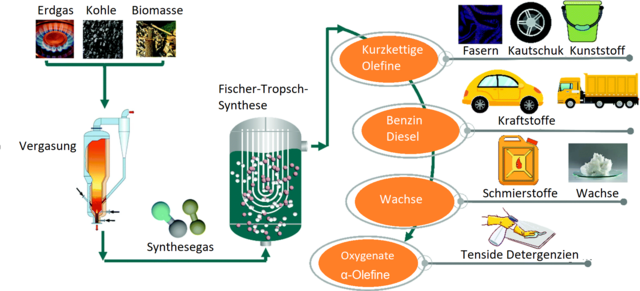
Fischer-Tropsch Process

Case Study 2: German Logistics and the Bio-Diesel Experiment

Challenge: Fueling a Far-Flung Military and Civilian Infrastructure

Germany faced a dual challenge: supplying a massive, highly mechanized military campaign while keeping the domestic civilian economy functional. While military transport relied heavily on synthetic fuel created through the Fischer-Tropsch process, the civilian sector and local military transport units required mass-market alternatives.

Innovation Intervention: Blended Fuels and Infrastructure Adaptation

Beyond wood gas, German innovation focused on blended fuels. A crucial adaptation was the widespread use of methanol, ethanol, and various bio-diesels (esters derived from vegetable oils) to stretch dwindling petroleum reserves. While wood gasifiers were used on stationary engines and some trucks, the government mandated that local transport fill up with methanol-gasoline blends. This forced a massive, distributed shift in fuel pump calibration and engine tuning across occupied Europe.

  • The adaptation required hundreds of thousands of local mechanics, from France to Poland, to quickly unlearn traditional engine maintenance and become experts in the delicate tuning required for lower-energy blended fuels.
  • This placed the burden of innovation not on a central R&D lab, but on the front-line workforce — a pure example of Human-Centered Innovation at the operational level.

The Innovation Impact:

This case highlights how resource constraints force innovation across the entire value chain. Germany’s transport system survived its oil blockade not just through wood gasifiers, but through a constant, low-grade innovation treadmill of fuel substitution, blending, and local adaptation that enabled maximum optionality under duress. The lesson is that resilience comes from flexibility and decentralization.

Conclusion: The Gasogene Mindset for the Modern Era

The wood-fired car is not a relic of the past; it is a powerful metaphor for the challenges we face today. We are currently facing the scarcity of time, carbon space, and public trust. We are entirely reliant on systems that, while efficient in normal times, are dangerously fragile under stress. The shift to sustainability, the move away from centralized energy grids, and the adoption of closed-loop systems all require the Gasogene Mindset — the ability to pivot rapidly to local, available resources and fundamentally rethink the consumption model.

Modern innovators must ask: If our critical resource suddenly disappeared, what would we use instead? The answer should drive our R&D spending today. The history of the gasogene vehicle proves that sufficiency is the mother of ingenuity, and the greatest innovations often solve the problem of survival first. We must learn to innovate under constraint, not just in comfort.

“The wood-fired car teaches us that every constraint is a hidden resource, if you are creative enough to extract it.” — Braden Kelley

Frequently Asked Questions About Wood Gas Vehicles

1. How does a wood gas vehicle actually work?

The vehicle uses a gasifier that burns wood or charcoal in a low-oxygen environment (a process called pyrolysis). This creates a gas mixture (producer gas) which is then cooled, filtered, and fed directly into the vehicle’s standard internal combustion engine to power it, replacing gasoline.

2. How did the performance of a wood gas vehicle compare to gasoline?

Gasogene cars provided significantly reduced performance, typically delivering only 50-60% of the power of the original gasoline engine. They were slower, had lower top speeds, required frequent refueling with wood, and needed a 15-30 minute warm-up period to start producing usable gas.

3. Why aren’t these systems used today, given their sustainability?

The system is still used in specific industrial and remote applications (power generation), but not widely in transportation because of the convenience and energy density of liquid fuels. Wood gasifiers are large, heavy, require constant manual fueling and maintenance (clinker removal), and produce a low-energy gas that limits speed and range, making them commercially unviable against modern infrastructure.

Your first step toward a Gasogene Mindset: Identify one key external resource your business or team relies on (e.g., a software license, a single supplier, or a non-renewable material). Now, design a three-step innovation plan for a world where that resource suddenly disappears. That plan is your resilience strategy.

Disclaimer: This article speculates on the potential future applications of cutting-edge scientific research. While based on current scientific understanding, the practical realization of these concepts may vary in timeline and feasibility and are subject to ongoing research and development.

Image credit: Google Gemini

Subscribe to Human-Centered Change & Innovation WeeklySign up here to get Human-Centered Change & Innovation Weekly delivered to your inbox every week.

The Power of Dreams

A Veterans Day Innovation Story

The Power of Dreams - A Veterans Day Innovation Story

by Braden Kelley

On this Veterans Day I send my thanks to all of my fellow veterans for the sacrifices they and their families have made in support of the great nations of the world. Military science has long been a source of innovation that goes beyond the defense of a population. From duct tape, GPS, jet engines and the Internet to nuclear power, sanitary napkins and digital photography, there is an endless list of innovations that owe their existence to investments in military research.

Innovation has always been fueled by exceptional ideas that push the boundaries of what is possible. Some of the most groundbreaking inventions in history have originated from the most unexpected sources, proving that inspiration knows no boundaries. One such remarkable innovation that emerged from the realm of dreams is the M9 Gun Director, a groundbreaking concept envisioned by David Parkinson. Today, we explore the fascinating story of how an ordinary dream sparked an extraordinary revolution in military technology.

Dreams have long been a source of fascination for humanity, acting as the gateway to our subconscious minds, guiding our creativity and problem-solving abilities. Great minds throughout history, from Albert Einstein to Nikola Tesla, have attested to the transformative power of dreams shaping their inventions and discoveries. In the case of David Parkinson, the M9 Gun Director serves as a testament to the astounding potential that lies within our dreams.

The Birth of a Revolutionary Concept

In 1895, Parkinson, a modest engineer by profession, experienced a vivid dream that would forever change the world of military technology. In this dream, he envisioned a device capable of automatically predicting and adjusting the trajectory of a gun, enabling unparalleled precision in aiming and firing. This visionary concept would ultimately become the foundation for the M9 Gun Director and revolutionize artillery warfare as we knew it.

Pursuing the Unconventional

David Parkinson, driven by an insatiable curiosity and an unwavering belief in his dream, embarked on a journey to transform this abstract idea into a tangible reality. Despite facing skepticism and opposition, Parkinson remained undeterred, recognizing the immense potential in his concept. He tirelessly invested his time in research, experimentation, and collaboration, all the while fueled by the hope of revolutionizing military technology.

Bringing Dreams to Life

After years of relentless persistence, Parkinson succeeded in developing a prototype that embodied his vision of the M9 Gun Director. It incorporated advanced mechanisms, including gears, gyroscopes, and other innovative technologies, to predict and adjust artillery gun trajectories with remarkable accuracy. This revolutionary innovation significantly enhanced the efficiency, precision, and destructive power of artillery systems, forever changing the course of warfare worldwide.

Implications and Significance

The advent of the M9 Gun Director marked a turning point in military history, fundamentally altering the dynamics of armed conflict. By harnessing the power of dream-inspired innovation, Parkinson had unlocked a whole new level of precision previously unimaginable in the realm of artillery. This groundbreaking invention significantly reduced casualties, transformed strategic planning, and tilted the balance of power on the battlefield.

Embracing the Power of Dreams

The story of David Parkinson and the M9 Gun Director serves as a testament to the incredible creative potential that lies within each of us. It encourages us to embrace the unexplored territories of our dreams, recognizing them not just as fleeting nocturnal experiences, but as wellsprings of unmatched inspiration. Who knows what other world-changing ideas are waiting to be unleashed from within our subconscious minds?

Image credits: Pixabay

Subscribe to Human-Centered Change & Innovation WeeklySign up here to join 17,000+ leaders getting Human-Centered Change & Innovation Weekly delivered to their inbox every week.

Cognitive Bandwidth – Staying Innovative in ‘Interesting’ Times

Cognitive Bandwidth - Staying Innovative in ‘Interesting’ Times

GUEST POST from Pete Foley

‘May you live in interesting times’ is the English translation of an ancient Chinese curse. Superficially presented as a blessing, its true meaning is of course far from positive. As memes go, it has lasted quite a while, perhaps because from a cognitive perspective, that little twist, and the little puzzle it forces us to solve makes it more subtle, but also more impactful than a more direct insult. But the ‘blessing and a curse’ dichotomy that it embodies is also a fundamental insight. Opportunity usually brings potential for trouble, and trouble usually bring potential for opportunity, largely because both involve change. So many are going through an awful time on many fronts at the moment, but if that has a silver lining, it is that with it comes change. And ultimately that creates an opportunity for innovation, and hopefully better times.

Big Issues Create Big Opportunity: I’ve written before about the opportunity that Covid-19 presented for innovation. The shattering of habits and established behaviors, combined with dramatic shifts in personal and work situations opened the door to trial of new products and services to a degree not seen in a generation. But as we (hopefully) continue to emerge from Covid, we’ve been sucker punched by numerous other things. The horror of war in Europe being the most shocking, but we are also facing enormous economic challenges in the form of energy shortages, inflation, supply chain issues, the great resignation and rapidly changing socio-political landscapes.  And of course, we still have numerous other pressing ‘pre-Covid’ issues such as climate change, pollution and economic inequality that also require urgent attention.

That is a lot of problems that need solving. And as awful as Covid was for everyone, the current issues around supply chain, global economic instability, inflation and increased cost of debt likely create at least as immediate operational issues for many organizations, and hence an equally urgent need for innovation.

Another Innovators Dilemma. Unfortunately, the time when we need most innovation is often when it is hardest to deliver it. Innovation doesn’t happen overnight, and usually needs clear strategy, resources, funding, creativity and knowledge. And all of these are currently in short supply. An uncertain and rapidly changing world makes setting long-term strategy challenging. Supply chain challenges can have huge short-term operational impact, and suck up resources and expertise normally allocated to longer-term innovation. The great resignation and early retirements reduce available expertise. And on top of all of this, inflation, increasing interest rates, raw material prices and labor costs are squeezing finances. None of this is terribly new news, or insightful, but it does provide context for another, sometimes less obvious barrier to innovation that I want to talk about: One that operates more on the individual level – the squeeze of cognitive bandwidth.

Cognitive Bandwidth: The innovation journey needs creativity everywhere from the nascent front end through to launching into market. Ultimately that creativity comes from individuals. That in turn requires those individuals to be allowed the cognitive bandwidth, or ‘quality thinking time’ to ideate. We can only effectively think deeply about one thing at a time. This is our ‘cognitive bandwidth’, and it is a finite resource. There are only so many hours in a day, and most of us can only allocate a small fraction of those to think deeply about problems or process information. And of course the more problems we are facing, the less bandwidth we usually have. The more difficult the situation, the more of our time is spent distracted, jumping from one issue to another, or attempting to ‘multi-task’. Even when we carve out time, the current climate means all too often we are stressed, or in an elevated emotional state. This reduces the quality as well as quantity of our thinking, and so further narrows our individual cognitive bandwidth.

The Covid Squeeze: Covid-19 of course sucked up a lot of cognitive bandwidth. We had to find new ways to work, learn new tools, and new ways to manage personal lives and work-life balance as many found themselves taking on new roles as educators, care givers, chefs, simply learning how to share an office with a spouse for the first time. There were some compensating effects, such as reduced travel, but even that likely had some less obvious and hard to measure impacts on the creative process that I’ll discuss later. But perhaps the biggest, albeit largely intangible impact on cognitive bandwidth was the impact Covid had on our collective emotional state. Covid, and the changes it brought was hard on everybody. Everyone has there own stories, and we’ve all seen the increase in mental health issues that accompanied the pandemic. But this is almost certainly the ‘tip of the iceberg’. Virtually everyone has experienced some degree of increased stress and negative emotions during Covid, and this directly impacts cognitive bandwidth and hence individual innovative capacity.

The Post-Covid Sucker Punch: One thing I think we were all looking forward to was a return to some semblance of normal. But unfortunately, as Covid (hopefully) subsides, reentry into the post Covid world is proving to be very bumpy, and we are facing the cornucopia of other issues described above.   This not only creates a host of ‘fires’ that need to be put out, but it also inevitably takes an emotional toll. After two years of disrupted work and home-life, we are now asking people to again step up and be ‘unusually’ innovative in difficult circumstances, and against a backdrop of war and human suffering. Fatigue and burn-out are almost inevitable.

At a practical level, I see this on a day-to-day basis. I sit in a lot of innovation teams, and one pattern I observe consistently is the workforce getting increasingly stretched; both from a time and emotional perspective. I see more and more people getting pulled out of meetings to fight fires, people attempting to double task, or stepping in and out of meetings, or simply looking frazzled and overworked. Of course, none of this is new, overwork and stress existed log before Covid. But it’s also not surprising that it appears to be increasing during a long period of constant change.

The Neuroscience of the Creative Moment. Innovative thinking comes in multiple forms, but it all requires time. We need time to think deeply, and consciously about problems, and to assimilate data and knowledge.  But ‘downtime’ is also a critical, if less understood part of the creative process. There is a very good reason that Eureka moments often happen in the bath, shower, or middle of the night. When the mind is relaxed, has time, and not focused on an immediate problem, it is more likely to make surprisingly obvious connections, or see things in different ways. This is often when the biggest ideas occur. We need conscious thinking to build essential foundations of knowledge, but the most interesting ideas and connections often happen when we are not trying. Have you ever had a name on the tip of your tongue, but no matter how hard you try, you cannot find it? Then a few hours later when you are not trying, it pops into your head? This is an analogous mechanism, where conscious focus simply reinforces and repeats converging on the same, sometimes unwanted result, but when we relax, it opens the channel to the needed connection. There is a lot of research around how this works, which includes the interaction between default mode and executive function, the role of alpha waves and flow state, and the conceptual blending process. It’s still very much an evolving science, but one thing that is fairly consistent across this research is that downtime and periods of reduced stress play an important role in the creative process and making connections. Unfortunately, for many, the pandemic reduced relaxation and ‘own time’.   Needing to learn new skills and new ways of working, while also having to solve a myriad of new and ever changing problems sucked up time. Even the loss of commutes took away a period of solo reflection where many of us consciously or unconsciously processed and synthesized the day’s information.   But perhaps the hardest pill to swallow has been that while we all hoped that the end of Covid would have provided some relief, if anything the news cycle has got worse. This takes an emotional toll.  Part of this reflects the ratings competition within media that favors an ever-increasing stream of bad news.  But unfortunately it also reflects a very challenging global reality and very real problems and suffering.

What Can We Do?

There are of course limits to what we can do within our sphere of influence. Most of us cannot directly impact the war in Ukraine, the supply chain crisis or global diplomacy. But we can take steps to reduce pressure on our teams, and ourselves, and thus make innovation and creativity a little easier.

1. Make tough strategic priority decisions. Primarily this is a leadership task, but it’s also something we can to some degree manage in our personal portfolios. One reason we see so much innovation during crisis is focus, and a willingness to sacrifice some goals or standards for more important ones. For us to replicate this means being very selective about what fires to fight, while also being willing to let others burn themselves out. This is not without risk, as short-term survival is of course a prerequisite for any successful long-term strategy.   But during periods of rapid change, we also see rapid reversals. For example, spikes in raw material costs are often short-term, and developing alternatives can often take longer than the problem lasts. It sounds obvious, but is often deceptively difficult, especially as deciding to let the wrong fire burn itself out can be quite career limiting. But making difficult priority calls, and saying ‘no’ can be critical to maintaining our innovative and competitive edge, by keeping limited cognitive bandwidth focused of the most important tasks.

2. Help talent to focus on what is really important, and to grow skills that are most relevant to the future. There has been an ongoing trend to increasingly ask talent to handle their own administrative and organizational work. This is partly driven by technology that reduces the need for specialized knowledge to manage many logistics tasks. And eliminating support roles looks good on margins and fixed costs. But asking a highly skilled technical expert to cover their own admin not only adds to their workload, but it is also inefficient, as we are effectively overpaying them to complete tasks that often don’t play to their core skills. Conversely, there is also a lot of skill on the sidelines at the moment, while many have developed skills in working remotely. So is one option is to leverage this to free up innovators and experts. Let them focus more on their areas of expertise, by bringing back more general support roles. Or bring in temporary outside help where short-term issues require expertise that is not anticipated to be part of long-term strategy.

3. Schedule down-time, and create a culture where it is encouraged. Build protected spaces in calendars when meetings are not allowed. Encourage lunch breaks, and enable casual team-building events and wellness practices. It’s easy to view these as non-essential, and the type of activities that we cut first when times get tough. But they are critical to an innovative culture. Mental downtime is not a luxury or a perk, but an essential part of the creative process.   And in too many cases, we’ve been in crisis mode for so long, that tool has become blunt or burnt out.

4. Further support this with the design of our physical environments. Another trend has been the move to open offices and shared space. This has benefits for both collaboration, and for space efficiency as hybrid home/office working models emerge. But studies have also shown more innovative ideas emerge when people work alone than in brainstorming environments. So it is critical to provide both physical spaces and a culture that enable private reflection and quiet concentration where people can potentially synthesize information and make connections. The key to a cognitively diverse innovation culture is to provide options for different thinking styles. And this also means that acknowledging that benefits of work from home are not one size fits all. For some it’s a blessing, but both work style and personal circumstance can make working from home a challenge for others. To support a cognitively diverse workforce, some people, especially those early in their careers, may need work as a sanctuary, and a bigger physical footprint at work than others.

5. Finally, distribute work evenly. I remember someone telling me early in my career that, ‘if you need something done quickly, go to the busiest person’. There is some truth in that, and some people thrive on high workload. But it only works to a point, and if taken too far, we risk overloading the cognitive bandwidth of our most creative people, even if they may not realize it themselves. By all means give the most challenging and most important tasks to the best people. But don’t overload them too much. They will often be happy to take on more, but it may not be best for them, their creativity, or the organization. Look very hard to see if the load is evenly distributed within an organization, and if not, ask hard questions why not? And if you are the person everyone comes to, practice saying ‘no’ occasionally!

The good news is that humans are pretty resilient, so it doesn’t always take huge changes to get significant results. We are all the progeny of ancestors who survived wars, famine, disease, social upheaval and natural disasters. And it’s worth noting that we are often at our most creative during periods of greatest tragedy.

Technology advanced at a phenomenal pace during WW-II, and more recently the speed of development of Covid vaccines was staggering. But there are clues in those situations that we can learn from. Resources and focus were unprecedented. During WW-II virtually everything was thrown against the war effort, and tough, sometimes brutal priority calls were the norm.

Project Warp Speed put enormous resources against the Covid vaccine and took huge risks on uncertain bets. Of course, most of us working in innovation don’t have these almost infinite resources, but we can be very strategic in how we use what we have. And keep in mind that wartime mentality is meant to be short-term, while Project Warp Speed was designed to last about a year.

We are in the business of creating a sustainable innovation culture. So, we are not just about protecting the cognitive bandwidth of individuals in the short-term, but also preventing burn out, and creating a sustainable cognitive culture.

Image credit: Pixabay

Subscribe to Human-Centered Change & Innovation WeeklySign up here to get Human-Centered Change & Innovation Weekly delivered to your inbox every week.