Tag Archives: workplace design

Why Are We Forcing People Back into Cubicles?

Why Are We Forcing People Back into Cubicles?

GUEST POST from Mike Shipulski

Whether it’s placing machine tools on the factory floor or designing work spaces for people that work at the company, the number one guiding metric is resources per square foot. If you’re placing machine tools, this metric causes the machines to be stacked closely together, where the space between them is minimized, access to the machines is minimized, and the aisles are the smallest they can be. The result – the number of machines per square foot is maximized.

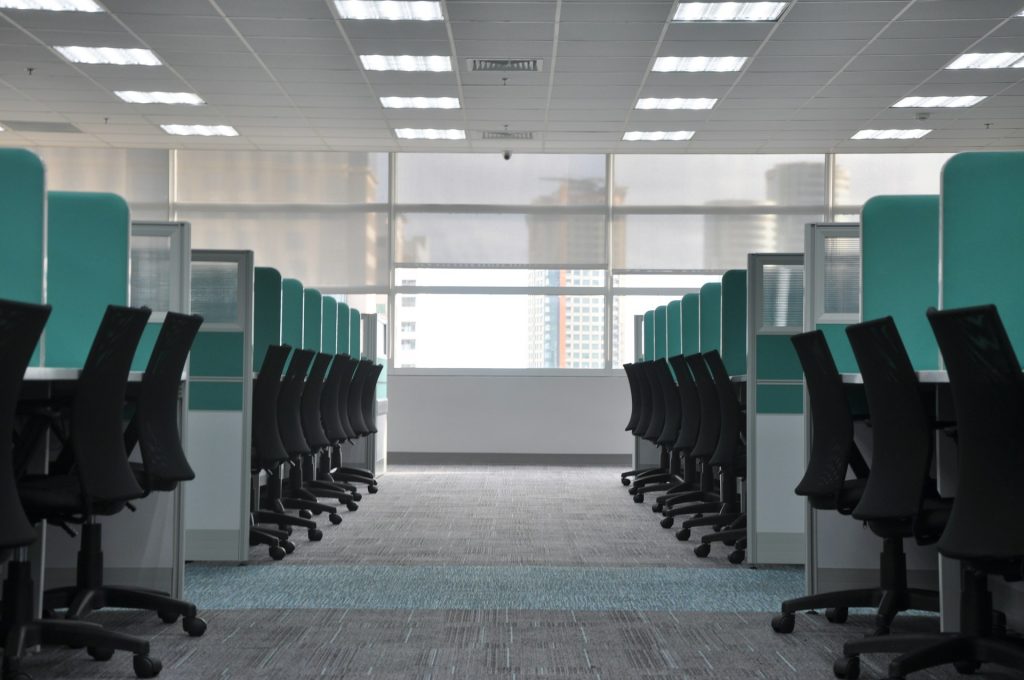
And though there has been talk of workplaces that promote effective interactions and creativity, the primary metric is still people per square foot. Don’t believe me? I have one word for you – cubicles. Cubicles are the design solution of choice when you want to pack the most people into the smallest area.

Here’s a test. At your next team meeting, ask people to raise their hand if they hate working in a cubicle. I rest my case.

With cubicles, it’s the worst of both worlds. There is none of the benefit of an office and none of the benefit of collaborative environment. They are half of neither.

What is one of Dilbert’s favorite topic? Cubicles.

If no one likes them, why do we still have them? If you want quiet, cubicles are the wrong answer. If you want effective collaboration, cubicles are the wrong answer. If everyone hates them, why do we still have them?

When people need to do deep work, they stay home so they can have peace and quiet. When people they want to concentrate, they avoid cubicles at all costs. When you need to focus, you need quiet. And the best way to get quiet is with four walls and a door. Some would call that and office, but those are passe. And in some cases, they are outlawed. In either case, they are the best way to get some quiet time. And, as a side benefit, they also block interruptions.

Best way for people to interact is face-to-face. And in order to interact at way, they’ve got to be in the same place at the same time. Sure spontaneous interactions are good, but it’s far better to facilitate interactions with a fixed schedule. Like with a bus stop schedule, people know where to be and when. In that way, many people can come together efficiently and effectively and the number of interactions increases dramatically. So why not set up planned interactions at ten in the morning and two in the afternoon?

I propose a new metric for facilities design – number of good ideas per square foot. Good ideas require deep thought, so quiet is important. And good ideas require respectful interaction with others, so interactions are important.

I’m not exactly sure what a facility must look like to maximize the number of good ideas per square foot, but I do know it has no cubicles.

Image credit: Unsplash

Subscribe to Human-Centered Change & Innovation WeeklySign up here to join 17,000+ leaders getting Human-Centered Change & Innovation Weekly delivered to their inbox every week.

Bringing Energy Back to Work

Bringing Energy Back to Work

GUEST POST from Geoffrey A. Moore

There are all kinds of survey data these days indicating that morale in the workplace is lower than it used to be and, more importantly, than it ought to be. This has got managers scurrying about trying to find ways to make their employees happier. One word of advice on this: Stop!

It is not your job to make the people on your team happy. That is their job. Your job is to make their work important. Now, as a bonus, there is a strong correlation between meaningful work and worker happiness, so there is a two-birds-for-one-stone principle operating here. It’s just that you have to keep your eye on the lead bird. Employee happiness is a trailing indicator. Customer success is the leading one.

Your team’s customers can be internal or external — it just depends on your performance contract, the one that sets out the outcomes your organization has been funded to deliver. To be meaningful, in one way or another, those outcomes must contribute materially to the overall success of your enterprise’s mission. Your job is to highlight that path, to help your team members see it as a North Star to guide the focus and prioritization of their work. That is what gives their work meaning. Their performance metrics should align directly with the outcomes you have contracted to deliver – else why are they doing the work?

Performance management in this context is simply redirecting their energy to align as closely as possible to the deliverables of your organization’s performance contract. The talent you recruit and develop should have the kind of disposition and gifts that motivate them to want to do this kind of work. If there is a mismatch, help them find some other kind of work that is a better fit for them, and backfill their absence with someone who is a better fit for you. Performance management is not about weeding out—it is about re-potting.

Finally, if we bring this mindset to our current challenges with institutionalizing remote/hybrid operating models, too often this is being framed as an issue of improving employee happiness. Again, not your job. Instead, the focus should be on how best to meet the needs of the customers you have elected to serve. That is, instead of designing enterprise-out, with our heads down in our personal and team calendars, we need to design customer-in, with our heads up looking at where the trapped value is in their world, aligning our energies to release that trapped value, and organizing our operating model to maximize our impact in so doing. If we are not in service to our customers, what use are we?

That’s what I think. What do you think?

Image Credit: Pexels

Subscribe to Human-Centered Change & Innovation WeeklySign up here to join 17,000+ leaders getting Human-Centered Change & Innovation Weekly delivered to their inbox every week.

Designing Workplaces That Inspire Innovation

Beyond the Cubicle

Designing Workplaces That Inspire Innovation

GUEST POST from Chateau G Pato

Cast your mind back to the quintessential office of the past: a sprawling grid of beige cubicles, each a miniature fortress of solitude. Designed for individual output and managerial control, these spaces implicitly signaled that work was about compartmentalized tasks and structured conformity. Yet, as a human-centered change and innovation thought leader, I’ve observed a profound and growing disconnect. In an era where innovation is the very lifeblood of competitive advantage, the traditional cubicle farm isn’t just inefficient—it actively stifles the very creativity it needs to cultivate.

The future of work, in all its evolving forms—physical, remote, and hybrid—demands a radical reimagining of our workspaces. We must move **beyond the cubicle** to design environments that genuinely inspire breakthrough thinking, foster deep collaboration, and nurture the human spirit. An innovation-inspiring workplace isn’t merely aesthetically pleasing; it’s a strategically crafted ecosystem that understands human psychology, optimizes for different modes of work, encourages serendipitous discovery, and provides the essential balance between focused effort and rejuvenating rest. It’s about designing for the complete human experience, recognizing that our surroundings profoundly shape our mood, productivity, and ultimately, our capacity for creative thought.

The Human Impact: How Thoughtful Design Unleashes Creativity

What truly transforms a space from a functional necessity into a catalyst for innovation?

  • Fostering Cognitive Flow & Choice: Recognizing that different tasks demand varied cognitive states, innovative workplaces offer a spectrum of settings. From quiet zones for deep concentration (allowing uninterrupted “flow” states) to vibrant, open areas for dynamic collaboration, to cozy nooks for informal one-on-one discussions – choice empowers individuals to optimize their environment for peak performance and creative output.
  • Engineering Serendipitous Collisions: The “water cooler effect” is real. Design choices that subtly encourage chance encounters and informal conversations (e.g., strategically placed coffee stations, central atriums, accessible staircases) are powerful. These unplanned interactions are fertile ground for cross-pollination of ideas, leading to unexpected solutions and deeper connections.
  • Stimulating the Senses & Inspiring Minds: Human beings thrive on stimulation. Thoughtful design incorporates elements that inspire and energize: abundant natural light, biophilic elements (plants, natural materials), vibrant colors, diverse textures, and visible displays of ongoing projects or organizational vision. These elements reduce cognitive fatigue and spark imagination.
  • Empowering Experimentation & Play: Spaces equipped for rapid ideation, spontaneous whiteboarding, and even light physical prototyping (e.g., dedicated maker spaces, reconfigurable furniture, writable walls) send a clear message: experimentation is not just tolerated, it’s actively encouraged. These “playgrounds for ideas” reduce the perceived risk of failure.
  • Prioritizing Holistic Well-being: Innovation is mentally and emotionally demanding. Workplaces that genuinely prioritize employee well-being—through ergonomic furniture, access to outdoor spaces, quiet wellness rooms, and areas for mental and physical breaks—contribute to sustained creative output and reduce burnout. A well-rested mind is a creative mind.
  • Seamless Technological Integration: The physical space must fluidly integrate with necessary technology. This means reliable connectivity, intuitive collaboration tools, and seamless transitions between individual digital work and collective virtual interactions, ensuring that technology serves, rather than hinders, human connection and creativity.

Case Study 1: Google – Designing for Playful Productivity

Google’s Campuses: A Living Ecosystem of Innovation

Google’s offices globally are legendary for their unconventional and often playful designs, frequently likened to adult playgrounds. While some initially dismissed them as mere extravagance, the underlying philosophy is profoundly tied to fostering psychological safety, informal collaboration, and continuous innovation on a massive scale.

  • The Human Challenge: To attract and retain the world’s top engineering and creative talent, and to cultivate a culture where complex problem-solving and radical new ideas could emerge from serendipitous interactions, rather than rigid hierarchies.
  • Workplace Design in Action: Google’s campuses feature an astonishing variety of unique spaces: themed micro-kitchens overflowing with snacks, brightly colored shared areas, reconfigurable “maker spaces,” and unconventional meeting zones (e.g., giant slides, outdoor cabanas). The design deliberately encourages movement and chance encounters. Engineers are encouraged to mingle with marketers, designers with data scientists, often over a casual meal or a coffee. Whiteboard walls are ubiquitous, inviting spontaneous ideation and problem-solving. This fosters a sense of psychological freedom to be curious and experimental.
  • The Outcome: While not the sole factor, Google’s consistent track record of groundbreaking innovations (e.g., Gmail, Chrome, Android, Google Maps) and its perennial status as a top employer are inextricably linked to a culture and a workplace specifically designed to stimulate curious thought, informal knowledge sharing, and a deep sense of psychological safety that allows for bold risk-taking and rapid experimentation. The physical environment directly reinforces the cultural values of curiosity, collaboration, and even playful disruption.

**The Lesson:** A thoughtfully curated, human-centric physical environment can be a powerful amplifier for continuous innovation and a magnetic force for top talent.

Case Study 2: Pixar – The Serendipity Machine

Pixar Animation Studios: Engineering Creative Collisions

Pixar, renowned for its paradigm-shifting animated films, attributes much of its unparalleled creative success to a deliberate architectural design philosophy, championed by none other than Steve Jobs, particularly in the central atrium of their Emeryville campus.

  • The Human Challenge: To foster seamless collaboration and spontaneous cross-pollination of ideas among highly specialized creative teams—animators, storytellers, technologists, sound designers—who might otherwise remain siloed in their specific expertise.
  • Workplace Design in Action: Jobs insisted that Pixar’s main building revolve around a massive central atrium where mailboxes, the sole cafeteria, all meeting rooms, and even the main restrooms were strategically located. His vision was to literally “force collisions”—accidental, unplanned encounters between individuals from different departments. The architectural layout was meticulously designed to make it nearly impossible for anyone to navigate the building without passing through this central common area. The idea was simple: if people from different disciplines met unexpectedly, they might start conversations they wouldn’t have otherwise, leading to unforeseen ideas, creative problem-solving, or a deeper understanding of each other’s work.
  • The Outcome: This intentional design has been widely credited with fostering Pixar’s unique and highly effective collaborative culture, directly leading to the “creative collisions” that underpin many of their innovative storytelling and technological advancements. The physical space actively encourages informal knowledge sharing, builds strong interpersonal bonds, and strengthens the social fabric of the organization—all critical components for deep, sustained creative work.

**The Lesson:** Strategic architectural design can deliberately engineer serendipitous human interactions, proving that intentional physical space can directly ignite creative breakthroughs.

Designing Your Innovation Hub: A Human-Centered Blueprint

Whether you’re crafting a new corporate campus, optimizing an existing office, or building a thriving hybrid model, the human-centered principles for inspiring innovation remain universal:

  1. Start with Deep Empathy: Before any design decisions, truly understand the diverse ways your teams work, their varying needs for focus vs. collaboration, and what genuinely energizes or drains their creativity. Conduct ethnographic studies, empathy interviews, and journey mapping.
  2. Design for Multi-Modal Work: Avoid monolithic solutions. Offer a spectrum of spaces and digital tools that cater to different work modes—from quiet zones for deep focus to vibrant collaborative hubs, and seamless virtual meeting environments. Empower choice.
  3. Prioritize Organic Connection & Flow: Think beyond static desks. Design pathways, both physical and digital, that encourage fluid movement and spontaneous interactions. Ensure technology seamlessly supports collaboration, bridging the gap between in-person and remote team members.
  4. Cultivate Psychological Safety Through Space: The physical and virtual environment should tangibly signal a culture of trust and psychological safety. Create spaces that feel welcoming for risk-taking, open experimentation, and transparent sharing of ideas, reinforcing that “failure” is a learning opportunity.
  5. Treat Your Workplace as a Living Lab: Don’t design it once and forget it. Treat your workplace design as an ongoing experiment. Continuously gather feedback (both formal and informal), observe how people interact with the space, and be willing to iterate, adapt, and evolve your environment as your organization and the nature of work itself change.

The era of the restrictive cubicle is behind us. The future belongs to workplaces—physical, virtual, and hybrid—that profoundly understand and actively respond to the complex needs of the human beings who inhabit them. By thoughtfully designing environments that spark curiosity, facilitate authentic connection, and unapologetically celebrate creativity, we can unlock an unprecedented wave of innovation, transforming not just our offices, but the very nature and potential of work itself.

“We shape our buildings; thereafter they shape us.”
– Winston Churchill

Extra Extra: Because innovation is all about change, Braden Kelley’s human-centered change methodology and tools are the best way to plan and execute the changes necessary to support your innovation and transformation efforts — all while literally getting everyone all on the same page for change. Find out more about the methodology and tools, including the book Charting Change by following the link. Be sure and download the TEN FREE TOOLS while you’re here.

Image credit: Unsplash

Subscribe to Human-Centered Change & Innovation WeeklySign up here to get Human-Centered Change & Innovation Weekly delivered to your inbox every week.

Innovating the Post-Pandemic Office Experience

The Connected Workspace

LAST UPDATED: December 17, 2025 at 11:49AM

Innovating the Post-Pandemic Office Experience - The Connected Workspace

GUEST POST from Chateau G Pato

The pandemic did not eliminate the office. It eliminated complacency. For decades, organizations treated the workplace as static infrastructure rather than a dynamic system shaping behavior, culture, and innovation. As a human-centered change and innovation practitioner, I see the post-pandemic moment as a rare inflection point: a chance to intentionally design the connected workspace.

The connected workspace recognizes that work happens across physical, digital, and social environments simultaneously. It is not a return-to-office strategy or a remote-work manifesto. It is an experience strategy that aligns space, technology, and leadership behaviors around human needs.

Reframing the Office as a Platform for Value Creation

In the past, offices were optimized for presence. Today, they must be optimized for purpose. This means designing environments that support collaboration, learning, and innovation rather than default individual work. The connected workspace functions as a platform where people come together intentionally to create value that cannot be easily generated alone.

When organizations fail to make this shift, they create friction. Employees question why they are commuting, meetings exclude remote voices, and culture becomes fragmented. Connection must be designed, not assumed.

Case Study One: Microsoft’s Human-Centered Hybrid Evolution

Microsoft approached hybrid work as a design challenge rather than a policy problem. By combining qualitative employee research with quantitative work-pattern data, the organization gained insight into how collaboration, focus, and well-being intersect.

Offices were redesigned to prioritize collaboration, while technology investments ensured remote participants were equally visible and heard. Teams were empowered to define norms that fit their context, reinforcing autonomy and trust. Microsoft’s approach demonstrates that a connected workspace is a living system requiring continuous learning and adaptation.

Technology Should Disappear, Not Dominate

In a truly connected workspace, technology becomes invisible. Tools exist to support human interaction, not to dictate it. When employees spend more time managing tools than solving problems, connection erodes.

Human-centered organizations evaluate technology through the lens of experience outcomes: clarity, inclusion, and reduced cognitive load. Surveillance-driven metrics may promise control, but they undermine trust, which is the foundation of connection.

Case Study Two: Atlassian’s Intentional Distribution Model

Atlassian’s Team Anywhere strategy illustrates that connection is not dependent on proximity. By explicitly designing for asynchronous collaboration and redefining offices as collaboration destinations, the company avoided the hybrid trap of unequal experiences.

Clear documentation, transparent decision-making, and shared rituals ensured that employees remained aligned regardless of location. Atlassian’s success underscores a critical insight: connection is behavioral before it is spatial.

Inclusion as a Core Design Principle

Hybrid work amplifies inequities when inclusion is an afterthought. A connected workspace must be designed to support diverse working styles, abilities, and life circumstances. This includes equitable meeting practices, flexible schedules, and environments that support focus as well as interaction.

Inclusion is not achieved through statements or training alone. It is experienced daily through systems and behaviors. When people feel they belong, they contribute more fully.

Leaders as Stewards of Connection

Leadership in the connected workspace is less about supervision and more about stewardship. Leaders shape connection through how they communicate, how they listen, and how they respond to uncertainty. They must be willing to experiment and to treat the workplace as a prototype rather than a finished product.

The most effective leaders understand that connection is a competitive advantage. It fuels innovation, resilience, and trust.

Final Thoughts

The future of work will not be decided by floor plans or mandates. It will be shaped by organizations willing to design experiences that honor human needs while enabling high performance. The connected workspace is not a trend. It is the next evolution of how we work together.

Those who invest in connection will not just adapt to the future of work. They will help define it.

Frequently Asked Questions

1. What defines a connected workspace?

A connected workspace intentionally integrates physical environments, digital tools, and cultural practices to support meaningful collaboration and inclusion.

2. Is a connected workspace the same as hybrid work?

No. Hybrid work describes where work happens, while a connected workspace focuses on how people experience work across locations.

3. What is the biggest risk in post-pandemic office design?

The biggest risk is recreating old office models without intentionally designing for connection, inclusion, and purpose.

4. What is the most common mistake companies make in hybrid work?

The biggest mistake is Proximity Bias. This occurs when leaders unconsciously favor employees who are physically present in the office with better assignments, more mentorship, and faster promotions. A true connected workspace must actively implement protocols to ensure visibility and equity for remote participants.

5. How can we maintain office culture when people are rarely together?

Culture is not created by free snacks or ping-pong tables; it is created by shared purpose and consistent communication. In a connected workspace, culture must be maintained through intentional digital rituals, transparent documentation, and “Deep Connection Days” where teams gather physically specifically for relationship building, not just routine tasks.

6. What technology is essential for a connected workspace?

Beyond standard video conferencing, the most essential tools are Persistent Digital Canvases (like Miro or Mural) and Asynchronous Communication Hubs (like Notion or Slack). These tools act as the “connective tissue” that holds projects together when people are working at different times and in different locations.

Extra Extra: Because innovation is all about change, Braden Kelley’s human-centered change methodology and tools are the best way to plan and execute the changes necessary to support your innovation and transformation efforts — all while literally getting everyone all on the same page for change. Find out more about the methodology and tools, including the book Charting Change by following the link. Be sure and download the TEN FREE TOOLS while you’re here.

Image credit: Pixabay

Subscribe to Human-Centered Change & Innovation WeeklySign up here to get Human-Centered Change & Innovation Weekly delivered to your inbox every week.