GUEST POST from Chateau G Pato
LAST UPDATED: January 21, 2026 at 11:43AM
In the high-stakes world of corporate transformation, we often suffer from a “magnitude bias.” We believe that massive problems require massive, monolithic solutions. We launch billion-dollar ERP systems, restructure entire divisions, and hold mandatory week-long summits. Yet, as a human-centered change strategist, I have found that these grand gestures often act as “change theater” — spectacular to watch, but leaving the audience largely unchanged once the lights come up.
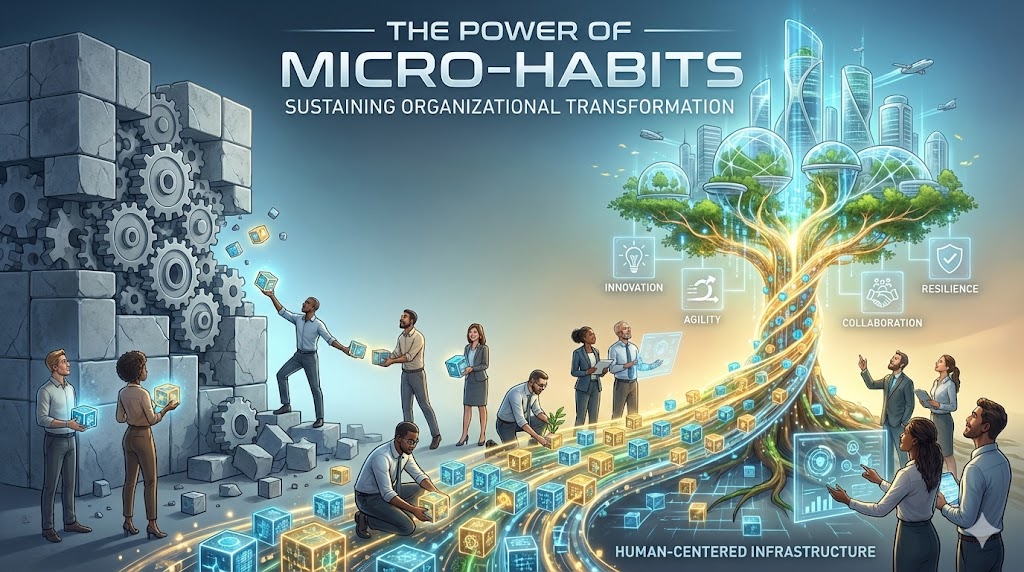
If we want to sustain transformation, we must move our focus from the macro to the micro. Sustained innovation isn’t a destination; it’s a frequency. It is the result of micro-habits — the tiny, repeatable actions that define “how we do things around here” when no one is looking.
“The most successful organizations don’t demand innovation; they engineer the tiny daily permissions that make curiosity inevitable. Transformation is simply the aggregate of these small, brave moments.”
— Braden Kelley
The Psychological Edge of the “Two-Minute Rule”
Transformation fails when the “cost” of change (effort, time, cognitive load) outweighs the perceived reward. Micro-habits exploit a psychological loophole: they are so small they are practically invisible to our internal resistance. In my work with leadership teams, I advocate for the Human-Centered Infrastructure — a system that supports people in doing the right thing by making it the easiest thing.
The Trigger: An existing event (e.g., Opening a laptop, starting a stand-up).
The Micro-Habit: A < 2 minute action (e.g., Thanking one person for a specific contribution).
Case Study 1: Rebuilding Trust in Financial Services
A major retail bank was reeling from a series of compliance failures. The transformation goal was “Integrity & Transparency.” Instead of just more training, we implemented a micro-habit for the 500 top managers: The “Red Flag” Minute.
In every single meeting, the final 60 seconds were dedicated to one question: “Is there anything we discussed today that *felt* slightly off, even if it’s technically compliant?” By rewarding the *question* rather than just the answer, the bank uncovered three major systemic risks within the first month. They didn’t change the rules; they changed the habit of speaking up.
Co-Creation and Keystone Behaviors
As I often say in my keynote presentations, you cannot force change; you can only invite it. This is where co-creation comes in. When employees help design their own micro-habits, they take ownership of the outcome. These become “keystone behaviors” — tiny shifts that naturally pull other positive behaviors along with them.
Case Study 2: Accelerating Innovation in Pharma
A pharmaceutical R&D lab was struggling with a “perfectionist” culture that slowed down experimentation. The transformation goal was “Agile Innovation.” The micro-habit: The Friday “Fail-Forward” Post.
Scientists were encouraged to post one “interesting failure” to an internal board every Friday afternoon. The effort took 90 seconds. Within six months, the fear of failure evaporated. The lab saw a 30% increase in prototype velocity because researchers stopped hiding their mistakes and started sharing the lessons. The transformation was sustained not by a new process, but by the habit of vulnerability.
The Long-Term ROI of Small Wins
Micro-habits are the compound interest of organizational culture. A 1% shift in daily behavior doesn’t look like much on Tuesday, but by next year, you are operating in an entirely different reality. This is the essence of being a change-ready organization. You aren’t reacting to the future; you are building it, one minute at a time.
Transformation Insights FAQ
What are organizational micro-habits?
Organizational micro-habits are the smallest unit of behavioral change — actions requiring minimal effort that reinforce strategic objectives through consistency rather than intensity.
Why is the human-centered approach critical for change?
Change is often forced from the top down, creating resentment. A human-centered approach focuses on empathy, co-creation, and reducing friction, making change something employees do *with* the organization, not *to* it.
How do micro-habits prevent change fatigue?
By lowering the cognitive load. When employees feel they are making ‘progress without pain’ through tiny wins, they build the ‘change muscle’ necessary for larger shifts without burning out.
Extra Extra: Because innovation is all about change, Braden Kelley’s human-centered change methodology and tools are the best way to plan and execute the changes necessary to support your innovation and transformation efforts — all while literally getting everyone all on the same page for change. Find out more about the methodology and tools, including the book Charting Change by following the link. Be sure and download the TEN FREE TOOLS while you’re here.
Image credits: Google Gemini
 Sign up here to get Human-Centered Change & Innovation Weekly delivered to your inbox every week.