Tag Archives: cryptocurrency

AI Stands for Accidental Innovation

LAST UPDATED: December 29, 2025 at 12:49 PM
AI Stands for Accidental Innovation

GUEST POST from Art Inteligencia

In the world of corporate strategy, we love to manufacture myths of inevitable visionary genius. We look at the behemoths of today and assume their current dominance was etched in stone a decade ago by a leader who could see through the fog of time. But as someone who has spent a career studying Human-Centered Innovation and the mechanics of innovation, I can tell you that the reality is often much messier. And this is no different when it comes to artificial intelligence (AI), so much so that it could be said that AI stands for Accidental Innovation.

Take, for instance, the meteoric rise of Nvidia. Today, they are the undisputed architects of the intelligence age, a company whose hardware powers the Large Language Models (LLMs) reshaping our world. Yet, if we pull back the curtain, we find a story of survival, near-acquisitions, and a heavy dose of serendipity. Nvidia didn’t build their current empire because they predicted the exact nuances of the generative AI explosion; they built it because they were lucky enough to have developed technology for a completely different purpose that happened to be the perfect fuel for the AI fire.

“True innovation is rarely a straight line drawn by a visionary; it is more often a resilient platform that survives its original intent long enough to meet a future it didn’t expect.”

Braden Kelley

The Parallel Universe: The Meta/Oculus Near-Miss

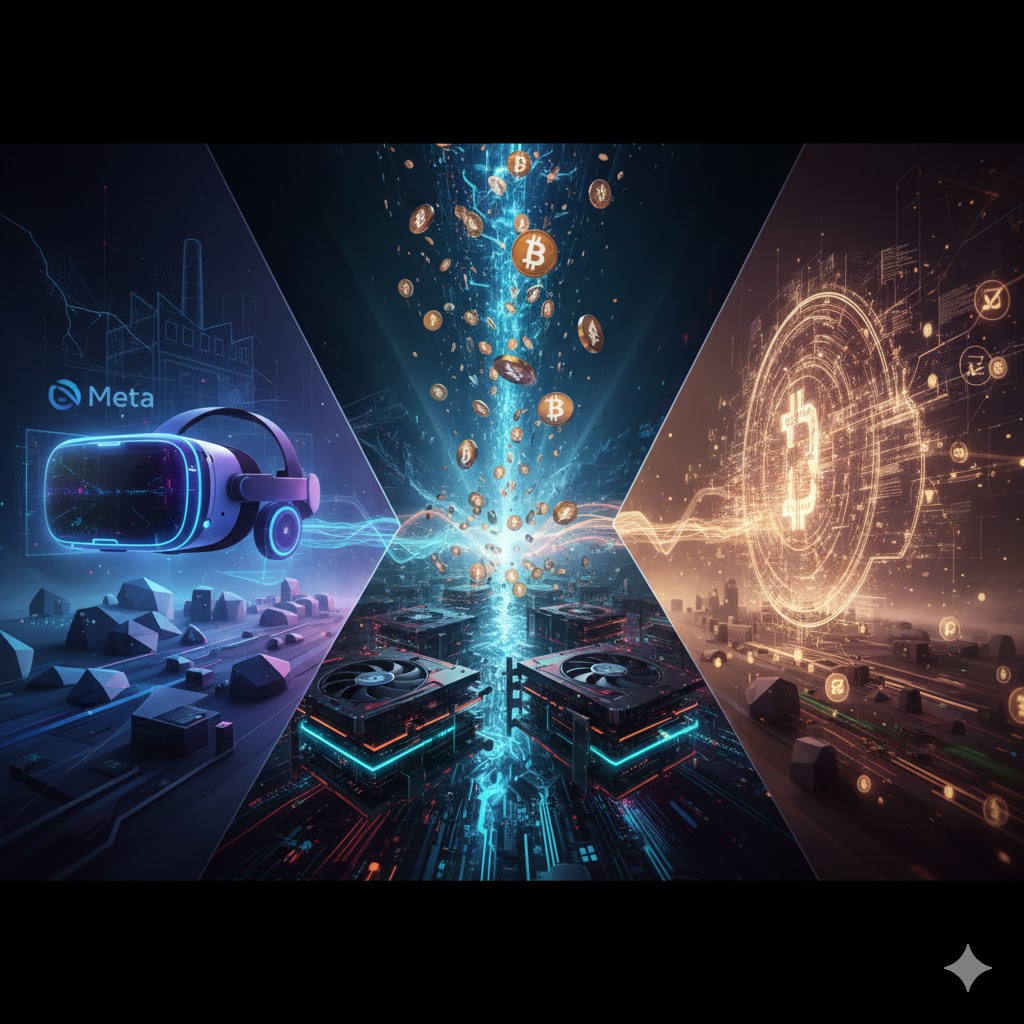
It is difficult to imagine now, but there was a point in the Future Present where Nvidia was seen as a vulnerable hardware player. In the mid-2010s, as the Virtual Reality (VR) hype began to peak, Nvidia’s focus was heavily tethered to the gaming market. Internal histories and industry whispers suggest that the Oculus division of Meta (then Facebook) explored the idea of acquiring or deeply merging with Nvidia’s core graphics capabilities to secure their own hardware vertical.

At the time, Nvidia’s valuation was a fraction of what it is today. Had that acquisition occurred, the “Corporate Antibodies” of a social media giant would likely have stifled the very modularity that makes Nvidia great today. Instead of becoming the generic compute engine for the world, Nvidia might have been optimized—and narrowed—into a specialized silicon shop for VR headsets. It was a sliding doors moment for the entire tech industry. By not being acquired, Nvidia maintained the autonomy to follow the scent of demand wherever it led next.

Case Study 1: The Meta/Oculus Intersection

Before the “Magnificent Seven” era, Nvidia was struggling to find its next big act beyond PC gaming. When Meta acquired Oculus, there was a desperate need for low-latency, high-performance GPUs to make VR viable. The relationship between the two companies was so symbiotic that some analysts argued a vertical integration was the only logical step. Had Mark Zuckerberg moved more aggressively to bring Nvidia under the Meta umbrella, the GPU might have become a proprietary tool for the Metaverse. Because this deal failed to materialize, Nvidia remained an open ecosystem, allowing researchers at Google and OpenAI to eventually use that same hardware for a little thing called a Transformer model.

The Crypto Catalyst: A Fortuitous Detour

The second major “accident” in Nvidia’s journey was the Cryptocurrency boom. For years, Nvidia’s stock and production cycles were whipped around by the price of Ethereum. To the outside world, this looked like a distraction—a volatile market that Nvidia was chasing to satisfy shareholders. However, the crypto miners demanded exactly what AI would later require: massive, parallel processing power and specialized chips (ASICs and high-end GPUs) that could perform simple calculations millions of times per second.

Nvidia leaned into this demand, refining their CUDA platform and their manufacturing scale. They weren’t building for LLMs yet; they were building for miners. But in doing so, they solved the scalability problem of parallel computing. When the “AI Winter” ended and the industry realized that Deep Learning was the path forward, Nvidia didn’t have to invent a new chip. They just had to rebrand the one they had already perfected for the blockchain. Preparation met opportunity, but the opportunity wasn’t the one they had initially invited to the dance.

Case Study 2: From Hashes to Tokens

In 2021, Nvidia’s primary concern was “Lite Hash Rate” (LHR) cards to deter crypto miners so gamers could finally buy GPUs. This era of forced scaling forced Nvidia to master the art of data-center-grade reliability. When ChatGPT arrived, the transition was seamless. The “Accidental Innovation” here was that the mathematical operations required to verify a block on a chain are fundamentally similar to the vector mathematics required to predict the next word in a sentence. Nvidia had built the world’s best token-prediction machine while thinking they were building the world’s best ledger-validation machine.

Leading Companies and Startups to Watch

While Nvidia currently sits on the throne of Accidental Innovation, the next wave of change-makers is already emerging by attempting to turn that accident into a deliberate architecture. Cerebras Systems is building “wafer-scale” engines that dwarf traditional GPUs, aiming to eliminate the networking bottlenecks that Nvidia’s “accidental” legacy still carries. Groq (not to be confused with the AI model) is focusing on LPU (Language Processing Units) that prioritize the inference speed necessary for real-time human interaction. In the software layer, Modular is working to decouple the AI software stack from specific hardware, potentially neutralizing Nvidia’s CUDA moat. Finally, keep an eye on CoreWeave, which has pivoted from crypto mining to become a specialized “AI cloud,” proving that Nvidia’s accidental path is a blueprint others can follow by design.

The Human-Centered Conclusion

We must stop teaching innovation as a series of deliberate masterstrokes. When we do that, we discourage leaders from experimenting. If you believe you must see the entire future before you act, you will stay paralyzed. Nvidia’s success is a testament to Agile Resilience. They built a powerful, flexible tool, stayed independent during a crucial acquisition window, and were humble enough to let the market show them what their technology was actually good for.

As we move into this next phase of the Future Present, the lesson is clear: don’t just build for the world you see today. Build for the accidents of tomorrow. Because in the end, the most impactful innovations are rarely the ones we planned; they are the ones we were ready for.

Frequently Asked Questions

Why is Nvidia’s success considered “accidental”?

While Nvidia’s leadership was visionary in parallel computing, their current dominance in AI stems from the fact that hardware they optimized for gaming and cryptocurrency mining turned out to be the exact architecture needed for Large Language Models (LLMs), a use case that wasn’t the primary driver of their R&D for most of their history.

Did Meta almost buy Nvidia?

Historical industry analysis suggests that during the early growth of Oculus, there were significant internal discussions within Meta (Facebook) about vertically integrating hardware. While a formal acquisition of the entire Nvidia corporation was never finalized, the close proximity and the potential for such a deal represent a “what if” moment that would have fundamentally changed the AI landscape.

What is the “CUDA moat”?

CUDA is Nvidia’s proprietary software platform that allows developers to use GPUs for general-purpose processing. Because Nvidia spent years refining this for various industries (including crypto), it has become the industry standard. Most AI developers write code specifically for CUDA, making it very difficult for them to switch to competing chips from AMD or Intel.

Image credits: Google Gemini

Subscribe to Human-Centered Change & Innovation WeeklySign up here to get Human-Centered Change & Innovation Weekly delivered to your inbox every week.

Blockchain Beyond Cryptocurrency

Innovations Across Industries

Blockchain Beyond Cryptocurrency - Innovations Across Industries

GUEST POST from Chateau G Pato

In the past decade, blockchain technology has become synonymous with cryptocurrency, paving the way for digital currencies like Bitcoin and Ethereum. While these applications are indeed revolutionary, focusing solely on cryptocurrencies limits the vast potential of blockchain technology. Blockchain’s unique properties – decentralization, transparency, and immutability – enable transformative innovations across various industries. In this article, we’ll delve into case studies that highlight blockchain’s role in reshaping industries such as supply chain management and healthcare, expanding beyond the financial realm.

Blockchain in Supply Chain Management

The global supply chain involves multifaceted interactions among various stakeholders, often hindered by lack of transparency and trust. Blockchain technology offers a solution by providing an immutable digital ledger to record transactions across the supply chain.

Case Study: Walmart and IBM’s Food Trust

Walmart, collaborating with IBM, launched the Food Trust initiative, aiming to enhance food safety and traceability. By leveraging blockchain, Walmart can accurately trace the origin of produce from farm to store shelf in mere seconds. Previously, tracking the source of contamination outbreaks took weeks. Walmart’s blockchain solution facilitates rapid identification of compromised food items, significantly reducing food-borne illnesses and increasing consumer confidence.

The success of this initiative highlights blockchain’s capacity to streamline logistics, ensure authenticity, and maintain high safety standards in global supply chains.

Blockchain in Healthcare

Blockchain’s encrypted and immutable features make it an ideal candidate for revolutionizing healthcare record management, enhancing patient data privacy, and improving interoperability among health systems.

Case Study: Estonia’s e-Health System

Estonia stands out as a pioneer in adopting blockchain for a national e-health system, where patient medical records are stored on a blockchain. This ensures data integrity, allows only authorized personnel access, and offers patients transparency on who accesses their data. In emergencies, healthcare providers can swiftly retrieve accurate patient information, leading to better patient outcomes.

Estonia’s e-health system exemplifies how blockchain can enhance data security, streamline healthcare operations, and foster trust between patients and healthcare providers.

Blockchain in Intellectual Property Protection

In the digital age, ensuring ownership and rights of intellectual property (IP) is increasingly challenging. Blockchain offers a robust alternative to traditional IP protection methods by providing verifiable, timestamped proof of creation and ownership.

A platform like Mycelia uses blockchain to protect music IP rights, enabling creators to register their compositions on a decentralized ledger. This transparent system not only gives artists control over their work but also simplifies royalty distribution.

Internal Resources for Further Exploration

For a deeper understanding of how innovations adapt to changing environments, check out Accelerating Complexity vs. Accelerating Change and explore the broader implications of technological evolution on business and society at Three Ways Technology Improves the Retail Customer Experience.

Conclusion

Blockchain technology extends far beyond its cryptocurrency roots, offering profound transformative potential across diverse industries. By enhancing transparency, security, and efficiency, blockchain is ushering in a new era of innovation. As demonstrated in sectors like supply chain management and healthcare, blockchain is rewriting traditional models, creating new opportunities for innovation and growth. The future promises even more sectors leveraging blockchain’s capabilities to foster trust and streamline processes, ultimately furthering the evolution of our digitally interconnected world.

Extra Extra: Futurology is not fortune telling. Futurists use a scientific approach to create their deliverables, but a methodology and tools like those in FutureHacking™ can empower anyone to engage in futurology themselves.

Image credit: Pixabay

Subscribe to Human-Centered Change & Innovation WeeklySign up here to get Human-Centered Change & Innovation Weekly delivered to your inbox every week.
Blockchain and Innovation

Beyond Cryptocurrency

Blockchain and Innovation - Beyond Cryptocurrency

GUEST POST from Chateau G Pato

Blockchain technology, most commonly associated with cryptocurrencies like Bitcoin, has far-reaching applications that extend beyond the realm of digital currencies. As a human-centered change and innovation thought leader, I will explore how blockchain technology is redefining various industries, driving efficiency, transparency, and trust. In this article, we will examine two case studies that showcase the transformative potential of blockchain: Supply Chain Management and Healthcare.

Case Study 1: Transforming Supply Chain Management

In the intricate world of supply chain management, where product authenticity, tracking, and operational efficiency are paramount, blockchain technology has emerged as a game-changer. By creating an immutable and transparent digital ledger, blockchain provides end-to-end visibility and traceability, revolutionizing how supply chains operate.

Example: Walmart and IBM’s Food Trust Blockchain Platform

Walmart, in collaboration with IBM, has implemented a blockchain-based platform called Food Trust to enhance food safety and traceability. The traditional system of tracking produce and other products through paper-based or siloed digital records was time-consuming and prone to errors. With blockchain, all stakeholders, including farmers, processors, distributors, and retailers, have access to a unified and tamper-proof record of information.

In one notable instance, the time taken to trace the source of mangoes in Walmart’s supply chain was reduced from seven days to merely 2.2 seconds. This significant improvement not only enhances food safety by swiftly identifying contamination sources but also builds consumer trust by providing transparent product information.

Case Study 2: Revolutionizing Healthcare

Healthcare systems worldwide grapple with issues of data security, patient privacy, and interoperability. Blockchain technology addresses these challenges by offering a decentralized platform for securely managing and sharing medical data.

Example: MedRec—Patient-Centric Health Records

MedRec, an MIT-affiliated project, is leveraging blockchain to create a patient-centric electronic health record (EHR) system. Traditional EHR systems are often fragmented and controlled by various entities, leading to inefficiencies and limiting patient access to their own health records. MedRec uses blockchain to aggregate medical data from multiple sources into a single, decentralized ledger that is accessible to patients and authorized healthcare providers.

This approach enhances data interoperability, reduces administrative burdens, and, most importantly, empowers patients by granting them complete control over their own health records. The blockchain ensures that all health data is secure, tamper-proof, and easily transferable among different providers, furthering seamless continuity of care.

Conclusion

Blockchain technology’s potential extends well beyond cryptocurrencies, offering groundbreaking solutions to complex challenges in various industries. The case studies of Walmart’s Food Trust and MedRec demonstrate how blockchain can drive innovation, enhance transparency, and build trust in supply chain management and healthcare. As we continue to explore and harness the power of blockchain, it is evident that this technology will play a crucial role in shaping the future of numerous fields, propelling us towards a more efficient and trustworthy world.

SPECIAL BONUS: The very best change planners use a visual, collaborative approach to create their deliverables. A methodology and tools like those in Change Planning Toolkit™ can empower anyone to become great change planners themselves.

Image credit: Pixabay

Subscribe to Human-Centered Change & Innovation WeeklySign up here to get Human-Centered Change & Innovation Weekly delivered to your inbox every week.

The Rise of Blockchain Technology: Transforming Industries Beyond Cryptocurrency

The Rise of Blockchain Technology: Transforming Industries Beyond Cryptocurrency

GUEST POST from Chateau G Pato

Blockchain technology has rapidly emerged as one of the most disruptive and transformative innovations of our time. While most commonly associated with cryptocurrencies like Bitcoin, its potential reaches far beyond the financial sector. As businesses around the world begin to grasp the implications of this decentralized ledger system, numerous industries are being revolutionized by blockchain.

Case Study 1: Supply Chain Management – Walmart

One of the notable examples of blockchain’s impact is evident in Walmart’s implementation of the technology to optimize its supply chain management. Prior to adopting blockchain, the company faced challenges in traceability, increased fraud risks, and delayed dispute resolution. However, by leveraging blockchain, Walmart has transformed its supply chain processes to ensure transparent, secure, and efficient transactions.

By implementing a blockchain-based system, Walmart improved its product traceability from days to mere seconds. The technology provides accurate and real-time information about the origin and movement of products, reducing the impact of fraud and mitigating the spread of contaminated products. Additionally, the decentralized nature of blockchain allows stakeholders to authenticate information, reducing the need for intermediaries, and saving costs for all parties involved.

Case Study 2: Healthcare – Medicalchain

Another industry significantly impacted by blockchain technology is healthcare. Medicalchain, a UK-based blockchain startup, is effectively utilizing this technology to revolutionize how patient data is stored, accessed, and shared securely.

Traditional healthcare systems are often plagued by fragmented data sets, privacy concerns, and inefficiencies in record-keeping. Medicalchain’s blockchain platform provides a secure and decentralized solution by giving patients full ownership of their medical data. Using smart contracts, patients can grant access to healthcare providers, researchers, or insurers on a need-to-know basis, ensuring privacy and transparency.

Through this blockchain-based system, patients have greater control over their medical history, reducing the likelihood of incorrect diagnoses due to incomplete information. It also eliminates the need for repetitive medical tests, lowering costs, and improving overall healthcare quality. Furthermore, researchers can securely access anonymized data for crucial medical studies and advancements without breaching patient privacy.

Future Opportunities and Conclusion

These case studies present just a glimpse of the vast potential blockchain technology holds in transforming various industries. Its decentralized nature, immutability, and transparency have the power to revolutionize sectors such as finance, supply chain management, healthcare, real estate, governance, and more.

In the finance sector, blockchain can reduce the reliance on intermediaries, enhance security, facilitate faster cross-border transactions, and enable greater financial inclusion. In real estate, blockchain can provide transparent property transactions, streamline the process of title transfers, and allow fractional ownership.

As blockchain technology continues to mature and stakeholders become more aware of its benefits, its potential applications will only expand. Governments, businesses, and individuals must embrace this technology and collaborate to shape its future.

In conclusion, blockchain technology is no longer confined to cryptocurrencies. It is already disrupting industries worldwide, bringing transparency, security, and efficiency to various processes. Businesses that incorporate blockchain into their operations will be well-positioned to thrive in this rapidly evolving digital landscape. The rise of blockchain presents an opportunity for industries to transform and surpass existing limitations, propelling us towards a more innovative and inclusive future.

Bottom line: Futurology is not fortune telling. Futurists use a scientific approach to create their deliverables, but a methodology and tools like those in FutureHacking™ can empower anyone to engage in futurology themselves.

Image credit: Pixabay

Subscribe to Human-Centered Change & Innovation WeeklySign up here to get Human-Centered Change & Innovation Weekly delivered to your inbox every week.

Exploring the Possibilities of Blockchain Beyond Cryptocurrency

Exploring the Possibilities of Blockchain Beyond Cryptocurrency

GUEST POST from Art Inteligencia

In recent years, blockchain technology has gained significant attention and acclaim for its association with cryptocurrency, particularly Bitcoin. However, the potential applications of blockchain extend far beyond the realms of digital currency. The decentralized and immutable nature of blockchain technology opens up numerous possibilities across various industries. In this article, we will explore two fascinating case studies that highlight the versatility of blockchain beyond cryptocurrency.

Case Study 1 – Supply Chain Management

One area where blockchain technology has demonstrated immense promise is supply chain management. The complex network of suppliers, manufacturers, wholesalers, and retailers often faces challenges related to transparency, traceability, and accountability. Blockchain can address these issues by creating a secure and tamper-proof record of every step in the supply chain.

A prominent example is the collaboration between Walmart and IBM in tracking mangoes. By utilizing blockchain technology, Walmart was able to trace the origin of mangoes across various stages of the supply chain, from the farm to store shelves. The blockchain-based system enabled real-time data sharing among all parties involved, from farmers to distributors, eliminating the need for intermediaries and reducing potential fraud or mishandling.

This increased transparency fosters trust among stakeholders and provides consumers with accurate information about the product’s origin, quality, and ethical practices. Ultimately, blockchain-powered supply chain management can help alleviate risks, strengthen efficiency, and establish accountability across a wide range of industries.

Case Study 2 – Healthcare Records

Another area where blockchain technology showcases its potential is healthcare record management. In traditional systems, patient records are scattered across multiple healthcare providers, making it challenging to access and share vital medical information efficiently. Blockchain can offer a decentralized, secure, and interoperable solution, enabling seamless data sharing while maintaining patient privacy.

A remarkable case study in this domain is Estonia’s e-Health system. Since 2008, Estonia has been using blockchain technology to secure healthcare records, allowing medical practitioners to access patient data across different healthcare institutions. This integration eliminates the need for redundant tests and reduces medical errors, leading to improved patient care and potentially saving lives.

Moreover, patients have full control over their medical records, granting them the power to share specific information with healthcare providers, streamlining the diagnosis and treatment process. Furthermore, with blockchain’s tamper-proof characteristics, the risk of unauthorized access or data manipulation is significantly decreased, making it an ideal solution for sensitive healthcare-related information.

Beyond these case studies, blockchain technology has the potential to revolutionize various other sectors, including finance, logistics, intellectual property rights, voting systems, and more. Its immutability, decentralization, and transparency offer innovative solutions to long-standing problems and foster trust in our increasingly digital world.

Conclusion

While cryptocurrency brought blockchain technology into the limelight, its potential applications span across numerous industries. Supply chain management and healthcare records are just two examples that demonstrate how blockchain can enhance efficiency, transparency, and security in various sectors. As the technology continues to evolve and gain wider adoption, we can anticipate even more transformative use cases that go beyond cryptocurrency and shape the future of our interconnected world.

Bottom line: Futurology and prescience are not fortune telling. Skilled futurologists and futurists use a scientific approach to create their deliverables, but a methodology and tools like those in FutureHacking™ can empower anyone to engage in futurology themselves.

Image credit: Pixabay

Subscribe to Human-Centered Change & Innovation WeeklySign up here to get Human-Centered Change & Innovation Weekly delivered to your inbox every week.
