LAST UPDATED: February 23, 2026 at 9:41AM

GUEST POST from Art Inteligencia
I. Introduction: The Myth of Algorithmic Neutrality
We must stop treating algorithms as objective referees. In the architecture of innovation, a line of code is as much a value judgment as a mission statement.
The “Black Box” Trap
The greatest danger to modern innovation is the belief that math is inherently neutral. When we outsource critical decisions to a “Black Box,” we aren’t just automating logic; we are often automating Experience Narcissism — the tendency of a system to reflect the unconscious biases and limited perspectives of its creators. In 2026, “the algorithm made the decision” is no longer an excuse; it is a confession of a lack of oversight.
The Strategic Necessity of Trust
In a digital-first economy, Trust is the only currency that matters. Every time an algorithm makes an opaque, biased, or harmful decision, it devalues your brand. Guardrails are not about slowing down; they are about providing the “high-performance brakes” that allow an organization to move at the speed of the future without the fear of a catastrophic ethical failure.
From Reactive Compliance to Proactive Integrity
Ethical guardrails represent a shift in the innovator’s mindset. We are moving from a compliance-based approach (doing the bare minimum to avoid a fine) to an integrity-based approach (designing systems that actively empower the user). This is the “Human-Centered Mandate”: ensuring that as we build more complex tools, the human stays at the center of the value proposition.
II. The Three Pillars of Ethical Algorithmic Decision-Making
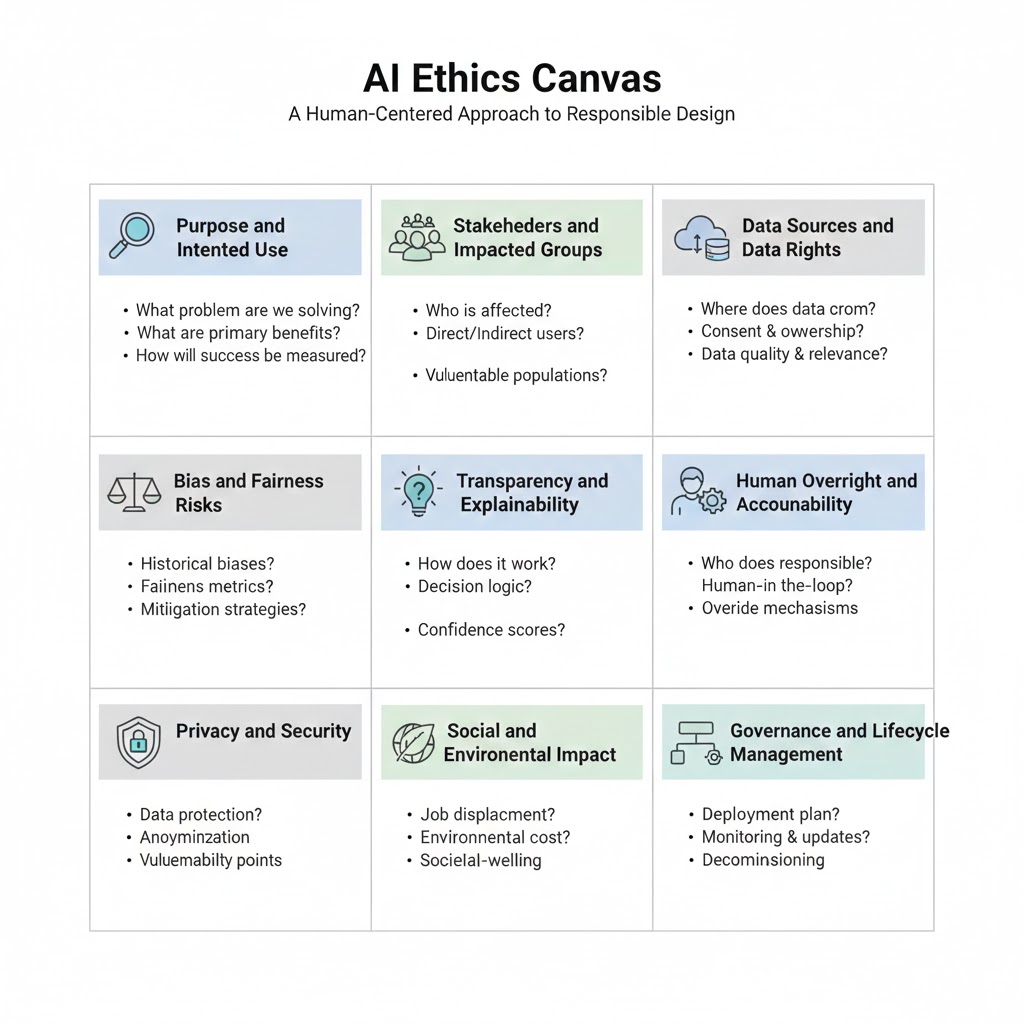
Building a trust-based ecosystem requires shifting from “Black Box” automation to an architecture of accountability. These three pillars serve as the foundation for every ethical decision-making engine.
1. Radical Transparency & Explainability (XAI)
Transparency is not just about showing the code; it’s about explaining the logic of the outcome. In 2026, the “Right to an Explanation” is a baseline consumer expectation. We must move toward Explainable AI (XAI), where every algorithmic output is accompanied by a plain-language summary of the weights and variables that influenced the result.
2. Purpose-Driven Data Minimization
The old innovation mantra of “collect everything and find the value later” is an ethical dead end. Ethical guardrails require Data Intentionality. We only collect the specific data points necessary to drive the stated human-centered value. By minimizing the footprint, we minimize the potential for “data bleed” and unintended algorithmic bias.
3. The “Benefit Flow” Audit
We must constantly ask: Who wins? An ethical algorithm ensures that the value derived from a decision flows back to the individual, not just the organization’s bottom line. A Benefit Flow Audit maps the distribution of value, ensuring that the algorithm isn’t just optimizing for corporate margin at the expense of user agency or equity.
III. Operationalizing the Guardrails: The Innovation Toolkit
Ethics cannot remain a high-level philosophy; it must be baked into the daily workflow of your engineering and product teams. Operationalizing integrity means building the systems that catch bias before it becomes code.
1. The Algorithmic Risk Committee (ARC)
The ARC is a cross-functional “Red Team” that evaluates algorithmic logic before deployment. Unlike a traditional legal review, the ARC includes CX Designers, Ethicists, and Frontline Employees. Their job is to stress-test the algorithm against real-world human edge cases, identifying where “mathematical efficiency” might inadvertently lead to human harm or exclusion.
2. Managing “Shadow AI” and Governance
In the decentralized environment of 2026, many algorithmic decisions are made by “Shadow AI”—tools adopted by departments without formal IT oversight. We must implement Governance as a Service: providing teams with pre-approved, ethically-vetted “logic modules” and API wrappers that include built-in audit trails. This allows for rapid innovation without bypassing the organization’s moral compass.
3. Continuous Feedback & Human-in-the-Loop (HITL)
An algorithm is never “done.” We must establish Continuous Calibration Loops where human supervisors can flag and override algorithmic decisions. These “Human-in-the-Loop” corrections are then fed back into the training set, allowing the machine to learn from human nuance and empathy over time.
IV. Measuring Success: Human-Centered Metrics
If you aren’t measuring integrity, you aren’t managing it. In 2026, we must move beyond “accuracy scores” toward metrics that reflect our commitment to human equity and trust.
1. The Strategic Alignment Score (SAS)
We must quantify how closely an algorithm’s decision path mirrors our stated organizational values. The Strategic Alignment Score measures the delta between algorithmic “optimization” (e.g., maximizing profit) and human-centered goals (e.g., long-term customer health). A low SAS is an early warning signal that the machine’s logic is drifting away from the brand’s soul.
2. The Equity Audit & Disparate Impact Ratio
An ethical guardrail is only as strong as its weakest link. We conduct regular Equity Audits to test for “Disparate Impact” — checking if the algorithm’s outcomes vary significantly across demographic groups (age, gender, ethnicity). Our goal is a ratio as close to 1:1 as possible, ensuring the algorithm provides a level playing field for all stakeholders.
3. The Trust Index (TI)
Ultimately, the market decides if your guardrails are effective. The Trust Index measures user confidence through direct feedback and behavioral signals. Are users more likely to follow an algorithmic recommendation when the “Explainability” layer is visible? High TI scores correlate directly with long-term customer retention and lower churn.
V. Case Studies: Integrity in Action
The theory of ethical guardrails meets reality in high-stakes environments. These cases demonstrate how organizations have pivoted from “efficiency at all costs” to “integrity by design.”
Case Study 1: Healthcare & The Accountability Gap
The Challenge: A leading diagnostic AI was achieving 98% accuracy in early-stage oncology detection but was being rejected by practitioners because they couldn’t understand the “reasoning” behind its flags. This created an Accountability Gap — doctors felt they couldn’t legally or ethically sign off on a diagnosis they couldn’t explain.
- The Guardrail: The team implemented an Explainability Layer that highlighted the specific pixel clusters and biometric markers influencing the AI’s confidence score.
- The Result: Adoption rates among specialists increased by 65%. By bridging the gap between “math” and “medicine,” the tool became a trusted collaborator rather than a black-box intruder.
Case Study 2: Finance & The Shareholder Value Trap
The Challenge: A fintech startup’s credit-scoring algorithm was mathematically perfect at minimizing short-term default risk. However, it was inadvertently creating a “poverty trap” by penalizing applicants for living in specific zip codes — a classic example of Encoded Bias.
- The Guardrail: The firm shifted its optimization variable from “Short-term Default Risk” to “Long-term Economic Empowerment.” They removed zip codes as a primary weight and replaced them with “Growth Potential” markers like consistent utility payments and educational progress.
- The Result: The company expanded its market into underbanked segments without a significant increase in defaults, proving that ethical guardrails can unlock new revenue streams.
VI. Conclusion: Leading with the Soul of the Customer
As we navigate the complexities of 2026, we must recognize that ethical guardrails are the infrastructure of sustainable innovation. They are not intended to bind our hands, but to protect our integrity. In an era where algorithms can scale bias at the speed of light, our role as leaders is to ensure that technology serves as a bridge to opportunity, not a barrier to it.
The Wisdom of the Brake
The fastest cars in the world require the most powerful brakes. Similarly, the most transformative AI requires the most robust ethical frameworks. When we stop worshipping the efficiency of the algorithm and start empowering the agency of the human, we create a Trust Ecosystem that competitors cannot easily replicate. True competitive advantage is no longer found in “who has the most data,” but in “who is most trusted with that data.”
The path forward requires courage — the courage to slow down when a “Black Box” lacks clarity, the courage to delete profitable data that lacks purpose, and the courage to put the human back in the loop. We don’t just innovate to change the world; we innovate to make the world more human.
The Final Word: Integrity is the Ultimate Algorithm
Innovation is a human endeavor. If we lose our values in the pursuit of velocity, we haven’t innovated — we’ve simply accelerated a mistake.
— Braden Kelley
Ethical Algorithmic Guardrails FAQ
1. What are ethical algorithmic guardrails?
Think of them as the braking system for high-speed innovation. They are rules and filters built into your AI that ensure it doesn’t make biased, unfair, or “secret” decisions. They keep the machine’s logic aligned with human values.
2. Why is “Explainable AI” (XAI) important for business?
In 2026, trust is your most valuable asset. If a doctor or a customer doesn’t understand why an AI made a recommendation, they won’t use it. XAI turns the “Black Box” into a glass box, making innovation transparent and adoption easier.
3. How does data minimization improve ethics?
By only collecting the data that actually matters for a specific goal, we prevent the algorithm from picking up on unintended patterns that lead to bias. Less “noise” in the data leads to more integrity in the decision.
Image credit: Google Gemini
 Sign up here to get Human-Centered Change & Innovation Weekly delivered to your inbox every week.