The concept of ‘smart cities’ has been gaining traction in the past decade. Smart cities integrate technology-enabled sensing, analysis and communication across vital city operations, for example, transportation and energy management. The term may also refer to a vision of a city that is connected and efficient, safer, and more livable. With their introduction into urban environments comes both challenges and opportunities.
One major challenge for smart cities is the amount of data that the connected infrastructure is expected to collect, analyze and report. For this reason, city governments require the right infrastructure and platform to store, protect and analyze the data safely to improve urban services and decision making. Security and privacy are also major concerns. Cities need to deploy new technologies and protocols for data security and privacy protection, while also managing the resilience of the data existing in such systems.
Cost is another major challenge for smart cities. The introduction of new technologies can incur high financial costs. This may include the development of interface-oriented smart systems, power supplies and real-time control. Moreover, the maintenance costs for managing and running smart city systems will be a challenge for city management.
Despite these challenges, smart cities also present lucrative opportunities. For example, two notable examples of successful implementations of smart cities are Barcelona in Spain and Amsterdam in the Netherlands.
Case Study 1 – Barcelona
Barcelona is known for its pioneering implementation of city-wide Wi-Fi. This initially included the deployment of 360 antennas across the city, providing free public access. Barcelona has since incorporated a range of digitalized services, for example, a collaboration program to create an open data platform for civic services such as waste management and pollution monitoring.
Case Study 2 – Amsterdam
Amsterdam is also an example of a successful smart city. The city collects data from a variety of sources, including sensors, wearables and smartphones, to generate a centralized control platform. This platform is then used for crime prediction, the efficient delivery of healthcare services, improved traffic management, and better environmental tracking.
Conclusion
It is clear that smart cities present both challenges and opportunities. Despite the high investments required for data collection and infrastructure, it is evident that the implementation of these frameworks can result in improved urban services and decision making, a modernized public infrastructure, and advanced safety standards. Cities that demonstrate innovation and effective management strategies could benefit from the potential of smart cities, making urban life more connected and efficient.
Bottom line: Futurology is not fortune telling. Futurists use a scientific approach to create their deliverables, but a methodology and tools like those in FutureHacking™ can empower anyone to engage in futurology themselves.
Image credit: Pexels
Sign up here to get Human-Centered Change & Innovation Weekly delivered to your inbox every week.
Is it really possible to travel back in time? What about traveling into the future, have we finally figured out how to do that? Well, you’ll have to read on to find out…
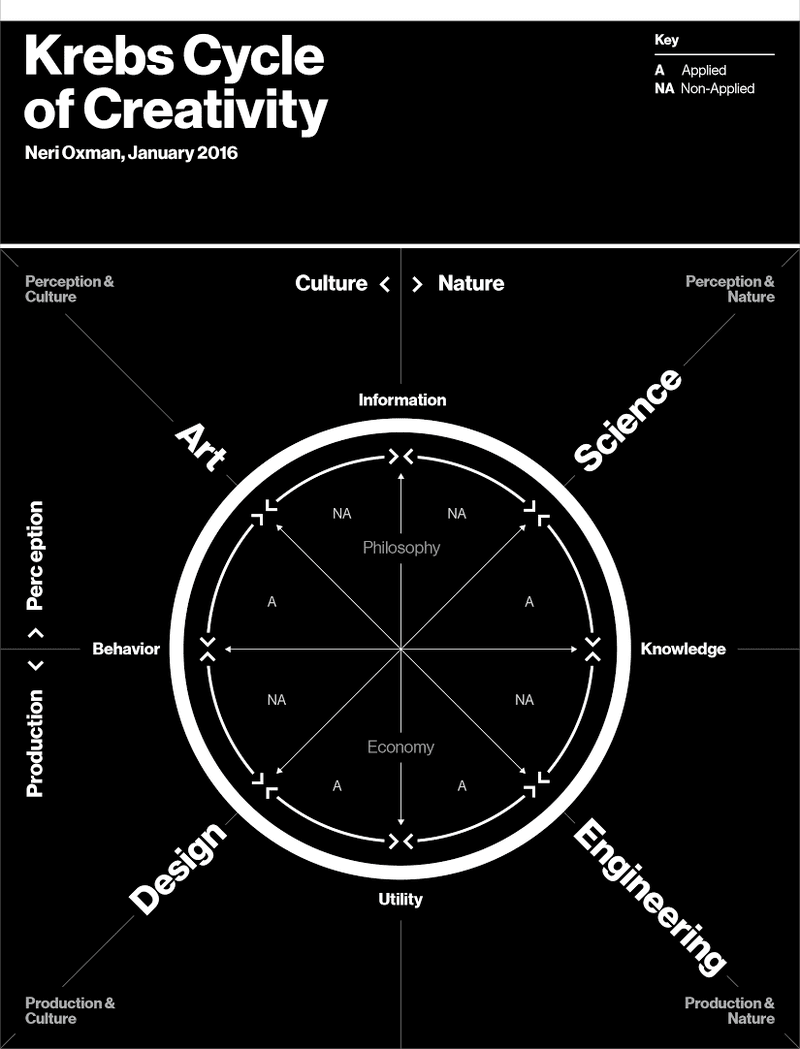
But before we explore whether someone has finally figured out how to successfully time travel and recruit you to join me in investing in their pre-IPO startup, I’d like to introduce one of the most important visualizations from the world of innovation that many of your have probably never seen – Neri Oxman’s Krebs Cycle of Creativity from January 2016.
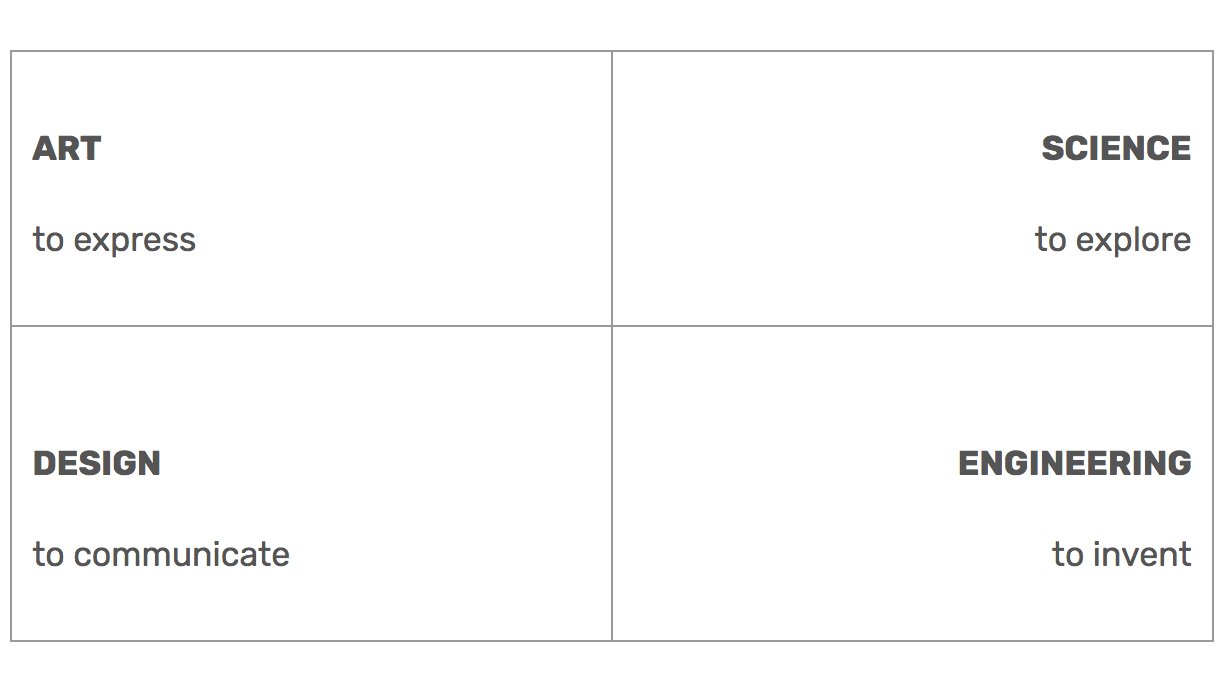
If you’re not familiar with this incredibly important visual artifact from the work of Neri Oxman from MIT’s Media Lab, you should be because it does an amazing job of capturing the interplay between Art, Science, Engineering and Design in the creation of innovation. It builds on John Maeda’s Bermuda Quadrilateral from 2006:
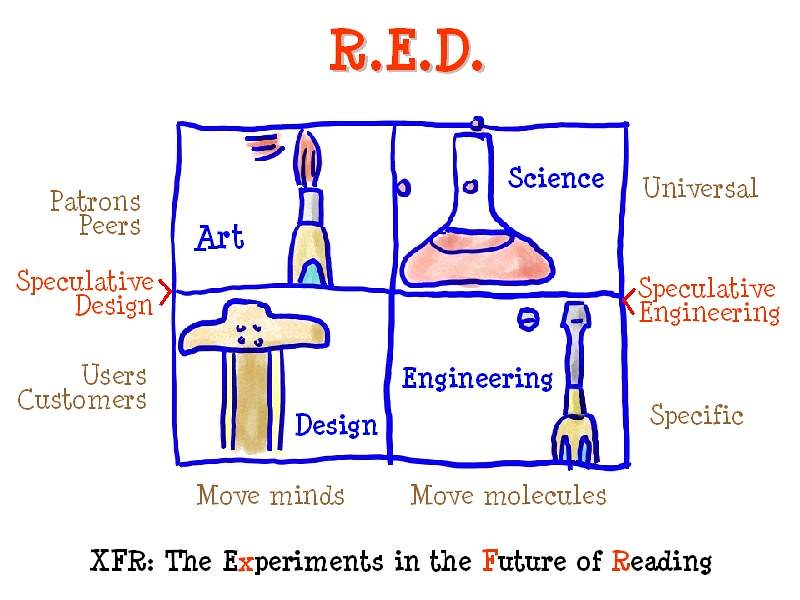
And Rich Gold’s Matrix, also from 2006:
While Rich Gold’s visualization builds on the logical bones of John Maeda’s Bermuda Quadrilateral and introduces the concepts of speculative design, speculative engineering, and the contrast between moving minds & moving molecules, it lacks the depth of Neri Oxman’s Krebs Cycle of Creativity visualization. But the Krebs Cycle of Creativity does lose Maeda’s expression of the linkages between science & exploration, engineering & invention, design & communication, and art & expression. But even without these assertions of Maeda, the Krebs Cycle of Creativity still captures a number of other powerful tensions and assertions that can benefit us in our pursuit of innovation.
Time Marches On
The Krebs Cycle of Creativity can be viewed from a number of different perspectives and utilized in a number of different ways. But, one way to look at it is as if it were a watch face. In this context as time moves forward you’re following the typical path, a technology-led innovation approach.
Using the Krebs Cycle of Creativity Canvas in a clockwise direction will help us explore:
What information do we have about what might be possible?
What knowledge needs to be obtained?
What utility does the invention create?
What behavior do we need to modify to encourage adoption?
It begins with the invention of a new piece of technology created by the usage of existing information and a new perception of what might be possible within the constraints of our understanding of the natural world, or even by expanding our understanding and knowledge of the natural world using the scientific method.
You’ll see at 3 o’clock in the image above that it at this point in time that most organizations then hand off this new knowledge to their engineers to look at this new understanding of nature through the production lens in order to convert this new knowledge into new utility.
Engineers in most organizations are adept at finding a useful application for a new scientific discovery, and in many organizations this work is done before designers get a peek and begin to imagine how they can present this utility to users in a way that drives behaviors of adoption in a way that the behaviors of using the product or consuming the service feel as natural as possible and as frictionless as possible.
And unfortunately the artists in any organization (or outside via agency relationships) are called in at the eleventh hour to help shape perceptions and to communicate the philosophy behind the solution and the to make the case for it to occupy space in our collective culture.
Pausing at the Innovation Intersection
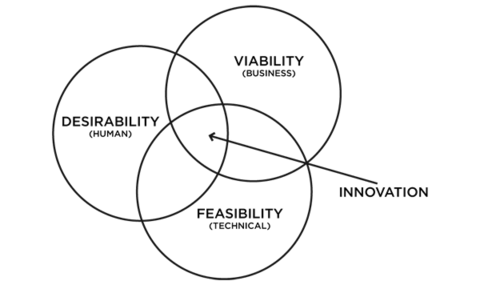
The way that innovation occurs in many organizations is that Science and Engineering collaborate to investigate and confirm feasibility, then Engineering and Design collaborate to inject viability into the equation, and then Design and Art (with elements of marketing and advertising) collaborate to create Desirability at the end. This may be how it works in many organizations, yet it doesn’t mean that it is the best way…
Traveling Back in Time
But as we all know, water can run uphill, the moon can eclipse the sun, and yes time can run in reverse. Viewing the Krebs Cycle of Creativity in a counter clockwise direction and pushing the hands of the watch backwards will have you following a user-led innovation approach instead.
Using the Krebs Cycle of Creativity Canvas in a counter clockwise direction will help us explore:
What information do we have about what is needed?
What behavior should we observe?
What would create utility for customers?
What knowledge must we obtain to realize our solution vision?
It begins with the identification of a new insight uncovered by the investigation of existing information and a new perception of what might be needed within the constraints of our understanding of our customers, or even by expanding our understanding and knowledge of our customers by using ethnography, observation, behavioral science and other tools to enter the mind of your customers, employees or partners.
You’ll see at 9 o’clock in the image above that it at this point in time that user-driven organizations after having their business artists use their perception skills to investigate the culture and philosophy underpinning this new understanding of behavior and pass it off for their designers to look at through the production lens in order to convert it into new utility.
Designers in many organizations are adept at finding a useful application for a new behavioral understanding, and in user-driven organizations this work is done before engineers get a peek and begin to imagine how they can build this utility for users in a way that creates new knowledge in a way that will differentiate the products or services of their organization from those of the competition.
And in user-driven organizations scientists are called in as needed to help overcome any barriers engineers encounter in realizing the solution that best satisfies the users’ identified needs, while leveraging new scientific perceptions that help shape our understanding of nature and empower new philosophical beliefs about what’s possible.
Conclusion
While we haven’t torn any worm holes through the fabric of the space-time continuum with this article, hopefully we have expanded your repertoire with some new tools to facilitate conscious choices around whether you are going to pursue technology-led innovation (clockwise) or user-led innovation (counter clockwise).
Hopefully we have also shown you a better way of visualizing where you are in your innovation journey and where the turning points in your innovation pursuits lie as you seek to take a quantum leap and transform your past into a bright, shiny future.
So now it is time to answer the question you had at the beginning of this article… Is time travel possible?
Well, nearly a decade ago NASA ran an experiment that proved elements of Einstein’s theory of relativity, specifically that the fabric of space-time warps around the earth in response to gravity. Read about it here
And yes, time travel is theoretically possible, or at least time is not theoretically constant as described in this NASA article.
Neither of these indicate that it is possible to travel backwards in time (despite what Superman physics says), only to affect how time advances, but if anyone wants to invest a million dollars in my time travel startup, I’ll cash your check. Because who knows, maybe your check is what will finally make time travel possible!
With the emergence of autonomous vehicles (AVs), society is now at a crossroads, on the cusp of a whole new reality in transportation and mobility. AVs offer many benefits, including improved safety, reduced emissions, and increased efficiency. They also come with some risks, including a disruption of infrastructure and labor, as well as the potential for increased privacy concerns. As AVs become increasingly integrated into our society, it is important to consider both the benefits and risks of this new technology so that we can maximize its potential and minimize its drawbacks.
The potential benefits of AVs are immense. In terms of safety, human error is the leading cause of automotive fatalities, accounting for 90 percent of fatal accidents. AVs are equipped with advanced sensory systems that can enable them to be significantly safer drivers than their human counterparts. They can sense potential hazards on the road better than a human driver, and their reaction times are significantly faster. Furthermore, due to their automation, the risk of fatigue among drivers is eliminated, which can reduce the risk of accidents.
In terms of efficiency, AVs can help reduce traffic congestion due to their increased accuracy in predicting road conditions and their ability to plan routes more efficiently. By reducing congestion, AVs could result in improved efficiency for transportation, reducing both fuel consumption and air pollution. Additionally, by removing the need for direct human control, AVs can enable people to engage in other tasks while in transit, potentially improving productivity and reducing commute times.
While there are many potential benefits to AVs, it is important to recognize the potential risks as well. One of the most pressing concerns is the potential for AVs to displace existing workers. Truck drivers, taxi drivers, and other occupations that rely on human driving could become obsolete as self-driving vehicles become more commonplace. This could result in an increase in unemployment and social unrest. Furthermore, AVs require robust infrastructure and connectivity for them to work efficiently. This could also have a disruptive effect on existing infrastructure and require significant investment, both financially and in terms of time. Additionally, AVs raise serious concerns about the potential for surveillance and privacy, as data collected by the vehicles could be exploited by third parties.
As AVs become increasingly integrated into our society, it is important to recognize the potential benefits and risks. To illustrate this, two case studies are worth looking at.
Case Study 1 – GoMentum Station (USA)
The first is a pilot program in California called “GoMentum Station”, which was launched in 2017 by Honda to test autonomous vehicles on a closed-off track. The program has had great success and opened the door to further discussion of the potential for AVs in the public space.
Case Study 2 – Drive.ai (Singapore)
The second is a pilot program in Singapore called Drive.ai, which launched in 2018 and is testing AVs in a variety of situations, including mixed traffic roads, highways, and bad weather. These case studies provide insight into the potential for AVs to benefit society, while also highlighting the potential risks.
Conclusion
Overall, AVs have the potential to revolutionize transportation and mobility. With their increased safety features and efficiency, they could offer many benefits to society in the long run. However, it is important to consider the potential risks before introducing AVs into the public space, so that we can ensure that their benefits are maximized while their drawbacks are minimized.
Bottom line: Futurology is not fortune telling. Futurists use a scientific approach to create their deliverables, but a methodology and tools like those in FutureHacking™ can empower anyone to engage in futurology themselves.
Image credit: Pixabay
Sign up here to get Human-Centered Change & Innovation Weekly delivered to your inbox every week.
The rise of blockchain technology has revolutionized the way businesses, governments, and individuals store and share data, as well as transact with each other. Because of its inherent security and digital record-keeping properties, blockchain technology presents a new level of assurance to organizations and offers unparalleled digital security. As the world increasingly shifts to more digitized processes, it’s becoming more important to explore the benefits of blockchain technology and consider how businesses can take advantage of its capabilities.
One of the most notable benefits of blockchain technology is its transparency. Data stored on blockchain networks is immutable and recorded in publicly available ledgers, meaning that it is resistant to tampering or manipulation. This level of visibility induces trust and improves collaboration between disparate parties through greater assurance that the data is authentic and secure.
The digital identity security that blockchain technology provides is another attractive benefit. By using private and public encryption keys, users can protect sensitive data and ensure that it is only accessible by appropriate parties. This further increases the trustworthiness of data and transactions as users can rest assured that their information is in the right hands and can be easily traced.
Case Study 1 – BBVA
The banking and financial industry has already begun to explore the many advantages of blockchain technology. A noteworthy case study is BBVA, a global bank that implemented blockchain technology to process multi-currency transactions. By utilizing distributed ledgers, the bank was able to reduce the time required to process international transactions from 2-3 days to under a minute. In addition, the transparency of the technology meant that customers could more easily verify that their transaction was secure and monitored, and it also allowed the bank to save on costs and improve operational efficiency.
Case Study 2 – eBay
Another example is well known online marketplace eBay, which utilizes blockchain technology to facilitate digital payments. By using distributed ledgers, eBay is able to securely store user payments and verify the authenticity of transactions, as well as support cross-border payments with confidence in the certainty of records. The technology has also enabled the company to reduce the risk of fraud and improve the speed and security of its digital transactions.
Conclusion
As businesses continue to migrate to the digital realm, blockchain technology offers several potential advantages that organizations should examine as they explore ways to improve data security and collaboration. Secure data storage, improved trustworthiness, and enhanced communication are just a few of the benefits that blockchain technology can provide businesses. By leveraging the technology’s capabilities, organizations can ultimately gain a competitive edge and improve operational efficiency.
Image credit: Pixabay
Sign up here to get Human-Centered Change & Innovation Weekly delivered to your inbox every week.
Robotics and automation are two technologies that are transforming many industries and causing drastic changes in the way many tasks are completed. While automation certainly has the potential to bring about substantial improvement in efficiency and quality of work, many potential challenges still remain. In this article, we will take a look at the potential benefits and challenges of robotics and automation, as well as discussing two case studies to provide more insight into how the technologies can be utilized.
First, let’s explore some of the beneficial applications of robotics and automation. One of the primary advantages of automation is the potential to reduce costs and streamline processes. By automating tedious and time-consuming tasks, manufacturers can increase production speeds and increase the accuracy of their work. Automated processes can also reduce errors in operations and help businesses remain compliant with relevant regulations. Automation can also reduce worker fatigue and improve worker safety, leading to improved worker satisfaction. In addition, adding robotics to processes is likely to result in much greater output and innovative solutions than manual processes.
Unfortunately, employing robotics and automation can present some challenges. One major challenge is that automation can sometimes require a large upfront investment in terms of purchasing the necessary machinery and integrating the related systems. Additionally, not all processes or tasks are suitable for automation, so companies must choose carefully which processes to automate and which to retain in a manual form. Exploring new technologies can also be difficult and time-consuming for many companies, and robots can require maintenance and repairs while training staff in the new technology.
Now let’s take a look at two case studies that demonstrate robotics and automation in action.
Case Study 1 – Automotive Industry
The first case study comes from the automotive industry, in which companies have implemented robotics and automation into the car production process. Automation has allowed car companies to produce cars much more quickly than before, while maintaining the same or better levels of quality. Automation has also enabled car companies to achieve additional cost savings due to eliminating steps in the production process.
Case Study 1 – Medicine
The second case study comes from the medical field, in which automation has been used to improve accuracy when performing surgeries. Automation has enabled surgeons to be more precise and has also helped reduce errors and complications during surgeries.
Case Study 1 – Conclusion
Robotics and automation can provide significant improvements in efficiency and output when effectively implemented. However, it is important to recognize the potential challenges associated with implementation, such as upfront costs and difficulty in integrating the technology. By taking a closer look at two case studies, we can gain further insight into how robotics and automation can be used in a variety of industries.
Bottom line: Futurology is not fortune telling. Futurists use a scientific approach to create their deliverables, but a methodology and tools like those in FutureHacking™ can empower anyone to engage in futurology themselves.
Image credit: Pexels
Sign up here to get Human-Centered Change & Innovation Weekly delivered to your inbox every week.
Artificial intelligence (AI) is quickly emerging as a powerful tool for business decision making. Companies of all sizes are realizing the potential of AI to provide insights and automate manual processes that previously served to hinder the decision-making process. In this article, we’ll take a look at some of the benefits that AI-enabled decision making can bring to a business, as well as some examples of successful implementations.
One of the most significant benefits of AI-enabled decision making is the ability to analyze large data sets and identify patterns that inform decisions. By harnessing powerful algorithms, AI can uncover correlations that are otherwise not visible. This can be especially beneficial in customer and market segmentation, where the application of AI-driven analytics can help uncover new growth opportunities. For example, one company used AI to analyze customer data as part of its product segmentation strategy. This enabled the company to develop personalized recommendations that drove increased customer loyalty and revenue growth.
Case Study 1 – Automating Chargeback Calculations
In addition to analyzing data, AI can automate tedious manual tasks for more efficient and accurate decision-making. For example, a global accounting firm used AI to automate chargeback calculations. By eliminating manual human review, AI enabled the company to process thousands of invoices in a fraction of the time. This reduced the cost of processing while improving accuracy and creating an overall better customer experience.
Case Study 2 – AI-Enabled Predictive Logistics
Finally, AI can be used to create predictive models that anticipate future actions, trends, and outcomes. By using AI to develop predictive models, businesses can get a jumpstart on preparing for potential events ahead of time. For example, a logistics firm developed an AI-enabled predictive model that anticipated customer buying patterns and adjusted its shipping routes accordingly. This enabled the company to save time and money through improved deployment of its assets.
Conclusion
AI-enabled decision making offers a range of potential benefits to businesses of all sizes. By leveraging powerful algorithms to analyze data, automate processes, and create predictive models, companies can improve decision making while creating a competitive edge. Through the use of case studies, this article has highlighted some of the key benefits of AI-enabled decision making that can be applied to a variety of organizational contexts.
Image credit: Pixabay
Sign up here to get Human-Centered Change & Innovation Weekly delivered to your inbox every week.
The future of automation and artificial intelligence is highly debated in today’s world. As technology continues to advance, so does the potential for automation and AI to radically transform how we live our lives. From automated robots in factories to smart assistants in our homes, automation and AI are becoming a reality in more and more areas of everyday life. This article will examine the potential of automation and AI, their impact on society, and provide two case study examples of where automation and AI are being applied today.
The potential of automation and AI is vast. Automation can take on mundane tasks, freeing up more time to focus on important and fulfilling work. AI can augment our knowledge, helping us to make better decisions for our businesses, families, and communities. As technology progresses, machines will more and more be used for tasks that have traditionally been done by humans. Automation and AI could soon lead to highly efficient, reliable, and even completely autonomous systems.
However, automation and AI come with their own set of risks. There is a lot of fear that automation and AI will lead to job losses, inequality, and ethical dilemmas, especially as AI becomes increasingly capable of replicating complex decisions and tasks. Though the advancement of these technologies could bring great benefits, it is important to consider potential risks and explore ways to ensure that any automation or AI systems are beneficial for everyone.
To better understand how automation and AI are impacting the world, let us look at two case study examples.
Case Study 1 – Manufacturing
The first example is the story of Foxconn, an electronics manufacturing company based in Taiwan. To increase efficiency, the company started to incorporate robots into their workflow. Recently, they announced that they will be reducing the number of employees by over 50,000 and replacing them with robotic automation. Though this might seem like a benefit to Foxconn, it has had negative impacts on their workers who are losing their jobs.
Case Study 2 – Healthcare
The second example is the application of AI in healthcare. AI is being used in a number of ways in healthcare, from automating simple tasks like medical record keeping to aiding in diagnosis and decisions. For example, a recent study found that AI systems can accurately predict heart attack risks by analyzing CT scans, which could potentially lead to earlier and more effective treatments.
Conclusion
Overall, the future of automation and AI is extremely promising, and their potential could bring tremendous benefits. It is important, however, to consider the risks and ethical implications of these technologies, and to explore ways to ensure that their application is beneficial for everyone.
Bottom line: Futurology is not fortune telling. Futurists use a scientific approach to create their deliverables, but a methodology and tools like those in FutureHacking™ can empower anyone to engage in futurology themselves.
Image credit: Pixabay
Sign up here to get Human-Centered Change & Innovation Weekly delivered to your inbox every week.
Business automation is increasingly becoming an important part of enterprise operations and is being used for a wide range of activities from payroll to customer service. Automating business processes is essentially a way for organizations to make their procedures faster, more efficient and reduce cost of operations. With so much potential for cost savings and efficiency, it is understandable why businesses are exploring automated business processes more and more.
By replacing labor-intensive processes with automated systems, businesses are finding cost savings and improved service levels that would have been difficult to achieve before. Additionally, these solutions can offer additional benefits such as better accuracy and optimization of business processes. With these potential benefits in mind, let’s explore some of the potential uses and case study examples of automated business processes.
Case Study 1 – Automated Payroll
One of the most common uses for automated processes is in the areas of employee administration and payroll. Automated systems can handle everything from on-boarding and benefits administration to payroll and taxes. This type of automation can reduce the amount of time and cost spent on administrative tasks while also ensuring that all processes are in compliance with applicable regulations.
For example, Canadian fashion retailer Reitmans recently implemented an automated payroll process that streamlined their processes and introduced cost savings of $50,000. The company was able to achieve this cost saving while still ensuring compliance with the government’s labor standards.
Case Study 1 – Order Processing
Another area where automated processes can be beneficial is order processing. Automated solutions can help manage order processing from taking an order to delivering it, furthering cost savings and faster turnover. Automation can reduce the manual effort to process orders which can lead to more orders being processed without the need to increase staffing.
One such example is from digital retailer Mabel’s Labels. The company is using an automated order processing system to automatically generate orders, check them, and ship them out within 24 hours. This automation has enabled the company to reduce order processing time from seven days to 24 hours.
Conclusion
With so much potential to automate business processes, it appears organizations are just starting to explore the potential of automation. As more organizations become comfortable with automation solutions, it’s likely we’ll see an increasing number of companies taking advantage of these solutions in the near future. Companies interested in taking advantage of automated processes should be sure to fully research the options available before implementing a solution.
SPECIAL BONUS: Braden Kelley’s Problem Finding Canvas can be a super useful starting point for doing design thinking or human-centered design.
“The Problem Finding Canvas should help you investigate a handful of areas to explore, choose the one most important to you, extract all of the potential challenges and opportunities and choose one to prioritize.”
Image credit: Pixabay
Sign up here to get Human-Centered Change & Innovation Weekly delivered to your inbox every week.
Augmented and virtual reality (AR/VR) are rapidly advancing technologies that are transforming the world around us. AR and VR technology has been used in a variety of areas, ranging from entertainment and gaming to medical and military applications. As AR and VR become more widely available and affordable, the potential ways they could be integrated into our daily lives continues to grow. With these changes, it is becoming increasingly important to explore how this technology will affect our lives and how we can leverage it for the better.
One potential area of AR and VR use is in medicine. AR and VR could be used in medical training, allowing medical professionals to gain more immersive experiences with anatomy and other medical procedures. On the patient side, AR and VR could be used to provide a more interactive and immersive experience with medical care and consulting. This could even be extended to allow those who are unable to physically be present for medical appointments to participate and become involved in their own medical care.
Another application could be in education. Currently, many educational institutions are already leveraging AR and VR tools to add a more interactive learning experience for their students. From early education to higher education, incorporating AR/VR technology could bring classes to life and give students the opportunity to truly explore their interests in a more immersive way.
Case Study 1
One example of AR and VR being used in both medical and educational applications is the application of Microsoft HoloLens in the medical field. HoloLens is a head-mounted display that uses both AR and VR technology to project an interactive 3D experience into the real world. It has been used in numerous medical and educational settings, such as medical imaging and microscopic exoplanet exploration. HoloLens has also been used in the medical field for students to “intern” with a physician, allowing them to observe and experience a real-world medical procedure.
Case Study 2
The use of AR and VR technology is also being explored for use in the military. A scientist at the Naval Surface Warfare Center has developed a Virtual Reality Battle Lab (VRBL), which is a training platform designed to simulate a battlefield environment in order to more accurately train warriors for defense. The lab uses a range of applications, such as AR and VR goggles, robotics, virtual reality systems, and even live-fire ranges. This technology could be used to help the military better prepare and respond to threats, as well as provide soldiers and personnel with more interactive and immersive scenarios for training and mission planning.
Conclusion
Overall, AR and VR technology have the potential to greatly enhance our lives by providing us with new opportunities and experiences. From medical and educational settings to military scenarios, we can see the potential for AR and VR technology to revolutionize how we interact with the world around us. As this technology becomes increasingly available and affordable, it will be interesting to see what new and exciting ways it will be used in our lives.
Bottom line: Futurology is not fortune telling. Futurists use a scientific approach to create their deliverables, but a methodology and tools like those in FutureHacking™ can empower anyone to engage in futurology themselves.
Image credit: Pexels
Sign up here to join 17,000+ leaders getting Human-Centered Change & Innovation Weekly delivered to their inbox every week.
Open source software is becoming increasingly popular in the corporate environment. Companies are starting to realize the potential benefits of leveraging the skills and resources of the open source community to save them time and money. By tapping into the collective brainpower of the open source community, companies can use open source projects to build their own software and create more efficient processes. In this article, we’ll take a look at what companies can learn from open source projects, and provide two case study examples.
The first benefit of open source projects is access to a broad range of skills and experience. By using open source projects, companies can access the expertise of a distributed group of developers that may not be available in a single location. This provides the potential for increased collaboration among developers and allows companies to create more comprehensive software solutions.
The second benefit of open source projects is cost savings. Companies do not need to invest in expensive software licenses in order to use open source software. Instead, they can use existing licenses or simply use a shared license with other companies. This can be a great cost-saving measure for companies that are looking to quickly develop and deploy software solutions.
Finally, open source projects give companies the opportunity to build better software solutions. Companies can not only access the best ideas and practices from the open source community, but can also use their own internal development and engineering teams to improve the software. This allows companies to leverage the creativity of their own specialized staff to develop and implement innovative solutions.
To illustrate these points, we will look at two case studies. The first involves the auto manufacturer General Motors. GM used an open source platform called Automotive Edge Computing Consortium (AECC) to develop an in-vehicle service platform that allowed drivers to customize the entertainment, navigation and other functions through the push of a few buttons. The platform also allowed GM to keep car maintenance costs low and deliver a more personalized driving experience.
The second example involves Microsoft. Microsoft used the open source .NET software development framework to create their Office suite of applications. This allowed Microsoft to streamline the development, testing and deployment processes, while ensuring that the applications were secure and could be easily updated.
By leveraging the power of open source projects, companies can build better software solutions at a fraction of the cost. The benefits of open source include access to a broad range of skills and experience, cost savings, and the ability to create better software solutions. The two case studies above demonstrate these benefits in practice. By taking advantage of the potential of open source projects, companies can develop more efficient processes and create innovative solutions.
Image credit: Pexels
Sign up here to get Human-Centered Change & Innovation Weekly delivered to your inbox every week.

 Sign up here to get Human-Centered Change & Innovation Weekly delivered to your inbox every week.