Measuring Empathy
LAST UPDATED: December 23, 2025 at 1:51PM
GUEST POST from Chateau G Pato
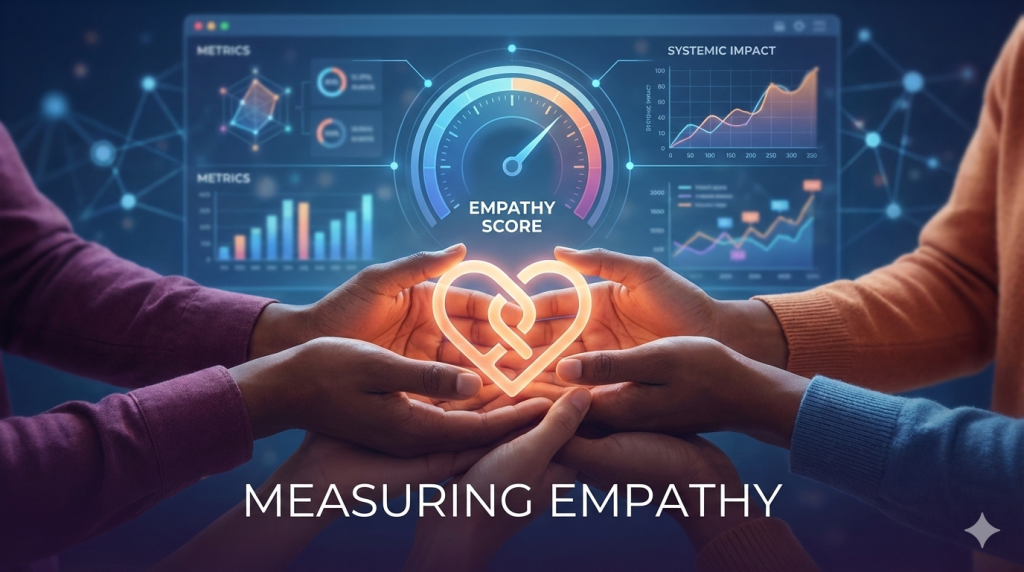
Empathy is frequently praised and rarely operationalized. In too many organizations, it lives in sticky notes, inspirational posters, and kickoff workshops — disconnected from how decisions are actually made. As human-centered design matures from a project-level practice into an enterprise capability, empathy must become measurable, repeatable, and systemic.
Measuring empathy is not about stripping humanity from design. It is about ensuring that human understanding survives scale, complexity, and quarterly pressure.
Re-framing Empathy as a Capability
Empathy is often misunderstood as an individual trait. In reality, sustainable empathy is an organizational capability supported by structures, incentives, and feedback loops. The question leaders should ask is not “Are our designers empathetic?” but rather “Does our system consistently produce empathetic outcomes?”
Metrics provide the answer.
A Practical Empathy Measurement Framework
1. Human Insight Integrity
These metrics assess whether decisions are grounded in real human understanding:
- Percentage of strategic initiatives informed by primary research
- Recency of customer insights used in decisions
- Inclusion of marginalized or edge users
Outdated or secondhand insights are a hidden empathy killer.
2. Experience Friction Reduction
Empathy should reduce unnecessary effort and stress:
- Time-on-task improvements
- Drop-off and abandonment rates
- Emotion-based experience ratings
3. Organizational Behavior Change
Look for evidence that empathy is shaping behavior:
- Frequency of cross-functional research participation
- Leadership presence in customer interactions
- Reuse of validated insights across teams
4. Long-Term System Health
At scale, empathy improves system resilience:
- Reduction in rework and failure demand
- Employee engagement and retention
- Trust and loyalty over time
“Empathy is not proven by how deeply we feel in a workshop, but by how consistently our systems change behavior in the real world. If you can’t measure that change, empathy remains a belief instead of a capability.”
Case Study 1: Retail Banking Transformation
A large retail bank invested heavily in digital channels but continued to see declining trust. By introducing empathy metrics focused on customer anxiety and clarity, the bank discovered that customers felt overwhelmed rather than empowered.
Design teams simplified language, reduced choice overload, and measured success through emotional confidence indicators. Within eighteen months, complaint volume dropped while product adoption increased — a clear signal of systemic empathy at work.
Case Study 2: Public Transportation Services
A metropolitan transit authority applied empathy metrics to rider experience. Beyond punctuality, they measured perceived safety, clarity of wayfinding, and stress during disruptions.
By addressing emotional pain points and tracking their reduction, the authority improved satisfaction without major infrastructure investment, proving that empathy can outperform capital expenditure.
Embedding Empathy into Governance
Empathy metrics only matter if they influence decisions. Leading organizations embed them into:
- Executive dashboards
- Investment prioritization
- Performance reviews
When empathy metrics sit alongside financial and operational metrics, they shape trade-offs instead of reacting to them.
The Future of Human-Centered Measurement
As AI and automation accelerate, empathy will become a primary differentiator. Organizations that can measure and manage it will design systems that are not only efficient, but humane.
The goal is not perfect empathy. The goal is continuous human understanding at scale.
Frequently Asked Questions
FAQ
Why are empathy metrics necessary?
They ensure human needs remain visible and actionable as organizations scale.
Do empathy metrics replace qualitative research?
No. They amplify and sustain qualitative insights over time.
What is the first empathy metric to implement?
Track how often real customer insights directly inform decisions.
Extra Extra: Because innovation is all about change, Braden Kelley’s human-centered change methodology and tools are the best way to plan and execute the changes necessary to support your innovation and transformation efforts — all while literally getting everyone all on the same page for change. Find out more about the methodology and tools, including the book Charting Change by following the link. Be sure and download the TEN FREE TOOLS while you’re here.
Image credits: Pixabay, Google Gemini
 Sign up here to get Human-Centered Change & Innovation Weekly delivered to your inbox every week.