GUEST POST from Stefan Lindegaard
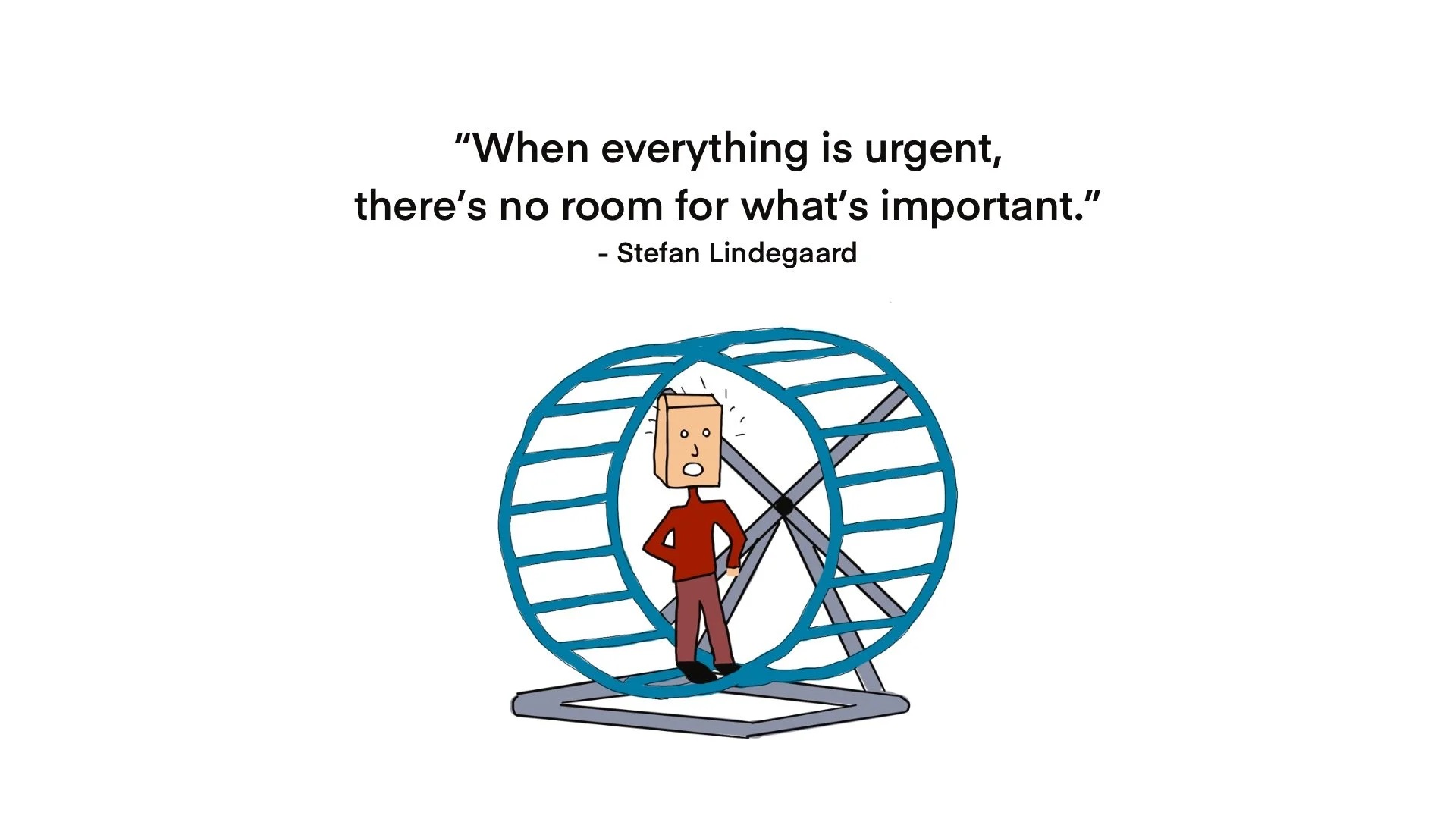
People in the corporate world today are busy – overwhelmingly so. Calendars are packed. Emails never stop. Meetings bleed into each other. On paper, it all looks like progress. But under the surface, something more critical is being lost.
This constant busyness creates the illusion of high performance. Output is visible. Actions are taken. Projects get delivered. But the deeper elements that actually build high performance – leadership development, trust, team learning, shared direction – are quietly being squeezed out.
In my work with leadership teams, I’ve seen this again and again: the very things that drive long-term success get de-prioritized, not because people don’t care, but because there’s simply no time left for them.
We talk a lot about performance, but real high-performance leadership isn’t built on urgency. It’s built on clarity, consistency, learning, and the ability to step back and make deliberate choices. When people are in constant motion, there’s no time for that. No time to coach. No time to reflect. No time to ask, “Are we even moving in the right direction?”
I often say that strong, high-performance teams are not just built – they are strategically designed and developed. That takes effort, intent, and most of all, space. But in the middle of never-ending activity, space is exactly what we don’t have.
This isn’t just a feeling. Research backs it up. Cal Newport’s Deep Work explores how modern work habits – from multitasking to nonstop notifications – have eroded our ability to do focused, meaningful work. Teresa Amabile and Steven Kramer, in The Progress Principle, found that what truly motivates people is making meaningful progress. But we interrupt that progress constantly with check-ins, firefighting, and shallow coordination. And studies like the Microsoft Work Trend Index show that most people feel they don’t get even a single hour of true focus time during their day.
It’s not that productivity is bad. But when busyness becomes the default mode, it turns into a trap – one that quietly undermines performance over time.
From a leadership and organizational development perspective, this is deeply concerning. I work with leaders who want to create better environments, who want to strengthen collaboration, sharpen execution, and grow their teams. But when every hour is accounted for, and every conversation is focused on delivery, there’s little room to ask the deeper questions that lead to change.
Worse still, in this kind of environment, team dynamics suffer. Feedback becomes reactive instead of developmental. Learning becomes fragmented. Strategy becomes surface-level. Psychological safety fades, because no one has the space to truly listen or adjust.
And that’s where Amy Edmondson’s research is so relevant. In her work on The Fearless Organization, she defines psychological safety as the shared belief that it’s safe to take interpersonal risks — to speak up, ask questions, make mistakes. It’s a cornerstone of high-performing teams. But here’s the catch: psychological safety doesn’t thrive in a culture of nonstop urgency. It requires time. Presence. Real conversations. If everyone is too busy, no one feels heard – and when people don’t feel heard, they stop contributing fully.
So it’s not just performance that suffers. It’s innovation. It’s trust. It’s the core of how teams work together.
What’s needed instead is a shift from reactive busyness to intentional performance. That means protecting time and mental space for what matters: coaching, alignment, leadership reflection, and team growth. It means giving teams the tools and structure to act with purpose, not just speed. It means creating a rhythm where delivery and development coexist.
High-performance isn’t about doing more. It’s about doing what matters – consistently, deliberately, and together.
So if your team is always too busy to reflect, to connect, to lead – that’s the signal something deeper needs to shift. Because when everything is urgent, we lose sight of what’s truly important.
And without that, performance is just motion.
Image Credit: Stefan Lindegaard
 Sign up here to get Human-Centered Change & Innovation Weekly delivered to your inbox every week.

