Author Archives: Chateau G Pato

About Chateau G Pato

Chateau G Pato is a senior futurist at Inteligencia Ltd. She is passionate about content creation and thinks about it as more science than art. Chateau travels the world at the speed of light, over mountains and under oceans. Her favorite numbers are one and zero. Content Authenticity Statement: If it wasn't clear, any articles under Chateau's byline have been written by OpenAI Playground or Gemini using Braden Kelley and public content as inspiration.

The Venture Client Model

Bringing the Outside In for Internal Disruption

LAST UPDATED: November 13, 2025 at 1:23PM

The Venture Client Model

GUEST POST from Chateau G Pato

For decades, large corporations have wrestled with a critical innovation problem: how to access the speed and agility of the startup ecosystem without choking it with bureaucracy or overpaying through premature acquisition. Corporate Venture Capital (CVC) offered a financial window, but often failed to translate investment into operational change. The solution is not more capital; it’s a new engagement model built on a human-centered relationship: the Venture Client Model.

The Venture Client Model transforms the relationship between the corporation and the startup. Instead of acting as a passive investor, the large company acts as a first, paying client — a crucial lighthouse customer. The startup receives a contract (not just equity) and the opportunity to pilot its technology within a real, complex industrial environment. The corporation, in turn, gains early, de-risked access to disruptive solutions and the ability to test future technologies for internal applications.

This model is inherently human-centered because it focuses on solving real, internal pain points with external ingenuity, forcing a necessary friction between established internal process and external disruptive speed. It moves innovation from the periphery of financial investment directly into the core of operational value creation, where change truly impacts the customer and the bottom line.

The Three Pillars of the Venture Client Advantage

The success of the Venture Client Model hinges on its unique structure, which addresses the primary failures of traditional internal R&D and CVC:

1. De-Risked Operational Access (The Speed Multiplier)

Traditional procurement processes are an innovation killer. They are designed for stability, not speed. The Venture Client Unit (VCU) operates with its own streamlined legal and commercial framework, allowing for the rapid deployment of proof-of-concept projects. This structure allows a startup solution to enter the corporate environment in weeks, not months, dramatically accelerating the time-to-value.

2. Focused Pain Point Sourcing (The Value Anchor)

Unlike traditional CVC, which often chases market hype, the VCU starts by rigorously identifying the top five systemic pain points within the parent organization (e.g., slow supply chain traceability, high energy consumption in a factory). They then source startups specifically to solve those problems. This ensures that every pilot project is anchored to an immediate, quantifiable operational return, overcoming internal resistance by delivering proven, tangible value right away.

3. Internal Cultural Catalyst (The Mindset Shift)

The most profound impact of the Venture Client Model is internal. When a lean, external solution fixes a multi-million-dollar internal process in six weeks, it creates a powerful cultural catalyst. It shows internal teams what is possible outside the traditional, risk-averse framework, directly increasing the Adaptability Quotient (AQ) of the workforce. It changes the mindset from “we can’t do that” to “who outside can help us do this?”

Case Study 1: The Automotive OEM and Process Optimization

Challenge: Inefficient Factory Floor Logistics

A major European automotive manufacturer was suffering from production bottlenecks due to outdated manual logistics tracking on its assembly lines. Traditional internal R&D struggled to find a quick, cost-effective solution that could integrate with decades-old legacy systems. The internal solution required a full-scale IT overhaul, demanding years and hundreds of millions.

Venture Client Intervention:

The manufacturer’s VCU identified a small startup specializing in computer vision-based inventory tracking. Within a specialized procurement sandbox, the VCU ran a three-month pilot. The startup’s off-the-shelf software was integrated with existing CCTV infrastructure to track component flow automatically. The result was a 15% reduction in assembly-line bottlenecks and an immediate, visible ROI. The manufacturer then scaled the solution across five factories within the next year.

The Human-Centered Lesson:

The success was not just technological; it was methodological. The Venture Client process forced internal operations teams to collaborate with a nimble external party on a real, immediate problem, breaking down “Not Invented Here” bias and proving the viability of external solutions.

The Crucial Distinction: Client vs. Investor

The Venture Client is fundamentally different from Corporate Venture Capital (CVC). CVC focuses on a financial return in 5-7 years, often funding startups outside the corporation’s direct operational sphere. The Venture Client focuses on an operational return in 6-12 months. The contract is for a product or service (not equity), though VCU often has an option for future equity if the pilot is successful. This immediate operational focus ensures that the initiative remains aligned with core business needs, securing necessary internal sponsorship.

Case Study 2: The Infrastructure Firm and Predictive Maintenance

Challenge: Reactive Maintenance in Remote Infrastructure

A global energy infrastructure firm maintained thousands of remote assets (pipelines, wind farms) and relied on scheduled or reactive maintenance, leading to costly downtime and emergency fixes. The internal data science team was too small and too focused on existing predictive models to develop a radically new solution.

Venture Client Intervention:

The VCU scouted a specialized startup utilizing acoustic sensing and advanced machine learning to detect micro-leaks and component wear in real-time, long before traditional vibration sensors flagged an issue. The firm acted as the first commercial client, providing the startup with critical, large-scale training data from their assets. The pilot demonstrated an increase in lead time for critical fixes by three weeks. The firm then moved from a pilot contract to a large-scale, multi-year vendor contract, securing a strategic advantage in predictive asset management.

The Human-Centered Lesson:

This highlights the mutual value exchange. The corporation gained a strategic, proprietary solution and validated a technology stream. The startup gained a massive, credible reference customer and the data necessary to rapidly mature its AI model. It’s a win-win built on the human-centered need for speed (startup) and stability (corporation).

Conclusion: Scaling External Ingenuity

The Venture Client Model is the ultimate tool for scaling external ingenuity for internal disruption. It turns the largest corporate asset — its scale, its budget, and its pain points — into a magnet for innovation. By establishing a dedicated, de-risked commercial channel, corporations can access game-changing technologies on their own terms, transforming innovation from a high-stakes financial bet into a continuous portfolio of strategic pilots that accelerate organizational learning.

“Stop waiting for the big acquisition to disrupt your business. Start paying the right startups to solve your most urgent problems today. That is the Venture Client Model.” — Braden Kelley

Your first step toward building a Venture Client capability: Identify the single biggest operational bottleneck in your organization that costs over $5 million annually, and commit to finding an external startup solution to pilot it within 90 days.

Extra Extra: Because innovation is all about change, Braden Kelley’s human-centered change methodology and tools are the best way to plan and execute the changes necessary to support your innovation and transformation efforts — all while literally getting everyone all on the same page for change. Find out more about the methodology and tools, including the book Charting Change by following the link. Be sure and download the TEN FREE TOOLS while you’re here.

Image credit: Pexels

Subscribe to Human-Centered Change & Innovation WeeklySign up here to get Human-Centered Change & Innovation Weekly delivered to your inbox every week.
Innovation or Not – The Trackless Train

A Human-Centered Analysis

LAST UPDATED: November 13, 2025 at 1:23PM
Innovation or Not - The Trackless Train

GUEST POST from Chateau G Pato

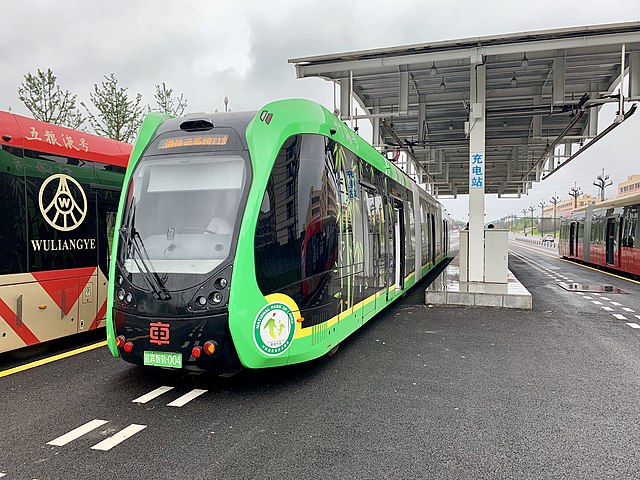
In the urban mobility landscape, China’s Autonomous Rail Rapid Transit (ART) — colloquially known as the trackless train or trackless tram — has emerged as a major disruptive force. Operating on rubber tires guided by optical sensors and GPS along “virtual tracks” painted on the road, it mimics the capacity and ride quality of a light rail system without the immense cost and disruption of laying physical rails. The critical question for city leaders is: Does this technology satisfy a true Human-Centered Change imperative, or is it merely an aesthetically pleasing substitute?

Innovation, in my view, is defined by solving a problem with a solution that delivers orders of magnitude greater value to the end-user or the system. The trackless train is a powerful example of systemic innovation because it challenges the trade-off that has defined urban transit for a century: high capacity equals high infrastructure cost.

It sits squarely in the “mid-tier transit” niche, providing the capacity (up to 300-500 passengers) that traditional Bus Rapid Transit (BRT) often lacks, while avoiding the exorbitant cost ($100M+ per kilometer) and multi-year construction timelines of Light Rail Transit (LRT). This cost differential is the fundamental disruptive innovation, making high-capacity transit accessible to thousands of previously underserved cities.

The Three-Axis Innovation Test

To assess ART’s true innovative nature, we must evaluate it against three critical axes of change:

1. The Cost-Reduction Axis (Systemic Innovation)

The primary systemic innovation of the trackless train is the elimination of fixed steel rails. This massive reduction in civil engineering cost — with proponents suggesting installation for as little as $10M per kilometer compared to $130M per kilometer for LRT — is transformative for medium-sized cities globally. This enables cities previously locked out of high-capacity transit due to budget constraints to deploy a solution quickly. This is innovation by subtraction.

2. The User Experience Axis (Human-Centered Innovation)

For the passenger, the value proposition hinges on ride quality and reliability. ART leverages stabilization technologies borrowed from high-speed rail to offer a smoother, quieter ride than a standard articulated bus. Furthermore, its guidance system and dedicated lane operations (where implemented) ensure a higher level of punctuality and predictability than mixed-traffic buses. The rail-like aesthetic also positively impacts land use, encouraging development around stations much like traditional rail. The faster deployment time also means citizens get access to improved transit sooner, a key human-centered benefit.

3. The Operational Flexibility Axis (Adaptive Innovation)

Unlike fixed-rail systems, ART offers greater adaptive flexibility. The vehicles are bi-directional and, crucially, can temporarily leave their virtual track to navigate around accidents or construction, a capability impossible for LRT. This allows the system to remain resilient to unexpected urban disruption, delivering a less frustrated customer experience.

  • The Challenge: Critics argue that this flexibility undercuts its benefit, as it still operates in mixed traffic and lacks the legal permanence that fixed rail offers to developers for long-term investment guarantees.

Case Study 1: Yibin, China – The Speed and Cost Imperative

Challenge: Rapid Urban Expansion vs. Traditional Rail Cost

Yibin, a city in Sichuan, China, experienced rapid population growth and needed a mid-capacity transit solution quickly to connect the old city center with its new high-speed rail network. Traditional LRT was deemed too expensive and time-consuming for the required 17.7km line through dense urban areas.

ART Intervention:

Yibin adopted the ART system (Line T1). The line was constructed and made operational in less than a year at a cost estimated around $13M/km — significantly less than the cost of conventional light rail. The short deployment time was critical to connecting the new high-speed rail station to the city’s commercial hubs almost immediately upon its completion. The ART was able to deliver a rail-like experience — speed (up to 70kph) and capacity (300 passengers per train) — at an accelerated timeline, thereby redefining the transit delivery schedule constraint.

The Innovation Takeaway:

This case demonstrates the value of Time-to-Market Innovation. The ART solution allowed Yibin to unlock the economic benefits of its high-speed rail investment years earlier than a conventional project would have allowed. The combination of speed and cost proved to be the transformative change agent.

The Gadgetbahn Critique: Is it Just a Fancy Bus?

A significant, rational critique from the transit community dismisses ART as a “gadgetbahn” — a glorified articulated bus. Critics point out that the system still requires reinforced concrete guideways to handle the multi-axle steering and rubber wheels repeating the same trajectory, which can cause significant differential road wear and compromise the promised low disruption and quick deployment. This addresses a critical flaw in the infrastructure savings claim.

However, the innovation lies not just in the hardware, but in the integration of technologies — high-speed rail stabilization, sensor-fusion guidance (GPS, Lidar), and multi-car articulation — that collectively push it into a new capacity and ride-quality tier. It’s an example of combinatorial innovation, where existing technologies are synthesized to solve a previously intractable systemic problem. It is a bus platform elevated to a new class of service, offering a viable, lower-cost step between high-quality BRT and full LRT.

Case Study 2: Perth, Australia – The Policy Barrier Test

Challenge: Certifying a New Mid-Tier System in a Developed Market

Perth, Western Australia, was one of the first Western cities to commit to implementing ART. Their challenge was not technical feasibility, but rather overcoming the rigid, decades-old regulatory framework that recognizes only two categories: fixed rail and road vehicles (buses/cars). ART fits neither.

ART Intervention:

The Perth initiative received funding for certification and demonstration of the ART vehicle. The focus of the trial was less on performance and more on addressing the policy and safety assurance gap. This involved proving how the vehicle’s unique steering, braking, and guidance systems met stringent public transport safety standards, essentially forcing a regulatory body to create a new transit category. The investment here is in demonstrating the integrity of the system to a skeptical, risk-averse regulatory environment.

The Innovation Takeaway:

The Perth case highlights that Innovation is often a Policy Problem. The ART forces cities to rethink urban transit categories, creating a viable regulatory precedent for mid-tier transit globally. The innovation is the ability to adapt to, and ultimately change, the institutional environment required for mass-scale adoption.

Conclusion: Redefining the Rail Niche

The trackless train is more than a clever bus. It is a powerful disruptive innovation because it provides a high-value trade-off for urban planners: high capacity and quality at a fraction of the cost and time. While it will not replace subways or traditional high-density light rail, it creates a new, accessible rail niche for the thousands of medium-sized cities worldwide that need a step up from BRT but cannot afford LRT. It provides the capacity necessary to drive urban regeneration without the financial burden, fundamentally changing how we approach city-shaping.

“True innovation eliminates the impossible trade-off. The trackless train removes the ‘rail-or-bust’ constraint for millions of urban citizens.”

Your first step toward systemic innovation: Identify one systemic problem in your organization currently constrained by a high cost/high time trade-off, and challenge your teams to find a combinatorial solution that eliminates the cost barrier entirely, much like the trackless train.

Extra Extra: Because innovation is all about change, Braden Kelley’s human-centered change methodology and tools are the best way to plan and execute the changes necessary to support your innovation and transformation efforts — all while literally getting everyone all on the same page for change. Find out more about the methodology and tools, including the book Charting Change by following the link. Be sure and download the TEN FREE TOOLS while you’re here.

Image credit: Pexels

Subscribe to Human-Centered Change & Innovation WeeklySign up here to get Human-Centered Change & Innovation Weekly delivered to your inbox every week.