How Multi-Sensory Environments Drive Customer Loyalty
GUEST POST from Art Inteligencia
Ambience Is Not Decoration — It’s a Loyalty System
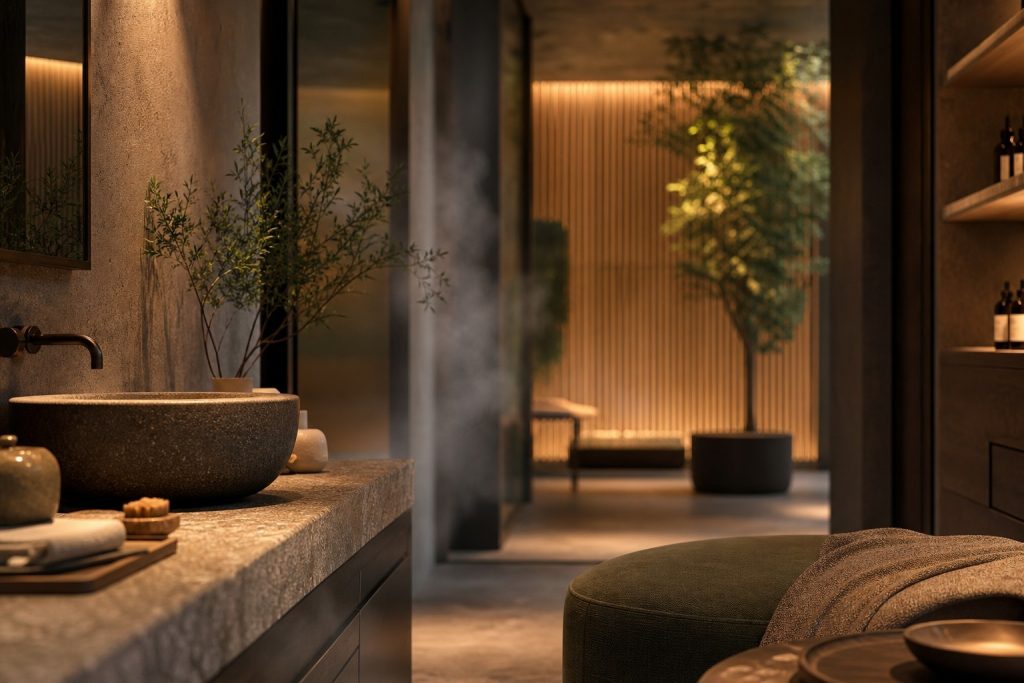
Walk into a space that “gets” you and something quiet happens before a single word is spoken. Your shoulders drop. Your pace changes. You feel oriented — or unsettled — long before you can explain why. That feeling is not an accident of paint color or playlist. It is ambience doing its real job: shaping whether people feel understood enough to stay, return, and advocate.
Too often, organizations treat ambience as finishing work — a mood board, a scent diffuser, a lighting upgrade bolted on after the “real” experience has been designed. Human-centered experience design flips that sequence. Ambience is not decoration layered onto loyalty strategy. It is loyalty strategy expressed through the senses.
Customers rarely leave because a single touchpoint failed in isolation. They leave when the cumulative sensory story of a place contradicts the promise of the brand. A premium claim under harsh lighting. A “calm” clinic with chaotic sound. A “welcoming” store that smells of nothing memorable — or worse, of indifference. The brain keeps score even when the survey does not.
Loyalty, in this light, is less a program and more a pattern of felt safety, belonging, and coherence. Multi-sensory environments earn that pattern when every cue — what people see, hear, smell, touch, and taste — works as one intentional system. Get the system right, and return visits stop being a chase and start becoming a habit. Get it wrong, and no points balance will fully repair what the body already decided.
The opportunity for innovators and experience leaders is clear: stop asking only what the space looks like, and start asking what the space teaches people to feel about your relationship with them. That is the science — and the craft — of ambience.
The Brain Buys Feelings First
People like to believe they choose with logic. Neuroscience and behavioral research keep reminding us otherwise: sensory input arrives first, emotion follows close behind, and rationalization often shows up last — wearing a suit and claiming it was in charge all along.
Sight sets expectation. Lighting temperature, visual clutter, color, and spatial rhythm tell the nervous system whether to explore, hurry, or brace. Sound regulates arousal — tempo, volume, and acoustic quality can invite lingering or push people through. Scent is tightly wired to memory and emotion; a single familiar note can reopen a whole chapter of association. Touch — materials, temperature, weight, texture — confirms or contradicts what the eyes promised. Taste and even ambient temperature close the loop, especially in hospitality, food retail, and care environments where the body is fully enrolled in the experience.
None of this means customers are irrational. It means they are human. The brain is a prediction engine constantly asking: Am I safe? Am I respected? Does this match what I was led to expect? Multi-sensory ambience answers those questions in milliseconds. When the answers feel coherent, trust rises. When they conflict, cognitive load rises with them — and loyalty becomes harder to earn because the experience itself feels effortful.
For experience designers and innovation leaders, the implication is practical. If you only optimize scripts, funnels, and features while ignoring the sensory field in which decisions happen, you are designing for a customer who does not exist. Feelings are not soft extras. They are the operating system of preference.
Designing the Five Senses as One Experience
The mistake most organizations make is designing senses in silos. Marketing owns scent. Operations owns noise. Facilities owns lighting. Digital owns the screen. The customer, inconveniently, experiences all of it at once.
Human-centered ambience treats the senses as one system. Congruence — when cues reinforce the same emotional promise — creates coherence. A wellness clinic that softens light, reduces sharp acoustics, uses clean natural materials, and keeps scent subtle and calming is not being “nice.” It is reducing threat signals so people can receive care. A flagship retail space that pairs theatrical visuals with aggressive sound, sticky floors, and a chemical smell is not being bold. It is teaching the body that the brand’s story and the brand’s reality are different people.
Congruence does not mean every sense must be loud. Often the most sophisticated environments know what to withhold. Silence can be a design choice. Neutral scent can be more trustworthy than a forced signature fragrance. Restraint is still authorship.
Cross-industry, the pattern holds. Hotels win return stays when arrival feels like exhale, not processing. Grocery and specialty retail increase dwell and basket size when circulation, light, and sound support discovery instead of fatigue. Workplaces that claim “collaboration” while assaulting people with glare and echo discover that culture cannot outrun physiology. Even digital-physical hybrids — showrooms, clinics with apps, stadiums with companion experiences — succeed when the sensory story stays continuous across channels rather than resetting at every threshold.
Design the senses separately and you get a collage. Design them as one experience and you get a place people recognize in their bodies — which is where loyalty actually lives.
From Moment to Memory: The Loyalty Loop
Loyalty programs count transactions. Ambience shapes the memories that make people want another transaction in the first place.
The loop is simple and stubbornly human: sensory moment → emotional response → memory encoding → preference → return or advocacy. A well-composed environment does not merely please in the present; it becomes easier to recall and easier to choose again later. That is why people can describe “how a place felt” years after they forget the exact product they bought.
Emotionally tagged memories are sticky. When ambience creates relief, delight, dignity, or belonging, the brain files the brand under return here. When ambience creates stress, confusion, or mild contempt, the brain files it under avoid if possible — even if the price was fine and the staff was polite. Points can bribe behavior for a while. They rarely overwrite a bodily verdict.
This is also why “consistency” is not the enemy of innovation. People do not need every visit to be identical; they need the emotional contract to remain recognizable. Variation can refresh attention. Incoherence breaks trust. The loyalty loop rewards organizations that treat each visit as another chance to reinforce a felt promise — not another chance to surprise people into cognitive whiplash.
If you want advocacy, design for memorability with meaning. If you want retention, design for emotional reliability. Multi-sensory ambience is how both get into the nervous system, not just the CRM.
How to Build Multi-Sensory Environments That Earn Trust
Start with the human outcome, not the fixture list. What should people feel able to do here — decide calmly, celebrate, recover, explore, belong? Ambience is successful when it supports the job-to-be-done and the emotional job underneath it.
Then map the sensory journey with the same rigor you would give a service blueprint. Where do people arrive, wait, choose, pay, recover, and leave? At each stage, ask what the eyes, ears, nose, skin, and palate are being asked to process. Friction often hides in the gaps between owned departments.
A practical build sequence
- Define the emotional contract. One clear promise (calm confidence, playful discovery, quiet luxury, restorative care) that every sensory cue must serve.
- Prototype before you renovate. Test lighting scenes, sound levels, materials, and scent with real users. Bodies give faster feedback than slide decks.
- Design for congruence, then for delight. Alignment first; signature moments second. A memorable cue works only if the system around it does not contradict it.
- Measure feel and behavior. Pair qualitative sensory feedback with dwell time, return rate, completion, complaint themes, and staff observations.
- Protect people from overload. More senses engaged is not automatically better. Intensity without intention becomes noise — and noise erodes trust.
Authenticity is non-negotiable. Borrowed “experience theater” that does not match your operations, values, or audience reads as manipulation. Human-centered change asks a harder question than Can we make this impressive? It asks Can we make this true? Environments that earn loyalty feel authored, not decorated — and they remain livable for the employees who must sustain them every day.
The Future of Ambience Is Adaptive and Human
The next chapter of ambience will be less static showroom and more responsive system. Sensors, spatial computing, adaptive lighting and sound, and personalization engines will let environments shift with occupancy, time of day, accessibility needs, and context. Done well, that is radical hospitality: spaces that notice people and adjust without forcing them to negotiate for comfort.
Done poorly, it becomes a new form of pressure — environments that optimize conversion while ignoring consent, dignity, and cognitive rest. The ethical line is not whether technology is used. It is whether adaptation serves human flourishing or merely extracts attention and spend.
Futurology in experience design should therefore stay anchored to a human-centered question: What does this environment make possible for the people inside it? Adaptive ambience can reduce anxiety in care settings, support neurodiversity at work, deepen immersion in cultural spaces, and make retail feel less extractive and more reciprocal. It can also deepen surveillance and manipulation if leaders treat the nervous system as just another funnel stage.
So the mandate for innovators is clear. Treat ambience as a continuous practice, not a capital project you finish and forget. Keep listening to how spaces feel as conditions change. Keep aligning sensory systems with brand promise and human need. The organizations that win lasting loyalty will not be the ones with the most stimuli. They will be the ones whose multi-sensory environments make people feel recognized — again and again — in a world that increasingly does not.
Frequently Asked Questions
What is multi-sensory ambience in customer experience?
Multi-sensory ambience is the intentional design of sight, sound, scent, touch, and taste/temperature as one coherent system that shapes how people feel in a space. It is not décor added at the end; it is experience design that influences trust, memory, and the likelihood customers return.
How do multi-sensory environments increase customer loyalty?
Coherent sensory cues create positive emotion, which strengthens memory and preference. Over time, that loop — moment, feeling, memory, return — builds loyalty more reliably than incentives alone, because customers remember how a brand made them feel in their bodies, not only what they purchased.
How can businesses start designing ambience that earns trust?
Define the emotional contract first, map sensory cues across the customer journey, prototype with real people, measure both feeling and behavior, and avoid sensory overload or inauthentic theatrics. Congruence across the senses matters more than maximizing stimulation.
Bottom line: Futurists are not fortune tellers. They use a formal approach to achieve their outcomes, but a methodology and tools like those in FutureHacking™ can empower anyone to be their own futurist.
Image credit: Gemini
 Sign up here to get Human-Centered Change & Innovation Weekly delivered to your inbox every week.