WWII’s Forgotten Lesson in Human-Centered Resourcefulness
LAST UPDATED: December 14, 2025 at 5:59 PM

GUEST POST from Art Inteligencia
Innovation is often romanticized as the pursuit of the new — sleek electric vehicles, AI algorithms, and orbital tourism. Yet, the most profound innovation often arises not from unlimited possibility, but from absolute scarcity. The Second World War offers a stark, compelling lesson in this principle: the widespread adoption of the wood-fired automobile, or the gasogene vehicle.
In the 1940s, as global conflict choked off oil supplies, nations across Europe and Asia were suddenly forced to find an alternative to gasoline to keep their civilian and military transport running. The solution was the gas generator (or gasifier), a bulky metal unit often mounted on the rear or side of a vehicle. This unit burned wood, charcoal, or peat, not for heat or steam, but for gas. The process — pyrolysis — converted solid fuel into a combustible mixture of carbon monoxide, hydrogen, and nitrogen known as “producer gas” or “wood gas,” which was then filtered and fed directly into the vehicle’s conventional internal combustion engine. This adaptation was a pure act of Human-Centered Innovation: it preserved mobility and economic function using readily available, local resources, ensuring the continuity of life amidst crisis.
The Scarcity Catalyst: Unlearning the Oil Dependency
Before the war, cars ran on gasoline. When the oil dried up, the world faced a moment of absolute unlearning. Governments and industries could have simply let transportation collapse, but the necessity of maintaining essential services (mail, food distribution, medical transport) forced them to pivot to what they had: wood and ingenuity. This highlights a core innovation insight: the constraints we face today — whether supply chain failures or climate change mandates — are often the greatest catalysts for creative action.
Gasogene cars were slow, cumbersome, and required constant maintenance, yet their sheer existence was a triumph of adaptation. They provided roughly half the power of a petrol engine, requiring drivers to constantly downshift on hills and demanding a long, smoky warm-up period. But they worked. The innovation was not in the vehicle itself, which remained largely the same, but in the fuel delivery system and the corresponding behavioral shift required by the drivers and mechanics.
Case Study 1: Sweden’s Total Mobilization of Wood Gas
Challenge: Maintaining Neutrality and National Mobility Under Blockade
During WWII, neutral Sweden faced a complete cutoff of its oil imports. Without liquid fuel, the nation risked economic paralysis, potentially undermining its neutrality and ability to supply its citizens. The need was immediate and total: convert all essential vehicles.
Innovation Intervention: Standardization and Centralization
Instead of relying on fragmented, local solutions, the Swedish government centralized the gasifier conversion effort. They established the Gasogenkommittén (Gas Generator Committee) to standardize the design, production, and certification of gasifiers (known as gengas). Manufacturers such as Volvo and Scania were tasked not with building new cars, but with mass-producing the conversion kits.
- By 1945, approximately 73,000 vehicles — nearly 90% of all Swedish vehicles, from buses and trucks to farm tractors and private cars — had been converted to run on wood gas.
- The government created standardized wood pellet specifications and set up thousands of public wood-gas fueling stations, turning the challenge into a systematic, national enterprise.
The Innovation Impact:
Sweden demonstrated that human resourcefulness can completely circumvent a critical resource constraint at a national scale. The conversion was not an incremental fix; it was a wholesale, government-backed pivot that secured national resilience and mobility using entirely domestic resources. The key was standardized conversion — a centralized effort to manage distributed complexity.
Case Study 2: German Logistics and the Bio-Diesel Experiment
Challenge: Fueling a Far-Flung Military and Civilian Infrastructure
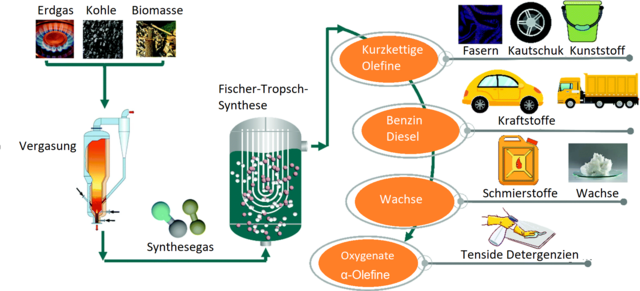
Germany faced a dual challenge: supplying a massive, highly mechanized military campaign while keeping the domestic civilian economy functional. While military transport relied heavily on synthetic fuel created through the Fischer-Tropsch process, the civilian sector and local military transport units required mass-market alternatives.
Innovation Intervention: Blended Fuels and Infrastructure Adaptation
Beyond wood gas, German innovation focused on blended fuels. A crucial adaptation was the widespread use of methanol, ethanol, and various bio-diesels (esters derived from vegetable oils) to stretch dwindling petroleum reserves. While wood gasifiers were used on stationary engines and some trucks, the government mandated that local transport fill up with methanol-gasoline blends. This forced a massive, distributed shift in fuel pump calibration and engine tuning across occupied Europe.
- The adaptation required hundreds of thousands of local mechanics, from France to Poland, to quickly unlearn traditional engine maintenance and become experts in the delicate tuning required for lower-energy blended fuels.
- This placed the burden of innovation not on a central R&D lab, but on the front-line workforce — a pure example of Human-Centered Innovation at the operational level.
The Innovation Impact:
This case highlights how resource constraints force innovation across the entire value chain. Germany’s transport system survived its oil blockade not just through wood gasifiers, but through a constant, low-grade innovation treadmill of fuel substitution, blending, and local adaptation that enabled maximum optionality under duress. The lesson is that resilience comes from flexibility and decentralization.
Conclusion: The Gasogene Mindset for the Modern Era
The wood-fired car is not a relic of the past; it is a powerful metaphor for the challenges we face today. We are currently facing the scarcity of time, carbon space, and public trust. We are entirely reliant on systems that, while efficient in normal times, are dangerously fragile under stress. The shift to sustainability, the move away from centralized energy grids, and the adoption of closed-loop systems all require the Gasogene Mindset — the ability to pivot rapidly to local, available resources and fundamentally rethink the consumption model.
Modern innovators must ask: If our critical resource suddenly disappeared, what would we use instead? The answer should drive our R&D spending today. The history of the gasogene vehicle proves that sufficiency is the mother of ingenuity, and the greatest innovations often solve the problem of survival first. We must learn to innovate under constraint, not just in comfort.
“The wood-fired car teaches us that every constraint is a hidden resource, if you are creative enough to extract it.” — Braden Kelley
Frequently Asked Questions About Wood Gas Vehicles
1. How does a wood gas vehicle actually work?
The vehicle uses a gasifier that burns wood or charcoal in a low-oxygen environment (a process called pyrolysis). This creates a gas mixture (producer gas) which is then cooled, filtered, and fed directly into the vehicle’s standard internal combustion engine to power it, replacing gasoline.
2. How did the performance of a wood gas vehicle compare to gasoline?
Gasogene cars provided significantly reduced performance, typically delivering only 50-60% of the power of the original gasoline engine. They were slower, had lower top speeds, required frequent refueling with wood, and needed a 15-30 minute warm-up period to start producing usable gas.
3. Why aren’t these systems used today, given their sustainability?
The system is still used in specific industrial and remote applications (power generation), but not widely in transportation because of the convenience and energy density of liquid fuels. Wood gasifiers are large, heavy, require constant manual fueling and maintenance (clinker removal), and produce a low-energy gas that limits speed and range, making them commercially unviable against modern infrastructure.
Your first step toward a Gasogene Mindset: Identify one key external resource your business or team relies on (e.g., a software license, a single supplier, or a non-renewable material). Now, design a three-step innovation plan for a world where that resource suddenly disappears. That plan is your resilience strategy.
Disclaimer: This article speculates on the potential future applications of cutting-edge scientific research. While based on current scientific understanding, the practical realization of these concepts may vary in timeline and feasibility and are subject to ongoing research and development.
Image credit: Google Gemini
 Sign up here to get Human-Centered Change & Innovation Weekly delivered to your inbox every week.
Pingback: Top 10 Human-Centered Change & Innovation Articles of December 2025 | Human-Centered Change and Innovation