Tag Archives: digital detox

Temporal Agency – How Innovators Stop Time from Bullying Them

LAST UPDATED: February 2, 2026 at 4:12 PM

Temporal Agency - How Innovators Stop Time from Bullying Them

GUEST POST from Art Inteligencia

We live in an age where time feels like a relentless tyrant. Deadlines loom, inboxes overflow, and the constant hum of connectivity creates an illusion of urgency that often masks a deeper problem: our lack of agency over our most precious resource. We’ve been conditioned to believe that speeding up is the only solution, when in reality, the answer lies in a more profound re-engineering of our relationship with time itself.

This isn’t about magical thinking or finding shortcuts; it’s about deeply understanding the mechanisms of time perception, leveraging neuroscience, and consciously crafting environments that enable us to reclaim temporal agency. It’s about moving from being victims of the clock to becoming its conductors.

Innovation rarely fails because of insufficient intelligence or ambition. It fails because time is weaponized against the very thinking it requires. Urgency crowds out curiosity. Speed displaces sense-making. Motion replaces meaning.

The result is a paradox: organizations move faster while understanding less.

“The real superpower isn’t bending time. It’s designing conditions where time stops bullying us.”

— Braden Kelley

Time as an Environmental Problem

Most discussions about time focus on individual discipline. This framing is incomplete. Time pressure is largely environmental.

Every unnecessary meeting, notification, and premature deadline fragments attention. Each fragment shrinks perceived time. Over time, this creates a persistent sense of acceleration, even when output stagnates.

Innovators do not need to work harder. They need environments that allow thinking to breathe.

Designing Conditions That Stretch Time

Stretching time means increasing the quality of attention per moment.

Innovative organizations intentionally design for:

  • Subjective time expansion through focused engagement
  • Reliable flow states by aligning challenge and capability
  • Lower perceived urgency through clearer prioritization
  • Greater present-moment bandwidth by reducing cognitive clutter

These conditions transform how time is felt, even when clocks remain unchanged.

Case Study 1: A Product Team Slows Down to Speed Up

A digital product team consistently missed deadlines despite aggressive schedules. Workdays were filled with context switching.

Leadership eliminated status meetings and replaced them with a shared visual dashboard updated asynchronously. Teams gained uninterrupted blocks of time.

Perceived time pressure dropped immediately. Delivery speed improved within one quarter, and employee burnout declined.

Flow as Infrastructure

Flow is often treated as a personal peak experience. In reality, it can be operationalized.

Organizations that enable flow:

  • Limit work-in-progress
  • Clarify decision rights
  • Align incentives with learning, not visibility

Flow-friendly systems create temporal elasticity—time feels abundant because it is used coherently.

Case Study 2: A Research Organization Redesigns Urgency

A research organization found that “urgent” requests dominated scientist schedules.

Leaders introduced explicit urgency criteria and delayed non-critical decisions by default. Scientists regained long stretches of uninterrupted inquiry.

Breakthrough insights increased, not because more time was added, but because time was no longer under constant assault.

From Time Management to Time Relationship

Time management asks individuals to cope. Temporal agency asks leaders to design.

When innovators command their relationship with time, they:

  • Think more clearly
  • Learn more quickly
  • Create more meaningfully

Time does not need to be conquered. It needs to be respected.

When time stops bullying us, innovation finally gets the space it deserves.


The Myth of Speed and the Reality of Felt Time

Our objective measurement of time – seconds, minutes, hours – is immutable. But our subjective experience of time is incredibly fluid. Think of those moments when an hour flies by in a blur of deep work, or when five minutes waiting for a delayed flight feels like an eternity. This discrepancy is our greatest lever for change. Innovators and creatives, especially, must learn to manipulate this subjective experience, not to work longer, but to work smarter, deeper, and more meaningfully.

Altering Subjective Experience of Time

This isn’t about wishing time away or making it go faster. It’s about enriching the present moment to reduce the *felt* pressure of time. When we are deeply engaged, focused, and present, the anxiety associated with time pressure dissipates. This requires conscious effort to minimize distractions and cultivate environments conducive to concentration.

Entering Flow More Reliably

The concept of “flow state,” popularized by Mihaly Csikszentmihalyi, is the ultimate expression of temporal agency. In flow, time ceases to exist, and our productivity skyrockets. To enter flow more reliably, we need to design for it: clear goals, immediate feedback, and a balance between challenge and skill. It’s about creating rituals that signal to our brains: “It’s time to deeply engage.”

Reducing Felt Time Pressure

A significant portion of our “time crisis” is psychological. The constant fear of missing out (FOMO), the pressure of endless notifications, and the expectation of immediate responses create a chronic state of urgency. Reclaiming agency means consciously unplugging, setting boundaries, and understanding that not all demands are created equal. Prioritization isn’t just about what to do, but what not to do, and when.

Increasing Present-Moment Bandwidth

In our hyper-connected world, our attention is constantly fragmented. We’re often performing tasks while thinking about the next five things. This multitasking illusion significantly degrades our present-moment bandwidth. Practicing mindfulness, single-tasking, and deep work techniques expands our capacity to engage fully with the task at hand, making each unit of objective time more potent and less stressful.


Practical Ways to Reclaim Temporal Agency

1. The “Temporal Audit”

Before you can optimize, you must understand. Conduct a rigorous audit of how you spend your time, not just objectively, but also subjectively. Where does time drag? Where does it fly? What activities genuinely recharge you versus those that drain your energy and create more pressure?

2. Deep Work Blocks

Inspired by Cal Newport, schedule dedicated, uninterrupted blocks for your most cognitively demanding tasks. Turn off notifications, close irrelevant tabs, and commit to single-tasking. These aren’t just work blocks; they are flow-creation blocks.

3. Strategic Procrastination (with a twist)

Not all tasks require immediate attention. Consciously defer non-urgent tasks to specific “batching” periods. This reduces the mental load of constantly switching contexts and allows for deeper focus on critical items. The “twist” is that this is a conscious decision, not an avoidance tactic.

4. The “No Meeting Wednesday” (or similar)

Create specific days or half-days entirely free of meetings. This provides an oasis for deep work, strategic thinking, and creative exploration without the constant interruptions that fragment our schedules and minds.

5. Digital Detox Rituals

Implement daily, weekly, or even monthly periods of disengagement from digital devices. This isn’t just about reducing screen time; it’s about allowing your mind to wander, to connect disparate ideas, and to replenish its creative reserves without the constant demand for attention.


Case Studies in Temporal Mastery

Case Study 3: The Biotech Founder’s “Un-Schedule”

A biotech startup founder was overwhelmed by the demands of fundraising, product development, and team management. Instead of trying to pack more into her day, she adopted an “un-schedule” approach. She scheduled only 3-4 hours of high-value, deep work each day, with the rest of her time dedicated to reactive tasks, strategic thinking, or even intentional white space. By consciously limiting her scheduled workload, she created mental breathing room, leading to more breakthroughs and less burnout. Her team also reported feeling less pressured, as her clarity translated into more focused direction. The result was a 25% reduction in project timelines due to improved focus and decision-making.

Case Study 4: The Creative Agency’s “Momentum Days”

A boutique creative agency struggled with project delays and artist burnout due to constant client revisions and internal meetings. They implemented “Momentum Days” twice a week where all internal meetings were banned, and external client communication was batched into specific windows. These days were dedicated solely to creative execution. By protecting this uninterrupted time, the agency saw a dramatic improvement in output quality, a 15% increase in client satisfaction due to faster turnaround, and a noticeable boost in team morale and creative satisfaction.

Reclaiming temporal agency isn’t about finding more hours in the day; it’s about making the hours you have more meaningful, more productive, and less stressful. It’s an act of conscious design, a rebellion against the tyranny of the clock. By understanding and manipulating our subjective experience of time, by fostering flow, and by implementing disciplined practices, we can cease being bullied by time and start truly commanding our relationship with it, unlocking unprecedented levels of innovation and well-being.


Frequently Asked Questions

What does Braden Kelley mean by “temporal agency”?

Temporal agency refers to our ability to influence our subjective experience of time and control how we allocate our attention, rather than feeling constantly dictated by the clock or external pressures. It’s about commanding our relationship with time.

How can innovators enter flow state more easily?

To enter flow more reliably, innovators should design their environment with clear goals, immediate feedback loops, and tasks that strike a balance between challenge and their current skill level. Minimizing distractions and creating dedicated “deep work” rituals are key.

What is the “Temporal Audit”?

A “Temporal Audit” involves rigorously tracking and analyzing how one spends time, both objectively (what tasks are performed) and subjectively (how one feels about that time), to identify patterns of engagement, disengagement, and areas where time pressure is most acute.

Disclaimer: This article speculates on the potential future applications of cutting-edge scientific research. While based on current scientific understanding, the practical realization of these concepts may vary in timeline and feasibility and are subject to ongoing research and development.

Image credits: ChatGPT

Subscribe to Human-Centered Change & Innovation WeeklySign up here to get Human-Centered Change & Innovation Weekly delivered to your inbox every week.
Re-Centering Human Connection in Digital Design

From Screen Time to Real Time

LAST UPDATED: November 17, 2025 at 12:29PM

Re-Centering Human Connection in Digital Design

GUEST POST from Chateau G Pato

We live in an age of unprecedented digital connectivity. From instant messaging to global video calls, social media feeds to virtual reality, our lives are increasingly mediated by screens. While these technologies promise to bring us closer, many of us feel a growing sense of isolation, distraction, and even a loss of authentic human interaction. The paradox is stark: the more “connected” we become digitally, the more disconnected we can feel in real life.

This isn’t an indictment of technology itself, but a call to action for its designers and leaders. As human-centered change advocates, we must ask: Are we designing digital experiences that genuinely foster connection, or merely amplify convenience and fleeting engagement? The imperative is to shift our focus from maximizing “screen time” to optimizing “real time” — to design digital tools that intentionally guide us back to meaningful human connection, not away from it.

Re-centering human connection in digital design isn’t just about ethics; it’s about building products and services that truly resonate, create deeper loyalty, and solve fundamental human needs in a world saturated with digital noise.

The Disconnect: How Digital Design Can Go Astray

Often, digital design prioritizes:

  • Efficiency over Empathy: Streamlining tasks can inadvertently strip away opportunities for nuanced human interaction.
  • Engagement over Well-being: Algorithms optimized for attention can lead to addictive patterns and social comparison, diminishing mental health.
  • Broadcasting over Belonging: Social platforms often favor one-to-many communication, diluting the intimacy and reciprocity of one-to-one or small-group interaction.
  • Convenience over Consequence: Easy digital interaction can reduce the effort — and thus the perceived value — of real-world encounters, making authentic connection feel less necessary.

The goal is not to eliminate these digital conveniences, but to embed human connection into their core, making it an intended outcome, not an accidental byproduct.

Key Characteristics of Connection-Centered Digital Design

Designing for real human connection means integrating specific principles into every aspect of digital product development, making human needs the central focus:

  • Intentional Friction: Introducing small, deliberate barriers that encourage thoughtfulness or shift interaction to real life (e.g., prompting users to consider who they’re sending a message to, or suggesting a real-world meet-up).
  • Empathy-Driven Interfaces: Using language, visuals, and interaction patterns that feel genuinely supportive, understanding, and non-judgmental, mirroring positive human interaction.
  • Facilitating Offline Action: Designing features that explicitly encourage and enable users to transition from online interaction to real-world engagement (e.g., event planning tools, local group discovery, “put your phone down” prompts).
  • Valuing Deep Engagement Over Fleeting: Prioritizing meaningful, sustained interactions over superficial likes or endless scrolling, fostering true intellectual and emotional investment.
  • Transparency in Algorithms: Helping users understand how their digital environment is curated, fostering a sense of control and agency over their experience, rather than feeling manipulated.
  • Supporting Micro-Communities: Building tools that empower small, intimate groups to connect and collaborate effectively, fostering true belonging and mutual support.

Key Benefits of Re-Centering Human Connection

When digital design prioritizes genuine connection, the benefits extend far beyond immediate user satisfaction, impacting loyalty, well-being, and brand reputation:

  • Increased Loyalty & Retention: Users who feel genuinely connected to a platform or community, and through it to other humans, are more likely to stay, engage deeply, and advocate for it.
  • Enhanced Well-being: Products that foster healthy, real-world connections contribute positively to user mental and social health, leading to more sustainable, positive usage patterns.
  • De-risked Reputation: Companies known for building “human-first” digital experiences cultivate trust and differentiate themselves in a crowded, often criticized, digital landscape, building resilience against negative sentiment.
  • Deeper Innovation: Understanding the true human need for connection leads to more profound product insights and breakthrough designs that address fundamental human desires, rather than superficial wants.
  • Stronger Communities: Digital platforms can become true enablers of robust, resilient real-world communities, driving collective action, shared value, and a sense of shared purpose.

Case Study 1: The “Local Connect” Feature in a Retail App

Challenge: Declining Foot Traffic & Online Anonymity

A national retail chain with local stores was struggling with declining foot traffic, despite a strong e-commerce presence. Their existing app focused solely on online shopping and product discovery, leaving customers feeling disconnected from their local community stores.

Connection-Centered Intervention:

The chain introduced a “Local Connect” feature into their existing retail app. This feature didn’t just show local store hours; it allowed customers to:

  • See local store events (workshops, product launches) and RSVP directly.
  • Connect with local store associates for personalized product recommendations or styling advice via moderated, time-bound chat (encouraging an in-store follow-up).
  • Join interest-based “local circles” (e.g., “Gardening Enthusiasts,” “Book Clubbers”) hosted by local store staff, facilitating real-world meet-ups and discussions.

The Human-Centered Lesson:

This re-design recognized that physical retail thrives on community. The app moved beyond just being a shopping portal to a facilitator of local human interaction. It created “intentional friction” by making personal connections online that were designed to culminate in real-world interactions. This led to a measurable increase in local store foot traffic, higher conversion rates on specific products, and a stronger sense of community among customers, proving that digital can indeed drive real-world connection and breathe new life into traditional retail.

Case Study 2: The “Digital Detox Buddy” App

Challenge: Pervasive Digital Distraction in Personal Relationships

Many couples and families struggled with constant digital distraction during quality time together. Existing “digital detox” apps were often punitive or solo-focused, failing to address the social dynamic of putting down devices.

Connection-Centered Intervention:

A new app emerged, “Digital Detox Buddy,” designed explicitly for small groups (couples, families, friends). Instead of just blocking apps, it gamified shared, screen-free time. Users would “commit” to a screen-free period together, placing their phones face-down on a shared digital “mat” in the app. If anyone picked up their phone before the timer ended, a fun, agreed-upon “penalty” (e.g., buying coffee for the group, doing a silly dance) was activated, recorded by the app. The app also provided conversation starters and suggestions for offline activities for the group.

The Human-Centered Lesson:

This app successfully leveraged digital design to reduce screen time and increase real-world connection. By introducing shared accountability and positive reinforcement through gamification, it turned a solo struggle into a collective goal. It understood that human connection is often about shared experience and lighthearted challenge, using digital means to achieve a profoundly analog outcome: deeper, uninterrupted time with loved ones. It created an interface for putting interfaces away, intelligently using technology to foster human presence.

Designing for a More Connected Future

Re-centering human connection in digital design isn’t about shunning technology; it’s about elevating it to its highest purpose. It requires empathy, intentionality, and a willingness to challenge established norms of “engagement” metrics in favor of deeper, more meaningful outcomes. We must continually ask ourselves:

  • Does this feature encourage face-to-face interaction or inadvertently replace it?
  • Does this experience foster genuine empathy and understanding or superficial judgment?
  • Does this tool help users feel more connected to other humans, or more isolated in a digital crowd?

By consciously integrating these principles, we can design a digital future that not only connects us more efficiently but also more profoundly, enabling us to thrive in both our screen time and, most importantly, our real time. This is the essence of truly human-centered digital innovation.

“The most human-centered digital designs are those that eventually get us to look up from our screens and truly see each other.”

Your first step toward connection-centered design: Identify one digital interaction your product or service currently offers that could lead to a richer, real-world connection but doesn’t. Brainstorm three small, intentional design changes — perhaps a prompt, a suggested action, or a subtle gamification — that could encourage users to transition from screen time to real time in that specific scenario. Focus on how digital can be a bridge, not a barrier.

Extra Extra: Because innovation is all about change, Braden Kelley’s human-centered change methodology and tools are the best way to plan and execute the changes necessary to support your innovation and transformation efforts — all while literally getting everyone all on the same page for change. Find out more about the methodology and tools, including the book Charting Change by following the link. Be sure and download the TEN FREE TOOLS while you’re here.

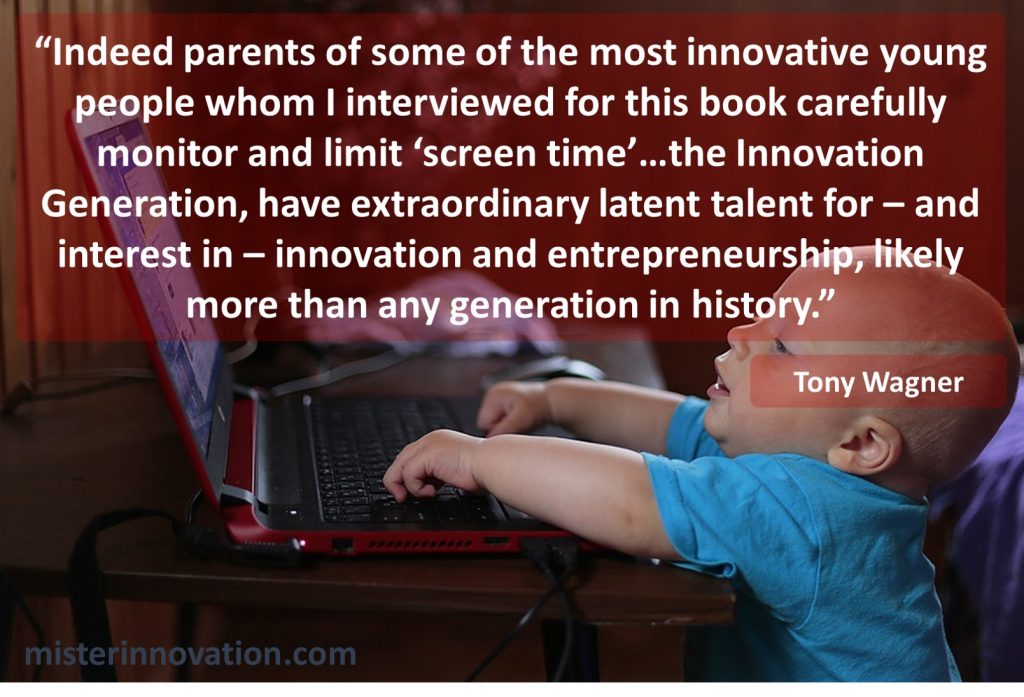
Image credit: 1 of 1,000+ FREE quote slides for your presentations at http://misterinnovation.com

Subscribe to Human-Centered Change & Innovation WeeklySign up here to get Human-Centered Change & Innovation Weekly delivered to your inbox every week.