
GUEST POST from Shep Hyken
When you have your customer’s confidence, the opportunity to create an excellent customer experience dramatically improves. That confidence comes from consistency. The customer knows what to expect, even if any problems or issues arise. They know you’ll take care of them.
This is a follow-up to my article that covered the Customer Service Recovery Paradox, in which a customer’s perception of the company is higher after a problem or complaint is resolved than if the problem had never happened at all. One of our subscribers, Sean Crichton-Browne of Market Culture, shared a great comment. The short version is that when you have the customer’s confidence, especially in potentially tenuous situations, customers work with you rather than against you.
Sean’s insight is spot-on and worth diving into further. Think about the last time you had a problem with a company you trusted versus one that you didn’t. By the way, that lack of trust could be because you haven’t yet experienced how they handle a problem, not because of any inconsistencies or problems in the past. With the trusted company, you most likely approached the conversation differently. You were more patient as you explained the situation, and you were more open to their suggestions and solutions.
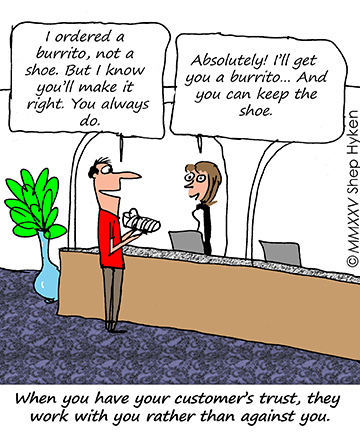
Contrast that with a company you don’t yet trust. You go into the conversation with your guard up, wondering if you’ll get the response and answers you hope for. You may even be prepared to fight for what you believe is right.
When customers trust you, they:
- Give you the benefit of the doubt when mistakes happen.
- Share more information about what went wrong, making it easier to fix.
- Accept reasonable solutions rather than demanding unrealistic ones.
- Remain calm and respectful, making it much easier to help them without having to first de-escalate the customer’s anger.
As mentioned, and worth mentioning again, confidence comes from consistency. Even if the customer has only done business with you once or twice, it can be earned through all of the positive touchpoints of those interactions. Every interaction, big or small, builds confidence. Every time you answer the phone, return a call promptly, respond to email quickly, keep your promises, and more, you’re building trust. When something does go wrong, not if something goes wrong, you will have those past interactions working for you.
Yes, we need to react to complaints and problems when they happen, but remember that your ability to resolve those issues successfully may have been determined long before the problem ever occurred. It’s determined by how you treat customers and manage every interaction, the small ones and the big ones. Every touchpoint is an opportunity to build the confidence that will make future problems easier to resolve. When you have their trust, customers work with you rather than against you.
Image credits: Flickr Mary Jane, Shep Hyken
 Sign up here to join 17,000+ leaders getting Human-Centered Change & Innovation Weekly delivered to their inbox every week.