
Tag Archives: customer expectations

The Reality Rule for Business

The Reality Rule for Business

GUEST POST from Shep Hyken

Most of us learned the Golden Rule at a young age: “Do unto others as you would have them do unto you.” This is a perfect rule for business, and specifically customer service and customer experience (CX). It translates into treating customers the way you want to be treated. It makes sense … or does it?

My colleague Dr. Tony Alessandra came up with a version of the Golden Rule he calls the Platinum Rule: “Do unto others as they would like done unto them.” Changing two words, you to them, in this rule means not everyone wants to be treated the in same way you might like to be treated. And in a broader sense, not everyone wants to be treated the same way.

However, when it comes to certain customers, no matter how you treat them, it doesn’t matter. If you don’t recognize this, it can break both employee satisfaction and customer satisfaction. That means it can also break a business.

The Expectation Trap

Recently, I read Give Hospitality by Taylor Scott, which tells the story of an employee who left her job because of a toxic workplace culture and found the perfect job where people, both employees and customers, were treated with respect and dignity. In her second week of training, she read a quote displayed on the company’s training room wall:

“Nothing in the Golden Rule says others will treat us as we have treated them. It only says we must treat others the way we would want to be treated.” – Rosa Parks

This quote from the legendary civil rights activist highlights a basic truth about customer service: exceptional treatment of customers doesn’t guarantee the customer will respond the same way. Yet many front-line employees and managers fall into the expectation trap and become frustrated when customers remain difficult despite receiving outstanding service.

The Danger of Misplaced Expectations

When employees expect customers to change their behavior to mirror that of employees, there is a possible danger of:

  • Employee Burnout: Front-line staff become disillusioned when their exceptional effort to take care of their customers isn’t appreciated or met with a more positive response. This is one of the top reasons it’s hard to keep good customer service reps. They say, “I can’t take it anymore,” and quit.
  • Inconsistent Customer Service: Frustrated employees may begin to take on the attitudes of their difficult customers, creating an inconsistent and bad experience for other customers.
  • Customers Leave: Difficult customers can become your most loyal customers when their problems are resolved with patience, kindness and professionalism, even if they don’t show it in their reactions. To avoid this, employees must be persistent and follow a new rule. (Read on!)
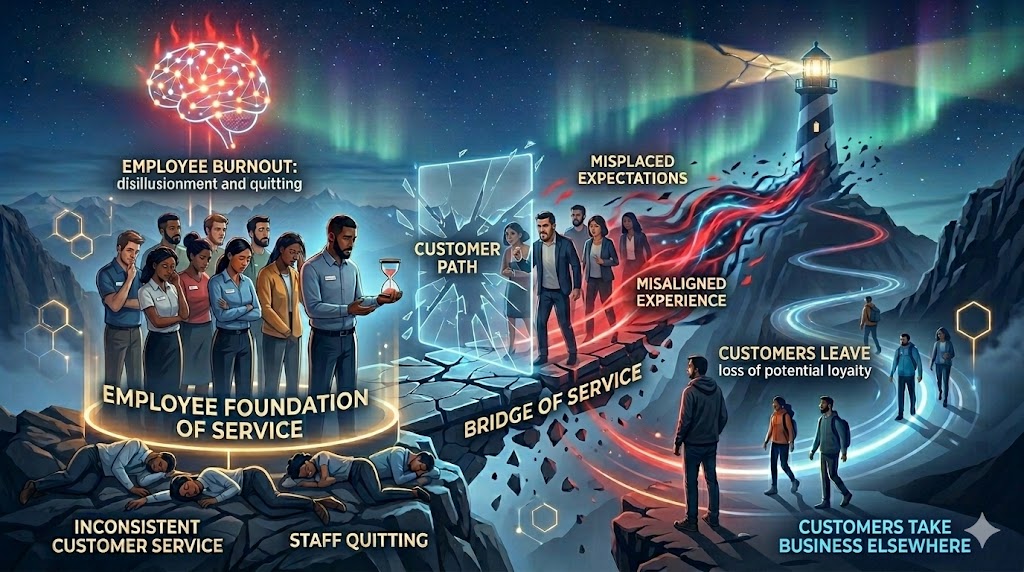
The Danger of Misplaced Expectations

The Reality Rule

Up until now, we have had the Golden Rule and the Platinum Rule. Now we have the Reality Rule:

Treat customers well, even if they don’t treat you well.

This isn’t about unacceptable abuse from a customer. Customers who cross the line with verbal abuse and threats fall under the category of Customers Who Aren’t Worth Doing Business With. Customers are allowed to be angry and agitated. They may be upset about the company or a product, and sometimes their behavior is driven by factors beyond your control.

The Reality Rule has three components:

  1. Control Your Response: While you can’t control the customer’s behavior, you have complete control over your attitude, effort and professionalism. Don’t let your angry customer’s behavior cause you to derail.
  2. Be Consistent: You know what it takes to deliver a great experience. Stay true to the core value of taking care of customers and, as just mentioned and worth mentioning again, don’t let your angry customer’s behavior cause you to go off track.
  3. Turn Foes into Friends: This is more of a goal than a rule, but it’s a goal you must start with in every tenuous interaction. My annual customer service and CX research finds that 81% of customers said they would consider returning to a company if it actively sought to make amends for a bad customer experience. When you handle a complaint properly, the customer will have higher confidence in you and your company than if the problem had never happened at all.

Final Words

When your team embraces the Reality Rule, magic happens. Difficult customers often transform into loyal advocates. Employee satisfaction increases when they understand their role and what they have control over. And your organization builds a reputation for taking care of customers, even when there are problems or complaints.

Remember, you’re not treating customers well because you expect them to change their behavior, although it’s nice when it happens — and sometimes it does. You’re doing it because it’s the right thing to do, knowing in the long run it pays dividends to properly manage problems and complaints. The Reality Rule creates the kind of experience that gets customers to say, “I’ll be back!

This article was originally published on Forbes.com.

Image credits: Google Gemini

Subscribe to Human-Centered Change & Innovation WeeklySign up here to join 17,000+ leaders getting Human-Centered Change & Innovation Weekly delivered to their inbox every week.

Understanding Customer Needs and Expectations

Key considerations for planning a customer-centric digital transformation

Understanding Customer Needs and Expectations

GUEST POST from Chateau G Pato

In today’s rapidly evolving business landscape, digital transformation has become a critical imperative for organizations looking to stay competitive and relevant. However, many companies often overlook one crucial aspect of this process – understanding and meeting the needs and expectations of their customers.

A customer-centric approach to digital transformation is essential in ensuring that the changes implemented align with what customers want and need. By putting the customer at the center of the transformation journey, businesses can drive greater customer satisfaction, loyalty, and ultimately, business growth.

To effectively plan a customer-centric digital transformation, organizations must first gain a deep understanding of their customers’ needs, preferences, and pain points. This can be done through a variety of methods, such as customer surveys, focus groups, and data analytics. By collecting and analyzing this information, businesses can identify key trends and insights that can inform their digital transformation strategy.

Case study 1: Amazon

Amazon is a prime example of a company that has successfully implemented a customer-centric digital transformation. By leveraging data analytics and machine learning, Amazon is able to personalize the online shopping experience for each customer, recommend products based on their browsing history, and offer fast and convenient delivery options. This customer-centric approach has helped Amazon cement its position as the largest online retailer in the world, with a loyal customer base and strong brand reputation.

Case study 2: Starbucks

Starbucks is another company that has prioritized customer needs and expectations in its digital transformation efforts. By investing in its mobile app and loyalty program, Starbucks has made it easier for customers to order and pay for their favorite drinks, earn rewards, and receive personalized offers. This has not only improved the customer experience but also increased customer engagement and loyalty. As a result, Starbucks has seen significant growth in its digital sales and overall revenue.

Conclusion

Understanding and meeting customer needs and expectations are essential considerations for planning a successful customer-centric digital transformation. By putting the customer at the center of the transformation journey and leveraging data and insights, businesses can drive greater customer satisfaction, loyalty, and business success. Through the examples of Amazon and Starbucks, we can see the tangible benefits of taking a customer-centric approach to digital transformation. By learning from these companies and incorporating their strategies into their own efforts, organizations can position themselves for long-term success in the digital age.

SPECIAL BONUS: The very best change planners use a visual, collaborative approach to create their deliverables. A methodology and tools like those in Change Planning Toolkit™ can empower anyone to become great change planners themselves.

Image credit: misterinnovation.com

Subscribe to Human-Centered Change & Innovation WeeklySign up here to get Human-Centered Change & Innovation Weekly delivered to your inbox every week.

Anticipating Future Customer Needs

Techniques for understanding customer expectations and designing products and services that align with evolving needs

Anticipating Future Customer Needs

GUEST POST from Chateau G Pato

In today’s fast-paced and ever-changing market landscape, businesses must constantly adapt to meet the evolving needs and expectations of their customers. Anticipating future customer needs is essential for ensuring long-term success and staying ahead of the competition. By understanding customer expectations and designing products and services that align with these expectations, businesses can create a loyal customer base and drive growth.

One of the key techniques for anticipating future customer needs is the use of data analytics. By analyzing customer data, businesses can gain valuable insights into customer behaviors, preferences, and trends. This data can help businesses identify emerging patterns and anticipate future needs before they become mainstream. For example, a retail company may analyze purchasing data to identify trends in consumer preferences and tailor their product offerings accordingly.

Another technique for understanding customer expectations is to engage with customers directly through surveys, focus groups, and feedback mechanisms. By soliciting input from customers, businesses can gain a deeper understanding of their needs and preferences. For example, a software company may conduct focus groups to gather feedback on new features and functionalities, allowing them to tailor their product development efforts to meet customer expectations.

Case Study 1: Amazon

Amazon is a prime example of a company that excels at anticipating future customer needs. Through their extensive use of data analytics, Amazon is able to track customer behavior and preferences in real-time. This allows them to recommend products to customers based on their browsing and purchasing history, creating personalized shopping experiences that align with customer expectations. Additionally, Amazon continuously innovates and introduces new services, such as Amazon Prime and Alexa, to meet evolving customer needs.

Case Study 2: Netflix

Netflix is another company that effectively anticipates future customer needs. Through data analytics, Netflix analyzes viewing patterns and preferences to recommend personalized content to users. By understanding what their customers like to watch, Netflix can tailor their content library to meet evolving preferences and expectations. Additionally, Netflix invests in producing original content, such as Stranger Things and The Crown, to cater to niche audiences and stay ahead of competitors.

Conclusion

Anticipating future customer needs is essential for businesses looking to stay competitive in today’s rapidly changing market. By utilizing techniques such as data analytics and engaging with customers directly, businesses can gain valuable insights into customer expectations and design products and services that align with evolving needs. Case studies like Amazon and Netflix showcase how businesses can successfully anticipate future customer needs and drive growth through customer-centric strategies. By prioritizing customer expectations, businesses can create a loyal customer base and thrive in an increasingly competitive market.

SPECIAL BONUS: The very best change planners use a visual, collaborative approach to create their deliverables. A methodology and tools like those in Change Planning Toolkit™ can empower anyone to become great change planners themselves.

Image credit: Pexels

Subscribe to Human-Centered Change & Innovation WeeklySign up here to get Human-Centered Change & Innovation Weekly delivered to your inbox every week.