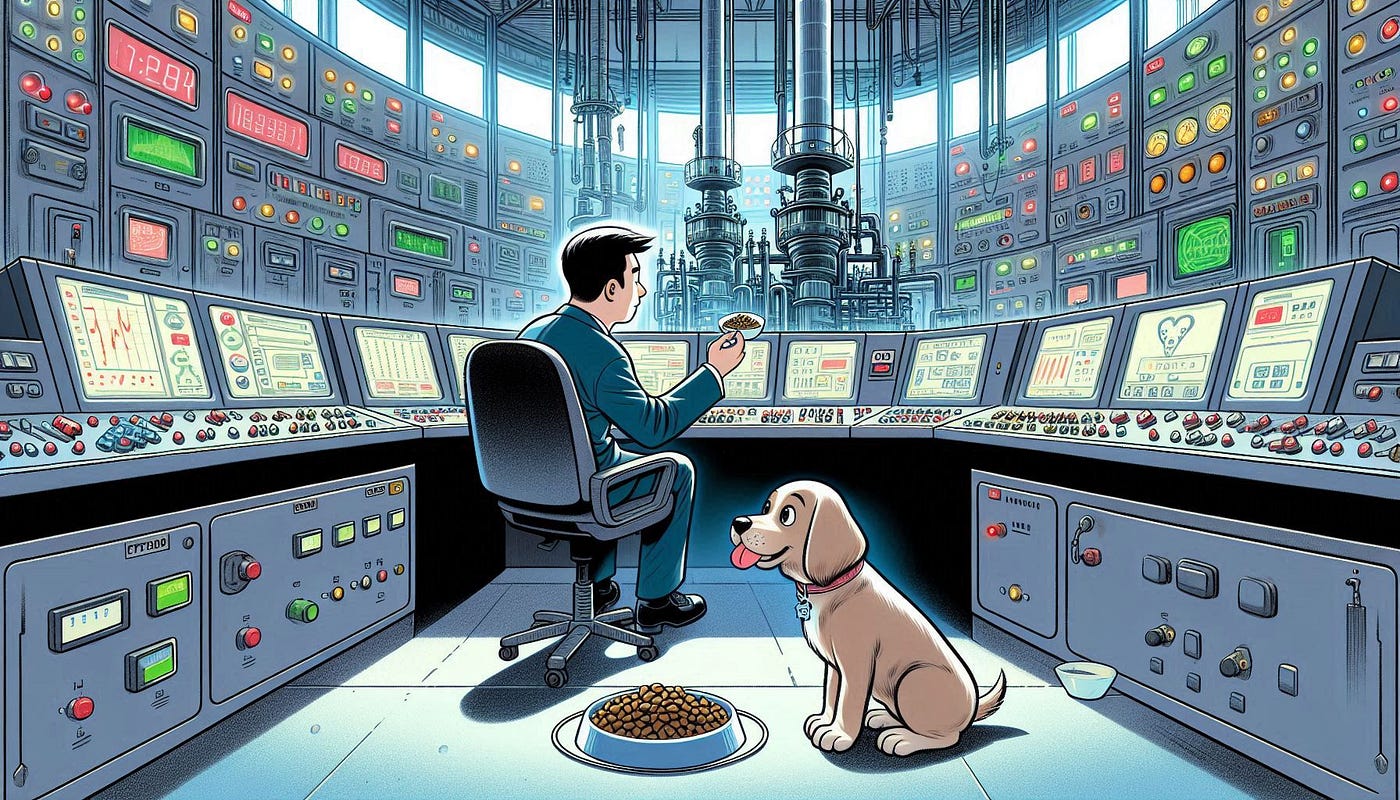
GUEST POST from Chateau G Pato
I. The Machine Horizon: Auditing What AI Solves
The narrative surrounding artificial intelligence routinely gravitates toward absolute replacement, operational efficiency, and rapid cost optimization. Organizations scramble to integrate generative models and autonomous agents into their workflows, treating speed as the ultimate metric of progress. Yet, to construct a sustainable future-ready enterprise, we must conduct a clear-eyed audit of what machine intelligence actually solves—and where its inherent boundaries begin to emerge.
The Scalability Paradox
AI excels exceptionally at scale, high-throughput compute, pattern recognition across massive datasets, and routine task execution. It collapses processing time from days to milliseconds. However, this creates a paradoxical reality: as the technical velocity of output accelerates, the volume of noise increases exponentially. Acceleration without intentional strategic direction merely allows organizations to make bad decisions faster.
Strategic Imperative: Machine intelligence delivers unprecedented speed and synthesis, but raw speed without strategic alignment only accelerates friction across the enterprise.
The Commoditization Trap
When every competitor in an industry gains access to identical algorithmic models, standardized prompt libraries, and foundation architectures, algorithmic efficiency ceases to function as a durable competitive differentiator. Standardized intelligence yields standardized outcomes.
- Algorithmic Uniformity: Reliance on off-the-shelf models leads to homogenized strategic thinking and me-too customer experiences.
- The Differentiation Vacuum: Unique value shifts away from raw computational execution to human insight, brand narrative, and proprietary domain experience.
The Expectation Gap
Automation alone consistently fails to build internal organizational capability or enduring external customer trust. Implementing technology solves technical bottlenecks, but technology never adopts itself. When leadership misinterprets software deployment as organizational transformation, they create a widening gap between algorithmic capability and human adoption.
II. The Unautomatable Triad: Empathy, Context, and Meaning
While artificial intelligence excels at processing data and detecting explicit trends, competitive advantage in modern enterprise design resides in human capabilities that algorithms cannot replicate. The true frontier of innovation is not technical speed, but the ability to extract meaning, demonstrate genuine empathy, and synthesize context across complex systems.
Deep Customer & Employee Experience (CX/EX)
AI engines process metrics, sentiment scores, and telemetry data, yet they remain blind to emotional nuance. Human leaders and experience designers uncover latent needs—the unarticulated frustrations and aspirations that never appear in standard analytics dashboards.
Human Insight: Algorithms measure behaviors, but humans understand motivations. Transforming experience requires decoding the emotional subterranean layers of customer and employee journeys.
Contextual Wisdom & Sensemaking
Machine models operate fundamentally by extrapolating historical patterns into the future. However, enterprise strategy rarely unfolds in a controlled historical loop. When navigating unprecedented market shifts, ethical dilemmas, or organizational crises, humans provide contextual wisdom—weighing trade-offs, reading non-verbal dynamics, and making judgements where data is incomplete or ambiguous.
- Beyond Data Synthesis: Sensemaking is the uniquely human process of determining what information actually matters in a given strategic context.
- Ethical & Cultural Stewardship: Preserving brand integrity and organizational culture requires human accountability that cannot be outsourced to code.
Shared Purpose & Vision
An algorithm can calculate an optimized path to an objective, but it cannot inspire people to pursue it. Organizational momentum depends on shared purpose and trust. Leaders translate raw strategic objectives into a compelling change story, aligning diverse teams around a vision that sparks commitment rather than compliance.
III. Human-Centered Change™ in the AI Era
As algorithms take on complex analytical operations, the success of technological transformation increasingly rests on human dynamics. Technology enables capability, but human adoption dictates value creation. Organizations that treat AI deployment purely as a technical integration repeatedly fall into predictable patterns of friction, resistance, and stranded capital.
Overcoming the 70% Failure Rate
For decades, studies have cited that up to 70 percent of organizational transformation initiatives fail to achieve their intended business outcomes. In the AI era, this risk is compounded: algorithms can generate strategies, scripts, and workflows in seconds, but human behavior changes at the speed of trust. Transformations fail not because the technology is flawed, but because leaders treat human adoption as an afterthought rather than the core design criteria.
Core Principle: Software never adopts itself. Sustainable enterprise transformation requires shifting focus from technical delivery to human capability creation.
Visual Collaboration with the Change Planning Canvas™
To bridge the gap between AI-driven strategy and execution, organizations require shared visual frameworks that drive alignment across cross-functional leadership. Utilizing tools like the Change Planning Canvas™ transforms abstract technology goals into a co-created visual plan.
- Cross-Functional Alignment: Gets leadership, project managers, and operational teams literally and figuratively on the same page.
- Mapping Friction Points: Identifies organizational barriers, skill gaps, and psychological resistance points long before deployment.
- Shared Ownership: Moves stakeholders from passive recipients of change to active architects of the transformation journey.
Designing for Continuous Adoption
Achieving the human advantage in an automated landscape demands shifting from top-down directives to participatory design. When employees help co-create the workflows, guardrails, and user experiences around AI systems, resistance transforms into advocacy. Designing for human adoption ensures that technological speed is paired with collective organizational capability.
IV. FutureHacking™: Shaping Tomorrow vs. Predicting It
In a business landscape dominated by predictive analytics, leaders frequently mistake algorithmic forecasting for strategic foresight. AI models project tomorrow by calculating probabilities based on yesterday’s datasets. However, true futurology is not an exercise in passive prediction—it is an active discipline of intentional shape-making.
Beyond Algorithmic Extrapolation
Machine learning algorithms excel at identifying linear trends and optimizing within existing paradigms. Yet, breakthrough innovation and market disruption rarely follow linear trajectories. Relying exclusively on predictive AI creates strategic blind spots, trapping organizations in historical assumptions and leaving them vulnerable to non-linear disruptions.
Futurology Principle: AI forecasts the expected future based on past data; human strategic foresight architects the preferred future through creative vision and bold intent.
Strategic Foresight & Weak Signals
Pioneering organizations utilize FutureHacking™ methodologies to identify weak signals—emerging cultural shifts, subtle behavioral changes, and nascent technology overlaps before they register in macro-data streams. Synthesizing these weak signals into actionable strategic choices requires human intuition, imagination, and holistic sensemaking.
- Sensing Discontinuity: Spotting inflection points where market dynamics break away from historic norms.
- Scenario Architecture: Constructing dynamic alternative futures to stress-test enterprise strategy against uncertainty.
Architecting Sustainable Innovation Capabilities
Translating strategic foresight into continuous capability requires orchestrating diverse human roles within the innovation ecosystem. While AI accelerates task execution, humans drive the key personas needed to move ideas from concept to commercial reality—from Revolutionaries who challenge status quo assumptions to Evangelists who build organizational buy-in.
V. The Symbiotic Enterprise: Orchestrating Human + Machine
The ultimate objective of digital transformation is not to build an automated enterprise, but to architect a symbiotic one. When organizations move past false dichotomies of human replacement, they unlock an ecosystem where computational efficiency amplifies human creativity, strategic vision, and empathy.
The Business Architect’s New Role
Leaders must transition from traditional process managers to ecosystem orchestrators. Redesigning work for the AI era requires clearly defining the operational boundaries: assigning high-volume data synthesis, routine execution, and pattern processing to machine models, while elevating human roles to focus on judgment, strategic direction, visual alignment, and stakeholder trust.
Orchestration Imperative: Competitive leadership is measured not by how much technology an enterprise deploys, but by how seamlessly machine power amplifies human capability across every touchpoint.
Building a Culture of Infinite Innovation
Sustained market leadership requires moving beyond episodic technology adoption toward a perpetual organizational capability. Utilizing frameworks like the Eight I’s of Infinite Innovation™ ensures that human curiosity and structured experimentation continuously feed the enterprise pipeline, turning technological disruptions into growth catalysts.
- Continuous Capability: Embedding structured innovation processes into daily organizational rhythms rather than relying on one-off initiatives.
- Human-Centered Synergy: Ensuring technological deployments serve to liberate talent for high-value strategic and creative contributions.
Final Strategic Imperative
Algorithms provide the engine, but human purpose remains the compass. Winning the future requires investing as heavily in human adoption, visual collaboration, and organizational empathy as we do in computational power. Those who master this balance will not merely adapt to tomorrow—they will shape it.
Frequently Asked Questions
What is the core limitation of AI in enterprise transformation?
AI excels at pattern recognition, data synthesis, and task execution at scale, but it cannot automate empathy, sensemaking, contextual judgment, or human adoption. Technology enables capability, but human adoption dictates value creation.
How does Human-Centered Change™ improve project success rates?
By shifting focus from technical implementation to human capability creation, Human-Centered Change™ addresses the psychological resistance and organizational friction behind the 70% transformation failure rate, utilizing visual frameworks like the Change Planning Canvas™ to build cross-functional alignment.
What is the difference between AI forecasting and FutureHacking™?
AI forecasting relies on extrapolating historical data to predict linear trends, whereas FutureHacking™ leverages human strategic foresight to identify weak signals, sense market discontinuities, and actively architect a preferred future.
EDITOR’S NOTE: Braden Kelley’s Problem Finding Canvas can be a super useful starting point for doing design thinking or human-centered design.
“The Problem Finding Canvas should help you investigate a handful of areas to explore, choose the one most important to you, extract all of the potential challenges and opportunities and choose one to prioritize.”
Image credit: Gemini
 Sign up here to get Human-Centered Change & Innovation Weekly delivered to your inbox every week.