Flow State for Teams
GUEST POST from Chateau G Pato
LAST UPDATED: January 7, 2026 at 12:26PM
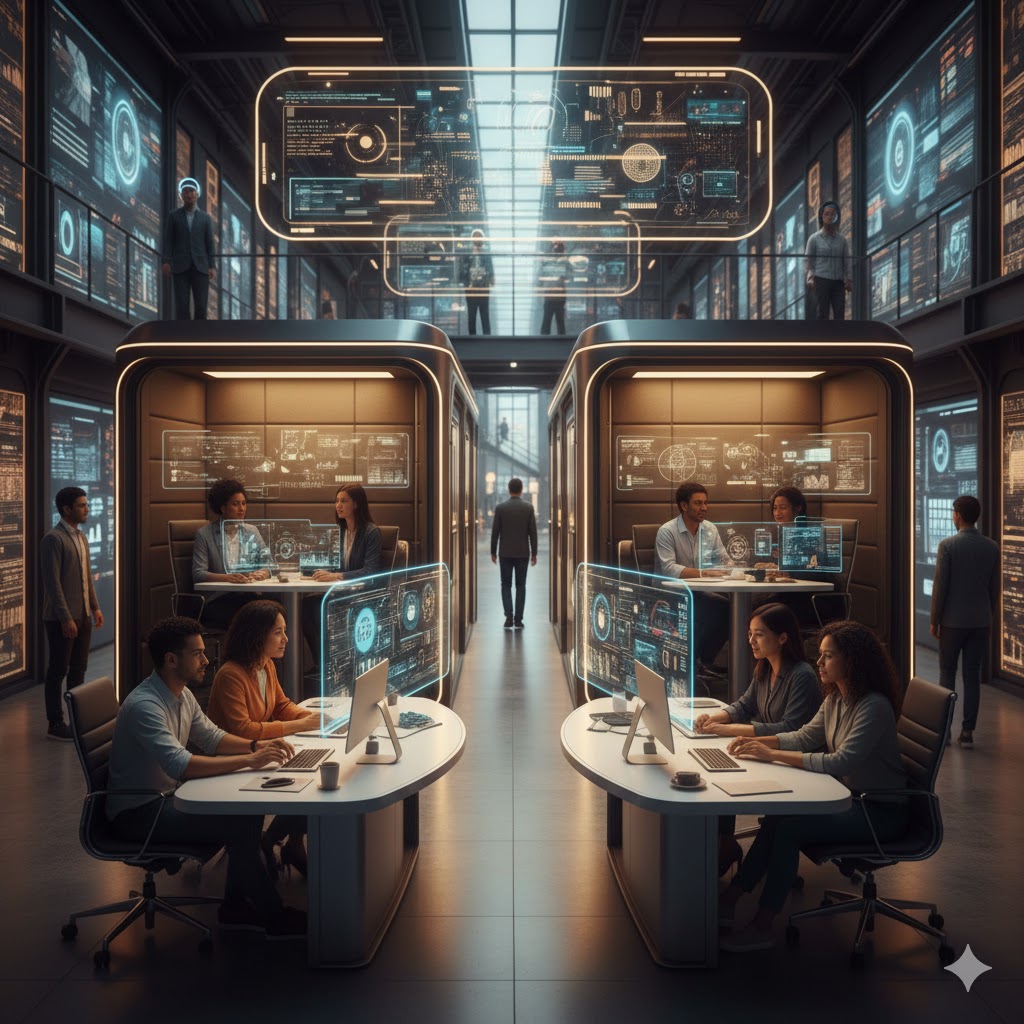
We have long understood individual “Flow” — that psychological state of optimal experience where time disappears and creativity peaks. But in 2026, the real competitive advantage lies in Team Flow. This is the ability of a group to synchronize their cognitive efforts, moving as a single, high-performance organism toward a shared outcome. To achieve this, we must stop leaving focus to chance and start designing for it as a core architectural requirement of the organization.
“Collective flow is the highest form of human-centered efficiency. When a team synchronizes their focus, they don’t just work faster; they inhabit the future together, turning the ‘useful seeds of invention’ into reality before the status quo even realizes the soil has been disturbed.” — Braden Kelley
The Architecture of Deep Collaboration
Many organizations fall into the Efficiency Trap, assuming that because information flows quickly through instant messaging and real-time dashboards, innovation must be happening. In reality, this “hyper-connectivity” often acts as a barrier to deep work. Team Flow requires a deliberate balancing act between high-bandwidth collaboration and uninterrupted cognitive solitude.
Now, the most successful firms are moving away from “Always-On” cultures toward “Rhythmic Focus” models. This involves aligning team schedules so that everyone enters deep work states at the same time, followed by structured, high-energy “bursts” of collaboration. By synchronizing the Cognitive (Thinking), Affective (Feeling), and Conative (Doing) domains like we do in Outcome-Driven Change, we reduce the friction of “context switching” that kills momentum.
Case Study 1: The “Silent Co-Creation” at Atlassian 2026
The Challenge: Despite being a leader in remote collaboration, Atlassian found that their cross-functional teams were suffering from “Meeting Fatigue,” where 70% of the day was spent discussing work rather than doing it.
The Human-Centered Shift: They implemented “Flow Blocks” — four-hour windows twice a week where all notifications are silenced, and teams engage in what they call “Silent Co-Creation.” During these blocks, team members work on a shared digital canvas without verbal interruption, using agentic AI to summarize changes in real-time for later review.
The Result: Project velocity increased by 45%. More importantly, employee engagement scores surged as engineers and designers felt they were finally being given the “permission to focus.” They successfully bypassed the Corporate Antibody of the “quick check-in” and fostered a culture of deep, impactful change.
Case Study 2: Designing Physical Focus at The LEGO Group
The Challenge: As LEGO expanded its digital services division, the physical open-office environment became a source of friction, preventing the deep concentration required for complex algorithmic and design work.
The Human-Centered Shift: Following the principles of Outcome-Driven Change, they redesigned their innovation hubs into “Library Zones” and “Marketplaces.” The Library Zones are zero-interruption areas designed for Group Flow, utilizing localized noise-canceling technology and visual signals to indicate when a sub-team is in a “Flow State.”
The Result: By physicalizing the boundaries of focus, LEGO reduced unintended interruptions by 60%. This environmental nudge helped teams move from transactional tasks to transformational innovation, ensuring that their useful seeds of invention had the quiet space necessary to take root.
Leading Companies and Startups to Watch in 2026
The infrastructure for Team Flow is being built by a new wave of visionary companies. Flow Club and Focusmate have evolved from individual tools into enterprise-grade “Deep Work Orchestrators,” using AI to match team members’ biological rhythms for peak focus. Humu, now more integrated than ever, uses behavioral science to “nudge” managers to protect their team’s flow windows. Keep a close eye on Reclaim.ai and Clockwise, which are shifting from simple calendar management to “Cognitive Load Balancing,” ensuring that no team is scheduled into a state of burnout. These organizations recognize that in the 2026 economy, attention is the ultimate currency.
Conclusion: Protecting the Human Heart of Focus
Ultimately, designing for Team Flow is an act of empathy. It is an acknowledgment that your people are not processors to be maximized, but creators to be protected. When we move beyond the Efficiency Trap and embrace Human-Centered Innovation™, we create environments where brilliance is not the exception, but the baseline.
We can and should be dedicated to helping our teams build a future where focus is the foundation of every breakthrough. We don’t just change for the sake of change; we change to create a world that works for humans.
Frequently Asked Questions
1. How do you prevent Team Flow from becoming “groupthink”?
2. Can Team Flow work in a fully remote or hybrid environment?
3. What is the biggest barrier to achieving Group Flow?
Extra Extra: Because innovation is all about change, Braden Kelley’s human-centered change methodology and tools are the best way to plan and execute the changes necessary to support your innovation and transformation efforts — all while literally getting everyone all on the same page for change. Find out more about the methodology and tools, including the book Charting Change by following the link. Be sure and download the TEN FREE TOOLS while you’re here.
Image credits: Google Gemini
 Sign up here to get Human-Centered Change & Innovation Weekly delivered to your inbox every week.