GUEST POST from Art Inteligencia
I. Executive Summary & Hook: The Siren Song of Speed
Organizations worldwide are caught in a high-stakes rush to deploy artificial intelligence, intelligent automation, and robotic process automation. Driven by the pressure to reduce operating costs, accelerate speed to market, and maintain a competitive edge, leaders are moving fast to automate every operational step within reach. Yet, despite massive capital investments, executive suites are frequently greeted by disappointing returns on investment, lingering operational bottlenecks, and unexpected organizational resistance.
The root cause of these failures is as predictable as it is avoidable: automating a broken, outdated, or poorly structured process simply makes bad work happen faster. Technology is an amplifier, not a remedy for organizational disorder. True digital transformation does not begin with technological acceleration; it begins with human-centered work redesign. When leaders prioritize software deployment over workflow architecture, they confuse operational velocity with strategic value creation.
This trap is not unprecedented—it is the modern equivalent of “paving the cow path.” During the early industrial revolution, factories that merely replaced steam engines with electric motors without altering factory layouts saw minimal productivity gains. It was only when leaders redesigned the entire production flow around electricity’s flexibility that exponential breakthroughs occurred. Today, by automating legacy workflows without questioning their fundamental value or human touchpoints, enterprises lock in historical inefficiencies under the guise of modernization.
II. The Anatomy of Premature Automation (What Goes Wrong)
When organizations rush to automate existing workflows without questioning their fundamental structure, they inevitably amplify friction rather than efficiency. Premature automation creates systemic failure modes that erode both operational effectiveness and organizational morale.
Institutionalized Waste
Automating an unexamined workflow hardcodes legacy inefficiencies into enterprise software. Redundant handoffs, defensive approval gates, and siloed validation steps—originally created to mitigate risks in manual processes—become permanent digital features. Instead of eliminating non-value-added activities, automation institutionalizes them, ensuring that wasteful steps are executed with unprecedented speed and precision.
Degraded Experience (EX & CX)
The human impact of hasty tech deployment is felt immediately across two critical dimensions:
- Employee Experience (EX): Subjugating people to rigid, automated systems strips workers of agency and context. When employees spend their days feeding data into inflexible automated workflows rather than applying strategic judgment, engagement plummets and burnout spikes.
- Customer Experience (CX): Automating a flawed customer journey scales frustration at high velocity. Chatbots and automated routing systems that lack context or flexibility force customers into dead-end loops, transforming routine service interactions into major friction points.
The Illusion of Productivity
Leader dashboards often display misleading metrics following automation deployments. Processing times drop and task completion rates soar, creating an illusion of high performance. However, measuring success solely by operational velocity (doing tasks faster) ignores strategic value creation (doing the right tasks). Accelerating output without aligning with customer outcomes or business strategy yields faster output, not better results.
Technical & Organizational Debt
Codifying outdated business logic into complex automated architectures creates rigid infrastructure that resists change. When market conditions shift or strategy evolves, organizations find themselves constrained by the very technology intended to make them agile. Unwinding premature automation requires significant capital, engineering effort, and organizational retraining, creating a cycle of compounding debt.
III. The Human-Centered Redesign Imperative
To break free from the trap of premature automation, organizations must shift their fundamental orientation from technology-first execution to human-centered design. Work redesign is not merely an optimization exercise; it is a strategic discipline that ensures technological deployment serves human potential and organizational purpose.
Putting Humans at the Center of Work Design
Traditional automation initiatives begin with a narrow query: “What human tasks can technology replace?” A human-centered perspective flips this dynamic entirely, asking instead: “How can technology augment human capabilities, elevate creativity, and empower better decision-making?” By designing workflows around human strengths—such as empathy, contextual understanding, strategic judgment, and complex problem-solving—organizations transform technology from a cost-reduction lever into a force multiplier for innovation.
Uncovering Hidden Value
Before any software is configured or AI model is trained, leaders must map end-to-end value streams through a critical, human-focused lens:
- Eliminating Friction & Noise: Identify and remove non-value-added activities, unnecessary administrative churn, and bureaucratic handoffs that add latency without delivering quality to the end user.
- Identifying Key Leverage Points: Pinpoint the high-impact moments in a workflow where human insight and emotional intelligence create meaningful differentiation for customers and employees alike.
Designing the Future State of Work
Reimagining work requires redefining the structural environment in which work happens. Rather than automating legacy jobs, human-centered redesign reshapes roles, cross-functional collaboration patterns, and decision rights. The goal is to build flexible, dynamic workflows where digital tools handle routine complexity, freeing people to focus on continuous improvement, collaborative problem-solving, and value generation.
IV. A Strategic Framework: The “Redesign First, Automate Second” Blueprint
To ensure technology investments deliver lasting competitive advantage, leadership teams need a structured methodology that prioritizes design before deployment. The following four-stage blueprint provides a practical roadmap for aligning human potential, workflow innovation, and technological acceleration.
1. Deconstruct & Question (Futurology & Purpose Lens)
Before optimizing or digitizing any process, dissect its underlying intent and long-term viability:
- Challenge Legacy Assumptions: Ask why the work exists in its current form. Is it driven by present customer needs and future market realities, or is it an artifact of obsolete constraints?
- Evaluate Strategic Alignment: Determine whether the workflow directly contributes to core enterprise value or if it can be completely eliminated before investing further resources.
2. Reimagine & Design (Experience Design Lens)
Apply human-centered design principles to architect an ideal end-to-end experience for both internal teams and external customers:
- Streamline Workflows: Radically simplify pathways by removing superfluous approval loops, consolidating redundant touchpoints, and minimizing cross-departmental friction.
- Optimize for Experience: Design interactions that protect employee focus, promote autonomy, and deliver effortless, high-value outcomes for customers.
3. Augment & Accelerate (Innovation & Tech Lens)
Only after the future-state process is established should technology enter the conversation as an enabler and force multiplier:
- Targeted Deployment: Identify precisely where artificial intelligence, machine learning, or automated processing offer maximum leverage to speed up low-value, repetitive tasks.
- Empower Human Capability: Position digital tools as intelligent assistants that provide real-time insights, context, and data to enhance human decision-making.
4. Enable & Lead Change (Change Management Lens)
Transformation succeeds or fails based on how effectively people transition into new ways of working:
- Proactive Upskilling: Invest in training programs that help employees transition from transactional task execution to strategic, analytical, and creative roles.
- Cultivate Psychological Safety: Engage employees directly in co-creating the new workflows, fostering trust, reducing resistance, and ensuring long-term operational adoption.
V. Leadership Mindset Shift & Practical Action Steps
Transitioning from premature automation to human-centered redesign requires more than updated processes—it demands a fundamental evolution in how executives define success, organize teams, and validate technology investments.
From Cost Reduction to Value Multiplication
Leaders must move beyond treating automation as merely a mechanism for headcount reduction or short-term cost cutting. When efficiency is the sole metric, organizations risk stripping out the human adaptability and contextual knowledge that fuel long-term resilience. True value multiplication occurs when technological efficiency is paired with redesigned work, liberating human talent to focus on innovation, strategic growth, and deeper customer engagement.
Cross-Functional Co-Creation
Technology deployment and work architecture can no longer happen in isolated silos. High-performing organizations establish cross-functional governance where IT, Human Resources, Operations, and Innovation teams work in lockstep. By involving experience designers and frontline employees early in the process, leaders ensure that technology deployments reflect the real-world operational context and enhance employee workflows from day one.
Pilot for Learning, Not Just Rollout
Rather than committing capital to massive, rigid software implementations based on legacy assumptions, organizations should adopt an iterative, experiment-driven approach:
- Rapid Prototyping: Test redesigned workflows using low-fidelity models and quick feedback loops before writing a single line of automation code.
- Measure End-to-End Value: Evaluate pilots against holistic metrics—including employee adoption, customer satisfaction, and error rates—rather than software execution speed alone.
- Iterate Before Scaling: Refine the human-technology interface continuously based on real-world usage data before committing to enterprise-wide scaling.
VI. Conclusion & Call to Action
Technology is ultimately an amplifier. If you automate bad processes, fragmented workflows, and legacy bureaucracy, you get faster chaos. If you invest first in thoughtful, human-centered redesign, you unlock an agile operating model that turns technology into a sustainable competitive advantage.
The rush toward rapid digital and AI deployment is understandable, but speed without direction is merely friction in motion. Executive leaders must cultivate the courage to resist the illusion of quick tech fixes. Before pressing “automate,” take a step back to interrogate the purpose of your workflows, remove institutional waste, and design systems that unleash human potential.
The future of work belongs to organizations that recognize automation not as a shortcut around design, but as the engine that powers it. Redesign for value today, so your technology can amplify excellence tomorrow.
Frequently Asked Questions
Why is automating work before redesigning it considered a strategic mistake?
Automating an unexamined or flawed process simply accelerates existing inefficiencies, bad user experiences, and unnecessary steps—a trap often called “paving the cow path.” Redesigning work first ensures that redundant handoffs are eliminated and technology is applied to augment human capability rather than institutionalizing waste.
How does human-centered work redesign differ from traditional process automation?
Traditional automation asks, “What tasks can software replace?” In contrast, human-centered redesign asks, “How can technology augment human intelligence, creativity, and strategic decision-making?” It prioritizes end-to-end customer and employee experience (CX and EX) to maximize value creation rather than focusing solely on headcount reduction or operational speed.
What is the recommended blueprint for aligning technology adoption with work redesign?
Organizations should follow a four-stage framework: (1) Deconstruct & Question the purpose of the work, (2) Reimagine & Design optimized workflows using human-centered design principles, (3) Augment & Accelerate by introducing automation tools to high-leverage points, and (4) Enable & Lead Change through upskilling and fostering psychological safety.
SPECIAL BONUS: Braden Kelley’s Problem Finding Canvas can be a super useful starting point for doing design thinking or human-centered design.
“The Problem Finding Canvas should help you investigate a handful of areas to explore, choose the one most important to you, extract all of the potential challenges and opportunities and choose one to prioritize.”
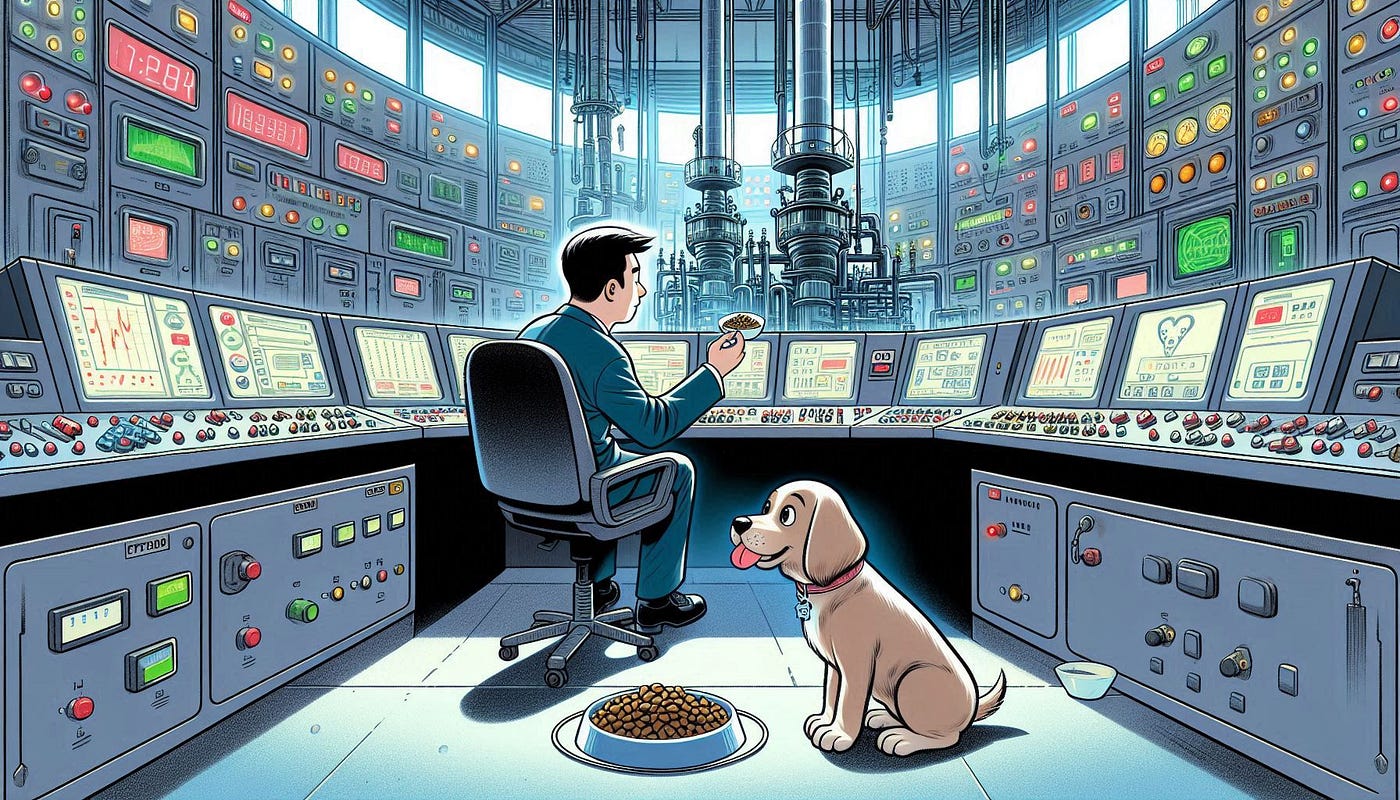
Image credit: Dall-E
 Sign up here to get Human-Centered Change & Innovation Weekly delivered to your inbox every week.