by Braden Kelley and Art Inteligencia
“We want to turn a cold, clinical, and often terrifying event into a casual, proactive trip to the spa.”
By moving away from the intimidating, clanging cylinders of traditional radiology and steering toward consumer wellness spaces filled with pools of golden light, Midjourney is attempting a massive feat of experience design. However, as any strategist knows, a beautiful interface does not inherently solve a complex medical problem.
From a human-centered innovation perspective, we have to look past the aesthetic appeal and ask the hard questions: Can a system built on ultrasound waves and massive computational reconstruction genuinely disrupt the deeply entrenched MRI and CT scan markets? Or is this an overhyped, physics-constrained novelty that risks creating more diagnostic noise than actual clinical value? Let’s break down the genesis, the mechanics, and the economic realities of this emerging technology to determine if it is a true paradigm shift — or simply a brilliant illusion.
Section I: The Genesis of an AI Outlier (Core Business vs. The Hardware Leap)
To understand the magnitude of this shift, you have to look at the sheer contrast in business models. Midjourney built its empire as a lean, hyper-profitable software-as-a-service (SaaS) platform, leveraging massive cloud compute to generate digital art for millions of subscribers. Moving from that friction-free digital realm into the high-risk, heavily regulated world of medical hardware is a leap few saw coming.
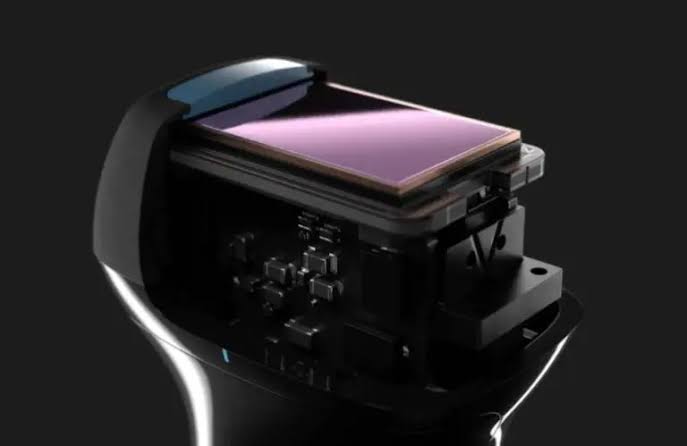
But this isn’t a random detour; it is a calculated bet on the convergence of physics and algorithms. Midjourney isn’t building the foundational hardware entirely from scratch. Instead, they have formed a massive $74 million co-development partnership with Butterfly Network, utilizing forty of their cutting-edge “Ultrasound-on-Chip” silicon modules. By combining Butterfly’s semiconductor-based ultrasound technology with Midjourney’s world-class computational reconstruction capabilities, the goal is to transform chaotic acoustic waves into crisp, full-body anatomical maps.
The strategic play here is treating massive compute power and large-scale AI models as a universal hammer to solve complex, real-world data reconstruction problems.
Founder David Holz’s broader organizational philosophy treats software and hardware as two sides of the same coin, balancing a portfolio of four software projects and four hardware initiatives. By treating the human body as a data set waiting to be rendered, Midjourney is attempting to prove that the core competency of an AI company isn’t just generating beautiful images — it is interpreting complex physical data to design a healthier, lower-friction human experience.
Section II: Modality Breakdown — The Midjourney Scanner vs. MRI vs. CT
To evaluate whether Midjourney’s system can legitimately disrupt medical radiology, we must contrast its core mechanics against the industry workhorses: Magnetic Resonance Imaging (MRI) and Computed Tomography (CT). While the immersion tank is designed to feel frictionless, the underlying physics presents a starkly different story of trade-offs.
The core hardware architecture relies on arrays of semiconductor chips, a massive shift from traditional radiation or magnetic resonance equipment.
| Feature | Midjourney “Ultrasonic CT” | Conventional MRI | Conventional CT Scan |
|---|---|---|---|
| Primary Physics | Ultrasound (Sound waves + water immersion) | Powerful Magnetic Fields + Radio Waves | Ionizing Radiation (X-rays) |
| Scan Duration | ~60 seconds | 30 to 90 minutes | 5 to 15 minutes |
| Infrastructure | Consumer wellness space (“Midjourney Spa”) | Shielded clinical room, liquid helium cooling | Hospital/clinical radiology department |
| Inherent Limits | Struggles with dense bone and air-filled organs (lungs) | Claustrophobia, zero metal allowed, high maintenance | Radiation exposure limits frequency of use |
| Clinical Utility | Non-diagnostic body composition mapping (Gen-1) | Deep tissue, neurological, and joint diagnostics | Bone fractures, internal bleeding, acute chest/abdo |
The Definite Advantages
- Zero Ionizing Radiation: Unlike a CT scan, which uses X-rays, Midjourney’s scanner uses acoustic waves. This makes it safe for repeated, routine baseline monitoring.
- Speed and Comfort: A 60-second immersion entirely side-steps the extreme claustrophobia and deafening, jackhammer-like thumping of an MRI machine.
- Decentralized Infrastructure: Because it doesn’t require liquid helium cooling or radiation-shielded walls, it can exist in light commercial real estate rather than expensive hospital wings.
The Unforgiving Disadvantages
This is where the laws of physics present a massive wall. Ultrasound waves travel exceptionally well through water and soft tissue, but they scatter severely when encountering dense bone or air pockets.
An MRI uses radio frequencies to manipulate hydrogen atoms, providing unparalleled resolution of soft tissues, brains, and ligaments. A CT scan cuts through bone with mathematical precision. Midjourney’s scanner, by using ultrasound, inherently struggles to “see” inside the skull or provide precise diagnostic data on air-filled lungs. While their massive AI model can use predictive algorithms to stitch scattered sound waves together, it runs the dangerous risk of hallucinating details to fill in acoustic blind spots — a minor issue for digital art, but a fatal flaw for a medical diagnosis.
Section III: The Economics of the Scan (Cost per Test)
To understand how Midjourney intends to disrupt the medical imaging market, we have to look past the technology and analyze the economic ecosystem. Traditional healthcare radiology is built on a highly centralized, capital-intensive model. Midjourney, true to its technology roots, is attempting to deploy a decentralized, high-volume model that relies on radical unit economic scaling.
The Heavy Burden of Legacy Systems
Traditional MRI and CT systems are financial black holes for healthcare providers before a single patient even walks through the door. A new, high-field MRI machine typically costs between $1 million and $3 million upfront, paired with hundreds of thousands of dollars in annual maintenance contracts, specialized software licensing, and the continuous cost of liquid helium for cooling.
When you factor in specialized radiologic technologist labor, hospital facility overhead, and the necessary physician interpretation fees, the cost passed to the consumer or insurance provider explodes. A standard MRI scan in the United States ranges from $400 to over $12,000, depending entirely on the hospital system and insurance coverage. This extreme cost makes scanning inherently reactive — reserved only for acute crises or post-injury confirmation.
“The legacy model treats imaging as a scarce, expensive luxury. Midjourney’s objective is to treat imaging data as an abundant commodity.”
Silicon Scaling vs. Superconducting Magnets
Midjourney’s approach completely bypasses these legacy infrastructure costs by leaning heavily on semiconductor technology. By utilizing Butterfly Network’s Ultrasound-on-Chip modules, the hardware costs scale alongside the manufacturing efficiencies of the silicon industry, rather than the expensive raw materials required for massive superconducting magnets.
This hardware shift enables a completely different operational scale. Midjourney has laid out an incredibly aggressive target: 50,000 scanners deployed globally by 2031, with the capability to process an astonishing 1 billion scans per month.
The Consumer Subscription Paradigm
Because the upfront infrastructure costs are significantly lower, Midjourney can entirely opt out of the complex, bureaucratic insurance reimbursement pipeline. Instead, they are positioning the scanner as an out-of-pocket, direct-to-consumer wellness product.
By matching the consumer subscription architecture of their core generative art business, a full-body scan could realistically be priced at a fraction of a clinical scan — democratizing access to full-body physical tracking. This changes the consumer paradigm entirely: instead of paying thousands of dollars for a one-time diagnostic scan after getting hurt, users pay a predictable, accessible fee to continuously monitor their baseline health over time.
Section IV: The Experience Design and Human Factors
As a human-centered design practitioner, this is where the Midjourney project becomes truly fascinating. Innovation isn’t just about the underlying technology; it is about how that technology fits into the fabric of human life. Midjourney is attempting a radical intervention in experience architecture, completely reimagining the emotional and sensory journey of medical imaging.
Friction Reduction: From Clinical Dread to Spa-Like Sanctuary
The traditional imaging experience is fundamentally hostile to human comfort. To get a standard MRI, a patient is slid into a cramped, freezing, claustrophobic plastic tube, instructed not to swallow or breathe for long intervals, and subjected to a deafening, metallic jackhammer cadence. It is an experience designed around the machine, not the human.
Midjourney completely flips this dynamic. By embedding forty ultrasound chips into an immersion tank, they replace clinical dread with sensory-focused relaxation. The user steps into a warm, shallow pool of water enveloped by soft, golden light. The entire scan takes a mere 60 seconds, requiring no breath-holds or structural restraints. By removing the psychological barriers of fear and discomfort, Midjourney converts a medical chore into a low-friction wellness ritual.
“True human-centered innovation doesn’t just make a system faster; it alters how the user feels while engaging with it.”
The Behavioral Shift: Reactive Crisis vs. Proactive Benchmarking
This experiential shift fundamentally alters human behavior. Today, we view medical scans as reactive interventions — something you endure only when you are broken, injured, or deeply sick.
By lowering both physical and financial friction, Midjourney aims to transition users into a state of proactive health tracking. Instead of a frantic, single-point-in-time diagnostic event, the full-body scan becomes an ongoing baseline. Users can visualize changes in their body composition, muscle mass, and internal soft-tissue structures month-over-month, shifting the health paradigm from waiting for illness to actively managing wellness.
The Over-Diagnosis Trap and “Clinical Noise”
However, an optimized user experience can still lead to systemic friction. Medical professionals are already raising alarms about the over-diagnosis trap. The human body is beautifully imperfect; we are filled with benign cysts, harmless nodules, and structural anomalies that will never cause us harm.
When you give millions of consumers an effortless, low-cost way to scan their entire bodies every month, you inevitably generate a massive influx of “clinical noise.” A user sees an unfamiliar shadow on their automated Midjourney report, panics, and floods the traditional healthcare system demanding specialist consultations, biopsies, and secondary MRIs. More data does not automatically equal better health. If an experience-driven tool inadvertently drives healthy people into spiral of unnecessary medical anxiety and drains clinical resources, it fails the ultimate test of human-centered utility.
Section V: The Regulatory and Future Development Roadmap
The leap from software pixels to medical-grade diagnostics is governed by an uncompromising arbiter: regulatory clearance. In the United States, the Food and Drug Administration (FDA) treats diagnostic machinery with the highest level of scrutiny. To navigate this reality without grinding their momentum to a halt, Midjourney is executing a highly strategic, phased rollout.
The Wellness Sidestep: Launching under General Wellness Guidance
Midjourney is deliberately holding back from making immediate disease diagnoses. When the first flagship “Midjourney Spa” opens its doors near Union Square in San Francisco in late 2027, it will strictly offer “detailed body composition maps.” By focusing solely on measuring muscle volumes, body fat distribution, and skeletal structures without asserting clinical diagnoses, Midjourney can launch under the FDA’s General Wellness Policy.
This is the exact same low-risk, non-invasive regulatory lane utilized by premium whole-body MRI screening services like Prenuvo and Ezra. It allows Midjourney to immediately commercialize the technology, build consumer habits, and generate cash flow while completely bypassing the years of grueling clinical trials required for formal diagnostic approval.
“The short-term goal is to do what is regulatorily simple to establish the footprint. The long-term goal is incremental validation.”
The Massive Computational Challenge
While David Holz noted that the Gen-1 prototype doesn’t even rely on generative AI yet, the data reconstruction pipeline is an absolute beast. The machine’s ring of 40 custom Butterfly Network chips streams roughly 17 gigabytes of raw acoustic data per second.
Processing these non-linear inverse scattering problems — essentially stitching scattered sound waves into a coherent, sub-millimeter 3D volume — demands over two petaflops of on-device computational power. The future development roadmap relies heavily on refining these proprietary algorithms to cleanly differentiate tissue boundaries over the next 12 to 24 months.
The 10-Year Vision: Diagnostics and Beyond
Midjourney has already initiated preliminary discussions with the FDA. The overarching strategy is a rolling submission process: as their data sets grow from thousands of consumer scans, they will submit clinical test results to the FDA to unlock “increased capabilities” piece by piece.
Over a ten-year horizon, Midjourney expects these machines to evolve far beyond basic body mapping into tools capable of running thousands of automated diagnostic cross-checks. Holz has even hinted at a long-term future where the hardware isn’t just used for passive imaging, but scales into localized, acoustic therapeutic applications as well.
Conclusion: Innovation or Not? The Verdict
When evaluating an emerging technology through the lens of strategic foresight and human-centered design, we must separate the seductive pull of an exquisite user experience from the hard reality of systemic impact. Midjourney’s full-body scanner is undeniably one of the most audacious pivots in tech history, but does it truly deserve the title of an innovation?
Why it IS an Innovation
From an experiential standpoint, it is a masterclass in friction reduction. It takes a universally dreaded clinical procedure — the cold, loud, claustrophobic machinery of legacy radiology — and transforms it into an accessible, 60-second wellness ritual. By combining semiconductor-based ultrasound with high-petaflop computational reconstruction, Midjourney is bypassing the multi-million-dollar physical constraints of traditional MRIs. If they achieve their goal of global scale, they will successfully shift human behavior from reactive crisis management to proactive, continuous health tracking.
Why it might NOT be
However, an innovative interface cannot rewrite the fundamental laws of physics. Ultrasound waves scatter when facing dense bone and air, leaving inherent diagnostic blind spots that cannot be entirely solved by predictive code. Furthermore, by making full-body scans an effortless consumer commodity, Midjourney risks unlocking the over-diagnosis trap — flooding the healthcare ecosystem with false positives, benign findings, and “clinical noise” that triggers immense medical anxiety and strains real-world clinical resources.
“True innovation does not just solve a human friction point on the front end; it ensures it does not create a deeper systemic failure on the back end.”
The Final Verdict
Ultimately, Midjourney Medical is a qualified innovation. It is a brilliant, high-compute disruption of the preventative wellness space, but it is not a true replacement for the diagnostic precision of an MRI or CT scan. Until the technology undergoes rigorous clinical validation and handles acoustic blind spots without the risk of algorithmic hallucinations, it remains an extraordinary tool for proactive physical benchmarking. David Holz and his team have designed an incredible, low-friction gateway to our data — but for now, the spa-like sanctuary is a complement to medicine, not a substitute for it.
Frequently Asked Questions
1. Can the Midjourney full-body scanner completely replace a traditional hospital MRI or CT scan?
No, it cannot replace them. While Midjourney’s scanner offers a fast, comfortable 60-second experience, it relies on ultrasound-on-chip technology. Sound waves inherently struggle to penetrate dense bone or image air-filled organs like the lungs. Traditional MRIs and CT scans use magnetic fields and X-rays, providing deep-tissue and skeletal diagnostic precision that ultrasound waves simply cannot achieve due to the laws of physics.
2. Does the Midjourney scanner have FDA approval for medical diagnostics?
No. Midjourney is deliberately launching the device under the FDA’s General Wellness Policy guidelines, focusing strictly on “body composition mapping” (such as muscle volume and fat distribution) rather than diagnosing specific diseases. This allows them to open consumer wellness spaces by late 2027 without waiting years for clinical diagnostic trials, though they plan a rolling submission process to gain incremental diagnostic approvals over the next decade.
3. How does the cost of a Midjourney scan compare to traditional clinical imaging?
Traditional MRIs and CT scans are highly centralized and expensive, ranging anywhere from $400 to over $12,000 depending on insurance and hospital overhead. Because Midjourney uses silicon semiconductor chips instead of multi-million dollar superconducting magnets, their hardware scaling costs are drastically lower. Midjourney bypasses insurance entirely, offering direct-to-consumer out-of-pocket pricing structured around an affordable, subscription-based wellness model.
Image credits: Google Gemini, The Robot Report
Content Authenticity Statement: The topic area, key elements to focus on, etc. were decisions made by Braden Kelley, with a little help from Google Gemini to clean up the article, add images and create infographics.
 Sign up here to get Human-Centered Change & Innovation Weekly delivered to your inbox every week.