Tag Archives: hurricanes

Startups, Companies, Acquisitions and Hurricanes

Startups, Companies, Acquisitions and Hurricanes

GUEST POST from Mike Shipulski

If you run a company, the most important thing you can control is how you allocate your resources. You can’t control how the people in your company will respond to input, but you can choose the projects they work on. You can’t control which features and functions your customers will like, but you can choose which features and functions become part of the next product. And you can’t control if a new technology will work, but you can choose the design space to investigate. The open question – How to choose in a way that increases your probability of success?

If you want to buy a company, the most important thing you can control is how you allocate your resources. In this case, the resources are your hard-earned money and your choice is which company to buy. The open question – How to choose in a way that increases your probability of success?

If you want to invest in a startup company, the most important thing you can control is how you allocate your resources. This case is the same as the previous one – your money is the resource and the company you choose defines how you allocate your resources. This one is a little different in that the uncertainty is greater, but so is the potential reward. Again, the same open question – How to choose in a way that increases your probability of success?

Taking a step back, the three scenarios can be generalized into a category called a “system.” And the question becomes – how to understand the system in a way that improves resource allocation and increases your probability of success?

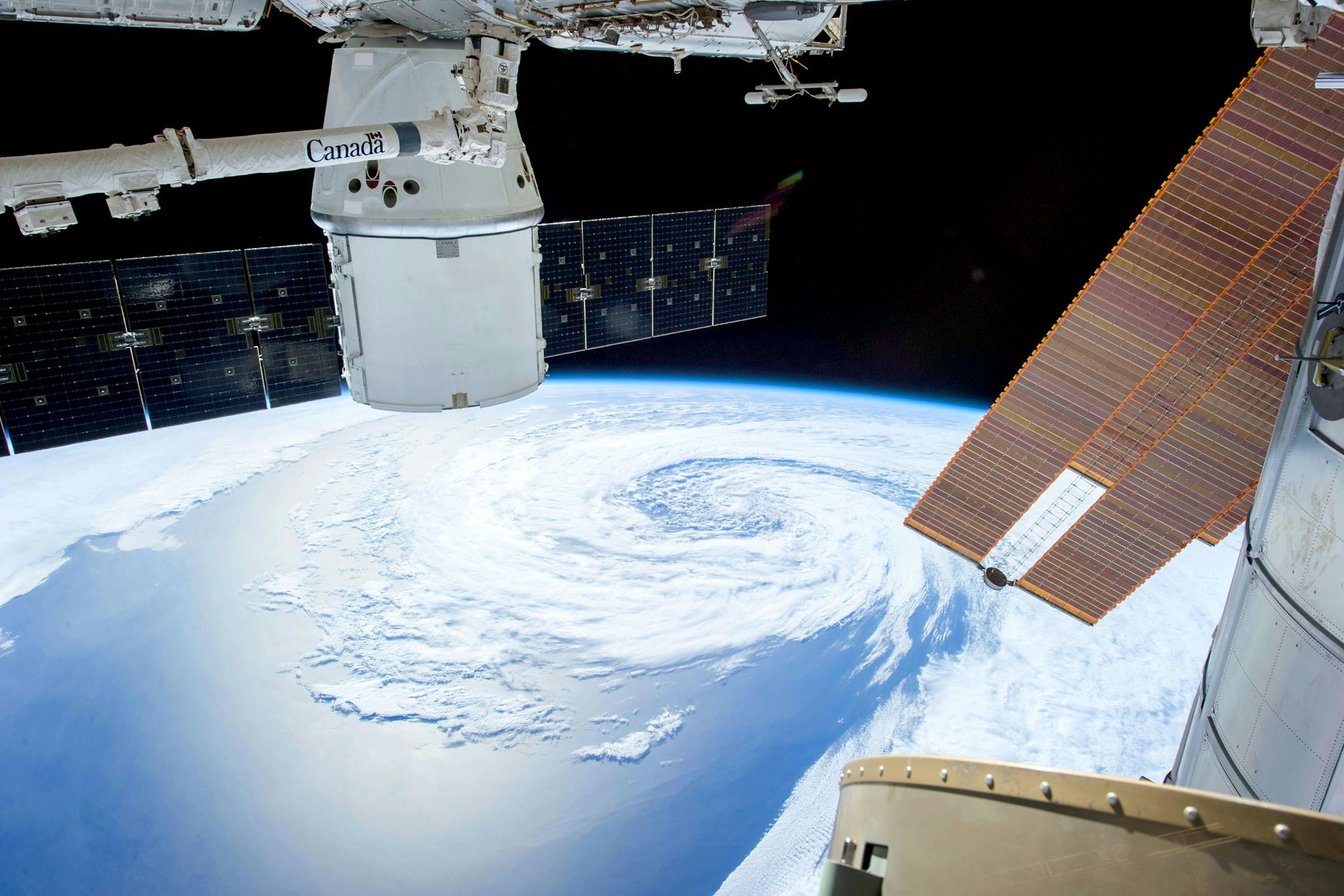
These people systems aren’t predictable in an if-A-then-B way. But they do have personalities or dispositions. They’ve got characteristics similar to hurricanes. A hurricane’s exact path cannot be forecasted, the meteorologist can use history and environmental conditions to broadly define regions where the probability of danger is higher. The meteorologist continually monitors the current state of the hurricane (the system as it is) and tracks its position over time to get an idea of its trajectory (a system’s momentum). The key to understanding where the hurricane could go next: where it is right now (current state), how it got there (how it has behaved over time), and how have other hurricanes tracked under similar conditions (its disposition). And it’s the same for systems.

To improve your understanding of how your system may respond, understand it as it is. Define the elements and how those elements interact. Then, work backward in time to understand previous generations of the system. Which elements were improved? Which ones were added? Then, like the meteorologist, start at the system’s genesis and move forward to the present to understand its path. Use the knowledge of its path and the knowledge of systems (it’s important to be the one that improves the immature elements of the system and systems follow S-curves until the S-curve flattens) to broadly define regions where the probability of success is higher.

These methods won’t guarantee success. But, they will help you choose projects, choose acquisitions, choose technologies, and choose startups in a way that increases your probability of success.

Image credits: Pexels

Subscribe to Human-Centered Change & Innovation WeeklySign up here to join 17,000+ leaders getting Human-Centered Change & Innovation Weekly delivered to their inbox every week.
Hurricane Helene Points to Our Climate Future

Hurricane Helene Points to Our Climate Future

GUEST POST from Robert B. Tucker

Ophthalmologist John Irvine served as chief medical officer at UCLA’s Doheny Eye Center before he and his wife retired to North Carolina to enjoy the good life in the pristine Blue Ridge Mountains near Asheville.

But on the night of September 26, 2024, the pristine turned into a disaster zone for the mountainous community.

In a few hours, Hurricane Helene arrived from Florida, turning the Swannanoa River into a raging, deadly debris flow. The storm flooded low-lying areas, ripped out roads, toppled trees, downed power lines and water pipes, and cut off entire towns.

Next morning, Irvine’s neighbor watched as houses floated by, and people clung to them for dear life. Two hundred thirty-four people lost their lives. Untold numbers are still unaccounted for.

In Helene’s aftermath, I flew to Asheville to volunteer with a disaster relief organization focused on restoring damaged housing. I spent time “mucking” (removing muck and damaged floors and walls) with a team of church volunteers recruited by Boston-based Fuller Center Disaster Rebuilders.

Although I came simply to help, what I observed caused me to reflect on the climate future and the adaptation needed in the way we prepare to cope with an increasing rate of disasters to come.

As climate change accelerates, experts predict that by 2035, the frequency and intensity of natural disasters will reach unprecedented levels. The scientific consensus is stark: rising global temperatures will increase the likelihood of severe hurricanes, tornadoes, wildfires, and dangerously hot days across the globe.

According to the latest Intergovernmental Panel on Climate Change (IPCC) report, extreme weather events once considered “once-in-a-century” are becoming annual occurrences.

Hurricanes like Helene and Milton will be stronger, fueled by warming oceans, with Category 4 and 5 storms becoming more frequent. Coastal towns will endure worsening storm surges and heavy rainfall, leading to repetitive flooding and economic devastation.

Inland communities like Asheville, once thought to be havens from hurricanes, face increasing risks as storms retain their energy longer.

Beyond storm disasters, other types of climate-related disasters are also increasing. The number of days with temperatures exceeding 100°F (37.8°C) will rise sharply in regions far from coasts. Cities like Phoenix, Dallas, and even parts of the Northeast are projected to experience two to three times the current number of extreme heat days by 2035, posing severe risks to public health, business, and infrastructure.

The economic implications are staggering. Hurricane Helene alone caused damages totaling $225 billion, representing approximately half of what the Congressional Budget Office estimated would be needed over a decade for such programs.

And then there is the emotional toll of lives torn upside down.

Less than one percent of households in the Asheville area carried flood insurance, so many homeowners will be dependent on NGOs like Fuller and others to rebuild, or houses will mold and need to be condemned. The woman whose modest duplex we mucked received an estimate of $150,000 to repair the damage.

Homes and trailers in low-lying areas have washed away on land that no longer exists. Hispanic and African American residents at an apartment building where a visiting nurse named Cathy and I visited to hand out supplies are out of work because tourism has plummeted.

Yet amidst all the devastation, I experienced a sense of hope and even joy, as volunteers come together in common purpose. Businesses in the community gave out free food and water, corporations such as Johnsonville Foods sent a semi-truck to feed people in need.

Heeding the Call to Serve

For Matthew Daughtry-Grubbs, executive director of Cragmont Assembly Retreat Center, Helene has been a call to action. The father of seven, Matthew awoke on the morning of September 27th to news that nearby Interstate 40 was clogged with thousands of stranded motorists.

“That was the moment I realized we needed to do something to help these people,” recalls Daughtry-Grubbs. Cragmont partnered with Emerge Ministries, based in Beulaville, NC, and used social media to beckon a network of Evangelicals who soon arrived from as far away as Indiana. The quiet retreat center was transformed into a bustling volunteer center, (one of several in the mountainous community), with perhaps a hundred volunteers at any given time manning the foodbank and emergency supplies warehouse, delivering meals, mucking houses, and comforting the afflicted.

“This hurricane was horrific,” observed a volunteer who’s a veteran of disaster relief. “You hold their hand but there’s nothing you can say that will help. You’re here to listen. I would say right now they’re probably in shock. Some are really angry, some are stuck in grief… I lost my husband during Covid and this gets my mind off my own problems because there’s a world of hurt right here.”

Soon, such scenes may become part of everyday life. Climate adaptation strategies will become essential, requiring governments, NGOs, and businesses to rethink preparedness, infrastructure, insurance models, and disaster management policies to prepare for a future marked by intensifying climate volatility.

This article originally appeared in Forbes
Image credit: Pexels

Subscribe to Human-Centered Change & Innovation WeeklySign up here to get Human-Centered Change & Innovation Weekly delivered to your inbox every week.