Emotional Agility
GUEST POST from Chateau G Pato
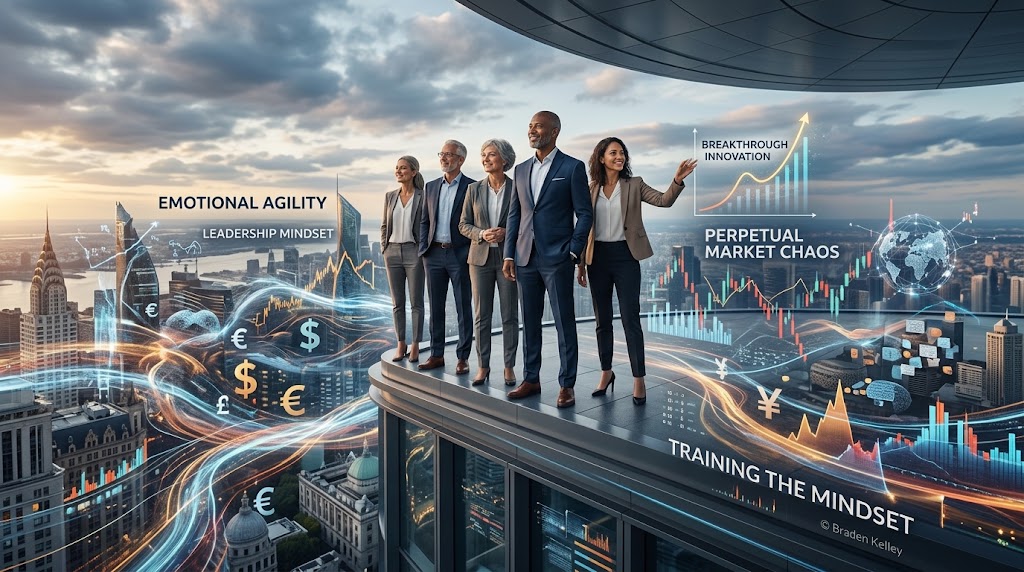
Modern market dynamics have fundamentally disrupted traditional linear strategic planning. Leaders no longer operate in stable environments punctuated by brief disruptions; instead, they face a landscape of perpetual, overlapping chaos driven by rapid technological evolution, shifting consumer expectations, and systemic uncertainty. Surviving and thriving in this environment requires moving beyond rigid process execution and static management tactics. True organizational resilience stems from Emotional Agility—the psychological capacity to navigate volatile environments with clarity, adapt strategic priorities without losing organizational alignment, and lead people through continuous transformation without inducing change fatigue.
Executive Summary: Emotional Agility is not a soft skill; it is a strategic core capability for modern enterprise leadership. Grounded in human-centered change design, this framework details how leaders can cultivate psychological flexibility, overcome cognitive friction during market shifts, and build resilient, human-first cultures capable of turning ongoing market volatility into a sustainable competitive advantage.
I. The Mirage of Stability: Why Traditional Leadership Mindsets Fail in Chaos
For decades, traditional management models treated change as an episodic event—a temporary bridge between two long periods of calm. Today, market chaos is ambient. Leaders who rely on command-and-control structures or rigid multi-year roadmaps quickly find themselves paralyzed by unpredictable shifts.
- The Traps of Cognitive Rigidity: How loss aversion and sunk-cost fallacies cause executives to double down on legacy strategies despite clear market signals to pivot.
- The Cost of Change Fatigue: How unmanaged anxiety, constant restructuring, and reactive decision-making burn out organizational talent and erode trust.
- Reframing Volatility as Input: Shifting leadership perception from seeing change as a threat to viewing perpetual market movement as a catalyst for continuous innovation.
II. The Anatomy of Emotional Agility in Enterprise Leadership
Emotional Agility is the foundational capability that enables leaders to separate knee-jerk emotional reactions from thoughtful, strategic responses. It requires deep self-awareness, cognitive flexibility, and a commitment to human-centered change principles.
- Unhooking from Reactive Traps: Recognizing automatic defense mechanisms (denial, micromanagement, panic) when unexpected market disruptions occur.
- Cognitive Reframing and Perspective Taking: Developing the ability to evaluate dynamic situations from multiple stakeholder viewpoints—including customers, employees, and ecosystems.
- Balancing Psychological Safety with Accountability: Creating environments where teams feel safe voicing risks, experimenting, and failing forward without fear of punitive retribution.
III. The Four Pillars of Emotionally Agile Leadership
To operationalize emotional agility across enterprise teams, leaders must cultivate four core capacities that translate internal psychological stability into outward strategic momentum.
- 1. Radical Candor and Contextual Realism: Facing harsh market realities directly while maintaining clear, empathetic, and transparent communication across all organizational levels.
- 2. Decoupled Identity and Strategy: Ensuring executive self-worth is tied to continuous learning and value creation rather than holding onto specific legacy products or organizational structures.
- 3. Purpose-Driven Anchoring: Grounding the organization in an enduring north star (core mission and customer value proposition) while remaining infinitely flexible about the tactical paths taken to achieve it.
- 4. Dynamic Adaptability: Embracing intentional experimentation, iterative decision-making, and rapid learning loops over static plan execution.
IV. Human-Centered Change: Embedding Agility into Organizational DNA
Leadership emotional agility must extend beyond individual executives to transform how teams collaborate, innovate, and execute. Cultivating a human-centered culture ensures that employees feel empowered to embrace ongoing transformation rather than resist it.
- Designing Collaborative Workflows for Uncertainty: Applying visual planning toolkits and transparent frameworks to co-create strategy and align multi-functional teams.
- Lowering Friction for Strategic Pivots: Normalizing the sunsetting of outdated projects without social or professional penalty through structured experiment canvases and clear learning metrics.
- Customer-Centric Empathy as an Agile Vector: Leveraging deep customer experience insights to stay connected to shifting needs, turning market noise into actionable innovation pathways.
V. Strategic Action Plan: Training the Leadership Mindset
Building emotional agility is an ongoing practice requiring systematic effort, practical tools, and continuous feedback loops across leadership tiers.
- Audit Executive Friction Points: Identify organizational areas where fear, ambiguity, or rigid governance are delaying critical decision-making.
- Institute Peer Reflection and Strategic Sprints: Establish psychological check-ins and cross-functional Alignment Sprints prior to executing major strategic shifts.
- Measure Cultural and Strategic Resilience: Track organizational adaptability metrics, employee engagement, and the speed of innovation cycles alongside traditional financial KPIs.
VI. Strategic Comparison: Legacy Management vs. Emotionally Agile Leadership
| Leadership Dimension | Legacy Reactive Management | Emotionally Agile Leadership |
|---|---|---|
| Response to Market Volatility | Defensive, rigid adherence to legacy plans; delayed pivots. | Curious, adaptive, leveraging chaos as an opportunity to innovate. |
| Decision-Making Drivers | Fear of failure, sunk-cost protection, top-down control. | Customer-centric value, experimental learning, decentralized empowerment. |
| Culture & Change Governance | Top-down mandates causing high change fatigue and anxiety. | Human-centered visual collaboration, high psychological safety, transparent alignment. |
| Organizational Anchor | Static products, traditional processes, fixed 5-year plans. | Enduring purpose, deep customer empathy, flexible tactical roadmaps. |
VII. Frequently Asked Questions
Q: Is emotional agility a personality trait or can it be systematically trained across leadership teams?
A: Emotional agility is a trainable cognitive skill set, not a static personality trait. While individuals naturally possess varying levels of emotional awareness, structured leadership development programs, deliberate practice in high-stakes scenarios, and the use of collaborative, human-centered toolkits can systematically build this capacity across executive leadership.
Q: How does emotional agility directly impact innovation outcomes?
A: Innovation requires comfort with ambiguity, willingness to take calculated risks, and the ability to learn rapidly from failure. Emotionally agile leaders remove the psychological fear of failure from organizational culture, enabling teams to test hypotheses faster, pivot away from unviable projects without defensiveness, and deliver customer value more rapidly.
Q: How can enterprise organizations prevent change fatigue while navigating perpetual disruption?
A: Change fatigue occurs when organizations lack a clear purpose anchor and execute unstructured, top-down changes without empathy for the workforce. By involving employees directly in visual change planning, maintaining transparent communication, and pacing transformations with clear sprint rhythms, leaders protect organizational energy while maintaining agility.
EDITOR’S NOTE: Braden Kelley’s Problem Finding Canvas can be a super useful starting point for doing design thinking or human-centered design.
“The Problem Finding Canvas should help you investigate a handful of areas to explore, choose the one most important to you, extract all of the potential challenges and opportunities and choose one to prioritize.”
Image credit: misterinnovation.com
 Sign up here to get Human-Centered Change & Innovation Weekly delivered to your inbox every week.