AI Soft Landing scenario — Leading People Through the Anxiety of Transformation and AI
LAST UPDATED: June 14, 2026 at 5:48 PM

by Braden Kelley and Art Inteligencia
The Hidden Friction in Modern Transformation
Change doesn’t fail because the technology is broken or the strategy is fundamentally flawed; it fails because organizations consistently underestimate the immense gravity of human fear.
We are living in an era of unprecedented, continuous disruption where the rapid, omnipresent rise of Artificial Intelligence (AI) has magnified workplace anxiety to an all-time high. This paradigm shift has fundamentally altered the conversation from standard operational “inertia” to a deep-seated, existential dread regarding professional relevance, personal autonomy, and long-term job security.
To build an agile, future-ready organization, leaders must stop merely trying to “manage” resistance and start actively dismantling fear. True transformation requires moving past rigid, top-down mandates to embrace genuine co-creation, psychological safety, and a commitment to human-centered design.
I. Mapping the Topography of Fear in the AI Era
To successfully guide an organization through a significant shift, leaders must first understand that the friction they encounter is rarely intellectual; it is emotional. In the wake of the generative AI revolution, traditional change management frameworks are proving insufficient precisely because they treat resistance as a logistical hurdle rather than a psychological defense mechanism.
The Shift from Traditional Resistance to Existential Anxiety
Standard change models were built for linear transitions — such as upgrading an ERP system or relocating an office — where the destination is clear and the skill gap is manageable. AI, however, introduces non-linear disruption. Employees are not just resisting a new tool; they are experiencing existential anxiety. The underlying fear is no longer “How do I use this software?” but rather “Does my expertise still matter?”
The Core Drivers of Workplace Fear
This widespread anxiety is fueled by three distinct, interconnected human dynamics:
- Loss of Competence & Relevance: Professionals who have spent decades perfecting their craft suddenly face systems that can replicate aspects of their output in seconds. The fear of being rendered obsolete overnight leads to defensive behaviors and a reluctance to engage with new platforms.
- Loss of Autonomy: Employees worry about losing the human element of decision-making. There is a deep-seated anxiety that their daily workflows will be dictated by black-box algorithms, reducing human agency to mere data entry and validation.
- The “Black Box” Effect: Because advanced AI models operate behind complex neural layers, the lack of transparency breeds immediate distrust. When people do not understand how a technology arrives at a conclusion, they naturally default to worst-case scenario thinking regarding its intent and accuracy.
The Real Cost of Inaction
When leadership fails to recognize and mitigate these fears, the organization pays a heavy cultural tax. This friction rarely manifests as open defiance. Instead, it operations below the surface as:
- Quiet Quitting: Disengagement driven by the belief that effort is futile in an automated future.
- Malicious Compliance: Following instructions to the letter while ignoring obvious system errors, effectively letting the new technology fail to prove a point.
- Organizational Paralysis: A total stall in innovation, as teams become too risk-averse to experiment with new digital capabilities.
II. Redefining the Approach: Moving from Mandates to Co-Creation
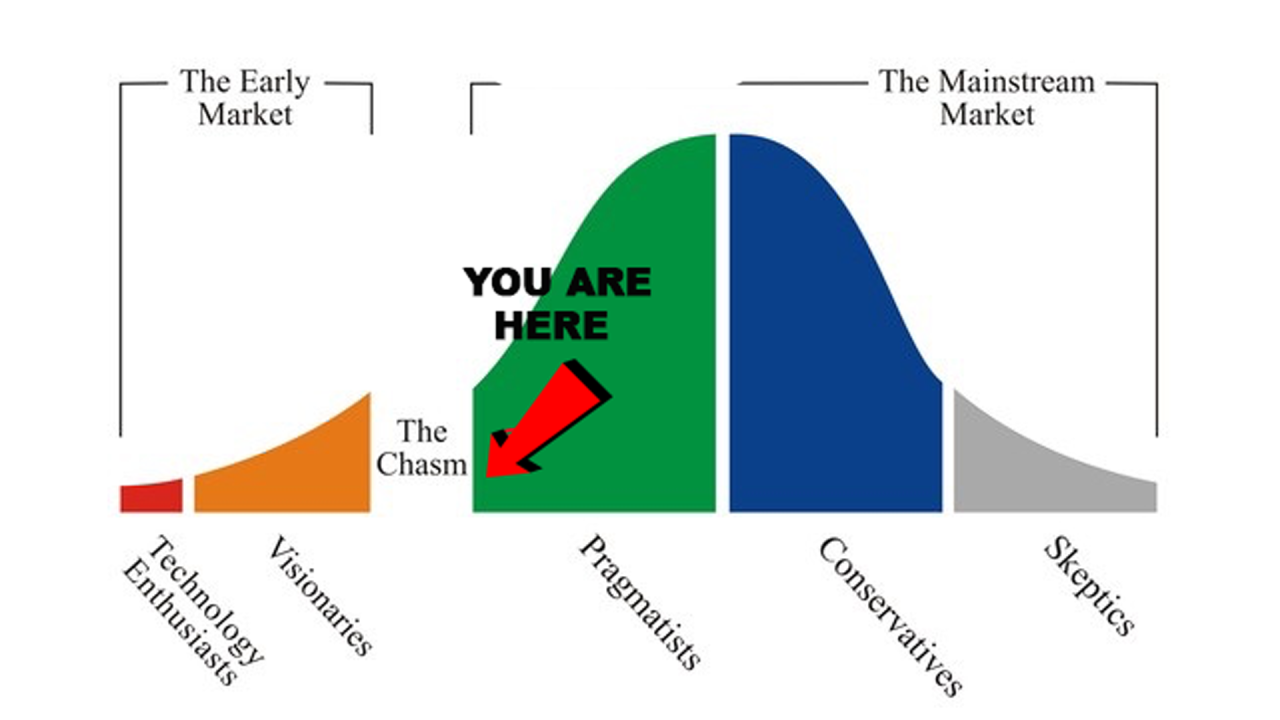
The traditional corporate playbook for technology deployment relies heavily on top-down enforcement. Executives select a platform, managers set a deployment date, and training sessions are scheduled to push the workforce into compliance. While this rigid approach might work for static software updates, it completely fractures when applied to cognitive, disruptive technologies like Artificial Intelligence. To cross the chasm of fear, leadership must fundamentally redefine how change is initiated.
The Failure of Top-Down Dictates
When an disruptive technology is thrust upon an organization from above, it triggers the corporate equivalent of an immune system response. Employees perceive the uninvited change as an existential threat to their routines and livelihoods. Pushing mandates down the organizational chart only hardens resistance, forcing anxiety underground and transforming potential advocates into silent saboteurs.
The Power of Participatory Innovation
The alternative to top-down friction is Participatory Innovation — the deliberate practice of shifting the narrative from “This is being done to you” to “You are building this with us.” True ecosystem agility requires flattening the hierarchy of contribution and inviting the entire workforce into the design process. Rather than treating front-line employees as passive recipients of change, organizations must treat them as active co-creators of their own future workflows.
This approach transforms the deployment strategy by:
- Engaging front-line staff at the inception stage to identify real, daily friction points that AI can genuinely alleviate, rather than forcing technology where it doesn’t fit.
- Utilizing cross-functional design sessions that break down legacy silos, allowing technical developers and domain experts to build tools in tandem.
- Establishing iterative feedback loops that give employees a direct hand in shaping, tweaking, and refining the automated systems they are expected to use.
Lowering Resistance Through Shared Ownership
Human beings rarely destroy what they help build. When an employee looks at a newly integrated AI assistant or a redesigned digital workflow and recognizes their own insights, feedback, and domain expertise baked into the final product, the underlying psychological dynamic shifts instantly. The fear of the unknown is replaced by a powerful sense of pride of authorship, transforming potential resistance into proactive, self-sustaining adoption.
III. The Strategic Blueprint: Crossing the Chasm of Fear
Dismantling fear and establishing a culture of participatory innovation requires more than good intentions; it demands an operationalized, human-centered strategy. To successfully cross the chasm of anxiety and achieve meaningful adoption, leaders must execute a deliberate, multi-layered blueprint that prioritizes human experience alongside technical milestone delivery.
Step 1: Cultivate Psychological Safety First
Before introducing a single algorithmic tool, leadership must anchor the organizational culture in psychological safety. If employees believe that experimenting with AI or voicing skepticism will jeopardize their standing, they will retreat into defensive compliance.
- Create dedicated, judgment-free forums where teams can openly discuss their anxieties, ask “naive” technical questions, and challenge assumptions without fear of retribution.
- Frame the early stages of AI adoption as an iterative experiment rather than a high-stakes, zero-fault mandate. Normalize failure as a natural, necessary component of learning to collaborate with intelligent systems.
Step 2: Demystify the “Black Box”
Fear thrives in obscurity. When technology is shrouded in complex, dense jargon, employees default to worst-case scenario thinking. Crossing the chasm requires pulling back the curtain on how automated tools function.
- Provide transparent, accessible education tailored to non-technical users. Demystify the data sources, logic, and operational boundaries of the AI models being deployed.
- Shift the corporate narrative away from “automation as a replacement” and explicitly reframe it as “augmentation as a partner.” Clearly demonstrate how these tools can absorb repetitive cognitive drudgery, freeing individuals to focus on high-value, uniquely human tasks.
Step 3: Define New “Experience Level Measures” (XLMs)
Traditional change management focuses almost exclusively on cold Operational Measures—tracking system uptime, deployment timelines, software licenses, and output volume. To manage the human friction of transformation, organizations must measure what actually matters: the human experience of the transition.
- Implement Experience Level Measures (XLMs) to actively track sentiment, cognitive friction, and confidence levels across the workforce during the rollout.
- Establish an Experience Management Office (XMO). This cross-functional entity acts as the empathetic heartbeat of the transformation, monitoring XLMs in real time and intervening with support, tailored training, or process redesign when emotional friction spikes.
Step 4: Re-skilling with Dignity and Equity
True fairness in transformation means ensuring that the rewards of technological advancement are relative to the effort invested by the people keeping the organization running. If employees feel that upskilling only leads to their own displacement or unfair workloads, adoption will fail.
- Demonstrate a visible, legally backed commitment to the long-term value of your human capital through robust, funded re-skilling pathways that dignify the worker’s career trajectory.
- Align future organizational recognition, bonuses, and growth opportunities with equitable outcomes: ensure that the harder working individuals who lean into the challenge of adapting and mastering new tools receive the tangible rewards of that shared success.
IV. Activating the Ecosystem: Leveraging Multi-Dimensional Roles
Successfully steering an organization away from anxiety and toward sustainable innovation requires a diverse network of human capabilities. Relying solely on technical project managers or traditional IT leaders to drive adoption is a structural mistake; these roles are designed to optimize systems, not to heal a fractured human culture. To operationalize empathy and scale change, leadership must activate a multi-dimensional ecosystem of specialized roles.
Beyond the Project Manager
While project managers excel at tracking timelines, budgets, and deployment milestones, they rarely possess the specialized tools or bandwidth required to navigate deep-seated psychological friction. Orchestrating a human-centered transformation requires shifting the focus from managing tasks to nurturing human relationships. Organizations must look beyond standard job titles and intentionally cultivate specific archetypes designed to bridge the gap between human anxiety and technological capability.
The Right People in the Right Seats
To dismantle fear at every layer of the enterprise, leaders should identify, empower, and deploy three distinct operational archetypes across the transformation ecosystem:
- The Evangelist: This role is responsible for crafting the overarching human narrative of the transformation. The Evangelist does not merely pitch the features of a new AI tool; they communicate the authentic “Why” behind the change. By generating real, unforced energy and painting a vivid picture of a more fulfilling, augmented future, they inspire teams to lift their heads above immediate anxieties and look toward the long-term horizon.
- The Connector: Change rarely scales effectively through top-down mandates; it spreads horizontally through social proof and trusted networks. Connectors are the cross-functional linchpins who span legacy departmental boundaries. They excel at identifying grassroots wins in one pocket of the organization, translating those successes for other teams, and ensuring that insights, feedback, and shared resources flow seamlessly across the entire ecosystem.
- The Coach: While Evangelists inspire groups and Connectors build bridges, the Coach works on the front lines of human emotion. Operating with high emotional intelligence, Coaches provide one-on-one empathy and guidance to individuals experiencing severe friction. They help employees navigate personal technical skill gaps, address specific career anxieties, and safely transition into new ways of working without losing their professional dignity.
Conclusion: The Ultimate Reward of a Human-Centered Future
Technology provides the raw capability, but human adoption provides the actual organizational value. As we navigate the complex, non-linear disruptions of the Artificial Intelligence era, it is becoming increasingly clear that the true competitive advantage does not belong to the enterprise with the largest budget or the most advanced algorithms. The future belongs to the organizations that can move their people past anxiety and into a state of shared purpose.
Crossing the chasm of fear requires leaders to abandon the outdated illusion of top-down control. By anchoring your transformation strategy in radical transparency, psychological safety, and participatory innovation, you transform a potentially threatening disruption into a collective opportunity. Measuring the journey through human-centric lenses like Experience Level Measures (XLMs) and deploying empathetic archetypes ensures that no one is left behind in the wake of progress.
Ultimately, when you design fear out of your corporate culture, you unlock the ultimate reward: an agile, resilient, and infinitely innovative workforce. By treating employees as respected co-creators of their digital future, you don’t just achieve a successful technology rollout — you build a human-centered ecosystem capable of thriving through any disruption the future brings.
Frequently Asked Questions
- Why do traditional change management frameworks fail when introducing AI?
- Traditional frameworks treat change as a linear, logistical hurdle focused on training and compliance. AI introduces non-linear disruption that triggers deep psychological and existential anxiety regarding job security, relevance, and loss of human autonomy. Overcoming this requires an empathy-driven, human-centered approach rather than top-down mandates.
- What is Participatory Innovation and how does it reduce resistance?
- Participatory Innovation is the practice of actively involving front-line employees in co-creating and designing their future workflows instead of pushing changes down from the executive level. Because human beings rarely destroy what they help build, this shared ownership transforms fear of the unknown into pride of authorship.
- What are Experience Level Measures (XLMs) and why are they necessary?
- While traditional operational measures track cold metrics like system uptime or deployment timelines, Experience Level Measures (XLMs) actively quantify human sentiment, cognitive friction, and adoption confidence. They are critical because technology only provides capability; human adoption is what actually unlocks organizational value.
Operationalize Organizational Empathy
Ready to Bridge the Gap Between Technology and Human Experience?
Technology only provides capability; human adoption creates the value. If you want to move past cold operational metrics and design fear out of your transformation, let’s connect. Get expert guidance on architecting impactful Experience Level Measures (XLMs) or establishing a dedicated Experience Management Office (XMO) tailored to your culture.
EDITOR’S NOTE: This is a visualization of but one possible future. I will be publishing other possible futures as they crystallize in my mind (or as you suggest them for me to explore).
Image credits: Google Gemini
Content Authenticity Statement: The topic area, key elements to focus on, etc. were decisions made by Braden Kelley, with a little help from Google Gemini to clean up the article, add images and create infographics.
 Sign up here to get Human-Centered Change & Innovation Weekly delivered to your inbox every week.